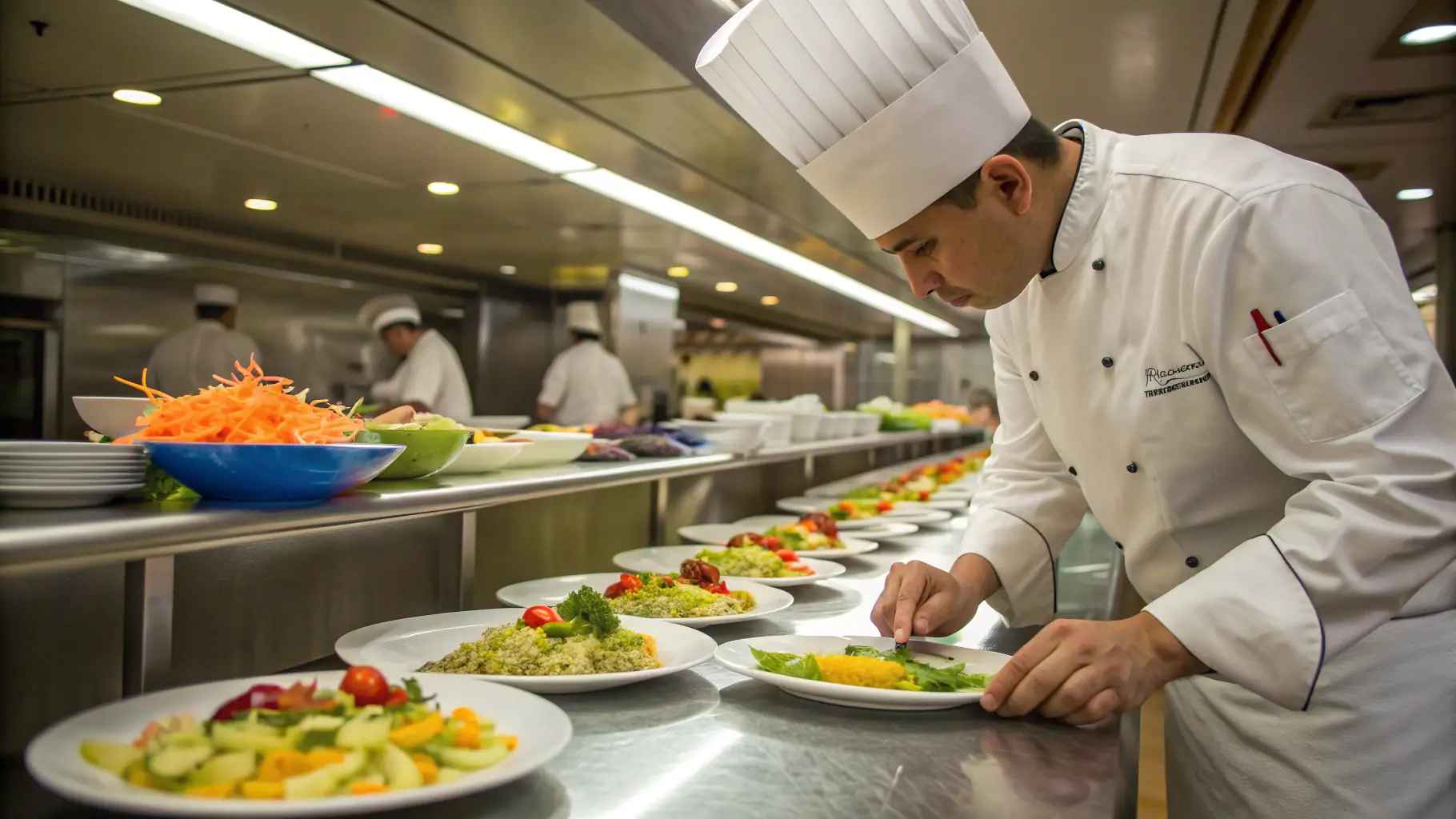
Seafood has fed civilizations for thousands of years, and the traditional dishes that survive today carry the weight of that history in every bite. Any serious traditional seafood dishes list spans continents, cooking methods, and wildly different flavor philosophies, from the butter-rich coasts of Normandy to the spice-laden fishing villages of Vietnam. Knowing which dishes are worth your time, and what actually makes them authentic, is the real challenge. This guide gives you a curated look at iconic regional seafood specialties, what separates the genuine article from a pale imitation, and how to bring these classic seafood recipes into your own kitchen.
Table of Contents
- Key takeaways
- How to identify and appreciate authentic traditional seafood dishes
- 1. British fish and chips
- 2. French bouillabaisse
- 3. Catalan suquet de peix
- 4. Italian-American cioppino
- 5. Vietnamese Cha Ca La Vong
- 6. Vietnamese Cá Trắm Kho
- 7. Russian ukha
- 8. French sole meunière
- Regional seafood dishes at a glance
- How to select the right seafood and cook traditional dishes at home
- My take on why traditional seafood dishes still matter
- Experience authentic Catalan seafood at Elspescadors
- FAQ
Key takeaways
| Point | Details |
|---|---|
| Authenticity starts with ingredients | Regional seafood and local aromatics define traditional dishes far more than technique alone. |
| Global diversity runs deep | From French bouillabaisse to Vietnamese Cá Trắm Kho, best seafood cuisine reflects wildly different cultural logic. |
| Fish selection is non-negotiable | Choosing firm versus delicate fish determines whether a traditional recipe succeeds or falls apart. |
| Freshness drives flavor | Classic dishes like Russian ukha rely entirely on fresh, never frozen fish to achieve their signature taste. |
| Home cooks can do this | With the right sourcing and technique, traditional seafood recipes are approachable for confident home cooks. |
How to identify and appreciate authentic traditional seafood dishes
The word “traditional” gets thrown around loosely in food writing. For seafood dishes, it carries a specific meaning: a recipe with documented roots in a particular region, shaped by what was locally available and prepared using methods passed down through generations.
Here is what actually signals authenticity:
- Regional ingredients first. A genuine Catalan suquet uses local Mediterranean fish and a picada made from Catalan almonds and hazelnuts, not a generic nut paste. Substitutions change the dish fundamentally.
- Historically grounded cooking methods. Traditional fish recipes are shaped by necessity. Braising, frying in fat, slow simmering in broth. These are not stylistic choices but practical solutions that happened to produce extraordinary flavor.
- Seasonal awareness. Authentic dishes are timed to what the sea offers. Seasonal seafood selection transforms flavor in ways that out-of-season ingredients simply cannot match.
- Traceable cultural context. Every genuine traditional dish has a story: a port town, a fishing community, a specific festival or daily ritual.
Pro Tip: When adapting traditional seafood recipes with local ingredients, swap for species with a similar fat content and texture. Replacing sea bass with striped bass in a Mediterranean recipe, for example, preserves the dish’s structure and flavor logic even if the species differs.
The spirit of a traditional recipe lives in its balance. You can honor that balance while using what is available to you, as long as you understand why each ingredient is there in the first place.
1. British fish and chips
Few dishes carry as much national identity as fish and chips. The recipe is deceptively simple: white fish in a crisp beer batter, fried alongside thick-cut potatoes. The cultural roots are layered. Fish and chips evolved from 17th-century Sephardic Jewish fried fish traditions merged with 19th-century fried potato culture. By 1910, there were 25,000 chip shops in the UK. Today that number sits closer to 35,000.
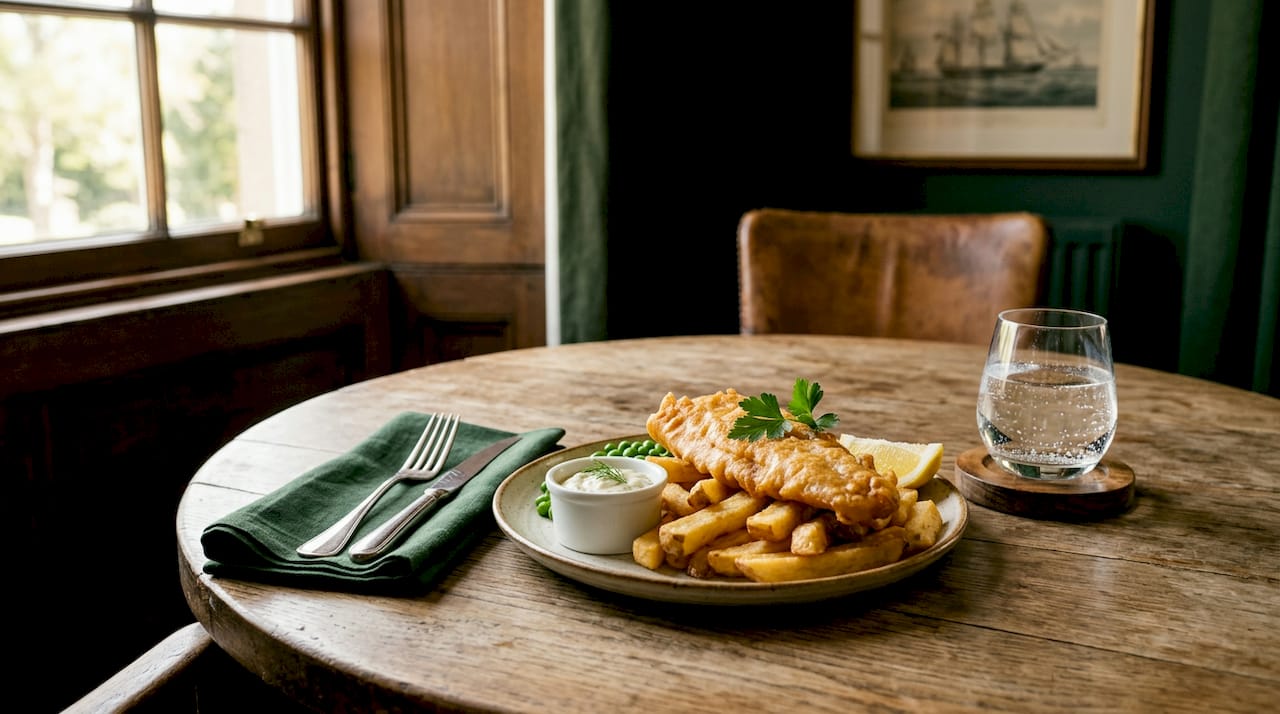
The fish matters enormously. Cod and haddock are traditional, but the batter technique separates good from great. A proper batter should be cold, light, and barely mixed. Overmixing develops gluten and makes it heavy.
2. French bouillabaisse
Bouillabaisse is Marseille’s answer to the question of what to do with a mixed catch that does not sell at market. It has since become one of the most recognized dishes in all of best seafood cuisine globally.
Bouillabaisse’s identity rests on saffron, fennel, and orange zest, a combination so specific to Provençal cooking that substituting any of them produces something else entirely. The broth requires 30 to 60 minutes of simmering for the layers of shellfish and fish to fully integrate. Rouille, the saffron-garlic mayonnaise served alongside, is not optional. It is structural.
“Bouillabaisse is not just a soup. It is the distillation of a coastline, a fishing culture, and centuries of Provençal flavor logic into a single bowl.”
3. Catalan suquet de peix
Suquet began as a fisherman’s stew, cooked directly on the boat with whatever the day’s catch offered. What separates it from every other Mediterranean fish stew is the picada. This paste of crushed almonds, hazelnuts, garlic, fried bread, and herbs is stirred into the broth at the end of cooking. The picada fundamentally transforms the texture and depth of the broth in a way no cream or flour can replicate.
The cooking order matters, too. Add shellfish first to build the broth’s base flavor, then add delicate fish last with minimal stirring. This preserves each ingredient’s texture while layering the flavors properly.
For a deeper look at how Catalan seafood flavors are built from the ground up, the traditions at work in suquet extend across the entire Mediterranean coastline of Catalonia.
4. Italian-American cioppino
Cioppino was born in San Francisco, created by Italian immigrant fishermen who pooled whatever they had not sold. It draws from the same Mediterranean logic as bouillabaisse but uses a tomato base rather than a saffron-fennel broth. Dungeness crab, clams, shrimp, squid, and firm white fish are the classic combination.
Like bouillabaisse, cioppino rewards patience. Rush the broth and you get a thin, acidic tomato soup with seafood floating in it. Give it time, and you get something with genuine weight and complexity.
5. Vietnamese Cha Ca La Vong
This Hanoi specialty is one of the most specific dishes in Vietnamese cuisine. Turmeric-marinated fish, traditionally snakehead or catfish, is pan-fried at the table and eaten with dill, green onions, rice noodles, peanuts, and mam tom, the fermented shrimp paste that ties everything together.
Firm-fleshed fish like catfish or sea bass are required here. Delicate species disintegrate under the high-heat pan-frying and tableside cooking process. The dish’s genius is the contrast: crispy fish against fresh herbs, funky fermented paste against neutral noodles.
6. Vietnamese Cá Trắm Kho
Braised fish dishes appear across Asian traditions, but Vietnam’s Cá Trắm Kho is a benchmark of the form. Black carp is the traditional choice specifically because its fat content and firm flesh can withstand hours of slow braising in a clay pot with caramelized fish sauce, ginger, chilies, and green banana.
The result is intensely savory, slightly sweet, and deeply aromatic. The long braising time is not optional. It is what allows the fish to absorb the braising liquid fully and develop that characteristic lacquered surface.
7. Russian ukha
Ukha is the oldest fish soup in Russian culinary tradition, with records stretching back centuries. Historian Pavel Syutkin notes that ukha did not originally mean fish soup until the 15th century, which hints at how deeply embedded it became once it claimed that identity.
The key to authentic ukha is using two to four types of fresh fish together, commonly pike, pike perch, and sturgeon. Fresh, never frozen fish is non-negotiable. Frozen fish release water during cooking and produce a broth that is flat, thin, and missing the sticky, sweet quality that defines the real thing.
8. French sole meunière
Sole meunière is the dish that reportedly converted Julia Child to French cooking on her first day in France. It is minimalist in a way that demands precision: sole fillets dusted in flour, fried in clarified butter, and finished with a brown butter and lemon sauce.
The technique is everything here. Clarified butter or a butter-oil mix is used for frying to prevent burning at the high temperatures needed to brown the fish properly. The brown butter sauce cannot be reheated. It is made fresh and brought to the table immediately. Any delay and the sauce splits, the brightness vanishes, and the dish loses its point.
Regional seafood dishes at a glance
This table gives you a quick-reference look at how the major traditional seafood dishes compare across key cooking factors.
| Dish | Origin | Main seafood | Flavor profile | Cook time | Key accompaniment |
|---|---|---|---|---|---|
| Fish and chips | United Kingdom | Cod or haddock | Mild, crispy, savory | 20-30 min | Malt vinegar, mushy peas |
| Bouillabaisse | France (Marseille) | Mixed white fish, shellfish | Saffron, fennel, aromatic | 45-75 min | Rouille, crusty bread |
| Suquet de peix | Catalonia, Spain | Mixed Mediterranean fish | Nutty, garlicky, rich broth | 40-60 min | Alioli, crusty bread |
| Cioppino | Italy-American (San Francisco) | Crab, clams, shrimp, white fish | Tomato-based, briny, robust | 45-60 min | Sourdough bread |
| Cha Ca La Vong | Vietnam (Hanoi) | Catfish, snakehead fish | Turmeric, dill, funky | 30-40 min | Rice noodles, peanuts |
| Cá Trắm Kho | Vietnam | Black carp | Savory, caramelized, spiced | 2-3 hours | Steamed white rice |
| Ukha | Russia | Pike, pike perch, sturgeon | Clean, sweet, delicate | 30-45 min | Dark bread |
| Sole meunière | France (Normandy) | Dover sole | Buttery, bright, simple | 15-20 min | Steamed potatoes, capers |
How to select the right seafood and cook traditional dishes at home
Getting the dish right starts before you turn on the heat. These are the decisions that actually move the needle:
- Match fish texture to cooking method. Firm-fleshed fish like sea bass, catfish, black carp, and monkfish hold up to braising, frying, and long-simmered stews. Delicate fish like sole, flounder, or tilapia need gentle, quick cooking or they fall apart.
- Fresh over frozen for broth-based dishes. For ukha, suquet, and bouillabaisse, the quality of the broth depends directly on the fish releasing their natural gelatin and sweetness. Frozen fish cannot do this at the same level.
- Buy from a fishmonger, not a supermarket. A good fishmonger will tell you what came in that morning. That conversation changes what you cook.
- Understand your heat source. Sole meunière requires a wide pan and high heat. Braised dishes need low, consistent heat over time. Using the wrong method for the dish is the most common home cook mistake.
Pro Tip: For Mediterranean stews like suquet or bouillabaisse, build your broth base with the shellfish first and reserve the fish fillets for the final 5 to 8 minutes of cooking. Overcooked fish in an otherwise perfect broth ruins the dish. The broth can handle time. The fish cannot.
The maritime cooking traditions behind these dishes encode generations of practical wisdom about how to handle seafood correctly. Reading them that way, as problem-solving, not just recipes, changes how you approach every step.
My take on why traditional seafood dishes still matter
I have spent years around kitchens that treat traditional recipes as a starting point for ego, a canvas for showing off technique rather than honoring what the dish actually is. That impulse is understandable, but it often produces something technically impressive and culturally empty.
What I have found is that the most satisfying traditional seafood dishes to cook and eat are the ones where you have done the homework first. You understand why Catalan suquet uses picada instead of cream. You know why ukha requires fresh fish. You respect why sole meunière is served the second it leaves the pan.
Home cooks often underestimate how much the ingredient sourcing is the recipe. You can follow a bouillabaisse method to the letter and still produce something ordinary if the fish is mediocre. The dish is only as good as what goes into it.
Experimenting with traditional seafood recipes is fine, encouraged even, but experiment from a position of understanding. Cook the dish as written at least once. Then adapt. The tradition will not break. It will teach you something first.
— YellowRock
Experience authentic Catalan seafood at Elspescadors
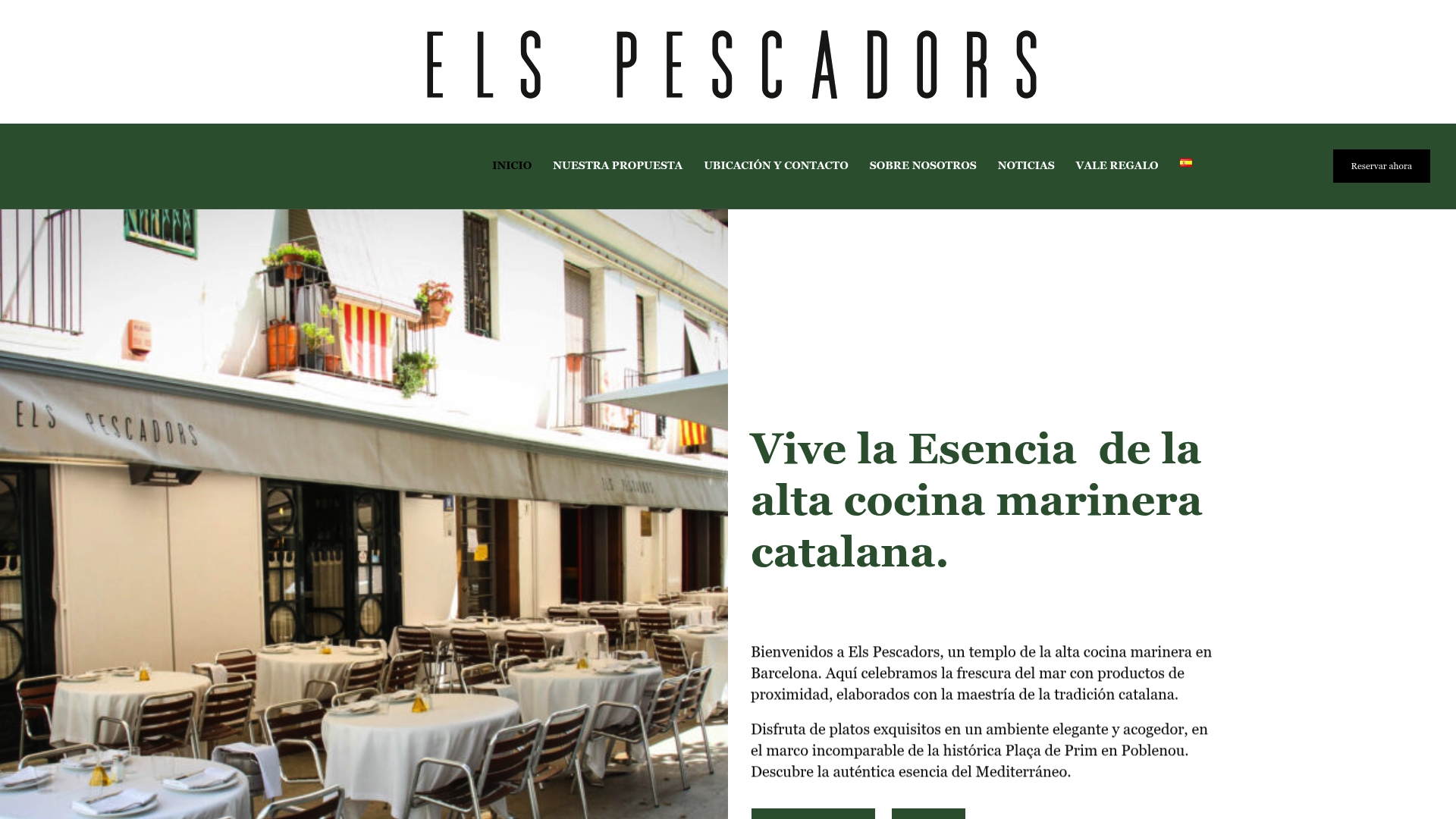
If this list has sparked a genuine curiosity about what traditional seafood cuisine tastes like when every element is done right, Elspescadors in Barcelona’s Poblenou district is the most direct answer. The kitchen at Elspescadors builds its menu around the same Catalan maritime traditions described here, using daily fresh catch and seasonal local ingredients to produce dishes that carry real cultural weight.
You can explore the restaurant’s full culinary philosophy and menu to understand how suquet, fresh fish, and traditional rice dishes come together in a dining experience grounded in Catalan identity. For those who want the full picture, the Catalan tasting menu offers a structured journey through these flavors with the context that makes each dish land.
FAQ
What are traditional seafood dishes?
Traditional seafood dishes are recipes with documented cultural and regional roots, shaped by locally available ingredients and preparation methods passed down through generations. Examples include French bouillabaisse, Catalan suquet, and Russian ukha.
Why is fresh fish important for classic seafood recipes?
Fresh fish release natural gelatin and sweetness that frozen fish cannot replicate, which is especially critical for broth-based dishes. Russian ukha, for example, depends entirely on fresh fish for its characteristic sticky, sweet flavor.
What fish works best for traditional braised seafood dishes?
Firm-fleshed species like black carp, catfish, sea bass, and monkfish are best for braised preparations because they hold their structure through long cooking times. Delicate fish like tilapia or flounder disintegrate under the same conditions.
What makes Catalan suquet different from other fish stews?
Suquet uses a picada, a paste of crushed nuts, garlic, herbs, and fried bread, stirred in at the end of cooking. This technique gives the broth a texture and depth that sets it apart from cream-thickened or tomato-based stews.
How do I start exploring traditional seafood recipes at home?
Start with one dish and cook it exactly as the tradition dictates before making any changes. Choose your fish based on texture requirements, source it fresh when the recipe depends on broth quality, and pay close attention to cooking time and heat level.