Fresh catch seafood in Barcelona is defined as fish and shellfish landed from local Catalan waters within hours of the meal. That proximity changes everything. The flavor is cleaner, the nutrition is higher, and the experience connects you directly to a maritime culture that has shaped this city for centuries. Whether you are visiting for a week or living here year-round, understanding why try fresh catch Barcelona matters is the first step toward eating the way this coast was always meant to be eaten.
Why try fresh catch Barcelona: what it actually means
Fresh catch is not a marketing phrase. It describes seafood caught locally and recently, typically by small-scale fishermen working the waters off the Catalan coast, then sold the same day at market or delivered directly to restaurants. The difference between fresh catch and frozen imported fish is not subtle. Texture, color, and taste all shift dramatically within 24 hours of landing.
Barcelona’s position on the Mediterranean gives it access to a rich seasonal cycle. Anchovies peak in spring, red mullet runs strong in summer, and cuttlefish dominates autumn menus. Each season brings a different plate, which means the menu at a serious seafood restaurant changes constantly. That rotation is a quality signal, not an inconvenience.
Local fish markets anchor this system. La Boqueria and similar markets serve as daily hubs where fishermen’s cooperatives sell directly to chefs and home cooks. Buying there means the fish has not traveled across three continents in a refrigerated container.
- Fresh catch arrives daily, not weekly
- Seasonal availability reflects what the sea actually produces
- Local sourcing eliminates the quality loss of long transport chains
- Fishermen’s cooperatives guarantee traceability from boat to plate
Pro Tip: Ask your server what came in that morning. Any serious seafood restaurant in Barcelona will know the answer immediately. If they hesitate, that tells you something.
What are the health benefits of choosing fresh catch seafood?

Fresh seafood is one of the most nutrient-dense foods available. A systematic review of 281 peer-reviewed articles found strong evidence linking seafood consumption to reduced risk of cardiovascular disease, stroke, certain cancers, and improved mental health outcomes. The key driver is omega-3 fatty acids, specifically the long-chain n-3 PUFAs found in oily fish like sardines, mackerel, and anchovies.
Fresh catch delivers these nutrients at their peak. Freezing and long transport degrade omega-3 content and alter the protein structure of fish flesh. Eating fish within hours of landing means you get the full nutritional profile the sea intended.
Small fish deserve special attention. Sardines and anchovies provide essential nutrients with lower contamination levels than large predatory fish like tuna or swordfish. Large fish accumulate mercury and other pollutants through the food chain. Eating lower on that chain is both healthier and more sustainable.
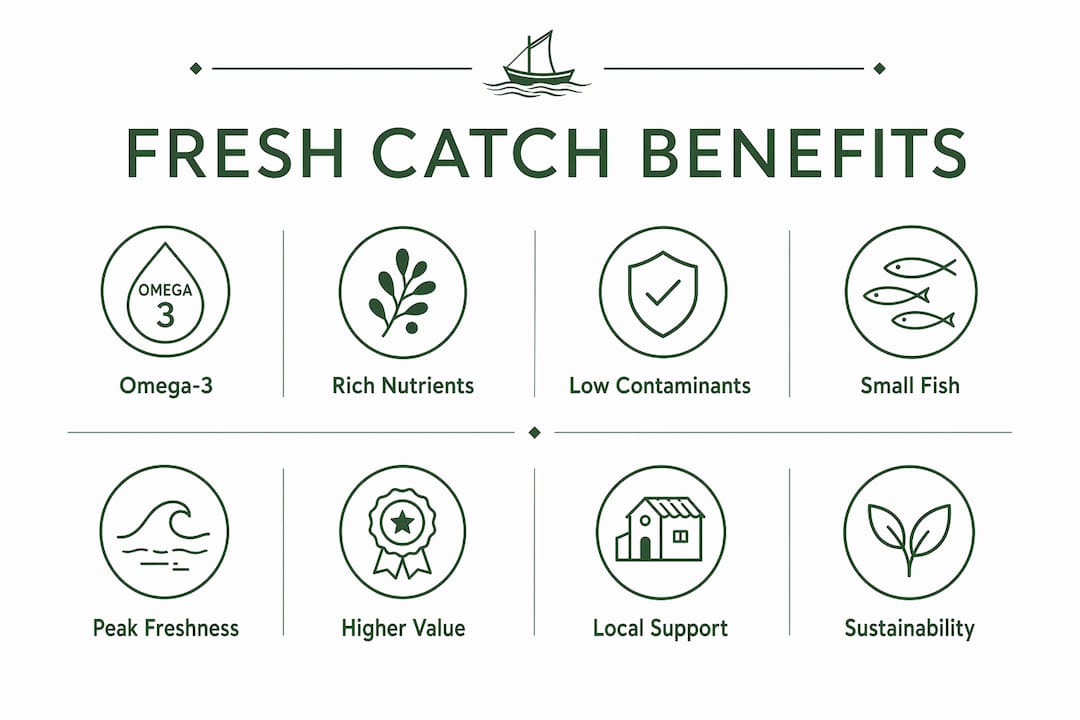
The Mediterranean diet places fresh seafood at its center, and that diet is internationally recognized for its links to longevity and reduced rates of noncommunicable disease. Barcelona sits at the geographic heart of this tradition. Eating fresh catch here is not a trend. It is the original local health practice.
Key health advantages of fresh catch seafood:
- High omega-3 fatty acid content supports heart and brain function
- Lower contamination in small, locally caught fish compared to large imported species
- Superior protein quality compared to frozen or processed alternatives
- Direct alignment with the Mediterranean diet’s proven health outcomes
How does fresh catch support sustainability and local communities?
Supporting fresh catch seafood in Barcelona is an ecological decision, not just a culinary one. A study by the Universitat Autònoma de Barcelona found low pollutant levels and a healthy biological state in fish from the Garraf marine area. That finding confirms that local Catalan fishing practices are not depleting the resource. They are working within it.
Professor Sara Dallarés, one of the researchers behind that work, makes the strategic case clearly:
“Prioritizing local fisheries protects Mediterranean ecosystem sustainability, reduces dependency on imported deep-frozen products with lower environmental standards, and maintains the integrity of the Mediterranean diet.”
The environmental math on imported seafood is unfavorable. Fish flown or shipped from distant waters carries a carbon cost that local catch does not. It also arrives under food safety standards that may differ significantly from those applied to Catalan fishermen.
The Garraf At Sea project shows what co-management between scientists and fishermen produces. By combining traditional fishing knowledge with biological monitoring, the project delivers recommendations that protect both the ecosystem and the livelihoods of small-scale fishermen. Supporting local fishermen in Barcelona directly funds that system.
- Local fishing keeps money inside the Catalan economy
- Small-scale fishermen maintain generational knowledge of the sea
- Science-sector collaboration produces adaptive, sustainable fisheries
- Choosing local catch reduces the environmental cost of your meal
What unique traditional Catalan dishes feature fresh catch seafood?
Catalan cuisine uses fresh catch in ways that have no direct equivalent elsewhere in Spain or Europe. The most distinctive expression is mar i muntanya, a culinary concept that dates back to the 15th century and combines seafood and meat in a single dish. The name translates literally as “sea and mountain,” and it reflects the geography of Catalonia, where the coast and the inland hills have always traded ingredients.
The technique that makes these dishes work is the picada. This is a sauce base made from toasted almonds, chocolate, garlic, and sometimes bread, ground together and stirred into the cooking liquid near the end. The chocolate-and-almond picada sounds unusual to outsiders but functions as a flavor bridge, binding the richness of meat with the brininess of shellfish into something coherent and deeply satisfying.
- Pollastre amb gambes (chicken with prawns): The classic mar i muntanya dish. The chicken braises in a sofregit base while prawns are added late to preserve their texture. The picada finishes the sauce.
- Arròs a banda: Rice cooked in a rich fish stock, served with the fish separately. The rice absorbs the full flavor of the catch used that day.
- Suquet de peix: A fisherman’s stew built from whatever came off the boat, thickened with potato and finished with picada. No two versions are identical.
- Fideuà: A noodle dish cooked like paella, using short pasta instead of rice, always built on a fresh seafood base.
Pro Tip: Order the suquet when you see it on a menu. It is the dish that changes most with the season and tells you exactly what the kitchen is working with that week.
How can travelers and locals best experience fresh catch seafood in Barcelona?
Finding genuinely fresh catch in Barcelona requires knowing where to look. The local seafood market guide points to La Boqueria and the Barceloneta fish market as the most reliable sources for same-day catch. Arriving early, before 10:00 AM, gives you the best selection before restaurant buyers clear the premium stock.
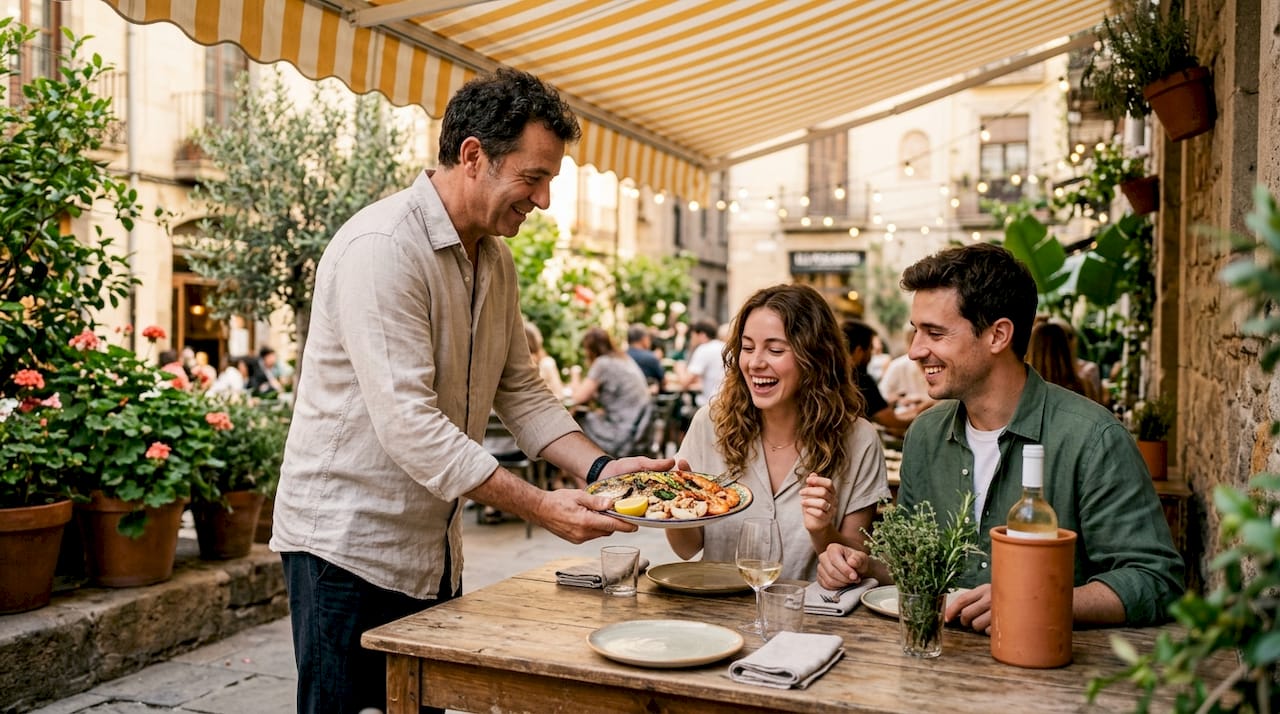
Identifying truly fresh fish is a skill worth developing. Clear eyes, firm flesh, and a clean sea smell are the three reliable indicators. Fish that smells “fishy” in the sharp, ammonia sense has already started to turn. Fresh catch smells like the ocean, not like a fish counter.
| Indicator | Fresh catch | Older fish |
|---|---|---|
| Eyes | Clear, bright, slightly bulging | Cloudy, sunken |
| Flesh | Firm, springs back when pressed | Soft, leaves an indent |
| Smell | Clean, ocean-like | Sharp, ammonia-tinged |
| Gills | Bright red | Brown or gray |
Seasonal timing shapes what you find. Spring brings anchovies and sea bream. Summer is the season for red mullet and squid. Autumn delivers cuttlefish and monkfish. Winter is the time for salt cod preparations and shellfish. Eating with the season is not a compromise. It is how you access the best the sea produces.
Dining customs in Barcelona favor a relaxed pace. Lunch is the main seafood meal, typically from 2:00 PM to 4:00 PM. Ordering a shared rice dish as the centerpiece, then building around it with smaller plates, mirrors how locals actually eat. Restaurants that serve local seafood in this style tend to be the ones most serious about sourcing.
For venues committed to sustainable practices, look for those that work with eco-friendly hospitality standards, a growing benchmark among Barcelona’s better seafood establishments.
Key Takeaways
Fresh catch seafood in Barcelona delivers superior freshness, proven health benefits, and direct support for a sustainable local fishing culture that has shaped Catalan cuisine for centuries.
| Point | Details |
|---|---|
| Fresh catch is time-sensitive | Seafood landed locally and served the same day offers peak flavor and nutrition. |
| Health evidence is strong | A review of 281 studies links seafood consumption to lower cardiovascular and cancer risk. |
| Small fish are the best choice | Sardines and anchovies deliver high nutrients with lower contamination than large species. |
| Local fishing is sustainable | UAB research confirms healthy fish stocks and low pollutants in Catalan coastal waters. |
| Mar i muntanya is a must-try | This 15th-century Catalan tradition combines seafood and meat using a chocolate-almond picada. |
What fresh catch in Barcelona taught me about eating well
Most food writing treats sustainability as a sacrifice. Eat the less exciting fish, support the cause, feel virtuous. That framing is wrong, and Barcelona proves it every day. The most interesting plates in this city are built from what came off a small boat that morning. The flavor argument and the ecological argument point in exactly the same direction.
What I find genuinely underappreciated is the role of the picada in Catalan cooking. Visitors often focus on the seafood itself and miss the sauce work underneath. A well-made picada with chocolate and almonds is not a novelty. It is a centuries-old solution to a real culinary problem: how do you make land and sea taste like they belong together? The answer turns out to be toasted nuts and a small amount of dark chocolate. That kind of specificity is what separates a regional cuisine from a collection of recipes.
Consumer habits in Barcelona are shifting toward more conscious sourcing, but the pressure needs to come from diners, not just chefs. When you ask where the fish came from and choose based on the answer, you fund the fishermen, the science projects, and the markets that keep this system alive. The local eating benefits extend well beyond your plate. The maritime heritage of this coast is not guaranteed. It survives because enough people choose to support it, one meal at a time.
— YellowRock
Fresh catch dining at Elspescadors in Poblenou
Elspescadors sits in the historic Plaça de Prim in Poblenou, one of Barcelona’s most authentic neighborhoods, and builds its entire menu around daily fresh catch from Catalan waters. The kitchen works directly with local fishermen to source what is best each morning, then designs the day’s dishes around that catch.
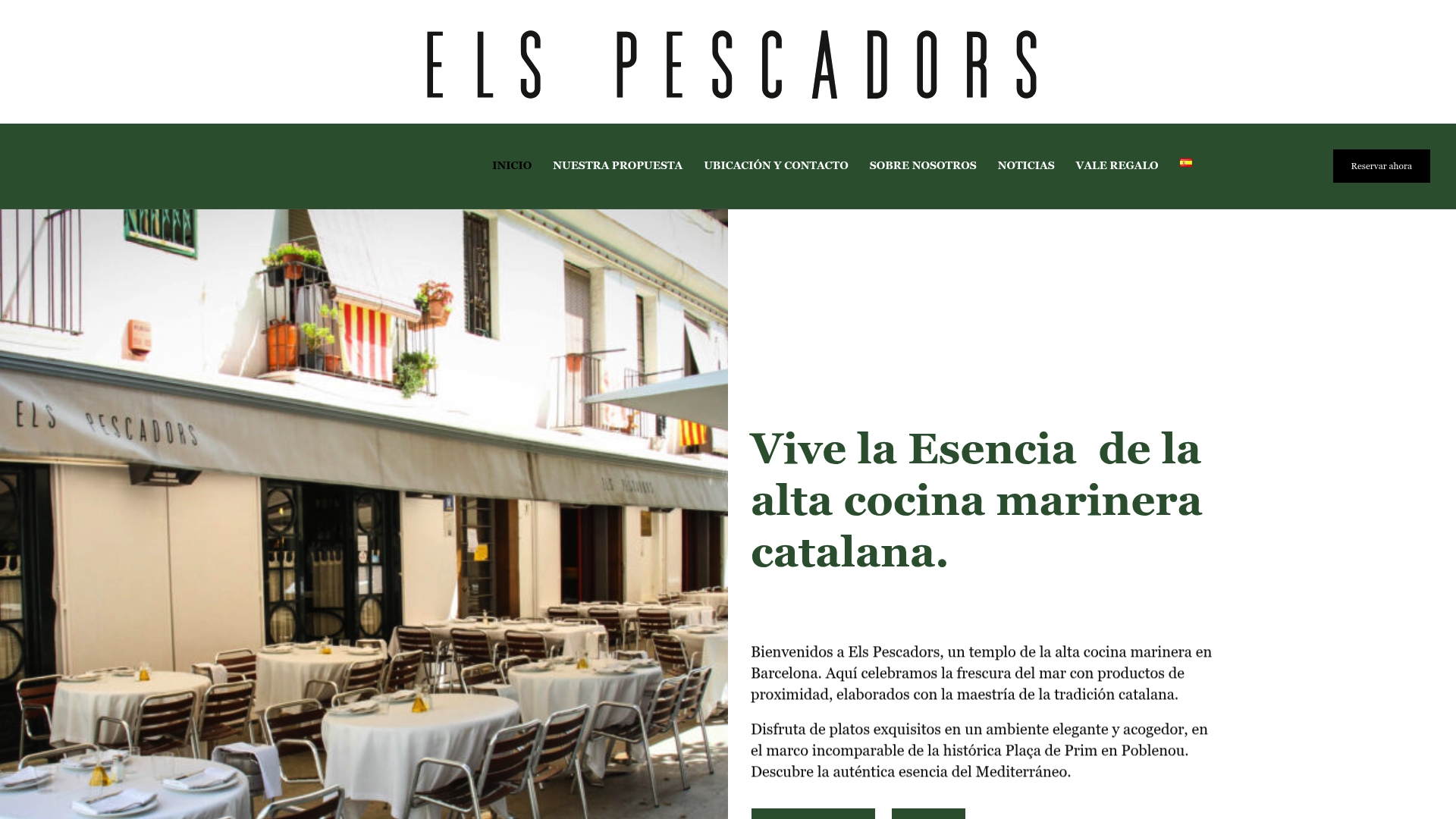
The menu at Elspescadors reflects the full range of Catalan maritime tradition, from classic rice dishes cooked in fish stock to mar i muntanya preparations that follow 15th-century technique. Tasting menus give you a structured way through the season’s best offerings. For groups, the group seafood dining options are built around shared plates that put the catch at the center of the table. For a more intimate evening, the romantic seafood dining experience pairs fresh catch with the quiet charm of Plaça de Prim. Reservations are available directly through the Elspescadors proposal page.
FAQ
What does “fresh catch” mean at a Barcelona seafood restaurant?
Fresh catch refers to fish and shellfish landed from local Catalan waters and served the same day, without freezing or long-distance transport. The term signals direct sourcing from local fishermen rather than wholesale frozen supply chains.
What are the top seafood dishes to order in Barcelona?
Suquet de peix, arròs a banda, and pollastre amb gambes are the most representative dishes of Barcelona’s fresh catch tradition. Each one changes with the season based on what the local catch delivers.
Is fresh catch seafood in Barcelona actually sustainable?
Research by the Universitat Autònoma de Barcelona confirms that fish stocks in the Garraf marine area are in good biological condition with low pollutant levels. Local small-scale fishing, supported by science-sector co-management, is the most sustainable seafood option available in the city.
When is the best time of year to eat fresh catch in Barcelona?
Spring and summer offer the widest variety, with anchovies, sea bream, red mullet, and squid all in season. Autumn and winter bring excellent cuttlefish, monkfish, and shellfish. Every season has a peak catch worth ordering.
How do I know if the seafood I am ordering is genuinely fresh?
Clear eyes, firm flesh, and a clean ocean smell are the three reliable signs of fresh fish. Any restaurant serious about fresh catch will tell you exactly what came in that morning and from which fisherman or cooperative.