Fermentation sits at the core of Catalan culinary identity, doing three things at once: preserving seasonal ingredients before they spoil, unlocking glutamate to amplify flavor, and giving perishables a second life that would otherwise go to waste. The techniques range from lactic acid fermentation and enzymatic processes to traditional salting and pickling, each one shaping the complex flavor profiles that define Catalan dishes. As chef Ricard Camarena puts it, fermentation is not a separate cuisine but a foundational tool, one that Catalan cooks have relied on since long before it became fashionable.
Key functions fermentation serves in Catalan cooking:
- Preservation: extends the usable life of fish, vegetables, and dairy well beyond their raw season
- Flavor amplification: lactic and enzymatic processes release glutamic acid, the compound behind deep, savory complexity
- Sustainability: turns surplus or less-prized ingredients into something worth serving
- Seasonality management: makes spring produce available in winter, and vice versa
How fermentation shaped Catalan culinary history
Catalonia’s fermentation heritage runs deep, shaped by its Mediterranean climate, mountain geography, and centuries of agricultural necessity. Before refrigeration, salting and lactic fermentation were survival skills. They also happened to produce some of the region’s most distinctive foods.
- Pa de Pagès Català: This protected IGP sourdough loaf requires a minimum 8-hour fermentation using natural starter cultures, baked on refractory stone. The slow proof gives it a dense crumb and acidic bite that keeps it usable for days, turning stale into toast, then into soup.
- Vi ranci: Catalonia’s oxidized wine tradition involves leaving large glass demijohns outdoors for months, exposed to summer heat and winter cold, a method called sol i serena. The wine then ages in oak or chestnut barrels, encoding family culinary memory across generations.
- Fermented sausages: Catalan charcuterie traditions, including cured meats like fuet and llonganissa, depend on controlled bacterial fermentation to develop their characteristic tang and texture.
- Pickled vegetables: Escabetx (vinegar-based pickling) and lacto-fermented preparations have long been standard ways to handle seasonal vegetable surpluses.
- Aged cheeses: Mountain regions like the Pyrenees produced raw-milk cheeses fermented and ripened over weeks, their rinds carrying the microbial fingerprint of specific valleys.
Catalonia’s geography accelerated all of this. The coast provided salt; the interior provided cool cellars; the climate swung enough between seasons to drive natural fermentation cycles without modern temperature control.
“The new Catalan cuisine is the living continuation of a tradition, and it must be reinterpreted with a contemporary gaze, ethical awareness, and creative spirit.” — Chef Joan Roca, Barcelona Gastronòmic Forum
Compared to broader Spanish fermentation culture, Catalonia stands out for its wine-based fermentations and its medieval recipe heritage, documented in texts like the Llibre de Sent Soví, which already described preservation techniques that modern chefs are now revisiting.
What is driving Barcelona’s fermentation revival right now?
Barcelona has become one of Southern Europe’s most active centers for fermentation culture, and the momentum is accelerating fast.
-
The FRMNT Festival holds the clearest signal of how serious this has become. Held at the Nau Bostik in Barcelona, the event brings together professionals, artisan producers, and the general public for workshops on kimchi, kombucha, koji applications, and wild fermentation. FRMNT’s founders are Xavier Ramon of Ferment Project and Henk Cortier of Lambicus, two figures who represent the breadth of the movement: one rooted in gastronomy, the other in craft brewing culture.
-
Ricard Camarena treats fermentation as a flavor library rather than a technique to showcase. His kitchen ferments tuna with carob, runs kombucha cultures blended with extra yeast colonies and enzymes, and applies koji-based enzymatic degradation to citrus rinds. The result never appears on the menu as “a fermented dish.” It appears as depth.
-
Xavier Ramon pushes the experimental edge, exploring koji maceration and contemporary applications that go well beyond traditional Catalan methods. His work through Ferment Project has helped build the community infrastructure that makes the FRMNT Festival possible.
-
High-end Barcelona kitchens now display their fermenting vessels openly, treating them the way a wine cellar treats its bottles. Garum made from aged fish, koji-macerated proteins, and kombucha vinegars sit on shelves at the restaurant entrance, visible markers of culinary depth.
“The fermentation movement has always existed. Now it is gaining momentum because people have far greater access to knowledge, recipes, and specialists — and because DIY culture and health awareness are pushing it forward.” — Xavier Ramon, FRMNT Festival co-founder
The broader public is following. Workshops sell out. Home fermenters are sharing cultures online. What was once a professional kitchen technique is becoming a household practice across Catalonia.
How do Catalans actually perceive fermented foods today?
The cultural picture is more complicated than the festival buzz suggests. A 2021 qualitative study of young adults in Barcelona found that the category “fermented food” is genuinely ambiguous to most people. Many could not clearly explain the fermentation process, and their perceptions split along several contradictory axes.
- Traditional vs. novel: fermented foods feel both ancestral and trendy, depending on the product
- Healthy vs. risky: yogurt reads as safe; home-fermented vegetables feel uncertain
- Artisanal vs. industrial: handmade kimchi earns trust; factory-produced equivalents do not
- Pleasurable vs. off-putting: flavor acceptance varies sharply by individual and product
The study also found low actual consumption of fermented foods in declared diets, despite their deep historical presence in Catalan food culture. People know fermented foods exist; they do not necessarily eat them regularly.
Fermented foods occupy a paradoxical space in contemporary Catalan culture: deeply rooted in tradition yet perceived as unfamiliar, associated with health yet approached with caution.
This ambivalence shapes the market. Artisan producers and chefs who communicate the story behind their ferments, where the culture came from, how long it aged, what it does to the ingredient, tend to convert skeptical consumers more effectively than those who lead with health claims alone.
How Elspescadors uses fermentation in authentic Catalan seafood cooking
Elspescadors, located in Barcelona’s historic Poblenou district at Plaça de Prim, applies fermentation as a quiet tool rather than a centerpiece. The restaurant’s approach to Catalan maritime cuisine treats fermentation the way Camarena describes it: as a means of adding complexity and extending ingredient usability without letting the process overshadow the product.
- Fermentative methods layer flavor into seafood preparations, adding depth that fresh-only cooking cannot achieve
- Seasonal local ingredients benefit from fermentation-based preservation, reducing waste and maintaining quality across the year
- The kitchen’s commitment to local, seasonal sourcing aligns naturally with fermentation’s core logic: use what is abundant now, preserve it intelligently, serve it when the season has moved on
Elspescadors’ tasting menus reflect this philosophy directly. Fermentation appears not as a trend but as a continuation of the culinary heritage that has defined Poblenou’s fishing community for generations.
Pro Tip: When dining at a restaurant that uses fermentation, ask which preparations involve aged or fermented components. The answer often reveals the kitchen’s relationship with tradition far better than the menu description does.
How Catalan fermentation compares with Central European traditions
Catalonia and Central Europe share more fermentation logic than geography might suggest. Both traditions developed fermentation as a response to seasonal scarcity and the need to preserve summer and autumn harvests through winter.
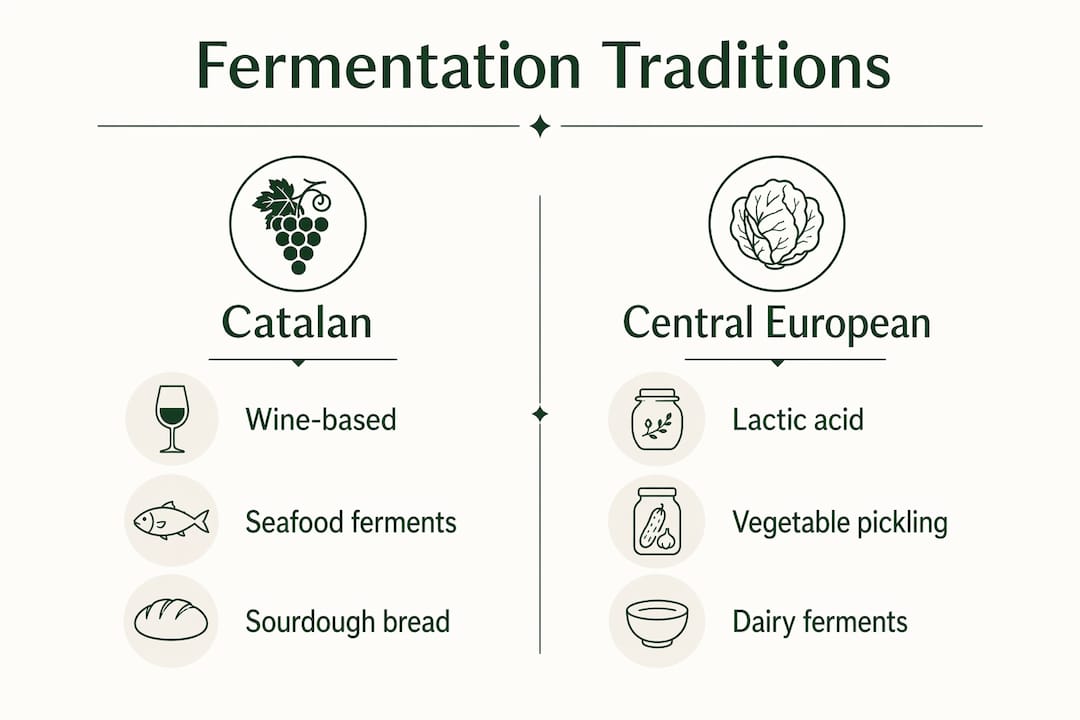
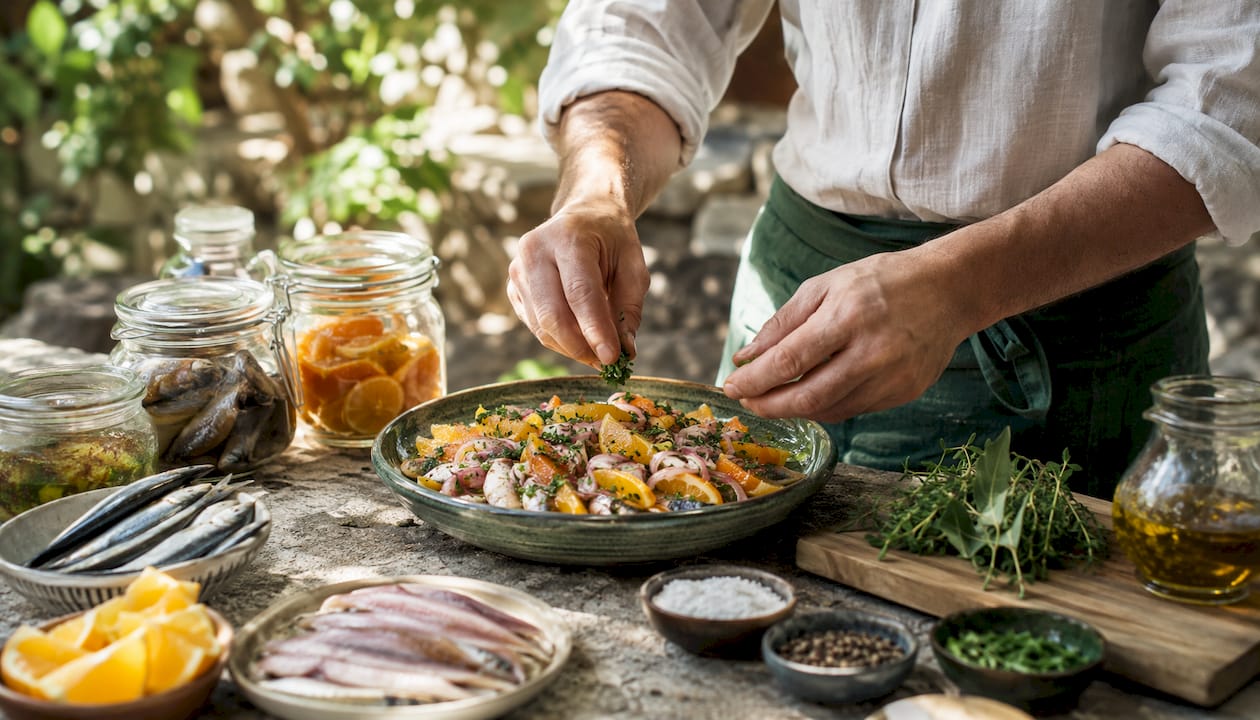
Central European cuisines, particularly those of Germany, Austria, and the Czech Republic, lean heavily on lactic acid fermentation for vegetables: sauerkraut, pickled cucumbers, and fermented beet preparations are staples. Catalonia uses similar lactic processes but applies them more broadly to seafood, wine, and bread, reflecting its Mediterranean access to salt and fish.
The key divergence is in wine-based fermentation. Vi ranci has no direct Central European equivalent. The sol i serena oxidation method, with its outdoor exposure to temperature extremes, produces flavor profiles that Central European winemaking traditions do not pursue. Where Central Europe ferments grain into beer and bread, Catalonia ferments grape into something closer to a culinary condiment.
Cultural exchange between these traditions is growing. The FRMNT Festival explicitly draws on Central European craft fermentation culture, with Henk Cortier’s background in Belgian brewing culture directly influencing Barcelona’s approach to wild and spontaneous fermentation.
Fermentation’s place in Catalan festivals and seasonal rituals
Fermented foods are woven into Catalan festive life in ways that often go unnoticed precisely because they are so embedded. Vi ranci has historically appeared at weddings, baptisms, and family gatherings, poured from the household barrel that each generation inherited and added to. The act of drawing from a shared solera carries genuine ritual weight.
Pa de Pagès, with its slow sourdough fermentation, anchors the daily table and appears at every significant meal, from casual family lunches to formal celebrations. Pa amb tomàquet, the iconic bread rubbed with tomato and olive oil, depends on Pa de Pagès as its base. Without the fermentation-driven texture and acidity of the bread, the dish loses its character entirely.
Seasonal fermentation cycles also align with Catalan agricultural festivals. The grape harvest in September and October feeds directly into wine and vi ranci production. Autumn vegetable surpluses become pickled preparations that carry through winter. These rhythms are not nostalgic artifacts; they are still practiced in rural Catalan households and increasingly revived in urban kitchens.
What fermented foods actually do for your health
The health case for fermented foods is well-supported, and Catalan cuisine benefits from it directly. Fermentation increases the bioavailability of nutrients by breaking down compounds that would otherwise pass through undigested. It also produces beneficial bacteria that support gut microbiota diversity.
Lactic acid fermentation, the process behind yogurt, pickled vegetables, and sourdough bread, generates live cultures that survive digestion and contribute to intestinal health. The heritage foods embedded in traditional Catalan diets, including aged cheeses, cured meats, and naturally fermented breads, carry these benefits as a byproduct of their production method, not as an added supplement.
Fermentation also reduces certain anti-nutrients and toxins present in raw ingredients, making them easier to digest. Chef Javier Olleros has noted that some ingredients that are mildly toxic in raw form become fully usable after fermentation, a practical benefit that traditional cooks understood long before food science confirmed it.
Experience fermentation-driven Catalan cuisine at Elspescadors
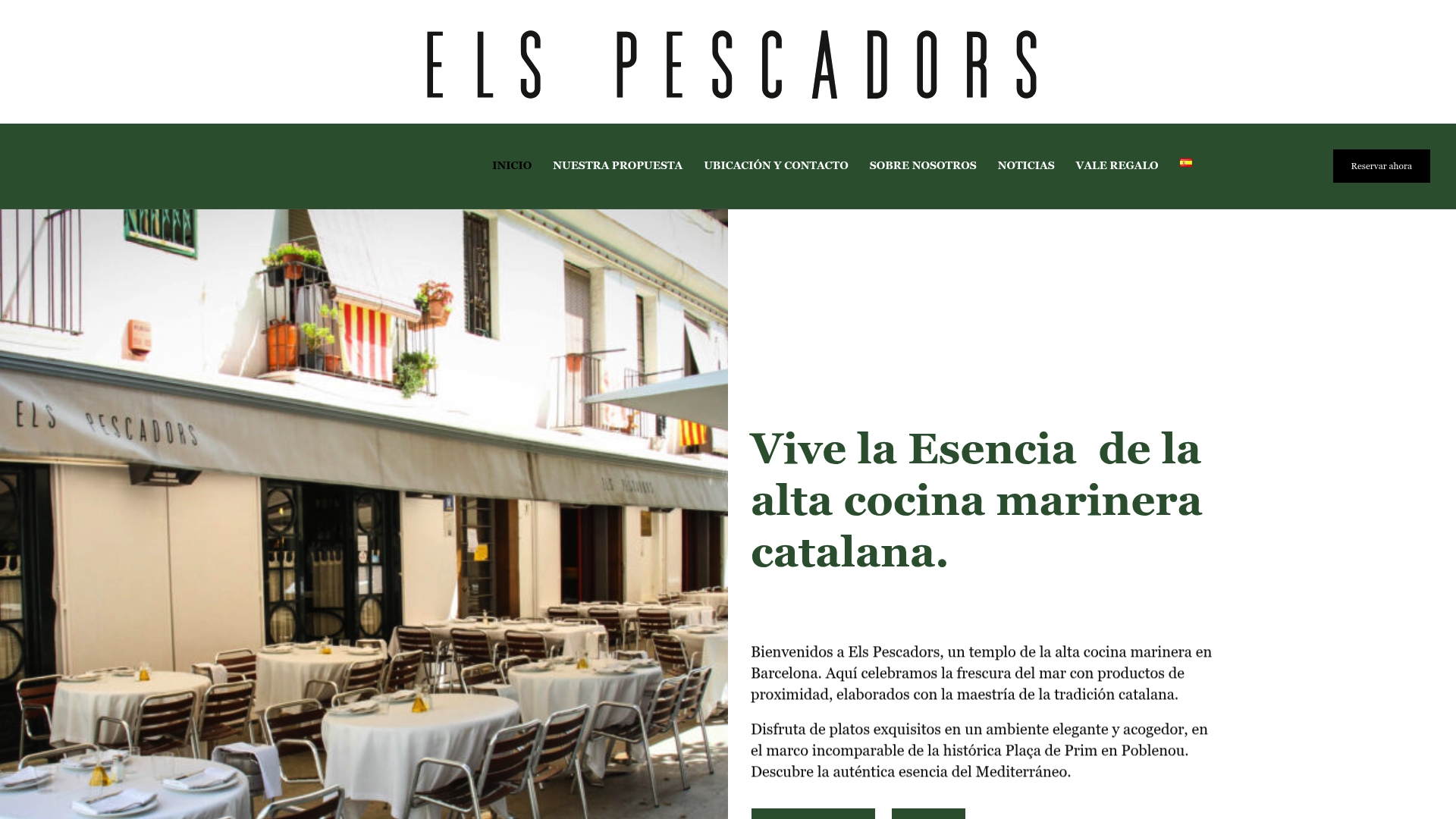
Elspescadors brings these traditions to the table in Poblenou, one of Barcelona’s most historically rooted neighborhoods. The restaurant’s seafood tasting menu draws on fermentation-informed techniques to deliver the layered, seasonal flavors that define authentic Catalan maritime cooking. Whether you are exploring Catalonia’s culinary heritage for the first time or returning to deepen your understanding of it, Elspescadors offers a dining experience grounded in the same principles that have shaped this region’s food culture for centuries.
Key Takeaways
Fermentation is not a trend in Catalan gastronomy. It is the structural backbone of a culinary tradition that has always used time, microbes, and patience to turn seasonal abundance into year-round flavor.
| Point | Details |
|---|---|
| Core functions | Fermentation preserves, amplifies glutamate-driven flavor, and extends seasonal ingredients in Catalan cooking. |
| Traditional anchors | Pa de Pagès requires a minimum 8-hour natural sourdough fermentation; vi ranci uses the outdoor sol i serena oxidation method. |
| Modern revival | The FRMNT Festival in Barcelona, led by Xavier Ramon and Henk Cortier, is the region’s primary hub for fermentation knowledge exchange. |
| Cultural ambivalence | A 2021 Barcelona study found young adults perceive fermented foods as simultaneously traditional and novel, healthy and risky, leading to low daily consumption. |
| Health benefits | Lactic acid fermentation increases nutrient bioavailability and supports gut microbiota, benefits embedded in traditional Catalan staples. |
FAQ
What is the main role of fermentation in Catalan gastronomy?
Fermentation in Catalan cuisine primarily preserves seasonal ingredients, unlocks glutamate to deepen flavor, and extends the usable life of perishable produce. It functions as a culinary tool rather than a standalone technique, appearing across bread, wine, seafood, and charcuterie traditions.
What is fermentation in gastronomy?
In gastronomy, fermentation refers to the controlled transformation of food by microorganisms, including bacteria, yeasts, and molds, that alter flavor, texture, and nutritional profile. Catalan cooking uses lactic acid fermentation, enzymatic processes, and oxidative aging to achieve these results.
Which country or region eats the most fermented food?
No single region dominates globally, but East Asian cuisines (Korea, Japan, China) and Central European traditions (Germany, Austria) are among the most fermentation-intensive. Within Spain, Catalonia stands out for the breadth of its fermented products, spanning wine, bread, cheese, cured meats, and seafood preparations.
What is the difference between Spanish and Catalan food?
Catalan cuisine is distinct from broader Spanish cooking in its emphasis on Mediterranean ingredients, wine-based fermentations like vi ranci, and a documented medieval recipe heritage traced to texts like the Llibre de Sent Soví. Catalan cooking also integrates fermentation more broadly across product categories than most other Spanish regional traditions.
How is the FRMNT Festival changing fermentation culture in Barcelona?
The FRMNT Festival, co-founded by Xavier Ramon and Henk Cortier, has made Barcelona a focal point for fermentation education and community building in Southern Europe, offering workshops on kimchi, kombucha, koji, and wild fermentation for both professionals and the general public.