An upscale seafood dinner is one of the most reliably impressive choices for client entertaining because it signals three things at once: that you value quality, that you paid attention to your guest’s experience, and that you chose substance over convenience. If you’re planning a client dinner in Barcelona, Elspescadors in the historic Poblenou district offers exactly this kind of setting, with authentic Catalan maritime cuisine, daily fresh catch, and tasting menus built for groups. Check availability and reserve a table before you read another word.
Table of Contents
- Why seafood dinners impress clients: the psychology behind it
- How to plan a seafood client dinner that actually works
- What to order: a Catalan seafood menu flow for client dinners
- What sourcing signals tell you about a restaurant’s quality
- Etiquette and conversation tips for seafood dinners
- Booking timeline and cost expectations in Barcelona
- Key Takeaways
- The meal is the meeting
- Elspescadors is ready for your next client dinner
- Useful sources
- FAQ
Why seafood dinners impress clients: the psychology behind it
The core mechanism is simple: seafood dining creates a premium impression that signals host investment in the relationship. Unlike a generic steakhouse or a hotel banquet room, a well-chosen seafood venue communicates that someone thought carefully about the evening.
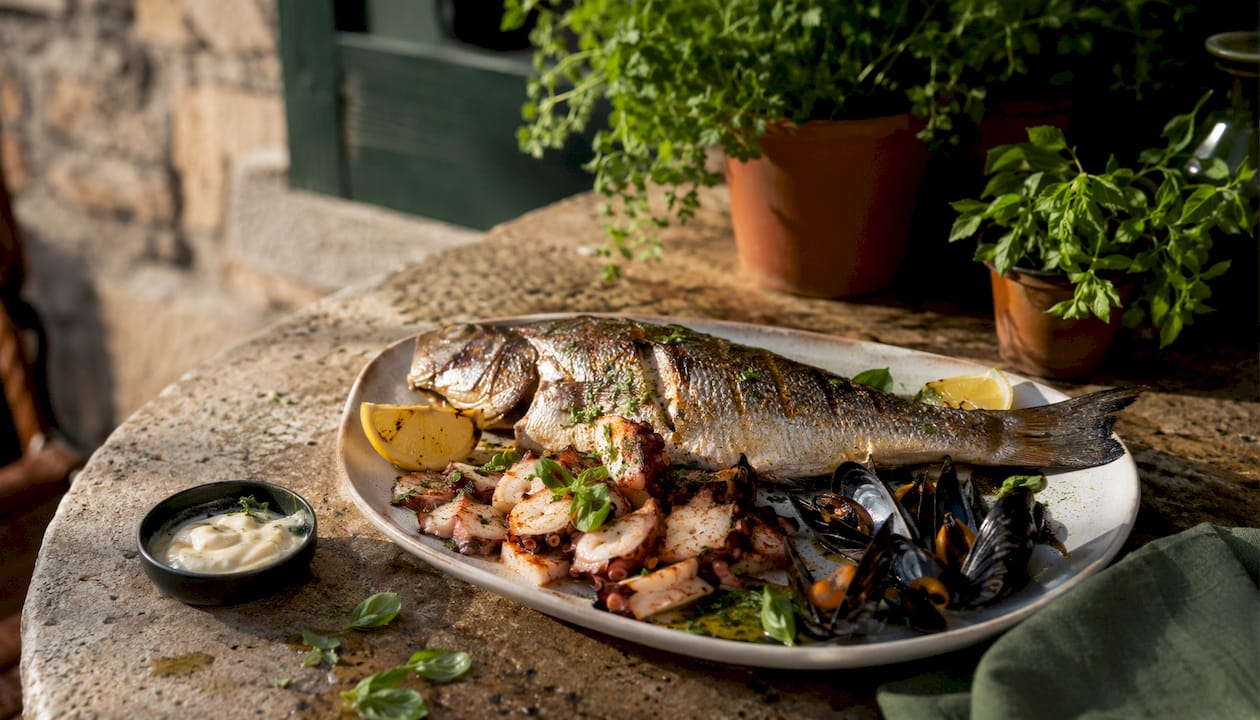
Presentation matters more at a seafood table than almost anywhere else. A whole grilled sea bass, a platter of Galician barnacles, or a saffron-laced rice arriving in a clay cazuela all create a visual moment that stops conversation briefly and then restarts it. That pause is useful. It gives guests something to react to together, which is exactly how shared experience builds rapport before business topics appear.
Local, place-based food at corporate events becomes part of the story and facilitates natural conversation. Catalan maritime dishes carry centuries of fishing tradition, and that context gives a host something genuine to offer: not just a meal, but a narrative. Research on Italian consumers found that a tradition cue raised willingness-to-pay by €4.11 among higher-income respondents for a fish-soup option, suggesting that heritage messaging resonates with exactly the clients you most want to impress.
Shared small plates reduce social pressure in a way that individual entrées cannot. The ritual of passing a dish, deciding together what to order next, and reacting to the same flavors creates micro-moments of alignment. Trust in business meals is often built in those unstructured margins, not during the formal agenda.
Pro Tip: Ask the restaurant to pace courses with 12–15 minute gaps between them. That rhythm gives conversation room to breathe and prevents the meal from feeling rushed or, worse, like a catered event.
How to plan a seafood client dinner that actually works
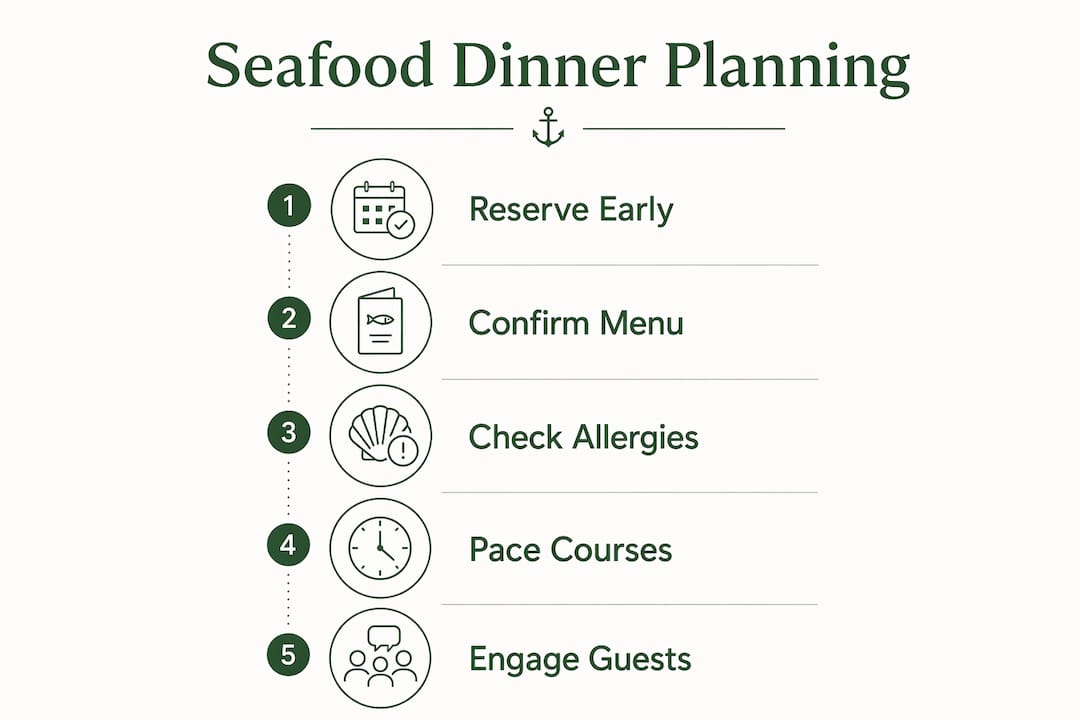
One planning principle covers everything: decide what you want the evening to achieve before you book a single thing. A deal-closing dinner needs privacy and a quieter room. A relationship-building dinner benefits from a livelier atmosphere and shared plates.
- Choose the venue first. Waterfront or harbor-style venues reduce stress and improve conversational flow. In Barcelona, a restaurant with a distinct sense of place, like Elspescadors in Plaça de Prim, signals thoughtfulness before the first course arrives.
- Confirm the menu style. Decide between à la carte, a set group menu, or a tasting menu. Tasting menus remove decision fatigue and keep pacing consistent, which is ideal for client dinners.
- Check dietary needs in advance. Email guests before booking and ask about shellfish allergies, dietary restrictions, and preferences. Pass this information to the restaurant when you reserve.
- Request a semi-private or private area. Background noise is the enemy of productive conversation. Ask specifically about room configuration for your group size.
- Plan wine pairing ahead. Discuss pairing options with the sommelier when you book, not on the night. A pre-selected wine flight removes awkward menu-scanning during the meal.
- Reserve early. For groups of 2–8, book at least one week ahead. For private rooms or tasting menus, two to three weeks is the safer window, especially on weekends or during peak season (May through October in Barcelona).
For group bookings and private menus, always confirm deposit and cancellation policies in writing at the time of reservation. Per-person costs at an upscale Barcelona seafood restaurant generally vary based on menu choice and wine pairing. Private group menus often fall in the middle of that range with a fixed minimum spend.
| Format | Best for | Typical per-person range |
|---|---|---|
| À la carte | Small groups, varied preferences | — |
| Set group menu | 6–15 guests, predictable pacing | €70–€100 with wine |
| Tasting menu | Relationship-building, 2–8 guests | — |
What to order: a Catalan seafood menu flow for client dinners
Start with something shared and low-stakes, then build toward the signature dish. That arc mirrors the conversation you want: light and exploratory at the start, substantive by the end.
A reliable flow for a Catalan maritime dinner:
- Appetizers: Catalan-style small bites, pa amb tomàquet (bread rubbed with tomato and olive oil), anchovies from the Costa Brava, or a small seafood carpaccio. These open the table without demanding attention.
- Shared plates: Grilled razor clams, gambas al ajillo (garlic prawns), or a mixed shellfish platter. Seafood menus emphasizing freshness and presentation become natural conversation starters.
- Main course: A signature rice dish, arròs negre (squid-ink rice) or a saffron seafood rice, is the natural centerpiece of a Catalan maritime meal. It arrives as a shared dish, which reinforces the communal dynamic.
- Tasting menu option: If the restaurant offers a chef-led tasting menu, this is the cleanest choice for client dinners. It removes all ordering decisions and lets the kitchen control the pacing.
For wine, lean toward local Catalan whites: Penedès Xarel·lo, a Priorat white, or a Cava for the opening course. These choices signal regional knowledge and give you something to talk about. For guests who don’t drink, ask the sommelier for a non-alcoholic pairing, as many Barcelona restaurants now offer house-made shrubs or local botanical waters. Ingredients like sea spaghetti and other nutrient-rich seafood also make for natural conversation around health-forward menu choices.
Pro Tip: Avoid dishes that require two hands, tools, or significant mess during the main business conversation. Save the whole crab or the lobster for a more relaxed, celebratory dinner.
What sourcing signals tell you about a restaurant’s quality
A restaurant that lists its catch by species and origin on the menu is telling you something important: it has nothing to hide. That transparency is a trust signal for your clients before they’ve tasted a thing.
Look for these markers when evaluating a venue:
- Daily fresh catch listed on the menu or chalkboard, updated by service
- Named sourcing regions (Tarragona, Costa Brava, Galicia) rather than generic “fresh fish”
- Seasonal menu changes that reflect what’s actually running, not what’s convenient
- Chef biography or kitchen narrative that references local suppliers
- Clear allergen information available on request or printed on the menu
- Private group or tasting menu options, which indicate the kitchen can handle structured service
- A sustainability statement or certification, even informal
Research on consumer preferences for seafood menu transparency at fine dining restaurants found that sustainability rating, species specification, and price are the top attributes diners care about. Your clients will notice these details even if they never mention them.
When you call to reserve, ask two direct questions: “Does your menu reflect today’s catch?” and “How do you handle guests with shellfish allergies?” The answers tell you everything about how the kitchen operates.
Etiquette and conversation tips for seafood dinners
The single most important etiquette principle: you set the tone, and the tone should be warm before it is professional. Before the first course arrives, acknowledge the meal and the company. A simple “I’m glad we could do this” costs nothing and signals that the evening matters to you.
Do:
- Pass shared plates to your guest first, always
- Use shellfish tools (crackers, picks) without apology; they’re there for a reason
- Let the server clear shells and debris without drawing attention to it
- Follow the restaurant’s pacing; don’t rush courses
Don’t:
- Order the most difficult-to-eat dish (whole lobster, crab in shell) during a first meeting
- Discuss business before the first course is served
- Ignore a guest’s hesitation about a dish; offer an alternative gracefully
For conversation, shared meals lower social barriers and shift the dynamic from formal to collaborative. Open with the food itself: “Have you had arròs negre before?” is a better opener than any business question. Transition to business naturally after the shared plates, not before.
Sample phrases for hosts:
- When introducing a dish: “This is the restaurant’s signature rice, it’s worth trying before anything else.”
- When handling a dietary issue: “I mentioned your allergy when I booked, but let me confirm with the server right now.”
- When moving to business: “While we wait for the main, I wanted to get your thoughts on…”
Booking timeline and cost expectations in Barcelona
For a premium seafood dinner in Barcelona, the safe minimum lead time is one week for a standard table and two to three weeks for a private room or tasting menu. During peak tourist season (June through September) and around major trade events, add another week to that window.
Key booking considerations:
- Groups of 2–4: One week ahead is usually sufficient; call rather than booking online for special requests
- Groups of 5–12: Two weeks minimum; confirm private or semi-private seating at the time of booking
- Private rooms or full tasting menus: Three weeks ahead, with a deposit typically required to hold the reservation
- Seasonality: Spring and fall offer the best catch variety in Catalonia; summer brings peak demand and higher prices
Always ask about the cancellation policy before you pay a deposit. Most upscale Barcelona restaurants require 24–48 hours’ notice for standard tables and 72 hours for private events. Confirm whether the tasting menu price includes wine pairing or lists it separately, and ask whether the kitchen can adapt courses for dietary restrictions without a surcharge.
Key Takeaways
An upscale seafood dinner impresses clients because it combines quality signals, shared ritual, and deliberate pacing into a single experience that a formal meeting cannot replicate.
| Point | Details |
|---|---|
| Quality signals matter | Seafood venues with daily fresh catch and transparent sourcing communicate care before the first course. |
| Shared plates build rapport | Passing dishes and reacting to the same flavors creates micro-moments of alignment that lower social barriers. |
| Plan the logistics early | Book private or tasting-menu options two to three weeks ahead; confirm dietary needs and cancellation terms in writing. |
| Tradition cues add value | Research found a tradition cue raised willingness-to-pay by €4.11 among higher-income diners, reflecting how heritage messaging resonates. |
| Elspescadors for Barcelona | Elspescadors in Poblenou offers daily fresh catch, tasting menus, and private group options suited to client-facing dinners. |
The meal is the meeting
The conventional wisdom about client dinners is that the food is secondary to the conversation. That’s half right. The food is the architecture of the conversation. A poorly chosen venue, a rushed service, or a generic menu doesn’t just fail to impress; it actively makes the conversation harder. Guests who are uncomfortable, bored by the food, or distracted by noise spend cognitive energy on the wrong things.
What makes a Catalan maritime dinner particularly effective for client entertaining is that it has a built-in narrative. The cuisine is specific, historically rooted, and visually distinct. It gives guests something to engage with that has nothing to do with business, which is exactly the condition under which trust forms. The Cicchetti Renaissance model, where small shared plates open the table before formality begins, works because it sequences warmth before transaction. A well-paced seafood dinner in Barcelona does the same thing with arròs negre and a glass of Penedès white.
The hosts who get the most out of client dinners treat the venue choice as a brand investment, not a line item. A carefully chosen restaurant with a genuine culinary identity tells your client something about how you operate before you’ve said a word about business.
Elspescadors is ready for your next client dinner
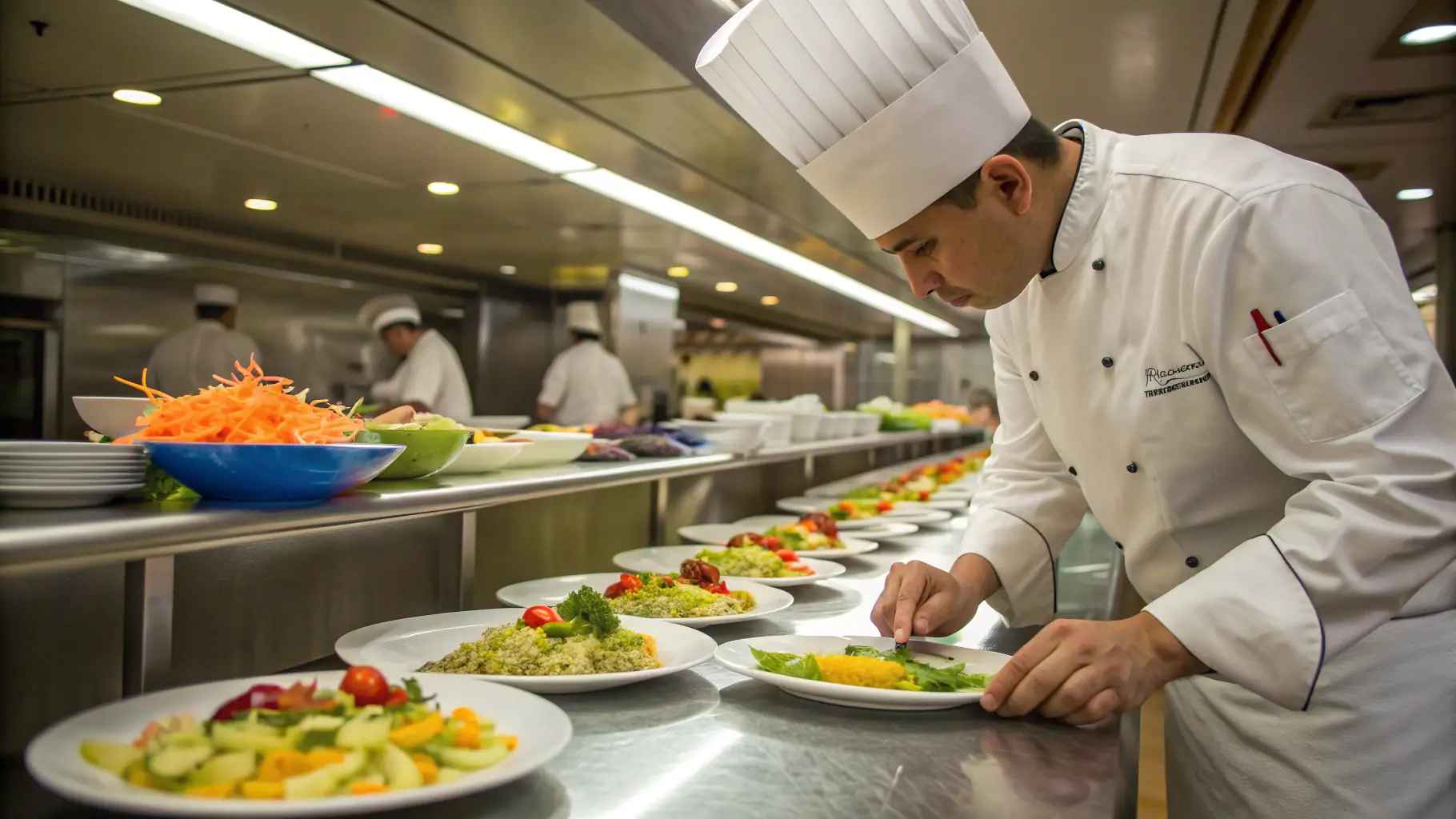
The dinner described in this article, daily fresh catch, a structured tasting menu, private group options, and full allergen transparency, is exactly what Elspescadors delivers in Barcelona’s Poblenou district.
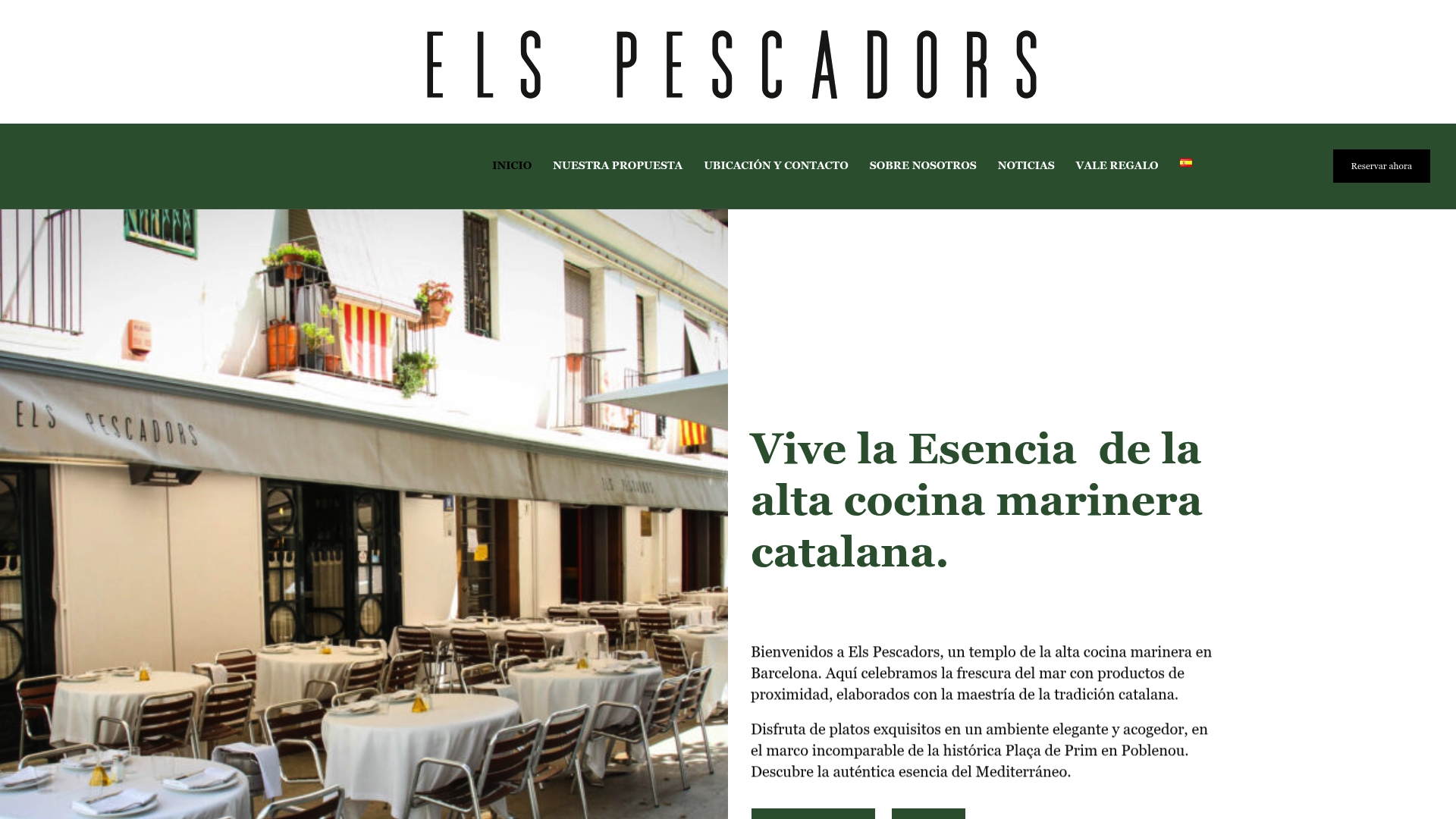
For business dinners, Elspescadors offers à la carte dining, set group menus, and tasting menus in Barcelona built around seasonal Catalan maritime cuisine. Private and semi-private seating is available for groups, with menu flexibility for dietary restrictions and allergen protocols handled at the time of booking. Check group dining options and reserve your table directly through the restaurant’s booking page. Deposits and cancellation terms are confirmed at reservation, so there are no surprises on the night.
Useful sources
- Sustainability and tradition as implicit cues for promoting low-market-value fish dishes — Springer Nature / Agricultural and Food Economics
- Regulating menu information: consumer preferences at fine dining restaurants — Journal of Food Policy
- Corporate Dinners: How to Impress Clients and Build Stronger Business Relationships — WithUS
- Why local gastronomy matters at European corporate events — Eating Europe
- The Cicchetti renaissance: trust before the first word of business — FX Street
- Seasonal fishing in Catalan cuisine — Elspescadors
- Group seafood dining ideas for memorable feasts — Elspescadors
- Luxury seafood dining experiences — Elspescadors
FAQ
Why do seafood dinners make a stronger impression than steak dinners?
Seafood menus signal freshness, regional specificity, and host attention to detail in a way that a standard steakhouse rarely does. The visual presentation and shared-plate format also create more natural conversation moments.
How far in advance should you book a private seafood dinner in Barcelona?
Book two to three weeks ahead for private rooms or tasting menus, and at least one week ahead for standard group tables. Add extra lead time during peak season (June through September).
What Catalan dishes work best for a client dinner?
Pa amb tomàquet and anchovies as openers, a shared shellfish platter for the middle course, and arròs negre or a saffron seafood rice as the centerpiece. These dishes are visually striking, easy to share, and rooted in Catalan maritime tradition.
How should a host handle a client’s seafood allergy at the table?
Communicate the allergy to the restaurant when you book, confirm it with the server when you arrive, and have a brief phrase ready: “I mentioned your allergy when I reserved, but let me double-check with the kitchen right now.” Elspescadors handles allergen requests at the time of booking.
Does Elspescadors offer tasting menus for business groups?
Yes. Elspescadors offers tasting menus and set group menus designed for private and semi-private dining, with seasonal Catalan maritime dishes and options for dietary accommodations confirmed at reservation.