A gamba is an edible decapod crustacean, most commonly classified in the infraorder Caridea, though the word gets used loosely in kitchens and fish markets to cover several related shrimp-like species. Biologically precise or not, “gamba” is the term you’ll hear across Spain for the small to medium shellfish that turn coral pink the moment they hit a hot pan. Names shift by region: much of Latin America calls the same general animal “camarón,” while bigger specimens in Spanish markets often get relabeled langostino or gambón. Three traits give one away every time:
- Ten legs, arranged in five pairs, the hallmark of every decapod
- A curved, flexible abdomen built for quick backward flicks through water
- A shell that shifts from translucent gray to pink or red once cooked
Key Takeaways
A gamba is a decapod crustacean, usually from the infraorder Caridea, and buyers who judge by shell shape, firmness, and provenance will pick better shellfish than those who trust the name on the label alone.
| Point | Details |
|---|---|
| Definition matters less than traits | Ten legs, a curved abdomen, and a shell that turns pink when cooked identify a gamba regardless of regional name. |
| Names vary by market, not biology | Langostino, gambón, and camarón often describe overlapping species rather than strictly separate ones. |
| Shell banding beats labels | Visible transverse bands are a more reliable clue than whatever term is printed on the tray. |
| Provenance drives flavor | Wild-caught gambas typically taste richer and more distinct than farmed ones, though farmed offers consistency. |
| Cook briefly, keep the head on | Quick, high-heat cooking with the head intact preserves texture and concentrates flavor. |
Table of Contents
- Where Does the Word “Gamba” Come From?
- How Are Gambas Classified Scientifically?
- What Does a Gamba Actually Look Like?
- Where Do Gambas Live?
- Gamba vs. Langostino vs. Gambón vs. Camarón: What’s the Real Difference?
- How Are Gambas Used in Cooking, and What Do They Offer Nutritionally?
- How Do You Choose Fresh Gambas at the Market?
- How Do Professional Kitchens Judge Gamba Quality?
- A Note From the Kitchen
- Sources
- FAQ
Where Does the Word “Gamba” Come From?
“Gamba” traces back through Latin gamba, itself borrowed from a Greek root referring to a joint or leg, and arrived in Spanish largely through Catalan and Italian maritime trade. The Real Academia Española recognizes it as the standard term in Peninsular Spanish, while camarón dominates in Mexico, the Caribbean, and much of South America for a broadly similar animal. That regional split explains why the same crustacean gets sold under different names depending on which side of the Atlantic you’re standing. Commercial labeling adds another wrinkle: a fishmonger in Barcelona and one in Buenos Aires might be selling nearly identical shellfish under names that sound like they describe two different things entirely.
How Are Gambas Classified Scientifically?
Gambas sit inside Decapoda, the crustacean order defined by ten walking legs, which also includes crabs, lobsters, and true prawns. Within that order, most animals sold as “gamba” in Spain belong to Caridea, while some larger commercial prawns marketed under similar names actually belong to Dendrobranchiata, a separate infraorder. The distinction matters more to biologists than shoppers, but it explains why “gamba” sometimes gets applied to animals that aren’t technically the same suborder.
A few facts worth knowing:
- Decapods, as a group, include roughly 15,000 living species according to the taxonomic classification for Decapoda
- Caridea species, the ones most often called gambas in Spain, number among the more than 3,000 described species found worldwide
- Dendrobranchiata includes many of the animals sold commercially as langostinos
That range of species also means a huge range of depth. Some gambas live in shallow tidal pools; others thrive far below where light ever reaches.
What Does a Gamba Actually Look Like?
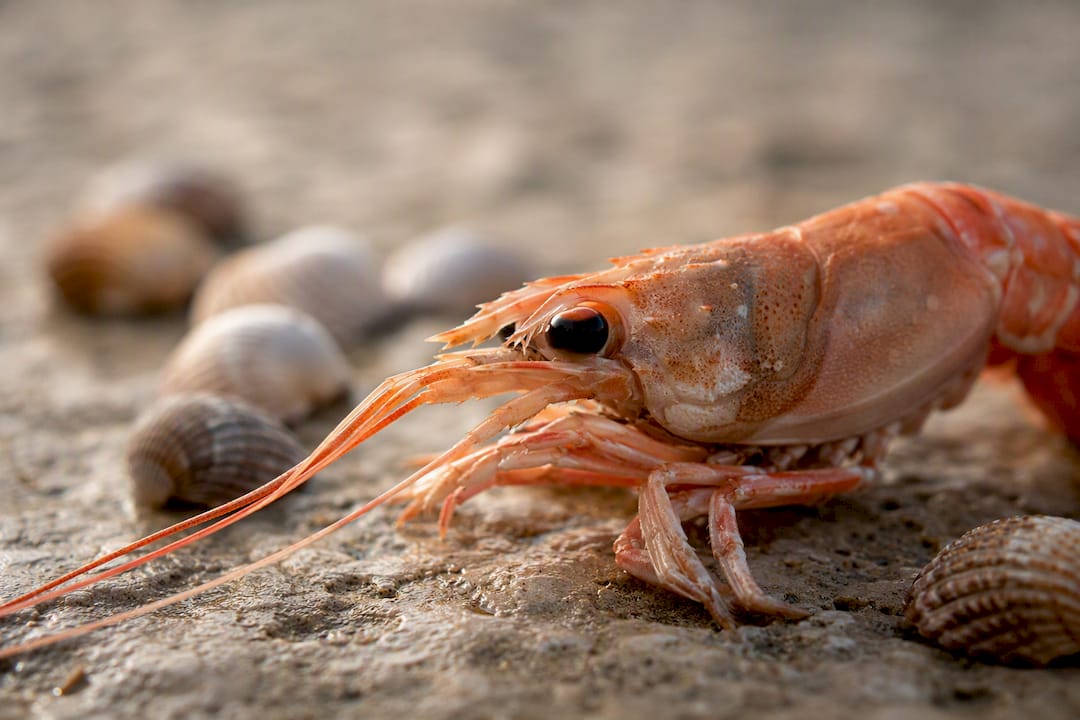
Before it hits a plate, a gamba has an elongated body, a well-developed curved abdomen, and a shell soft enough to peel by hand but firm enough to hold its shape. Look for visible legs and small swimming appendages called swimmerets along the underside, plus long, thin antennae up front. Raw, the shell runs translucent gray to pale brown; cooked, it turns pink or red thanks to astaxanthin, a pigment the shell hides until heat breaks down the proteins masking it.
Size tells you a lot about what you’re buying:
- Small gambas (a few centimeters): common in tapas, often served whole and fried
- Medium gambas: the standard size for grilling or sautéing
- Larger specimens: frequently rebranded as langostino or gambón at the counter, even when biologically close to a gamba
Pro Tip: Press the shell gently near the head. Fresh gambas resist slightly and spring back; if the flesh feels mushy or the head separates with almost no pressure, the shellfish has been sitting too long.
Where Do Gambas Live?
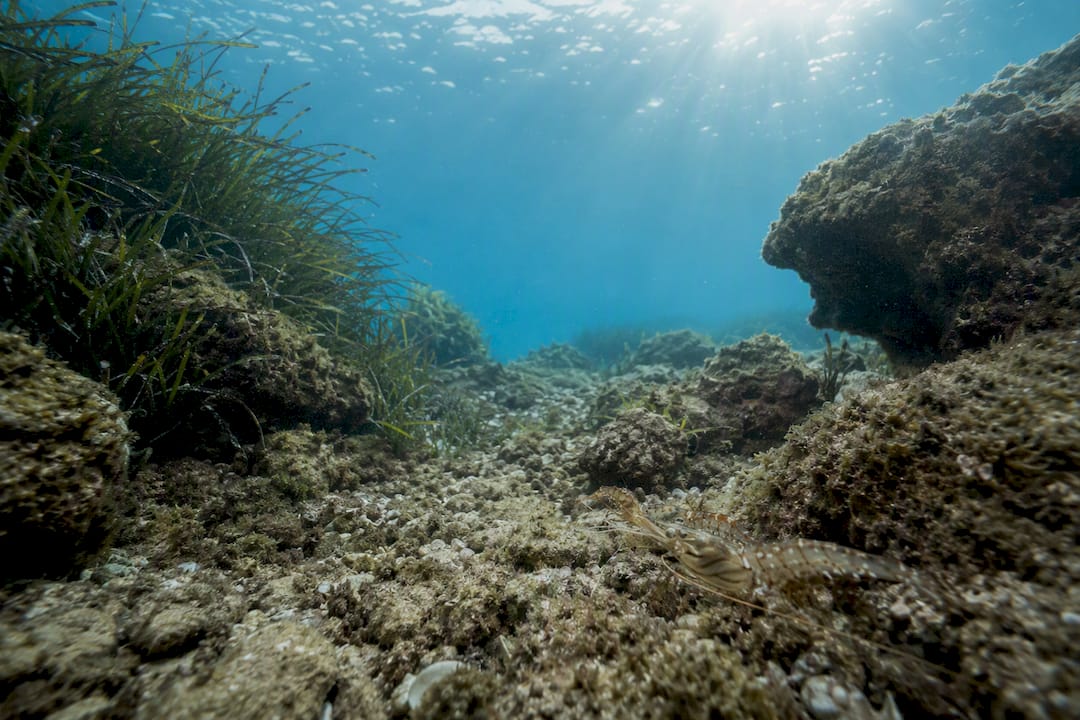
Most gambas are marine, though distribution varies enormously by species. Some live in shallow coastal waters just meters deep; others inhabit depths beyond 5,000 meters, a range that alone tells you how diverse this group really is. European markets lean heavily on Mediterranean and Atlantic populations, while much of the volume sold globally today comes from aquaculture rather than wild capture. Habitat shapes flavor directly: deep, cold-water specimens tend toward denser, more concentrated taste, while farmed gambas raised in controlled ponds trade some of that intensity for size consistency and lower cost.
Gamba vs. Langostino vs. Gambón vs. Camarón: What’s the Real Difference?
Shoppers rarely get confused by biology. They get confused by the counter, where four names sometimes describe overlapping animals. Confusion between gambas, langostinos, and gambones happens because these commercial names aren’t strictly scientific categories; they’re market conventions layered loosely on top of taxonomy. The word “gambón,” in particular, doesn’t correspond to one official species at all. It’s a marketing term that groups various larger prawns together, a point gastronomy writers have flagged as one of the biggest sources of buyer confusion.
| Feature | Gamba | Langostino | Gambón | Camarón |
|---|---|---|---|---|
| Typical size | Small to medium | Medium to large | Large | Small to medium |
| Shell markings | Smooth, minimal banding | Often visible transverse bands | Thicker shell, less banding | Smooth, thin shell |
| Suborder | Usually Caridea | Often Dendrobranchiata | Varies by species | Usually Caridea |
| Common origin | Mediterranean, Atlantic | Atlantic, farmed | Farmed or wild, mixed | Latin American waters |
| Culinary texture | Tender, delicate | Firmer, meatier | Very firm, substantial | Tender, similar to gamba |
A few clear takeaways from that table:
- Shell banding is a better clue than the label on the tray
- Camarón and gamba often describe the same animal under a regional name, not two different species
- “Gambón” is the term most likely to mislead, since it isn’t tied to one specific species
How Are Gambas Used in Cooking, and What Do They Offer Nutritionally?
Gambas earn their place on Spanish menus because they cook fast and reward simple treatment. Common preparations include:
- Grilled with just olive oil and coarse salt
- Sautéed quickly in garlic and a splash of white wine
- Folded into rice dishes like arroz negro or paella
- Served whole as tapas, shell and head intact
A chef’s real skill with gambas is restraint: a minute too long in the pan turns tender flesh rubbery, so timing matters more than seasoning.
Nutritionally, gambas offer a high-quality, low-calorie protein source rich in iodine, phosphorus, and magnesium. That pink hue after cooking comes from astaxanthin, an antioxidant pigment naturally present in the shell that only becomes visible once heat unlocks it from the proteins that mask it raw. Flavor still varies widely by species and origin. Wild Mediterranean gambas taste noticeably more mineral and complex than farmed imports, even when both are labeled identically at the counter.
How Do You Choose Fresh Gambas at the Market?
Freshness shows up in the details most shoppers skip past. Check for:
- Clear, dark eyes rather than clouded or sunken ones
- Heads still attached, since separation is often the first sign of age
- Firm, springy flesh rather than a soft or slack texture
- A mild sea smell, never sharp or ammonia-like
- Clear labeling on frozen or pre-packed gambas, including catch date and origin
Provenance changes both flavor and price. Wild-caught gambas tend to carry a richer, more distinctive taste, while aquaculture gambas offer more predictable size and texture at a lower cost, useful for high-volume kitchens but rarely as memorable on the plate. If you care about where your seafood comes from, that same logic applies across the counter, not just to shellfish, as this look at why local sourcing changes freshness lays out.
Pro Tip: Ask the fishmonger a single question: “Where and when was this caught?” A vague answer or a shrug is itself useful information. A specific port and date usually signals a seller who actually tracks provenance.
How Do Professional Kitchens Judge Gamba Quality?
In a working kitchen, gambas get judged fast, usually within seconds of arrival. Freshness comes first, then how little the cook needs to do to it. High heat, brief time, minimal seasoning: that’s the standard approach chefs use to protect the natural sweetness rather than mask it. Heads stay on more often than not, since the head holds much of the concentrated flavor that gets lost if it’s removed before cooking. A common shortcut in busy service is finishing a sauce with pan juices left behind after searing gambas quickly, head-on, capturing flavor that would otherwise go to waste. Reheating is the enemy of texture, so kitchens that respect gambas cook them once, close to the moment of serving, and skip the freezer step whenever the calendar allows it.
A Note From the Kitchen
At Els Pescadors, choosing gambas starts with knowing exactly where they came from and how recently they left the water. That standard shapes the seasonal, locally sourced approach behind every plate that leaves the kitchen, gambas included. If you’re curious what that attention to sourcing tastes like on a plate, it’s worth experiencing directly rather than reading about secondhand.
Sources
- Gamba (crustáceo) – Wikipedia, la enciclopedia libre
- Gambas: origen, variedades, propiedades y cómo usarlas en la cocina
- ¿Sabes distinguir un langostino de un gambón? Esta es la diferencia
- Gambas, gambones, camarones, langostinos y carabineros: en qué se diferencian y cuáles son mejores
- Decapoda – Wikipedia
FAQ
What part of the animal is the “gamba”?
The whole animal is called a gamba; there’s no single body part with that name. The head, tail, and shell are all parts of one gamba, though the head is often prized separately for flavor in cooking.
What kind of animal is a gamba?
A gamba is a decapod crustacean, part of the same broad group as crabs, lobsters, and true prawns, and most commonly associated with the infraorder Caridea.
What’s the difference between gamba and camarón?
The two words largely describe the same type of shellfish, with “gamba” used in Spain and “camarón” preferred across much of Latin America; the split is regional and linguistic more than biological.
What does “ser gamba” mean as slang in Spain?
Outside the kitchen, “ser gamba” is colloquial Spanish slang sometimes used to describe someone acting foolish or clumsy, unrelated to the seafood definition covered in this article.