Gamba de Palamós is the deep-water red prawn (Aristeus antennatus) caught off Spain’s Costa Brava, certified by the Marca de Garantia Gamba de Palamós and prized for its sweet, briny flavor and firm, coral-tinted flesh. The fishery operates under a strict co-management plan and Order APM/532/2018, which limits fishing days and enforces annual closures to protect the stock. If you’re buying or ordering it, look for the certification seal, ask about the lot’s first-sale inspection at the llotja, and expect a premium price tag, especially in high season when restaurants running the Menú de la Gamba network sell out fast.
Key Takeaways
Gamba de Palamós earns its premium price through a deliberately small, regulated fishery and a certification system that ties every lot back to a specific boat, date, and inspection.
| Point | Details |
|---|---|
| Verify before you buy | Check for the Marca de Garantia seal and ask about llotja inspection and lot origin. |
| Know the size grades | Pieces-per-kilo bands (extra, grossa, mitjana) tell you what you’re actually paying for. |
| Plan around the veda | The annual closure and limited fishing days mean supply tightens in and out of season. |
| Cook it briefly | À la plancha, suquet, and rice dishes all depend on short contact time to avoid overcooking. |
| Reserve ahead at certified kitchens | Els Pescadors features seasonal, traceable seafood and can include the prawn on tasting or group menus when available. |
Table of Contents
- What Makes Gamba de Palamós Different From Other Prawns?
- Where and How Is Gamba de Palamós Fished?
- How Does the Marca de Garantia Verify Authenticity?
- When Is Gamba de Palamós in Season, and Why Does It Run Short?
- How Should You Cook Gamba de Palamós at Home?
- What Should You Expect When Ordering Gamba de Palamós at a Restaurant?
- What This Guide Gets Right That Most Others Miss
- Taste It Properly: Reserve a Gamba de Palamós Tasting in Barcelona
- Sources
- FAQ
What Makes Gamba de Palamós Different From Other Prawns?
Real Gamba de Palamós has a look and feel that’s hard to fake once you know what to check. The shell runs a deep, almost lacquered red, the eyes stay clear and dark rather than clouded, and the flesh springs back when pressed instead of feeling mushy or waterlogged.
Size matters more than most buyers realize. Certification standards sort the catch into grading bands by pieces per kilo, roughly extra (fewer, larger prawns per kilo), grossa, and mitjana, with the numeric ranges set by the Marca de Garantia’s quality protocol. A box labeled “extra” should contain noticeably fewer, larger specimens than one marked mitjana.
Before you buy or order, ask three things:
- Where was this lot landed, and does it carry the Marca de Garantia seal?
- Was it sold through the llotja (the official fish auction) at Palamós?
- What grade or pieces-per-kilo band is this batch?
Pro Tip: If a fishmonger or server can’t answer where the lot was inspected, treat the “Palamós” label with skepticism. Genuine sellers know their paperwork.
Where and How Is Gamba de Palamós Fished?
The prawns come from specific caladeros (fishing grounds) along the Canyó de la Fonera, a submarine canyon off the Costa Brava, at depths that typically run from around 300 to 1,000 meters, with much of the catch coming from roughly 400 meters down. Boats work these grounds with selective trawling gear and pelagic doors engineered to reduce contact with the seabed and cut down on damaged specimens, a detail the Museu de la Pesca’s management plan documents in some depth.
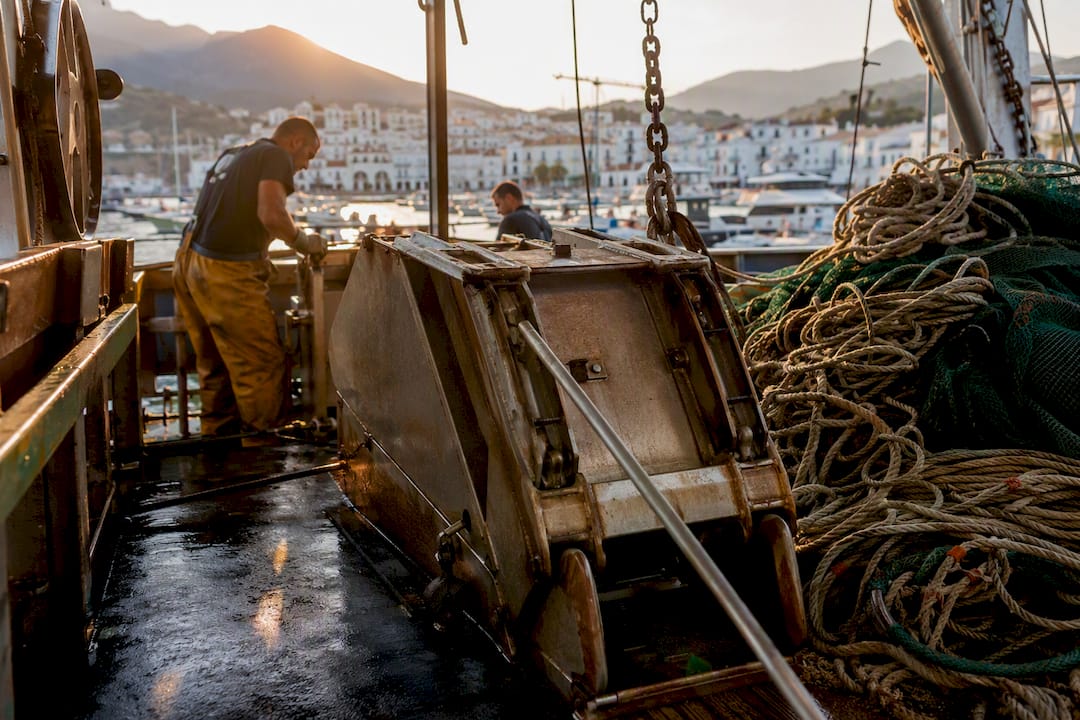
What actually limits the catch is regulation, not just geography. Order APM/532/2018, published in the BOE, formalized a co-management plan that had already been running since 2013, and it sets hard boundaries on who can fish and when.
| Regulatory measure | Practical effect |
|---|---|
| Annual veda (closure) lasting about two months | Removes roughly two months of fishing pressure each year to let stocks recover |
| Limited fishing days per week | Caps how often authorized boats can work the caladeros |
| Authorized vessel list | Restricts the fishery to a fixed, small fleet rather than open access |
| Selective gear requirements | Reduces seabed damage and lowers the rate of damaged or undersized catch |
The result, according to reporting in El País, is a fishery that’s regenerating even as it stays small and tightly controlled. That combination, healthy stock, limited volume, is exactly why the prawn commands the price it does.
How Does the Marca de Garantia Verify Authenticity?
The Marca de Garantia Gamba de Palamós, an initiative dating to 2007, exists to stop generic red prawns from being sold under the Palamós name. Every certified lot passes through the llotja, where inspectors run organoleptic checks, color, texture, smell, and confirm the catch meets size and handling standards before it earns the seal.
Temperature control is non-negotiable. Certified boxes must be kept below 5°C from the moment they’re landed, a cold-chain rule that the Visit Palamós quality page treats as central to preserving the prawn’s texture and flavor.
What this buys you as a shopper or diner:
- A traceable lot number tied to a specific vessel and landing date
- Grading by pieces per kilo, so you know what you’re paying for
- Assurance the prawn never sat above 5°C between boat and counter
Pro Tip: Ask to see the certification tag or lot number on the box. A legitimate fishmonger or restaurant will show it without hesitation, since it’s part of the point of the seal.
Understanding food certification schemes generally helps here too. Resources like this explainer on food quality standards break down how traceability seals work across different products, which makes it easier to spot a legitimate claim versus marketing dressed up as provenance.
When Is Gamba de Palamós in Season, and Why Does It Run Short?
The prawns are landed year-round outside the veda, but summer tends to bring the larger specimens ashore, which is also when tourist demand peaks. That timing creates a squeeze: bigger prawns, more buyers, and a fishery that can’t scale up to meet the demand because the fleet and the fishing days are fixed by regulation.
Industry voices have been vocal about this tension. OPP91, the local producers’ organization, reported quota reductions in 2025 that limited catch even during peak season, despite stock indicators looking healthy. Fishers weren’t complaining about scarcity of fish, they were complaining about not being allowed to land what’s there.
For buyers, that means planning matters more than luck:
- Build a relationship with a trusted supplier who can flag when certified lots arrive
- Reserve ahead at restaurants in the Menú de la Gamba network during summer
- Show up early on auction days if you’re buying wholesale, since certified boxes at the llotja can sell out within hours
How Should You Cook Gamba de Palamós at Home?
The whole point of this prawn is that it doesn’t need much done to it. Overcooking is the single biggest way to ruin a specimen that costs this much, so simplicity isn’t a shortcut, it’s the technique.
- À la plancha: Sear on a very hot flat griddle for well under a minute per side for medium prawns; the shell should just start to color while the flesh stays translucent at the core.
- Suquet: Use the heads and shells to build a stock base, then add the tails only at the very end so they barely cook through.
- Arroz: Fold cooked or lightly seared prawns into rice just before serving so residual heat finishes them gently.
- Crudo: For the largest, freshest specimens, serve raw with nothing more than good olive oil and a touch of citrus.
Timing scales with size: extra-grade prawns need a few more seconds of heat than mitjana, but the margin for error stays tight either way. Chefs who work this prawn regularly, as RTVE’s coverage notes, almost always keep the head on during cooking and save it for stock rather than discarding it.
Pro Tip: Season with nothing more than good olive oil, a squeeze of lemon, and flaky salt. A crisp Catalan white, like an Empordà DO, won’t fight the prawn’s natural sweetness the way a heavier red would.
What Should You Expect When Ordering Gamba de Palamós at a Restaurant?
Certified restaurants in the Menú de la Gamba network typically build the prawn into a tasting sequence rather than serving it as an afterthought, often pairing it with a suquet or a rice course where its flavor can carry the dish. A restaurant that takes sourcing seriously will select seasonal seafood based on what’s actually landing well that week, not just what’s on a fixed printed menu.
Before you book, ask how the kitchen sources its prawns and whether the current lot carries the certification. A kitchen that can trace its seafood to a specific boat and landing date is one worth trusting with a dish this delicate.
What This Guide Gets Right That Most Others Miss
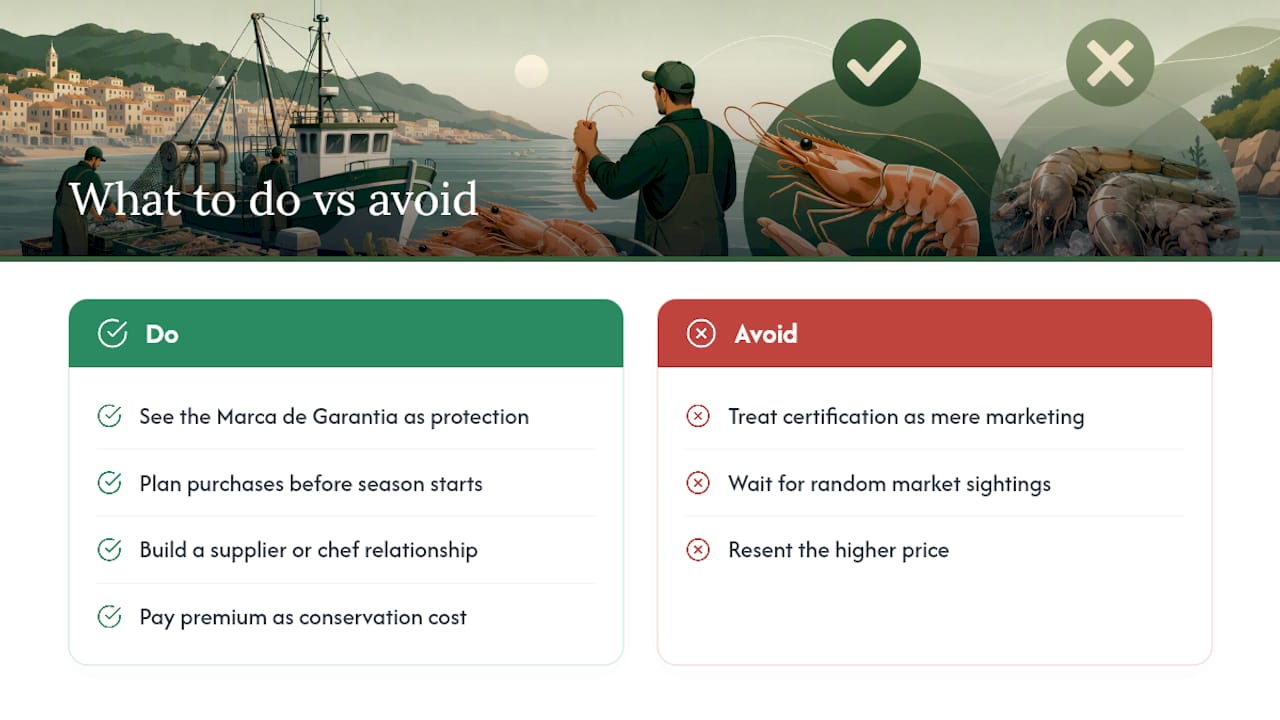
Most coverage of Gamba de Palamós treats the certification as a marketing detail and the scarcity as an inconvenience. Both readings miss the point. The Marca de Garantia exists because the fishery is small on purpose, a deliberate tradeoff between volume and stock health that the co-management plan has sustained since 2013 with input from ICM-CSIC scientists.
The conventional advice, “buy it when you see it”, undersells how much planning actually pays off. Waiting for a lucky sighting at the market means competing with everyone else who had the same idea during the same three summer weekends. The buyers who eat this prawn regularly are the ones who’ve built a relationship with a supplier or a kitchen ahead of season.
If you take one thing from the regulation and the science, it’s this: scarcity here is a sign the system is working, not a marketing story. A fishery that regenerates while staying tightly capped is rare. Treat the premium price as the cost of that success, not as a markup to resent.
Taste It Properly: Reserve a Gamba de Palamós Tasting in Barcelona
Reading about provenance only gets you so far. Els Pescadors sources seasonal, traceable seafood directly from trusted suppliers and can feature Gamba de Palamós on its tasting and group menus when the certified catch is available, saving you the guesswork of chasing down a certified lot yourself.
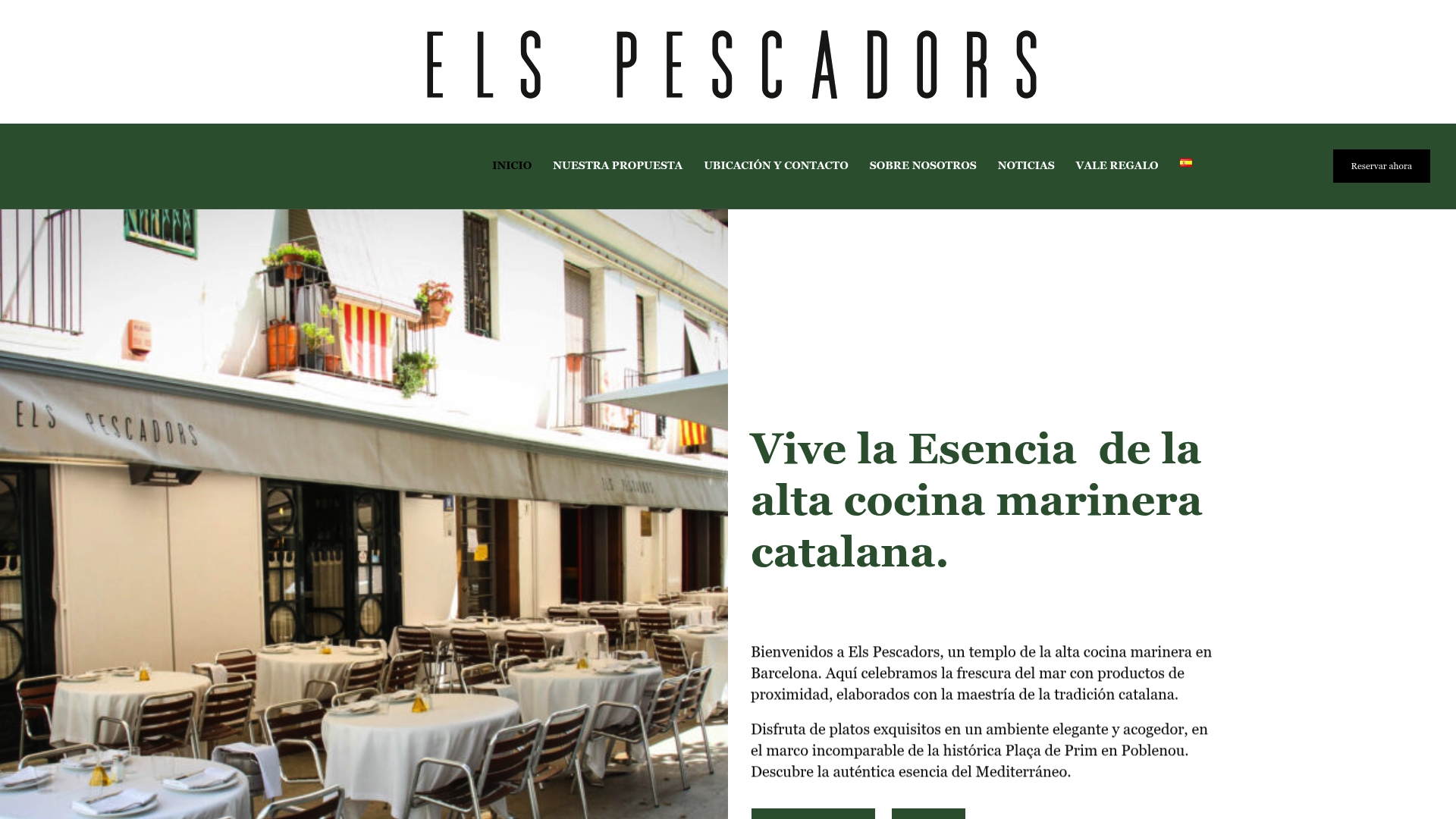
Unlike hunting for a box at the llotja or hoping a fishmonger has stock, booking a table means someone else handles the sourcing, the grading, and the cooking, all while keeping the prawn’s provenance transparent. Check the tasting menu or Our Proposal page for group and private dining options, and reserve ahead of the summer season when demand for the prawn peaks. Availability shifts with the catch, so contact the restaurant directly for the latest word on what’s landing.
Sources
- La gamba roja se regenera en Palamós gracias a las nuevas redes — El País
- Segell de qualitat Marca de Garantia – Gamba de Palamós — Museu de la Pesca
- Qualitat – La Gamba de Palamós — Visit Palamós
- Els pescadors de Palamós veuen limitada la pesca de gamba en plena temporada — Diari de Girona
FAQ
Is Palamós, Spain Worth Visiting?
Yes. Beyond the prawn, Palamós offers a working fishing port, the Museu de la Pesca, and Costa Brava beaches, making it a worthwhile stop for anyone combining food tourism with coastal scenery.
What Is Shrimp Called in Spain?
Spanish uses several terms depending on species and region: “gamba” for prawns generally, “langostino” for larger prawns, and “camarón” for small shrimp, with “gamba roja” specifically referring to red prawns like the one from Palamós.
What Is Palamós, Spain Known For?
Palamós is best known for its red prawn fishery, protected by the Marca de Garantia and a co-management plan that limits fishing days and enforces seasonal closures to sustain the stock.
What Are Red Prawns Called in Spain?
Red prawns are called “gamba roja” in Spanish, with the ones from this specific fishery known as Gamba de Palamós, distinct from similar red prawns landed near Dénia or other Mediterranean ports.