Galician navajas hit their best texture and flesh fullness from October through April, with October to January singled out most often for peak plumpness. But don’t buy on calendar faith alone: local extraction openings, not a national closed season, decide what actually reaches the counter on any given week.
- Peak window: October through April, best flesh in October to January
- Before buying, ask which capture zone the navajas came from and the exact catch date
- Once home, a hot plancha with lemon and two minutes per side is all they need
Key Takeaways
Galician navaja availability is set by rotating zone management plans, so buyers who confirm the capture zone and date get better quality than those who rely on a printed season alone.
| Point | Details |
|---|---|
| Peak window | Best flesh commonly runs from autumn through spring, with the colder months often cited as fullest. |
| Supply concentration | Arousa, Pontevedra, and Vigo supply the majority of recorded Galician navaja production. |
| Check before buying | Ask for the capture zone and date rather than trusting a general season claim. |
| Cook briefly | Plancha, steam, or sauté for under two minutes to avoid rubbery texture. |
| Storage window | Refrigerate and use within 24 to 48 hours; freezing softens texture noticeably. |
Table of Contents
- What Is Temporada de Navajas in Galicia?
- How Do Vedas Zonales Control When You Can Buy Navajas?
- How Do You Check Freshness Before Buying Navajas?
- What’s the Best Way to Cook and Store Navajas?
- What the Season Really Tells You About Navajas
- Sources
- FAQ
What Is Temporada de Navajas in Galicia?
Ask five fishmongers in Vigo when temporada de navajas runs and you’ll likely get five slightly different answers. That’s not sloppiness. It’s because Galician razor clam season isn’t one fixed calendar window handed down from Madrid. It’s a patchwork of rotating local openings, each one tied to a specific bank, río, and management plan. Retailers selling Galician navajas commonly market October through April as the sweet spot, with October to January called out for the fullest, meatiest specimens.
The three Rías that matter most are Arousa, Pontevedra, and Vigo. Together they account for 83% of recorded navaja production in Galicia, according to regional auction reporting. That concentration matters for buyers: if you’re shopping outside these three zones, you’re likely getting navajas that traveled further or sat longer before reaching the counter.
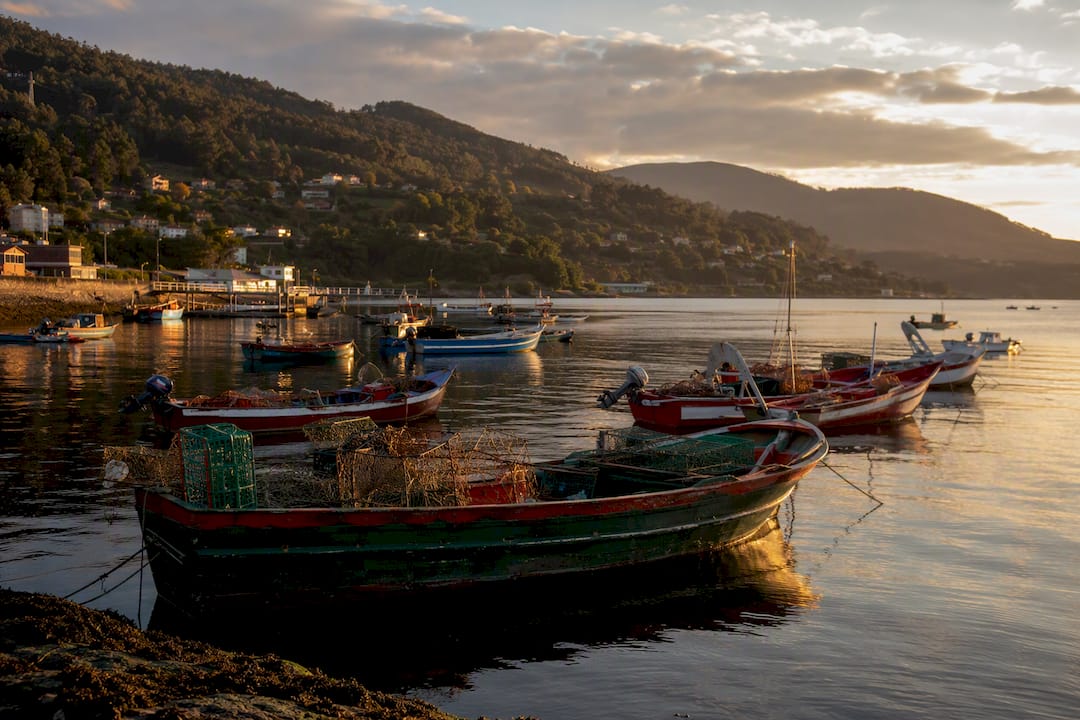
Here’s the distinction that trips up most shoppers: “available all year” and “at peak fullness” are not the same claim. Because extraction rights rotate zone by zone, a bank near Vigo might open in November while one in Arousa stays closed for stock recovery, then flips the following month. That rotation is precisely why some guides note December and January as unusually strong months even within the broader October to April window, and why the practical answer to seasonal seafood timing always starts with checking what makes seafood genuinely seasonal before assuming a fixed date applies everywhere.
A few practical notes worth keeping in mind:
- Arousa, Pontevedra, and Vigo drive the bulk of supply and set the pricing baseline
- Secondary or smaller banks can open or close on short notice depending on stock surveys
- A “closed” navaja zone this month doesn’t mean the species is out of season elsewhere in Galicia
How Do Vedas Zonales Control When You Can Buy Navajas?
Spain doesn’t run a single blanket closed season for razor clams. Instead, the Xunta de Galicia authorizes a Plan general de explotación marisquera, a triennial framework that assigns extraction rights zone by zone. The current cycle, set under the 2024–2026 order referenced by the Cofradía de pescadores de Vigo, governs which banks can be worked and when.
83% of Galicia’s recorded navaja production comes from just three Rías, meaning most of what you’ll ever buy traces back to a small, tightly managed set of extraction zones.
Underneath that triennial plan sit the vedas zonales, temporary closures applied to specific banks to let stocks recover. The official fichas for the Pontevedra and Vigo fishing zones spell out permitted extraction days, rotating openings, and probable closed periods bank by bank. Cofradía notices, like those published by the Cofradía Pescadores San Xosé de Cangas, list navaja and longueirón extraction as ongoing but rotational rather than governed by one fixed date.
What this means practically:
- Check the current ficha or veda notice for the specific zone before assuming availability
- Cofradía bulletins update faster than most retail calendars, so they’re the better real-time source
- Auction notices reveal which banks are actively supplying that week, which tells you more than any printed season chart
How Do You Check Freshness Before Buying Navajas?
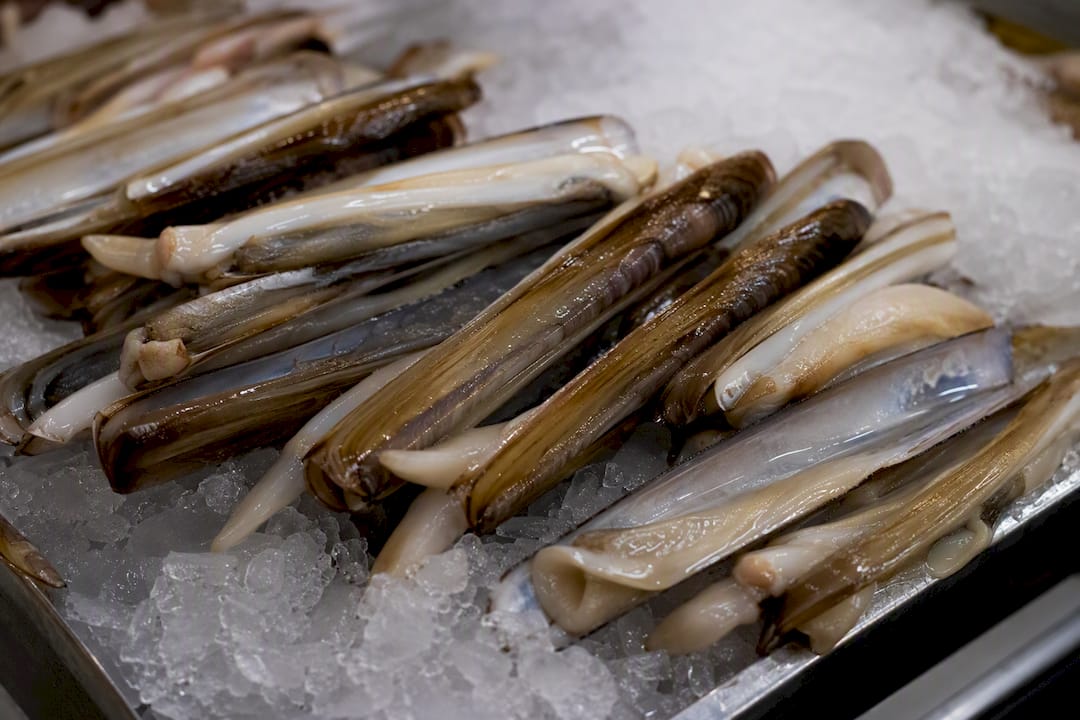
A navaja that looks fine on ice can still be a poor buy if it’s been sitting since a closed zone’s last legal harvest day. The shell should react when you touch the exposed foot, either retracting slightly or closing partway. If it stays limp and unresponsive, move on. Smell should read as clean sea brine, never sharp or ammonia-like, and there should be no milky discharge pooling in the tray.
Before you hand over cash, ask the seller these questions:
- What zone did these come from, Arousa, Pontevedra, or Vigo?
- What was the capture date?
- Did these move through a cofradía auction, or another traceable channel?
- Were they hand-raked or extracted by another permitted method?
Cofradía stalls and established fish markets tend to answer these questions without hesitation. That transparency is often a better freshness signal than the navaja’s appearance alone. For a broader walkthrough of what to look for at the counter, this local seafood market guide covers the same instincts across other shellfish.
Pro Tip: Prices often dip when a major bank near Arousa or Vigo just opened, since supply floods the auction. Ask which zone is currently active and you’ll often land better navajas for less.
What’s the Best Way to Cook and Store Navajas?
Rinse navajas under cold running water and, if there’s visible sand, give them a brief soak in lightly salted water, no more than 20 to 30 minutes. Skip long soaks. Razor clams are delicate and turn mushy fast if left waterlogged.
Three quick-cook methods handle navajas well:
- Plancha or grill: very high heat, about 60 to 90 seconds per side, just until they open and firm up
- Steam: two to three minutes in a covered pan with a splash of white wine, done the moment shells gape
- Quick sauté: garlic and olive oil in a hot pan, tossed for under two minutes total
Cook them too long and the texture turns rubbery in seconds, not minutes. That’s the single most common mistake home cooks make with this shellfish, treating it like a mussel that can handle a few extra minutes on the heat.
Refrigerate fresh navajas and use them within 24 to 48 hours. Freezing works in a pinch, but expect the texture to soften noticeably once thawed, since the muscle structure that gives fresh navajas their snap doesn’t survive ice crystals well. If you’re building a broader seafood spread, seasonal seafood retains more of its natural flavor than off-season stock that’s been frozen and shipped long distances.
What the Season Really Tells You About Navajas
Most guides to navaja season give you a date range and call it done. That’s the gap in conventional advice: a calendar can’t tell you whether the specific bank your fishmonger bought from is mid-rotation, freshly opened, or three weeks from closing. The date range is real, but it’s a starting filter, not a verdict.
What the research actually supports is a shift in what you ask. Instead of “is it navaja season,” ask “which zone is open and how recently.” That single change in an interaction with a fishmonger tells you more than the entire October to April window combined, because it collapses regional variation, auction supply, and freshness into one answer.
Where conventional advice falls short is treating Galicia as one market. It isn’t. Arousa, Pontevedra, and Vigo behave like three separate supply chains with three separate rotation schedules. Prioritize the zone question first, the freshness checklist second, and the calendar last. That order gets you better navajas more consistently than memorizing months ever will.
— YellowRock
Sources
Els Pescadors builds its menu around daily fresh catch, which means the kitchen judges navajas the way any working cofradía buyer does: by fullness and provenance, not by a printed calendar. A smaller navaja from a bank that just opened after a rest period often beats a larger one pulled from a zone nearing its next closure.
The clam that fills its shell completely, with no gap at the tip and a foot that responds the moment you touch it, tells you more about quality than any date on a seasonal chart.
On the menu, this often shows up as a simple plancha preparation, minimal garlic, a touch of olive oil, and lemon at the table, letting the navaja’s own brine and texture carry the dish rather than masking it. That restraint is deliberate. It’s the same sourcing logic behind seasonal fishing traditions in Catalan cuisine, where the ingredient’s peak moment decides the dish, not the other way around.
If you’d rather taste peak-season navajas prepared this way than chase down zone fichas yourself, Els Pescadors’ group and private dining proposals put that sourcing knowledge directly on your table in Barcelona.
- Arousa, Pontevedra and Vigo contribute 83% of recorded navaja production in Galicia
- Fichas: Pontevedra / Vigo — calendar and zone details for navaja extraction
- Navaja Gallega extra. 1kg — Pesco & Go
FAQ
What Months Should You Avoid Buying Navajas?
There’s no single national month when navajas can’t be sold, since closures are zone specific under rotating vedas zonales rather than a fixed calendar ban.
What Are the Best Months to Eat Galician Shellfish Overall?
Autumn through winter tends to favor most Galician shellfish, with navajas specifically strongest from October through April and fullest between October and January.
When Is Zamburiña Season in Galicia?
Zamburiñas generally follow a similar autumn-to-winter pattern to navajas, though their harvesting also runs under zone-specific plans rather than one fixed national window.
Which Shellfish Are Currently in Season Alongside Navajas?
Alongside navajas, Galician banks under active extraction plans commonly supply mussels, clams, and scallops during the same autumn-to-winter stretch, though each species follows its own zone rotation.
How Do I Know if a Navaja Zone Is Currently Open?
Check the current Pontevedra/Vigo fichas or your local cofradía’s veda bulletin, since these update faster than general retail season charts.