Most visitors arriving in Barcelona with a restaurant reservation expect a predictable menu, the same celebrated dishes waiting for them just as they appeared in last year’s travel article. That assumption costs you the best meal of your trip. Barcelona’s finest seafood restaurants operate on an entirely different logic: what’s on the plate today was swimming off the Catalan coast yesterday, and next month’s menu will look almost nothing like this week’s. Seasonal ingredients don’t just influence the menu here — they are the menu. Understanding that shift is the difference between a good dinner and an unforgettable one.
Table of Contents
- Why seasonal ingredients matter in Barcelona’s seafood cuisine
- How Barcelona’s top restaurants source and showcase seasonal seafood
- Examples of peak-season ingredients and signature dishes
- Tradition versus innovation: Classic purity meets culinary creativity
- What most guides miss about experiencing Barcelona’s seasonal seafood
- Explore and taste Barcelona’s seafood seasons with us
- Frequently asked questions
Key Takeaways
| Point | Details |
|---|---|
| Seasonality drives menus | Barcelona’s top seafood restaurants design their offerings around what’s freshest each season for the best flavor and sustainability. |
| Dining is dynamic | Signature seafood dishes change with the seasons, so the best meal varies from month to month. |
| Tradition and innovation blend | Both classic and avant-garde restaurants use seasonal ingredients to delight diners in unique ways. |
| Maximize your visit | Trust tasting menus or chef recommendations to access peak-season flavors during your Barcelona trip. |
Why seasonal ingredients matter in Barcelona’s seafood cuisine
After explaining the seasonal nature of Barcelona’s seafood menus, let’s explore why this commitment matters so deeply in Catalan culture.
Catalan cooking has always moved to the rhythm of the sea and the land. Long before refrigerated trucks or global supply chains, fishermen brought in whatever the season offered, and cooks built their craft around those realities. That pre-refrigeration necessity shaped an entire culinary identity, one where a summer table overflows with prawns and lobster while winter calls for slow, warming stews built on fatty fish and preserved shellfish. As explored in depth through seasonal fishing in Catalan cuisine, this philosophy never disappeared — it evolved into a point of pride.
Today, Catalan cuisine’s seasonal cycles are recognized as both a sustainability model and a flavor optimization strategy. Chefs no longer follow the calendar because they have to — they follow it because nothing tastes better than an ingredient caught or harvested at its natural peak. A red prawn pulled from the water in spring carries a natural sweetness that the same species cannot replicate in other months. That’s not marketing language; it’s marine biology meeting gastronomy.
Understanding what is seasonal seafood also reveals a sustainability benefit that goes beyond flavor. When restaurants buy what’s abundant and naturally available, they reduce pressure on overfished species and support local fishing communities operating within sustainable catch limits. For diners, this translates into a more varied and genuinely exciting experience every time you sit down.
Here’s what seasonal commitment looks like in practice at Barcelona’s best venues:
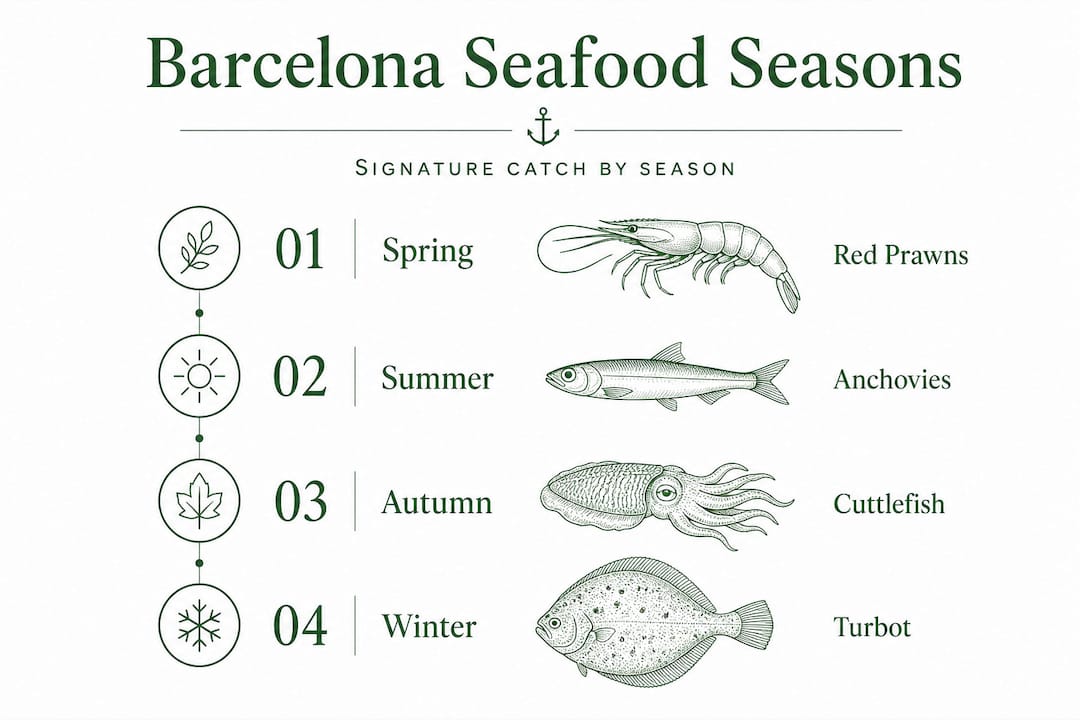
- Spring: Red prawns, cuttlefish, fresh anchovies, wild asparagus, and young garlic
- Summer: Lobster, spider crab, sea urchin, sardines, and heirloom tomatoes
- Autumn: Wild mushrooms (especially rovellons), sea bass, grey mullet, and chestnuts
- Winter: Turbot, monkfish, salt cod, oysters, and hearty coastal stews
“Seasonality in Catalan cuisine is not a trend. It is the foundation of the entire culinary tradition, born from fishing villages that cooked what the sea provided each day. That discipline is now our greatest luxury.”
How Barcelona’s top restaurants source and showcase seasonal seafood
Having set the stage for why seasonality is treasured, we now dive into how Barcelona’s finest restaurants bring this philosophy to life in real, daily operations.
The process begins before sunrise. Head chefs or their buyers walk through markets like La Boqueria or make direct calls to Galician and Catalan fish markets to see what came in overnight. This is not ceremonial — it directly shapes what appears on the menu that day. At Batea Barcelona, for example, sourcing from daily markets drives a constantly rotating selection where minimalist techniques like grilling and steaming allow the ingredient’s natural flavor to lead. The kitchen serves the fish; the fish doesn’t serve the kitchen.
Acclaimed venues including Botafumeiro and Els Pescadors apply the same seasonal lens to prioritize lesser-known marine products at their optimal ripeness, from spring red prawns to winter turbot. This is the philosophy behind “catch of the day” and “market menu” labels that you’ll see throughout high-end Barcelona seafood spots. Those aren’t just hospitality phrases. They signal that the chef made a fresh sourcing decision within the last 24 hours.
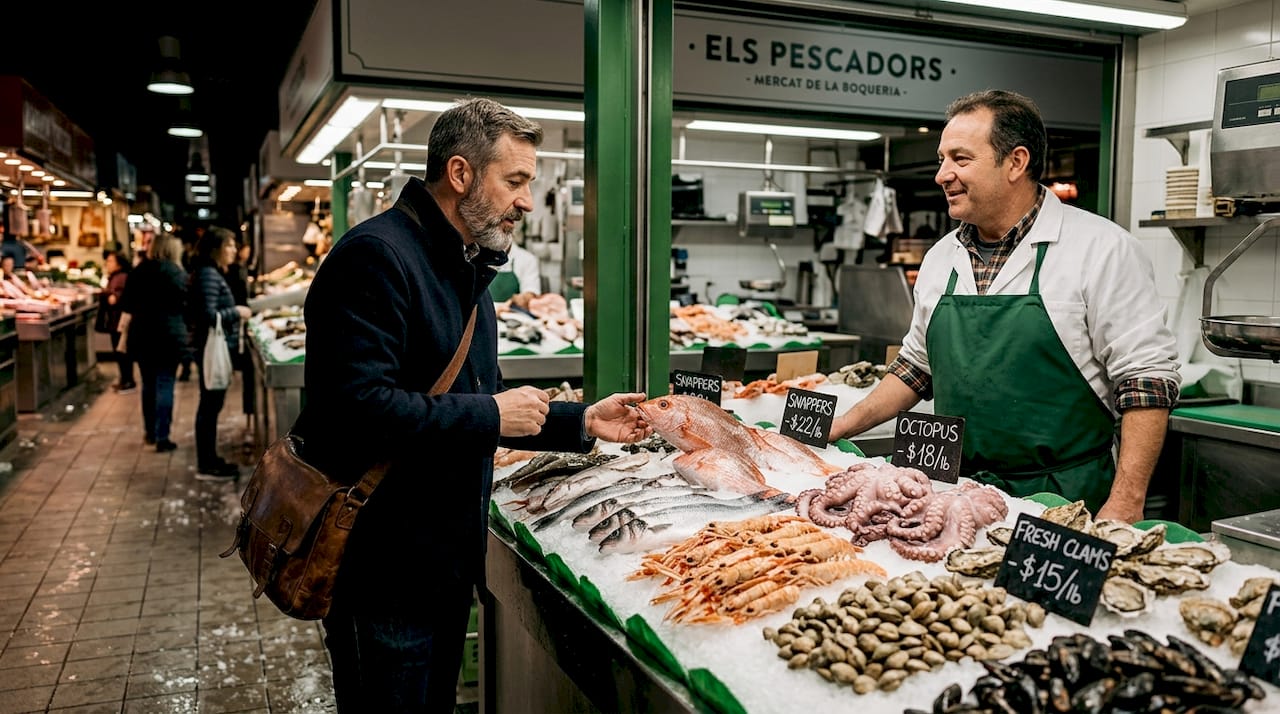
Pro Tip: When you see “merluza del día” or “marisco del mercado” on a menu, ask your server what market it came from and when it arrived. The answer reveals a restaurant’s true commitment to seasonal sourcing and tells you a great deal about the kitchen’s philosophy.
Here’s how classic and contemporary restaurants approach seasonal sourcing differently:
| Approach | Classic seafood house | Contemporary fine dining |
|---|---|---|
| Sourcing method | Daily market visits, trusted suppliers | Direct relationships with fishermen, special orders |
| Menu format | Daily specials board, à la carte | Tasting menus that change weekly or monthly |
| Primary technique | Grilling, steaming, plancha | Minimalist presentation, modern textures |
| Seasonal highlight | Single peak ingredient, simply prepared | Multiple seasonal elements layered in one dish |
| Guest interaction | Server explains the day’s catch | Chef sends explanation with each course |
To get the most out of any seasonal seafood restaurant in Barcelona, follow this approach:
- Research before you go. Check the restaurant’s current menu online or call ahead to ask what’s in season right now. Many venues update their offerings weekly.
- Arrive with an open mind. If the dish you read about online is gone, that’s a good sign. It means the kitchen is responsive to what the sea is actually producing.
- Ask for the market recommendation. Any confident chef will have a clear answer about what they’re most excited about serving today.
- Trust the tasting menu. At venues offering seasonal tasting menus, this format gives you the widest window into the chef’s current seasonal vision.
- Visit the seasonal dishes at Els Pescadors menu for a real-world example of how a dedicated Catalan seafood kitchen translates seasonal sourcing into a full dining experience.
Exploring the full range of essential Catalan seafood also helps you understand which species to look for in which months, so you can plan your visit around a specific ingredient you’ve been dreaming about.
Examples of peak-season ingredients and signature dishes
Understanding sourcing and menu creation, let’s look at exactly which ingredients and dishes define each season in Barcelona’s best seafood establishments.
Barcelona’s seasonal seafood calendar is rich and surprisingly specific. Certain ingredients have near-mythic status among local food lovers, and knowing when to visit for each one gives you a serious advantage.
| Season | Star seafood ingredient | Classic preparation | Best venue style |
|---|---|---|---|
| Spring | Red prawns (gambas rojas) | Lightly grilled with sea salt | Traditional seafood house |
| Spring | Fresh anchovies (boquerones) | Marinated or pan-fried | Casual and fine dining |
| Summer | Lobster (llagosta) | Arrossejat or grilled | Fine dining, rice specialists |
| Autumn | Rovellons (wild mushrooms) | Sautéed with seafood rice | Catalan tradition venues |
| Winter | Turbot (rodaballo) | Roasted whole with olive oil | Classic and contemporary |
| Winter | Oysters | Raw with lemon or warm mignonette | Modern seafood bars |
A remarkable indicator of how seriously Barcelona takes seasonal ingredients is the city’s participation in cross-regional food celebrations. 38 Barcelona restaurants, including two Michelin-starred venues, participated in the 2026 “Ruta del Espárrago de Navarra,” showcasing how even a landlocked vegetable like spring asparagus integrates naturally into seafood-focused menus. You’ll find it paired with salt cod, grilled with seafood broths, or woven into rice dishes during its spring peak.
At the avant-garde end, places like Enigma use seasonal ingredients as the creative foundation for tasting menus that change on a monthly basis, blending Catalan tradition with techniques borrowed from global fine dining. A turbot you eat in January at Enigma will arrive in a form that surprises even experienced diners, yet it remains entirely rooted in the quality of that single winter-caught fish.
Key seasonal seafood facts to guide your planning:
- Red prawns from the Costa Brava reach peak sweetness in spring, making March through May the optimal window
- Turbot caught in cold winter waters carries more fat and flavor than the same fish in summer
- Wild rovellons mushrooms have a narrow autumn window, typically October through November, and pair exceptionally well with rice dishes
- Sardines are at their fattiest and most flavorful in June and July, making summer visits ideal for traditional grilled preparations
- Sea urchin (erizo de mar) season peaks in late winter through early spring, and Barcelona’s best restaurants serve it raw over rice or with light pasta
For a broader understanding of what to expect across Barcelona’s seafood scene, the guide to types of seafood cuisine in Barcelona maps the full range of restaurant styles and their approaches to the Mediterranean larder.
Tradition versus innovation: Classic purity meets culinary creativity
Now that you know when and what to look for, discover how restaurants interpret seasonal ingredients — whether through time-honored methods or genuine creative reinvention.
This is where Barcelona’s seafood scene becomes especially interesting for food enthusiasts. The city holds two entirely different schools of thought, and both are worth experiencing.
The traditionalist approach, embodied by restaurants like Botafumeiro, rests on a single conviction: the best ingredient needs the least intervention. A wild turbot in January is best served roasted whole with high-quality olive oil, sea salt, and perhaps a little vinegar from Spain’s interior. Nothing more. The skill lies in sourcing and timing, not in transformation. This philosophy produces dishes of stunning simplicity that only work because the ingredient is genuinely at its peak.
“Classic Catalan seafood cooking asks the cook to step back and let the sea speak. The dish is ready when you can taste the water it came from.”
The contemporary approach takes that same peak-season ingredient as a creative launching point. Avant-garde venues apply techniques from molecular gastronomy, fermentation, and global culinary traditions to seasonal Catalan seafood in ways that honor the ingredient while offering something unexpected. A spring red prawn might arrive as a warm broth, a raw preparation with citrus, and a lightly cured tail — three expressions of one ingredient in a single course.
Here’s how the two philosophies break down in practice:
- Tradition: Product purity, minimal ingredients, time-tested recipes, focus on technique mastery
- Tradition: Strong link to specific regional sourcing, consistency of preparation across decades
- Innovation: Seasonal ingredient as canvas, monthly menu evolution, cross-cultural technique application
- Innovation: Surprise as a dining value, ingredient presented in multiple forms or unexpected textures
Neither approach is better. They serve different desires. If you want to understand what a red prawn actually tastes like at its finest, a classic preparation teaches you that. If you want to experience what a creative chef imagines when they hold that prawn in their hand, the contemporary route rewards you differently.
The richness of Catalan gastronomy traditions sits underneath both styles, giving Barcelona’s seafood scene a coherence that cities without this culinary depth simply cannot replicate.
Pro Tip: If you’re visiting Barcelona for the first time, start with a classic restaurant to build your reference point for what peak-season Catalan seafood tastes like. On a second visit, try the contemporary interpretation. The comparison deepens both experiences significantly.
What most guides miss about experiencing Barcelona’s seasonal seafood
Most travel guides tell you which restaurants to book and which dishes to order. That’s useful, but it misses the single most important insight about seasonal dining in Barcelona: the best dish available the day you visit probably isn’t the one anyone wrote about.
Chefs working with seasonal ingredients are at their most creative and excited when they’re working with something exceptional that just arrived. That excitement translates directly to the plate. When you come into a restaurant clutching a specific dish name from an article written eight months ago, you’re working against the very logic that makes Barcelona’s seafood scene worth visiting.
The most rewarding approach we’ve seen from experienced diners and curious tourists is this: sit down, ask the server what the chef is most proud of today, and then order that. Accept the market fish recommendation. Say yes to the tasting menu even if it pushes you toward unfamiliar territory. The Catalan tasting menu process is designed specifically to take you through the chef’s seasonal vision in sequence, each course building on the last.
Open-minded diners consistently report the most memorable experiences. The dish that surprised them — the one they almost didn’t order — becomes the story they tell when they get home. Seasonal dining rewards curiosity more than any fixed itinerary ever could. The Catalan table has always operated on trust between cook and guest. Lean into that tradition and you’ll eat better than any fixed reservation plan could guarantee.
Explore and taste Barcelona’s seafood seasons with us
Els Pescadors, set in the historic Plaça de Prim in Poblenou, has been built around exactly this seasonal philosophy. Every menu reflects what the Mediterranean and Catalan coast are producing right now, not a version of what they produced last season or what a travel guide expects.
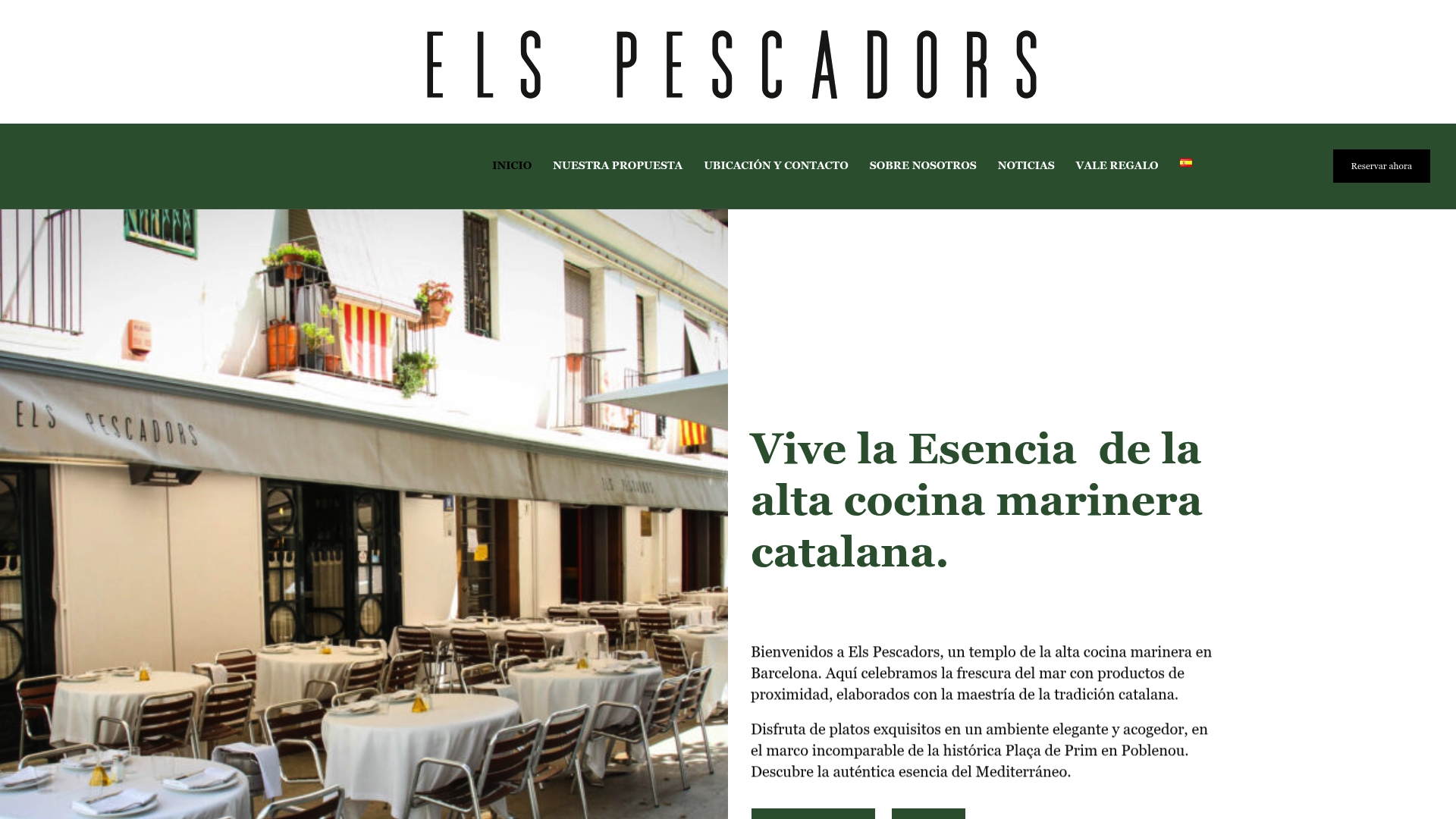
Whether you’re planning your first visit or returning to explore what autumn or winter brings to the table, our curated approach to Catalan maritime cuisine makes every season worth tasting. Discover the city’s top seafood tasting menus to plan the right experience, and explore our current signature seasonal seafood dishes to see what the season is offering right now. Reserve your table at Els Pescadors and let the season lead the way.
Frequently asked questions
How can I identify seasonal seafood on a Barcelona restaurant menu?
Look for phrases like “marisco del día,” “catch of the day,” or menus that change weekly, as these signal daily market sourcing rather than fixed, year-round offerings.
Which months are best for tasting red prawns or turbot in Barcelona?
Red prawns are best from March through May, while turbot reaches peak flavor in winter. High-end venues like Els Pescadors and Botafumeiro prioritize both species at their natural ripeness.
Do vegetarian or green ingredients also feature in seafood dining?
Yes — seasonal vegetables like asparagus and wild mushrooms regularly appear alongside seafood. In 2026, 38 Barcelona restaurants participated in a spring asparagus route that included seafood-focused fine dining venues.
Is it better to try a tasting menu or à la carte in seasonal restaurants?
A tasting menu gives you the fullest seasonal experience, as venues like Enigma change their tasting formats monthly to reflect what’s at peak quality right now.