
Local sourcing in restaurants is the practice of purchasing ingredients from producers located within a defined nearby radius, typically 100–150 miles, to deliver fresher food, stronger supply chains, and credible sustainability claims. The farm-to-table concept popularized this approach, but the operational reality goes far deeper than marketing language. This guide explains what local food sourcing actually means in 2026, how to set measurable standards, and how to build a program that holds up under scrutiny from guests, staff, and suppliers alike.
What is local sourcing in restaurants?
Local sourcing in restaurants is defined as procuring food and ingredients from farms, fisheries, and producers within a geographically close radius, most commonly 100–150 miles from the restaurant’s location. The industry term for this practice is “proximity sourcing,” though farm-to-table remains the phrase most guests recognize. As of 2026, no federal legal definition of “local” exists for restaurant marketing, which means every restaurant must set and communicate its own standard.
That absence of regulation creates both opportunity and risk. A restaurant can call itself “locally sourced” without meeting any minimum threshold. The credibility gap this creates is exactly why internal definitions matter so much. Guests are increasingly skeptical, and vague claims erode trust faster than no claim at all.
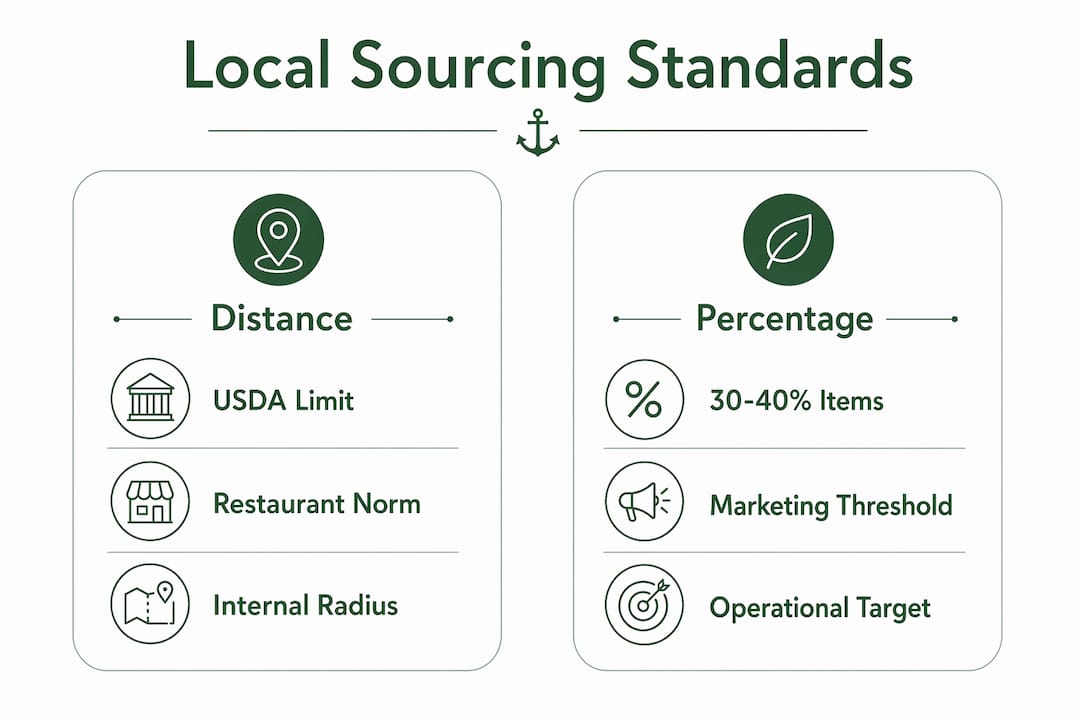
The USDA references 400 miles as a ceiling for local food programs, but most restaurants treat that figure as a policy boundary, not a practical target. The 100–150 mile radius reflects real operational logic: shorter distances mean faster delivery, less cold-chain degradation, and stronger producer relationships. For a seafood restaurant in Barcelona like Elspescadors, that radius maps directly onto the Mediterranean fishing communities and Catalan agricultural producers who supply the daily catch and seasonal produce.
How are local sourcing distance and percentage standards defined?
Distance alone does not make a sourcing program credible. Sourcing 30–40% of total menu items from local partners is the common benchmark restaurants use before publicly declaring a local sourcing identity. That threshold reflects a meaningful operational commitment rather than a token gesture.
The table below compares the most common standards restaurants use when defining their local sourcing programs.
| Standard | Distance or Percentage | Practical Use |
|---|---|---|
| USDA ceiling | 400 miles | Policy boundary, rarely used operationally |
| Industry norm | 100–150 miles | Most common restaurant definition |
| Credibility threshold | 30–40% of menu items | Minimum before public local sourcing claims |
| Strict local programs | Under 100 miles | Used by fine dining and farm-to-table specialists |
| Regional hybrid | 150–250 miles | Common for inland or rural restaurant locations |
Setting your internal radius is not a marketing decision. It is an operational one. A restaurant that defines “local” as within 150 miles and documents that policy can communicate with confidence. A restaurant that uses the term loosely will eventually face a guest or journalist who asks a direct question and gets an inconsistent answer.
Pro Tip: Write a one-page internal sourcing policy that defines your local radius, your percentage target, and which product categories qualify. Share it with your entire team before you put “locally sourced” on a single menu.
What are the key benefits of local sourcing for restaurants?
The benefits of local sourcing divide into three categories: product quality, operational resilience, and marketing differentiation. Each one delivers measurable value, and together they make a compelling case for any restaurant willing to invest in the transition.
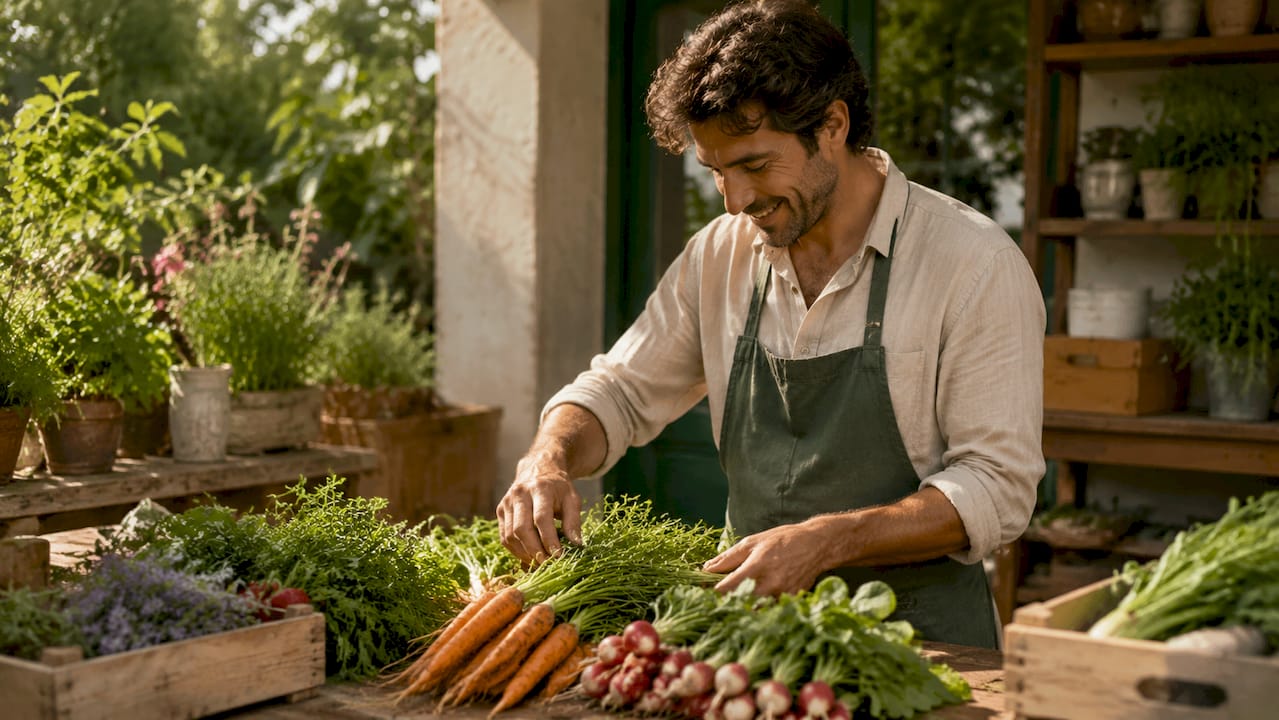
Product quality and freshness are the most immediate gains. Fresh ingredients directly elevate flavor, texture, and plate presentation in ways that no amount of technique can compensate for. Local seafood delivered within hours of catch tastes categorically different from product that has traveled three days through a national distribution network.
Supply chain resilience is the benefit that became impossible to ignore after 2020. Local supply chains reduce replenishment windows from weeks to days or hours. That speed means your kitchen is not waiting on a delayed container ship or absorbing a fuel surcharge spike from a distant distributor.
Consumer appeal and brand differentiation are real and growing. Guests at fine dining and casual restaurants alike now read menus more carefully and ask more questions about sourcing. A credible local sourcing story gives your front-of-house team something genuine to say.
The top operational and marketing benefits include:
- Faster ingredient turnover and reduced spoilage from shorter transit times
- Protection from global shipping disruptions and customs delays
- Stronger supplier relationships that improve priority access during shortages
- Menu differentiation that supports premium pricing
- Alignment with guest expectations around sustainability and local food culture
- Reduced carbon footprint, which supports sustainability certifications and press coverage
Supporting the local economy also matters to guests in ways that show up in reviews and repeat visits. When a restaurant names its suppliers on the menu, it signals confidence and transparency. That signal builds the kind of trust that advertising cannot buy.
What challenges come with implementing local sourcing?
The operational friction of local sourcing is real, and underestimating it is the most common mistake restaurant owners make. Managing multiple local vendors increases invoice volume, creates inconsistent pack sizes, and multiplies the number of delivery schedules your kitchen team must manage. Replacing two or three large distributors with twelve local producers is not a simple swap.
Seasonal variability is the second major challenge. A local tomato supplier delivers extraordinary product in August and nothing in February. Your menu must absorb that reality without creating guest confusion or food cost spikes. Restaurants that treat their menu as a fixed document will struggle. Restaurants that treat it as a living tool will thrive.
Here is a practical sequence for managing the transition to local sourcing without disrupting operations:
- Audit your current supply chain. List every ingredient category, its current supplier, and its origin distance. Identify the highest-volume, highest-visibility items first.
- Identify local supplier candidates. Use regional food hubs, farmers markets, and fishery cooperatives to find producers within your defined radius.
- Start with two or three categories. Proteins, produce, and dairy are the highest-impact categories for guest perception. Do not try to localize everything at once.
- Build redundancy into your supplier network. For every critical ingredient, have at least two local sources. Single-supplier dependency is the fastest way to end up with an empty walk-in.
- Update your ordering and invoicing systems. Spreadsheets break down quickly when you are managing a dozen vendors. Restaurant management platforms like Toast or MarketMan handle multi-vendor purchasing more reliably.
- Train your team on the new sourcing story. Your servers need to know where the fish came from. Your prep cooks need to know that the squash variety changes by week in October.
Pro Tip: A hybrid sourcing model is the most sustainable approach for most restaurants. Source your highest-visibility staples locally and rely on regional or national distributors for off-season basics and cost-sensitive commodities. This keeps your program credible without exposing your kitchen to unnecessary supply risk.
How do you integrate local sourcing into menus and guest communication?
Menu engineering aligned with seasonal supply is the operational backbone of any successful local sourcing program. Dishes need built-in flexibility. A grilled fish special that rotates with the daily catch absorbs supply variability without confusing guests. Cross-utilizing one seasonal ingredient across three dishes reduces waste and keeps food cost predictable.
Transparency in menu language matters as much as the sourcing itself. Listing a supplier’s name next to a dish (“Grilled sea bass from Cofradía de Pescadores de Barcelona”) does more for guest trust than a generic “locally sourced” label. Specificity signals accountability.
Effective communication strategies for local sourcing programs include:
- Naming specific farms, fisheries, or producers on the menu or a dedicated sourcing page
- Training servers with a clear, consistent script that explains your local radius and sourcing philosophy
- Publishing a supplier list on your website, updated seasonally
- Using social media to document supplier visits, harvest days, and market trips
- Creating a “seasonal specials” section that rotates weekly and signals freshness to regular guests
Consistent staff communication is the piece most restaurants overlook. When a guest asks where the fish came from and three different servers give three different answers, the credibility of the entire program collapses. A simple one-paragraph script, rehearsed at pre-shift, solves this problem completely.
Pro Tip: Build a seasonal menu page on your website that updates monthly. It signals to guests and search engines alike that your sourcing is real and current, not a static marketing claim.
Local sourcing vs. global sourcing: how do they compare?
Global sourcing means purchasing ingredients from producers anywhere in the world, typically through national or international distributors. It offers scale, price stability on commodity items, and year-round availability of ingredients that do not grow locally. The trade-off is supply chain length, lead time, and exposure to disruptions.
| Factor | Local Sourcing | Global Sourcing |
|---|---|---|
| Lead time | Hours to days | Days to weeks |
| Cost per unit | Often higher | Often lower at scale |
| Supply chain risk | Low (fewer intermediaries) | High (shipping, customs, fuel) |
| Ingredient freshness | High | Variable |
| Menu flexibility | Seasonal, limited | Year-round, broad |
| Marketing value | Strong differentiation | Minimal differentiation |
| Relationship quality | Direct, personal | Transactional |
The most effective restaurant supply chains in 2026 are not purely local or purely global. They are hybrid systems that apply local sourcing where it creates the most value, specifically for proteins, produce, and signature ingredients, and use global distribution for commodity staples where cost and consistency matter more than story.
A fine seafood restaurant like Elspescadors applies this logic naturally. The daily catch comes from Mediterranean fishing communities within hours of service. Specialty pantry items that have no local equivalent are sourced through trusted regional suppliers. The result is a menu that is genuinely local where it counts and operationally sound everywhere else.
Key takeaways
Local sourcing works when restaurants define their own standards, build redundant supplier networks, and train every team member to communicate the program consistently.
| Point | Details |
|---|---|
| Define your local radius | Set a written policy (100–150 miles is the industry norm) before making any public claims. |
| Use the 30–40% benchmark | Reach this threshold across menu items before marketing yourself as a locally sourced restaurant. |
| Build a hybrid model | Source high-visibility staples locally and use distributors for off-season or commodity items. |
| Engineer menus for seasonality | Use rotating specials and cross-utilized ingredients to absorb supply fluctuations without raising costs. |
| Train staff with a clear script | Consistent guest communication is as important as the sourcing itself for building trust. |
Why authenticity beats perfection in local sourcing
The biggest misconception I encounter among restaurant owners is the belief that local sourcing is an all-or-nothing commitment. That framing stops more programs before they start than any supply chain challenge ever does.
The restaurants I respect most are transparent about what they source locally and honest about what they do not. A chef who says “our fish comes from the dock two kilometers away, and our olive oil comes from Catalonia” is more credible than one who claims 100% local provenance and cannot back it up when a knowledgeable guest asks a direct question. Partial, honest local sourcing builds more consumer trust than inflated claims of total local content.
The relationship with suppliers is where the real value lives. When you buy directly from a fisherman or a small farm, you get information that no distributor will ever give you. You learn which catch is running strong this week, which variety is peaking, and which product to avoid. That knowledge makes you a better chef and a more interesting restaurant.
My advice to any owner starting this process: pick two or three local suppliers, build genuine relationships with them over a full season, and let that experience teach you what your program can realistically become. The benefits of supporting local producers compound over time in ways that a single sourcing decision never will.
— YellowRock
How Elspescadors puts local sourcing into practice
Elspescadors has built its entire culinary identity around the principle that the best seafood is the closest seafood. Located in Barcelona’s historic Poblenou district, the restaurant works directly with Mediterranean fishing communities to bring the daily catch from water to plate with minimal distance and maximum freshness.
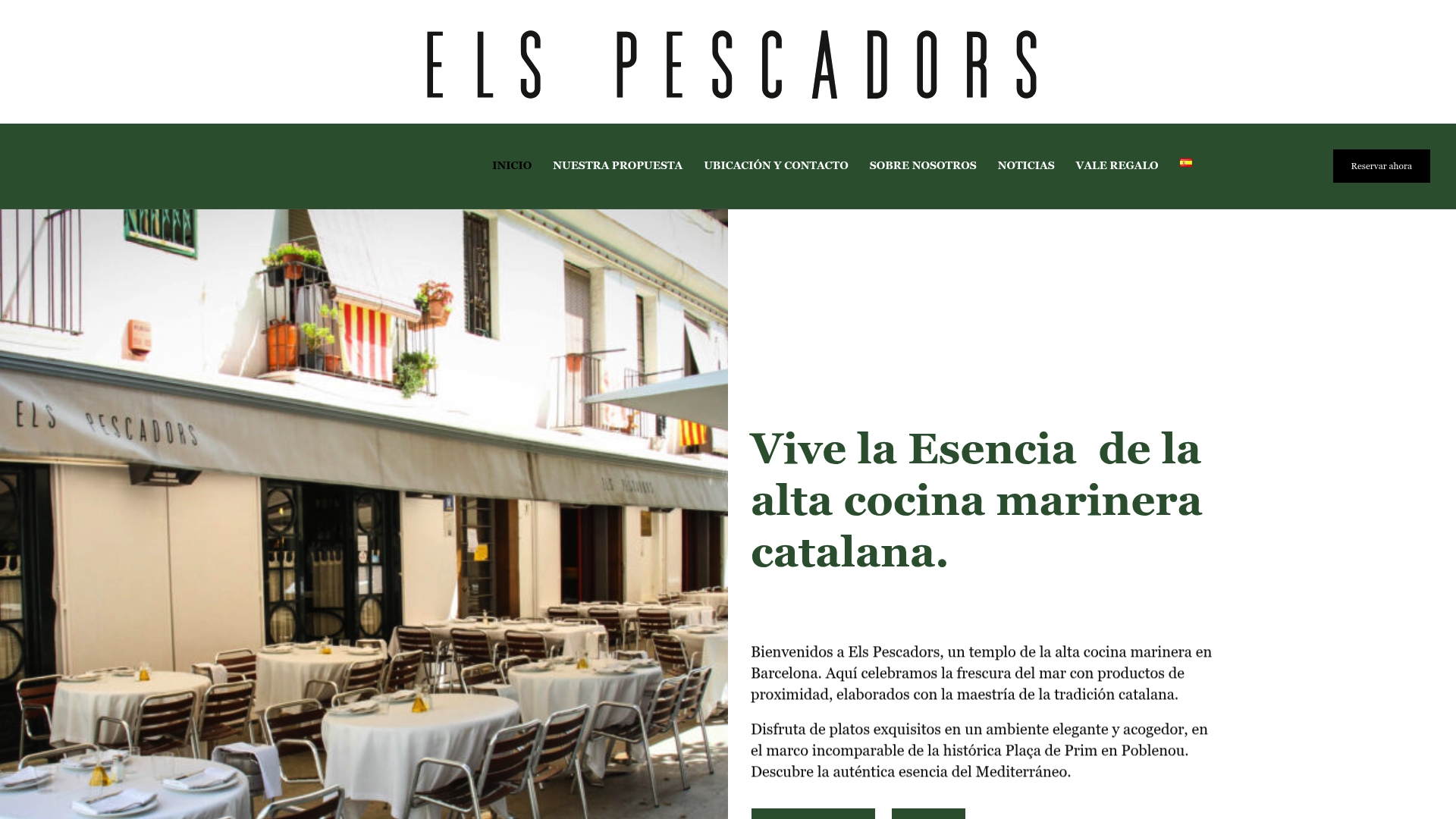
That commitment shows up on every plate, from the traditional Catalan rice dishes to the seasonal tasting menus that change with what the sea and local producers offer each week. If you want to see what a credible, transparent local sourcing program looks like in a fine dining context, explore the restaurant’s culinary proposal and discover why proximity to the source is the foundation of every great dish. You can also learn more about what defines a fine seafood restaurant in Barcelona and why sourcing is the first answer to that question.
FAQ
What does local sourcing mean for a restaurant?
Local sourcing means purchasing ingredients from producers within a defined nearby radius, typically 100–150 miles. There is no federal legal definition, so each restaurant sets its own standard.
How much of a menu needs to be local to count?
The common industry benchmark is 30–40% of total menu items sourced from local partners before a restaurant publicly claims a local sourcing identity.
What is the difference between local sourcing and farm-to-table?
Farm-to-table is a marketing concept that describes the broader philosophy of connecting restaurants directly to producers. Local sourcing is the operational practice that makes farm-to-table claims credible.
Is 100% local sourcing realistic for most restaurants?
A fully local supply chain is impractical for most operations. A hybrid sourcing model that prioritizes local for high-impact items and uses distributors for off-season basics is the recommended approach.
How does local sourcing affect restaurant supply chain resilience?
Local supply chains reduce replenishment windows from weeks to days and protect restaurants from global shipping disruptions, customs delays, and fuel surcharge volatility that affect long-distance distribution networks.