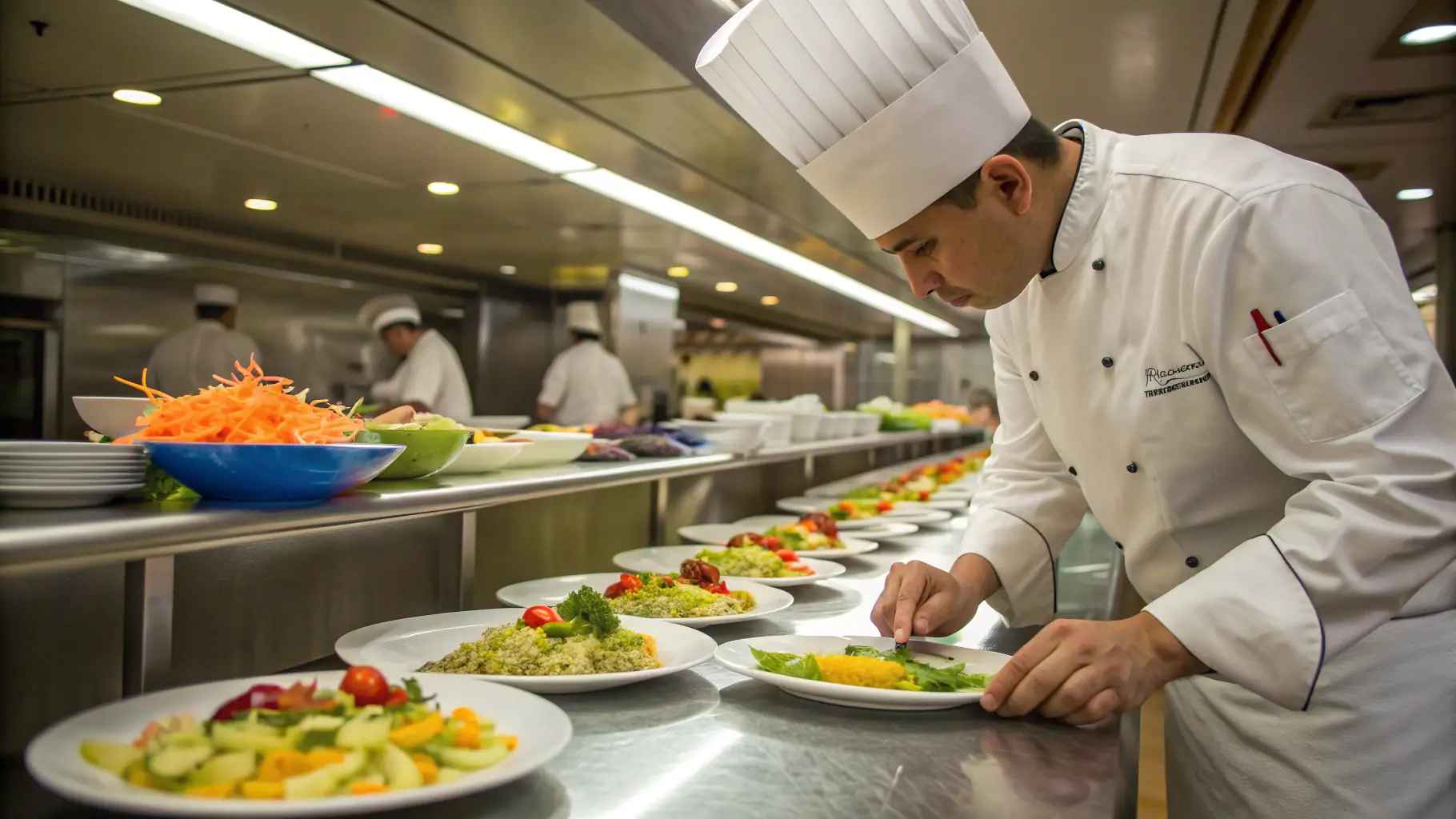
Barcelona’s restaurants differ by district because each neighborhood operates under a distinct set of economic pressures, cultural identities, and culinary traditions that shape everything from menu content to pricing. A beachfront table in Barceloneta and a corner bar in Gràcia may sit three kilometers apart, yet they serve fundamentally different food cultures. Understanding this divide is the difference between eating well in Barcelona and eating expensively and badly. The culinary diversity in Barcelona is not random. It is the direct result of who lives in each district, what they earn, and what they have eaten for generations.
Why Barcelona restaurants differ by district: economics and location
The single biggest driver of Barcelona dining differences is rent. High-rent tourist areas need high turnover and generic menus to survive financially. Lower-rent residential neighborhoods support smaller venues with authentic cuisines because their customer base returns week after week. That economic reality shapes every decision a restaurant owner makes, from ingredient sourcing to portion size.
The Barceloneta waterfront is the clearest example. Restaurants facing the beach charge premium prices for dishes that rarely change. Walk two blocks inland and the same city produces a completely different dining experience. Moving just two blocks from tourist-heavy streets shifts dining from quick, generic menus to community-centered places where locals hold restaurants accountable for quality. That accountability is the mechanism that keeps residential district food honest.
Price structures also shift with location in ways most travelers never anticipate. Terrace seating can double prices compared to standing at the bar, even for the exact same dish. This practice varies by district and is rarely explained in tourist guides. Knowing it before you sit down changes how you order.
- Barceloneta beachfront: High turnover, static menus, premium terrace pricing
- Gràcia and Sant Antoni: Neighborhood clientele, rotating menus, bar pricing available
- Poblenou: Industrial-to-residential conversion, growing local food scene, fewer tourist traps
- Eixample: Mixed zone with both tourist-facing restaurants and strong local bar culture
Pro Tip: Ask for the bar menu before sitting at a terrace table. The same coffee or tapa can cost significantly less when ordered standing at the counter, and that gap widens in tourist-heavy districts.
What culinary identities define each Barcelona neighborhood?
District food culture in Barcelona is not just about price. It reflects history, geography, and the social habits of the people who live there. The Catalan culinary tradition was preserved through difficult political periods, which embedded a strong preference for seasonal, market-fresh ingredients over convenience. That preference survives most strongly in residential districts where locals still shop daily at neighborhood markets.
Each district has developed a recognizable dining personality:
- Barceloneta prioritizes fresh fish and seafood over generic paella menus. The maritime history of the neighborhood created a genuine culture of coastal cooking that authentic spots still honor.
- Gràcia and Eixample host Basque-style pintxos bars that emphasize small plates and shared dining. These bars differ sharply from the seafood-heavy coastal district menus and reflect a social eating culture imported from the Basque Country.
- Poblenou has shifted from an industrial district to a residential and creative hub. Its restaurants reflect that transition, with a growing number of spots serving market-driven menus to a local, younger clientele.
- El Born and Gothic Quarter sit in a complicated middle ground. Both have strong historical identities but face heavy tourist pressure that has pushed many authentic spots out in favor of high-margin operations.
The daily handwritten menu, known locally as the menú del día, is the clearest signal of an authentic local restaurant. These menus change daily based on market availability and tradition, costing around €13–€15 in local plazas. A static laminated menu with photos is the opposite signal. It tells you the kitchen is not cooking to what arrived at the market that morning.
How local culture and tradition affect dining choices by district
Catalan dining customs are specific and consistent across residential neighborhoods. Locals treat meal timing as non-negotiable. Lunch runs from 2:00 p.m. to 4:00 p.m. and is the main meal of the day. Dinner starts no earlier than 9:00 p.m. Restaurants that open for dinner at 6:00 p.m. are targeting tourists, not locals.
Rice dishes are a particularly telling example. Traditional Catalan kitchens avoid serving rice at night, reserving preparations like arroz a banda or fideuà for midday service. This is not a rule posted anywhere. It is simply how authentic kitchens operate. A restaurant serving paella at 8:00 p.m. is almost certainly not cooking it fresh for you.
“Visitors often mistake high-traffic tourist areas as indicators of culinary quality. Food experts recommend seeking neighborhood life signals to find consistent, authentic dining.” Where Locals Eat in Barcelona
The signals of a genuinely local restaurant are consistent across districts. Look for a chalkboard menu, a room full of people speaking Catalan or Spanish rather than English, and a kitchen that closes between meals. Neighborhood restaurants are built around the routines of locals with simpler menus, regular customers, and consistent quality rather than trendiness.
Pro Tip: Arrive for lunch between 2:00 p.m. and 3:00 p.m. and ask for the menú del día. If the server has to check what is available that day, you are in the right place. If they hand you a printed card, reconsider.
Tourist districts vs. residential neighborhoods: how do they compare?
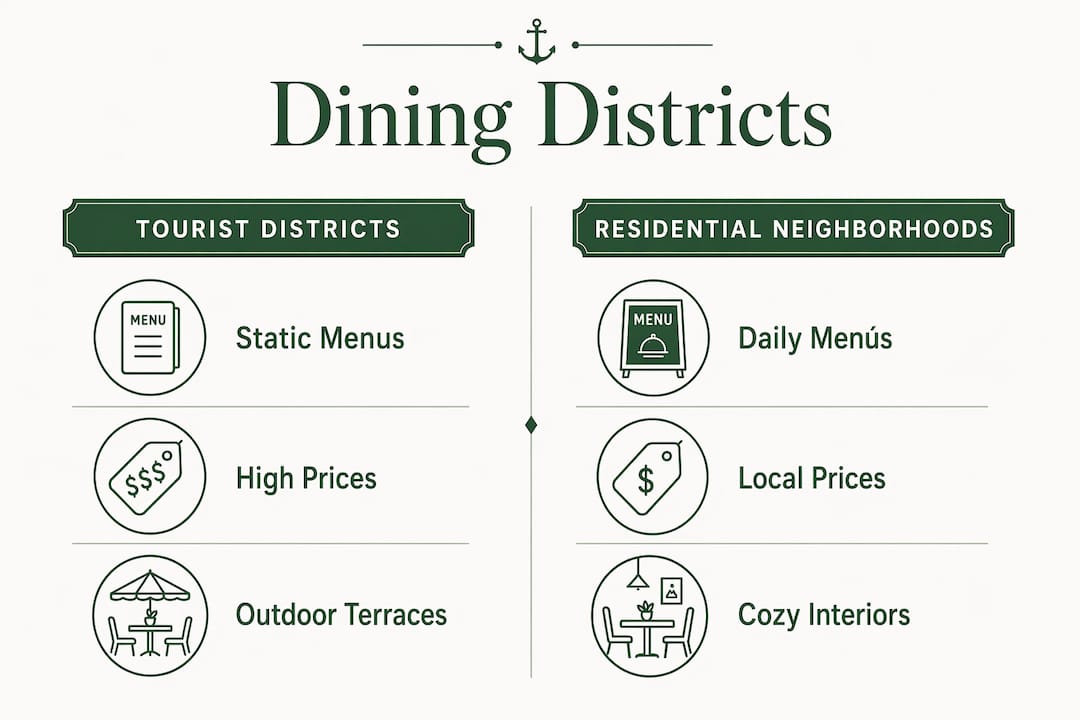
The contrast between tourist-centric and residential dining in Barcelona is sharp enough to feel like two different cities. Tourist menus rely on aesthetics and quick service to attract transient customers, while local neighborhood restaurants prioritize consistency and food quality to satisfy repeat customers. That difference shows up directly in the food-to-price ratio.
| Factor | Tourist-heavy districts | Residential neighborhoods |
|---|---|---|
| Menu type | Static, laminated, with photos | Daily handwritten or chalkboard |
| Pricing | Higher, especially on terraces | Lower, bar pricing often available |
| Ingredient sourcing | Bulk, consistent year-round | Seasonal, market-driven |
| Customer base | Transient visitors | Regular local clientele |
| Rice dishes at dinner | Common | Rare in authentic spots |
| Authenticity signals | Few | Strong (timing, language, menu format) |
Barcelona’s food scene operates as distinct local food pockets. Cuisines coexist across districts but rarely cross-pollinate within immediate neighborhoods. That insularity is actually a strength. It means each district maintains a coherent food identity rather than blending into a generic urban dining scene. The best local dining experiences happen a few streets away from major tourist crowds, in quieter residential neighborhoods like Gràcia, Poblenou, and Sant Antoni.
Finding those spots requires one simple habit: walk away from the crowd. If a restaurant has a host standing outside trying to pull you in, keep walking. If it has a line of locals waiting without anyone soliciting them, join the line.
Key Takeaways
Barcelona’s restaurants differ by district because economic pressure, local culture, and Catalan culinary tradition each shape what a neighborhood kitchen cooks, how it prices its food, and who it serves.
| Point | Details |
|---|---|
| Economics drive menu style | High-rent tourist areas use generic menus; residential districts support authentic, seasonal cooking. |
| Two blocks changes everything | Moving away from tourist strips shifts dining quality and price significantly in most Barcelona districts. |
| Rice dishes signal authenticity | Authentic Catalan kitchens serve rice only at midday. Dinner paella is a tourist-menu indicator. |
| Menú del día is the local test | A daily-changing handwritten menu costing €13–€15 marks a genuinely local restaurant. |
| Terrace pricing can double costs | Sitting outside can cost twice as much as standing at the bar for the identical dish. |
What I have learned from eating across Barcelona’s districts
The most common mistake travelers make in Barcelona is treating restaurant density as a quality signal. Las Ramblas and the Barceloneta beachfront are packed with restaurants. They are also, with rare exceptions, the worst places to eat in the city. The restaurants that have survived for decades in this city do so because locals choose them repeatedly. Tourists do not create that kind of loyalty.
What I find genuinely interesting is how sharp the geographic divide is. Two blocks is not a metaphor. Walk two blocks north from the Barceloneta beach and the menus change, the prices drop, and the kitchens start cooking to what arrived at the Mercat de Santa Caterina that morning. That physical proximity makes the contrast feel almost deliberate, as if the city is testing whether you are paying attention.
The other misconception worth addressing is that authentic means cheap. Poblenou has restaurants that charge serious prices for serious food. The difference is not cost. It is whether the kitchen is cooking for people who will come back next week. That accountability produces better food at every price point. Elspescadors, located in Poblenou’s Plaça de Prim, is a direct example. It operates within a residential district context, which means its kitchen answers to a local standard rather than a tourist expectation. That distinction matters more than any review.
For travelers, the practical advice is simple. Learn the meal timing. Respect the rice rule. Find the handwritten menu. Walk two blocks from wherever everyone else is eating. Barcelona rewards that small effort with food that is genuinely worth remembering.
— YellowRock
Elspescadors: authentic district dining in Poblenou
Elspescadors sits in Poblenou’s Plaça de Prim, one of Barcelona’s most genuinely residential districts. The restaurant specializes in Catalan maritime cuisine, built around fresh local fish, seasonal seafood, and traditional rice dishes prepared with ingredients sourced daily. That approach reflects exactly the district food culture described throughout this article.
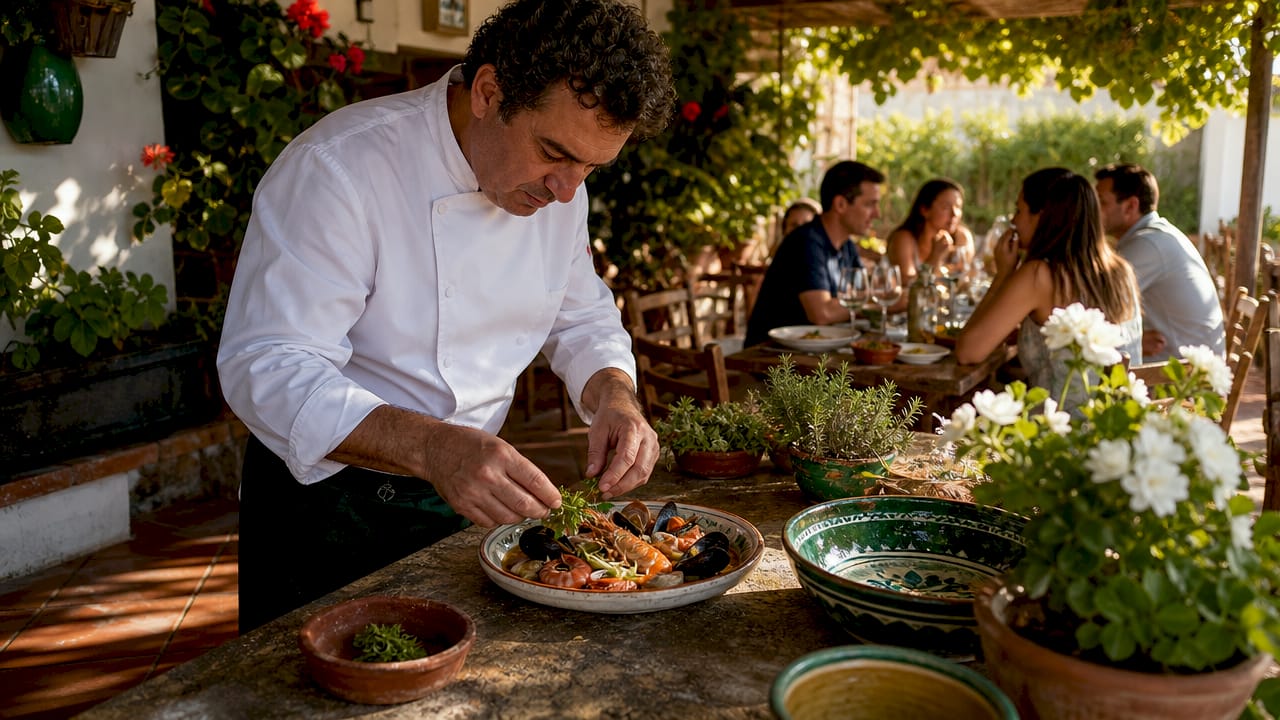
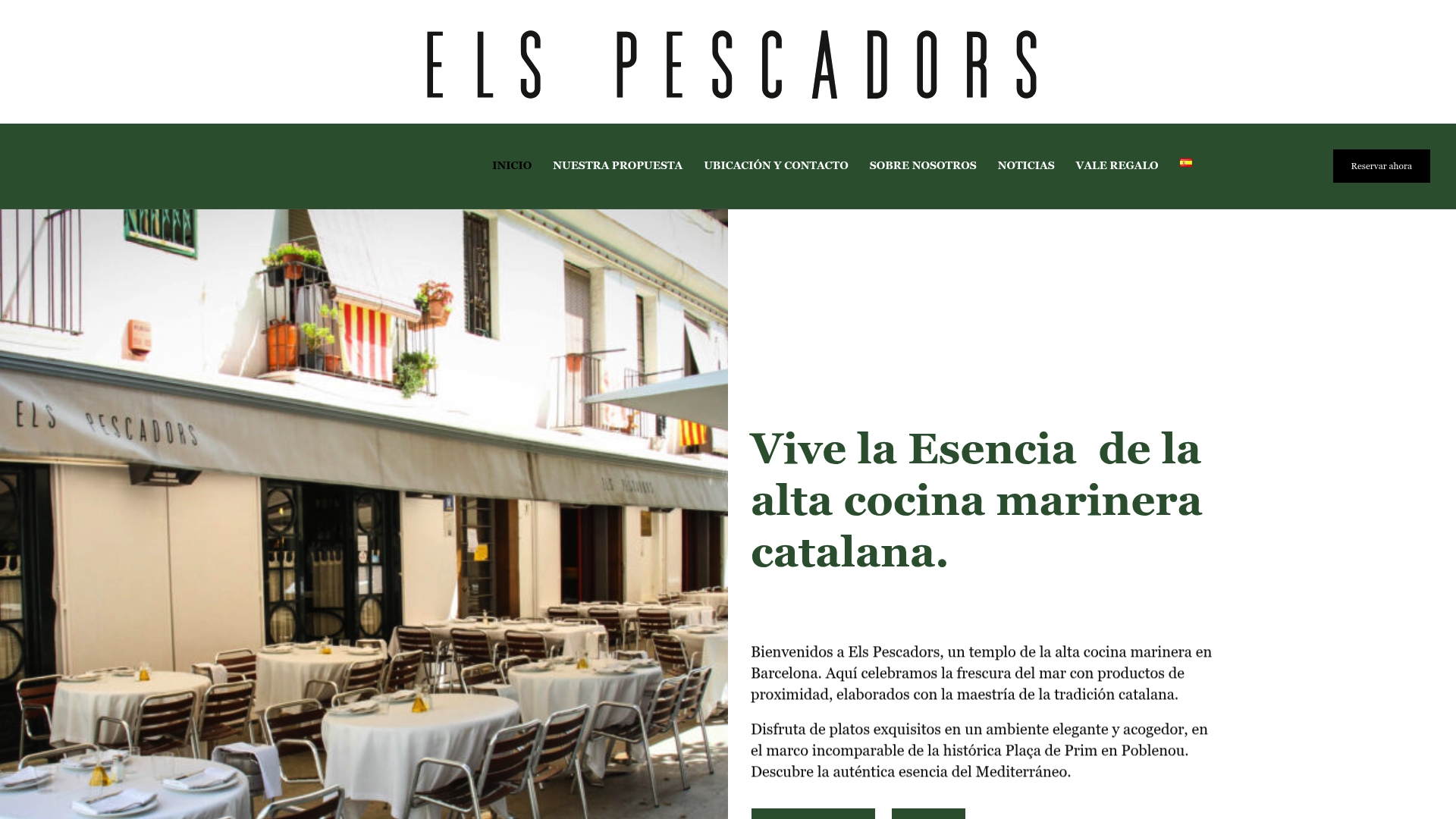
The kitchen at Elspescadors follows the same principles that define authentic local dining across Barcelona’s residential neighborhoods: seasonal menus, fresh catch, and a commitment to Catalan culinary tradition over tourist-friendly convenience. For travelers who want to experience what Barcelona dining actually looks like when it is done right, Elspescadors offers group seafood dining and individual reservations in a setting that reflects the real character of the city’s best neighborhood restaurants.
FAQ
Why do Barcelona restaurant prices vary so much by location?
Rent levels and customer type drive the price gap. Terrace seating in tourist areas can cost twice as much as bar standing in a residential neighborhood for the same dish.
What is the menú del día and how do I find it?
The menú del día is a daily-changing set lunch menu, typically costing €13–€15, that signals an authentic local restaurant. Look for handwritten or chalkboard versions rather than printed cards.
Why don’t authentic Barcelona restaurants serve paella at dinner?
Traditional Catalan kitchens reserve rice dishes for midday because the preparation suits the main meal of the day. A restaurant serving paella at dinner is almost certainly not cooking it fresh.
Which Barcelona districts are best for authentic local dining?
Gràcia, Poblenou, and Sant Antoni consistently offer the strongest local dining experiences. The best spots sit a few streets away from major tourist crowds, in quieter residential areas.
How can I tell a tourist restaurant from a local one in Barcelona?
Look for a chalkboard menu, a room where most people are speaking Spanish or Catalan, and a kitchen that closes between lunch and dinner. A host standing outside soliciting customers is the clearest sign to keep walking.