
Fresh squid is most reliably in season from October through February. The peak season generally occurs in the colder months, with the Mediterranean offering a longer and more reliable window than the Atlantic and Cantabrian coasts.
Buyers working with Loligo vulgaris, the common squid found in coastal markets, should treat these months as the ordering backbone of any menu built around calamares a la plancha or seasonal tasting courses.
- Prioritize the peak winter months — catch records indicate the majority of landings occur during this period, with December and January together accounting for a substantial share of annual catches.
- Treat October and February as reliable shoulders, especially on the Mediterranean coast.
- Watch water temperature, not just the calendar. Squid concentrate near shore when the sea is within a preferred temperature range, which largely defines the October to February window.
At Els Pescadors in Barcelona, kitchen planning for tasting menus follows this exact curve, shifting squid-forward dishes into heavier rotation as soon as autumn landings pick up, highlighting the importance of seasonal produce for optimal freshness and flavor.
Key Takeaways
Squid season runs October through February across most Spanish coasts, with December and January delivering peak volume, quality, and pricing stability.
| Point | Details |
|---|---|
| Peak months | Target December and January, which together account for nearly half of annual squid landings. |
| Regional variation | Mediterranean coasts offer the longest window (Oct–Feb); Cantabrian coasts add a smaller May–Jul secondary campaign. |
| Temperature threshold | Shore catches decline once water drops below roughly 13°C, so track sea temperature alongside the calendar. |
| Quality checklist | Look for bright skin, clear eyes, firm mantle texture, and a clean briny smell before buying. |
| Els Pescadors sourcing | The restaurant rotates squid-forward dishes onto its seasonal menu as autumn landings build, using supplier transparency to confirm peak-quality stock. |
Table of Contents
- Squid Season Dates by Region and Month
- Why Does Squid Season Concentrate in Cooler Months?
- How to Judge Fresh Squid Quality at the Market
- Procurement and Menu Planning Around Squid Season
- Boat-to-Plate Handling and Storage Best Practices
- Seasonal Squid Dishes Worth Putting on the Menu
- How We Plan Squid Season Into Our Menus
- Taste the Season at Els Pescadors
- Sources
- FAQ
Squid Season Dates by Region and Month
The single biggest mistake buyers make is treating “squid season” as one national calendar. It isn’t. Coastal geography changes both the start date and the shape of the curve.
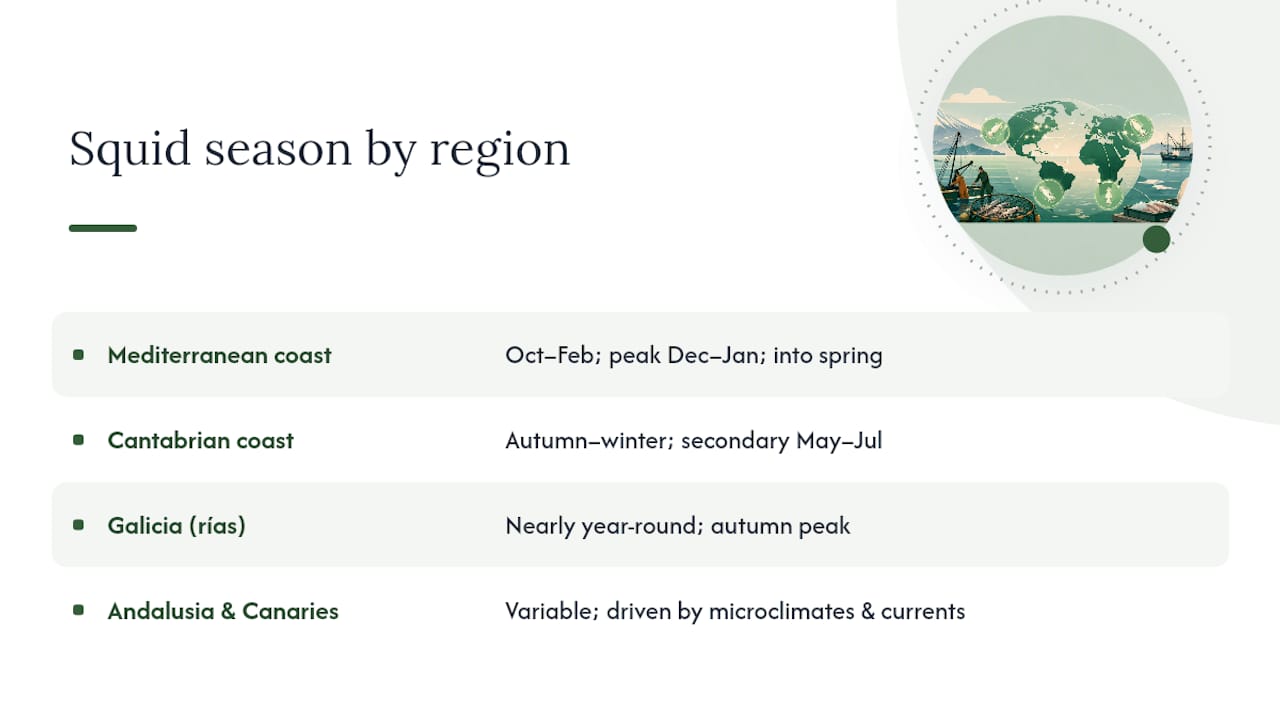
Mediterranean coast. This is the most forgiving region for consistent sourcing. The season runs roughly October through February, with December and January as the peak, but Mediterranean ports often keep decent volume into early spring, giving chefs more runway than northern suppliers can offer.
Cantabrian and northern coast. Here the pattern splits into two campaigns. Autumn and winter carry the bulk of the catch, but a secondary spring push between May and July gives northern buyers a second, smaller opportunity that Mediterranean buyers simply don’t get.
Galicia and the rías. Squid show up here nearly year-round, but landings still peak in autumn. Treat any winter or spring sighting as a bonus rather than a planning baseline.
Atlantic Andalusia and the Canary Islands. Patterns here run more local and less predictable, shaped by microclimate and current more than by a clean monthly rule. Buyers in these zones should lean on supplier relationships over calendar assumptions.
For ordering logistics: place standing orders for the Mediterranean window by early October, before December demand tightens supply. Cantabrian buyers should split their planning into two purchasing cycles rather than one, and expect frozen backfill to cover the gap between campaigns.
Pro Tip: Squid aggregate near harbor lights at night, which is why artisanal night-jigging fleets often land the freshest, most consistent product. Ask your supplier whether the catch came from a lit night operation rather than a daytime trawl. It changes the texture on the plate.
Why Does Squid Season Concentrate in Cooler Months?
Water temperature and life cycle timing push squid toward shore in autumn and winter, and that single mechanism explains almost everything about the season’s shape.
Loligo vulgaris has a short annual cycle. Cohorts spawned in spring reach catchable size by late autumn, aggregating near the coast just as water cools into their preferred range before dispersing again in winter.
A few forces drive this pattern together:
- Water temperature. Squid concentrate nearshore between 14°C and 19°C; below roughly 13°C, they move to deeper water and shore catches drop off fast.
- Migration and aggregation. Cooling water triggers inshore movement, often clustering near harbor lights and structure.
- Spawning cycles. Post spawning, adult squid move toward shallower feeding grounds.
- Prey availability. Baitfish and small crustaceans concentrate in the same cooler, nutrient-rich shallows.
Once temperatures fall below that 13°C threshold, don’t expect strong shore or near-coast landings. That’s your signal the window is closing.
How to Judge Fresh Squid Quality at the Market
Calendar timing gets you close. The actual squid in front of you tells the rest of the story, and harvest context often matters more than the date on the calendar.
Run through this checklist before you buy:
- Skin should look bright and slightly iridescent, not dulled or grayish.
- Eyes should be clear and full, never sunken or clouded.
- Mantle should feel firm and spring back when pressed, not mushy or slack.
- Smell should be clean and briny, with no ammonia sharpness.
- Size should be consistent with Loligo vulgaris; unusually large or tiny specimens outside typical range often signal a different species or older stock.
Decide early whether you need whole squid or cleaned tubes. Whole squid gives you more control over freshness verification but demands more prep labor. Cleaned or frozen product simplifies kitchen workflow but strips away most of the visual and tactile cues above.
Pro Tip: Ask suppliers for the exact time of landing and vessel type before you commit to an order. A same-day artisanal catch from a jigging boat beats a two-day-old trawl catch every time, regardless of what the invoice says about freshness.
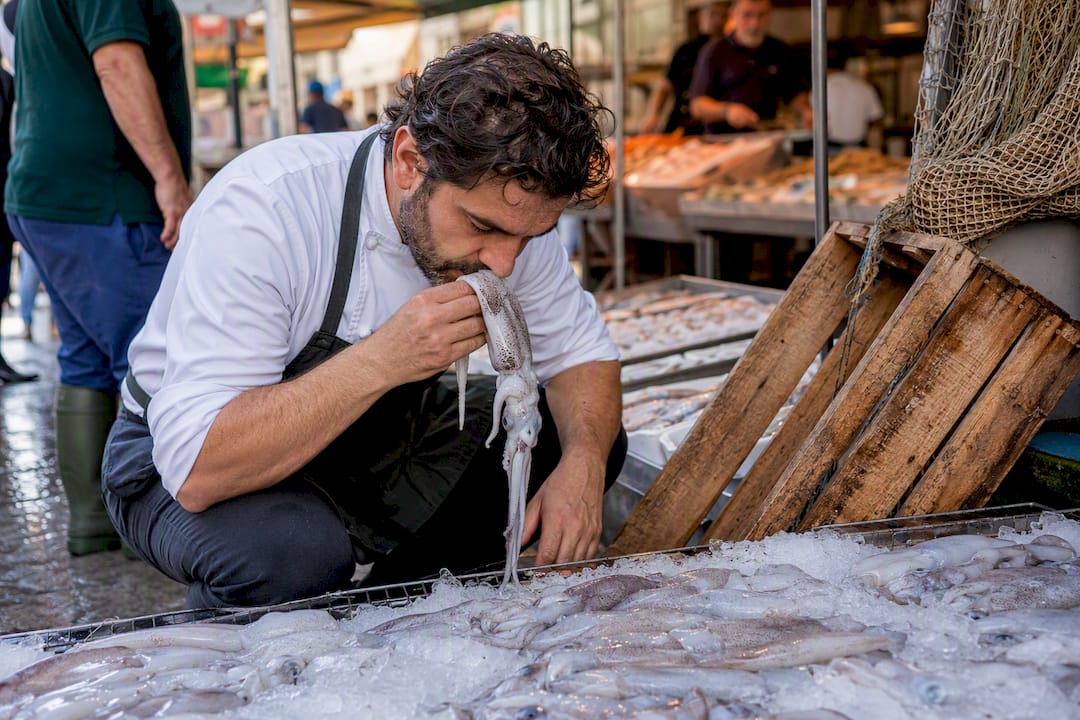
Pro Tip: Smell the mantle cavity, not just the exterior. Surface rinsing can mask early spoilage that the interior will reveal immediately.
Procurement and Menu Planning Around Squid Season
Turning season timing into kitchen action means locking orders early, sizing portions correctly, and knowing exactly what to ask a supplier before money changes hands.
Ordering timeline:
- Place standing orders for peak-season squid by early October for Mediterranean sourcing.
- Reserve spot buys for shoulder months (March, September) when volume is thinner but quality can still be strong.
- Build in a frozen-stock contingency for any menu item that can’t tolerate a supply gap.
Portioning guidance:
- Plan roughly 150 to 200 grams of whole squid per main-course portion, adjusted for preparation style.
- Scale tasting-menu courses down to 60 to 80 grams for a single small plate.
- For group menus, calculate total need per cover and add a 10% buffer for trim loss during cleaning.
Supplier questions worth asking every time: species confirmed as Loligo vulgaris or a named alternative, landing port, landing date and time, catch method (artisanal jig versus trawl), and any legality or size-minimum disclosures tied to regional fishing rules.
Industry pricing guidance generally favors buying at the peak of the season, when supply is deep and pricing is more stable, over chasing off-season stock at a premium.
Els Pescadors builds its seasonal menu rotation around exactly this kind of supplier transparency, tracking landing details and selecting seafood the same way any serious buyer should approach a squid order.
Boat-to-Plate Handling and Storage Best Practices
Buy squid that landed the same day whenever you can. Every hour on ice after that first day costs texture, and there’s no cooking technique that gets it back.
- Ice the catch immediately at landing to slow enzymatic breakdown.
- Clean and gut within hours of landing rather than waiting until kitchen delivery.
- Pack in shallow layers with fresh ice, avoiding crush weight on the mantle.
- Store at 0°C to 2°C in the walk-in, never above 4°C.
- Hold fresh squid no longer than one to two days before use; beyond that, freeze or discard.
Blast-chilling on arrival extends usable shelf life without pushing the product into a full freeze, which matters if you’re running a tasting menu that depends on true fresh texture rather than thawed.
Pro Tip: A brief blanch followed by an ice bath firms the surface just enough to hold shape during plating, without cooking the interior past a light sear later. It’s a useful trick when you need consistency across a full tasting-menu service.
Seasonal Squid Dishes Worth Putting on the Menu
Peak-season squid rewards restraint. The better the raw product, the less you should do to it.
- Crudo or ceviche-style preparations showcase the clean, briny flavor that only true fresh product delivers.
- Quick-sear a la plancha with olive oil, garlic, and lemon remains the standard for a reason: fast, high heat, minimal handling.
- Grilled whole tubes and tentacles work well as a shareable starter or a compact tasting course.
- Classic Catalan preparations, including rice dishes built around squid ink or stuffed calamari, lean into regional tradition.
Keep cook times short. Overcooked squid turns rubbery fast, usually inside 60 to 90 seconds past the ideal point on high heat. Light acid marinades work better than heavy tenderizing techniques, which tend to mask brine notes rather than preserve them.
For tasting menus, keep squid portions small and let the technique carry the course. When fresh supply runs thin, frozen product performs differently in texture and works better in braised or sauced applications than in raw or short-seared ones.
How We Plan Squid Season Into Our Menus
At Els Pescadors, tasting-menu planning tracks the squid curve directly. As landings build through October, a swap-in window opens where a grilled tube course replaces a heavier fish plate on the seasonal menu.

That single substitution, tied to genuine peak-season product, changes what a guest tastes and reflects a sourcing commitment that runs straight from harbor to table.
Taste the Season at Els Pescadors
Els Pescadors turns squid-season timing into something you can actually taste, not just read about. While plenty of restaurants serve calamari year-round regardless of freshness, the kitchen here shifts squid dishes onto the menu specifically when Mediterranean landings peak between October and February.
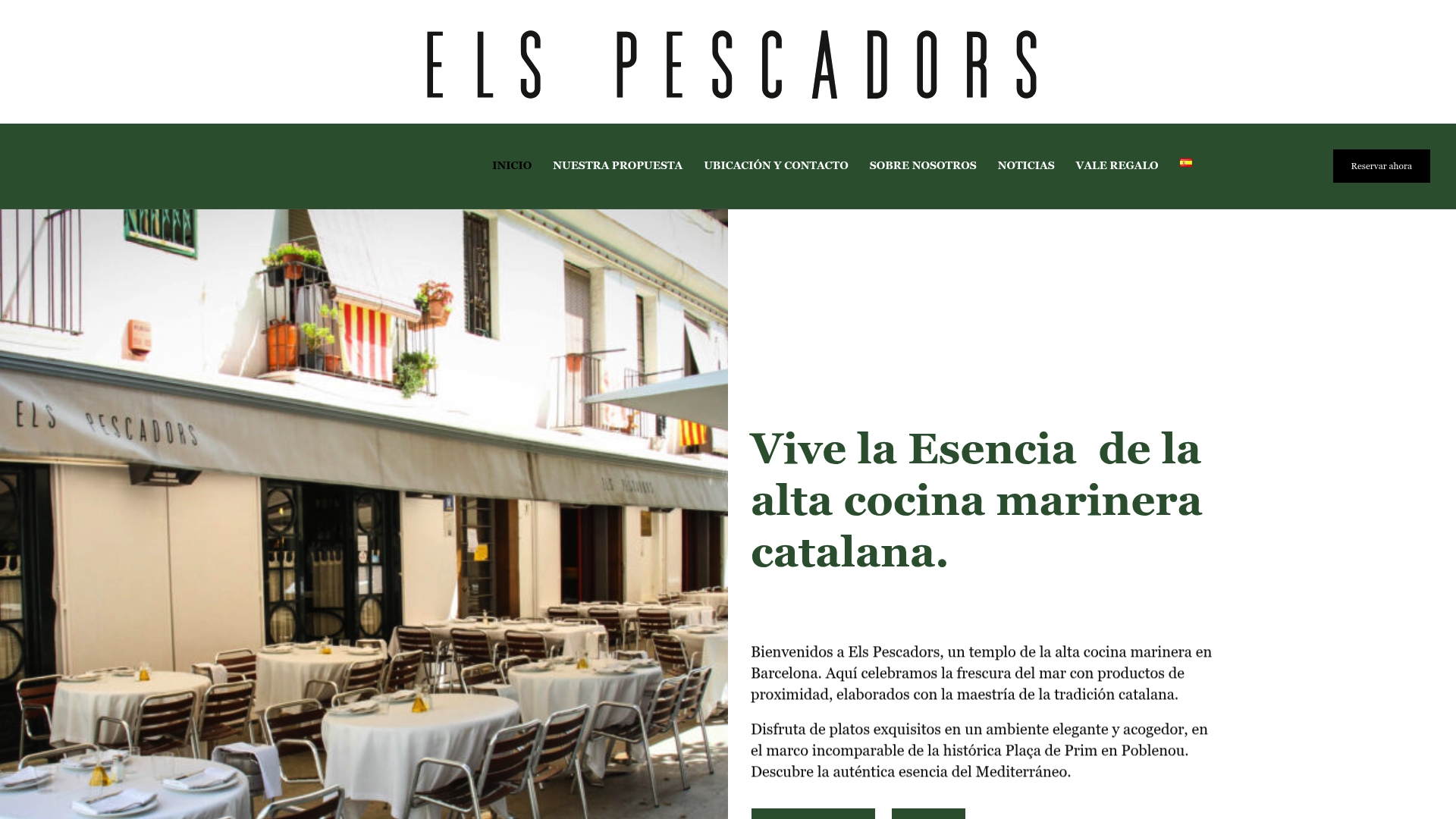
If you’re planning a night out built around seasonal seafood, the tasting menu showcases squid at its peak alongside other Catalan maritime dishes chosen for that week’s catch. Organizing a larger event or corporate dinner? The group dining page covers set menus built around the same seasonal sourcing philosophy. Reserve a table now while the current squid window is still running strong.
Sources
Always confirm current regulatory limits and size minima with your supplier before placing a large order.
FAQ
When Is Squid Season at Its Peak?
December and January are the strongest months, together accounting for nearly half of all annual landings across Spanish coasts.
Does Squid Season Differ by Region?
Yes. The Mediterranean coast runs a longer window from October through February, while the Cantabrian coast splits into an autumn/winter peak plus a smaller spring campaign from May to July.
What Water Temperature Produces the Best Squid Catches?
Squid concentrate nearshore between 14°C and 19°C; once water drops below about 13°C, they move to deeper water and shore catches fall off quickly.
How Long Can Fresh Squid Be Stored Before Cooking?
Hold fresh squid no more than one to two days under proper refrigeration at 0°C to 2°C; beyond that window, freezing is the safer option.
How Does Els Pescadors Source Squid During Peak Season?
Els Pescadors shifts squid dishes onto its seasonal tasting menu as autumn landings build, prioritizing supplier transparency on landing time and catch method.