“Pescado del día” means whatever fish arrived at the restaurant that morning, not a fixed dish on a laminated menu. In Barcelona, that fish almost always traces back to Mercabarna or a neighborhood market like Barceloneta, and the day of the week matters more than most visitors realize. Ask your server when the fish arrived, lean toward midweek dining, and treat Mondays with a healthy dose of skepticism.
TL;DR:
- The fish listed as “pescado del día” is sourced daily from Mercabarna or neighborhood markets, with fresh fish being the regular standard.
- Markets like Mercabarna handle over 70,000 tons of seafood annually, mainly fresh, and deliveries arrive early before lunch, ensuring freshness.
- Chefs advise avoiding ordering fresh fish on Mondays due to weekend slowdowns, increasing the chance of receiving older stock.
- Asking servers about the fish’s arrival date, origin, and whether it’s frozen helps verify if the restaurant genuinely sources daily catch.
- Prices range from around €12-€18 at casual spots to €35+ at fine dining, with a focus on seasonal, locally sourced fish and straightforward preparation methods.
Table of Contents
- What “pescado del día” means on Barcelona menus
- Where Barcelona’s daily fish comes from: Mercabarna and neighborhood markets
- Timing and freshness: why some days beat others
- Checklist and exact questions to ask when ordering pescado del día
- How Els Pescadors treats the pescado del día
- Typical fish in Barcelona’s daily catch, by season
- Why seafood sits at the center of Barcelona’s food culture
- Pairing pescado del día with local wines
- What pescado del día actually costs in Barcelona
- A local’s take on ordering the daily catch
- Taste Barcelona’s daily catch at Els Pescadors
- Sources
- FAQ
What “pescado del día” means on Barcelona menus
The phrase signals a dish that changes daily based on what the kitchen bought that morning, not a permanent menu item with a fixed name. A restaurant that lists “pescado del día” instead of naming a specific fish is telling you the catch dictates the menu, not the other way around.
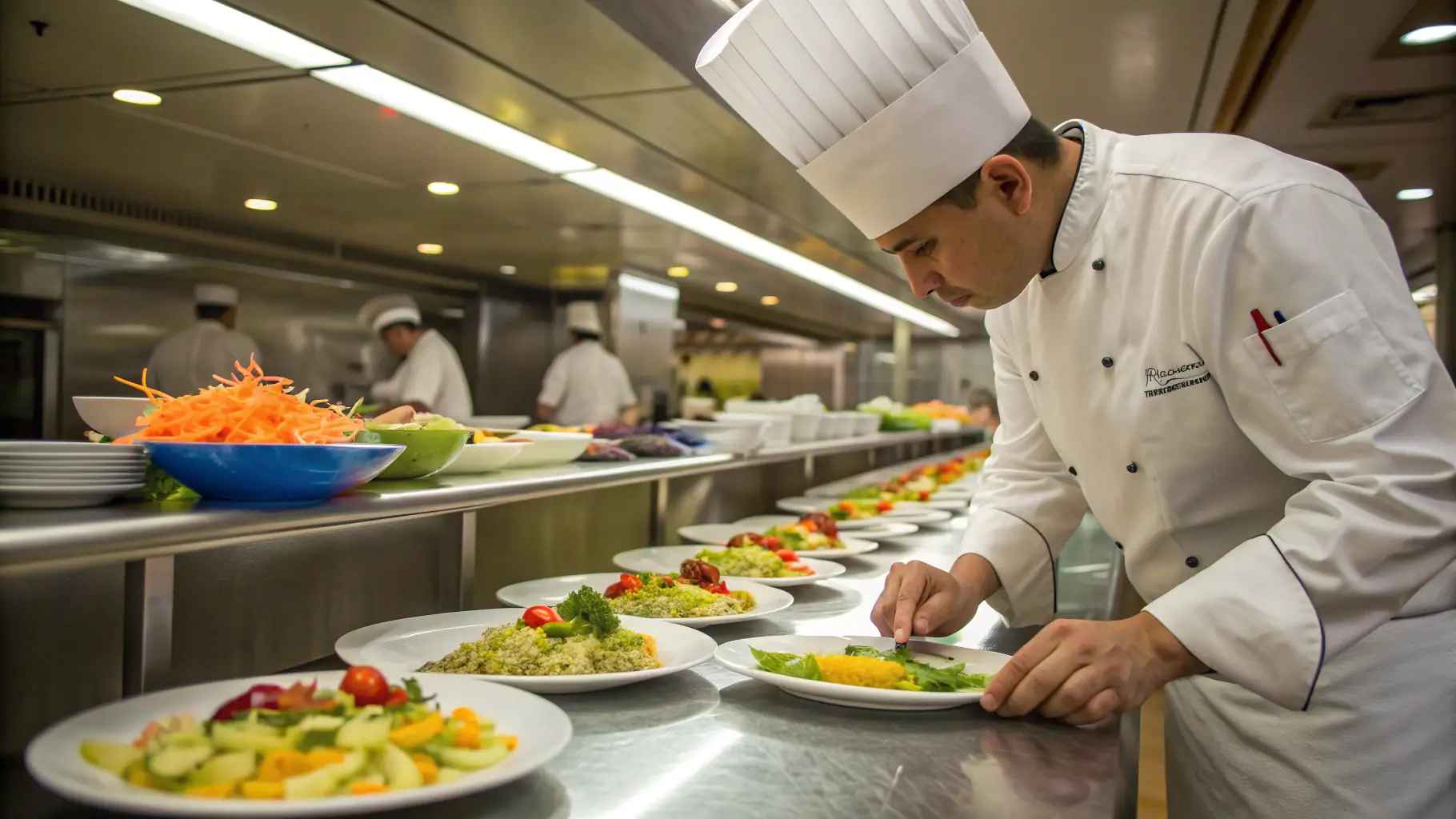
Kitchens built around this model tend to keep preparation simple: grilled, roasted whole, or served a la plancha with olive oil and a squeeze of lemon. The idea is to let the fish speak for itself rather than burying it under heavy sauces, which also happens to be the fastest way to expose a fish that isn’t actually fresh.
A few things separate restaurants that take this seriously from those that use “pescado del día” as marketing filler:
- The dish changes noticeably from one visit to the next, reflecting real market variation.
- Staff can name the exact species and where it came from without hesitating.
- The kitchen offers whole-fish options, which are harder to fake with frozen product than fillets.
Fish-focused restaurants also move through inventory faster than general Mediterranean spots, which mechanically improves the odds that what lands on your plate arrived within the last day or two, highlighting why fresh prepared food matters for your health.
Where Barcelona’s daily fish comes from: Mercabarna and neighborhood markets
Nearly all of Barcelona’s restaurant fish passes through one of two channels: the wholesale system at Mercabarna or direct relationships with neighborhood markets and coastal suppliers.
Mercabarna’s Mercado Central de Pescado y Marisco commercializes more than 70,000 tons of seafood a year, and roughly 81% of that volume is fresh rather than frozen. That scale makes it the backbone of restaurant supply across the city, and its overnight wholesale model explains why deliveries typically hit kitchens in the early morning hours, well before lunch service starts.
Neighborhood markets fill a different role. The Mercat de la Barceloneta sits close enough to the port that sellers and chefs interact directly, and vendors there often tip off regular buyers about what’s genuinely fresh that day rather than what’s just available.
A few supply facts worth knowing:
- Mercabarna publishes a calendar of open and closed days that directly affects when restaurants can restock.
- Barceloneta’s proximity to the sea shortens the gap between catch and counter for some species.
- Restaurants with direct relationships to specific sellers, at either hub, tend to get first pick on the best product.
Timing and freshness: why some days beat others
Monday is the day chefs themselves warn diners about. A 2026 piece in ElNacional quotes chefs recommending diners avoid ordering fresh fish on Mondays, since weekend slowdowns at the markets can leave kitchens working with stock that’s a few days old until Tuesday deliveries arrive.
That doesn’t mean every Monday fish dish is stale. It means the odds shift, and a restaurant without a confirmed Tuesday delivery is more likely to be serving Friday’s or Saturday’s leftovers dressed up as today’s special.
Here’s a simple sequence to follow when timing your visit:
- Default to Tuesday through Saturday for the best odds of same-day or next-day fish.
- If you’re dining on a Monday, ask directly whether the fish arrived that morning or over the weekend.
- Watch for restaurants that name a specific supplier or market, since that usually signals a real delivery schedule rather than a vague “fresh daily” claim.
- Notice whether the daily fish selection has actually changed from a menu you saw a day or two earlier.
Pro Tip: If a server can’t tell you what day the fish came in, ask which dish they’d order themselves that day. Staff who eat there regularly usually know exactly which plate to avoid.
Checklist and exact questions to ask when ordering pescado del día
A few seconds of conversation with your server tells you more than any menu description ever will. Ask these questions before you order:
- “¿Cuándo llegó el pescado?” (When did the fish arrive?)
- “¿Es fresco o congelado?” (Is it fresh or frozen?)
- “¿De qué mercado o proveedor viene?” (Which market or supplier does it come from?)
- “¿Qué guarnición recomienda con este pescado?” (What side do you recommend with this fish?)
Beyond the answers themselves, pay attention to how the staff responds. Confident, specific answers about the species, the market, and the delivery timing are a good sign. Vague responses, or a menu dominated by fixed fish dishes that never seem to change, suggest the “pescado del día” label is decorative rather than operational.
A useful comparison point: Mercabarna’s own figures show that about 81% of its seafood volume moves as fresh product, not frozen. That statistic matters because it tells you fresh fish is the norm at the wholesale level in Barcelona. A restaurant that leans heavily on frozen product isn’t following the regional supply pattern, it’s opting out of it.
Red flags worth remembering:
- A long list of “daily” fish dishes that look identical to last week’s menu.
- Staff who can’t name the fish’s origin or arrival date.
- A menu with far more frozen seafood items than fresh ones, especially for a restaurant claiming a daily catch.
How Els Pescadors treats the pescado del día
Els Pescadors, in Barcelona’s Poblenou district, builds its Carta del Día around what actually arrives from local suppliers rather than a static fish list. The restaurant’s own account of how it selects seasonal seafood describes a sourcing approach centered on freshness, seasonality, and sustainability, the same priorities that separate a serious daily-catch kitchen from one using the phrase loosely.
That sourcing philosophy carries through the restaurant’s broader menu structure:
- The Menú de Temporada rotates with what’s in season rather than staying fixed year round.
- The Menú Degustación lets kitchens showcase the best of that week’s catch across multiple courses.
- A specialized seafood kitchen with established supplier relationships is less exposed to the midweek supply gaps that trip up generalist restaurants.
A restaurant’s relationship with its suppliers matters as much as the fish itself. Specialization and direct sourcing ties are what let a kitchen serve a genuinely different “pescado del día” from one week to the next, instead of recycling the same frozen inventory under a rotating label.
That distinction, specialization versus generic labeling, is the clearest signal a diner has before the food even arrives.
Typical fish in Barcelona’s daily catch, by season
The species behind “pescado del día” shift with the Mediterranean calendar, and knowing the pattern helps you spot a restaurant that’s actually tracking the season versus one recycling a static list.
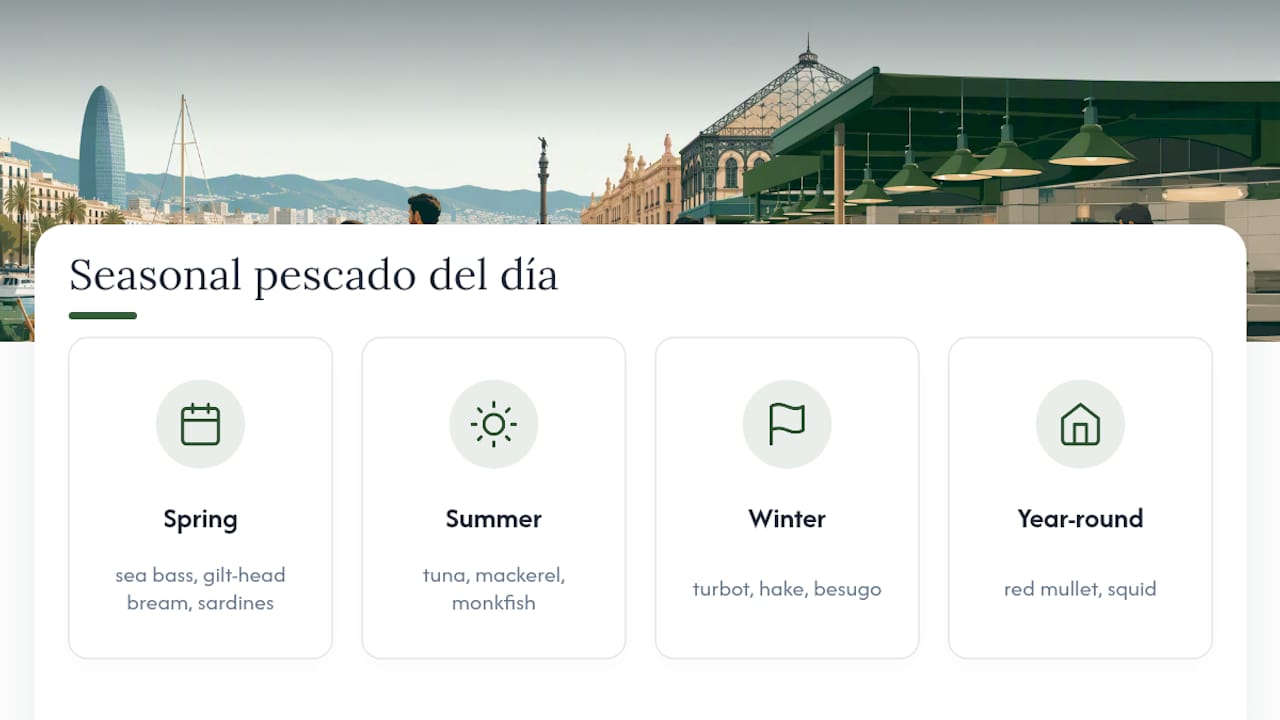
Spring and early summer tend to bring lubina (sea bass), dorada (gilt-head bream), and sardinas in strong supply, with sardines often at their fattest and most flavorful right before summer heat sets in. Summer months add atún (tuna) and caballa (mackerel) to the rotation, along with rape (monkfish), which holds up well to grilling.
Cooler months shift the emphasis toward rodaballo (turbot), merluza (hake), and besugo, a bream variety associated with winter and holiday tables across coastal Catalonia. Salmonetes (red mullet) and calamares appear fairly consistently year round, since both are staples of the local trawling fleet regardless of season.
A kitchen that swaps its daily fish selection to match this rhythm, more bream and turbot in winter, more tuna and sardines in summer, is telling you it’s actually buying to the market rather than defaulting to whatever’s easiest to stock. That seasonal fluency is one of the more reliable, if subtle, signs of a restaurant worth trusting with your order.
Why seafood sits at the center of Barcelona’s food culture
Barcelona’s relationship with fish isn’t a recent culinary trend, it’s structural. The city’s wholesale fish trade has roots going back generations, evolving from smaller centralized markets into the modern system that culminated with Mercabarna’s move to its current facility in 1983. That history explains why so much of Catalan cuisine, from suquet de peix to arroz de marisco, treats fish as a daily staple rather than an occasional indulgence.
Neighborhood markets reinforce that culture on a human scale. At Mercat de la Barceloneta, sellers and regular shoppers still trade advice about what’s freshest, a daily ritual that predates every restaurant menu built around the same catch. Fishing families settled the Barceloneta neighborhood itself, and that maritime identity still shapes how restaurants in the area talk about their menus.
The result is a food culture where “what’s fresh today” isn’t a gimmick, it’s the default question locals ask before deciding where to eat. Visitors who adopt that same question, rather than picking a dish off a printed menu without asking, are tapping into a habit that’s shaped Barcelona’s dining scene for decades.
Pairing pescado del día with local wines
The right glass depends more on preparation than species. A simply grilled white fish, sea bass or bream, pairs naturally with a crisp Catalan white like Penedès or a mineral-driven Empordà white, both of which won’t overpower delicate flesh.
Richer or oilier fish, like grilled tuna or mackerel, can handle a light, chilled rosado or even a young, low-tannin red served slightly cool. For shellfish-forward dishes or a seafood rice, a sparkling Cava cuts through richness and refreshes the palate between bites, a pairing that’s become something of a local default at celebratory meals.
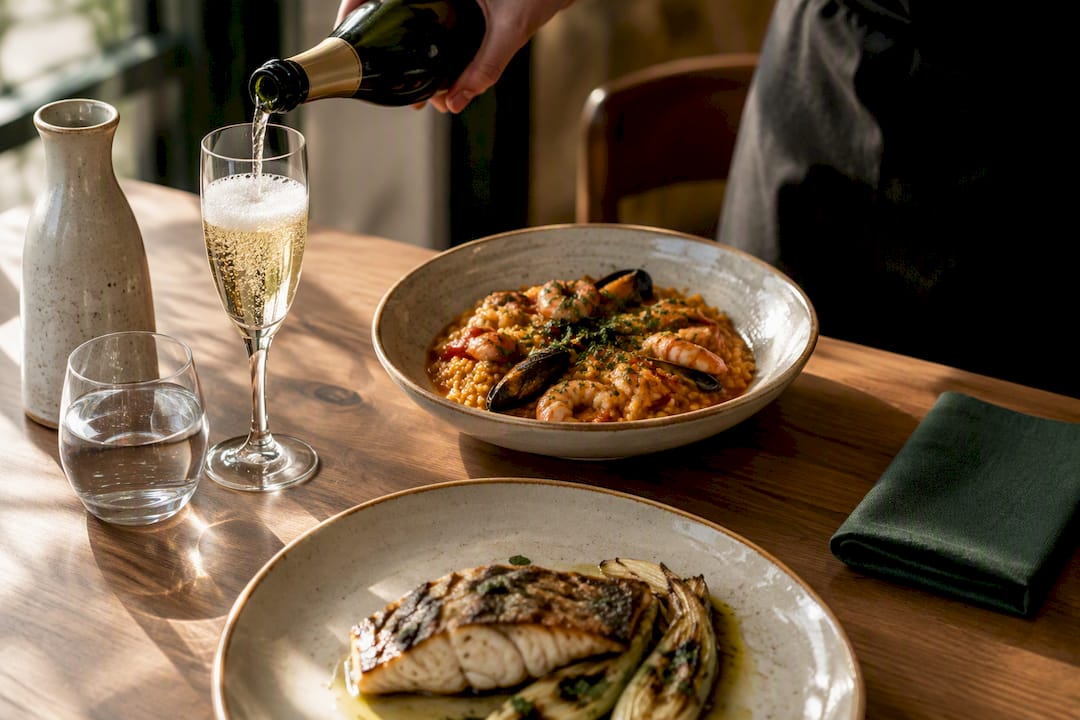
If you’re eating monkfish or turbot prepared with a heavier sauce, a fuller-bodied white with some oak, certain Rueda or barrel-aged Catalan whites, stands up better than a bare, unaged white would. When in doubt, ask your server what they’re pouring with that day’s fish specifically. A kitchen confident enough to name a specific pairing for its daily catch is usually the same kitchen that’s confident about where that fish came from.
What pescado del día actually costs in Barcelona
Price ranges swing widely depending on where you sit down. A casual market-adjacent spot near Barceloneta might charge €12 to €18 for a straightforward grilled daily fish plate, no frills, quick turnover, and a menu that leans on volume rather than presentation.
Mid-range seafood restaurants across the Gothic Quarter or Eixample typically price a daily fish main between €18 and €28, often with a side included and a slightly more curated sourcing story behind the dish. Fine dining establishments specializing in Catalan maritime cuisine push higher, with whole-fish preparations or tasting-menu formats built around the day’s catch running €35 and up per course or as part of a multi-course experience.
The gap usually reflects sourcing effort as much as ambiance. A restaurant paying more attention to supplier relationships, seasonal rotation, and preparation technique tends to charge more, and that premium often buys you a kitchen less likely to serve you three-day-old stock disguised as today’s special. Cheap doesn’t automatically mean stale, but a restaurant charging premium prices without a coherent sourcing story is a harder sell than one charging less with a clear, confident answer about where the fish came from.
A local’s take on ordering the daily catch
Ask the fish’s arrival date before you ask about preparation. That single question separates a kitchen proud of its sourcing from one hoping you won’t ask. Midweek visits, paired with a simple grilled preparation and a crisp Catalan white, give you the clearest read on whether a restaurant’s “pescado del día” is a genuine daily habit or just a phrase on the menu. If the answer feels rehearsed rather than specific, that’s worth noticing too.
— YellowRock
Taste Barcelona’s daily catch at Els Pescadors
Els Pescadors gives you a direct alternative to guessing which restaurant actually tracks the daily catch versus one recycling the same frozen list under a rotating label. The restaurant’s Carta del Día is built around seasonal, locally sourced fish rather than a fixed menu dressed up with a daily-special sticker.
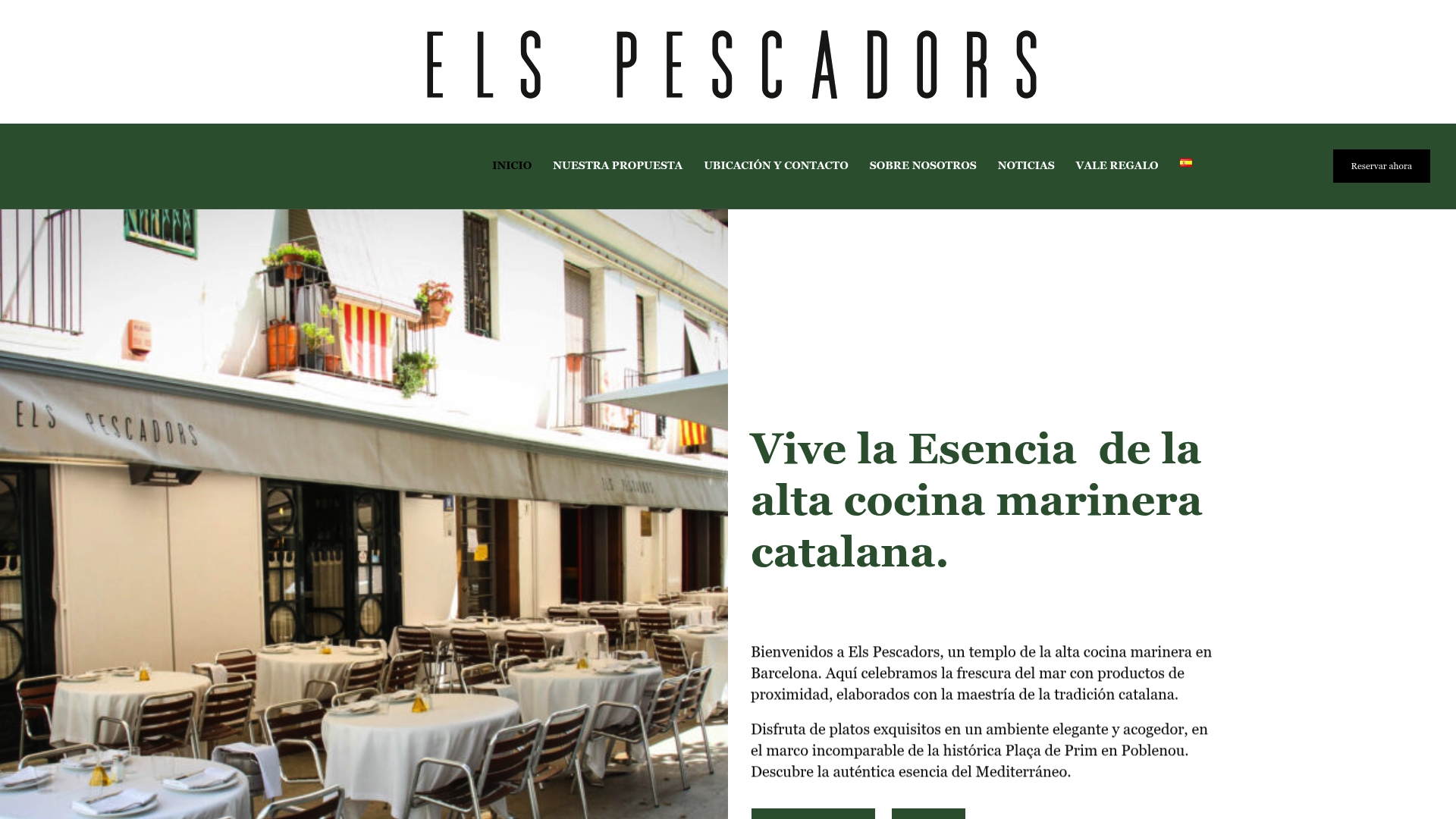
Beyond the daily selections, the Menú de Temporada runs €39 per person and shifts with what’s actually in season, while the Menú Degustación offers a multi-course route through the kitchen’s best current sourcing. Groups planning a private event can also arrange a Menú para Grupos built around the same seasonal, locally sourced approach. If you want to skip the guesswork this article just walked you through, check the current Carta del Día and reserve a table for a meal built on what actually came in that morning.
Sources
- Mercado Central de Pescado y Marisco de Mercabarna | Mercabarna
- Mercabarna – Mercat central del peix (Markets in Spain)
- Los chefs recomiendan que, si vas a pedir pescado en un restaurante, mejor no lo hagas un lunes (ElNacional)
- Mercat de la Barceloneta (This is Barcelona)
FAQ
What does “pescado del día” mean in Barcelona?
It refers to the specific fish a restaurant received that day, based on what was available at Mercabarna or local markets, rather than a fixed menu item. Restaurants that take it seriously change the dish regularly and can tell you exactly where and when it arrived.
Is it true that Monday is a bad day to order fresh fish?
Chefs commonly advise caution on Mondays since weekend market slowdowns can leave kitchens serving stock from before the weekend. It’s not an absolute rule, but asking about arrival day is worth doing before you order.
Where does Barcelona’s restaurant fish actually come from?
Most of it passes through Mercabarna, the city’s central wholesale fish market, which moves over 70,000 tons a year with roughly 81% sold fresh. Neighborhood markets like Barceloneta supplement that supply, especially for restaurants with direct seller relationships.
How much should I expect to pay for pescado del día?
Casual spots run roughly €12 to €18, mid-range restaurants typically charge €18 to €28, and fine dining establishments can run €35 or more per course. At Els Pescadors, the seasonal Menú de Temporada is priced at €39 per person, while a la carte and tasting menu prices are available directly on the restaurant’s site.
What should I ask staff before ordering the daily fish?
Ask when the fish arrived, whether it’s fresh or frozen, and which market or supplier it came from. Confident, specific answers are a strong signal, while vague responses or a menu heavy on frozen items are worth treating as a red flag.