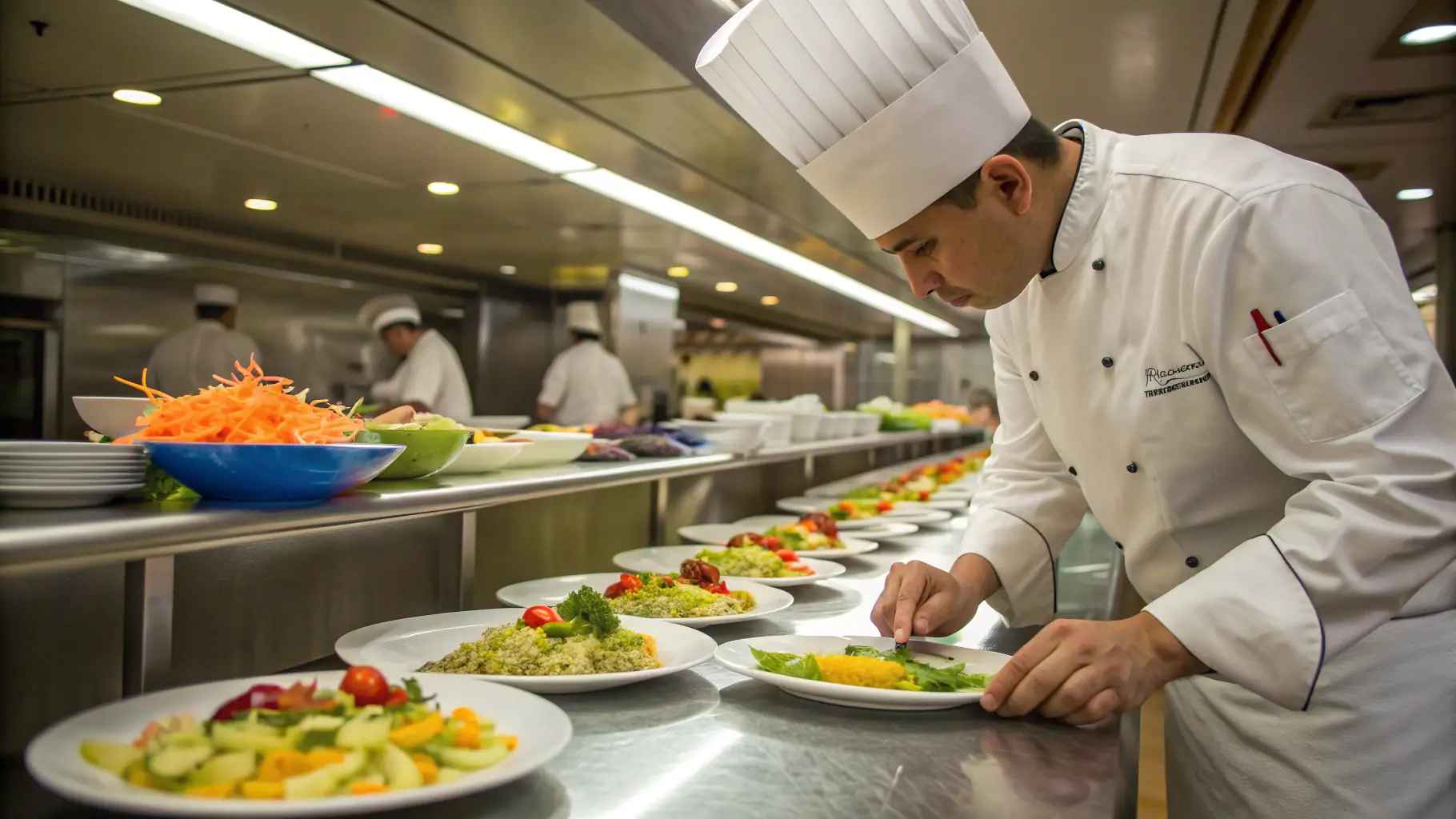
Salt baked fish is a whole fish packed inside a sealed shell of coarse salt and roasted until the flesh steams gently in its own moisture. The crust seals in heat and vapor rather than drying the fish out, so the result is tender, lightly seasoned flesh that pulls cleanly off the bone. Check doneness with a probe thermometer, aiming for a core temperature around 55 to 60°C. The method works well with many whole fish, from sea bass to trout to bream.
TL;DR:
- Using a probe thermometer to check for a core temperature of 55 to 60°C ensures proper doneness while keeping the fish moist and tender.
- Coarse sea salt, mixed with egg whites or water, provides a shell that seals in heat and vapor, preventing the flesh from drying out.
- Leaving the scales on the fish creates a barrier that helps control seasoning and prevents the salt from oversaturating the flesh during baking.
- The resting period inside the salt shell allows internal juices to redistribute, increasing moisture and flavor before cracking open the crust.
- Proper safety measures include verifying a core temperature of 60°C for parasite inactivation and maintaining separation of raw and cooked utensils to prevent cross-contamination.
Table of Contents
- Ingredients and salt mix for a whole fish
- Equipment and oven setup for salt baking
- Step-by-step method: building and baking the salt crust
- Food safety and parasite guidance for whole fish
- Common mistakes and how to fix a problem bake
- Flavor variations and serving ideas
- What restaurant technique brings to a home kitchen
- Why thermometer-led cooking beats timing charts
- Bring the technique to the table at Els Pescadors
- Sources
- FAQ
Ingredients and salt mix for a whole fish
A whole fish weighing roughly 500 to 700 grams per person works well for this method, including sea bass, bream, snapper, or trout. Choose fish with scales intact and skin unbroken, since the scales act as a barrier between the salt and the flesh.
For the crust, plan on about 1 to 1.5 kilograms of coarse sea salt per whole fish. Fine table salt packs too densely and oversalts the flesh, so stick to coarse or kosher grain. Mix the salt with a few egg whites or a small amount of water until it holds together like wet sand.
- Fill the cavity with lemon slices, fresh thyme, and a crushed garlic clove or two.
- Avoid adding loose salt inside the cavity since the crust alone provides enough seasoning.
- Keep the scales on the fish rather than scaling it, since this protects the flesh during baking.
- Scale the salt quantity up proportionally for larger fish or multiple servings.
Equipment and oven setup for salt baking
A probe thermometer is the one piece of equipment that turns this from a guessing game into a repeatable recipe. Insert it through the thickest part of the crust and flesh before the fish goes in the oven, or check it partway through baking by inserting it carefully.
- Use a rimmed baking tray on the middle oven rack for even heat distribution.
- Choose coarse sea salt over fine salt, since it holds shape and does not oversaturate the fish.
- Test the salt mixture by squeezing a handful: it should hold its shape like packed sand, not crumble or run.
- Line the tray with parchment paper for easier cleanup and crust removal.
Step-by-step method: building and baking the salt crust
Preheat the oven to between 190 and 200°C, adjusting toward the lower end for a fan oven since the circulating air cooks faster than a conventional electric setting.
- Pat the whole fish dry and stuff the cavity with lemon, thyme, and garlic, leaving the scales on.
- Mix coarse sea salt with egg whites or water until the texture holds together when pressed, usually about 1 to 1.5 kilograms of salt per fish.
- Spread a bed of the salt mixture on the lined tray, about 1 centimeter thick, and lay the fish on top.
- Pack the remaining salt mixture over the entire fish, sealing it completely in a shell roughly 1.5 to 2 centimeters thick.
- Bake until the crust turns golden and hardens, typically 25 to 35 minutes depending on the thickness of the fish.
- Insert the probe thermometer through the crust into the thickest part of the flesh, avoiding the central bone, and check for a core temperature of about 55 to 60°C.
- Remove the tray from the oven and let the fish rest inside the salt shell for 5 to 10 minutes before cracking it open.
- Tap the crust firmly with the back of a spoon or a small mallet to break it, then lift away the hardened salt along with the skin and scales.
- Lift the fillets off the bone, finish with a light drizzle of oil or a squeeze of lemon, and plate.
55 to 60°C is the core temperature target recipe writeups consistently point to for salt baked whole fish, a range that keeps the flesh moist while fully cooking it through, according to a detailed salt crust recipe writeup. The resting period inside the shell lets the internal juices redistribute before you crack it open, which is part of why restaurant kitchens treat the rest as a non-negotiable step rather than an optional pause.
Food safety and parasite guidance for whole fish
Fish can carry live parasites such as Anisakis, and heat is the main defense for a cooked preparation like this one. EU and EFSA guidance states that a core temperature of 60°C held for one minute inactivates viable parasites, though thicker cuts need more time at the center to reach that point throughout. Freezing at minus 18°C for an extended period is the alternative control method, which matters more for raw or undercooked preparations than for a fully baked salt-crust fish.
Reaching 60°C at the core for one minute is the heat benchmark EU guidance uses to confirm parasites have been inactivated in fishery products.
- Use a clean thermometer probe and wipe it between uses to avoid cross-contaminating raw and cooked surfaces.
- Follow EFSA’s safe food handling guidance on keeping raw fish and ready-to-eat items on separate boards and utensils.
- Ask your fishmonger whether the fish is wild caught or farmed, since risk profiles and recommended freezing practices can differ.
Common mistakes and how to fix a problem bake
Leaving the scales on is not a cosmetic choice. It is what keeps the salt from penetrating the flesh directly, which is why scaled fish often comes out drier or oversalted under a crust. When probing for temperature, angle the thermometer away from the spine and central bone, since contact there gives a false reading. If you do not have a probe, a toothpick slid into the thickest part should meet little resistance when the fish is done.

If the crust cracks open early in the oven, patch it with a bit more wet salt mixture and continue baking, checking the temperature a few minutes early. If the fish reads underdone, reseal the opening and return it to the oven in short intervals, checking often.
Pro Tip: Finish the fish with a light, neutral oil or a pat of butter rather than a bold, fruity extra-virgin olive oil, which can overpower the delicate flavor the salt crust preserves.
- Keep scales intact through the entire process, including serving.
- Probe away from the bone and check more than one spot on thicker fish.
- Patch cracked crusts rather than abandoning the bake.
Flavor variations and serving ideas
A bed of cabbage or leek leaves under the fish, inside the salt shell, adds a subtle vegetal note and can make unwrapping the fish easier since it lifts the flesh slightly off the direct salt layer. This swap changes the texture only slightly but makes plating neater.
For sauces, a bright romesco or a simple chimichurri cuts through the richness of the fish without masking it. A lemon-herb oil works as a lighter option for those who want to taste the fish itself.
- Serve the whole fish on a platter and fillet it tableside for a more dramatic presentation.
- Pair with simple roasted vegetables or a green salad rather than heavy sides.
- Thai-style versions often stuff the cavity with lemongrass, kaffir lime leaves, and chili instead of the lemon and thyme used here, with the same core salt technique.
What restaurant technique brings to a home kitchen
Restaurant kitchens rely on precise core temperatures rather than fixed bake times, since fish thickness varies from one catch to the next. That same thermometer-led approach is what makes salt baking reliable at home instead of a hit-or-miss method. For readers who want to go deeper on low-temperature fish cookery, guidance on precise doneness for fish covers the same principle applied across other cooking methods. Seasonal sourcing matters too: a fish’s role in a balanced diet often starts with choosing the freshest catch available, which is the same instinct that guides which whole fish to pick for a salt crust.
Why thermometer-led cooking beats timing charts
The biggest gap in most salt baked fish writeups is their reliance on fixed bake times instead of temperature targets. A 600 gram sea bass and a 900 gram bream do not cook at the same rate, yet many recipes list a single number of minutes and hope for the best. That approach produces inconsistent results, especially for cooks working with an unfamiliar oven or an irregularly shaped fish.

The fix is simple: treat the probe thermometer as the primary tool and the clock as a rough guide. Readers who skip the thermometer are the ones who end up with a cracked-open fish that is either chalky and overdone or translucent near the bone. The resting step gets skipped just as often, and it matters nearly as much as the bake itself, since cutting into the fish immediately after cracking the crust lets moisture escape before it redistributes.
Prioritize the thermometer first, the rest second, and the recipe’s exact minutes a distant third.
— YellowRock
Bring the technique to the table at Els Pescadors
Not every cook wants to manage a salt crust on a weeknight, and that is exactly where a seafood-focused restaurant earns its place. A seafood-focused restaurant prepares fresh fish daily using the same attention to precise cooking and seasonal sourcing described here, applied across a menu built around Catalan maritime cooking in a historic setting in Barcelona.
For readers who want to taste the result of careful technique without the prep and crust-building, the Menú Degustación offers a tasting format that moves through seasonal seafood dishes course by course. Those planning a larger gathering can look at the Menú para Grupos for a seated group experience built around the day’s catch. Reserve a table to see how a professional kitchen applies fresh fish principles similar to those this guide walks through at home.
Sources
- Guidance on viability of parasites in fishery products (EU / EFSA related guidance)
- Proper food handling | EFSA
- Stern
FAQ
What does salt baking a fish do?
Salt baking seals a whole fish inside a hardened salt shell that holds in steam and heat, cooking the flesh gently and evenly while keeping it moist. The crust also seasons the fish lightly from the outside in, without making it oversalted if the scales are left intact.
How do you make Thai-style salt baked fish?
Thai-style versions use the same coarse salt crust technique but stuff the cavity with lemongrass, kaffir lime leaves, and chili instead of lemon and thyme. The baking method, crust thickness, and temperature target stay the same as a classic preparation.
Where did salt baked fish originate?
Salt crust cooking has roots in multiple coastal culinary traditions, including Mediterranean and Asian cooking, where coarse salt was a practical way to cook whole fish evenly without added fat. The exact origin is not clearly documented in a single source, but the technique appears across many fishing cultures.
How do I prepare salt fish safely?
Use a probe thermometer to confirm the core of the fish reaches about 55 to 60°C, which aligns with EU heat-treatment guidance for inactivating parasites in fishery products. Keep raw fish, utensils, and the thermometer probe separate from ready-to-eat items to avoid cross-contamination.