Arbequina is the mild, fruity oil you reach for on raw seafood, salads, and anything you want to finish rather than cook. Picual is the robust, bitter, higher-phenolic oil built for frying and long braises. The split isn’t a matter of taste alone: it comes down to measurable differences in phenolic content and oleic acid that change how each oil behaves under heat and time.
TL;DR:
- Picual olive oil generally has higher phenolic content and oleic acid, making it more stable under heat and ideal for frying or long cooking.
- Arbequina’s lower phenolic level results in a softer, more delicate flavor suited for raw dishes, finishing, and vinaigrettes, but with a shorter shelf life.
- Harvest timing and processing conditions significantly influence the phenolic strength and bitterness of both oils, with earlier harvests increasing phenolic concentration.
- Picual often meets the European antioxidant health claim more frequently due to its higher phenolic levels, but actual content varies by harvest and production.
- For optimal quality, choose dark bottles, favor recent bottles, and verify lab-verified phenolic figures, especially if health benefits are a priority.
Table of Contents
- Arbequina: origin, flavor, and why it fades faster
- Picual: Spain’s workhorse variety and its bitter edge
- How the two oils compare on flavor, chemistry, and heat
- What to cook with each oil
- What the phenolic differences mean for your health
- Reading labels and storing oil so it stays good
- How a seafood kitchen decides which oil to pour
- Taste both, on the plate they’re meant for
- Sources
- FAQ
Arbequina: origin, flavor, and why it fades faster
Arbequina developed in Catalonia and has since spread to olive groves across the Mediterranean and beyond, prized wherever growers want a mild, aromatic oil rather than an assertive one, according to the World Olive Catalogue. Tasters describe it as sweet, fruity, and almost buttery, with green apple or almond notes and very little bite.
That gentleness traces back to chemistry as much as tradition. Arbequina generally carries lower phenolic content, which gives it a softer taste but also shorter shelf life and lower resistance to heat, per the same varietal data. Producers who want to protect what little pungency the fruit has often lean on early harvest timing and cooler malaxation, since research on extraction parameters shows these choices help preserve phenolics and green aromatics that would otherwise disappear during processing.
- Origin: Catalonia, now grown widely across Mediterranean regions.
- Flavor: mild, fruity, sweet, low bitterness and pungency.
- Chemistry: comparatively lower phenolic content, shorter oxidative stability.
- Best handled with early harvest and cold extraction to keep what aromatics it has.
Picual: Spain’s workhorse variety and its bitter edge
Picual is the most widely planted olive variety in Spain, dominating groves across Andalusia, and it’s known for producing oil with high oleic acid and strong stability, according to the World Olive Catalogue. Where Arbequina reads as soft, Picual reads as loud: bitter, peppery, and green, with a pungency that can catch in the back of your throat.
That intensity is a direct result of higher phenolic concentration, the same compounds responsible for the oil’s longer shelf life and better resistance to oxidation. Harvest timing changes the volume knob here too: earlier picking and shorter, cooler malaxation tend to push phenolic intensity higher, while later harvest and warmer processing soften the bitterness, per the same extraction research.
- Distribution: dominant variety in Andalusia and across Spain overall.
- Flavor: bitter, peppery, green, noticeably pungent.
- Chemistry: higher phenolic content, high oleic acid, strong oxidative stability.
- Harvest date and malaxation conditions shift how intense that bitterness lands in the bottle.
How the two oils compare on flavor, chemistry, and heat
Put side by side, the differences aren’t subtle. Arbequina’s phenolic content tends to be lower than Picual’s, a gap that sensory and compositional research ties directly to Picual’s stronger bitterness and pungency. Those phenolic compounds aren’t just about taste: they act as natural preservatives, which is why Picual holds up better over time and under heat.
That stability advantage shows up in the kitchen, not just the lab. Frying studies comparing the two oils found Picual outperforms both Arbequina and high-oleic sunflower oil in thermal stability, tolerating more frying cycles before hitting regulatory quality limits.
- Taste: Arbequina is soft and fruity; Picual is bitter, peppery, and assertive.
- Chemistry: Picual’s phenolic content and oleic acid run higher across the board.
- Cooking: Picual withstands more heat and more reuse before breaking down.
- Quick guide: pick Arbequina to finish delicate dishes, Picual to fry or braise.
If you’re choosing by flavor alone, let the dish decide. If you’re choosing by performance under heat, Picual has the edge every time.
What to cook with each oil
Both oils earn their place in a kitchen, just not in the same role.
- Drizzle Arbequina raw over crudo, carpaccio, or a simple tomato salad, where its sweetness won’t fight the main ingredient.
- Use Arbequina in vinaigrettes and mayonnaise-style sauces that need fat without sharpness.
- Fry with Picual when you want an oil that survives multiple batches, from croquetas to fried fish.
- Finish stews, lentils, or grilled meats with a spoonful of Picual for a bitter, peppery lift that stands up to richer flavors.
- Blend the two when you want fruitiness up front and a bitter finish behind it, useful for an all-purpose house oil.
Rice dishes split the difference depending on texture: a brothier rice can take a mild Arbequina finish, while a drier, more concentrated rice often wants Picual’s pepper. For more on how rice texture changes what a dish needs, see this comparison of arroz caldoso and meloso.
Pro Tip: Keep a small bottle of single-variety Arbequina strictly for finishing. A little goes further than you’d expect, and heat kills the point of buying it.

What the phenolic differences mean for your health
The European Food Safety Authority allows an antioxidant health claim on olive oil that delivers at least 5 mg of hydroxytyrosol and its derivatives per 20 g, a threshold set out in EFSA’s 2011 opinion. Oils with naturally higher phenolic content have an easier time clearing that bar.
Picual’s typically higher phenolic average puts it closer to that threshold more often than Arbequina, based on the same phenolic and sensory data cited above. But phenolic content varies by harvest, region, and processing, so a specific bottle’s numbers can land well above or below the variety’s typical range.
- Look for a harvest date on the label rather than a vague “best by” year.
- Favor producers who publish lab-verified phenolic figures, not just marketing claims.
- Buy recently bottled oil when the health claim matters to you specifically.
- Treat variety as a starting point, not a guarantee of phenolic content.
Reading labels and storing oil so it stays good
A label tells you more than the variety. Look for “extra virgin,” a harvest date, and, where it applies, a protected designation of origin, since these indicate freshness and traceability rather than just a marketing term.
Packaging matters almost as much as what’s inside. Dark glass bottles or tins protect against light exposure, which degrades phenolics and aromatics over time, while smaller bottles limit how long an opened oil sits exposed to air.
- Store bottles in a cool, dark cabinet, never near the stove or a sunny window.
- Use opened oil within a few months rather than letting it linger for a year.
- Choose monovarietal Arbequina or Picual when you want a specific flavor profile for a dish.
- Choose a blend when you want one all-purpose oil that balances fruitiness and bitterness.
How a seafood kitchen decides which oil to pour
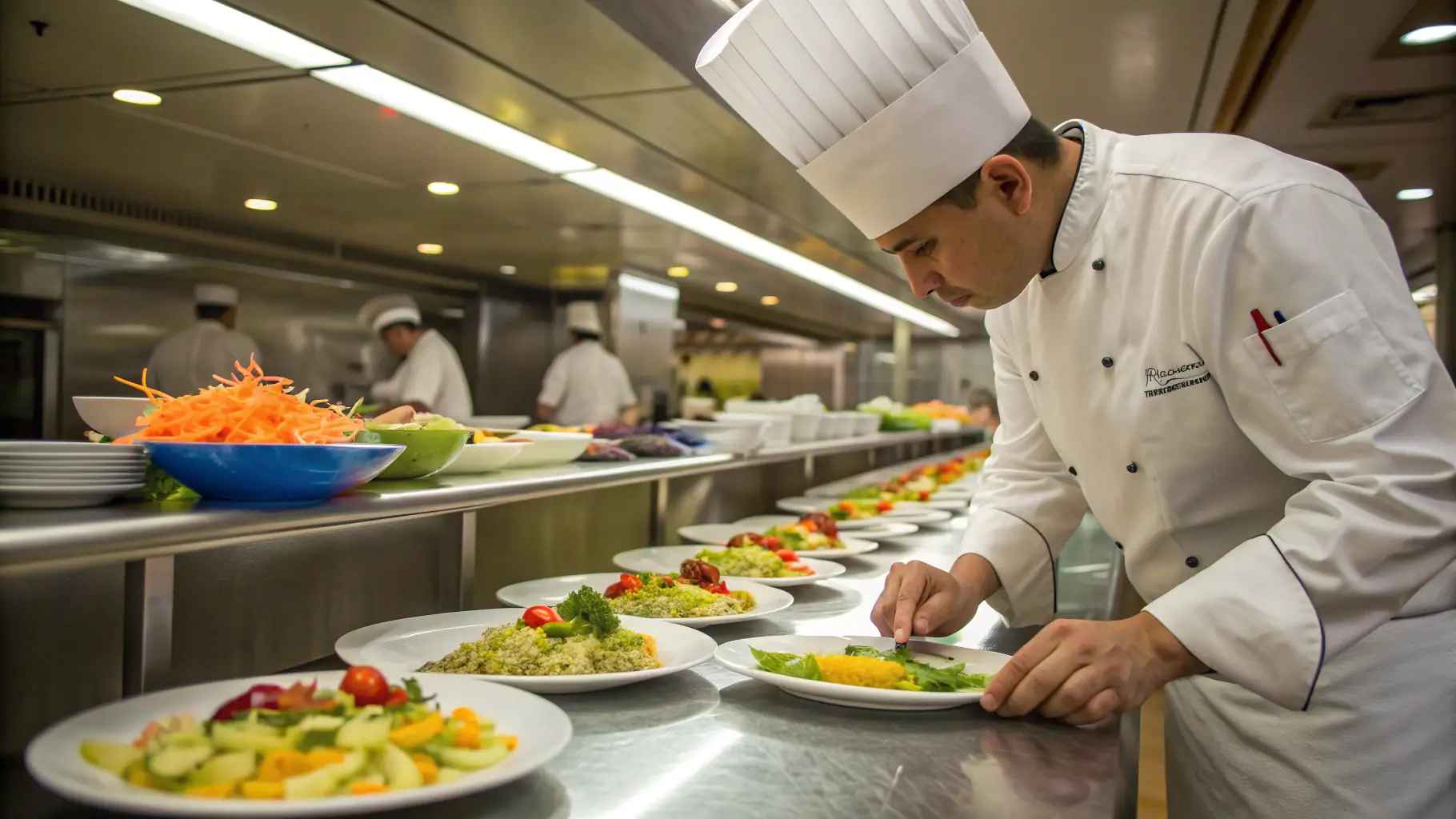
In a kitchen built around fresh catch, the choice between these two oils comes down to what’s on the plate. A delicate piece of raw fish or a simple seafood salad gets Arbequina, since its sweetness lets the fish speak without competing for attention. Anything fried, whether it’s a classic croqueta or a piece of battered fish, gets Picual, because it holds up through repeated frying without turning bitter or breaking down.
That same logic shapes how a tasting menu moves from course to course: lighter, rawer plates open with an Arbequina finish, while heartier or fried courses later in the meal lean on Picual’s pepper to cut through richness. It’s a small decision, but one that changes how a dish reads on the palate.
— YellowRock
Taste both, on the plate they’re meant for
Reading about the difference between Arbequina and Picual only goes so far. The clearest way to understand why a chef reaches for one over the other is to taste both oils doing the job they were made for, on a plate designed around fresh, local seafood. At a fine seafood restaurant in Barcelona’s historic Poblenou district, olive oil is treated as an ingredient chosen dish by dish, not poured on autopilot.

The seasonal Menú de Temporada, priced at €39 per person, moves through courses built on daily fresh catch and traditional Catalan rice dishes, giving you a practical look at how a mild finishing oil and a robust cooking oil each earn their place across a single meal. For a longer, multi-course version of the same idea, a tasting menu option walks through several plates where the oil choice shifts with the dish. Private group menus bring similar attention to seasonal ingredients in group settings. Reserve a table and taste the difference.
Sources
- World Olive Catalogue / World Olive Germplasm Bank – varietal facts
- Molecules study — phenolic content and sensory links
- Changes in the physicochemical and nutritional parameters of Picual and Arbequina olive oils during frying
FAQ
What is the difference between Picual and Arbequina?
Picual is bitter, peppery, and higher in phenolic content, while Arbequina is mild, fruity, and softer on the palate. The gap in phenolics also means Picual holds up better under heat, according to research comparing the two varieties.
Which olive oil is better, Picual or Arbequina?
Neither is objectively better since the right choice depends on the job: Arbequina suits raw dishes and delicate finishing, while Picual suits frying and long cooking thanks to its higher oleic acid and greater thermal stability, per frying stability research.
Which olive variety produces the best oil?
There’s no single best variety, since quality depends on harvest timing, processing, and freshness as much as the cultivar itself. The World Olive Catalogue documents dozens of varieties, each suited to different climates, uses, and flavor goals.
What is the difference between Arbequina, Picual, Hojiblanca, and Cornicabra oils?
Arbequina is mild and fruity, Picual is bitter and highly stable, and both Hojiblanca and Cornicabra tend to fall between the two, offering moderate bitterness and pungency with their own distinct aromatic notes. Regional growing conditions and harvest date shift these profiles further within each variety, as documented across varietal catalogue data.
Does Picual olive oil qualify for the EFSA antioxidant health claim more often than Arbequina?
Picual’s typically higher phenolic content makes it more likely to reach the EFSA-authorized threshold of 5 mg of hydroxytyrosol and derivatives per 20 g, but individual bottles vary by harvest and processing. Checking a specific oil’s lab data is more reliable than relying on variety alone.