If you find a bone in your mouth, remove it with your fingers, quietly, and set it on the edge of your plate. That is the whole rule, and it is the one that Debrett’s and most etiquette writers agree on. Everything else is detail: how to spot bones before they reach your mouth, how to handle a whole fish, where the leftovers go, and the rare moment when a bone is a medical matter rather than a manners one.
We cook fish every day in Poblenou, so we see how guests handle bones every service. This guide combines what etiquette authorities say with what actually happens at a Barcelona table.
TL;DR
- A bone in your mouth comes out with your fingers (thumb and index finger), discreetly, and goes on the side of your plate.
- Do not spit it into a napkin or make a show of it. Cover your mouth with your hand if you need to.
- With a whole fish, work along one side of the backbone, lift the skeleton away, and keep the bones on a side plate or the edge of the plate.
- In Spain, assume fish may have espinas even when it looks filleted, and check each forkful.
- If a bone is stuck, you are in pain or cannot swallow, stop eating and get medical care. Home remedies can make things worse.
Table of Contents
- The basic rule: fingers, side of the plate, no fuss
- Avoid the bone in the first place
- Eating a whole fish step by step
- Where do the bones go?
- Can you eat fish bones?
- When a bone is stuck: what to do and when to get help
- Our perspective: how we think about bones at Els Pescadors
- Eat fish with us in Poblenou
- Fish bones in Barcelona and Catalonia
- A quick reference for the table
- FAQ
- Sources
The basic rule: fingers, side of the plate, no fuss
Etiquette guides differ on many small points, but they converge here. Debrett’s guidance on table manners says that if something is unsafe to eat, you should cover your mouth with your hand and quickly and discreetly put it on the side of your plate. Its guide to eating fish adds that small bones found in the mouth are removed with the fingers and placed at the side of the plate.
The American etiquette consultant Diane Gottsman gives the same advice in more practical terms: use the index finger and thumb of your left hand, place the bone discreetly on your plate, and do not make a big deal of it. The last part matters most. The goal is for your companions to keep talking without noticing anything happened.
A simple sequence
- Stop chewing and keep your mouth closed. Chewing with an open mouth is the thing people notice, far more than a bone.
- Move the bone with your tongue to the front of your mouth.
- Lift your hand to your mouth as a screen, take the bone between thumb and forefinger, and lower it.
- Set it on the rim of your plate, away from the food you are still eating. Tuck it under a garnish or a lemon wedge if you like.
- Pick up your glass or your conversation again.
The “same way it came in” principle
A useful shortcut comes from Spanish etiquette writing: a bone leaves your mouth the way it entered. If the food arrived on a fork, a Spanish etiquette article on good table habits says you can use cutlery to remove it, and if you were eating with your hands, your hand is fine. In practice, most diners find fingers quicker and less awkward, and the fork method works best when the bone is large and visible.
Another approach, described in a 2019 etiquette guide, is to use the tongue to push the bone onto your fork and set it at the edge of the plate. If a bone is lodged between your teeth, that guide suggests excusing yourself and dealing with it in private. Both are sensible. Do not pick at your teeth at the table.
What not to do
- Do not spit a bone into your napkin. It ends up in the laundry or on the floor.
- Do not drop bones into your glass, your bread basket or a shared dish.
- Do not announce it. A quick “excuse me” is only needed if you must leave the table.
- Do not pile bones in a tower. A neat, small cluster at the rim is plenty.
Avoid the bone in the first place
The best etiquette is not needing it. Spanish fish is often served with its bones, and a long-term resident’s account of surviving Spain’s bony fish advises checking each forkful for small espinas before you eat it, and warns that even cuts that look filleted can contain some.
That is not a flaw in the kitchen. Many fish simply have fine pin bones that run through the flesh, and removing every one would damage the fillet. Here is how we suggest reading the plate:
- Break the flesh with your fork first. Bones show up as pale, thin lines when the flesh flakes.
- Take small bites. A small forkful is easier to scan and to chew carefully.
- Chew slowly and use your tongue. Most bones are felt before they are swallowed.
- Go slower with children. Cut their fish into small pieces and check it for them.
- Ask when you order. Whether a fish comes whole, in loins or boned is the kind of thing a server expects questions about. Our own list of questions to ask before ordering seafood covers it.
Eating a whole fish step by step
A whole fish on the plate looks like an exam. It is actually the easiest way to deal with bones, because you can see the skeleton and avoid it.
Debrett’s method is to work down one side of the backbone from head to tail, lift the skeleton away rather than flipping the fish over, and then ease out the meat underneath. A Spanish protocol resource describes a similar order for whole fish: remove the tail, bones and head, and eat with a fish fork. If the fish arrives already cleaned, it says to use only the fish fork for both cutting and eating.
The practical version
- Cut behind the head and above the tail with a knife, just enough to free the top fillet.
- Slide the knife along the backbone and lift the top fillet away in pieces. Eat it.
- Lift the skeleton by the tail end and set it on the side plate or the far edge of your plate. Do not flip the fish.
- Eat the lower fillet, checking for the fine bones that sit near the belly.
- Leave the head, tail and skin on the side plate. The cheeks are the prize for those who want them, and it is fine to eat them.
If the table gives you no side plate, ask for one. A fish etiquette guide recommends a side plate for the skeleton, head, tail and uneaten skin when you eat a whole fish, and a good server will bring one before you ask.
Fish cooked in salt
Salt-baked fish is a special case, because the crust is cracked and the fish is lifted off the bone in front of you. If you are curious about the dish, we explain how we prepare pescado a la sal at the table in Poblenou, and how home cooks can aim for the right internal temperature when salt baking. It is one of the easiest ways to meet a whole fish for the first time, since the fillets come off cleanly.

Where do the bones go?
At the table, the answer is simple: the side of your plate, or a side plate if one is provided. Debrett’s says an item that is unsafe to eat goes on the side of your plate. Do not put bones on the tablecloth, and do not hand them to the server.
At home, the question is different. In Barcelona, the city council’s waste finder lists all animal bones, fish bones included, as organic waste. Spain’s environment ministry explains that separate collection of biowaste has been obligatory for all local authorities since 31 December 2023, and that in container systems the separated biowaste goes in the brown container. Another Spanish public body gives the same answer for fish and shellfish leftovers: the organic bin.
A practical tip from the kitchen: fish bones smell. Wrap them in a compostable bag and take them out the same evening, or freeze them until collection day in summer. If you are making stock, keep the clean bones of fish that have not been cooked in heavy sauce. We write about what makes a good base in our guide to Mediterranean fumet with rockfish.
Can you eat fish bones?
Some people do. In many fish dishes, tiny bones soften completely, and in other cuisines they are eaten on purpose. In Spain, the general approach is to eat around them. The question that matters is whether it is safe, and the honest answer is that it depends on the bone and the person.
The 2025 MSD Manual explains that small indigestible objects often pass through the digestive system, but sharp objects such as fish bones can lodge in the oesophagus, stomach or narrowed parts of the intestine. A 2024 protocol from the Spanish Society of Pediatric Emergency Medicine lists fish spines as a common ingested foreign body in Spain and says most foreign bodies pass without intervention, while symptoms, location and sharpness decide treatment. A peer-reviewed Spanish study of paediatric emergency visits also found that fish bones were the most frequent foreign body type in its setting and advised families to seek care promptly after a suspected ingestion, particularly with children.
Our view as a kitchen: do not treat bones as food. Enjoy the crisp fins of a fried fish if the cook meant them to be eaten, but leave anything sharp, long or stiff.
When a bone is stuck: what to do and when to get help
This is the one part of the topic where manners stop and health begins. If you feel a bone catch in your throat, leave the table without embarrassment. Nobody will think less of you.
A hospital guide from Hong Kong Adventist Hospital says to spit out the food and cough forcefully, and to seek medical care if the bone does not come out, or if you have chest pain or cannot eat or drink. It also warns that forcing down rice or bread may push the bone deeper, and that vinegar may injure the oesophagus further. So skip the folk remedies.
In Spain, if the bone will not move, you feel sharp pain when swallowing, you drool because you cannot swallow, or you have trouble breathing, call 112 or go to an emergency department (urgencias). Do not wait for it to pass overnight. For a child who may have swallowed a bone, go the same day, as the Spanish paediatric sources above advise.

Our perspective: how we think about bones at Els Pescadors
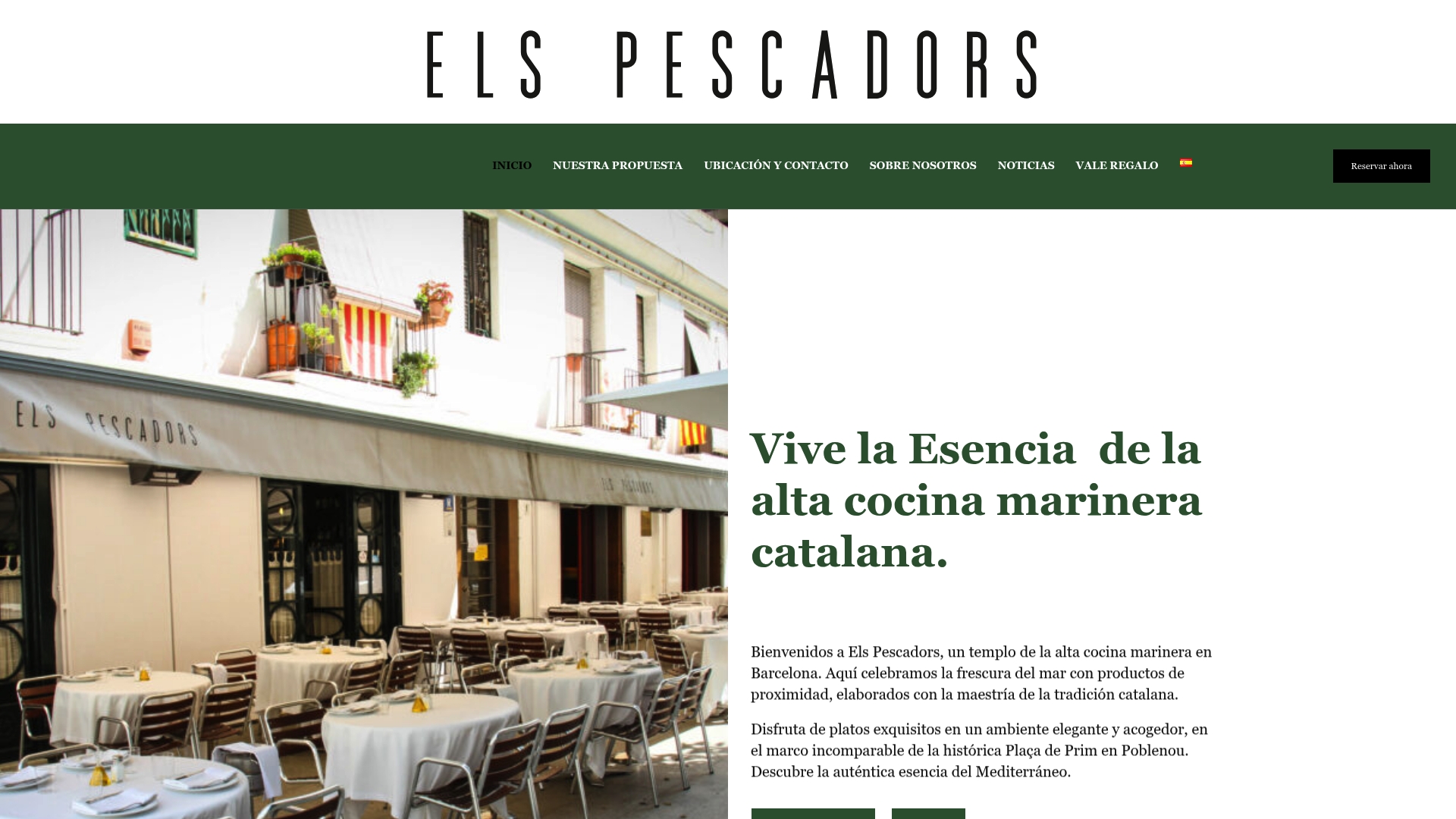
We are a seafood restaurant on Plaça de Prim, in Poblenou, and our cooking is built on authentic Catalan maritime cuisine, fresh fish and seasonal, local produce. Bones are part of that. A fish cooked on the bone is moister and tastes of more, and the trade-off is that you need a little attention at the table.
We would rather you ask than worry. If you are not sure how a fish will arrive, whole, in a loin or filleted, ask your server when you order, and ask for a side plate if you want one. If you find a bone, take it out with your fingers and put it on the plate. Nobody in our dining room will look twice, and we would much rather you do that than swallow something uncomfortable to avoid a fuss.
There is also a respect point. Fish with bones is a sign that the animal was cooked properly, not stripped and reshaped. Taking your time with it is part of the meal, in the same way that a long lunch is. Our team can show you where to start with a whole fish, and the same goes for our shrimp head technique and the rest of the shellfish, which have their own etiquette.
— YellowRock
Eat fish with us in Poblenou
If you want to practice on a table where nobody is judging, our dining room is a relaxed place to do it. Our Menú de Temporada is €39 per person, and you can see what it includes on the seasonal menu page. Prefer to choose by the day’s catch? Look at the Carta del Día, or for a longer meal, the tasting menu.
Booking is simple, and our step-by-step reservation guide shows what to tell us, including the preference to have fish served boned if you would feel more comfortable. For a group, our group menu and group seafood dining ideas are a good start.
Fish bones in Barcelona and Catalonia
On the Catalan coast, fish is central to the food, from suquet de peix to fideuà and anchovies, as one overview of Catalan cuisine notes. Many of those dishes are made with whole fish or fish with the bone, because the bone adds flavor to the broth or sauce. In a suquet or a fish stew, expect to find bones in the bowl, and use your spoon and fork to lift them out and place them on a side plate.
Two local habits are worth knowing:
- Sharing is normal. Many dishes arrive in the middle of the table. Use the serving spoon for the food, then bring bones to your own plate, never back into the shared dish.
- Bread is a tool. A small piece of bread helps push food onto your fork, but do not use it to hide bones.
If you want to explore what the region eats, our guide to what Catalan cuisine is is a good place to begin, and our piece on unique fish preparations in Barcelona will help you choose what to order.
A quick reference for the table
| Situation | What to do |
|---|---|
| Small bone in your mouth | Remove with thumb and index finger, place on the rim of the plate |
| Bone lodged between teeth | Excuse yourself and deal with it privately |
| Whole fish | Work along one side of the backbone, lift the skeleton away, bones on a side plate |
| Fish stew or suquet | Lift bones out with fork or spoon onto a side plate |
| Shared dish | Never return bones to the shared dish |
| Bone will not move, pain or trouble swallowing | Leave the table, seek medical care, avoid home remedies |
| Leftovers at home | Organic (brown) container in Barcelona |
FAQ
What should I do with a fish bone I find in my mouth?
Remove it with your thumb and index finger while screening your mouth with the other hand. Place it on the side of your plate, away from your food. Do not spit it into a napkin.
Is it rude to take a bone out with my fingers?
No. Etiquette sources such as Debrett’s say that small bones found in the mouth are removed with the fingers. What is rude is doing it noisily or with an open mouth, so keep it quick and quiet.
Can you eat fish bones?
Very small, soft bones often pass without trouble, but sharp ones can lodge in the digestive tract, according to the MSD Manual. The safe habit is to leave them on the plate, and to be especially careful with children.
Where do fish bones go after the meal?
At the table they go on the side of your plate or a side plate. At home in Barcelona they are classed as organic waste and go in the organic (brown) container.
What if a fish bone gets stuck in my throat?
Spit out the food and cough forcefully. If the bone does not come out, or you have chest pain or cannot eat or drink, get medical care and avoid remedies such as forcing down rice or drinking vinegar. In Spain, go to urgencias or call 112.
Sources
- Essential table manners, Debrett’s
- A fishy business, Debrett’s
- How to Eat Tricky Seafood, Diane Gottsman
- ¿Tienes clase al comer? Genial
- How to eat seafood? A guide to etiquette, FormAdore
- How I Survive Spain’s Fish with Bones, Sincerely, Spain
- ¿Cómo se come el pescado? Protocolo.org
- Where go Bones, Barcelona City Council Waste Finder
- Biorresiduos, MITECO
- Restos de pescado y marisco, Bizkairezikla
- Foreign Bodies in the Digestive Tract, MSD Manual
- Protocolos en urgencias de pediatría: ingesta de cuerpos extraños, SEUP
- Emergency department consultations due to foreign body, Anales de Pediatría
- Fish Bone Stuck in Throat, Hong Kong Adventist Hospital
- Catalan Food: Ultimate Guide, Spanish Sabores