
Edible bivalves are shellfish with two hinged shells enclosing a soft body, and in a kitchen context the term covers mussels, clams, oysters, scallops, razor clams, and cockles. Each has its own texture, flavor, and best cooking method. Before you cook any of them, the single rule that matters most: buy live, tightly closed shells, and if one stays open after a tap on the counter, throw it out.
TL;DR:
- Buying live bivalves with closed shells and rejecting any that stay open or smell off ensures food safety and freshness.
- Seasonal peak months, typically spring, provide bivalves with fuller meat and more concentrated flavor, especially for oysters and mussels.
- Proper depuration and careful cleaning, including shell scrubbing and sand expulsion, are essential for good texture and avoiding grit in cooked dishes.
- Overcooking bivalves leads to toughness in mussels and clams and rubberiness in scallops, so quick searing or rapid shell opening is crucial.
- Serving and pairing should match the mineral profile: oysters with acidity, mussels in broth, and scallops with fat and light acidity for optimal flavor.
Table of Contents
- What Counts as a Bivalve in the Kitchen (Types and How They Differ)
- How to Buy Fresh, Safe Bivalves at the Market
- Cleaning and Opening Bivalves Without Losing the Good Stuff
- Storing Bivalves Safely Before You Cook Them
- Pairing and Serving Bivalves for Maximum Flavor
- The Anatomy Behind the Flavor: Shells, Siphons, and Gills
- Why Bivalves Matter Beyond the Plate
- Nutritional Value and Allergy Considerations
- How Els Pescadors Sources and Serves Seasonal Bivalves
- Taste the Difference: Book a Seafood Table at Els Pescadors
- Sources
- FAQ
What Counts as a Bivalve in the Kitchen (Types and How They Differ)
Ask five chefs to define bivalves and you’ll get five slightly different answers, but they’ll all point to the same handful of shellfish. Mussels have intensely flavored, orange to golden meat and hold up well steamed in wine, garlic, and herbs, or folded into a marinara sauce. Their shells need scrubbing and the fibrous “beard,” the byssus threads they use to anchor to rocks, has to come off by hand or knife before cooking.
Clams are the broad category that includes chowder clams, razor clams, and cockles, and they tend toward a sweeter, more delicate flavor than mussels. Chowder clams disappear into soups and stews; razor clams, with their long narrow shells, are often grilled or seared whole; cockles are small enough to toss straight into rice dishes or pasta.
Oysters are usually the star eaten raw, prized for a saline, mineral flavor that changes noticeably by region and season. Scallops stand apart from the rest of the group: what you eat is mostly the large adductor muscle, white and delicate, and it rewards a quick, hot sear far more than long cooking.
- Mussels: Bold, briny flavor. Best steamed or sauced.
- Clams (chowder, razor, cockles): Sweeter and more subtle. Best in soups, rice, or grilled whole.
- Oysters: Saline and mineral. Best raw or lightly poached.
- Scallops: Delicate, buttery. Best seared hard and fast.
Chefs and seafood specialists often point out that these flavor differences come down to handling as much as species. Oysters read as saline and mineral, clams read sweeter, mussels carry a stronger mineral signature, and that hierarchy shapes almost every pairing decision on a raw bar or a rice dish.
How to Buy Fresh, Safe Bivalves at the Market
The freshness test for live bivalves is simple and physical: tap the shell. A living mussel, clam, or oyster reacts and closes tighter. One that stays open, or smells off, needs to go straight in the trash, not the pot.
That single check protects you from the most common food-safety risk tied to eating bivalves: a dead shellfish decomposing inside a shell you can’t see into.
- Shells should be closed, or close firmly when tapped.
- Reject any shell that’s cracked, gaping, or gives off an unpleasant odor.
- Ask whether clams and cockles have already been depurated, meaning soaked in clean salted water to purge sand, since some sellers do this step for you and some don’t.
- Buy in season when possible; quality peaks for many bivalves.
Seasonality matters more than most diners realize. Many bivalves hit their gastronomic peak during the spring months, according to the FEN practical manual on fresh fish and shellfish, when meat is plumper and flavor is more concentrated. Buying out of season doesn’t make bivalves unsafe, but it usually means thinner, less flavorful meat.
Cleaning and Opening Bivalves Without Losing the Good Stuff
Getting bivalves from the market to the plate without ruining texture or losing the briny liquid inside takes a specific sequence, and it’s shorter than most home cooks assume.
- Scrub the shells under cold running water to remove grit, sand, and any barnacles.
- Remove the mussel beard by pulling the dark threads free with your fingers or the edge of a knife.
- Depurate clams and cockles by soaking them in cold, salted water for a couple of hours so they expel sand from inside the shell, not just off the surface. Skipping this step is the single biggest reason home-cooked clams turn out gritty.
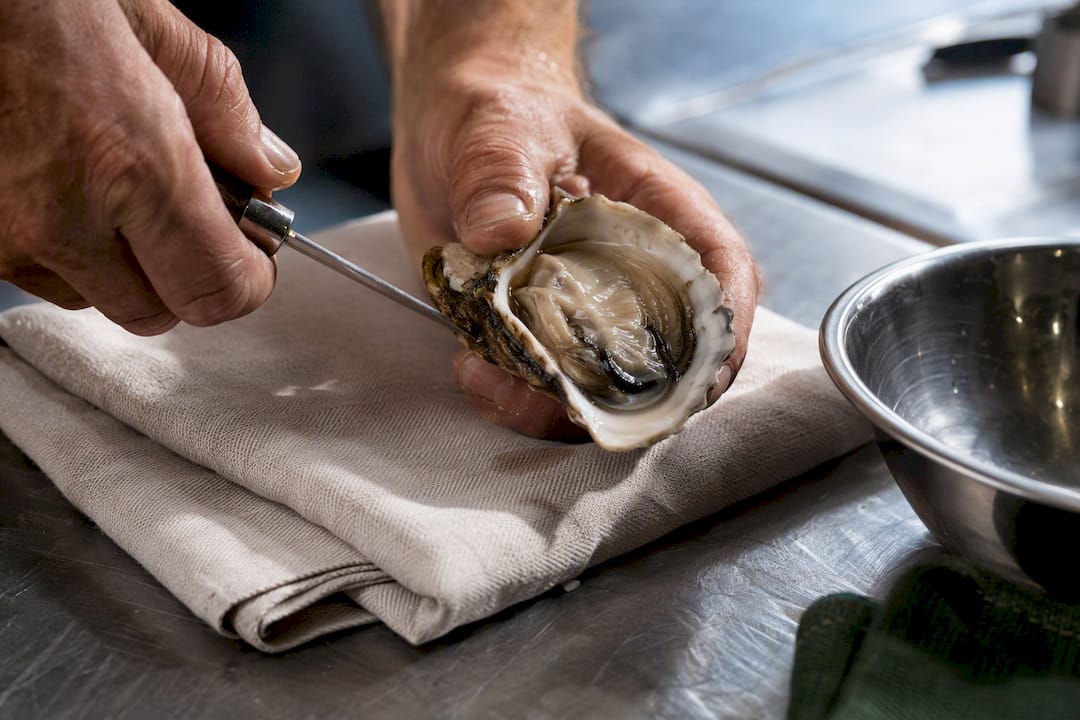
- Open oysters and scallops with a small, thin, sharp knife, cutting only through the adductor muscle. Slicing into the meat itself releases the juices you want to keep and can mangle the presentation.
- Cook mussels and clams quickly, just until the shells pop open, usually a matter of minutes over direct heat.
- Sear scallops hard and fast, a minute or two per side in a very hot pan, and pull them the moment they turn opaque.
The most common mistake across every species on this list is the same: overcooking. Mussels and clams turn tough and shrink away from the shell if left on the heat past the point they open. Scallops go from silky to rubbery in the time it takes to answer a phone call.
Pro Tip: Keep a small, thin-bladed knife dedicated to shellfish. A thick blade tears the meat when you’re trying to sever just the adductor muscle, and that’s the difference between a clean oyster on the half shell and a mangled one.
Storing Bivalves Safely Before You Cook Them
Live bivalves need to breathe. Store them cool, around 4°C, loosely covered with a damp cloth rather than sealed in plastic or submerged in fresh water, both of which suffocate them faster than open air.
- Refrigerate live bivalves and plan to cook them within a day or two of purchase.
- Never seal them in an airtight container; they need airflow to stay alive.
- Never store them in fresh water; it kills them and ruins the texture.
- Discard anything with a shell that won’t close, a cracked shell, or an off odor, the same rule that applies at the point of purchase applies right up until the pot.
Cooked bivalves keep for a couple of days refrigerated in a sealed container, but raw, live ones are always the better bet for flavor and safety if you can cook them the same day you buy them.
Pairing and Serving Bivalves for Maximum Flavor
Match the accompaniment to the mineral note, not just the “seafood” category in general. Oysters want acid and salinity: a squeeze of lemon, a mignonette, or a crisp, briny white wine. Mussels do well with a broth built on white wine, garlic, and butter, since the sauce becomes half the dish. Scallops want fat and a touch of acid, a butter sear finished with lemon or a light vinaigrette, because their sweetness needs contrast, not competition.
- Raw on the half shell: oysters, sometimes cockles.
- Steamed in broth: mussels, clams.
- Seared: scallops, razor clams.
- Folded into rice or paella: mussels, clams, cockles.
Presentation lives or dies on the opening technique. A shell that still holds its juice looks and tastes better than one that’s been drained by a clumsy cut, so keep that thin knife close and the cuts shallow. For deeper pairing logic on wine and shellfish together, a practical seafood and wine pairing guide is worth a look before you plan a tasting menu.
Pro Tip: Serve oysters and clams on a bed of crushed ice, not just a plate. It keeps the shells stable and the meat cold longer while your table works through a dozen.
The Anatomy Behind the Flavor: Shells, Siphons, and Gills
Every bivalve on the plate shares the same basic body plan, and understanding it explains why the cooking rules above work the way they do. Two hinged shells, called valves, protect a soft body with no head and no eyes in the way you’d expect from other animals. A strong, elastic hinge ligament and one or two adductor muscles hold the shells shut. That adductor muscle is exactly what a knife has to sever cleanly when opening an oyster or a scallop, and in scallops it’s also the primary edible portion.
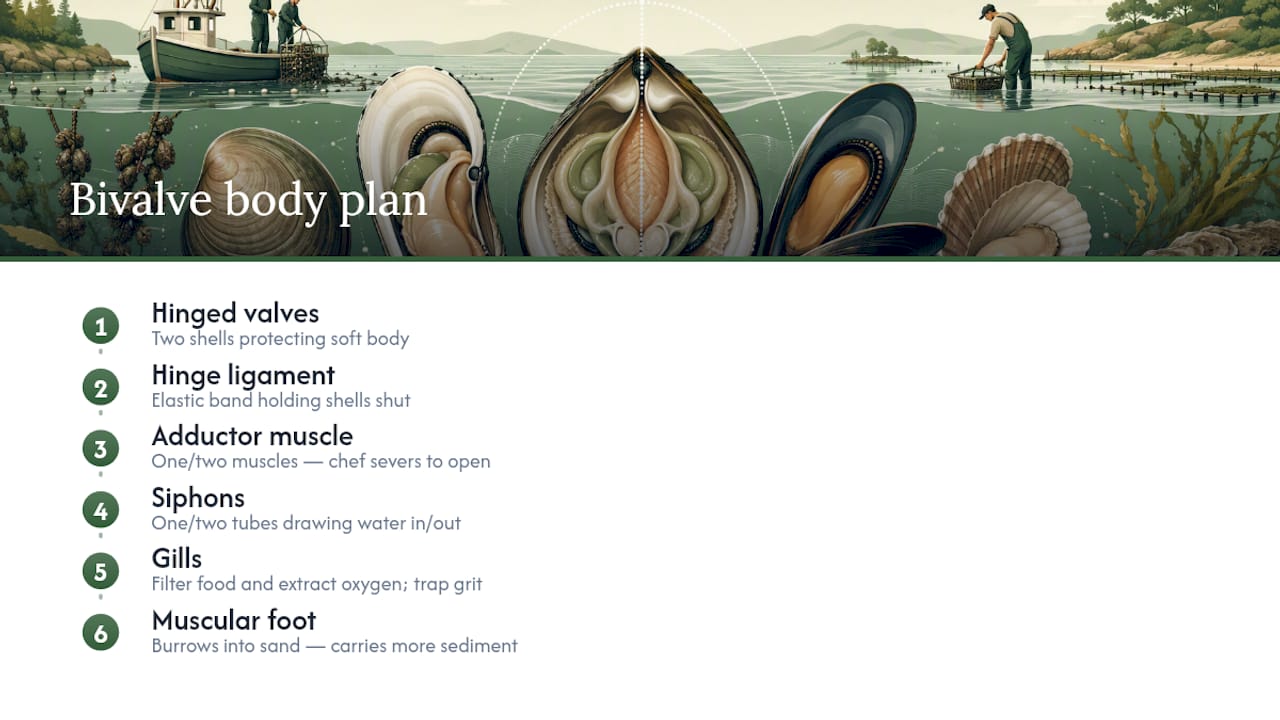
Inside the shell, most bivalves draw water in and out through one or two siphons, tube-like structures that pull water over the gills. Those gills do double duty: they extract oxygen and, more importantly for a cook, they filter tiny food particles out of the water column. That filter-feeding habit is the reason bivalves can carry grit and sand, and it’s exactly why depuration matters so much for clams and cockles before they hit a pan.
A muscular foot lets many species, particularly clams and cockles, burrow into sand or mud, which is part of why they arrive at market carrying more sediment than mussels, which anchor to rocks or ropes with byssus threads instead of burrowing. Scallops are the outlier: some species can actually swim short distances by rapidly clapping their shells together, propelled by jets of water forced out between the valves.
Why Bivalves Matter Beyond the Plate
Bivalves aren’t just seafood, they’re ecosystem engineers. A single oyster or mussel filters gallons of water daily as it feeds, pulling out algae, sediment, and excess nutrients. Beds of mussels and oysters built up over generations create reef-like structures that shelter juvenile fish and stabilize shoreline sediment, functions that matter well beyond whatever ends up on a dinner plate.
Most edible bivalves live in coastal waters, attached to rocks and pilings, buried in sandy or muddy flats, or farmed on suspended ropes and racks in bays and estuaries. Mussels and oysters are commonly rope-cultivated or grown on trestles in relatively shallow, nutrient-rich water. Clams and cockles favor soft sediment where their burrowing foot can do its work, and razor clams in particular dig deep, fast escape tunnels in sand when disturbed, which is part of why harvesting them by hand takes real skill.
Because bivalves filter feed, water quality directly determines whether they’re safe to eat. That’s the biological reason behind sourcing rules and depuration standards: a bivalve pulled from clean, well-managed water is a fundamentally different product from one pulled out of a polluted estuary, even if they look identical on ice.
Nutritional Value and Allergy Considerations
Bivalves pack a lot of nutrition into a small, low-calorie package. They’re a lean source of protein, along with iron, zinc, vitamin B12, and, particularly in mussels and oysters, omega-3 fatty acids. Oysters in particular are known for concentrated zinc content, one reason they’ve carried a reputation as a mineral-dense food for centuries.
That nutritional density comes with a real allergy consideration worth taking seriously. Shellfish, including bivalves, are one of the most common food allergens, and reactions can range from mild to severe. Anyone with a known shellfish allergy, or any diner unsure of their own sensitivity, should treat bivalves with real caution and check with a doctor before eating them if there’s any history of reaction to shellfish. Restaurants serving bivalves should always be asked directly about cross-contact risk in the kitchen if a guest has a shellfish allergy, since mussels, clams, oysters, and scallops are often prepared in the same pans and on the same stations.
How Els Pescadors Sources and Serves Seasonal Bivalves
At a fine seafood restaurant, sourcing bivalves means working the seasonal window rather than fighting it, favoring peak months when meat is fuller and flavor holds up on its own. Cold chain discipline starts the moment product arrives and continues straight through to the pass, because a mussel or oyster that sits even briefly at the wrong temperature loses the exact qualities that made it worth buying.
Menu choices follow the same logic: oysters served simply enough to let their mineral character speak, mussels built into a broth that earns its place, rice dishes that let clams and cockles do quiet, essential work. Trends in seasonal sourcing and plating discussed in broader hospitality coverage of 2026 gastronomy echo what a Catalan seafood kitchen has practiced for decades: let the ingredient’s own season set the menu, not the other way around.
— YellowRock
Taste the Difference: Book a Seafood Table at Els Pescadors
Reading about mussel beards and depuration times is useful. Tasting bivalves cooked the moment they’re at peak season, by a kitchen that’s spent years perfecting the timing, is a different experience entirely. Seasonal mussels, clams, oysters, and scallops sourced with cold chain discipline can be plated carefully in fine-dining style: juices intact, texture exact, nothing overcooked.
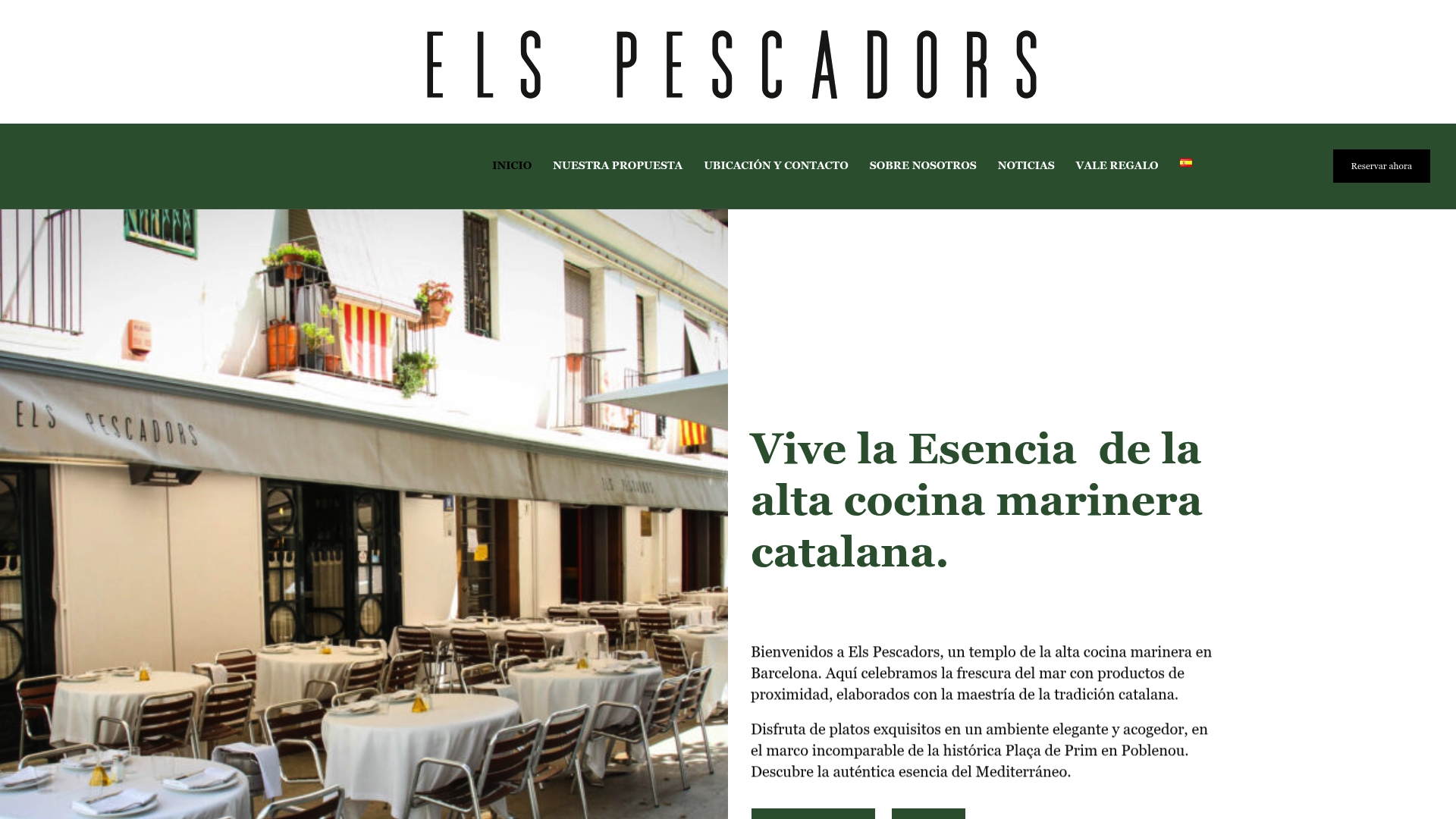
Whether you’re planning a quiet dinner for two or organizing a private event, the group-dining menus at Els Pescadors are built around exactly this kind of seasonal seafood showcase, with tasting formats designed for larger tables and special occasions. If you’re weighing options for a group seafood experience in Barcelona, explore group dining ideas built around fresh, expertly prepared shellfish, or reach out directly to check dates for a private tasting menu.
Sources
- Cocción al vapor de mariscos y bivalvos — Consumer
- Manual práctico sobre pescados y mariscos frescos — FEN
- Guía definitiva para comprar, limpiar y cocinar bivalvos — El Confidencial Digital
FAQ
What Are Bivalves in Cooking Terms?
Bivalves are shellfish with two hinged shells, and in the kitchen the term covers mussels, clams, oysters, scallops, razor clams, and cockles.
How Do You Know if a Bivalve Is Fresh?
Tap the shell: a live, fresh bivalve closes or reacts, while one that stays open or smells unpleasant should be discarded immediately.
Why Do Clams Need to Be Depurated Before Cooking?
Clams and cockles burrow in sand and can carry grit inside the shell, so soaking them in cold salted water purges that sediment and prevents a gritty finished dish.
What’s the Biggest Mistake People Make Cooking Bivalves?
Overcooking. Mussels and clams toughen once they’ve been open on the heat too long, and scallops turn rubbery within seconds of leaving their ideal sear point.
Can People With Shellfish Allergies Eat Bivalves?
No, anyone with a known shellfish allergy should avoid bivalves and speak with a doctor, since reactions can range from mild to severe and cross-contact risk in a kitchen is real.
Where Can I Try Expertly Prepared Bivalves in Barcelona?
Els Pescadors serves seasonal mussels, clams, oysters, and scallops prepared with species-specific technique, available through its group dining menus for both individual meals and private events.