A Barcelona restaurant is accessible when you can get in without steps, move between tables, sit comfortably, reach a usable toilet and be served by staff who know what you need. The Catalan accessibility code sets technical minimums for this, but only some venues have to publish their details. So the best plan is to know the checklist, tell the restaurant what you need when you book, and choose a table that fits. At Els Pescadors, in Plaça de Prim in Poblenou, you can reserve through our website and choose between a seasonal menu, tasting menu, daily menu or à la carte.
TL;DR
- Six things decide whether a restaurant works for you: the route to the door, the entrance, space between tables, the table itself, the toilet and the staff.
- Catalonia’s accessibility code has applied since March 2024. Restaurants with a capacity above 100 people must file an accessibility sheet, so smaller venues often have no published details.
- Accessibility is not only about wheelchairs. Lighting, contrast, chairs with backrests and armrests, and seating that allows eye contact matter too.
- Give the restaurant your needs in writing when you book, with the number of guests, any wheelchair or walker, and the table type you prefer.
- Historic districts such as Poblenou mix old buildings with modern rules, so each venue needs its own check.
Table of Contents
- What makes a restaurant accessible in Barcelona
- What the Catalan rules say
- How to check before you go
- Choosing the right table and the right format
- A worked example: planning an anniversary dinner
- Our view
- Reserve your table at Els Pescadors
- FAQ
- Sources
What makes a restaurant accessible in Barcelona
The Observatori de l’Accessibilitat, a Spanish body that publishes practical guidance for hospitality businesses, has a guide for bars and restaurants. It treats accessibility as a chain, from the street to the table. If one link breaks, the visit breaks with it. The chain covers:
- Reserved disabled parking near the venue and an accessible route outside.
- The terrace layout, if you plan to sit outdoors.
- A step-free entrance.
- Circulation inside, meaning enough room to move between tables.
- Counters and bars with at least one lowered section of 80 cm and clear space underneath.
- Stable tables with free space below, so a wheelchair can pull up.
- Accessible public toilets.
- Trained staff.
The same guide stresses that accessibility is not only physical. It names colour-contrast signage on counters and bars, and stable, movable chairs with backrests and armrests. It also recommends circular tables, which help deaf and hard-of-hearing guests keep visual contact with everyone at the table.
For a dinner out, this means you should think of the evening as a sequence: arriving, entering, being seated, eating, using the toilet and leaving. A restaurant can be fine at the table and impossible at the toilet, or the reverse.
What the Catalan rules say
You don’t need to read legislation to book a table, but a few rules explain why venues differ so much.
The code and the accessibility sheet
Catalonia’s accessibility code, Decree 209/2023 of 28 November, came into force in March 2024. It introduced the accessibility sheet (fitxa de condicions d’accessibilitat), a document that describes a venue’s accessibility. Existing businesses had a one-year grace period, which ended on 1 March 2025.
The Barcelona City Council says the sheet is mandatory for, among others, bars, restaurants and nightclubs with a capacity above 100 people. It also covers shops over 250 m², municipal markets and hotels. The sheet is meant to give clear information to the public and to help the city inspect venues. The Generalitat’s guide to completing the sheet confirms the same 100-person threshold for restaurants.
What it means for you: a large restaurant should have this document available. A small, intimate dining room, which is what many of the most charming places in Barcelona are, may have no sheet at all. That doesn’t make it inaccessible. It means you can’t rely on paperwork, so you need to ask.

What the code requires of the room
The decree regulates restaurants specifically, as well as catering services, toilets, entrances and routes. Some of the rules that affect your evening:
- Partly accessible rooms. A restaurant may have an accessible zone only if it is representative of the whole. For bars and restaurants, the accessible table area must be similar in character, surface and number of seats to the inaccessible one, and accessible elements such as toilets and counters must be in that zone. In practice, you should not be sent to a worse room.
- Small venues and ramps. Bars and restaurants with 50 seats or fewer may, where a standard 12% ramp would seriously disrupt the layout, build a ramp of up to 16% slope, as long as it is 75 cm or shorter and resolves a level difference of 12 cm or less. A short, steep ramp at a small restaurant is therefore normal. Ask whether you can manage it.
- Larger venues. A CaixaBankLab summary of the code says venues with more than 50 seats need an adapted route, toilets, furniture and stairs, with ramps under 12% and toilets with 1.5 m of free turning space.
Barcelona’s new licensing framework, which has applied since 2024, also treats accessibility for people with reduced mobility as a technical requirement for new venues. Newer restaurants are therefore more likely to meet current standards than older ones. Historic buildings can still be well adapted, but you should confirm it for each place.
How to check before you go
This is the practical part. A review site’s filter for “wheelchair accessible” is a starting point, but it tells you little about the door width or the toilet. A short message with specific questions gets you a far better answer.
Questions worth sending
| Area | What to ask | Why it matters |
|---|---|---|
| Route | Is there a kerb, cobbled street or slope between the nearest drop-off point and the door? | Old districts often have uneven paving. |
| Entrance | Is it step-free? If there is a ramp, how steep and how long is it? | Small venues may use the short 16% ramp described above. |
| Interior | Can a wheelchair or walker pass between tables to your table? | Tables packed closely can block a route even when the door is fine. |
| Table | Is the table stable, with free space beneath? Are the chairs movable, with backs and armrests? | Pedestal tables and fixed benches can make transfer hard. |
| Toilet | Is it on the same level as the dining room, and is there room to turn? | A toilet downstairs undoes an accessible entrance. |
| Staff | Will the team know about your needs when you arrive? | Staff training is part of the Observatori’s checklist. |
| Other needs | Is the lighting bright enough to read a menu? Can you sit where you can see everyone’s face? | Matters for guests with low vision or hearing loss. |
Two habits help. First, ask in writing so the answer is on record and the team on the day knows what was agreed. Second, give your own measurements if you use a larger wheelchair or a mobility scooter, since “accessible” is a judgment and a number is not.
What a good answer sounds like
A useful reply is specific: “the entrance is level, the toilet is on the ground floor, we can put you at a table by the window with space at the side.” A vague reply such as “yes, no problem” deserves a follow-up about the toilet and the table, because those are where problems usually appear.
Choosing the right table and the right format
The way you eat affects what you need. A long tasting menu means two or three hours in one seat. A shorter set menu or à la carte lunch asks less of you in comfort and stamina. If you need frequent breaks, easy access to the toilet or a seat that suits your back, say so when you book.
Terraces are popular in Barcelona, but a pavement terrace brings its own questions: kerbs, slope, how close the tables are, and whether staff can move around you. Our piece on why Barcelona terraces enhance dining covers the appeal, and the same checklist applies to any terrace you choose.

For groups, accessibility starts with the organizer. If anyone in your party uses a wheelchair, has limited mobility or is hard of hearing, decide the seating plan with the restaurant before sending invitations. Round tables help conversation, as the Observatori notes. Our guide to seafood group menus in Barcelona explains how group reservations are structured, and our tips for booking a restaurant in Barcelona cover timing and what to include in your request.
If food needs are part of the picture, the same logic applies. Our guide to gluten-free seafood in Barcelona shows how to raise dietary requirements clearly.
A worked example: planning an anniversary dinner
Imagine you are booking for two, and one of you uses a folding wheelchair. You want a seafood dinner in Poblenou on a Friday.
- Two weeks before: you choose three restaurants and write to each with the same questions from the table above.
- One week before: you compare answers. Which replies mention the toilet and the table specifically? Those are the ones where someone has looked at the room with you in mind.
- The day before: you confirm the time, the table and the route from the taxi drop-off or the nearest metro station.
- On the night: you arrive a few minutes early, so the team can settle you without rushing, and you have time to look at the room before the first course.
The process takes ten minutes of writing and removes most of the uncertainty. It also works for older relatives, a parent with a pram, or anyone recovering from an injury.
Our view
We think a good table starts with a clear conversation before the evening. A guest who tells us who is coming and what they need lets the team plan the room, the pace and the menu around them, instead of improvising at the door.
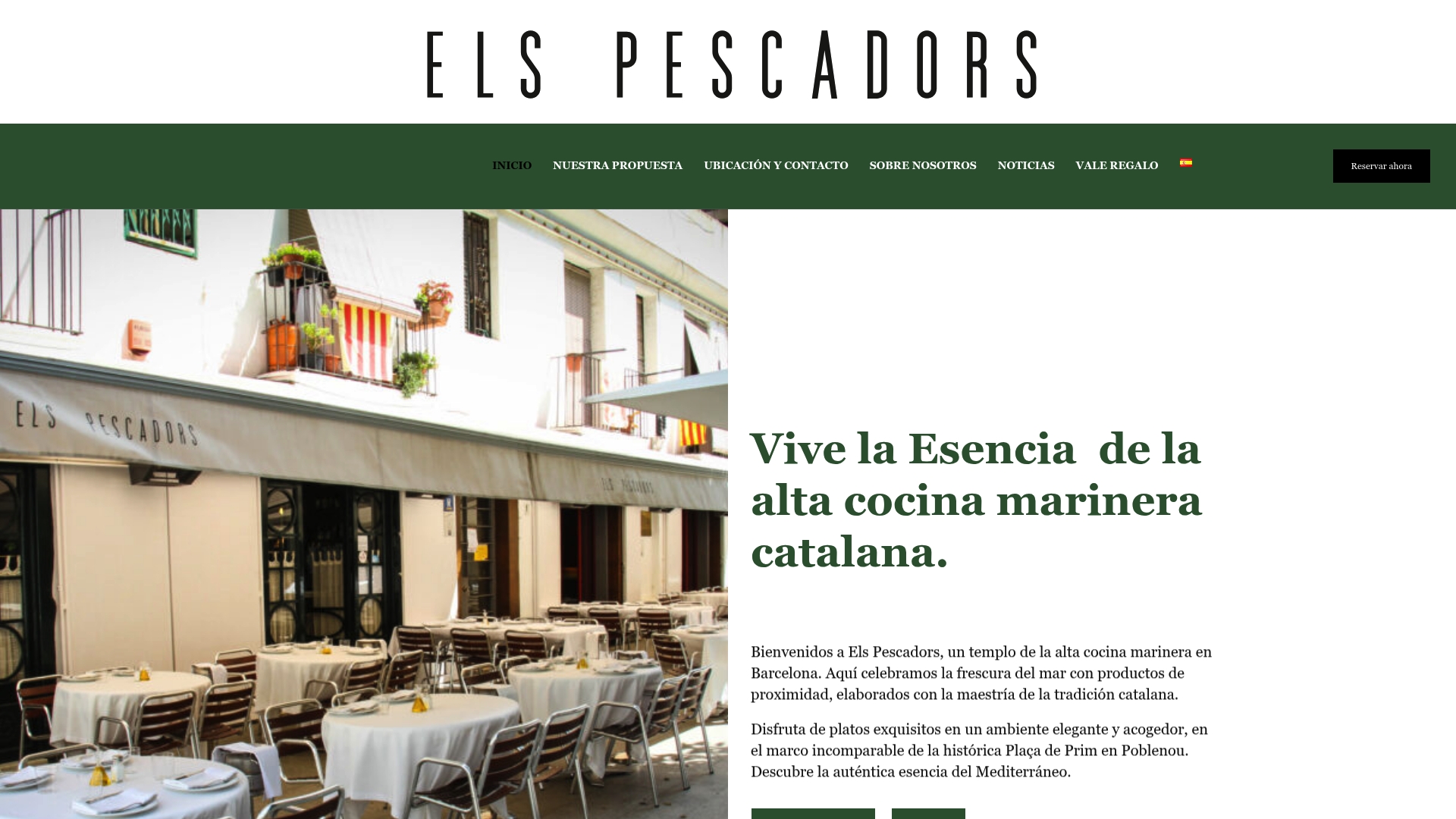
Els Pescadors sits in Plaça de Prim in Poblenou, one of the historic districts of Barcelona, and we cook authentic Catalan maritime cuisine there: fresh fish, seafood and traditional rice dishes from seasonal, local ingredients. A meal like that is made to be shared and unhurried, and it deserves a table where every guest is comfortable.
That is why we offer different formats. The seasonal menu, the daily menu, the tasting menu, the à la carte and private group menus suit different appetites and different amounts of time at the table. Choose the one that suits your party, then tell us what else you need when you reserve.
YellowRock
Reserve your table at Els Pescadors
If you want fresh Catalan seafood without a long commitment, our Menú de Temporada is €39 per person. For a longer evening, there is the Menú Degustación, and the Carta del Día follows the daily catch. Groups can look at the Menú para Grupos.
Book through our website and include your party size, the date and anything the team should know about how you like to be seated.
FAQ
Do all Barcelona restaurants have to publish accessibility information?
No. The accessibility sheet is mandatory for bars and restaurants with a capacity above 100 people, according to the Barcelona City Council. Smaller restaurants may have nothing published, so your own questions at booking are the reliable route.
Is a ramp at the entrance always a sign of full accessibility?
Not by itself. A ramp solves the entrance, but you also need room to move between tables, a table you can use and a toilet you can reach. Small venues with 50 seats or fewer may use a steeper, shorter ramp under the code, so ask about its length and slope.
What should I look for if I am deaf or hard of hearing?
The Observatori de l’Accessibilitat recommends circular tables so guests can keep visual contact, along with good contrast in signage. When you book, ask for a quieter table with good lighting on faces.
How far ahead should I tell a restaurant about my needs?
As early as you reserve. A note with the booking gives the team time to prepare the table and the route. Our booking tips explain what to include.
Sources
- Observatori de l’Accessibilitat: ¿Cómo gestionar la accesibilidad? (bars and restaurants)
- Ajuntament de Barcelona: accessibility sheet for establishments
- Generalitat de Catalunya: guide to the accessibility sheet
- Decree 209/2023, Catalonia accessibility code (Iberley)
- Annex 3d, Catalonia accessibility code (Iberley)
- CaixaBankLab: La accesibilidad de tu bar o restaurante
- ChefBusiness: Cómo abrir un restaurante en Barcelona