Good shellfish etiquette comes down to three habits: use the tool the dish was designed for, use your hands where the dish invites it, and keep your shells and shared plates tidy. In a Barcelona seafood restaurant that means a small fork for oysters, fingers for prawns, and a side of the plate for what you leave behind. At Els Pescadors, in Plaça de Prim in the Poblenou district, tables are built around fresh fish, seafood and rice dishes, so these small decisions come up at almost every meal. Here is how to handle each one with confidence.
TL;DR
- Oysters: loosen the meat with the small fork, then lift the shell to your mouth. The fork is not for eating.
- Taste the oyster instead of gulping it, and chew the firm part.
- Prawns, langoustines and crab claws are finger food. Mussels and clams go on a fork or an empty shell.
- Shells, heads and bones go on the edge of your own plate, not back into the shared dish.
- With shared plates, use your own plate and keep your cutlery on your side of the dish.
Table of Contents
- Oysters: the one dish with a real ritual
- Mussels and clams: fork, shell or fingers
- Prawns, langoustines and crab: your hands are welcome
- What to do with shells, heads and bones
- Sharing a seafood table
- Ordering so the etiquette is easy
- Perspective
- Put it into practice in Poblenou
- FAQ
- Sources
Oysters: the one dish with a real ritual
Oysters cause the most anxiety because they arrive on ice, in a shell, with an unfamiliar fork. The good news is that the ritual is short.
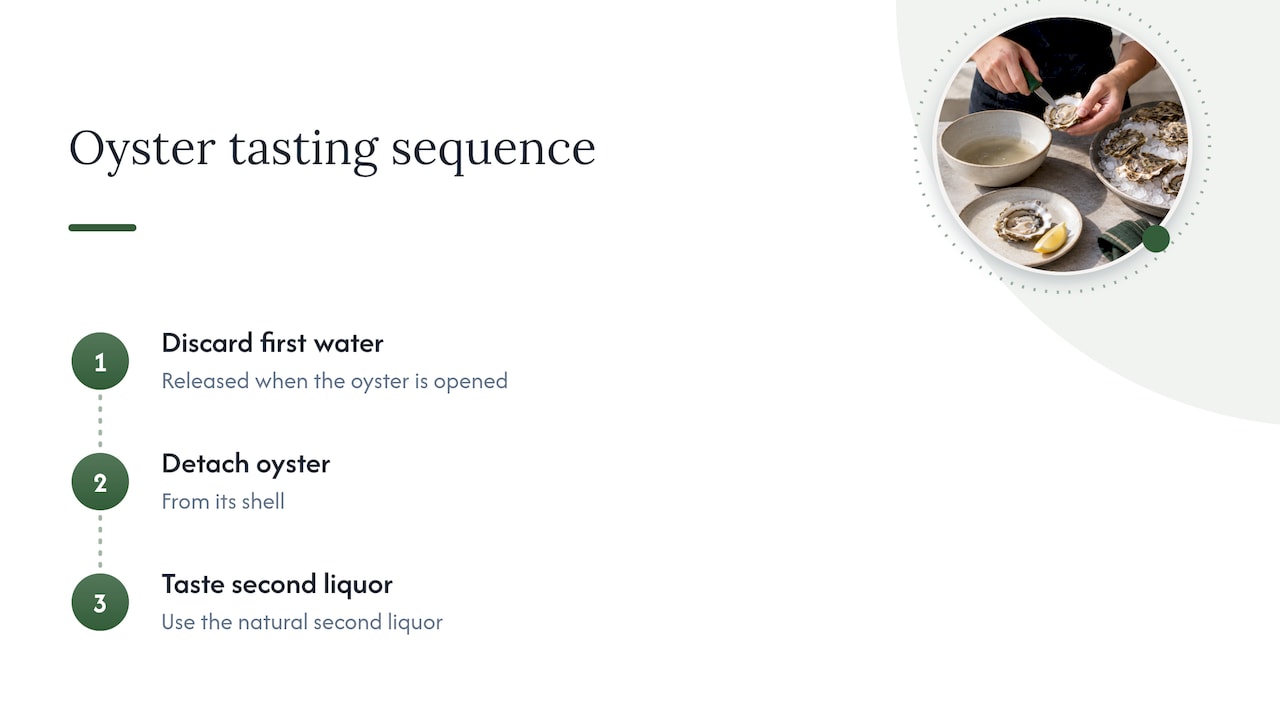
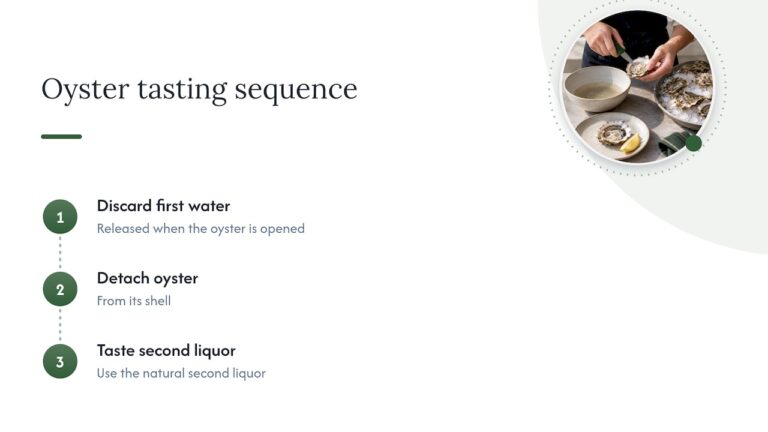
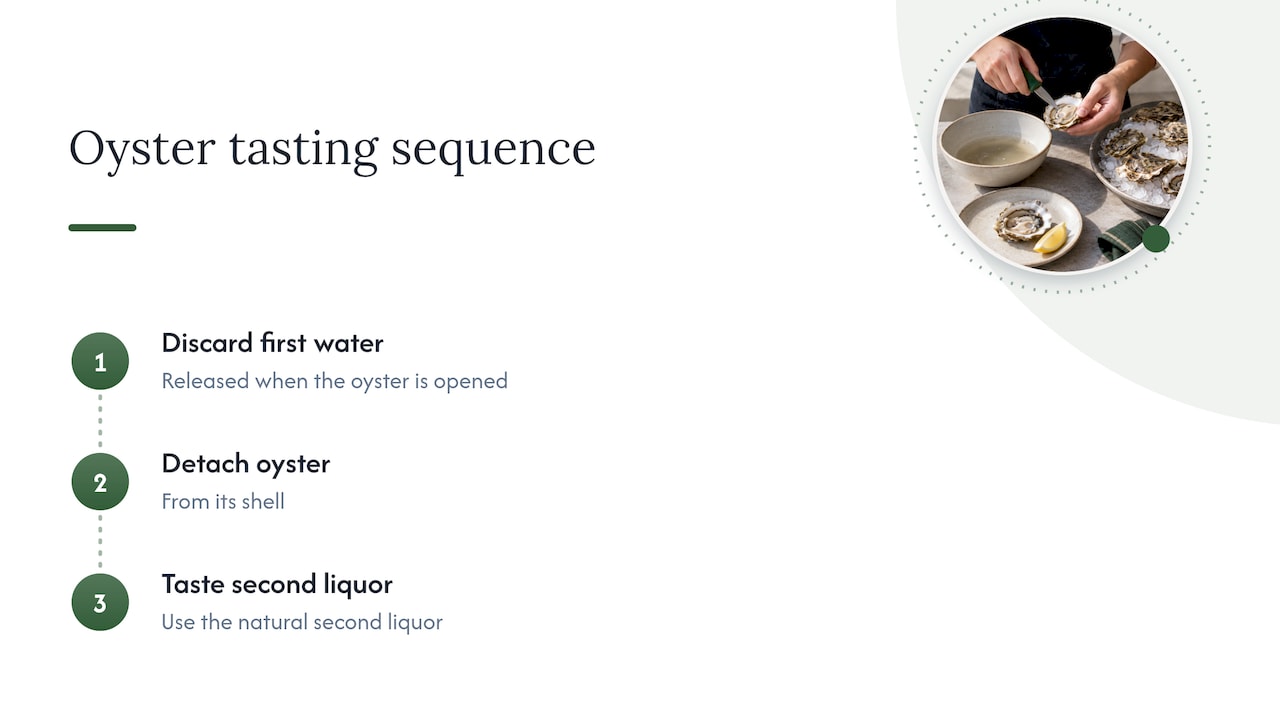
Mercats de Barcelona, part of Barcelona City Council, describes the sequence in an article on oyster tasting from 8 May 2024: the first water released when the oyster is opened is discarded, the oyster is detached from its shell, and it is tasted with the natural second liquor. In a restaurant the kitchen has already opened the oyster, so your part starts at the detaching.
Step by step
- Pick up the small fork. It sits on the right of your place setting. It is there to free the meat from the shell, not to carry it to your mouth.
- Loosen the oyster. Slide the tip under the oyster to cut the muscle that holds it. Do this gently so the liquor stays in the shell.
- Lift the shell. Hold it steadily and tilt it toward your mouth. ElDiario.es describes bringing the half-shell to the mouth and letting oyster and liquor slide onto the tongue.
- Taste it. Mercats de Barcelona says to press the oyster against your palate with your tongue to release the second water, then chew the firm part, the nuez. Swallowing it whole skips the flavor.
- Set the shell down. Return the empty shell to the ice or plate, hollow side down, so the table stays tidy.
If you want to understand why paying attention to texture and brine is the point, this piece on what makes a culinary experience is a good companion read.
Lemon, mignonette and sauces
Keep it light. ElDiario.es recommends restrained accompaniments, a little lemon or a mignonette, rather than covering the oyster with sauce. A few drops are enough. The point is to taste the sea.
Who opens the oyster
Opening is a kitchen job. The Institut Català de la Cuina Catalana’s oyster recipe tells cooks to steady the oyster with a cloth and slide a short knife in sideways. Do not try this at the table. Your task begins once the shell is open.
Mussels and clams: fork, shell or fingers
Shelled molluscs have more than one accepted method, and Spanish diners do not all agree.
An etiquette article from a Valencian philosophy-for-children association says clams and mussels are usually detached with a fork and brought to the mouth on it. It also describes using a shell to bring the mollusc to your mouth without sucking noisily.
El Español’s June 2025 report on mussels describes the familiar Galician method: remove one half of the shell, then bring the other half, holding the mussel, to your mouth. It also mentions using an empty shell as improvised tongs, and notes that customs vary. Some diners prefer the tongs for neatness, others the hand-and-shell method that keeps the broth close.
A practical rule:
- In a dish with sauce or broth: a fork plus a spoon is the tidy choice at a formal table.
- At a relaxed table: the empty-shell method is fine and widely used.
- Either way: do not slurp loudly, and do not drop shells back into the bowl.
Prawns, langoustines and crab: your hands are welcome
The stiffest etiquette habit a visitor can bring to Spain is refusing to touch the food. For shellfish that comes in its armor, fingers are the right tool.
AFAR’s guide to Spanish tapas notes that fingers are acceptable for peeling shrimp or picking meat from a bone. Totally Spain says the same about peeling prawns. The Valencian table-manners article adds that fingers are fine for hard shellfish parts, while a fork is used for prepared prawn or lobster meat that arrives already shelled, and that lemon-water bowls or lemon wipes are the proper way to clean your fingers afterward.
The broader principle, from ForeverBarcelona’s guide to Spanish eating habits, is to use cutlery for most foods, allow hands for finger foods, and avoid open-mouth eating or awkward noises. It is a flexible rule that works well for seafood: if the dish has a shell you must open, your hands are expected.
The prawn head question
Many diners are unsure whether to eat the head or leave it. Both are acceptable, and plenty of people enjoy the head for its flavor. Our guide to table etiquette in Spain and Catalonia covers it, and the step-by-step technique shows how to do it neatly.
What to do with shells, heads and bones
The rule is simple: keep waste on your own plate. Totally Spain advises placing prawn heads, olive stones and fish bones on the side of your plate. In rustic settings, it says, debris may be moved to the central platter once the food is finished and table space is needed. In a fine restaurant, stay with the side of your plate.
If your plate fills up, do not stack shells into a mountain. Ask the staff for an extra plate. It is a routine request in a seafood restaurant, and it keeps the table pleasant for everyone.
| Item | Tool | Where the waste goes |
|---|---|---|
| Oyster | Small fork to loosen, then the shell to your mouth | Empty shell back on the ice, hollow side down |
| Mussel or clam | Fork or empty shell | Side plate or a discard bowl |
| Prawn or langoustine | Fingers | Edge of your own plate |
| Crab claw | Fingers and tools provided | Edge of your own plate |
| Shelled prawn or lobster meat | Fork | Nothing to discard |
Sharing a seafood table
Seafood in Spain is often shared, and shared dishes have their own manners.
- Use your own plate. Totally Spain explains that shared dishes are commonly placed in the center while each diner gets an individual plate. Guests may serve themselves, or one person may portion the food.
- Keep your cutlery on your side. AFAR advises keeping your fork or spoon on your own side of a shared dish.
- Coordinate quantities. Count what is on the platter and take your share. If you are unsure about portions or serving order, ask the staff.
- Fine dining touch. Totally Spain notes that in fine-dining settings you spoon platter juices onto your own plate rather than dipping into the dish.
- Do not assume self-service. Matador Network advises asking a waiter before taking food displayed at the bar.
If you are planning a larger table, our ideas for group seafood dining show how a shared meal can flow.
Ordering so the etiquette is easy
The easiest way to eat gracefully is to order well. A table that mixes a shelled starter, a rice dish and a fish main has natural pauses for cleaning your hands and resetting. Before you order, our list of five questions to ask before ordering seafood is a useful checklist. If menu vocabulary is the obstacle, the guide to Spanish restaurant menu words for travelers covers seafood terms and allergens. For dishes you may want to try, see traditional Spanish seafood dishes and must-try Mediterranean seafood.
If you have a shellfish allergy, tell the staff before ordering. That is a safety matter, and a restaurant needs to know it at the start of the meal.
Perspective
Etiquette at a seafood table is not a test. It is a way of paying attention to a product that arrived that morning. In Catalan maritime cooking, the catch shapes the menu, and the manners follow: use your hands where the dish asks for them, slow down where the flavor deserves it.
That is how we think about service at Els Pescadors. Our cuisine is built on fresh fish, seafood and traditional rice dishes, prepared with seasonal, locally sourced ingredients. A guest who knows what to do with a shell or a fork can relax and enjoy the plate, and that is what a long lunch in Poblenou is for.
If you are unsure about a dish, ask. Explaining how a dish is eaten is part of a good meal.
YellowRock
Put it into practice in Poblenou
The best way to learn is at the table. At Els Pescadors, in Plaça de Prim, our Menú de Temporada is €39 per person, a relaxed way to try seasonal seafood. If you want a longer meal, there is the Menú Degustación, and for celebrations or business lunches there are group menus. Prefer to choose dish by dish? See La Carta.
Our guide to tasting menus in Barcelona explains what to expect from the first course to the last.
FAQ
Is it rude to use your hands to eat shellfish in Spain?
No. Peeling prawns and picking meat from a shell are normal finger tasks in Spain, according to AFAR and Totally Spain. Use cutlery for most other foods, and use the lemon wipe or finger bowl if one is offered.
Should you chew oysters or swallow them whole?
Taste them. Mercats de Barcelona advises pressing the oyster against your palate to release the second water, then chewing the firm nuez. Swallowing without tasting misses the texture and the flavor.
What is the oyster fork for?
It loosens the oyster from its shell. It is not meant to carry the oyster to your mouth. Once the meat is free, lift the shell and tilt it toward your lips.
Where do I put shells and prawn heads?
On the edge of your own plate. Moving debris to a central platter is only seen in rustic settings once the food is finished. If your plate is full, ask for an extra one.
Sources
- Las ostras: un viaje gastronómico a las delicias del mar, Mercats de Barcelona
- Así es la forma correcta de comer ostras, ElDiario.es
- Oyster recipe, Institut Català de la Cuina Catalana
- Table manners article, Asociación de Centros de Filosofía para Niños Comunidad Valenciana
- Mussel-eating report, El Español
- Sharing Food in Spain, Totally Spain
- How Tapas Differs Across Spain, AFAR
- Guide to eating and ordering tapas, Matador Network
- Food and eating habits in Spain, ForeverBarcelona