Eating on a terrace in Spain is relaxed, but it runs on unwritten rules: you choose your own table, the waiter waits for your signal, the bill only arrives when you ask, and the price of a coffee outside can differ from the price inside. Learn those four habits and you will eat well and calmly anywhere from a Poblenou square to a seafront promenade. If you want to practice them over a proper seafood lunch, our Menú de Temporada at Els Pescadors in Plaça de Prim is €39 per person.
TL;DR
- Look for a free table and ask the waiter if you are unsure. Most terraces have no host, and you should move quickly if a crowded patio frees up.
- Get attention with eye contact, a raised hand or a soft “Perdona”. Never snap, whistle or shout.
- A terrace supplement is legal in Spain only if it is clearly shown beforehand. Check the menu or the price notice before you order.
- The bill comes only when you ask: “La cuenta, por favor.” Tipping is optional, usually 5% to 10% or a few euros.
- Let the meal take its time. Nobody expects you to leave the minute you finish.
Table of Contents
- Getting a table: no host, no queue
- Catching the waiter’s eye and ordering
- The terrace supplement: what is allowed and how to check it
- Water, drinks and dogs
- Sharing dishes and the pace of the meal
- Asking for the bill, paying and tipping
- A quick terrace checklist
- Take the etiquette to a seafood table
- FAQ
- Sources
Getting a table: no host, no queue
Many Spanish terraces do not have a host stand. Barcelona’s municipal terrace ordinance defines a terrace as an authorized, delimited outdoor area linked to a restaurant or similar premises, offering the same activities and products as the venue it belongs to. In practice that means the tables on the pavement are part of the restaurant. They are not a separate café, and the same menu and the same staff apply.
How to claim a table:
- Scan the area. If several tables are free, ask a waiter before sitting, especially if the table looks unlaid or reserved.
- Say what you are there for. Drinks only or a meal? Some places prefer to keep the best tables for diners, and a short “Venimos a comer” (we are here to eat) saves a move later.
- Be quick on busy days. Where there is no formal seating system and diners are leaving, the same source notes that visitors may need to move promptly to grab the table.
- Reserve when it matters. For a dinner for two on a good evening, or any group, book ahead. A booked table removes the whole scramble.
In a city like Barcelona, public space is shared. The ordinance says terraces must be balanced with pedestrian circulation, accessibility and inclusive public use. So do not drag chairs into the walkway, and keep strollers and bags inside the terrace boundary.
Catching the waiter’s eye and ordering
Service on a Spanish terrace is customer-led. The waiter will not check on you every five minutes, and that is not neglect: it is a way of letting you enjoy the table. When you are ready, you signal.
The polite toolkit, according to a Spain etiquette guide:
- Catch the waiter’s eye, raise a hand briefly, or say “Perdona” softly.
- Avoid snapping, whistling or shouting.
- “¿Nos toma nota?” politely asks whether the server can take your order.
- “La cuenta, por favor” asks for the bill.
In Barcelona, a local guide to reading menus says diners commonly call the server with “Perdón” and order by simply naming the dish followed by “por favor”. If you intend to share, say “Vamos a compartir”, so the kitchen can bring dishes in a sensible order and the waiter can set extra plates.
A short phrase list for the table
| You want to | Say |
|---|---|
| Get attention | “Perdona” / “Perdón” |
| Order | “¿Nos toma nota?” |
| Share dishes | “Vamos a compartir” |
| Ask for the bill | “La cuenta, por favor” |
No need for perfect grammar. A smile and “por favor” matter more than the conjugation.
The terrace supplement: what is allowed and how to check it
This is the rule that surprises visitors most. In Spain a restaurant may charge more for the same drink or dish on the terrace than at the bar or inside. The Ministry of Consumer Affairs explains that terrace, bread or cover supplements may be charged if permitted and clearly disclosed beforehand, and that a mandatory charge that appears for the first time after you have consumed is not allowed. The protection is transparency, not a ban on charging more outside.
The Community of Madrid’s consumer guide on restaurants and summer terraces spells out how this looks in practice. It is a regional page, so Catalonia has its own consumer authority, but the principle it describes is the one the national ministry states:
- Menus and price lists must make clear any difference between consuming at a table, at the bar or on the terrace.
- Prices must include taxes and any additional charges.
- Cover, bread and similar items may be charged only when shown on the menu or on a clearly visible public notice. Undisclosed charges can be disputed.
Your pre-order check
Before you order, spend ten seconds on this:
- Read the price column. Is there a separate terrace (“terraza”) price?
- Look for a line about bread or “cubierto”.
- If the menu shows no prices at all, ask the waiter. A travel guide notes that surprises are a particular risk in tourist areas such as Barcelona, so asking upfront is simply sensible.
If a charge appears on the bill that you could not have known about, ask politely for the waiter to explain where it was shown. Raising it calmly at the table usually settles it. We cover this situation in more detail in our piece on what to do if a service charge appears without your consent, and our guide to three Spanish bill terms explains how service charges, tips and supplements differ.
A related line: “market price”
Fresh fish and shellfish are often listed at “precio de mercado” (market price), written MP on some menus. It is normal for seafood, because the cost follows the catch. Ask for the price per portion or per kilo before ordering, which is the same transparency principle as the terrace supplement. Our explainer on what MP means and what to ask walks through it.
Water, drinks and dogs
Two small points that come up on terraces more than indoors.
Water. The Community of Madrid’s guide states that hospitality businesses must offer free non-bottled water even when they sell bottled water separately. In Spain tap water is the “agua del grifo”. You are free to ask for it politely, although many people choose bottled water with a meal.
Drinks. Terraces are the natural home of outdoor drinks. Spain’s tourism board describes terraces as a normal setting for outdoor drinks and meals, including traditional summer drinks such as tinto de verano, sangria and clara. Ordering one while you read the menu is entirely standard.
Dogs. According to the national tourism site, dogs are more commonly allowed on terraces than inside, but acceptance depends on the establishment and the animal must not disturb other customers. Ask when you book or sit down.
Sharing dishes and the pace of the meal
Spanish eating is social. Tapas and raciones (larger plates) are designed for the middle of the table, and paella is customarily served for a minimum of two people. Order a few dishes, put them in the centre, and add more as you go. Asking the waiter “¿Cuántas raciones recomiendas para dos?” (how many plates for two?) is a friendly way to avoid over- or under-ordering.

On a terrace the pace is slow by design. The same guide says local bars and restaurants may let you sit for hours, while fancier restaurants may expect a stay of around an hour to an hour and a half. For a tasting menu, plan longer: see our note on how long a tasting menu takes.
Some pointers on rhythm:
- Nobody will hurry you for the next course, and nobody will bring the bill early.
- Coffee and dessert are a separate decision. Order them after the main course, not with it.
- If you booked a time slot for a busy evening, ask when booking how long the table is yours.
Table manners worth knowing
Keep your hands visible above the table, and keep elbows off it. Use cutlery for most foods, including fruit. Bread is for the table, not for dipping in soup. On terraces the same manners apply even though the setting is casual.
What about leaving food on the plate? Spanish culture tends to dislike waste, so take a smaller portion, or decline a dish, rather than leaving a lot behind. This is cultural custom, not law. A small amount left at the end is nothing to worry about, but ordering sensibly and sharing avoids the question entirely.
Asking for the bill, paying and tipping
A waiter will not bring the check unless asked. Delivering it unprompted would be read as hurrying you out, so just make your signal and say “La cuenta, por favor”. Often the waiter brings a card terminal to the table.
On payment, the national tourism site says cash is accepted almost everywhere and cards are widespread, although some businesses may set a minimum card purchase of around €10. It also notes that haggling over a marked price is not acceptable. Carry a little cash for a coffee or two on a small terrace.
Tipping
Tipping is not obligatory in Spain, because the service is included in the price. The same national source says tips are common and usually range from 5% to 10% of the bill. Locals often round up or leave a few euros after a good meal rather than calculating a percentage. For a coffee or a caña, loose change is plenty.
We have written separately about how it works in our city: how tipping in Barcelona restaurants actually works, how much to tip and whether to leave cash or pay by card.
A quick terrace checklist
- Choose a free table or ask the waiter. Do not block the pavement.
- Tell them if you are there for drinks or to eat.
- Check the menu for a terrace price, bread or cover charge.
- Signal calmly: eye contact, a raised hand, “Perdona”.
- Order a few dishes to share, then add more.
- Take your time. Ask for the bill when you are ready.
- Tip if you enjoyed the service, in whatever amount feels right.
Our view from Plaça de Prim
We cook Catalan maritime cuisine in the historic Poblenou district, and we think the best etiquette is the one that lets the table enjoy the food. Seafood and rice dishes reward time. A rice dish is built around the day’s fish and the season, and the slow, customer-led pace that Spanish terraces are known for suits it perfectly.
Clear prices matter to us for the same reason they matter in the consumer rules above: a guest who knows what a dish costs relaxes and enjoys it. That is why our menus carry published formats: a seasonal menu, a tasting menu, a daily menu and the full carta, so you can choose the shape of your meal before the first plate arrives.
Our advice to visitors is simple. Decide how long you want to spend, tell us when you book, and share. Seafood is made for the middle of the table.
YellowRock
Take the etiquette to a seafood table
If you want to put all this into practice, Els Pescadors is a fine seafood restaurant on Plaça de Prim in Poblenou, serving fresh fish, seafood and traditional rice dishes with seasonal, locally sourced ingredients. The Menú de Temporada is €39 per person, a clear price for a seasonal meal. For a longer evening, look at the Menú Degustación, and for a celebration or business lunch, the Menú para Grupos is built for larger tables.
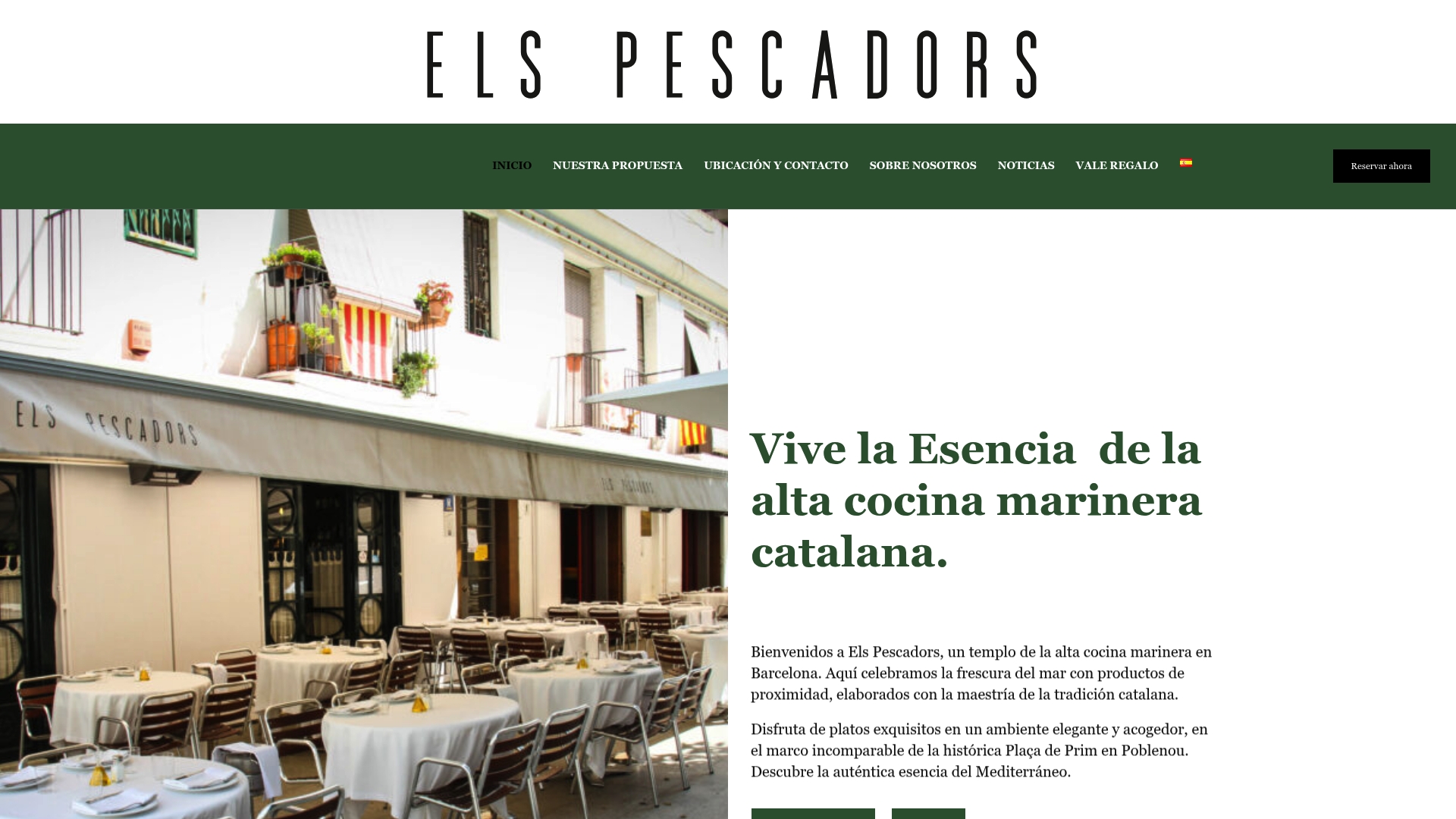
If you prefer to choose dish by dish, see La Carta or the Carta del Día. Our guide on carta versus tasting menu helps you decide which suits your evening.
FAQ
Is it rude to leave food unfinished in Spain?
It is not a serious offence, but Spanish custom frowns on waste, so it is better to order modestly and share. Take less rather than leaving a large amount. This is a matter of culture, not law.
Do Spanish waiters expect a tip?
Not as an obligation, because service is included in the price. The national tourism site says tips are common and usually fall between 5% and 10% of the bill. Rounding up or leaving a few euros is typical.
How do I get a waiter’s attention without being rude?
Make eye contact, raise a hand briefly, or say “Perdona” softly. Do not snap your fingers, whistle or shout. When you are ready to order, “¿Nos toma nota?” is a polite phrase.
Can a restaurant charge more for a terrace table?
Yes, if the supplement is permitted and clearly shown beforehand on the menu or a visible notice. The Ministry of Consumer Affairs says a mandatory charge that is not disclosed before you consume is not allowed. Check the price list before ordering.
Sources
- Barcelona terrace ordinance
- Spain restaurant etiquette guide (Spanish Sabores)
- How to politely get a waiter’s attention in Spain
- How to understand a menu in Barcelona
- Ministry of Consumer Affairs: terrace, bread and cover supplements
- Community of Madrid: restaurants and summer terraces
- Food in Spain (Faraway Worlds)
- Traditional Spanish summer drinks (spain.info)
- Travelling with pets in Spain (spain.info)
- Currency in Spain and how to pay (spain.info)