Most people hear “maritime gastronomy” and picture a plate of grilled fish by the harbor. That image isn’t wrong, but it barely scratches the surface. Maritime gastronomy is a living system, one built from centuries of fishing knowledge, preservation craft, community ritual, and an intimate relationship between coastal people and the sea. Along the Catalan coast, that system has produced one of the most distinctive and celebrated food cultures in the Mediterranean, and understanding it changes the way you eat, travel, and think about what’s on your plate.
Table of Contents
- Defining maritime gastronomy: Beyond the seafood plate
- From coast to kitchen: Ingredient sourcing and preservation
- Techniques and traditions: Preparing maritime cuisine
- Sustainability and ‘blue foods’: The future of maritime gastronomy
- A fresh perspective: Rediscovering maritime gastronomy through heritage and innovation
- Discover authentic maritime gastronomy in Barcelona
- Frequently asked questions
Key Takeaways
| Point | Details |
|---|---|
| More than seafood | Maritime gastronomy is a system of ingredient sourcing, technique, and culture, not just seafood dishes. |
| Seasonal sourcing | Local and seasonal fish, shellfish, and seaweed define authentic maritime cuisine. |
| Tradition shapes technique | Cooking methods and signature dishes reflect coastal community heritage and creative adaptation. |
| Sustainability matters | ‘Blue foods’ and sustainable sourcing are essential for future maritime gastronomy and food security. |
| Experiences connect | Seeking local stories and traditions deepens your culinary journey in maritime regions. |
Defining maritime gastronomy: Beyond the seafood plate
Maritime gastronomy is far more than a category of restaurant menus. It’s a framework that connects how ingredients are harvested to how communities share and celebrate them. As the Halifax Food Guide puts it, maritime gastronomy is a culinary approach built around the sea’s ingredients and the coastal food cultures that harvest, preserve, and cook them. That definition points to something deeper than a menu category. It names a whole way of living with the ocean.
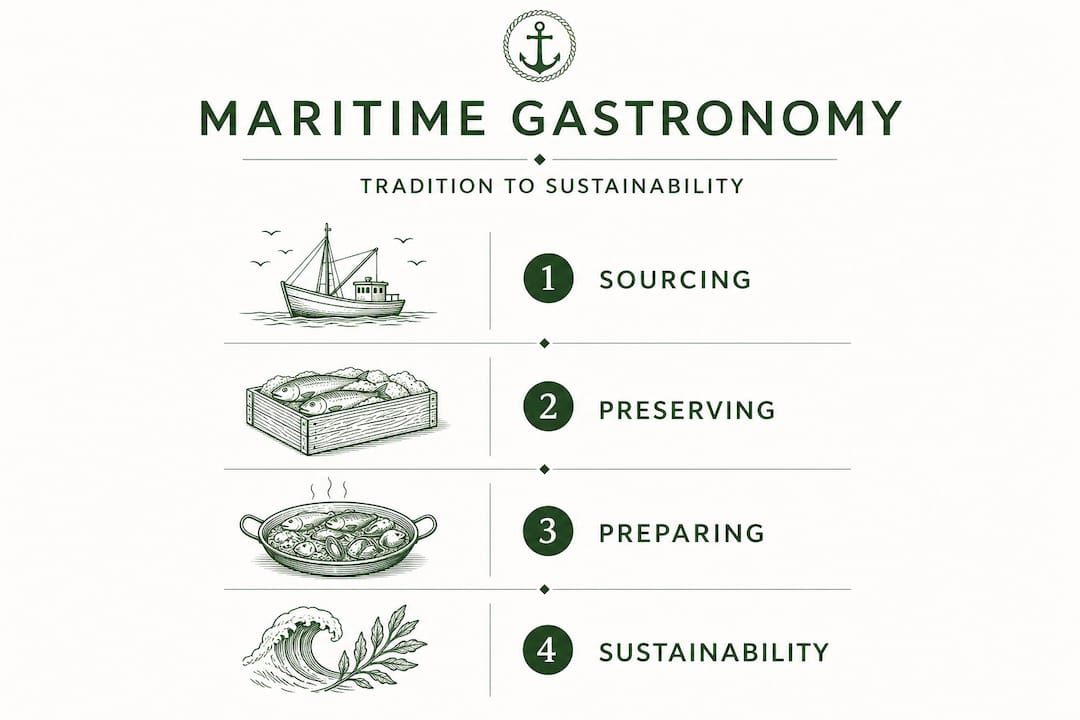
Four core elements hold this system together:
- Ingredient sourcing: Fish, shellfish, crustaceans, seaweed, and sea plants form the raw material, all shaped by what the local sea provides each season.
- Preservation techniques: Salting, curing, drying, and pickling extend seasonal ingredients across the year and create unique flavor profiles.
- Culinary technique: Methods ranging from slow stewing to high-heat grilling reflect both practical constraints and centuries of accumulated skill.
- Social setting: Shared tables, fishing community festivals, and market culture are inseparable from how maritime food is made and enjoyed.
“Food practices in coastal communities become part of identity and knowledge transmission around marine biodiversity and local resources. Maritime gastronomy is heritage, not just cuisine.”
The social setting deserves special attention because it’s often invisible to visitors. In Catalonia, the traditions embedded in Catalan gastronomy stretch back to Roman trade routes and medieval fishing guilds. Recipes passed down through generations carry not just flavor instructions but ecological knowledge, like which fish runs in which month, and which preparation method honors the ingredient best. Understanding culinary heritage in Barcelona means recognizing that every dish carries layers of meaning that no guidebook can fully capture.
From coast to kitchen: Ingredient sourcing and preservation
The journey from open sea to finished dish is where maritime gastronomy really earns its distinction. Maritime gastronomy commonly focuses on fresh fish and shellfish, region-specific preparations, and food traditions shaped by local marine resources and fishing communities. In Catalonia, that means knowing your “escamarlans” (Norway lobster) from your “llagosta” (spiny lobster), and understanding that the best “rap” (monkfish) arrives in cooler months when the fish is firmest and most flavorful.
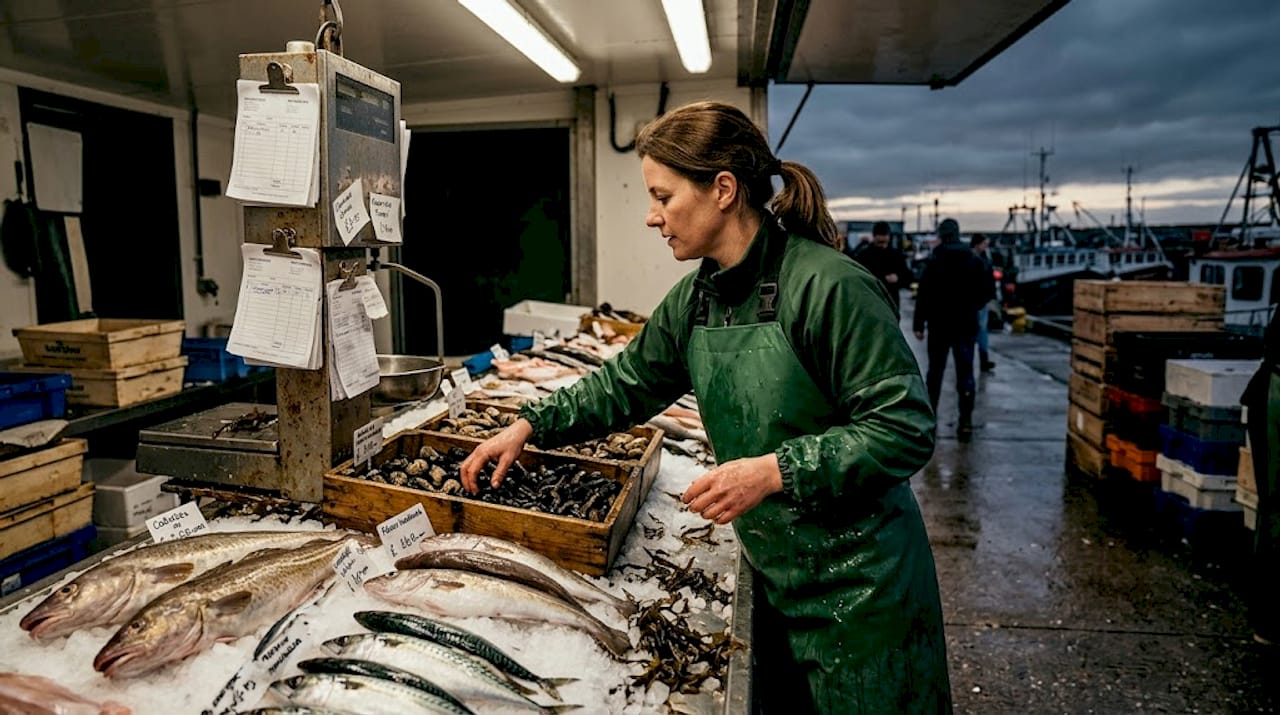
Seasonality isn’t just a trend here. It’s the backbone of authentic Catalan maritime cooking. A good understanding of seasonal fishing in Catalan cuisine reveals just how directly the ocean’s natural rhythms drive what ends up on the table.
| Season | Key seafood ingredients |
|---|---|
| Spring | Red mullet, anchovies, cuttlefish, sea urchin |
| Summer | Sardines, gilt-head bream, clams, spider crab |
| Autumn | Monkfish, hake, mussels, Norway lobster |
| Winter | Turbot, grouper, oysters, sea bass |
Traditional preservation methods have shaped Catalan maritime dishes in ways that persist to this day. Salted anchovies from the Costa Brava, for example, are not a compromise on freshness. They are their own ingredient category, with a concentrated umami depth that fresh anchovies simply cannot deliver. Similarly, salt cod, known locally as “bacallà,” has been central to Catalan cooking for five centuries, originally as a preservation solution for inland communities and now a celebrated delicacy in its own right.
Ways that preservation techniques influence Catalan and Mediterranean dishes:
- Salt cod forms the base for dishes like “esqueixada,” a cold salad with tomatoes, olives, and onions that balances salt, acid, and freshness.
- Cured anchovies appear across “pa amb tomàquet” (bread rubbed with tomato) as an everyday ingredient elevated to ritual.
- Pickled shellfish introduce acidity and texture contrast to rice dishes and seafood stews.
- Bottarga (dried, cured fish roe) adds an intense savory note to pasta and salads across the broader Mediterranean.
- Smoked fish preserves oils and flavor while creating a smoky complexity that works in cold and hot preparations.
When you explore the essential flavors of Catalan seafood, you quickly realize that preserved ingredients are not a lesser version of fresh ones. They are a parallel tradition with equal depth and craft.
Pro Tip: When dining at a Catalan seafood restaurant, ask the server what the day’s fresh catch is before ordering. Seasonal items rarely appear on printed menus, and they represent the best of what the local fishing boats brought in that morning.
Techniques and traditions: Preparing maritime cuisine
After sourcing and preserving seafood, preparation is where tradition and technique shine most clearly. Catalan maritime cooking uses a surprisingly varied toolkit. Grilling over wood or charcoal brings out natural sugars in shellfish. Slow braising in fish stock builds complex base flavors in stews. Raw preparations like “ceviche-inspired” dishes, though more Peruvian in origin, have found a home in contemporary Catalan kitchens because the fresh Mediterranean catch is exceptional when simply dressed with citrus, olive oil, and herbs.
The signature dishes tell you everything about a culture’s priorities. “Suquet de peix,” a Catalan fisherman’s stew, uses modest cuts of fish, potatoes, garlic, and “picada” (a ground paste of nuts, bread, and herbs) to create something far greater than its parts. It’s a dish born from practical necessity at sea and elevated over generations into a celebration of flavor and technique.
Consider the step-by-step logic behind a well-made seafood rice dish, arguably the most iconic expression of Catalan maritime cooking:
- Build the base: Sauté “sofregit” (slowly caramelized onion and tomato) in good olive oil until deeply concentrated and almost jamlike.
- Add aromatics: Introduce garlic, paprika, and “nyora” (a dried sweet pepper) to the sofregit for a distinctly Catalan flavor foundation.
- Toast the rice: Add short-grain rice and stir to coat every grain with the oil and aromatics before adding any liquid.
- Incorporate the stock: Use a rich, house-made fish or shellfish stock, never water, to add the liquid gradually while the rice absorbs flavor.
- Layer the seafood: Add shellfish and fish at precise intervals so each ingredient reaches perfect doneness simultaneously.
- Rest and serve: Allow the rice to rest briefly so the bottom forms a slight crust (the prized “socarrat”) before serving directly from the pan.
You can explore this process in detail in our authentic seafood paella guide, which breaks down each stage with the techniques behind it.
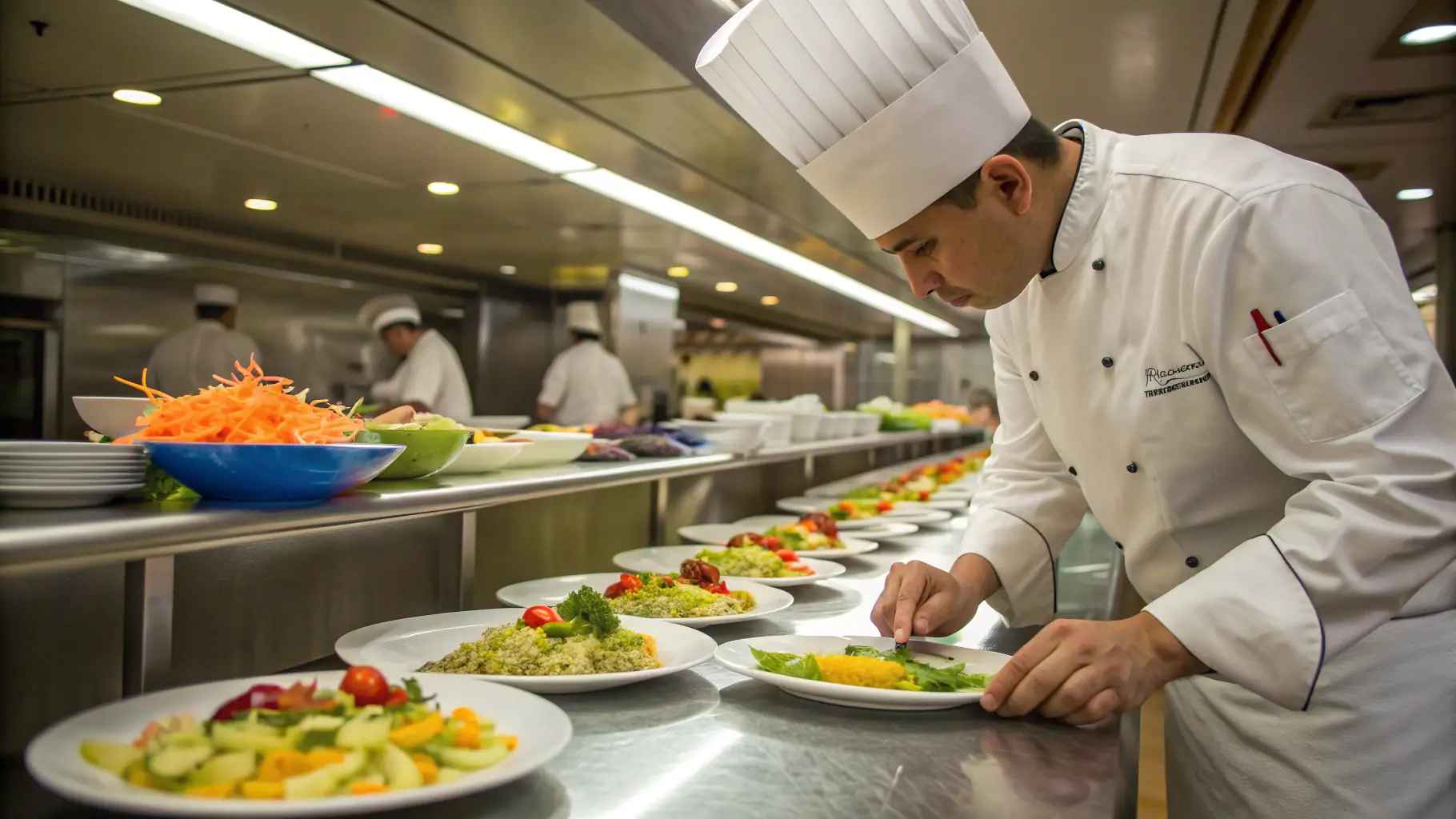
Interestingly, cooking at sea aboard ships presents a completely different set of constraints, including limited space, the motion of the vessel, and the challenge of long-term meal planning, yet the methods developed there (one-pot cooking, heavy use of preserved ingredients, and simple high-heat techniques) directly influenced the land-based maritime cuisine we celebrate today.
Common errors that undermine maritime dishes:
- Overcooking shellfish, which destroys their delicate texture and turns them rubbery in seconds.
- Using inferior stock or plain water instead of a proper fish “fumet,” which removes the depth that defines these dishes.
- Adding seafood too early in a stew or rice dish, so it falls apart before the other elements are ready.
- Skipping the “picada” in Catalan stews, which acts as both a thickener and a flavor bomb at the end of cooking.
- Sourcing out-of-season fish that lack the fat content and texture needed for the dish’s intended balance.
Pro Tip: When choosing where to eat seafood in Barcelona, look for restaurants that name their fishing suppliers or display the day’s catch visibly. That transparency signals a genuine commitment to sourcing quality, not just marketing.
Discover the broader world of traditional Catalan seafood dishes to see how these techniques play out across generations of recipes.
Sustainability and ‘blue foods’: The future of maritime gastronomy
As we savor tradition, it’s essential to look toward maritime gastronomy’s future, with sustainability and “blue foods” at its core. The concept of blue foods refers to fish, shellfish, and seaweed from oceans and rivers, framed as essential to food systems and human health when produced sustainably. This isn’t an abstract policy idea. It’s the lived practice of coastal kitchens that have always known the ocean is finite.
The United Nations has highlighted blue foods as a critical pillar of future food security, noting that sustainably managed ocean foods can feed billions while producing a fraction of the carbon footprint of land-based animal proteins. For Mediterranean communities, this is validation of something fishermen have known for generations: healthy seas produce better food.
| Factor | Sustainable sourcing | Conventional sourcing |
|---|---|---|
| Fish origin | Local day-boat catches | Industrial trawling |
| Species selection | Seasonal and abundant | Year-round regardless of stock |
| Bycatch management | Minimal, targeted gear | High incidental catch |
| Carbon footprint | Low (shorter supply chain) | Higher (global transport) |
| Menu flexibility | Changes with availability | Fixed regardless of season |
| Flavor quality | Peak freshness | Often frozen or stored |
Simple ways diners can support sustainable maritime gastronomy:
- Ask where the fish comes from. A confident answer means the kitchen values traceability.
- Order the “catch of the day” instead of always defaulting to popular species like tuna or sea bass.
- Embrace lesser-known species like red mullet, mackerel, or spider crab, which are often more abundant and equally delicious.
- Support restaurants that work with local fishing cooperatives rather than large distributors.
- Avoid out-of-season seafood even when it appears on the menu, as it often signals frozen imports.
In Barcelona, chefs and restaurateurs who align with sustainable seafood choices are reshaping how the city eats. The result is a more honest relationship between the kitchen, the fisherman, and the sea.
A fresh perspective: Rediscovering maritime gastronomy through heritage and innovation
Here’s what most food travelers miss: they consume maritime gastronomy as scenery. They sit in a pretty harbor restaurant, eat excellent fish, take a photo, and move on. They experience the surface without touching the system beneath.
Research is clear that maritime gastronomy functions as a system, one where ingredient sourcing, technique, preservation, and social setting work together. Remove any one of those elements and you have something lesser. A fish dish made with imported frozen product, cooked by someone with no connection to local fishing tradition, served in a generic setting, is technically seafood. It is not maritime gastronomy.
This distinction matters enormously for food travelers. The most memorable meals aren’t always the most technically complex ones. They’re the ones where you can feel the weight of the place behind the plate. When a chef in Poblenou sources his morning catch from the Barceloneta fish market and prepares a “suquet” the way his grandmother taught him, food practices become cultural heritage, carrying identity and knowledge that can’t be replicated in a vacuum.
Innovation has a role here, but its best form amplifies heritage rather than replacing it. The most exciting developments in Catalan maritime cuisine innovation use new techniques to express ancient flavor logic, like using modern emulsification to deliver a lighter “all i oli” that still carries the garlic-olive oil soul of the original.
“The question to ask at every maritime table isn’t ‘What am I eating?’ but ‘Where did this come from, and who brought it here?’”
Pro Tip: Seek out restaurants where the chef or a staff member can tell you the story of a specific ingredient, which boat caught it, which fisherman supplied it, or which village tradition inspired the recipe. That narrative is the meal itself.
Discover authentic maritime gastronomy in Barcelona
Ready to turn insight into experience? Barcelona’s Poblenou district is home to one of the most authentic expressions of Catalan maritime gastronomy, and Els Pescadors sits at its heart. The restaurant draws from daily market sourcing and deep culinary tradition to create a dining experience that’s both refined and genuinely rooted.
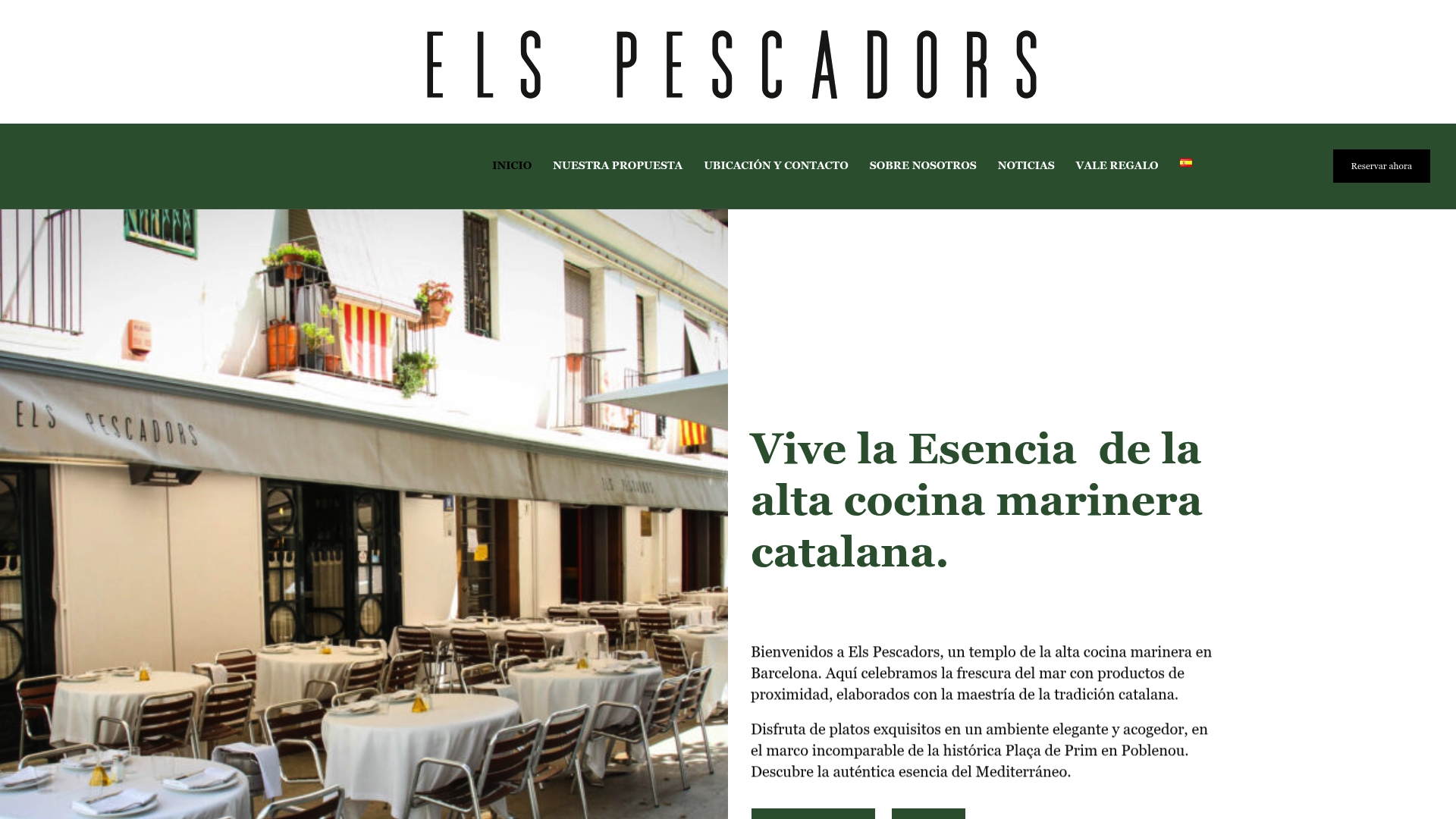
Start by exploring our proposal to understand the philosophy behind every dish. Then browse the collection of traditional Catalan seafood dishes that anchor our menu across seasons. If you’re ready for a full immersion, the guide to top seafood tasting menus in Barcelona will help you choose the right experience for your appetite and curiosity. Maritime gastronomy at its best is waiting at Plaça de Prim.
Frequently asked questions
What ingredients are most common in maritime gastronomy?
Maritime gastronomy centers on fresh fish, shellfish, and seaweed, shaped by local marine resources and the fishing communities that harvest them seasonally.
What is the difference between maritime gastronomy and cooking at sea?
Cooking at sea involves adapting recipes to limited space and vessel motion, while maritime gastronomy is a land-based culinary tradition that draws on broader cultural and historical practices.
How does maritime gastronomy promote sustainability?
When maritime gastronomy highlights blue foods, it encourages sourcing ocean ingredients responsibly, reducing environmental impact while supporting healthier diets and more resilient food systems.
Why is maritime gastronomy important for local culture?
It preserves food practices and identity, transmitting ecological knowledge about marine biodiversity and seasonal resources across generations of coastal communities.
What are ‘blue foods’ and why are they relevant?
Blue foods are fish, shellfish, and seaweed from oceans and rivers; they are vital for healthy diets and sustainable food systems when responsibly produced and sourced.