
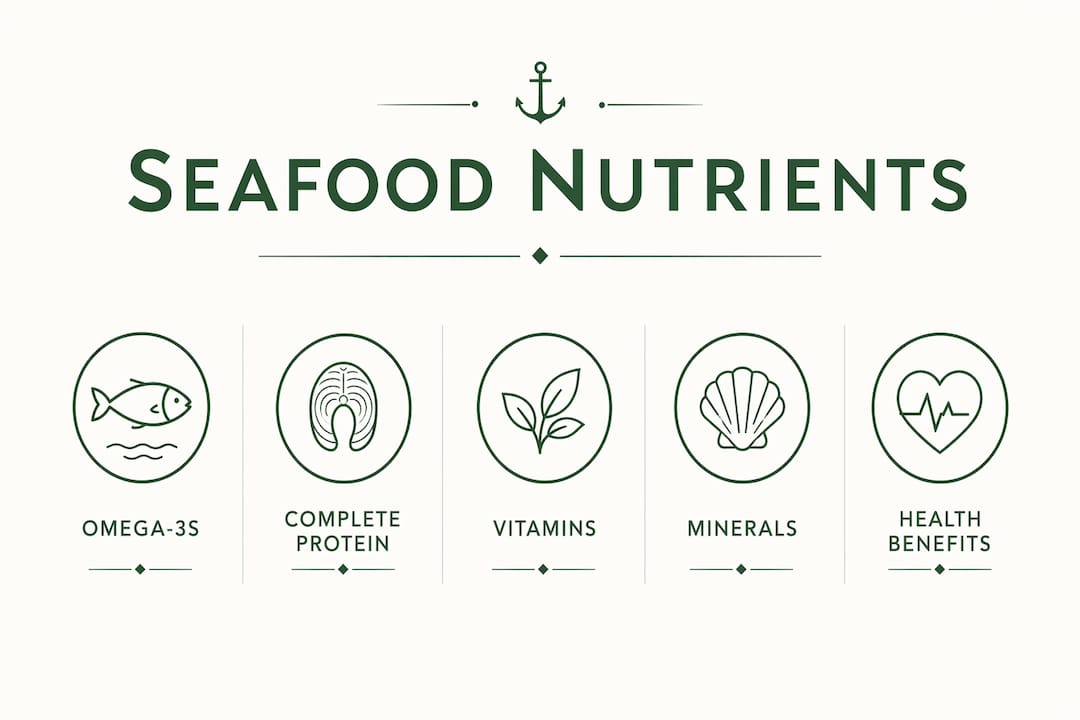
Seafood is defined as one of the most nutrient-dense food categories available, delivering omega-3 fatty acids, complete protein, iodine, selenium, and vitamin B12 in a single meal. The American Heart Association and the Dietary Guidelines for Americans both recognize seafood as a cornerstone of a heart-healthy diet, recommending it multiple times per week. Species like salmon, sardines, oysters, and anchovies rank among the most studied foods in nutritional science. Understanding why seafood is healthy goes beyond a single nutrient. It requires looking at the full picture: what seafood contains, what the science says, and how to eat it wisely.
Why seafood is healthy: the core nutrients explained
Seafood earns its reputation through a combination of nutrients that few other foods can match in one serving. The most studied are the omega-3 fatty acids EPA (eicosapentaenoic acid) and DHA (docosahexaenoic acid), which the body cannot produce in sufficient quantities on its own. These fatty acids reduce inflammation, support brain function, and protect the cardiovascular system. Fatty fish like salmon, mackerel, and sardines are the richest dietary sources of both.

Beyond omega-3s, seafood provides complete protein, meaning it contains all nine essential amino acids the body needs for muscle repair, immune function, and enzyme production. A 3-ounce serving of cod or shrimp delivers roughly 20 grams of protein at a fraction of the calories found in red meat. That protein quality is comparable to chicken or eggs, with a lighter fat profile.
The micronutrient picture is equally strong:
- Iodine: Critical for thyroid function; shellfish and white fish are among the best dietary sources.
- Selenium: An antioxidant mineral that supports immune defense; tuna and halibut are particularly rich.
- Vitamin B12: Necessary for nerve function and red blood cell production; clams and sardines provide exceptionally high amounts.
- Vitamin D: Supports bone health and immune regulation; salmon and herring are among the few foods that naturally contain it.
- Calcium: Found in small fish eaten whole, such as sardines and anchovies, where the soft bones are consumed along with the flesh.
- Zinc: Supports wound healing and immune response; oysters contain more zinc per serving than any other food.
Pro Tip: If you eat sardines canned in water or olive oil, eat the soft bones too. They dissolve easily and deliver a significant calcium boost that you would miss by discarding them.
This nutrient combination explains the seafood diet benefits seen in Mediterranean populations, where fish has been a dietary staple for centuries.
How does seafood consumption impact heart health?
The cardiovascular case for seafood is the most thoroughly documented in nutrition science. Two or more weekly servings of omega-3-rich fish lower the risk of heart disease and reduce both blood pressure and systemic inflammation. The Mayo Clinic identifies inflammation reduction and modest blood pressure lowering as the primary mechanisms, not just cholesterol management.
The Dietary Guidelines for Americans go further. Three or more seafood servings per week are associated with reduced risk of both heart disease and stroke, according to NOAA Fisheries. That is a meaningful threshold, and most adults in the United States fall well short of it.
A meta-analysis of 16 randomized controlled trials involving 127,771 patients found that purified EPA reduces cardiovascular mortality with a hazard ratio of 0.79, a clinically significant reduction. This matters because it confirms that the omega-3 content in seafood is genuinely protective, not just correlated with healthy lifestyles.
“The benefits of eating fish for heart health generally outweigh the risks for most adults.” — Mayo Clinic
However, the same research cautions against assuming that fish oil supplements replicate the effect of eating fish. Seafood delivers a complex nutrient matrix that isolated EPA capsules cannot fully reproduce. The protein, selenium, vitamin D, and other co-factors in a fish fillet work together in ways that a supplement cannot replicate.
| Mechanism | Effect on cardiovascular health |
|---|---|
| Omega-3 EPA and DHA | Reduce triglycerides and systemic inflammation |
| Blood pressure regulation | Modest but consistent lowering with regular intake |
| Plaque stabilization | EPA associated with reduced cardiovascular mortality |
| Anti-inflammatory action | Lowers inflammatory markers linked to arterial disease |
Pro Tip: Grilled salmon or baked sardines twice a week delivers more measurable cardiovascular benefit than a daily fish oil capsule, based on current evidence comparing whole food versus supplement sources.
Which seafood choices maximize benefits while minimizing risks?
Not all seafood carries the same risk profile, and choosing wisely is the practical skill that separates informed eaters from anxious ones. The core principle is straightforward: eat lower on the food chain. Smaller fish and bivalves like sardines, anchovies, herring, clams, and oysters provide high levels of protein, omega-3s, and micronutrients with significantly lower mercury and PCB contamination than large predatory fish.
Large, long-lived species like swordfish, shark, king mackerel, and bigeye tuna accumulate mercury through a process called biomagnification. Each step up the food chain concentrates contaminants further. EFSA data shows that 34% of adults consume high-mercury species three or more times per week, a frequency that exceeds safe thresholds for vulnerable groups including pregnant women, nursing mothers, and young children.
| Seafood type | Mercury risk | Omega-3 content | Recommended frequency |
|---|---|---|---|
| Sardines, anchovies, herring | Low | High | 3+ times per week |
| Salmon (wild or farmed) | Low to moderate | Very high | 2-3 times per week |
| Shrimp, clams, oysters | Very low | Moderate | Freely, several times per week |
| Canned light tuna | Moderate | Moderate | Up to 2-3 times per week |
| Swordfish, shark, king mackerel | High | Moderate | Limit to 1 serving per week or less |
Practical purchasing tips make a real difference:
- Buy from reputable fishmongers or restaurants that disclose sourcing and daily catch.
- Choose wild-caught Pacific salmon over farmed Atlantic salmon when possible for a cleaner omega-3 to omega-6 ratio.
- Frozen sardines and anchovies retain nearly all their nutritional value and cost far less than premium fillets.
- Sustainable seafood choices also tend to be lower-trophic species, so environmental responsibility and personal health align naturally.
Harvard Health notes that eating lower on the seafood chain is better for both individual health and the environment, a rare case where the most nutritious option is also the most sustainable one.
How to incorporate seafood healthfully into your diet
Frequency and preparation method determine how much of seafood’s nutritional value you actually receive. The science-backed target is clear: aim for at least two to three servings per week, with each serving around 3 to 4 ounces of cooked fish or shellfish. For cardiovascular protection specifically, three or more servings weekly align with the Dietary Guidelines’ cardiovascular health goals.
Cooking method matters more than most people realize. Here is a practical hierarchy from best to worst for preserving nutrients and keeping calorie counts reasonable:
- Grilling or broiling: Preserves omega-3 content, adds flavor through char, and requires minimal added fat. Salmon fillets and whole sardines respond particularly well.
- Baking or roasting: Gentle heat keeps moisture in and nutrients intact. Ideal for white fish like cod, sea bass, or halibut with herbs and olive oil.
- Steaming or poaching: The gentlest method, best for delicate shellfish like clams and mussels. Retains virtually all water-soluble vitamins.
- Pan-searing: Adds a crust and concentrates flavor. Use a small amount of olive oil and avoid overcooking to preserve omega-3 integrity.
- Deep-frying: Adds significant calories and oxidized fats that partially offset the health benefits. Reserve for occasional enjoyment rather than weekly rotation.
Balancing seafood with other whole foods amplifies the benefits. Pair grilled fish with leafy greens, legumes, or whole grains to create meals that cover a wide nutritional spectrum. The Mediterranean diet model, which places seafood alongside olive oil, vegetables, and pulses, consistently outperforms other dietary patterns in long-term cardiovascular and cognitive health studies.
Pro Tip: A simple weeknight meal of baked sardines on whole-grain toast with sliced tomatoes and a drizzle of olive oil covers your omega-3 target, delivers calcium from the bones, and takes under 10 minutes to prepare.
Addressing common myths: seafood is not inherently high in sodium (fresh fish is naturally low), it is not difficult to cook well, and the mercury concern, while real for specific species, does not apply to the majority of commonly eaten seafood. The health advantages of seafood are accessible to anyone willing to choose the right species and prepare them simply.
Key takeaways
Seafood is healthy because it delivers omega-3 fatty acids, complete protein, and critical micronutrients that support heart, brain, and immune health in a combination no supplement fully replicates.
| Point | Details |
|---|---|
| Omega-3s are the headline nutrient | EPA and DHA in fatty fish reduce inflammation and cardiovascular mortality. |
| Species choice determines risk | Sardines, anchovies, and oysters maximize nutrients while minimizing mercury exposure. |
| Frequency drives results | Three or more servings per week align with cardiovascular health guidelines. |
| Whole fish beats supplements | Seafood’s complex nutrient matrix produces benefits that isolated EPA capsules cannot replicate. |
| Cooking method preserves value | Grilling, baking, and steaming retain omega-3 content better than deep-frying. |
What I’ve learned from years of watching people eat seafood wrong
Most people approach seafood with one of two flawed mindsets. Either they treat it as a luxury food reserved for restaurants and special occasions, or they eat the same species, prepared the same way, every single time. Neither approach captures what the science actually supports.
The evidence points clearly toward variety and frequency over perfection. A person who eats sardines on toast three times a week and grilled salmon once is doing more for their cardiovascular health than someone who orders swordfish at a fine restaurant once a month. The species that deliver the most consistent benefit, sardines, anchovies, herring, clams, and mussels, are also the cheapest and most available. That is not a coincidence. These are the fish that coastal populations have eaten daily for generations, and their health outcomes reflect it.
The supplement trap is the other issue I see repeatedly. People take fish oil capsules and consider the omega-3 box checked. The meta-analysis evidence on purified EPA is genuinely impressive, but it does not translate cleanly to capsule form for most people. Whole fish brings selenium, vitamin D, B12, and protein alongside the omega-3s. That combination is what produces the outcomes seen in population studies.
The practical shift I would encourage is simple: stop treating seafood as a special-occasion protein and start treating it as your default two or three times a week. Choose small fish when you can. Prepare them simply. The nutritional value of seafood is not locked behind expensive preparations or rare species. It is sitting in a can of sardines at your local grocery store.
— YellowRock
Experience the health benefits of seafood at Els Pescadors
Els Pescadors, located in Barcelona’s historic Poblenou district at Plaça de Prim, sources its fish and shellfish daily from local Mediterranean waters. Every dish on the menu reflects the same principles this article outlines: fresh, seasonal ingredients, species chosen for quality and sustainability, and traditional Catalan preparation methods that preserve natural flavor and nutritional value.

Choosing a trusted seafood restaurant removes the guesswork from species selection and preparation. At Els Pescadors, the kitchen does that work for you, presenting our full culinary proposal built around the freshest catch available each day. Whether you are a Barcelona local or visiting the city, a meal here is one of the most direct ways to experience what a genuinely seafood-centered diet looks and tastes like. Reserve your table and let the Mediterranean do the rest.
FAQ
Why is seafood considered healthy?
Seafood is healthy because it provides omega-3 fatty acids, complete protein, and micronutrients like iodine, selenium, and vitamin B12 that support heart, brain, and immune function. The American Heart Association recommends eating fish at least twice a week for cardiovascular protection.
How often should you eat seafood for health benefits?
The Dietary Guidelines for Americans recommend three or more servings of seafood per week for cardiovascular benefits, with each serving around 3 to 4 ounces of cooked fish or shellfish. Two servings per week is the minimum threshold cited by the American Heart Association.
Which fish are the healthiest to eat?
Sardines, anchovies, herring, salmon, and oysters rank among the most nutritious choices because they combine high omega-3 content with low mercury levels. Harvard Health specifically recommends eating lower on the seafood chain to maximize nutrients while minimizing contaminant exposure.
Is eating fish better than taking fish oil supplements?
Whole fish delivers a complex nutrient matrix including protein, selenium, vitamin D, and B12 alongside omega-3s, which supplements cannot fully replicate. Meta-analysis data shows purified EPA reduces cardiovascular mortality, but translating those results directly to capsule use requires caution.
What seafood should you limit due to mercury?
Swordfish, shark, king mackerel, and bigeye tuna carry the highest mercury levels and should be limited to one serving per week or less, especially for pregnant women and young children. Shrimp, sardines, salmon, and canned light tuna are lower-mercury options suitable for regular consumption.