A great seafood platter comes down to three things: fresh ingredients, smart preparation, and a balance of flavors that makes every bite feel intentional. Whether you’re planning a casual weekend spread or a proper celebratory centerpiece, the best platters combine briny shellfish, silky raw fish, punchy sauces, and crisp garnishes on a bed of crushed ice. The result is communal, festive, and far easier to pull off at home than most people expect.
The core components of any successful platter:
- Shellfish: oysters, clams, mussels, crab legs, prawns, lobster
- Raw fish: salmon sashimi, tuna, yellowtail (hamachi) crudo
- Cooked items: chilled shrimp cocktail, steamed lobster, crab claws
- Sauces: classic mignonette, cocktail sauce with horseradish, garlic butter, green goddess aioli
- Garnishes: lemon wedges, fresh parsley, seaweed, edible flowers
- Serving tools: crushed ice, ramekins, oyster knife, kitchen shears
Temperature and texture contrast matter as much as the seafood itself. Pair cold, briny oysters with a warm garlic butter dip. Set silky salmon sashimi next to the crunch of pickled vegetables. The goal is variety, not volume.
Pro Tip: Buy your seafood the morning of the gathering, not the day before. Fresh fish and live shellfish deteriorate quickly, and the difference between 12-hour-old and 36-hour-old oysters is immediately obvious on the plate.
What seafood works best on a platter?
The strongest platters draw from at least three categories: live shellfish, cooked crustaceans, and raw or cured fish. Each brings a different texture and flavor register, and together they give guests something to explore rather than a single note repeated across the board.
Shellfish
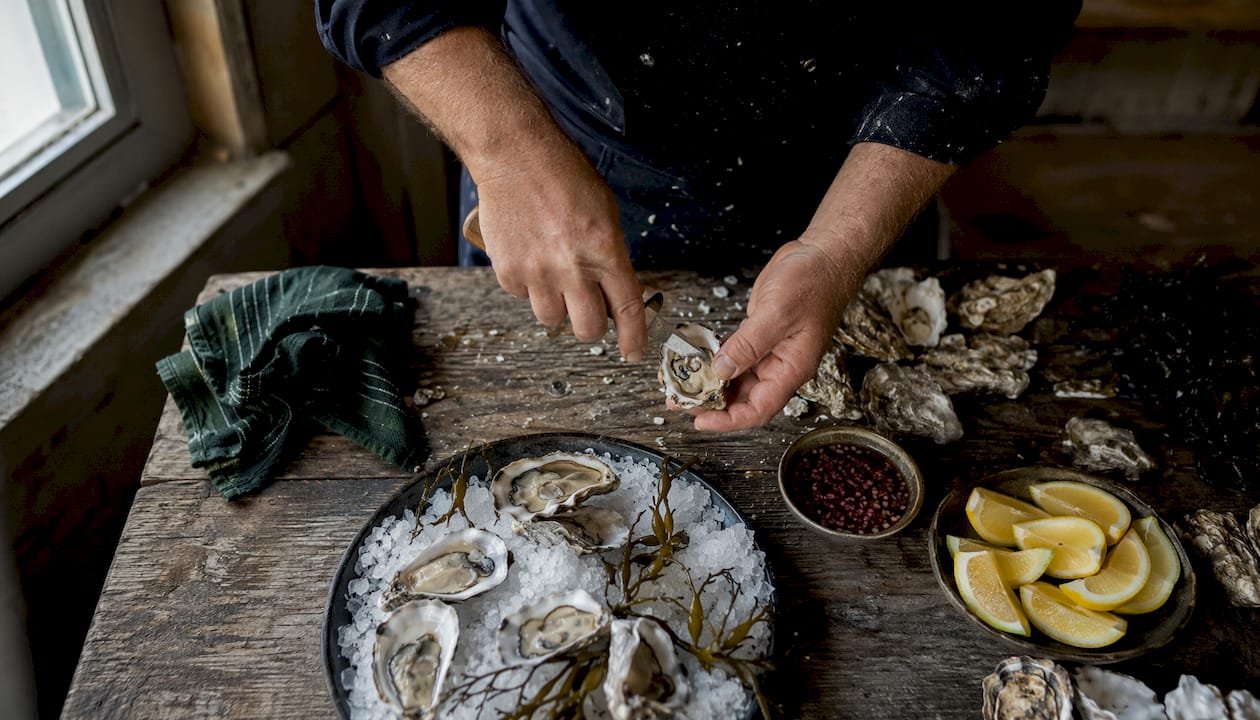
Oysters are the anchor of almost every iconic seafood platter. Serve them raw on the half shell, freshly shucked, with a mignonette or a squeeze of lemon. Clams, particularly littleneck and razor varieties, work the same way. Mussels are better steamed and served warm or at room temperature with a white wine broth. Live shellfish should smell of the ocean, not of fish. Shells that gape open and don’t close when tapped are dead and should be discarded.
Prawns and shrimp are crowd favorites because they’re approachable and easy to eat. Large Gulf shrimp or tiger prawns, chilled and arranged shell-on, add visual drama. Crab legs, whether Alaskan king or Dungeness, bring sweetness and a satisfying crack-and-dip ritual. Lobster, served steamed and chilled, is the showpiece.
Raw fish
Sashimi-grade salmon, tuna, and yellowtail are the standard choices for raw fish sections of a platter. Slice them thin, about a quarter inch, and lay them on a bed of seaweed or shiso leaves. The leaves serve a practical purpose: they prevent the fish from sitting directly on ice, which can waterlog the flesh and dull the flavor. Hamachi crudo with a drizzle of yuzu and a few microgreens reads as elegant without requiring any cooking.
Regional and Mediterranean varieties
Mediterranean-inspired platters lean heavily on mussels, clams, prawns, and cured anchovies alongside olives, capers, and pickled peppers. The Mediterranean seafood tradition at Elspescadors draws from Catalan coastal cooking, where freshness and simplicity define the plate. On the US East Coast, blue crabs, farmed oysters, and blue mussels are year-round staples. West Coast platters often feature Dungeness crab, Pacific tuna, and California squid.
Seasonal availability
Oysters are at their best in colder months, roughly October through April in the Northern Hemisphere, when cooler water temperatures produce firmer, brinier meat. Soft-shell crabs are seasonal, typically strongest in warmer months in many regions. Shrimp and prawns are generally available year-round from reputable suppliers, with some wild-caught varieties noted for seasonal flavor differences. Checking seasonal fishing cycles before you shop helps you buy what’s actually at its peak rather than what’s simply available.
Complementary non-seafood elements
| Category | Items | Purpose |
|---|---|---|
| Briny accents | Capers, Kalamata olives, pickled peppers | Add depth and contrast |
| Acid elements | Lemon wedges, white wine vinegar mignonette, yuzu | Brighten and cut richness |
| Fresh herbs | Flat-leaf parsley, dill, chives, shiso | Color, aroma, freshness |
| Bread and crackers | Sourdough slices, water crackers, flatbread | Texture and neutral base |
| Preserved options | Quality tinned anchovies, smoked salmon, sardines | Pantry-based depth |
Preserved and pantry-based options
Not every home cook has access to a live seafood market. High-quality tinned or preserved seafood, such as Spanish anchovies packed in olive oil, smoked salmon, or oil-packed sardines, combined with fresh accompaniments like lemon, garlic, and herbs, creates a genuinely elegant platter for inland cooks. The local sourcing approach matters here: buying from suppliers with traceable origins, whether fresh or preserved, produces a noticeably better result than grabbing whatever is cheapest at a big-box store.
Pro Tip: For a Mediterranean mezze-style platter, pair your seafood with small dishes of hummus, tzatziki, and a simple olive tapenade. The creamy dips balance the brine of shellfish and give guests something to do between bites.
How to prepare and serve seafood safely at home
The single most important rule is temperature. Seafood must stay below 40°F at all times and should never sit at room temperature for more than two hours. On a hot day above 90°F, that window shrinks to one hour. Cooked items need to reach an internal temperature of 145°F before serving.
Safe handling basics
- Keep raw and cooked seafood on separate surfaces and use separate utensils for each
- Use plastic, acrylic, or rubber cutting boards rather than wood, which is harder to sanitize
- Wash hands thoroughly between handling raw shellfish and cooked items
- Store fresh fish in the coldest part of your refrigerator, as close to 32°F as possible, packed on ice
- Live clams, oysters, and mussels go in a shallow pan covered with damp paper towels, never in an airtight container or fresh water
- Use fresh fish within two days of purchase
Cooking shellfish without overcooking
Shrimp, scallops, lobster, and crab all turn rubbery fast. Shrimp are done the moment they curl into a loose C shape and turn opaque. A tight O shape means overcooked. Lobster tails go from translucent to white and firm in about 8–10 minutes of steaming, depending on size. Crab legs are almost always pre-cooked before sale; you’re just reheating them, so two to three minutes in boiling water is plenty. Clams, mussels, and oysters signal doneness by opening their shells. Discard any that stay shut after cooking.
Prep in advance to reduce stress
Prepping in stages is the professional approach: cook and chill your shrimp and lobster the day before, make your sauces, cut your lemon wedges, and store everything separately in the refrigerator. On the day of the gathering, all that remains is assembly. This approach also means the ice stays colder longer because the seafood going onto the platter is already thoroughly chilled.
Pro Tip: Layer your serving platter with ice using the salt method: a base layer of crushed ice, a light sprinkle of coarse salt, then a second layer of ice on top. The salt slows the melting rate and keeps shellfish at a safe temperature significantly longer than a single ice layer alone.
How to present a seafood platter that actually looks impressive
Presentation is where a good platter becomes a great one. The visual logic is simple: large items anchor the center or bottom tier, smaller and more delicate items fill in around them, and garnishes add color and height. A tiered seafood tower is the most dramatic option, but a rimmed baking sheet lined with paper towels and covered in crushed ice works just as well at home.
Building a tiered seafood tower
Start from the bottom tier and work upward. Larger items like whole lobster halves, king crab legs, and freshly shucked oysters belong on the wider lower plate. Smaller, more delicate items like littleneck clams, crudo, and scallop preparations go on the upper tier. This arrangement is practical as well as visual: heavier shells won’t crush delicate fish slices, and guests can reach everything without dismantling the display.
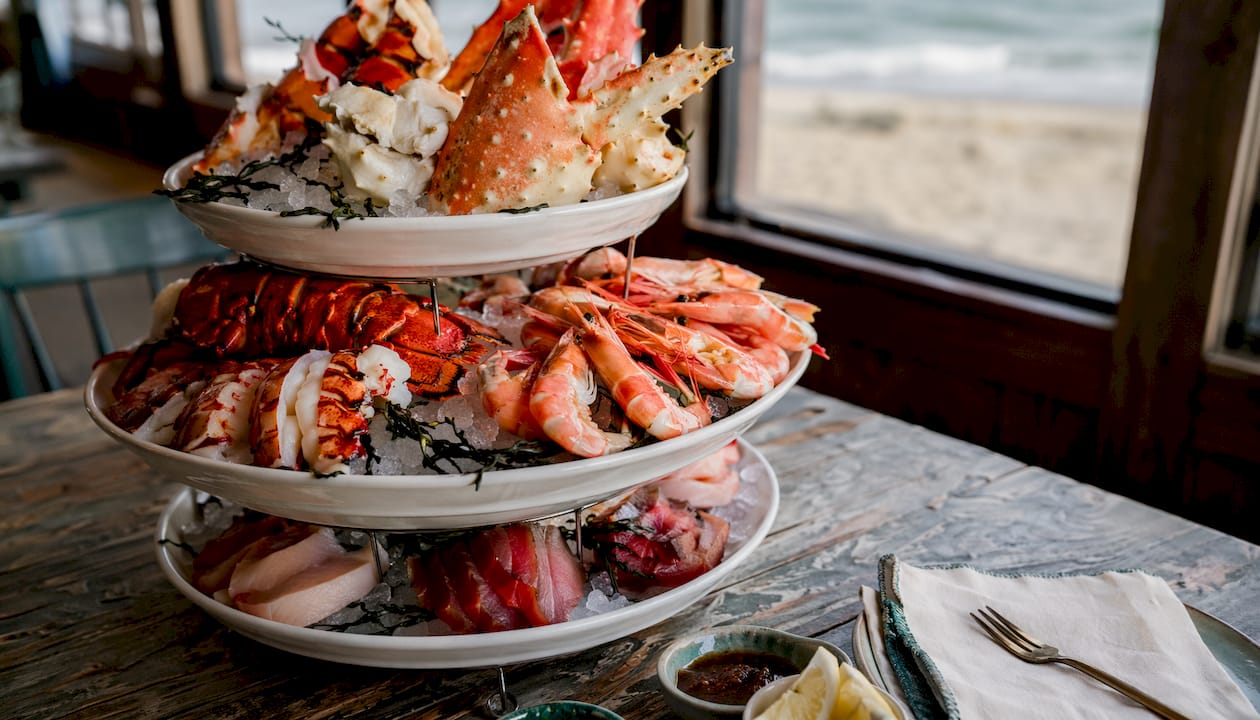
Freezing the platter or baking sheet beforehand extends your serving window, especially useful for outdoor gatherings or longer meals.
Arrangement principles
- Place sauces in ramekins at the center of the platter so guests can reach them from any angle
- Cluster similar items together rather than scattering them randomly; clusters read as intentional
- Alternate colors: the pale pink of shrimp next to the dark shell of mussels next to the bright orange of crab legs
- Use scallop shells as natural serving vessels for delicate sliced fish or small portions of ceviche
- Add lemon wedges in clusters near each major seafood group, not just at the edges
Garnishes that do real work
Seaweed or kelp leaves beneath salmon sashimi or hamachi crudo add visual drama and prevent ice contact from degrading the fish texture. Sprigs of flat-leaf parsley bring vibrant green color and a fresh aroma. Edible flowers, placed with tweezers for precision, signal care and attention. A few thin radish slices add crunch and a pop of red or pink. None of these are decorative afterthoughts; each one serves the overall balance of color and texture.
Pro Tip: Freeze your serving platter or baking sheet for at least 30 minutes before assembly. A pre-chilled surface keeps the ice from melting as quickly and gives you more time before the platter needs refreshing.
Equipment worth having
- Oyster knife and clam knife for safe, clean shucking
- Oyster gloves to protect your hands during shucking
- Sturdy kitchen shears for cutting through crab and lobster shells
- Wooden mallet for cracking lobster claws and crushing ice
- Tweezers for placing garnishes and removing pin bones from fish
- Ramekins for sauces (at least three: mignonette, cocktail sauce, and one aioli)
Pairing drinks with the platter
Light, acidic beverages complement briny seafood without competing with it. Chef Guillaume Thivet recommends Champagne, rosé, or a dry white wine like Vouvray or sauvignon blanc. A crisp pilsner or a floral IPA works equally well for beer drinkers. The right wine pairing for a mixed seafood platter leans toward high acidity and low tannins, which let the natural sweetness of crab and lobster come through rather than masking it.
Mediterranean best practices from professional kitchens
The Mediterranean approach to seafood platters is built on a principle that professional cooks at Elspescadors apply every day: the seafood itself is the dish. Sauces, garnishes, and presentation exist to support the main ingredient, not to disguise it. That means sourcing quality is non-negotiable.
Fresh seafood has a clean, oceanic scent. Anything with an ammonia or sour odor is past its prime and should not go on the platter. When sourcing, ask your supplier about traceability: where the fish was caught, when it arrived, and whether the shellfish carries a certified shipper’s tag. Buying from a reputable local supplier with transparent sourcing practices produces a noticeably better result than price-shopping at a generic retailer.
Mediterranean flavor pairings that work
The Mediterranean mezze tradition pairs seafood with briny olives, capers, fresh parsley, dill, lemon wedges, and acid-forward sauces like mignonette or a simple vinaigrette. These elements do three things: they add contrast to rich shellfish, they brighten the palate between bites, and they give the platter visual depth. Chef Guillaume Thivet’s yuzu seaweed mignonette is a modern extension of this logic, using yuzu’s acidity the way a classic mignonette uses white wine vinegar.
For aioli variations, saffron aioli pairs beautifully with steamed shrimp or lobster, adding savory warmth without overpowering the sweetness of the meat. A green goddess aioli, built on herbs, lemon, and a touch of anchovy, works across almost every item on the platter.
What professional chefs prioritize
- Sourcing first: identify your seafood supplier before planning the menu, not after
- Mise en place: every sauce, garnish, and tool ready before the first oyster is shucked
- Temperature discipline: everything cold stays cold; nothing sits out unmonitored
- Restraint in garnishing: three well-chosen garnishes beat ten random ones
- Communal intent: the platter is designed to be shared, not admired from a distance
The group dining experience at Elspescadors reflects exactly this philosophy: a seafood platter is celebratory and communal, not fussy. Planning and organization are what make it feel effortless to guests, even when the preparation behind it was anything but.
Pro Tip: If you’re serving both raw and cooked seafood on the same platter, use different tiers or clearly separated sections. Never let raw oysters and warm shrimp share the same ice bed, both for food safety reasons and because the temperature contrast will compromise both items.
Key Takeaways
A well-built seafood platter balances fresh shellfish, raw fish, and cooked crustaceans with acid-forward sauces, briny garnishes, and a disciplined cold chain from purchase to table.
| Point | Details |
|---|---|
| Temperature is non-negotiable | Keep all seafood below 40°F; never leave it at room temperature for more than two hours. |
| Source quality before planning the menu | Fresh seafood should smell oceanic, not fishy; buy from traceable, reputable suppliers. |
| Prep in advance to simplify service | Cook, chill, and sauce everything the day before; assembly on the day takes minutes. |
| Layer ice with coarse salt | A base layer, a salt sprinkle, then a top layer of ice slows melting and maintains safe temperatures. |
| Balance flavors and textures deliberately | Pair briny shellfish with acid sauces, rich crustaceans with herb aioli, and raw fish with citrus garnishes. |
FAQ
What should I put on a seafood platter?
A well-rounded platter includes at least three categories: live or raw shellfish (oysters, clams), cooked crustaceans (shrimp, crab legs, lobster), and raw or cured fish (salmon sashimi, tuna crudo). Add ramekins of mignonette, cocktail sauce, and an aioli, plus lemon wedges, fresh herbs, and crushed ice.
How do you make a good seafood platter at home?
Prep everything in advance: cook and chill shrimp and lobster, make your sauces, and cut garnishes the day before. On the day, line a chilled platter or baking sheet with crushed ice, arrange larger items first, fill in with smaller ones, and place sauces in the center where guests can reach them from any side.
What seafood is typically on a platter?
The most common items are oysters on the half shell, chilled shrimp, crab legs, lobster, clams, and sashimi-grade fish like salmon or tuna. Mussels, scallops, and razor clams appear frequently on more elaborate or Mediterranean-style platters.
What is a seafood platter menu?
A seafood platter menu is a curated selection of cold and sometimes warm seafood served together on a single large platter or tiered tower, accompanied by dipping sauces, garnishes, and bread. It functions as both an appetizer and a shared main course, depending on portion size.
How do you keep a seafood platter cold during a party?
Serve cold seafood on ice if it will be out for more than two hours. Use the layered ice method with coarse salt between layers to slow melting, and pre-chill your serving platter before assembly. Replenish ice as needed rather than letting the platter warm up.