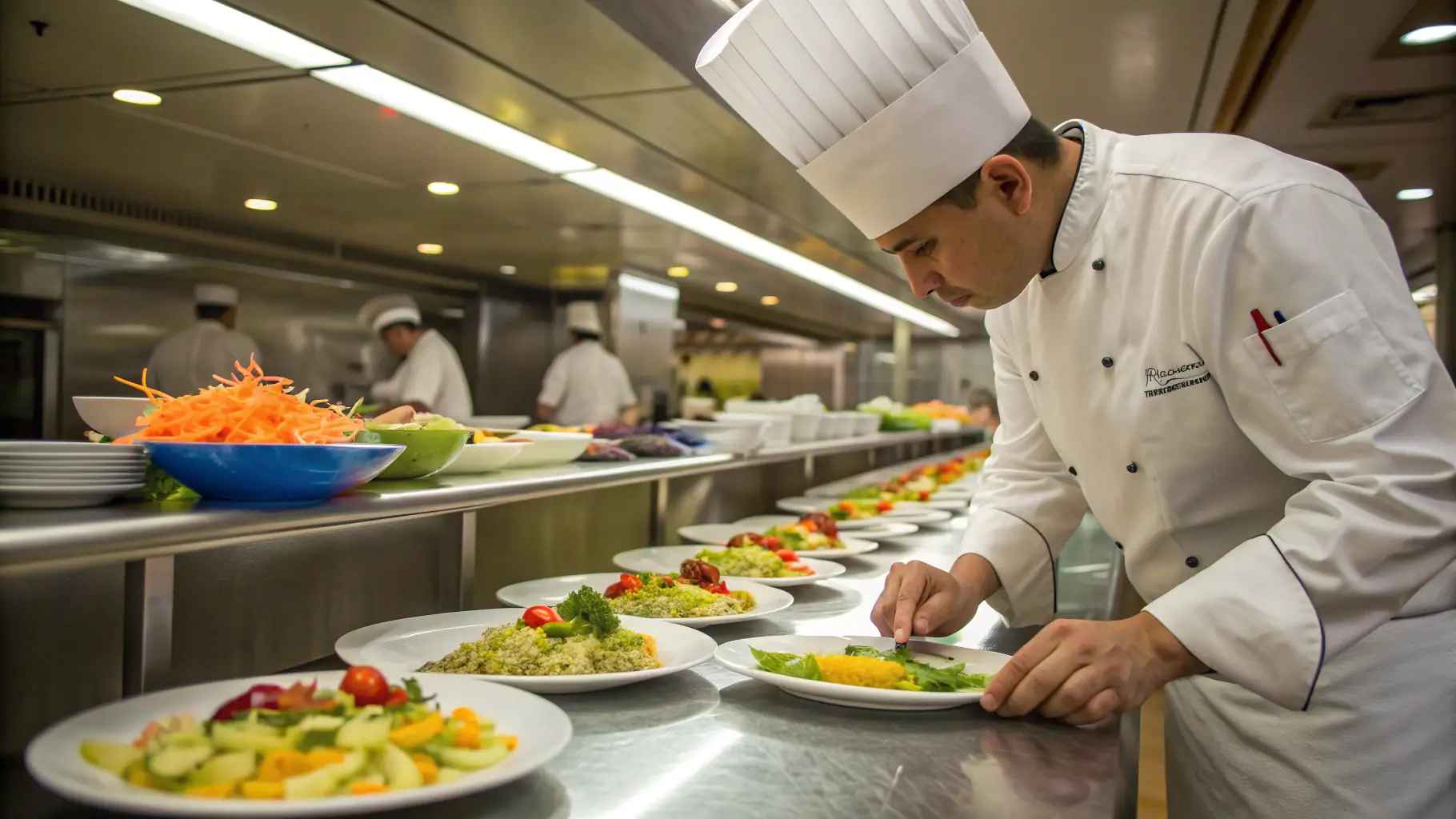
Mediterranean cuisine is the diverse set of food traditions and cooking methods shared by the countries bordering the Mediterranean Sea. It is better understood as a collection of related regional cuisines plus a common approach rather than a fixed recipe book. Olive oil, fresh vegetables, legumes, seafood, and aromatic herbs appear across every regional variation. What unites them is not a single dish but a shared philosophy: cook with what is fresh, balance bold flavors with clean ingredients, and eat together.
What is mediterranean cuisine, and what makes it distinct?
Mediterranean cuisine is defined by a plant-forward diet with olive oil as the main fat source, emphasizing vegetables, fruits, whole grains, legumes, nuts, and seeds. Fish and seafood appear moderately, while red and processed meats are minimal. That pattern is not a modern diet trend. It reflects centuries of cooking shaped by climate, agriculture, and trade routes across Southern Europe, the Middle East, and North Africa.
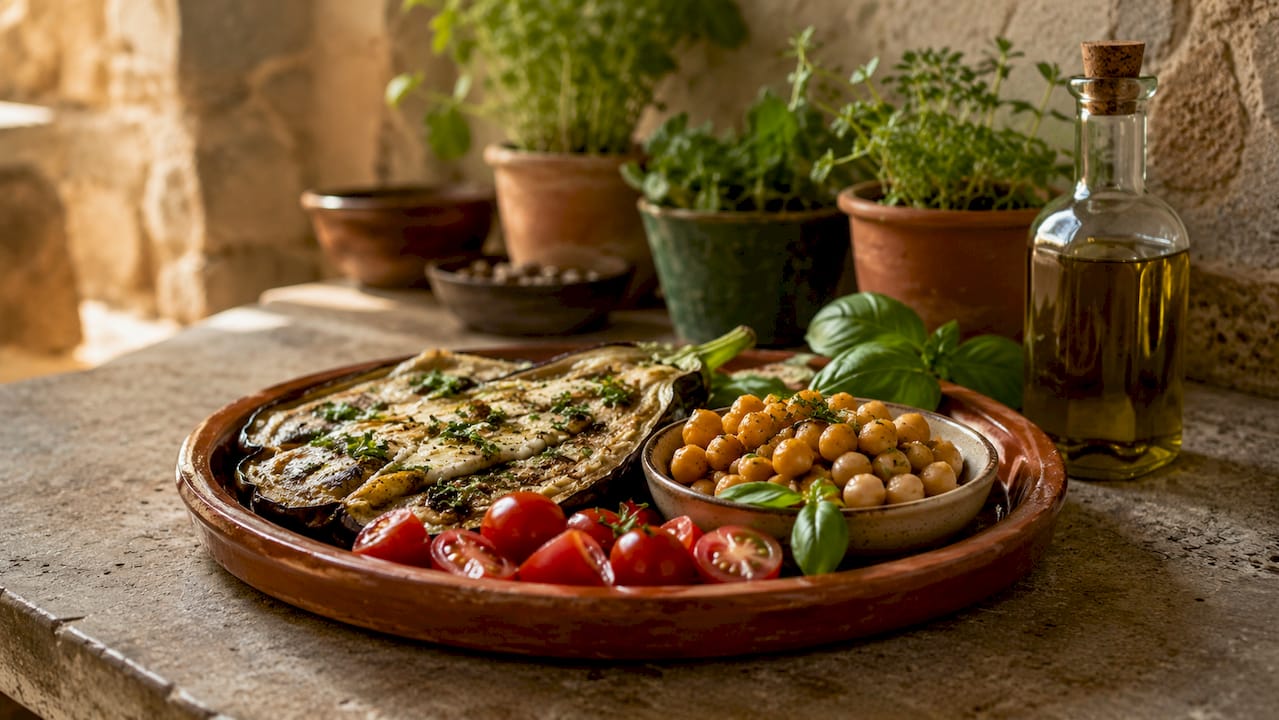
The flavor profile is bold but clean. Common staple ingredients include chickpeas, eggplant, tomatoes, cucumbers, parsley, lemon, garlic, olives, yogurt, rice, and flatbreads. These ingredients create brightness and depth without heavy sauces or excessive spice. Think of a Greek salad, a Moroccan tagine, or a Spanish rice dish: each is intensely flavorful, yet the individual ingredients remain recognizable on the plate.
Pro Tip: When building a Mediterranean meal at home, start with olive oil and one fresh herb. Those two elements alone shift a dish toward the Mediterranean flavor register faster than any spice blend.
Core ingredient categories at a glance
| Category | Examples |
|---|---|
| Vegetables and legumes | Eggplant, tomatoes, chickpeas, lentils, cucumbers |
| Grains and starches | Flatbreads, bulgur, rice, couscous, farro |
| Fats and condiments | Extra-virgin olive oil, olives, tahini |
| Proteins | Fresh fish, anchovies, yogurt, poultry, eggs |
| Aromatics and herbs | Garlic, lemon, parsley, mint, oregano, saffron |
Quality sourcing matters as much as technique. Ingredients like premium anchovies and specialty saffron represent the kind of pantry investment that separates an authentic Mediterranean dish from an approximation.
How does mediterranean cuisine vary by region?
No single Mediterranean diet or cuisine fits all regions identically. Local culture, climate, and available ingredients shape each area’s cooking in distinct ways. A Lebanese mezze spread and a Sicilian fish stew share core principles but look and taste completely different.
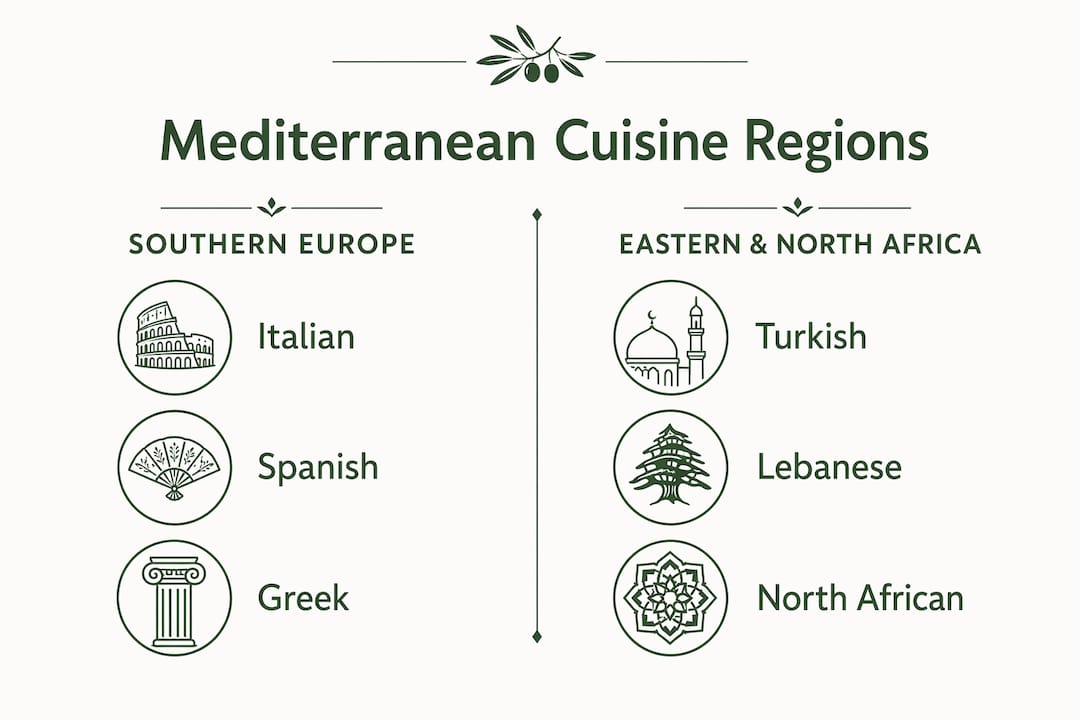
The table below shows how six major regional cuisines differ in key features while staying within the Mediterranean framework.
| Region | Signature Ingredients | Characteristic Dishes | Key Flavor Notes |
|---|---|---|---|
| Greek | Feta, lamb, olives, lemon | Moussaka, spanakopita, grilled octopus | Bright, herbal, tangy |
| Italian | Tomatoes, pasta, cured fish, wine | Pasta al pomodoro, ribollita, branzino | Rich, acidic, savory |
| Spanish (Catalan) | Saffron, seafood, rice, romesco | Paella, fideuà, grilled fish | Earthy, smoky, oceanic |
| Turkish | Eggplant, yogurt, lamb, bulgur | Imam bayildi, kebabs, meze | Warm spice, creamy, bold |
| Lebanese | Chickpeas, parsley, tahini, flatbread | Hummus, tabbouleh, kibbeh | Fresh, nutty, herbaceous |
| North African | Couscous, preserved lemon, harissa | Tagine, shakshuka, bastilla | Spiced, aromatic, layered |
What unites these cuisines is not a shared recipe but a shared logic: communal meals, seasonal ingredients, and plant-based staples at the center of the table. The maritime gastronomy traditions of Catalonia, for example, reflect the same seasonal and local principles found in a Turkish coastal village, even though the dishes look nothing alike.
Pro Tip: If you want to explore Mediterranean regional variety without traveling, pick one region per month and cook only from its pantry. You will notice shared logic across regions faster than reading about it.
What is the role of tradition in mediterranean cooking?
Mediterranean cooking knowledge passes through observation and practice tied to local agriculture and seasons, not formal recipes. In rural Sicily, meals reflect the direct influence of garden and olive tree harvests. In Catalonia, the daily catch at the fish market shapes what goes on the table that evening. This is the role of tradition in Mediterranean cooking: it is a living system, not a written archive.
Several shared practices define this cultural approach:
- Seasonal menus: Cooks plan meals around what is available locally, not what a recipe demands.
- Communal eating: Meals are shared events. Multiple dishes appear at once, and portions are passed around the table.
- Ingredient respect: Minimal processing preserves natural flavors. A ripe tomato needs only olive oil and salt.
- Generational transmission: Techniques pass from parent to child through cooking together, not through cookbooks.
- Market-driven shopping: The market visit comes before the menu decision, not after.
This cultural context matters when you adopt Mediterranean cooking at home. The goal is not to replicate a specific dish exactly. The goal is to absorb the logic: buy what is fresh, build the meal around it, and share it. Understanding seafood’s role in the Mediterranean diet is one clear entry point into that logic, since fish and shellfish connect seasonal availability directly to the plate.
Common misconceptions about mediterranean cuisine
The biggest misconception is that Mediterranean cuisine is always light, uniform, and health-focused. The cuisine includes rich dishes, pastries, grilled meats, and hearty preparations that emphasize balance, not restriction. A Moroccan lamb bastilla wrapped in flaky pastry and dusted with powdered sugar is Mediterranean. So is a Catalan rice dish cooked in squid ink with a full cup of olive oil.
A second misconception treats Mediterranean cuisine as a fixed diet plan. Health experts stress focusing on guiding principles such as plant-forward eating, olive oil as the primary fat, and minimally processed ingredients, rather than copying specific regional menus. The cuisine is a framework, not a checklist.
“Mediterranean cuisine is best recognized as a cooking framework with shared ingredients and methods, not a strict checklist of dishes.” — What Is Mediterranean Cuisine, Really?
A third misconception is that Mediterranean food is always simple or rustic. Many preparations require real technique: slow-braised stews, hand-rolled pasta, wood-fired breads, and precisely timed grilled fish. The simplicity is in the ingredient list, not always in the method. That distinction matters when you explore Mediterranean fine dining, where traditional techniques meet refined presentation.
How to incorporate mediterranean cuisine into your cooking
Shifting to Mediterranean cooking means focusing on fresh, seasonal ingredients and local availability rather than memorizing recipes. The transition is practical and gradual. Follow these steps to build authentic Mediterranean meals at home:
- Start with olive oil. Replace butter and neutral oils with extra-virgin olive oil as your default cooking fat. Use it generously for sautéing, dressing, and finishing dishes.
- Build meals around plants. Make vegetables, legumes, and whole grains the largest portion of every plate. Protein is a supporting element, not the centerpiece.
- Use the “patterns on the table” approach. Mediterranean meals often feature shared plates with dips, salads, grains, and a grilled or stewed main. Serve several small dishes rather than one large entrée.
- Let the market guide you. Shop for what looks freshest, then decide what to cook. This is how traditional Mediterranean cooks have always worked.
- Substitute within the ingredient logic. If a recipe calls for branzino and you only have cod, use cod. Substitutions within core ingredient patterns maintain the culinary logic and flavor of the dish.
- Eat communally. Put dishes in the center of the table and share. The social dimension of Mediterranean eating is as important as the food itself.
Pro Tip: Lemon juice added at the end of cooking, not during, preserves brightness in Mediterranean dishes. Add it off the heat, taste, and adjust. This single habit transforms the finish of soups, stews, and grilled fish.
For deeper inspiration on local ingredients and Catalan cooking, the principles translate directly to any Mediterranean home kitchen.
Key takeaways
Mediterranean cuisine is a flexible, ingredient-driven cooking framework built on freshness, balance, and communal tradition, not a fixed set of recipes or a single national style.
| Point | Details |
|---|---|
| Framework, not a recipe book | Mediterranean cuisine is a shared cooking logic across 20+ countries, not one fixed menu. |
| Plant-forward with olive oil | Vegetables, legumes, grains, and olive oil form the foundation of every regional variation. |
| Regional diversity is real | Greek, Italian, Spanish, Turkish, Lebanese, and North African cuisines each express the framework differently. |
| Tradition drives ingredient choice | Seasonal markets and local agriculture shape meals more than written recipes ever have. |
| Balance over restriction | The cuisine includes rich, hearty dishes. The goal is balance and variety, not limitation. |
Why mediterranean cuisine keeps drawing people back
After years of eating and writing about food across Southern Europe, I keep returning to the same observation: Mediterranean cuisine rewards curiosity more than compliance. Every time I try to pin it down to a list of rules, a dish from a different region breaks the pattern in the best possible way.
What I find most underrated is the ingredient-first mindset. Most food cultures tell you what to cook. Mediterranean cooking tells you to look at what is available and build from there. That shift in thinking changes how you shop, how you cook, and how you eat. It is a more honest relationship with food.
The diversity across regions is also genuinely surprising to people who assume Mediterranean means Greek salad and hummus. Catalan cuisine alone spans from delicate raw seafood to deeply spiced rice dishes cooked in cuttlefish ink. North African traditions bring layers of warm spice that feel nothing like Italian simplicity, yet both sit comfortably under the same umbrella.
My advice: resist the urge to treat Mediterranean cooking as a diet or a trend. Treat it as a way of thinking about ingredients, seasons, and the people you eat with. Start with one region, cook from its pantry for a few weeks, and let the logic sink in. You will find yourself adapting it naturally to wherever you live and whatever is fresh near you.
— YellowRock
Experience mediterranean seafood at Elspescadors
Elspescadors brings the full depth of Mediterranean culinary tradition to Barcelona’s historic Poblenou district. The kitchen works from a daily fresh catch, building each dish around what the sea and season offer, exactly the ingredient-first logic that defines authentic Mediterranean cooking.
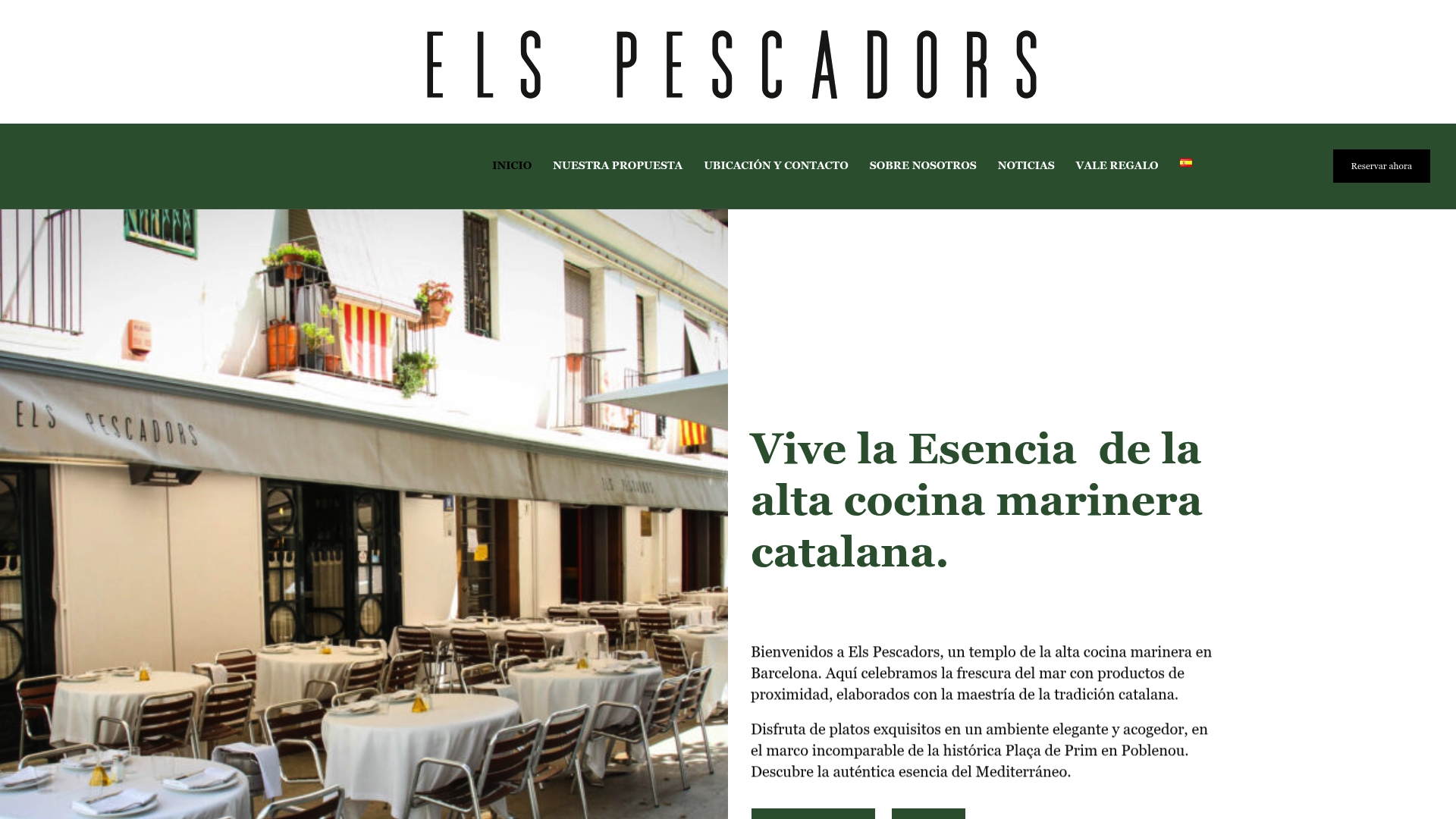
Whether you are planning a shared feast for a group or a focused tasting experience, Elspescadors’ menu reflects the communal, seasonal spirit of the Mediterranean table. Explore group seafood dining ideas for your next gathering, or browse the full dining proposal to see how traditional Catalan maritime cuisine translates into a refined, modern experience in Barcelona.
FAQ
What defines mediterranean cuisine?
Mediterranean cuisine is defined as a cooking framework built on plant-forward eating, olive oil as the primary fat, fresh seasonal ingredients, and minimal processing. It spans the food traditions of more than 20 countries bordering the Mediterranean Sea.
Is mediterranean cuisine the same as the mediterranean diet?
They overlap but are not identical. The Mediterranean diet is a nutritional framework derived from traditional eating patterns. Mediterranean cuisine is the broader culinary tradition that includes rich pastries, grilled meats, and hearty dishes alongside lighter preparations.
What are the main types of mediterranean cuisine?
The main regional types include Greek, Italian, Spanish, Turkish, Lebanese, and North African cuisines. Each uses distinct ingredients and techniques while sharing core principles like olive oil, legumes, fresh vegetables, and communal dining.
What role does seafood play in mediterranean cooking?
Seafood is a moderate but central protein source across most Mediterranean regions. Fish like branzino, sea bream, sardines, and anchovies appear regularly, reflecting the coastal geography and seasonal fishing traditions of the Mediterranean basin.
How do i start cooking mediterranean food at home?
Start by replacing your cooking fat with extra-virgin olive oil, building meals around vegetables and legumes, and shopping for what is freshest rather than following a fixed recipe. Those three shifts capture the core logic of the tradition.