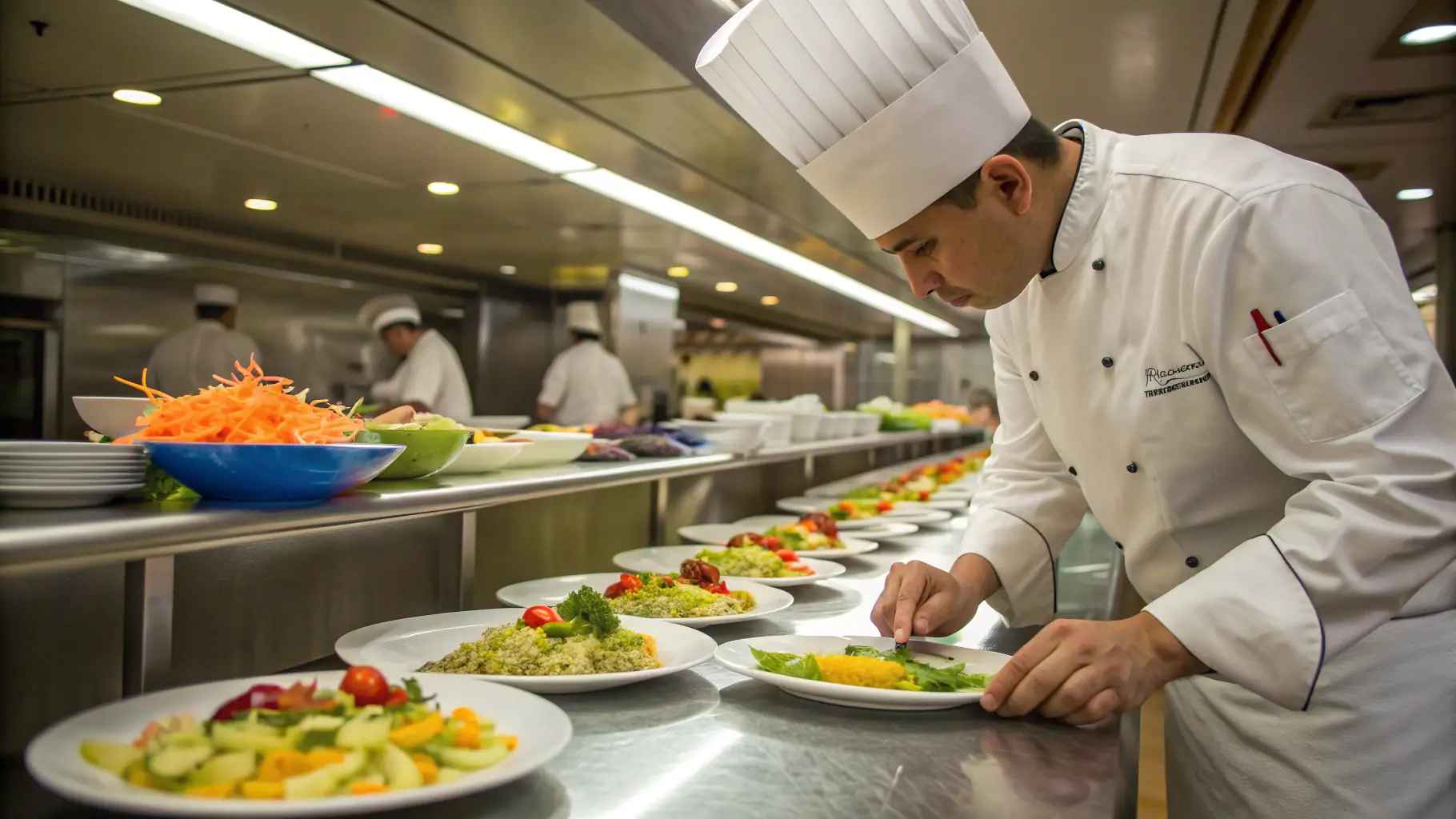
Lock purpose, headcount, budget, venue, format, vendor, timeline, and contingency. That sequence is the backbone of every well-run corporate dining event, and skipping any step is where most planners get burned. Here are the eight things to do first:
- Define the event brief — write one page covering objective, tone, audience, and VIP protocol before any vendor call
- Collect RSVPs with dietary fields — send invitations at T-6 weeks minimum; reconfirm dietary needs 48 hours out per Fooda’s corporate event planning guide
- Set a per-person budget with a 10% contingency line — include food, beverage, tax, service charge, and gratuity
- Shortlist venues early — premium venues book 6–9 months ahead for peak dates; don’t wait
- Choose a catering format — plated, buffet, stations, or boxed each carry different staffing and cost implications
- Vet and contract vendors — run tastings, confirm minimums, and get cancellation terms in writing
- Build a day-of run-of-show — minute-by-minute from setup through teardown, with a vendor contact list
- Prepare contingency plans — backup caterer, universal dietary plate, and a 15-minute buffer built into every service window; apply the 90% rule (order for 90% of confirmed RSVPs plus a small buffer), and confirm ADA accessibility for every venue on your shortlist
Key Takeaways
Effective corporate dining comes down to one principle: document everything before you spend anything, and build contingency into every layer.
| Point | Details |
|---|---|
| Brief before budget | Write a one-page event brief with sign-off from finance and the host executive before contacting any vendor. |
| RSVP with dietary fields | Send RSVPs at T-6 weeks; reconfirm dietary restrictions 48 hours before the event to avoid last-minute substitutions. |
| 90% rule for ordering | Order for 90% of confirmed RSVPs plus a 5–10% buffer; keep a 10% contingency budget unspent until after the event. |
| Venue timing | Premium venues book 6–9 months ahead for peak dates; shortlist and lock your venue before any other vendor. |
| Elspescadors for turnkey events | Elspescadors offers private rooms, curated group menus, and experienced service coordination for corporate dining in Barcelona. |
Table of Contents
- How to write a clear event brief for corporate dining
- How to set a realistic budget and lock a reliable headcount
- Which catering format fits your corporate dining event?
- What makes a venue work for a corporate dining event?
- How to vet and contract caterers and service vendors
- How to build a day-of timeline and run-of-show
- What are the most common corporate dining failures and how do you prevent them?
- How to handle post-event reconciliation and feedback
- Restaurant-sourced planning artifacts: timeline, RSVP template, and sample group menus
- What most planners get wrong about corporate dining
- Elspescadors: a turnkey group-dining option for corporate planners
- Sources
- FAQ
How to write a clear event brief for corporate dining
A one-page brief prevents scope creep better than any contract clause. Before you contact a single venue or caterer, write down the event type (client dinner, team celebration, board retreat), a measurable objective (retain three key accounts, recognize Q2 top performers), the audience profile (seniority, dietary culture, relationship to host), and the tone (formal seated dinner vs. relaxed stations).
Who needs sign-off matters. Finance approves the budget ceiling. HR flags any policy constraints around alcohol or dietary accommodations. The host executive confirms VIP protocol: who sits where, whether remarks are planned, and whether the event is confidential.
Your brief should also document hard constraints:
- Budget ceiling (per-person and total)
- Accessibility requirements (mobility, dietary, language)
- AV limits (does the venue have a built-in system or do you need to rent?)
- Guest list sensitivity (NDAs, media restrictions, seating separation)
Pro Tip: Keep the brief to one page. A two-page brief gets read; a six-page one gets skimmed and misinterpreted by vendors. Attach supporting documents separately.
Host responsibilities — reservation, arrival order, menu guidance, and discreet payment handling — should be documented in the brief so the host executive knows exactly what’s expected before they walk in the door.
How to set a realistic budget and lock a reliable headcount
Per-person cost components
Every corporate dining budget needs these line items before you talk to a vendor:
| Cost tier | Food (per person) | Beverage | Service/gratuity | Estimated total |
|---|---|---|---|---|
| Casual team lunch | $30–$45 | $8–$10 | $6–$10 | $40–$60 |
| Client dinner | $65–$90 | $20–$30 | $15–$20 | $100–$140 |
| Upscale/executive | $110–$160 | $40–$65 | $25–$30 | $175–$280 |
Never absorb contingency into the food line — keep it as a separate budget item so you can see exactly what you’re spending it on.
RSVP process and headcount rules
Use a digital RSVP form (Google Forms, Eventbrite, or your event management platform) with these required fields:
- Full name and company/department
- Attendance confirmation (yes/no/maybe)
- Dietary restrictions (vegetarian, vegan, gluten-free, nut allergy, halal, kosher, other)
- Mobility or accessibility needs
- Guest name, if plus-ones are permitted
Apply the 90% rule for mandatory events: order for 90% of confirmed RSVPs and add a 5–10% buffer for walk-ins. For optional events, the ratio drops. Reconfirm dietary data 48 hours before the event — restrictions submitted six weeks out are often outdated by event day.
Which catering format fits your corporate dining event?
Format drives everything downstream: staffing ratios, service timing, menu complexity, and per-person cost. Here’s how the main options compare for corporate settings:
| Format | Best for | Pros | Cons |
|---|---|---|---|
| Plated (prix fixe) | Formal dinners, client events | Controlled pacing, elegant presentation | Higher staffing cost, less flexibility |
| Buffet | Large teams, casual celebrations | Guest autonomy, easier dietary management | Queuing, temperature control challenges |
| Stations | Networking events, mixed groups | Interactive, variety-friendly | Requires more floor space and staff |
| Boxed/individual | Hybrid meetings, travel groups | Allergy-safe, easy logistics | Less social, limited menu range |
For most client-facing dinners, a plated prix fixe is the right call. It keeps pacing under your control, which matters when you’re slotting remarks between courses. Emily Post’s business meals guidance notes that dinner allows the most relaxed pacing of any meal format, making it the natural choice for relationship-building and celebrations.
Menu design checklist
- Offer at least one vegetarian and one gluten-free option at every course
- Keep the menu to three courses for events under two hours
- Pre-select a beverage pairing with the sommelier and agree a per-head drink budget in writing — this removes awkward table decisions and keeps the evening focused
- Label every dish with allergens at the point of service, whether plated or buffet
- For buffets, use tongs and separate serving utensils for each allergen category
What makes a venue work for a corporate dining event?
Venue selection checklist
- Location convenience for the majority of guests (transit access, parking, proximity to hotels for out-of-town attendees)
- Private dining room availability — high-stakes dinners require separation from the general dining room for confidentiality
- Acoustics: can guests hear each other at a table of eight without raising their voices?
- ADA-compliant access (entrance, restrooms, seating)
- Loading and service access for external caterers or AV equipment
- Built-in AV capability (screen, microphone, lighting control)
- Minimum spend requirements and cancellation policy
Private dining spaces with dedicated service reduce execution risk for formal corporate dinners and are worth the premium when confidentiality or formal hosting is required. Start your venue shortlist early: top venues book 6–9 months in advance for Q4 and year-end dates
Layout and seating
Round tables encourage conversation; long banquet tables work for celebrations but make cross-table talk difficult. For executive dinners, six to eight guests per table is the sweet spot for meaningful conversation. Leave at least 60 inches between table edges for service aisles. If you’re using stations, position them away from the main seating area to prevent traffic jams during peak service.
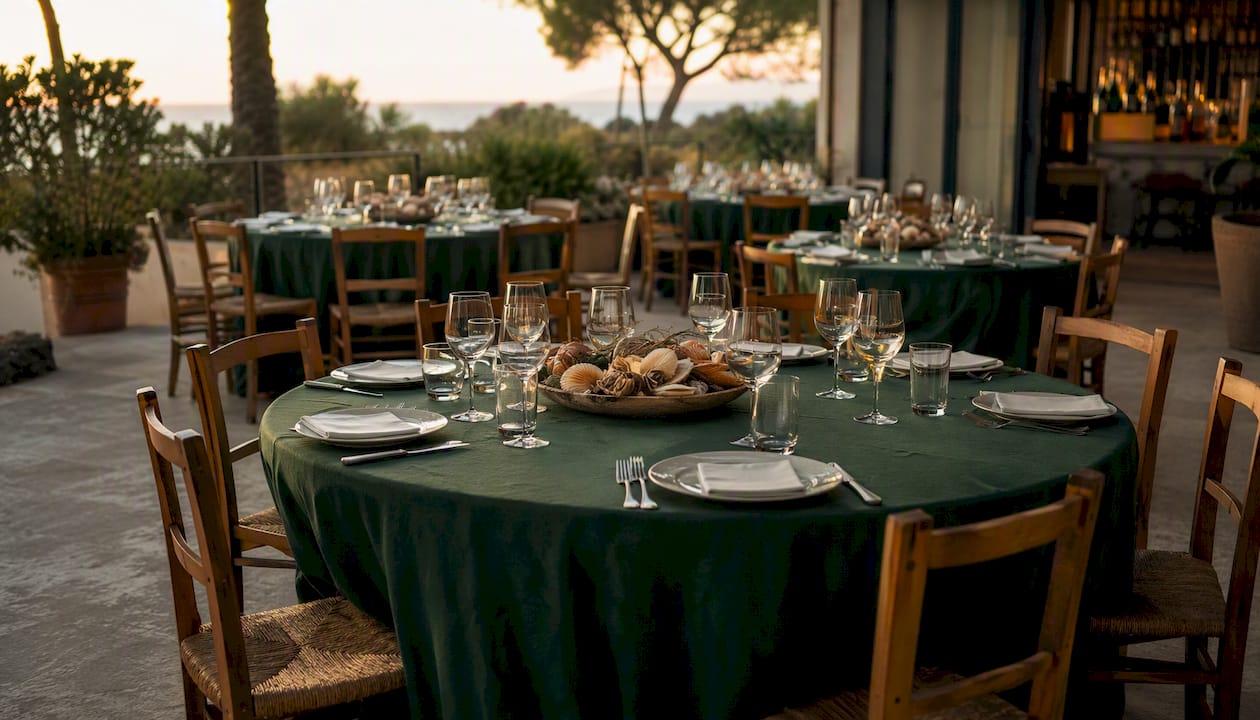
Pro Tip: Draw the floorplan before the site visit, then walk it on-site. A plan that looks clean on paper often has a service bottleneck at the kitchen door that only becomes obvious when you’re standing in the room.
How to vet and contract caterers and service vendors
A reusable vendor brief and operational checklist sent to all bidders in the same format is the single biggest time-saver in corporate catering organization. It makes proposals directly comparable and cuts the back-and-forth in half.
Questions to ask every vendor
- What are your minimums (guest count, spend)?
- What is your cancellation and substitution policy?
- How do you handle dietary accommodations — do you prepare allergen-free dishes in a separate area?
- Can we schedule a tasting before signing?
- What is your staffing ratio for plated service vs. buffet?
- Who is the on-site lead on event day, and how do we reach them?
Key contract clauses to request
- Delivery windows with a penalty clause for late arrival
- Temperature-holding guarantees for hot and cold items
- Liability coverage for food safety incidents
- Staffing minimums written into the contract (not just estimated)
- Payment schedule with a clear deposit and final-balance timeline
- Force majeure and contingency substitution terms
Compare proposals in a single spreadsheet: one row per vendor, columns for per-person cost, minimums, tasting availability, cancellation terms, and references. Identify a contingency vendor before you sign with your primary — you want a name and number ready, not a search to run on event day.
How to build a day-of timeline and run-of-show
| Time | Checkpoint | Owner |
|---|---|---|
| T-3 hours | Venue access, setup begins, AV test | Planner |
| T-2 hours | Caterer arrives, kitchen walkthrough | Planner + Vendor lead |
| T-90 min | Table setup complete, dietary labels placed | Venue staff |
| T-60 min | Food temperature check (hot ≥140°F, cold cold temperature) | Caterer |
| T-30 min | Staff briefing, VIP seating confirmed | Planner |
| Event start time | Guest arrival, welcome drinks service begins | Host + Front-of-house |
| +30 min | First course service | Caterer |
| +60 min | Remarks/toast (5–10 minutes max) | Host executive |
| +75 min | Main course service | Caterer |
| +2 hours | Dessert, coffee, close | Caterer |
| +2.5 hours | Teardown begins | All vendors |
Keep formal remarks to 5–10 minutes and slot them between courses, not during service. Clover Events recommends building breathing room into the run-of-show and leaving space for organic conversation — a tightly scripted evening feels like a presentation, not a dinner.
Your day-of contact list should include: venue manager, caterer on-site lead, AV technician, host executive’s assistant, and your own backup contact. Distribute it to every team member by T-24 hours.
What are the most common corporate dining failures and how do you prevent them?
Four failure modes account for the majority of day-of problems:
- No-shows above expected rate — hold back 10% of the food order until T-30 minutes; release it only if attendance tracks higher than projected
- Late or canceled vendor — your contingency vendor contact should be in your phone before event day; trigger the call at T-90 minutes if the primary hasn’t confirmed arrival
- Dietary surprises at the table — a universal plate (vegan, gluten-free, nut-free) held in reserve covers most last-minute needs without visible scrambling
- Weather or location disruption — for outdoor or multi-venue events, have an indoor fallback confirmed in writing, not just verbally agreed
The buffer absorbs the small delays that compound into big ones; the budget covers the unexpected vendor charge that appears on the final invoice.*
For business travel attendees, a business travel meal planning guide can help you anticipate logistics specific to traveling guests, including transportation timing and hotel proximity.
How to handle post-event reconciliation and feedback
Invoice review checklist
- Confirm cover count matches your final RSVP number, not the original estimate
- Check service charge percentage against the contract (commonly 18–22%)
- Review any damage or breakage charges with photographic evidence
- Verify that dietary substitutions were not billed as premium add-ons without prior agreement
- Confirm that any unused contingency food was not charged at full price
Post-event survey questions
- How would you rate the food quality? (1–5)
- Was the service attentive and timely?
- Were your dietary needs met without issue?
- How did the venue atmosphere contribute to the event’s objectives?
- What would you change for next time?
Keep a vendor scorecard updated after every event: rating, notes on what worked, and a flag for any contract disputes. A documented leaderboard makes the next RFP faster and protects you when a vendor disputes your recollection of events.
Restaurant-sourced planning artifacts: timeline, RSVP template, and sample group menus
Sample restaurant run-of-show (plated dinner, 30 guests)
RSVP template fields
- Full name / organization
- Attendance: Yes / No / Tentative
- Dietary restrictions (free text + checkbox: vegetarian, vegan, gluten-free, nut allergy, halal, kosher)
- Mobility or seating accessibility needs
- Arrival time (if staggered)
- Guest name (if applicable)
Sample group menus
Menu A — Prix fixe (3 courses, upscale client dinner)
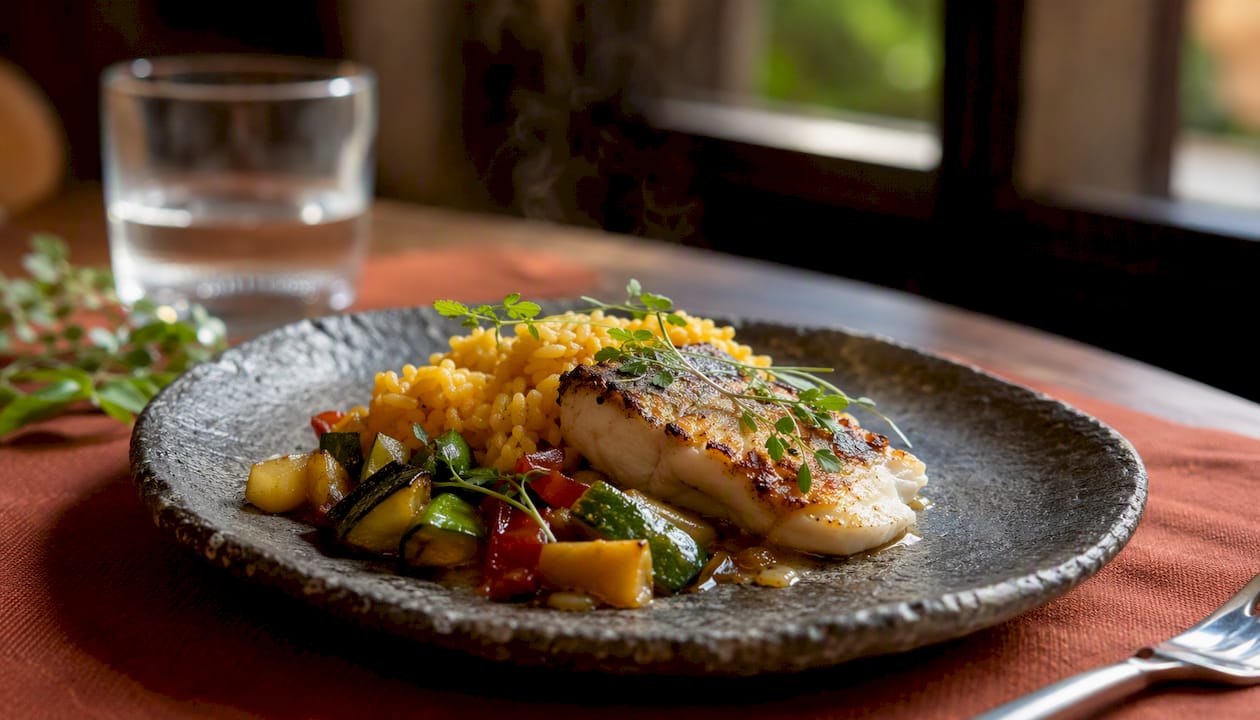
Starter: Seasonal seafood carpaccio with citrus dressing. Main: Grilled fresh catch with roasted vegetables and saffron rice. Dessert: Crema catalana with seasonal fruit. Per-person food cost: approximately $85–$110. Service format: plated, synchronous service. Dietary note: vegetarian and gluten-free variants pre-confirmed with kitchen.
Menu B — Family-style sharing (team celebration)
Shared starters: mixed seafood platter, grilled bread, aioli. Shared mains: whole roasted fish, fideuà, seasonal vegetable sides. Dessert: shared fruit and pastry selection. Per-person food cost: approximately $55–$75. Service format: large platters to the table, guests serve themselves. Dietary note: allergen-free items plated individually and labeled.
For group dining menu examples you can adapt directly, Elspescadors publishes detailed proposals for upscale group events. A step-by-step guide to booking group meals is also available for planners coordinating multi-course group reservations.
Checklist to adapt these menus:
- Confirm the kitchen can execute your dietary variants at volume
- Agree plating cadence in writing (how many covers per minute for synchronous service)
- Pre-taste the menu at least two weeks before the event
- Confirm beverage pairing and per-head drink budget with the sommelier
What most planners get wrong about corporate dining
Three mistakes show up repeatedly, and none of them are about the food.
The first is treating the brief as optional. Planners who skip a written brief spend the week before the event renegotiating scope with vendors and stakeholders — because nothing was documented, everyone remembers the agreement differently. One page, signed off by finance and the host executive, prevents that entirely.
The second is underestimating how much the beverage program affects the evening. Pre-selecting pairings with a sommelier and agreeing a per-head drink budget in writing removes the awkward moment when a guest orders a bottle that blows the budget. It also keeps the evening focused on the conversation, not the wine list.
The third is conflating “outsource” with “abdicate.” Handing the event to a restaurant or caterer doesn’t mean handing over the run-of-show. The best outcomes happen when the planner stays in the command structure on event day: the vendor handles execution, the planner handles escalation. When something goes sideways — and something always does — you want one person with authority to make the call, not a committee.
The decision to outsource vs. keep planning in-house usually comes down to headcount and formality. Under 20 guests at a restaurant with private dining? Let the restaurant manage it. Over 50 guests with external catering, AV, and a program? Keep an internal planner in the command seat.
Elspescadors: a turnkey group-dining option for corporate planners
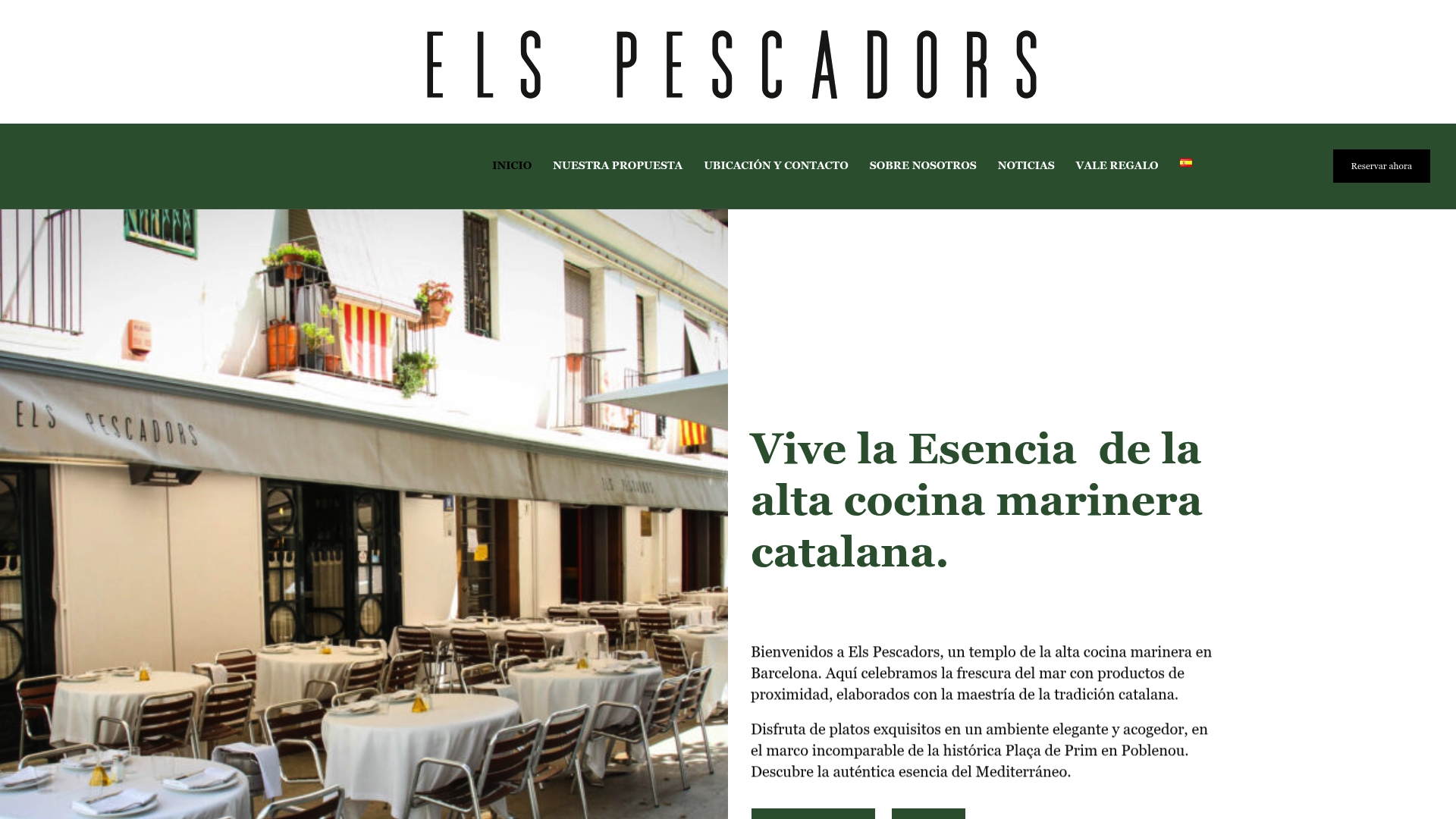
When the brief calls for a private room, a curated menu, and a team that has done this before, Elspescadors handles the details that eat up a planner’s time. Located in Barcelona’s historic Poblenou district, the restaurant offers private group dining built around authentic Catalan seafood, with tasting menus and à la carte group proposals designed specifically for corporate events.
What’s included for group bookings:
- Private room preparation and setup coordination
- Custom menu curation (prix fixe and family-style options)
- Dietary management confirmed in advance with the kitchen
- Beverage pairing recommendations and per-head drink budgeting
- Prepayment options to simplify post-event reconciliation
- On-site service team experienced with corporate pacing and host protocol
For planners exploring seafood-focused group dining as a format for team dinners or client events, Elspescadors’s proposal page outlines exactly what to expect from an initial inquiry through to the event itself. Send your brief, guest count, and date to get a tailored group menu proposal.
Sources
- Corporate Event Planning Guide — Fooda
- Corporate Event Catering Checklist: The Operational Playbook — Zerocater
- Business Dining at Fine Restaurants: Etiquette, Seating, and Host Duties | Fine Dining Authority
- Getout
FAQ
How far in advance should you plan a corporate dining event?
For premium venues, start 6–9 months ahead for peak dates like Q4 year-end events. Smaller, off-peak dinners can be planned in 6–8 weeks if the venue has availability.
What dietary information should an RSVP form collect?
At minimum: vegetarian, vegan, gluten-free, nut allergy, halal, and kosher, plus a free-text field for other restrictions. Reconfirm all dietary data 48 hours before the event.
What is the 90% rule in corporate catering?
This avoids chronic over-ordering at mandatory events while protecting against shortages.
When does it make sense to host a corporate dinner at a restaurant?
A restaurant with private dining is the right call for groups under 50 where confidentiality, service quality, and menu curation matter. Elspescadors, for example, offers private rooms and curated group menus that handle most of the coordination a planner would otherwise manage independently.
What should a corporate dining run-of-show include?
A run-of-show should cover setup start time, food temperature checks, guest arrival, each course’s service window, the timing and length of any remarks (5–10 minutes maximum), and teardown. Distribute it to all vendors and the host executive’s assistant by T-24 hours.