Arroz caldoso de marisco is a spoonable seafood rice built on a deep, saffron-infused fumet, and the technique that separates a good one from a great one comes down to numbers: a ratio of four parts hot fumet to one part rice, Bomba or Senia rice, and about 15 to 18 minutes on the stove. Do that and add the seafood in the right order, and you get broth clear enough to see the bottom of the bowl and rice that still has bite.
TL;DR:
- The success of arroz caldoso de marisco depends on roasting the shells before simmering to develop deep flavor in the fumet, avoiding flat-tasting broth.
- Using a four-to-one liquid-to-rice ratio and cooking for 15 to 18 minutes produces a broth loose enough to eat with a spoon, unlike thicker, creamier meloso.
- Seared seafood, especially delicate shellfish, should be added near the end of cooking to prevent rubberiness, while firm fish and shells can be added earlier.
- Making and freezing double batches of fumet enhances flavor and speeds up weeknight preparation, often reducing cooking time to around 30 minutes.
- Proper rice choice, like Bomba or Senia, is crucial for absorption without mushiness, forming the foundation for authentic restaurant-quality arroz caldoso.
Table of Contents
- What Goes Into Arroz Caldoso de Marisco?
- How Do You Make a Rich Seafood Fumet?
- Step-by-Step: Cooking Arroz Caldoso de Marisco
- Caldoso vs. Meloso: What’s the Right Ratio?
- When Should You Add Each Type of Seafood?
- Fixing Common Arroz Caldoso Mistakes
- What Restaurant Kitchens Get Right About Arroz Caldoso
- Why the “Just Add Seafood” Version Never Tastes Right
- Taste the Real Thing at Els Pescadors
- Sources
- FAQ
What Goes Into Arroz Caldoso de Marisco?
A proper arroz caldoso de marisco splits into two shopping lists: what builds the fumet and what goes into the rice itself. For four people, plan on this base.
For the fumet:
- 1 kilogram of shrimp heads and shells, crab shells, or fish bones (rockfish, monkfish, or similar)
- 1 onion, 1 carrot, half a leek, roughly chopped
- 2 ripe tomatoes, halved
- Splash of white wine or brandy
- about 1.5 to 2 liters of water
- a pinch of saffron threads
For the rice:
- Bomba or Senia rice, using approximately 80 grams per person
- 400 grams mixed seafood: shell-on shrimp, mussels, clams, cuttlefish or squid, and a firm white fish like monkfish
- 1 onion and half a red bell pepper, finely diced
- 2 garlic cloves, minced
- 2 ripe tomatoes, grated, or 3 tablespoons of tomato paste
- Extra virgin olive oil
- Salt to taste
You will need a wide, shallow paella pan or a heavy caldero (a deep, rounded pot works too, though the broth reduces less evenly). Keep a fine mesh strainer and a ladle nearby for the fumet stage. If fresh shellfish shells are hard to find, frozen shrimp shells sold at most Spanish fishmongers work fine, and a quality store-bought fish stock can substitute in a pinch, though it will taste noticeably thinner.
How Do You Make a Rich Seafood Fumet?
The fumet is what separates arroz caldoso from a rice dish cooked in salted water. Skipping the roasting step is the single biggest reason home versions taste flat.
- Roast the shells. Heat a generous pour of olive oil in a wide pot and sauté the shrimp heads, shells, and fish bones over high heat for 5 to 7 minutes, pressing them with a wooden spoon to release their juices.
- Build the aromatic base. Add the onion, carrot, and leek, and cook until softened, about 5 minutes. Stir in the tomatoes and let them break down.
- Deglaze. Pour in the wine or brandy and let it reduce for a minute, scraping up anything stuck to the bottom.
- Add water and simmer. Cover with water, bring to a boil, then lower the heat and simmer gently for 30 to 45 minutes, sautéing the shells before a long simmer to pull out maximum depth without turning the broth bitter.
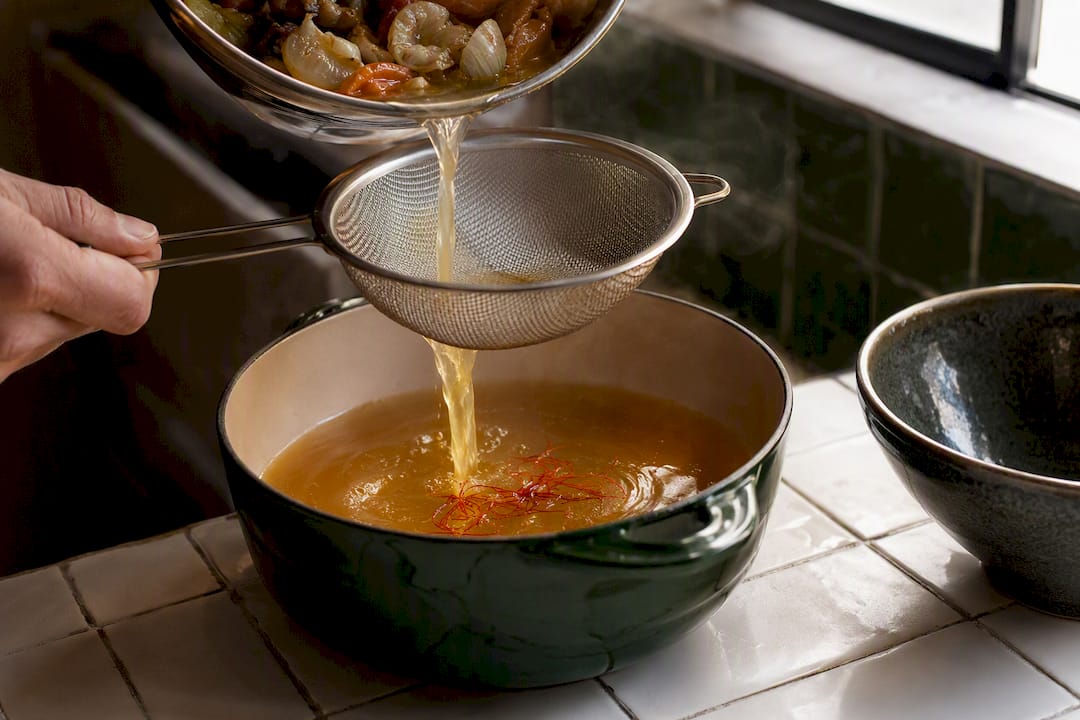
- Strain. Pass everything through a fine mesh strainer, pressing the solids to extract every drop.
For an advanced move used in professional kitchens, crush the sautéed shells with a small amount of the simmering liquid in a mortar or blender before returning that paste to the pot. It concentrates the shellfish flavor and lipids that would otherwise stay trapped in the shell fragments.
Saffron goes in near the end, once the fumet is strained and back on low heat, letting it steep for 5 to 10 minutes before you use it. Add it too early during a hard boil and it turns slightly bitter instead of floral. Roasting the shells first and infusing saffron into the finished stock is the technique that separates a restaurant-grade fumet from a thin, one-note broth.
Pro Tip: Make double the fumet and freeze the extra in 500 ml portions. A frozen block of good fumet turns a weeknight arroz caldoso into a 30 minute meal.
Step-by-Step: Cooking Arroz Caldoso de Marisco
Once your fumet is ready and kept hot on a back burner, the rest of the process moves fast.
- Sear the showpiece seafood first. In the paella pan or caldero, heat olive oil and sear the shrimp and cuttlefish pieces for a minute or two per side, just enough to color them. Remove and set aside; they will finish cooking later. Toss any leftover shrimp shells into the fumet pot if it is still simmering.
- Build the sofrito. In the same pan, add more oil if needed and cook the diced onion and red pepper over medium heat until soft and turning golden at the edges, about 8 minutes. Add the garlic and cook for 1 minute more.
- Add the tomato. Stir in the grated tomato or tomato paste and cook until it darkens slightly and the raw acidity cooks off, roughly 5 minutes. This step matters more than most home cooks realize: an underdeveloped sofrito is the second most common reason arroz caldoso tastes thin.
- Toast the rice. Add the rice directly to the sofrito and stir for 1 to 2 minutes so each grain gets coated in oil and picks up a little color. This toasting step helps the rice hold its structure once the liquid goes in.
- Add the hot fumet. Pour in the fumet, which must be at a near boil, not lukewarm, or the rice will start cooking unevenly from the moment it hits the pan. Following an initial high heat stage for the first 5 minutes, then reducing to medium for the remainder, gives the rice a strong start before it settles into a gentler simmer.
- Add the firm seafood. Around the 8 minute mark, once the rice is roughly half cooked, add the monkfish and any mussels or clams that need more time to open.
- Add the delicate seafood last. With about 3 to 4 minutes left, add the seared shrimp and cuttlefish back in, along with any small clams. They need just enough heat to finish, not enough to turn rubbery.
- Stop stirring. From the moment the fumet goes in, resist the urge to stir constantly. A gentle shake of the pan is fine; aggressive stirring breaks the rice grains and clouds the broth.
- Rest and serve. Pull the pan off the heat, cover loosely, and let it rest for 2 minutes before ladling into bowls. The rice keeps absorbing a little liquid even off the heat, so serve as soon as the rest is done.
Related technique overlaps with preparing authentic seafood paella, particularly the searing and sofrito stages, though the liquid ratio and final texture diverge sharply from there on.
Caldoso vs. Meloso: What’s the Right Ratio?
The ratio is what defines the dish, and getting it wrong is the fastest way to end up with either soup or risotto by accident.
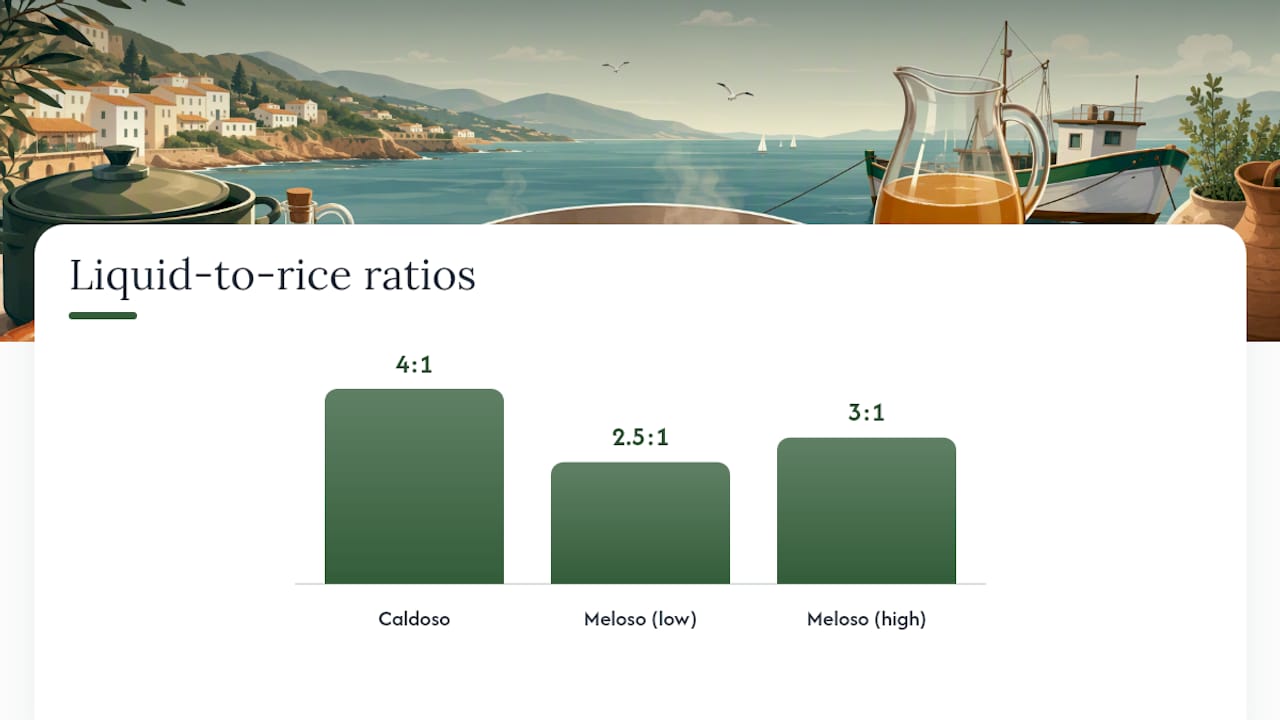
- Caldoso: 4 parts liquid to 1 part rice, a ratio and cook time confirmed across Spanish culinary sources, producing a dish loose enough to eat with a spoon.
- Meloso: roughly about two and a half to three parts liquid to one part rice, yielding a creamier, thicker texture eaten with a fork rather than sipped.
- Cook time: about 15 to 18 minutes for caldoso, tasting the rice at the 14 minute mark to judge doneness rather than trusting the clock alone.
Bomba and Senia rice are the two varieties worth seeking out, because both absorb large amounts of liquid while resisting the mushiness that regular long-grain or short-grain rice develops under a long simmer. That absorption without disintegration is exactly what the caldoso texture depends on.
Culinary experts draw the caldoso versus meloso line by how the dish behaves in the bowl: caldoso stays loose enough for a spoon while meloso thickens into fork territory. If you cook on an electric or induction range that runs hotter than a traditional gas burner, check the rice a minute or two earlier than the timer suggests, and at higher altitudes expect the simmer to need a few extra minutes since water boils at a lower temperature. For a closer breakdown of how the two styles diverge in the kitchen, see this comparison of caldoso and meloso.
When Should You Add Each Type of Seafood?
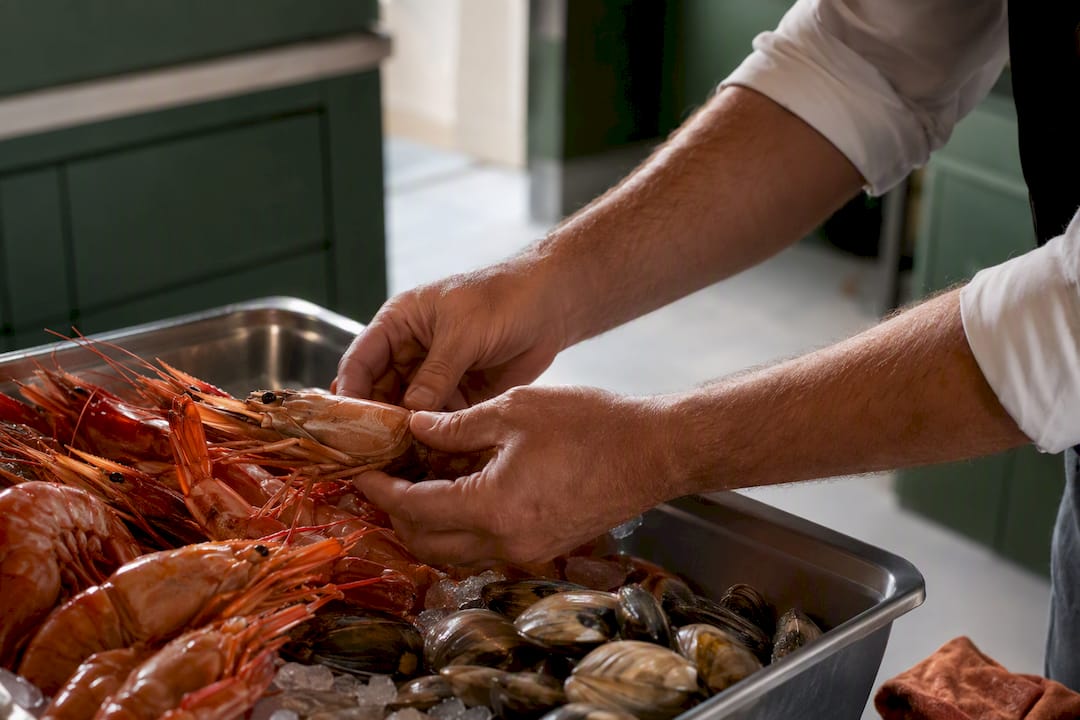
Timing seafood correctly is the difference between tender shrimp and rubber bands. Firm, dense fish tolerates more time in the pot; delicate shellfish does not.
- Add early (around the halfway mark): monkfish (rape), firm white fish, and mussels or clams that still need to open.
- Add near the end (last 3 to 4 minutes): peeled shrimp, cuttlefish, squid, and any pre-seared seafood.
- Reserve the shells: shrimp shells and heads should go into the fumet pot rather than the trash. They are where most of the flavor lives.
- Common Spanish substitutions: gamba arrocera (a smaller, intensely flavored shrimp variety) in place of standard shrimp, cigalas for a more luxurious version, and sepia instead of squid for a firmer bite.
Firm white fish like monkfish can go in earlier without breaking down, while smaller, delicate shellfish need to go in near the end to avoid overcooking. When shopping, look for shrimp with firm, translucent shells and no ammonia smell, and clams or mussels that are tightly closed or close when tapped.
Pro Tip: Buy your seafood the same day you cook, ideally from a fishmonger you can ask directly what came in that morning. Fumet made with day-old shells still tastes fine; rice cooked with day-old shrimp does not.
Fixing Common Arroz Caldoso Mistakes
Most arroz caldoso problems trace back to one of three things: stirring too much, timing the seafood wrong, or under-seasoning the base.
- Broth turned pasty or cloudy: stop stirring immediately and let it simmer undisturbed for the remaining time.
- Too salty or intense: thin it out with a splash of additional hot fumet rather than plain water, which dilutes flavor along with salt.
- Too watery: simmer uncovered for another minute or two to reduce, watching closely since caldoso thickens fast in the last stretch.
- Flat flavor: finish with a fresh squeeze of lemon and chopped parsley right before serving; both lift the dish without masking the saffron.
- Leftovers: store in the refrigerator no more than a day, since the rice keeps absorbing liquid and the seafood loses texture. Reheat gently with a splash of fumet or water rather than the microwave alone, which toughens the shellfish.
What Restaurant Kitchens Get Right About Arroz Caldoso
Professional kitchens treat fumet as infrastructure, not an afterthought. At Elspescadors, in Barcelona’s Poblenou district, rice dishes are built around whatever seafood came in that morning, which is the same principle worth borrowing at home: buy first, then decide the exact seafood mix once you see what looks best.
A busy seafood kitchen makes fumet in large batches early in the day, then times rice orders in waves so every table gets its caldoso at the correct 15 to 18 minute mark rather than sitting under a heat lamp. Home cooks can copy the logic on a smaller scale: prep the fumet well ahead, keep it hot, and start the rice only once the table (or your family) is ready to eat immediately. For more on how rice culture connects to this coastal tradition, see Els Pescadors’ approach to rice in Barcelona.
Why the “Just Add Seafood” Version Never Tastes Right
The biggest gap between home versions and restaurant versions of arroz caldoso de marisco isn’t the seafood. It’s the fumet. Most home recipes treat stock as an ingredient to buy rather than a technique to practice, and that shortcut shows up immediately in a broth that tastes like salted water with shrimp floating in it.
Conventional advice tends to overweight the seafood mix (more variety, more shellfish, more everything) and underweight the two things that actually control the outcome: how well the shells were roasted before the water went in, and whether the cook resisted stirring during the final 15 minutes. Both cost nothing extra. Both take discipline more than skill.
If you take one thing from this recipe, prioritize the fumet over the rice. A mediocre rice cooked in an excellent fumet still tastes like a good meal. The reverse is rarely true.
— YellowRock
Taste the Real Thing at Els Pescadors
Cooking arroz caldoso de marisco properly takes a few hours between the fumet and the final simmer, and getting the timing exact takes practice most home cooks build over several attempts. Elspescadors serves it the way it’s meant to be eaten: rice dishes built daily from fresh, seasonal seafood, cooked to order rather than held under a warmer.
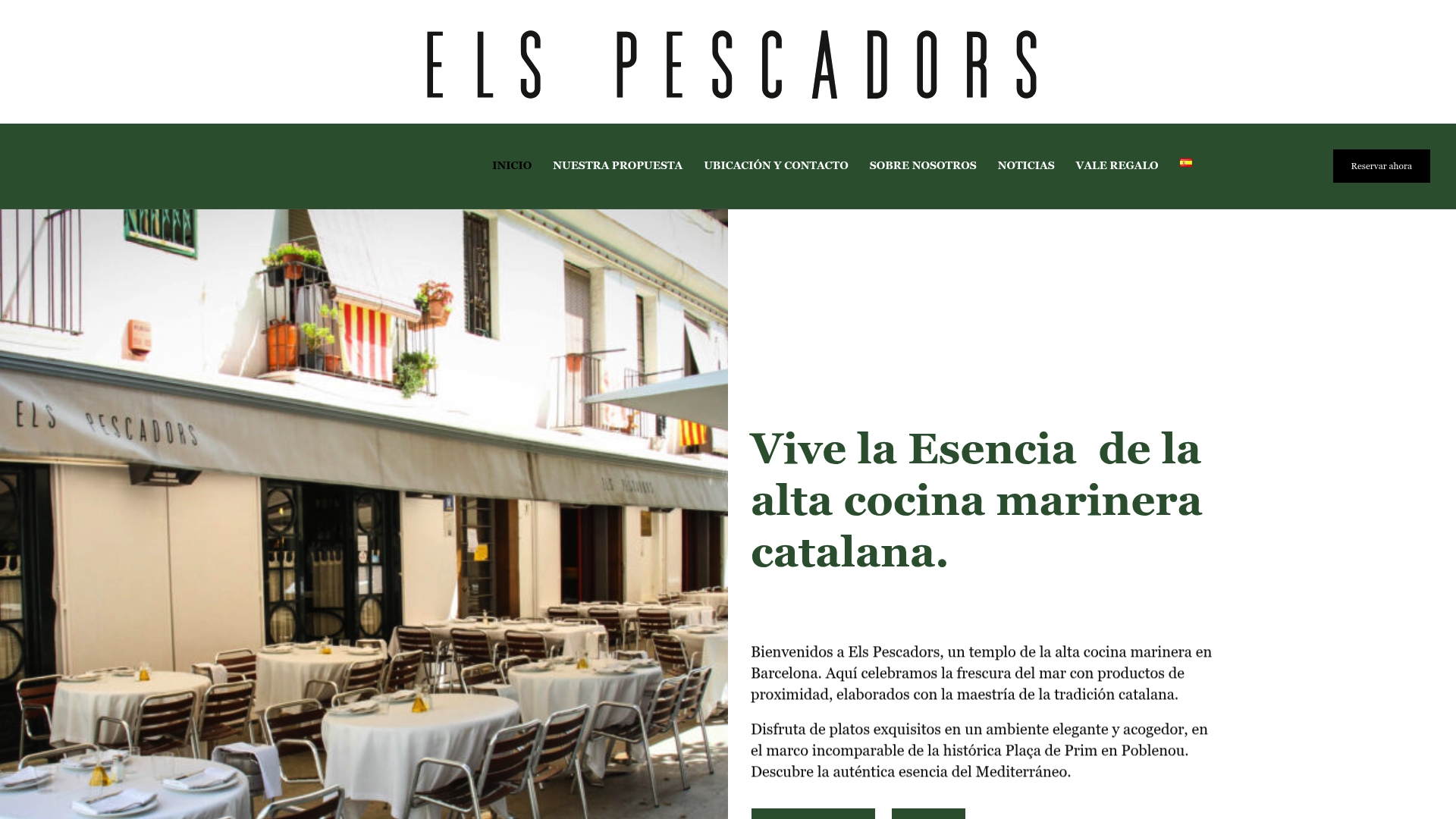
If a weeknight recipe experiment isn’t what you’re after tonight, dining out gets you the same tradition without the shell-roasting and the timer-watching. Elspescadors, in Barcelona’s Poblenou district, prepares traditional Catalan maritime rice dishes alongside fresh daily catch and seasonal tasting menus, and its rice program is built around the same fumet-first philosophy covered above. Groups celebrating something worth celebrating can book a shared seafood menu rather than split individual orders. Check availability and explore group dining and seafood menu options to reserve a table.
Sources
For readers who want to go deeper on the technical side: Hola’s breakdown of caldoso, meloso, and seco ratios covers the liquid ratios in detail, Tu Arrocero’s fumet guide walks through shell roasting and saffron timing, and Cadena SER’s chef interviews explain the texture logic behind each rice style.
- Diferencias para preparar un arroz caldoso, un arroz meloso y un arroz seco
- Caldo de marisco (fumet) technique
- Arroz caldoso de marisco: receta (Arroz SOS)
- Arroz caldoso con fumet de marisco (En mi cocina)
FAQ
What Ingredients Go Into Arroz Caldoso de Marisco?
A full recipe needs Bomba or Senia rice, a mixed seafood selection (shrimp, mussels, clams, cuttlefish, and a firm fish like monkfish), a sofrito of onion, pepper, garlic, and tomato, and a fumet made from shellfish shells, aromatic vegetables, and saffron.
What’s the Secret to a Good Arroz Caldoso?
The real trick is the fumet: roasting shells before simmering them concentrates the flavor that plain water or store-bought stock can’t match, and not stirring during the final cook keeps the broth clear instead of pasty.
What’s the Water-to-Rice Ratio for Arroz Caldoso?
The standard ratio is 4 parts hot fumet to 1 part rice, cooked for about 15 to 18 minutes total.
What’s the Difference Between Caldoso and Meloso Rice?
Caldoso uses a 4:1 liquid ratio and stays loose enough to eat with a spoon, while meloso uses roughly 2.5 to 3:1 and thickens into a creamier texture eaten with a fork.