A pescatarian diet is defined by one rule: no meat or poultry, but fish and seafood are welcome. The Mediterranean diet is defined by a whole pattern: lots of plants, olive oil as the main fat, fish often, and only moderate amounts of meat and dairy. They overlap a great deal, and you can follow both at once. This guide shows where they match, where they split, what the evidence says, and how to put them on a plate in Barcelona.
TL;DR
- Pescatarian is an exclusion rule (no land-animal meat). Mediterranean is an eating pattern built around plants, olive oil and fish.
- Mediterranean-style diets include some poultry and limit meat. Pescatarian diets avoid both, and set no fixed portions.
- Neither is automatically healthy: a pescatarian plate of fried fish and refined grains does not match a Mediterranean plate of vegetables, legumes and grilled fish.
- In Spain, official guidance is at least three servings of fish a week, with oily fish prioritized. Pregnant women and young children should avoid high-mercury species.
- The best-fitting hybrid is a “Pesco-Mediterranean” diet: plants, extra virgin olive oil, fish and seafood as the main animal protein.
Table of Contents
- The short answer: a rule versus a pattern
- What a pescatarian diet includes and excludes
- What the Mediterranean diet actually is
- Side by side: where they overlap and where they split
- Can you follow both at once?
- What the evidence says about health
- Weight loss and belly fat: what to expect
- How much fish, and which fish
- Perspective: how we cook the overlap at Els Pescadors
- Eating pescatarian and Mediterranean in Barcelona
- A simple week that fits both
- FAQ
- Sources
The short answer: a rule versus a pattern
The two terms answer different questions. “Pescatarian” tells you what you do not eat. “Mediterranean” tells you what your plate is built from.
A pescatarian eats fish and shellfish alongside plant foods, and usually eggs and dairy too, as Today’s Dietitian describes it. Beef, pork, lamb, chicken, turkey and game are out. There is no required olive oil, no required vegetable count, no required wine or no wine. A pescatarian could live on fish and chips and pasta with cream sauce and still be pescatarian.
The Mediterranean diet has no ban list in the same sense. It leans heavily on vegetables, fruit, legumes, nuts, whole grains and extra virgin olive oil, then places fish, poultry, eggs and dairy in moderate amounts and red meat at the margins. You can eat chicken on a Mediterranean diet. You cannot on a pescatarian one.

So the honest answer to “which is better?” is that they are not rivals on the same axis. One is a boundary. The other is a recipe for what goes inside the boundary.
What a pescatarian diet includes and excludes
The core is plant foods plus fish and seafood. The American Heart Association’s review of popular dietary patterns describes pescetarian eating as emphasizing vegetables, fruits, whole grains, legumes, nuts and seeds, with fish and seafood but without meat and poultry.
What that looks like in practice:
- In: all fish and shellfish, vegetables, fruit, legumes, grains, nuts, seeds, and usually eggs and dairy.
- Out: red meat, poultry and game, and typically anything made from them, such as stock and cured meats.
- Not specified: portion sizes. Cleveland Clinic notes that the pescatarian diet has no strict quantities for food groups, which leaves room for personal choice, good or bad.
That flexibility is the diet’s strength and its weak point. The AHA review is clear that pescetarian diets are not inherently health-promoting when they consist mainly of fried fish or poor-quality plant foods such as refined grains, sweets and tropical oils. The label tells you about animals, not about quality.
What the Mediterranean diet actually is
The Mediterranean diet centers on vegetables, fruits, beans, lentils, nuts, whole grains and extra virgin olive oil as the main source of fat. Fish and seafood appear regularly, poultry, eggs and dairy in moderation, and red meat rarely.
Spain’s food safety agency AESAN describes the same pattern in its healthy and sustainable dietary recommendations: fresh plant foods and fish, moderate meat and dairy, olive oil as the principal fat. AESAN presents it as good for people and for the planet.
It also goes beyond the food list. Australia’s Healthdirect points out that the tradition values shared, unhurried meals and the lower stress that comes with them. Anyone who has sat through a long Sunday lunch in Catalonia knows this part is not decoration.

One practical point: you do not need to calculate anything. Cleveland Clinic advises focusing on the overall eating pattern rather than strict formulas.
Side by side: where they overlap and where they split
Both patterns are plant-forward. The AHA review puts the main difference simply: pescetarian diets include fish and seafood but avoid meat and poultry, while Mediterranean-style diets include poultry and fish and limit meat.
| Feature | Pescatarian | Mediterranean |
|---|---|---|
| Basic idea | Exclusion rule: no land-animal meat | Whole eating pattern |
| Fish and seafood | Allowed, often central | Regular, encouraged |
| Poultry | Excluded | Allowed in moderation |
| Red meat | Excluded | Limited |
| Eggs and dairy | Usually included | Included in moderation |
| Main fat | Not specified | Extra virgin olive oil |
| Wine | Not specified | Moderate amounts, optionally with meals |
| Portion guidance | None | Pattern-based, not rigid |
| Plant emphasis | Common but not required | Core of the diet |
The AHA review also notes that the Mediterranean diet more explicitly stresses daily extra virgin olive oil and may include moderate alcohol such as red wine. That is a pattern, not a prescription: nobody needs to start drinking for health, and AESAN-style advice favors water as the everyday drink.
A 2025 Spanish modelling study, published in Frontiers in Nutrition, built separate seven-day, 2,000-kcal menus including a Mediterranean one and a pesco-vegetarian one. In the pesco-vegetarian menu, meat and its derivatives were replaced with plant foods or permitted foods such as fish, eggs and cheese. It shows how easily the two approaches can be translated into real weekly menus.
Can you follow both at once?
Yes, and it is probably the most sensible way to be pescatarian. Dietitians quoted by Today’s Dietitian say a healthful pescatarian diet resembles the traditional Mediterranean diet, although it can also be built on other cuisines.
Cardiology researchers have even given the hybrid a name. A JACC review describes a “Pesco-Mediterranean” diet based on vegetables, fruits, nuts, seeds, legumes, whole grains and extra virgin olive oil, with fish, seafood and fermented dairy. The authors propose seafood as the principal animal protein, citing modern overconsumption of meat, especially processed meat. They are explicit that it is a proposed model that needs further randomized trials.
If you want to do both, the rules are simple:
- Keep the pescatarian boundary: no meat or poultry.
- Adopt the Mediterranean content: olive oil as your main fat, legumes several times a week, vegetables at both meals, whole grains, nuts.
- Pick fish for variety, not routine: oily fish, white fish and shellfish all count.
- Keep fried and heavily processed items occasional. Cleveland Clinic advises pescatarians to focus on whole foods and eat processed foods sparingly, fried fish included.
In Spain, AESAN’s guidance points the same way: more fruit, vegetables, legumes and whole grains, olive oil and the healthy fats of oily fish, water to drink, and less processed meat, saturated fat, sugar and salt. For the pescatarian part, that means the dish you are building is mostly vegetables, with fish as the centerpiece rather than the whole meal.
We go deeper on the seafood side in our explanation of seafood’s role in the Mediterranean diet.
What the evidence says about health
Here the honest answer is more modest than most diet pages suggest.
Heart health. The JACC review reports a meta-analysis of five prospective dietary studies that found coronary disease mortality 34% lower among pescatarians than regular meat-eaters. Observational findings like this do not prove that the fish or the missing meat is the cause, and the authors say randomized trials are still needed for the Pesco-Mediterranean approach.
Omega-3 fats. A Spanish consensus document from the Spanish Society of Arteriosclerosis and SEMERGEN notes that long-chain n-3 fatty acids are associated with a lower heart rate and slower atrioventricular conduction, which gives an anti-arrhythmic effect. That is one mechanism by which oily fish may help the heart.
Quality still decides. As the AHA review states, a pescetarian diet made mostly of fried fish or refined plant foods is not inherently health-promoting. A Mediterranean diet has built-in quality filters, such as olive oil, legumes and vegetables, which the pescatarian label lacks.
The fats in cooking matter too. If you cook at home, even your seasoning oils affect how much of fish’s omega-3 content survives to the plate; this piece on seasoning oils that keep omega-3s covers foods and oils that sit at the heart of Mediterranean cooking.
Weight loss and belly fat: what to expect
“Do you lose belly fat on a Mediterranean diet?” is one of the most common follow-up questions. The research gives a careful answer: not reliably, and not by itself.
- In the Spanish PREDIMED randomized trial, after a median of 4.8 years, weight changes compared with a low-fat diet were −0.410 kg for the olive oil group and −0.016 kg for the nut group. Only the nut group had a significantly smaller waist increase (−0.923 cm).
- A prospective study of 3,058 Spaniards followed from 2000 to 2009 found that higher Mediterranean-diet adherence was linked to lower waist-circumference gain, but the link to developing abdominal obesity over ten years was not statistically significant.
- A 2022 review concluded that the weight effect depends heavily on energy intake: the diet is not associated with weight gain even without calorie restriction, but weight loss is generally greater when energy restriction or more physical activity is added. Reductions in belly fat are not universal, and superiority over other diets remains uncertain.
The practical reading: the Mediterranean diet, with or without pescatarian limits, is a good pattern to stay on for years and does not tend to cause weight gain. If your goal is fat loss, you still need an energy deficit and activity. Neither label does that for you.
How much fish, and which fish
This is where a pescatarian diet needs the most care, because fish becomes your main animal protein.
For residents of Spain, AESAN recommends at least three servings of fish a week, prioritizing oily fish such as sardines, anchovies and mackerel. The Spanish cardiovascular consensus document likewise recommends fish or shellfish at least three times a week, two of them oily fish.
A pescatarian will exceed three servings easily, so the question becomes variety. Rotating species keeps you from leaning on a single one, and mixing in legumes, eggs and dairy on other days keeps protein balanced.
Who should be careful. AESAN advises pregnant women, breastfeeding women and children aged 0 to 10 in Spain to avoid high-mercury fish such as swordfish, bluefin tuna and several shark species. The Spanish consensus document also advises pregnant women to eliminate mackerel, swordfish and shark. If you are pregnant, or feeding a young child a pescatarian diet, talk to your midwife, doctor or a registered dietitian about species and quantities before you plan weekly menus.
Cleveland Clinic also flags that pescatarians need to plan for zinc, protein and iron, especially if they eat little fish, eggs or dairy. If you are cutting down on all three, a dietitian can check your intake.
Perspective: how we cook the overlap at Els Pescadors
We are a seafood restaurant in Plaça de Prim in Poblenou, so we see the Mediterranean and pescatarian ideas meet every day on the pass. Our view is that the label matters less than what is on the plate.
The dishes that sit squarely in both camps are the ones our kitchen is built around: the daily catch cooked simply, rice dishes made with seafood and good olive oil, vegetables that follow the season. Catalan maritime cooking has always been fish-forward and plant-supported, because that is what the coast and the market provided. We write about it in traditional Spanish seafood dishes and in the importance of seasonal fishing in Catalan cuisine.
Three habits are worth taking from this tradition:
- Let the season choose the fish. What is plentiful is usually fresher, and rotating species follows the variety advice above.
- Keep the preparation light. Grilled, baked, in a rice or with a simple sauce keeps the meal closer to the Mediterranean pattern than deep-fried plates do.
- Eat slowly and together. The shared meal is part of the Mediterranean diet, not an add-on.
If you eat no meat, tell us when you book and we will guide you toward the fish, seafood and rice dishes that suit you. Because the menu follows the catch, ask what is on that day.
— YellowRock
Eating pescatarian and Mediterranean in Barcelona
Barcelona makes this easy, with a few traps. Many Catalan dishes use meat stock or cured pork in places you would not expect, so it helps to ask. Our guides to Spanish restaurant menu words for seafood and allergens and Catalan seafood names will help you read a menu, and five questions to ask before ordering seafood covers freshness and preparation.
When you want a meal that is Mediterranean and pescatarian without effort, our Menú de Temporada is 39 € per person and follows the season. Our Carta del Día reflects the day’s catch, and our Menú Degustación suits a longer, slower meal. You can read about what a seafood tasting menu involves before you choose.
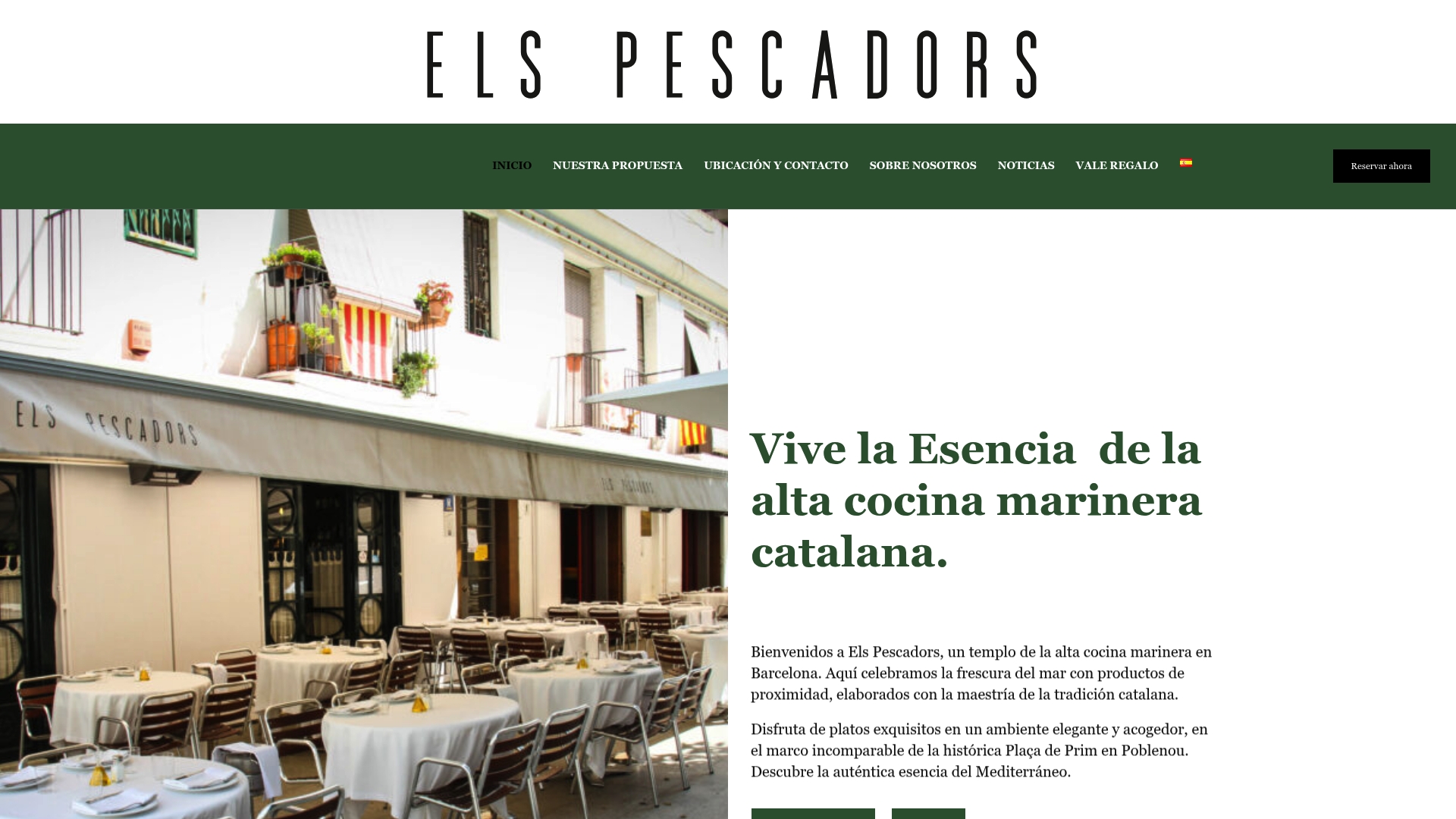
To book a table, start from our main page and tell us about any dietary requirements. For a group with mixed diets, our Menú para Grupos lets you plan ahead.
A simple week that fits both
If you want to try the hybrid, here is a pattern, not a prescription:
- Monday: lentil and vegetable stew with olive oil, fruit to finish.
- Tuesday: grilled sardines or anchovies with a tomato and pepper salad.
- Wednesday: chickpeas with spinach and a poached egg.
- Thursday: baked white fish with roasted vegetables and whole-grain bread.
- Friday: seafood rice, or a vegetable rice with mussels.
- Weekend: a long shared meal, with fish or shellfish and whatever is in season at the market.
That gives you at least three fish days, oily fish included, with legumes and vegetables at the center and olive oil throughout. It follows the AESAN guidance and the pescatarian boundary together. For home-cooking ideas, see four seasonal Mediterranean menus.
FAQ
Is a pescatarian diet the same as the Mediterranean diet?
No. A pescatarian diet excludes meat and poultry but sets no rules on olive oil, portions or food quality. The Mediterranean diet is a full pattern that includes poultry in moderation and limits red meat. The two overlap strongly, and a well-built pescatarian diet looks very Mediterranean.
Do vegans eat fish?
No. Vegans avoid all animal products, including fish, eggs and dairy. Pescatarians eat fish and seafood, and usually eggs and dairy as well, so the two diets are quite different.
What is the best fish to eat on the Mediterranean diet?
Oily fish such as sardines, anchovies and mackerel are the ones AESAN prioritizes in Spain, alongside other fish and shellfish for variety. Pregnant women, breastfeeding women and young children should avoid high-mercury fish such as swordfish, bluefin tuna and sharks.
Is it safe to eat fish every day?
For most healthy adults in Spain, official advice sets a minimum of three servings a week rather than a cap. Eating fish daily is common in pescatarian diets, so vary species and avoid the high-mercury ones. If you are pregnant, breastfeeding or planning a diet for a child, ask a doctor or dietitian for specific limits.
Do you lose belly fat on a Mediterranean diet?
Not necessarily. Studies show the diet does not cause weight gain and may limit waist gain, but belly fat reductions are not universal. Weight loss is generally greater when the diet is combined with fewer calories or more physical activity.
Sources
- Popular Dietary Patterns: Alignment With American Heart Association Guidance (AHA Journals)
- The Pescetarian Diet (Today’s Dietitian)
- What a Pescatarian Diet Is, and Its Benefits (Cleveland Clinic)
- Mediterranean Diet: Food List and Meal Plan (Cleveland Clinic)
- Healthy and sustainable dietary recommendations (AESAN)
- Mediterranean diet (Healthdirect)
- Nutrient adequacy and environmental footprint of dietary patterns (Frontiers in Nutrition)
- A Pesco-Mediterranean Diet With Intermittent Fasting (JACC)
- SEA/SEMERGEN 2019 consensus document on dietary fat (Clínica e Investigación en Arteriosclerosis)
- Effect of a high-fat Mediterranean diet on bodyweight and waist circumference (The Lancet Diabetes and Endocrinology)
- Mediterranean diet impact on changes in abdominal fat (British Journal of Nutrition)
- Mediterranean Diet and Obesity-related Disorders (PMC)