Tipping in Barcelona is voluntary, not expected, and usually modest. In casual bars and tapas spots, round up the bill or leave €1 to €2. In fine dining, it is customary to leave a modest tip for genuinely excellent service, but nobody will chase you down for skipping it. Before you pay, glance at the ticket: if a “servicio” line has been added without your agreement, you can ask for it to be removed or request a corrected bill.
TL;DR:
- Rounding up or leaving €1 to €2 is typical at casual bars and tapas spots in Barcelona, while modest tips for excellent service are common in fine dining.
- Card machine prompts for tips are optional, and diners can decline or adjust the amount without any legal issues or delays.
- Tips collected via payment terminals are subject to payroll and tax rules, with cash tips usually treated as personal gifts outside the restaurant’s official income.
- About one in four Spanish diners tips regularly, and locals generally decide to tip based on the quality of service rather than fixed rules.
- Always check for unauthorized service charges on bills, and request a corrected invoice or complaint form if extra fees appear without your consent.
Table of Contents
- How Tipping in Barcelona Restaurants Actually Works
- How Much Should You Tip in Barcelona?
- Cash, Card, or App: How to Actually Leave a Tip
- What Happens to Your Tip After You Leave
- What Locals Actually Do at the Table
- If a Service Charge Shows Up Without Your Consent
- Els Pescadors’ Take on Tipping and Transparency
- Reserve a Table Where the Bill Never Surprises You
- Sources
- FAQ
How Tipping in Barcelona Restaurants Actually Works
Restaurant gratuity in Barcelona has never been baked into the price of a meal the way it is treated in some countries. Wait staff earn a regular salary, and menu prices already include everything you owe. A tip is a personal choice made after the fact, not a hidden cost the restaurant is entitled to collect.
Spanish law backs this up directly. Restaurants cannot legally include a mandatory service charge without the customer’s express consent. If a charge for service shows up on your bill that you never agreed to, you have grounds to question it on the spot, and consumer groups like OCU treat this as a straightforward right, not a gray area.
What has changed recently is the payment terminal itself. Many card machines in Barcelona now prompt you to add a tip before you finish paying, sometimes with preset percentage buttons. This isn’t a legal requirement showing up on your screen. It’s a feature restaurants have adopted, and you’re free to tap “no tip” or enter your own amount.
The reaction to these prompts has been mixed at best. A survey from TheFork Lab found that 60% of diners consider suggested-tip prompts inappropriate, and 17% said they feel outright uncomfortable when a machine nudges them toward a specific amount. That discomfort is worth knowing before you sit down, because it explains why so many locals wave the prompt away without a second thought.
A few things to keep straight before you eat:
- Tipping never changes what you legally owe for the meal.
- A suggested amount on a card terminal is a prompt, not a bill.
- You can always decline, adjust, or pay entirely in cash instead.
How Much Should You Tip in Barcelona?
The amount depends far more on the type of place than on any fixed formula. Barcelona dining tips scale with formality: the more elaborate the meal, the more a percentage-based tip starts to make sense, but even then it stays modest by American standards.
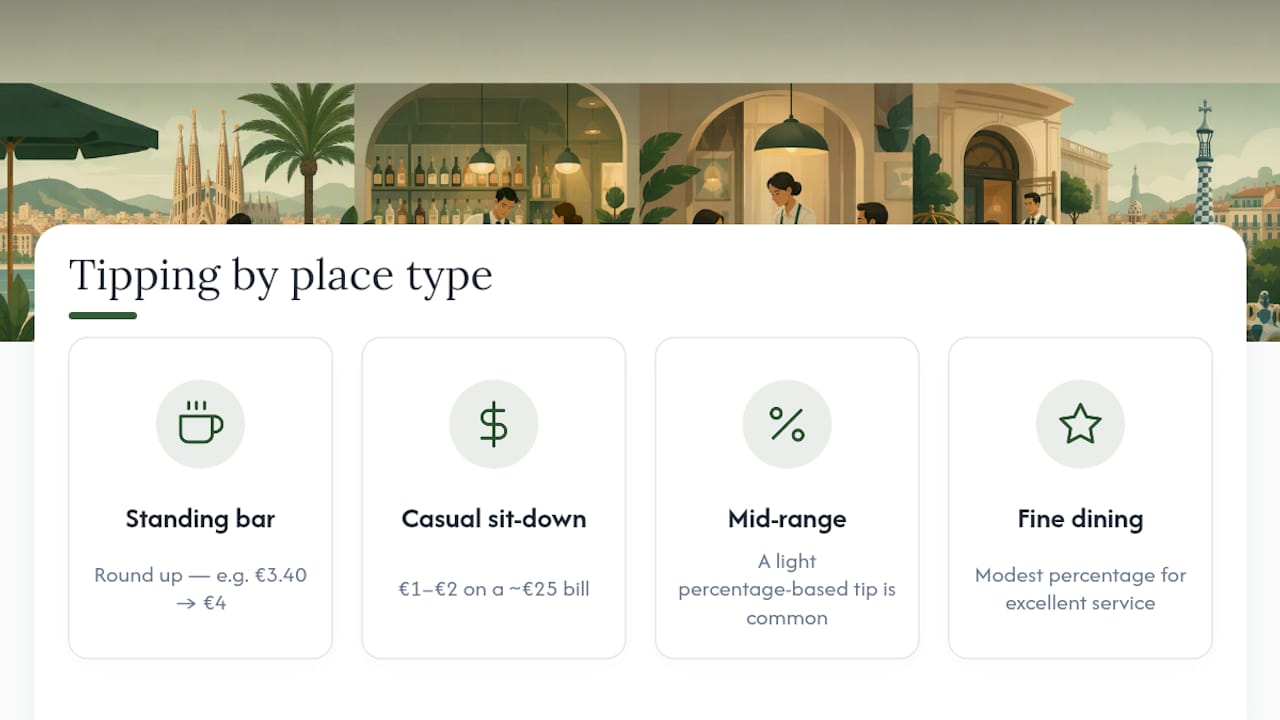
At a standing bar or a casual tapas counter, rounding up is the norm. If your coffee and pastry come to €3.40, leaving €4 covers it. For a casual sit-down lunch where the bill lands around €25, tossing in €1 or €2 is generous and completely appropriate.
Mid-range restaurants are where a light percentage-based tip may be given. Fine dining and special-occasion meals are the only settings where a modest percentage for excellent service becomes a natural gesture, but tipping beyond that is unusual even when the meal has been memorable.
Pro Tip: Doing quick percentage math at the table feels awkward. Round to the nearest euro or five, and don’t stress over the exact figure. Nobody at the next table is counting your coins.
Cash, Card, or App: How to Actually Leave a Tip
The mechanics differ slightly depending on how you’re paying, but none of them require any special knowledge beyond what’s below.
- Paying in cash: Leave coins or a small bill on the table, or hand the server the total and say “quédate el cambio” (“keep the change”) if you’re rounding up from a larger note.
- Paying by card: When the terminal shows suggested tip percentages, you can select one, enter a custom amount, or tap through with no tip at all. None of these choices delay your payment or require an explanation.
- Paying through an app or digital wallet: Some reservation and payment platforms now build in an optional tip step. Check whether it’s marked optional and whether the restaurant processes it as a direct gratuity or through payroll, since that affects how staff actually receive it.
Restaurants experimenting with preset tip options at the terminal have made this a talking point in the Barcelona dining scene over the past few years, and reactions from diners have been split between convenience and irritation. If you’re unfamiliar with how a venue’s reservation or payment flow works, it helps to understand how digital reservation systems handle payment prompts before you arrive, so nothing on the screen catches you off guard.
Pro Tip: If you want to tip but the card terminal only offers percentages you don’t like, just say “prefiero pagar en efectivo la propina” (“I’d rather pay the tip in cash”) and hand over coins separately.
What Happens to Your Tip After You Leave
Where your money goes once you’ve paid depends on how the restaurant processes it, and this is the part most diners never think about.
Cash tips handed directly to a server are generally treated as a personal gift between you and that staff member, distinct from restaurant income. Card tips work differently. When a restaurant collects tips through its payment terminal and later distributes them among staff, that money typically needs to run through payroll and be declared, since it’s no longer a direct handoff between customer and server.
Getting this wrong has tax consequences for the business. Proper terminal setup records the tip as a separate line item rather than folding it into the total bill, which matters because a tip merged into the base price can get classified as restaurant revenue subject to VAT. Separating it out keeps the gratuity what it’s supposed to be: a voluntary addition, not taxable service income.
A few practical distinctions worth knowing as a diner:
- Cash left on the table rarely triggers any paperwork on the restaurant’s side.
- Card tips collected centrally and shared among staff usually require payroll treatment.
- Correct TPV configuration protects both the tip’s status and the restaurant’s tax filing.
None of this changes what you owe or how you tip. It just explains why some restaurants are more careful than others about how the terminal is set up, and why staff sometimes prefer cash for exactly this reason.
What Locals Actually Do at the Table
Ask a Barcelona native how much to tip and you’ll likely get a shrug rather than a percentage. Rounding up is the default move in cafés, bars, and casual eateries, and leaving a euro or two of loose change on the table is common practice after a decent lunch.
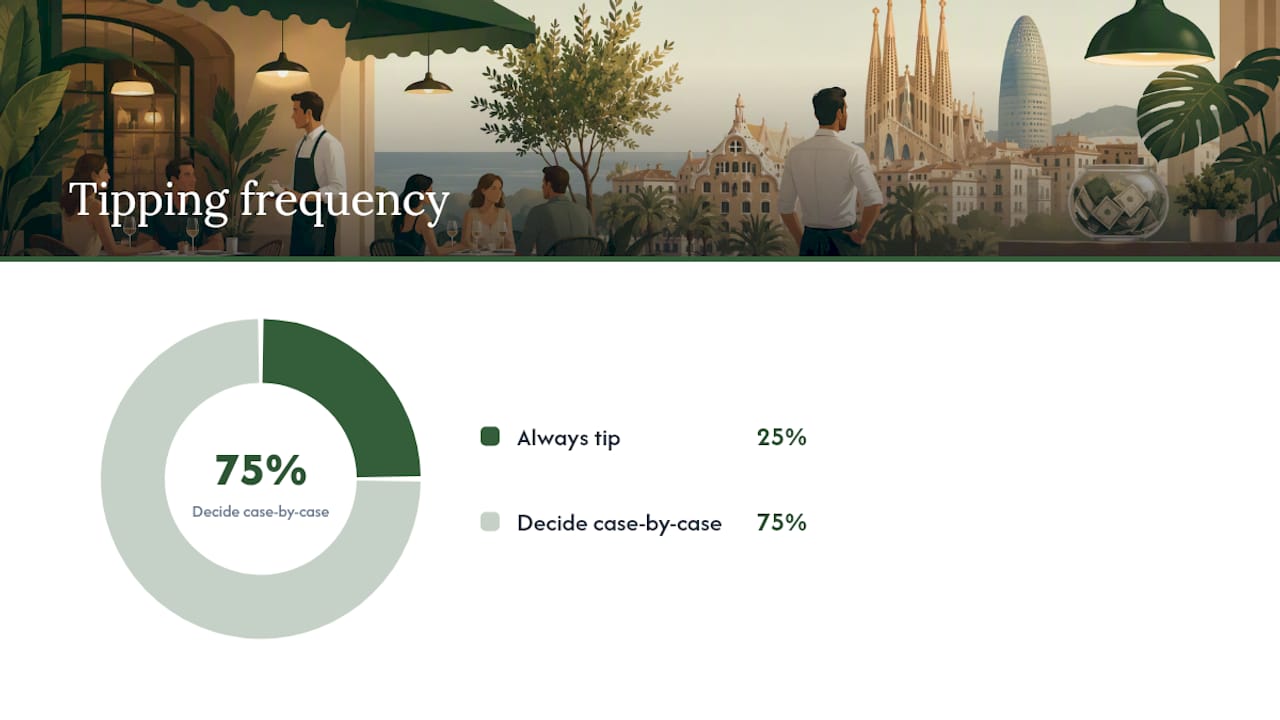
Frequency matters more than formula here. Survey data shows only about one in four Spanish diners tips every time they eat out, while most people decide case by case depending on the meal. Tipping tends to track how the experience actually felt rather than a fixed obligation attached to the bill.
- Casual places: rounding up or leaving small change is standard.
- Percentage-based tipping shows up mainly at higher-end restaurants.
- Most locals decide meal by meal, not by habit.
- A tip signals the meal genuinely stood out, not just that service was adequate.
Understanding Catalan dining traditions helps explain why: the meal itself, the ingredients, and the pace of service carry more cultural weight in Barcelona than the transaction that ends it.
If a Service Charge Shows Up Without Your Consent
Spot it before you pay, not after. Scan the printed ticket for any line labeled “servicio,” “propina,” or similar wording you didn’t agree to when you sat down.
- Ask the server directly to explain the charge. A simple “¿qué es este cargo de servicio?” gets you a straight answer most of the time.
- If the charge wasn’t disclosed upfront, politely request a corrected bill. Restaurants are required to remove charges you never consented to.
- If staff refuse, ask for a “hoja de reclamaciones,” the official complaint form every Spanish establishment must provide on request.
- For further escalation, consumer protection organizations like OCU handle exactly this kind of dispute.
This rarely turns into a confrontation. Most restaurants correct the ticket the moment you ask, since the law is unambiguous about consent.
Els Pescadors’ Take on Tipping and Transparency
Fine dining carries an unspoken pressure to tip more, and we think that pressure is often misplaced. What actually earns a tip is a kitchen and floor team working in sync, something a well-run seafood restaurant depends on far more than any single server’s table-side charm.
A gratuity left after a great meal reflects the whole team: the person who filleted the fish, the one who timed the rice, and the one who brought it to your table. Sharing tips fairly across front and back of house is standard advice in the hospitality sector, and it’s the model believed to reward the work that makes a seafood restaurant worth returning to.
— YellowRock
Reserve a Table Where the Bill Never Surprises You
At some restaurants, what you see on the ticket is what you pay. There’s no hidden service line, no ambush at the card terminal, and no guesswork about where a tip goes if you choose to leave one. That kind of clarity matters most on a special occasion, when the last thing you want at the end of a great meal is a confusing bill.
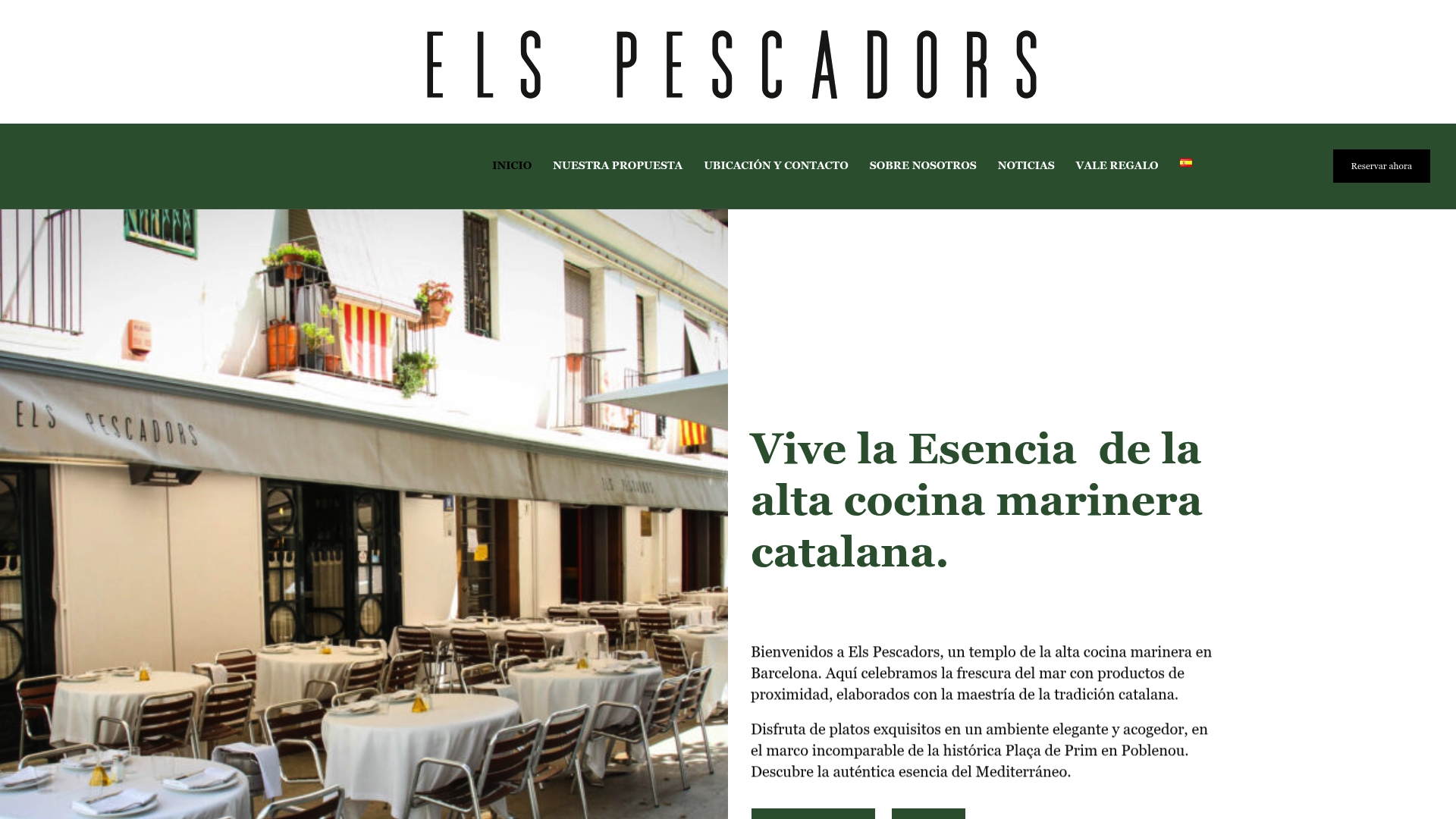
If you’re planning a celebration, a business dinner, or a night out with friends, our group dining proposal walks you through menu options and pricing before you ever sit down, so there are no surprises at the end. Check availability and reserve your table now, and enjoy Catalan maritime cuisine with a bill you can trust from the first course to the last.
Sources
- ¿Me pueden obligar a dejar propina en un restaurante? Esto es lo que se encuentra recogido en la ley
- Dejar propina en restaurantes en España: encuesta y debate
- Propinas en hostelería: obligaciones fiscales y laborales
- Cómo facturar las propinas en hostelería en España (con ejemplos reales)
FAQ
Do I need to tip in restaurants in Barcelona?
No. Tipping is voluntary in Spain, and restaurants cannot legally add a mandatory service charge without your consent. A small tip for good service is appreciated but never required.
How much should I tip at a casual restaurant in Barcelona?
Rounding up the bill or leaving €1 to €2 is standard for bars, tapas spots, and casual sit-down meals.
Is it rude not to tip in Barcelona?
No. Since only about one in four Spanish diners tips every time they eat out, skipping a tip after an average meal is completely normal and won’t be seen as an insult.
Can a restaurant force me to pay a suggested tip shown on the card terminal?
No. A suggested amount on a payment terminal is a prompt, not a charge, and you can decline it, adjust it, or pay in cash instead.
What should I do if I see an unauthorized service charge on my bill?
Ask staff to explain the charge, request a corrected bill if it wasn’t disclosed upfront, and ask for a hoja de reclamaciones if the issue isn’t resolved.