Call the restaurant or book online the moment you have a headcount and a date, and say plainly that you need a mesa redonda para grupos, a round table for groups. Expect the restaurant to ask for three things before confirming: a provisional guest count, whether you want a closed or semi-closed menu, and a deposit to hold the reservation. A restaurant in Barcelona’s Poblenou district handles this exact request regularly and is a solid place to start the process.
TL;DR:
- Booking a round table for groups requires confirming headcount deadlines, deposit terms, menu options, and allergy information well in advance.
- Group menus should be agreed upon before the event, with dietary restrictions submitted 24 to 72 hours beforehand to prevent service delays.
- Large reservations, especially on weekends, typically demand a deposit and a booking several weeks ahead, with clear, written confirmation of all conditions.
- Day-of coordination benefits from appointing a single contact, preparing a seating list, and finalizing payment and service pacing to keep the event running smoothly.
Table of Contents
- What To Confirm Before You Book a Round Table for Groups
- How Big Should Your Round Table Be?
- How Do Group Menus and Allergies Work at a Restaurant?
- When Should You Book, and What Deposit Rules Apply?
- Day-of Coordination: Keeping the Table Running Smoothly
- The One-Page Brief Every Restaurant Wishes You’d Bring
- Book Your Group’s Round Table at Els Pescadors
- Primary Sources and Further Reading
- Sources
- FAQ
What To Confirm Before You Book a Round Table for Groups
A round-table group booking falls apart when details get assumed instead of confirmed. Before you hang up the phone or submit an online form, settle these points with the restaurant directly.
- Headcount windows: ask when they need a pre-close number (typically 7 days out) and the absolute final count (usually 48 hours before).
- Deposit and cancellation terms: find out the amount, whether it’s deducted from the final bill, and what happens if guests cancel late.
- Menu format: agree whether it’s a closed menu, semi-closed with a couple of choices per course, or a shared-plates setup, and how guests will submit their picks.
- Allergies and intolerances: set a clear deadline for collecting this information, not a vague “let us know.”
- Payment logistics: confirm whether split billing is allowed, what card and cash limits apply, and if you need an invoice afterward.
- Accessibility and parking: ask about step-free access, nearby transport, and whether a quieter corner or private space is available.
- Table hold time: clarify how long the table is reserved and whether toasts or speeches need extra time built in.
Restaurants that manage large groups well tend to confirm logistics like table configuration, spacing, and accessibility well ahead of the date, not the day before.
Pro Tip: Send your questions in writing, even if you also call. A text or email thread means nobody has to rely on memory when the reservation summary arrives. Els Pescadors’ own step-by-step group booking process walks through most of this checklist directly.
How Big Should Your Round Table Be?
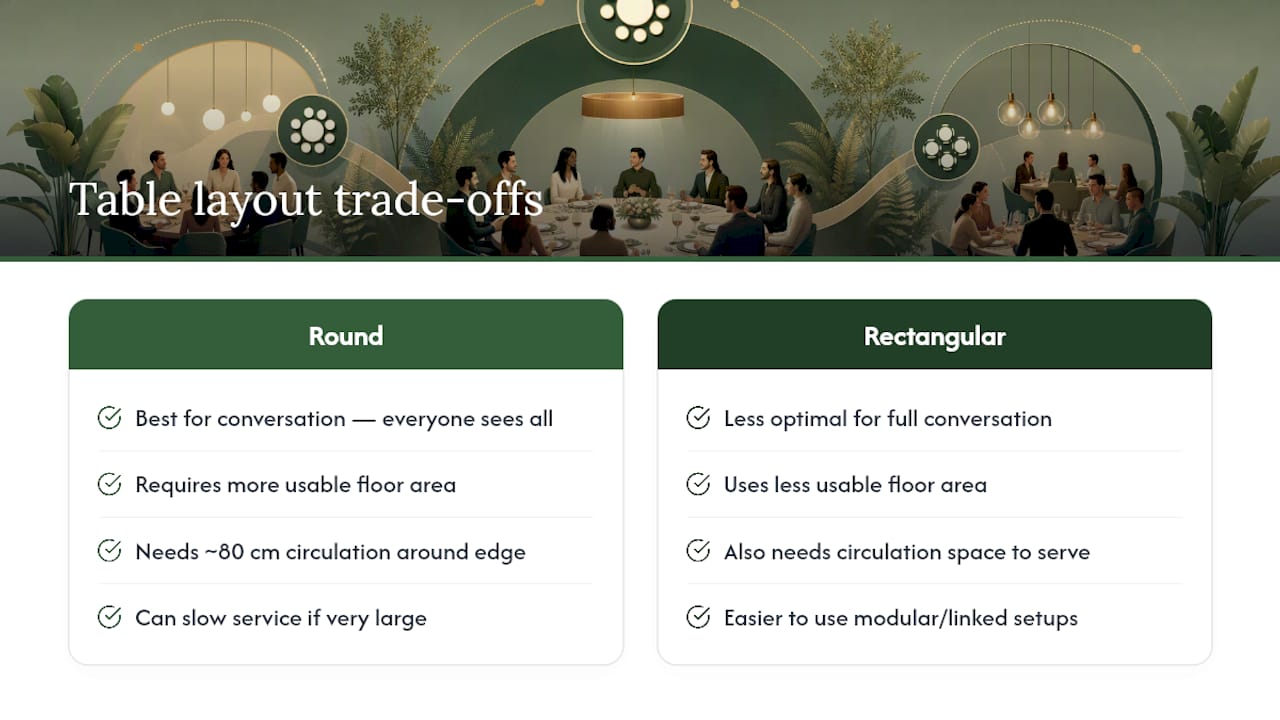
Round tables win on conversation. Everyone can see everyone, which matters for birthdays, retirements, and any dinner where the point is talking, not just eating. The tradeoff is floor space, and getting the size wrong either crowds your guests or leaves the room feeling empty.
Round tables usually range from sizes suitable for small groups up to larger groups. For bigger groups, venues often use modular setups, linked tables, or private rooms instead of one large round table.
Round tables improve conversation but demand more usable floor area than an equivalent rectangular setup, so confirm exact dimensions rather than assuming a “big table” will fit your group comfortably. Staff also need roughly 80 centimeters of circulation space around the table edge to serve without squeezing past chairs. For groups past ten or twelve, ask whether island seating or a separate room makes more sense. A single sprawling round table looks great in photos but can slow service to a crawl.
How Do Group Menus and Allergies Work at a Restaurant?
Kitchens cook for groups differently than they cook for individual tables, and the menu format you pick decides how smoothly that goes.
- Closed menu: everyone gets the same courses. Fastest for the kitchen, easiest to plan around, best for large parties with a fixed budget.
- Semi-personalized menu: two choices per course. This balances agility and variety and is the format most restaurants recommend when guests have different tastes but the kitchen still needs predictability.
- Shared plates: family-style dishes down the middle of the table. Works well for seafood-forward menus but needs more coordination on portioning.
- Full tasting menu: multiple small courses, usually for smaller or more food-focused groups willing to commit to one direction.
Whatever format you choose, requesting intolerances and allergies in advance and locking in a closed or semi-closed menu is the single most effective way to keep service on schedule. Aim to submit dietary details and final menu choices 24 to 72 hours before the event, not the morning of. List severe allergies by name rather than a general “some guests have allergies,” and ask the kitchen directly about cross-contamination handling and how allergens are labeled on the menu.
Pro Tip: If your group has five or more different dietary requests, ask the restaurant for two or three pre-approved substitute dishes instead of trying to customize every plate on the fly. Kitchens handle a short substitute list far better than improvised changes mid-service. Browsing group dining menu examples ahead of time also helps you walk into the conversation already knowing what you want.
When Should You Book, and What Deposit Rules Apply?
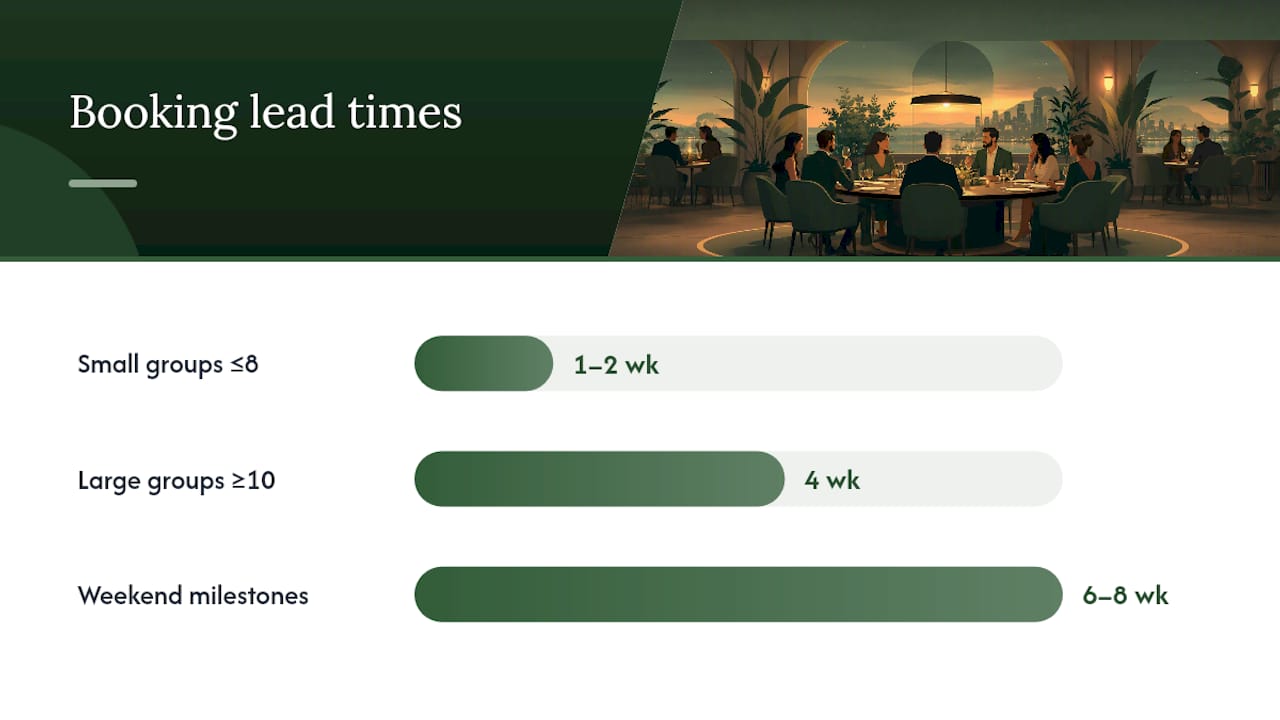
Timing depends heavily on group size and the day of the week. Small groups, up to eight people, can often get a table with one to two weeks’ notice. Larger groups of ten or more should aim for four weeks out, and if you’re planning something like a milestone celebration on a weekend, six to eight weeks ahead is safer for popular dates and private-room requests.
Deposits and minimum spends are standard practice, not a red flag. A restaurant asking for one is protecting a table it’s turning down for other diners. What matters is getting the terms in writing.
- Provisional booking confirmed at the time you first reserve.
- Pre-close headcount requested around 7 days before the date.
- Final number locked in 48 hours out, with no more changes after that.
- A written summary, usually by email, listing headcount, menu, deposit amount, and cancellation terms.
A clear plan covering budget, schedule, menu, and confirmation deadlines removes most of the surprises that derail group dinners. If a restaurant won’t put terms in writing, that’s worth noting before you commit a deposit. Els Pescadors’ group booking guide lays out this exact confirmation rhythm.
Day-of Coordination: Keeping the Table Running Smoothly
The reservation is set. Now the job is making sure the day itself doesn’t unravel over small logistics nobody thought to mention.
- Name one contact. Whoever organized the booking should be the single point of contact on the day, and the restaurant should have that person’s mobile number the moment the group starts arriving.
- Bring a seating list. Even a simple name list speeds up seating if the host or server needs to place people quickly.
- Agree on service pacing. Decide beforehand whether courses come out to the whole table at once or staggered, and how shared dishes get presented.
- Flag any extras early. Cakes, speeches, gifts, or toasts should be mentioned when you book, not announced mid-meal, since some venues add a service charge for handling them.
- Settle the payment plan. One bill, split evenly, or itemized by guest, decide before dessert arrives, not after.
Pro Tip: Text your restaurant contact 30 minutes before arrival with your actual headcount. Even a one-person change lets the kitchen and floor staff adjust in real time instead of scrambling. A designated host contact with a shared timeline consistently cuts down on door-time confusion and last-minute seating chaos.
The One-Page Brief Every Restaurant Wishes You’d Bring
Restaurants don’t need a novel. They need one page with the right fields filled in: organizer name and phone, event date and arrival window, final headcount, ages if children are attending, agreed menu, dietary notes, deposit paid, and any special requests or scheduled moments like toasts.
Handing that page to your contact the day you book eliminates most of the back-and-forth that otherwise happens over five separate phone calls. A single point of contact paired with a written timeline speeds up decisions on the day and keeps the kitchen working from one source of truth instead of guessing. Els Pescadors applies this same logic to its own group dining menus, confirming headcount, dietary notes, and deposit terms before the group ever sits down. A page of facts beats a string of texts every time.
— YellowRock
Book Your Group’s Round Table at Els Pescadors
A restaurant offers a seasonal seafood menu built around Catalan maritime cooking, group and tasting menu formats designed for exactly this kind of booking, and direct coordination for private events in a historic setting. When you reach out, expect a straightforward process: a request for your headcount and dietary notes, a choice of group menu structure, a deposit to hold the date, and one named contact managing your reservation from confirmation to the final bill.
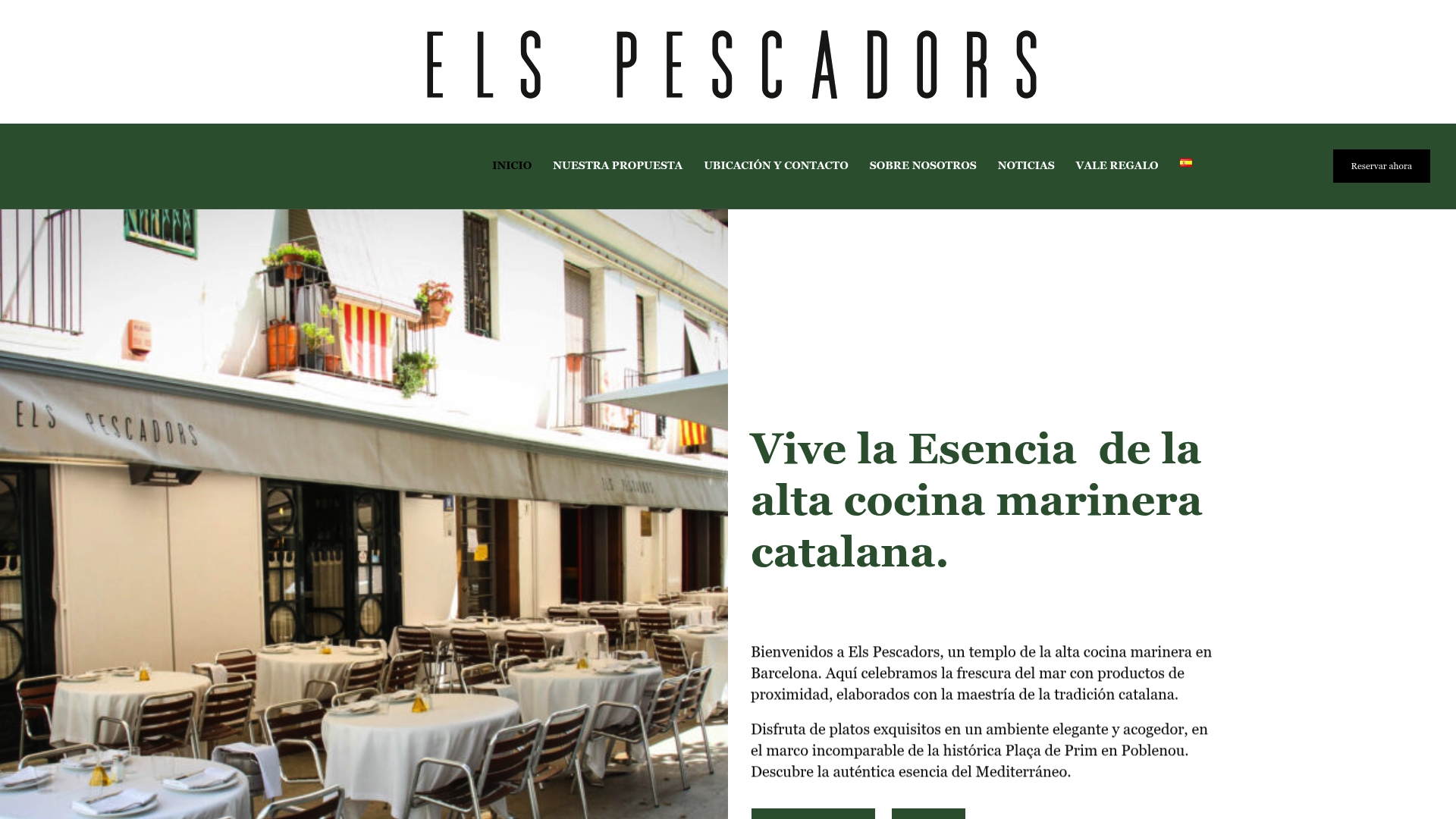
If you’re weighing menu ideas before you call, the group seafood dining ideas page has practical inspiration for shared plates and course structures that work well around a round table. When you’re ready to move forward, Els Pescadors’ group dining proposal is the fastest way to start the conversation and lock in your date.
Primary Sources and Further Reading
- Mesas redondas hostelería: guía completa covers round-table diameters and layout tradeoffs.
- CoverManager’s guide to managing large groups explains service logistics and confirmation timing.
- CarbooMasador’s coordination guide details host-contact and timeline practices.
- Wild Foodz on digital reservations offers a traveler-focused primer on booking etiquette.
Sources
- Cómo gestionar eventos y grupos grandes en tu restaurante (CoverManager)
- Cena de grupo sin esperas: guía práctica para coordinar (CarbooMasador blog)
- Mesas redondas hostelería: guía completa (Fundación Copyleft)
FAQ
How Far in Advance Should I Book a Round Table for a Group?
Small groups of up to eight can often book one to two weeks ahead, while groups of ten or more should aim for four weeks out. Popular weekend dates or milestone celebrations warrant six to eight weeks of lead time.
Do Restaurants Always Require a Deposit for Group Bookings?
Many restaurants request a deposit or minimum spend for larger reservations, especially on weekends, and this is standard practice rather than an unusual demand. Always ask whether the deposit is deducted from your final bill and get the cancellation terms in writing.
When Should I Tell the Restaurant About Allergies?
Submit dietary restrictions and allergy details 24 to 72 hours before the event so the kitchen has time to prepare safe substitutes. List severe allergies explicitly rather than a general note.
What Size Round Table Do I Need for 6 or 8 People?
Round tables usually range from sizes suitable for small groups up to larger groups, with venues often using modular setups, linked tables, or private rooms rather than one large round table for bigger groups.
Do restaurants offer group menus for round-table bookings?
Yes. Some restaurants coordinate group and tasting menus for private dining, working with organizers on headcount, dietary needs, and deposit terms ahead of the reservation date.