Cook most fish sous vide between 122°F and 131°F (49.9°C to 55°C) for 25 to 45 minutes, adjusting for a 1-inch fillet. That range gives you tender, evenly cooked fish without the dry edges a hot pan or oven produces. The caveat: those temperatures rarely pasteurize the fish, so start with fresh, well-sourced fillets and freeze anything you’d otherwise eat raw.
TL;DR:
- Thicker fillets require additional time rather than higher temperatures to ensure even cooking and prevent mushy edges.
- Precise temperature control and immediate temperature verification with an independent thermometer are essential for consistent results and safety.
- Proper searing involves drying the fish completely, searing skin-side only for a brief time, and optionally finishing with butter for flavor.
- Starting with forgiving species like salmon simplifies mastering low-temperature cooking before trying more delicate white fish.
Table of Contents
- What Temperature and Time Work Best for Pescado Baja Temperatura?
- How Do You Sous Vide Fish at Home?
- What Are the Best Sous Vide Fish Recipes to Try First?
- Is It Safe to Cook Fish at Low Temperature?
- How Do You Finish Sous Vide Fish Without Overcooking It?
- How Do Professional Kitchens Choose Fish for Low-Temperature Cooking?
- Why Sous Vide Rewards Patience Over Shortcuts
- Want to Taste It Instead of Cooking It Yourself?
- Sources
- FAQ
What Temperature and Time Work Best for Pescado Baja Temperatura?
Sous vide, the technique behind cooking pescado a baja temperatura, works by holding fish in a precisely controlled water bath instead of blasting it with the uneven heat of a stove or oven. The proteins in fish denature at much lower temperatures than beef or chicken, which is why a few degrees make such an outsized difference in texture.
Salmon turns silky around 122°F to 126°F (50°C to 52°C), while firmer white fish like cod and hake hold up better closer to 131°F (55°C). Anova’s guidance puts salmon at 113°F to 122°F (45°C to 50°C) for 25 to 45 minutes and white fish at 120°F to 131°F (49°C to 55°C) for 20 to 40 minutes, with thicker cuts needing the longer end of each window.
| Fish | Temp Range | Time (1-inch fillet) | Texture |
|---|---|---|---|
| Salmon | 113 to 126°F (45 to 52°C) | 25 to 45 min | Silky, custard-like |
| Cod | 122 to 131°F (50 to 55°C) | 25 to 35 min | Flaky, moist |
| Hake (merluza) | 122 to 131°F (50 to 55°C) | 25 to 35 min | Delicate, tender |
| Tuna (seared center) | 113°F (45°C) | 20 to 30 min | Rare, silky |
| Firm white fish | 126 to 131°F (52 to 55°C) | 30 to 40 min | Firm, flaky |
A few adjustment rules keep you from guessing:
- For every extra centimeter of thickness beyond 1 inch, add roughly 10 minutes to the cook time rather than raising the temperature.
- Thicker fillets, Anova notes, should get more time in the bath, not more heat, or you risk mushy edges before the center catches up.
- If you’re going for a sashimi-style center on tuna, stay under 113°F (45°C) and sear hard on the outside only.
- For fully cooked, flaky results across any species, push toward the top of its range and hold it there the full window.
How Do You Sous Vide Fish at Home?
Here’s the equipment list before you start: an immersion circulator, a container large enough for full water circulation, a vacuum sealer or heavy-duty zip-top bags, an accurate digital thermometer, and a rack or clips to keep bags submerged.
- Portion the fish. Cut into even fillets, pat dry, and season lightly with salt, herbs, or citrus.
- Consider a brief cure. A light salt application 10 to 15 minutes before bagging firms the flesh slightly, which helps thinner fillets sear cleanly later.
- Seal the bag. Vacuum-sealing gives tighter contact and faster, more even cooking, but delicate fillets can get crushed under full vacuum pressure. The displacement method (a zip-top bag slowly lowered into water to push out air) is gentler and works fine for fish.
- Preheat the bath to your target temperature and confirm it with an independent thermometer before adding the bags. Built-in circulator readouts sometimes drift a degree or two, and that matters more with fish than with meat.
- Submerge and clip the bags so water can circulate freely on all sides. Crowding the bath extends the time it takes the center of each fillet to reach target temperature.
- Time from the moment the water returns to temperature, not from when you drop the bags in, especially if you’re cooking straight from frozen (which works, but expect to add 15 to 20 extra minutes).
Skip guessing at “minutes per pound.” Sous vide timing depends on thickness far more than weight, since a thin, wide fillet cooks through faster than a thick, narrow one of the same mass.
Pro Tip: Keep a spare thermometer probe clipped inside the bath the entire cook, not just at the start. Circulators can lose calibration mid-cycle, and catching a two-degree drift after 30 minutes is better than finding out at the end.
What Are the Best Sous Vide Fish Recipes to Try First?
Start with salmon. It’s forgiving, widely available, and the payoff is obvious the first time you taste it.
- Silky sous vide salmon. Season fillets with salt, a drizzle of olive oil, and a sprig of thyme. Cook at 122°F (50°C) for 30 minutes, pat dry, then sear skin-side down in a screaming-hot pan for 30 to 45 seconds. Plate over a light citrus vinaigrette.
- Confit-style bacalao. Bag salted cod with olive oil, garlic, and a bay leaf. Cook at 131°F (55°C) for 35 minutes for that classic bacalao al pil pil texture, flaky but still holding shape, then finish under a broiler for color.
- Merluza with white wine and parsley. Cook hake at 126°F (52°C) for 25 minutes with a splash of white wine and lemon zest in the bag. Finish with a quick pan-roast, skin-side only, and a scatter of chopped parsley.
- Tuna two ways. For a rare, silky center, cook bonito or tuna loin at 109°F (43°C) for 25 minutes and sear the exterior only. For a Catalan-style escabeche, recook the same tuna gently in a warm vinegar and paprika marinade after the initial sous vide step, which firms it up for a completely different, tangier dish.
Batch-cook salmon or hake ahead of a dinner party. Cooked fillets hold safely in an ice bath immediately after cooking and reheat gently in a lower-temperature bath without losing texture. Pair any of these with a simple emulsified sauce, a citrus beurre blanc, or a light seafood broth. Recipe collections built around sous vide fish follow this same logic: precise temperature, then a fast, high-heat finish.
Is It Safe to Cook Fish at Low Temperature?
Here’s the part most recipe cards skip: cooking fish at 122°F to 131°F (50°C to 55°C) rarely reaches full pasteurization. Pasteurization depends on both temperature and how long the fish holds at that temperature, and the ranges that give salmon its best texture sit below the curve needed to reliably kill pathogens.
A 2026 review of sous vide science confirms that low-temperature cooking preserves texture and nutrients well when the time-temperature combination is optimized, but flags a real risk from non-proteolytic pathogens that can survive and even multiply in the oxygen-free environment of a vacuum bag if the fish sits too long at the wrong temperature.
Practical safety steps that actually matter:
- Buy fish from a source you trust, and ask specifically whether it’s suitable for undercooked or raw preparation.
- Freeze fish intended for very low temperature cooks (sashimi-style tuna, for example) to mitigate anisakis risk, the standard advice behind “sushi-grade” labeling.
- Verify your bath temperature with an independent thermometer every time. Home-cooking safety guidance is blunt about this: many home setups drift, and drift at these temperatures is the difference between safe and not.
- After cooking, chill fish rapidly in ice water if you’re not serving immediately, and don’t hold it at room temperature.
- If you’re batch cooking for a group, keep a simple log of bath temperature and cook time for each batch. It sounds excessive until the one time it saves you from a bad guess.
The takeaway isn’t to avoid low-temperature fish. It’s to treat sourcing and temperature verification as part of the recipe, not an afterthought.
How Do You Finish Sous Vide Fish Without Overcooking It?
The sous vide bath does the hard work. The finish is what makes it look and taste like something a restaurant would serve.
Pat the fillet completely dry with a paper towel before it touches any heat. A wet surface steams instead of browning, and steam is the enemy of a good sear. Get your pan smoking hot, add a thin layer of neutral oil, and sear skin-side down for 30 to 45 seconds, no longer. The interior is already cooked. You’re only building color and a crisp surface.
- A kitchen torch works well for delicate fillets that might overcook under pan heat.
- Searing skin-side only, and briefly, protects the flesh side from going past its target texture.
- Finishing in a spoonful of butter at the very end adds gloss and a rounder flavor without extra cook time.
Pro Tip: Chill the fillet briefly in the fridge for a few minutes after patting it dry, right before searing. The colder, drier surface sears faster and cleaner, which means less time near heat and less risk of overcooking the center.
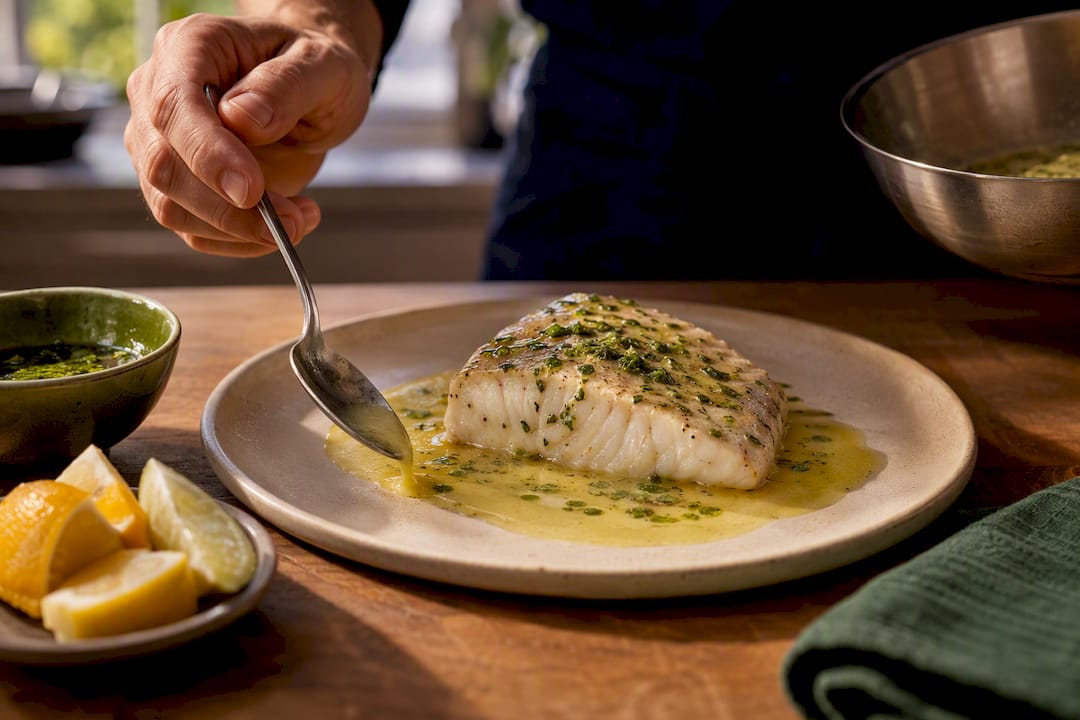
Pair finished fish with something light: a citrus emulsion, a quick herb oil, or a thin seafood broth spooned around the plate at the last second, right before serving.
How Do Professional Kitchens Choose Fish for Low-Temperature Cooking?
A professional kitchen buys the day’s catch first and decides the menu around it, not the other way around. That order matters more for low-temperature cooking than for grilling or frying, because gentle heat won’t mask a fillet that’s a day past its prime.
- Freshness gets judged by smell, firmness, and how the flesh springs back, not just by the date on a label.
- A light salt cure applied minutes before cooking firms delicate species enough to sear cleanly afterward.
- A quick texture test, pressing the thickest part of a fillet, tells an experienced cook whether it needs another five minutes before the exterior even goes near a pan.
Readers curious about sourcing rockfish or building a stock from the day’s catch can look at how rockfish gets selected and handled for a proper Mediterranean fumet, and the same logic behind why freshness defines good seafood applies just as much at home.
Why Sous Vide Rewards Patience Over Shortcuts
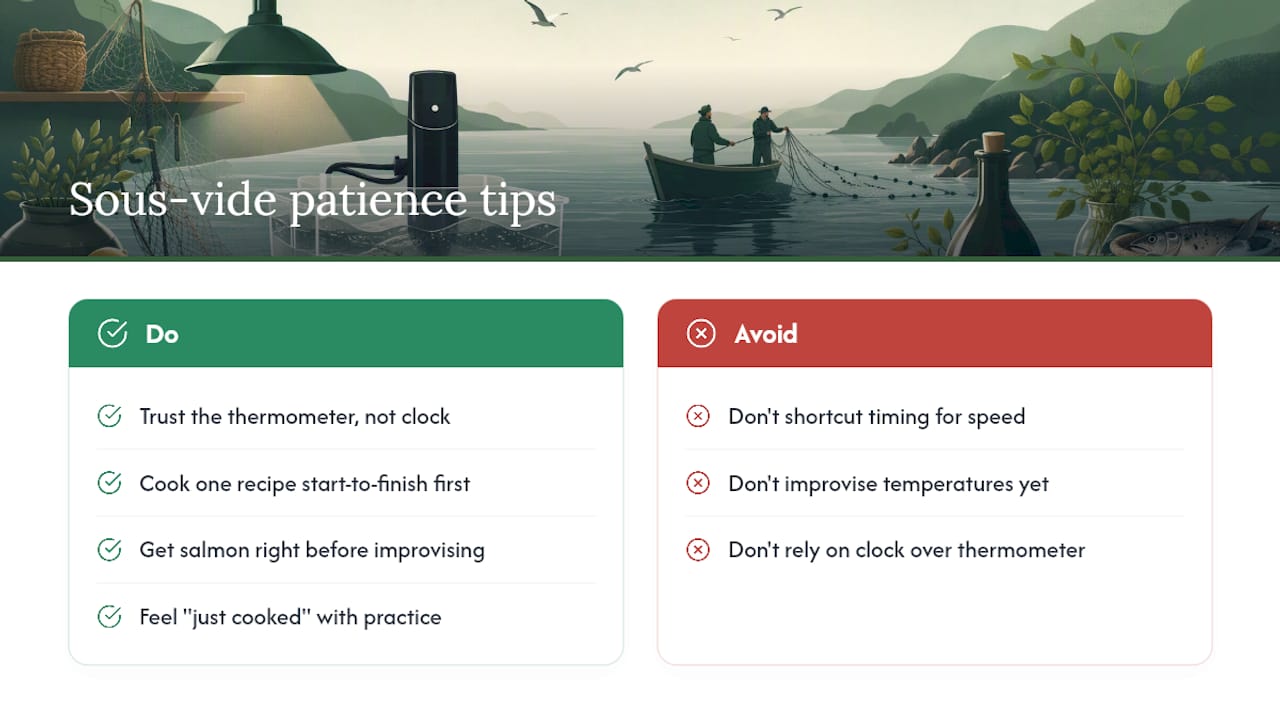
The gap between a good sous vide fillet and a forgettable one usually isn’t the recipe. It’s whether the cook trusted the thermometer over the clock. Fish is unforgiving in a way meat isn’t: two degrees of drift shows up immediately in texture, not just doneness.
If you’re new to this, cook one recipe from start to finish before you start improvising with temperatures or timing. Get the salmon right first. Everything else gets easier once you’ve felt what “just cooked” actually means with your own hands.
— YellowRock
Want to Taste It Instead of Cooking It Yourself?
Getting the water bath, the thermometer checks, and the sear exactly right takes practice, and some nights you’d rather just sit down to a plate someone else perfected. Elspescadors builds its tasting menu around the same principle covered here: the day’s fresh catch, cooked with the precision that low-temperature technique demands, then finished by hands that do this every service.
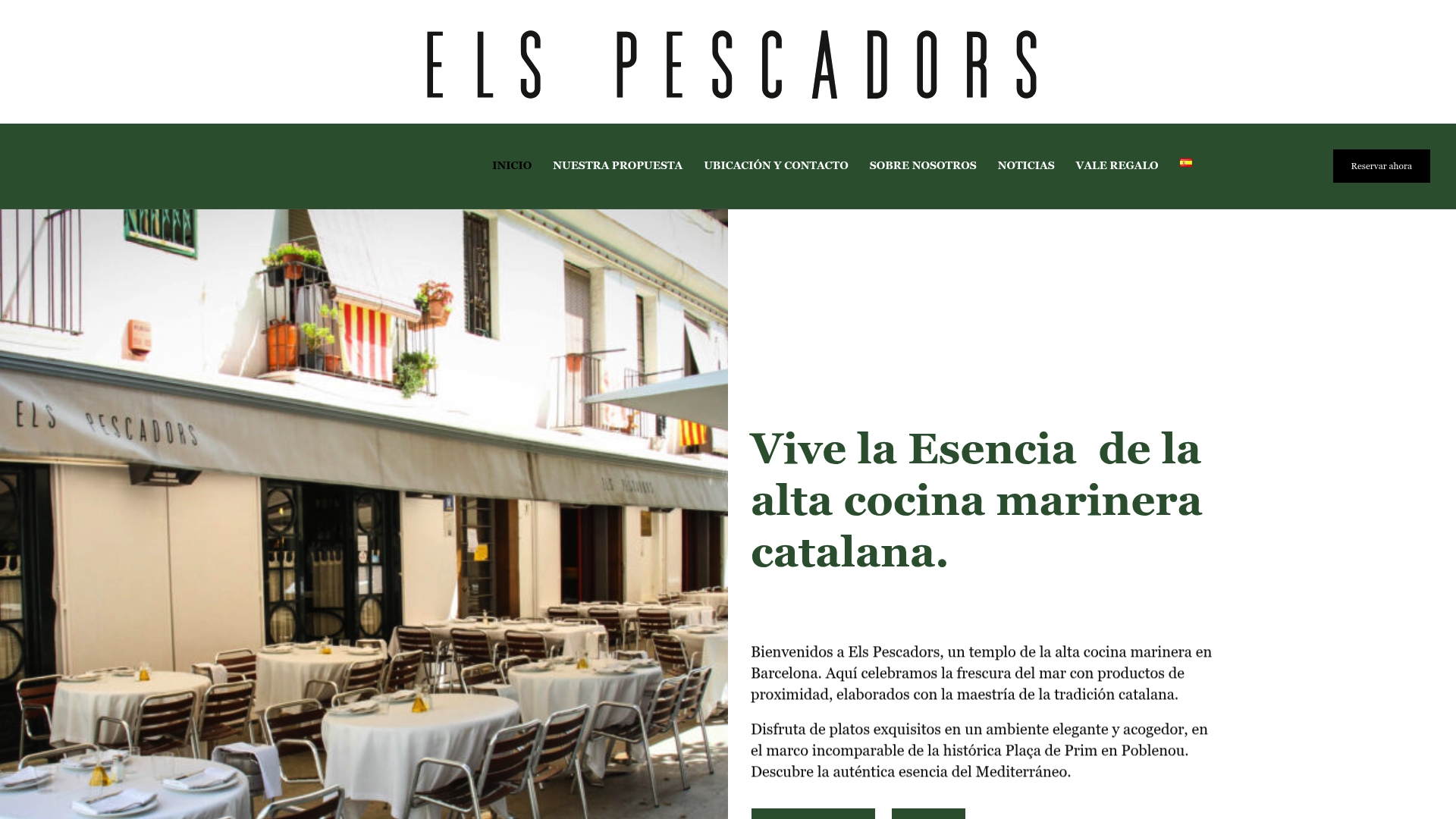
A seasonal tasting menu can rotate around what came off the boat that morning, and a kitchen can showcase the same sourcing judgment described above, freshness first, technique second. If you’re planning a dinner for a group instead of a solo table, the group dining menu gives you a shared tasting experience without anyone needing to touch a thermometer. Check availability and book a table when you’re ready to let someone else handle the water bath.
Sources
- Cocción a Baja Temperatura y Sous Vide: Evidencia Científica sobre su Impacto Sensorial, Nutricional y Fisicoquímico
- Anova Culinary: Sous vide white fish guide
- Seguridad alimentaria en la cocina a baja temperatura (Cocinista)
- Recetas Sous‑Vide de Pescado (Sous‑Vide.cooking)
FAQ
How do you cook hake (merluza) at low temperature?
Cook hake sous vide at 122°F to 131°F (50°C to 55°C) for 25 to 35 minutes per 1-inch fillet, then finish with a brief skin-side sear or a quick pan-roast for color.
Is it safe to cook fish at low temperature?
It’s safe when you source fresh fish, verify your bath temperature independently, and freeze fish first if you’re targeting parasite-risk species; most low-temperature cooks don’t fully pasteurize, so sourcing and verification matter as much as the temperature itself.
How do you cook bacalao (cod) at low temperature?
Bag salted cod with olive oil, garlic, and bay leaf, then cook at 131°F (55°C) for about 35 minutes for a confit-style texture that’s flaky but still holds together, finishing under a broiler for color.
What fish is good for diabetics?
Fatty fish like salmon and tuna, cooked without heavy breading or sugar-laden sauces, fit well into a diabetes-friendly diet since they’re low in carbohydrates and rich in protein and omega-3s; sous vide cooking keeps them moist without added fat from frying.