Seasonal Mediterranean cooking means building your menus around what’s at peak right now, and it changes everything about how food tastes on your plate. Ingredients picked at the right moment carry more flavor and higher nutrient density than off-season versions, and they usually cost less too. Clinical consensus on the Mediterranean diet backs this up, and restaurants like Els Pescadors build entire menus around it daily.
TL;DR:
- Seasonal ingredients vary greatly by time of year, with spring offering artichokes and peas, while summer features tomatoes and small oily fish like sardines.
- Using whole fish and vegetables, buying fresh daily, and planning batch cooking help maximize flavor and reduce waste during peak seasons.
- Quick techniques like sautéing, grilling, and pickling emphasize freshness, while slow braising and roasting deepen flavors for heartier dishes.
- Restaurants adjust menus daily based on market catch and produce, demonstrating the importance of shopping locally and intuitively.
- Seasonality simplifies cooking by allowing ingredients to speak for themselves, making flavorful meals accessible with minimal effort.
Table of Contents
- What Makes Cocina de Temporada Mediterránea Different
- What Should You Buy Each Season in Mediterranean Cooking?
- What Can You Cook Right Now With Seasonal Ingredients?
- Which Cooking Techniques Bring Out the Most Flavor?
- How Do You Shop Smart for Seasonal Mediterranean Ingredients?
- How Does a Seasonal Restaurant Kitchen Actually Work?
- Why Seasonal Cooking Is Worth the Small Effort
- Taste What Seasonal Mediterranean Cooking Looks Like Done Right
- Sources
- FAQ
What Makes Cocina de Temporada Mediterránea Different
Cocina de temporada mediterránea isn’t a diet plan or a list of “superfoods.” It’s a cooking logic built on a simple pantry: olive oil, legumes, whole grains, garlic, herbs like rosemary and bay leaf, and whatever fish came off the boat that morning. What changes constantly is the produce wrapped around that pantry.
That rotation is the whole point. Winter calls for citrus, cabbage, and braised dishes that need an hour on low heat. Summer flips the script entirely, favoring raw tomatoes, quick grills, and dishes you barely have to touch a stove for.
The core Mediterranean staples that anchor every season include:
- Extra virgin olive oil for cooking, dressing, and finishing
- Legumes (chickpeas, lentils, white beans) as a protein backbone
- Whole grains like bulgur, rice, and rustic bread
- Fresh herbs: parsley, oregano, thyme, rosemary
- Seasonal fish and shellfish as the centerpiece protein
A 2026 consensus from Spanish cardiology and internal medicine societies argues the health benefits go beyond nutrients on a label. Meal timing, eating with others, and seasonal variety all play a role in why the Mediterranean diet performs so well long term.
What Should You Buy Each Season in Mediterranean Cooking?
Shopping by season sounds simple until you’re standing in a market unsure what’s actually local right now. Here’s a working guide, organized by what the EU seasonal calendar confirms as peak Mediterranean harvest windows.
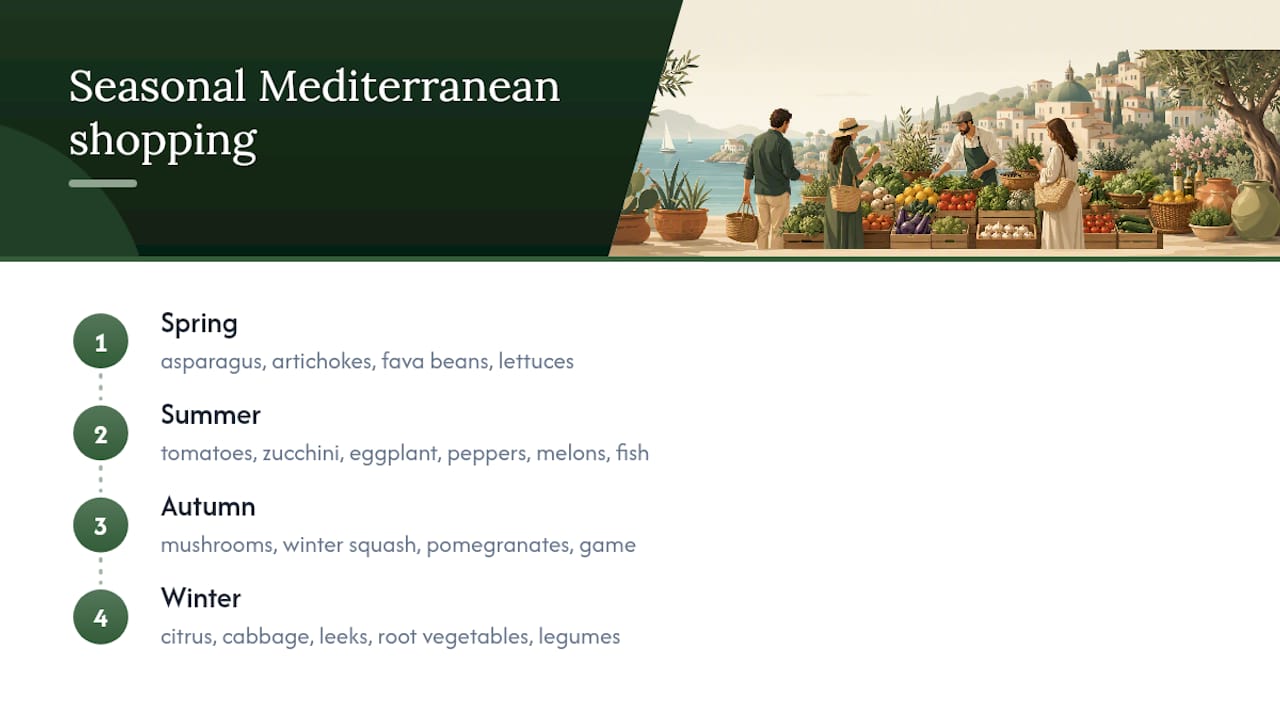
Spring brings asparagus, artichokes, fava beans, and peas. Artichokes braised with garlic and white wine, then finished with lemon, capture the season in one dish. This is also when the first tender lettuces show up, perfect for simple salads with just oil, salt, and vinegar.
Summer is tomato season, full stop, along with zucchini, eggplant, peppers, and melons. Ripe tomatoes need almost nothing: a little salt, good oil, maybe torn basil. This is also prime time for sardines and other small oily fish that grill in minutes over hot coals.
Autumn shifts toward mushrooms, winter squash, and pomegranates. Squash roasted whole and split with a drizzle of oil and thyme needs no other work. Game and heartier fish start appearing too, suited to slower cooking as evenings cool.
Winter means citrus, cabbage, leeks, and root vegetables. Slow-braised legume stews with a bay leaf and a splash of good olive oil carry you through the cold months, and citrus segments cut through richer dishes at the table.
To confirm what’s actually in season where you live, check SoyDeTemporada, which breaks Spain’s calendar down month by month and even by province, so you’re not guessing based on a national average.
What Can You Cook Right Now With Seasonal Ingredients?
You don’t need a complicated recipe to make a seasonal ingredient shine. You need timing and restraint. Here are four menu ideas built around whatever’s peaking this month:
- Grilled sardines with charred lemon and parsley. Buy sardines the day you plan to cook them; they lose flavor fast. A quick brine in salted water for 15 minutes firms up the flesh before grilling.
- White bean and artichoke stew. Simmer canned or soaked white beans with braised artichoke hearts, garlic, and a bay leaf for 40 minutes. Finish with raw olive oil off the heat.
- Roasted squash with pomegranate and toasted almonds. Roast wedges at 400°F for 30 minutes, then scatter pomegranate seeds and almonds just before serving so they stay crisp.
- Seafood rice with whatever catch is freshest. A simple sofrito of onion, tomato, and garlic, plus rice and stock, lets the fish do the talking. Swap in monkfish, hake, or shrimp depending on what looked best at the counter that morning.
For make-ahead cooking, stews and braises freeze well for up to three months. Blanch surplus vegetables for two minutes before freezing to lock in color and texture, and always cook rice fresh rather than reheating it.
Which Cooking Techniques Bring Out the Most Flavor?
Mediterranean cooking relies on a small set of techniques, each suited to a different kind of ingredient:
- Quick sauté, using high heat and minimal oil, for delicate greens and shellfish that overcook in seconds.
- Slow braise, low heat over an hour or more, for legumes, tougher cuts, and root vegetables that need time to soften.
- Roast, dry heat around 400°F, for squash, peppers, and whole fish that benefit from caramelization.
- Grill, for oily fish and summer vegetables that want smoke and char rather than moisture.
- Confit, slow cooking in fat at low temperature, traditionally used for preserving duck or tuna.
- Quick-pickle, a fast vinegar brine, for extending the life of peak-season vegetables by days or weeks.
Finish most dishes with raw olive oil and an acid, lemon or vinegar, added right before serving rather than during cooking. Heat dulls both.
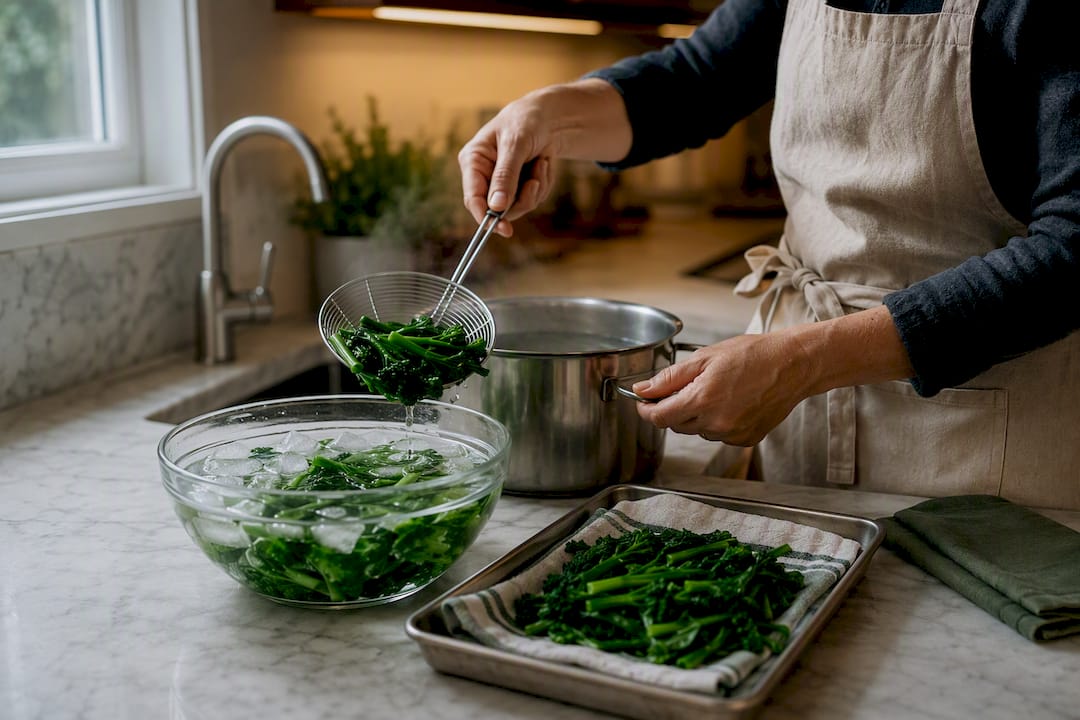
Pro Tip: When a vegetable is at its peak and you have more than you’ll eat in a week, blanch it for two minutes, shock it in ice water, then freeze it flat in bags. You get near-fresh texture months later instead of a soggy mess.
How Do You Shop Smart for Seasonal Mediterranean Ingredients?
Buying well starts with knowing what to ask. At the fish counter, ask directly what came in that day, “pesca del día,” rather than picking whatever’s displayed largest.
- Cross-check what’s listed as in-season against Producto de Temporada before you shop, not after.
- Buy whole fish or whole vegetables when possible; you waste less and get more cooking options.
- Plan one batch-cook session weekly (a big pot of beans, a tray of roasted vegetables) to stretch peak-season buys across several meals.
- Preserve surplus through pickling or freezing rather than letting it sit until it spoils.
Farmers who sell direct at markets, sometimes called km0 produce for the near zero distance traveled, tend to have the freshest and most honestly seasonal stock. A Belgian nutrition guide on seasonal produce makes a similar case: shorter supply chains generally mean better flavor and lower environmental cost.
How Does a Seasonal Restaurant Kitchen Actually Work?
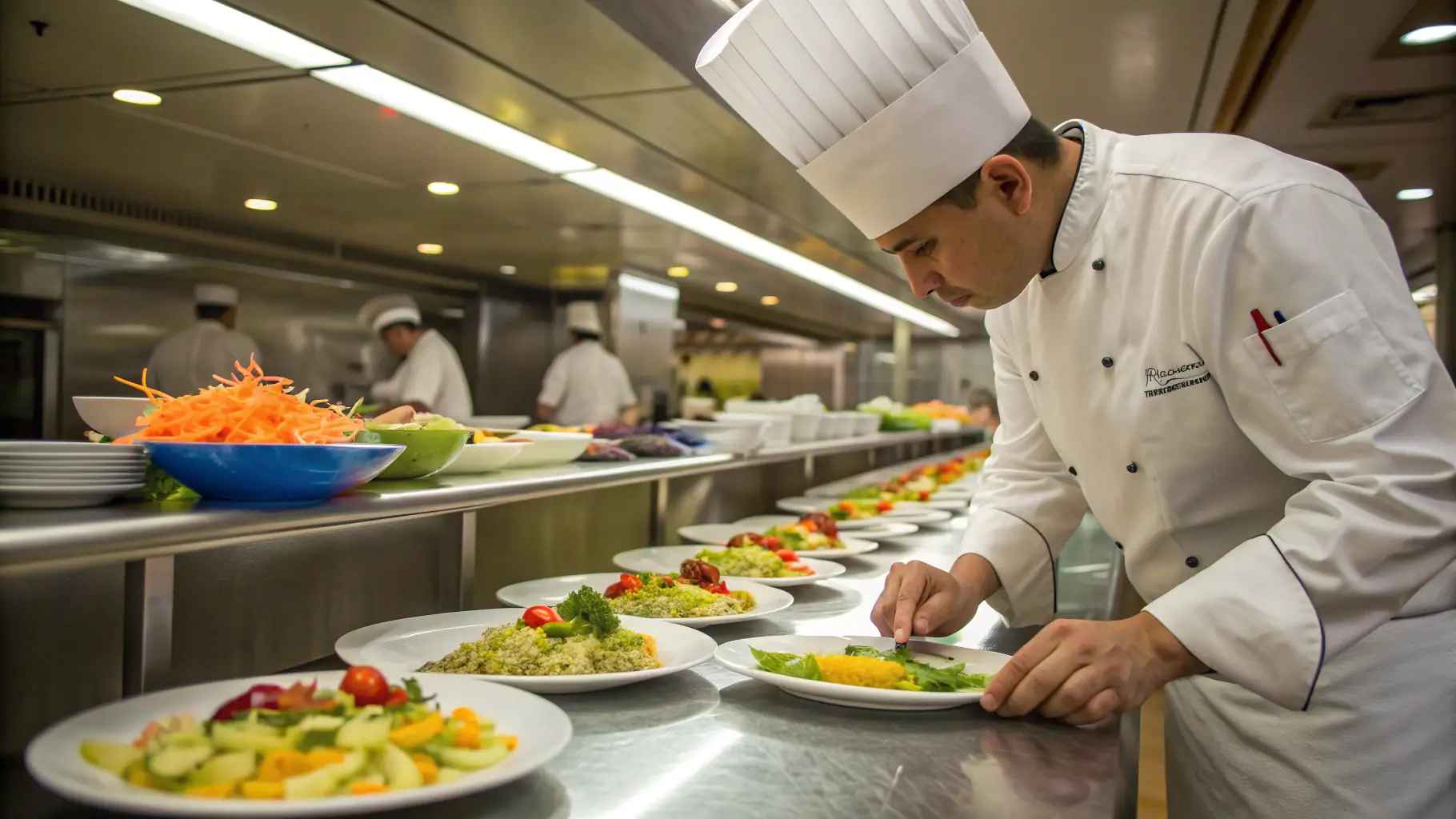
Restaurants that build around seasonality don’t wing it day to day. Some seafood restaurants in Barcelona structure their menus around what the daily catch brings in, adjusting dishes as market produce shifts through the year.
A kitchen built on seasonal fish and local produce doesn’t ask “what do we want to cook today.” It asks “what’s good today,” and builds the menu backward from that answer.
The home version of that habit is simpler than it sounds: visit a market or trusted fishmonger regularly, keep a mental (or written) short list of what’s currently good, and let that list decide dinner instead of a recipe printed months ago. You can see how that principle plays out across a full menu in this look at must-try seafood dishes from the Mediterranean.
Why Seasonal Cooking Is Worth the Small Effort
Here’s what conventional wisdom gets wrong: people assume seasonal cooking demands more skill or more time. It demands less of both. A ripe August tomato needs salt and oil. A February leek needs an hour of low heat and a bay leaf. The ingredient does the work; you just stop getting in its way.
The bigger shift is mental. Stop shopping from a recipe and start cooking from what’s actually good. Pick one seasonal ingredient this week, whatever your market pushed hardest, and build a single meal around it with no more than four other ingredients. That’s the whole method.
— YellowRock
Taste What Seasonal Mediterranean Cooking Looks Like Done Right
Cooking seasonally at home teaches you to recognize what peak flavor actually tastes like, and that makes a night out even more worthwhile. Some restaurants serve seafood and rice dishes built entirely around the day’s catch and whatever produce the market delivered that morning.
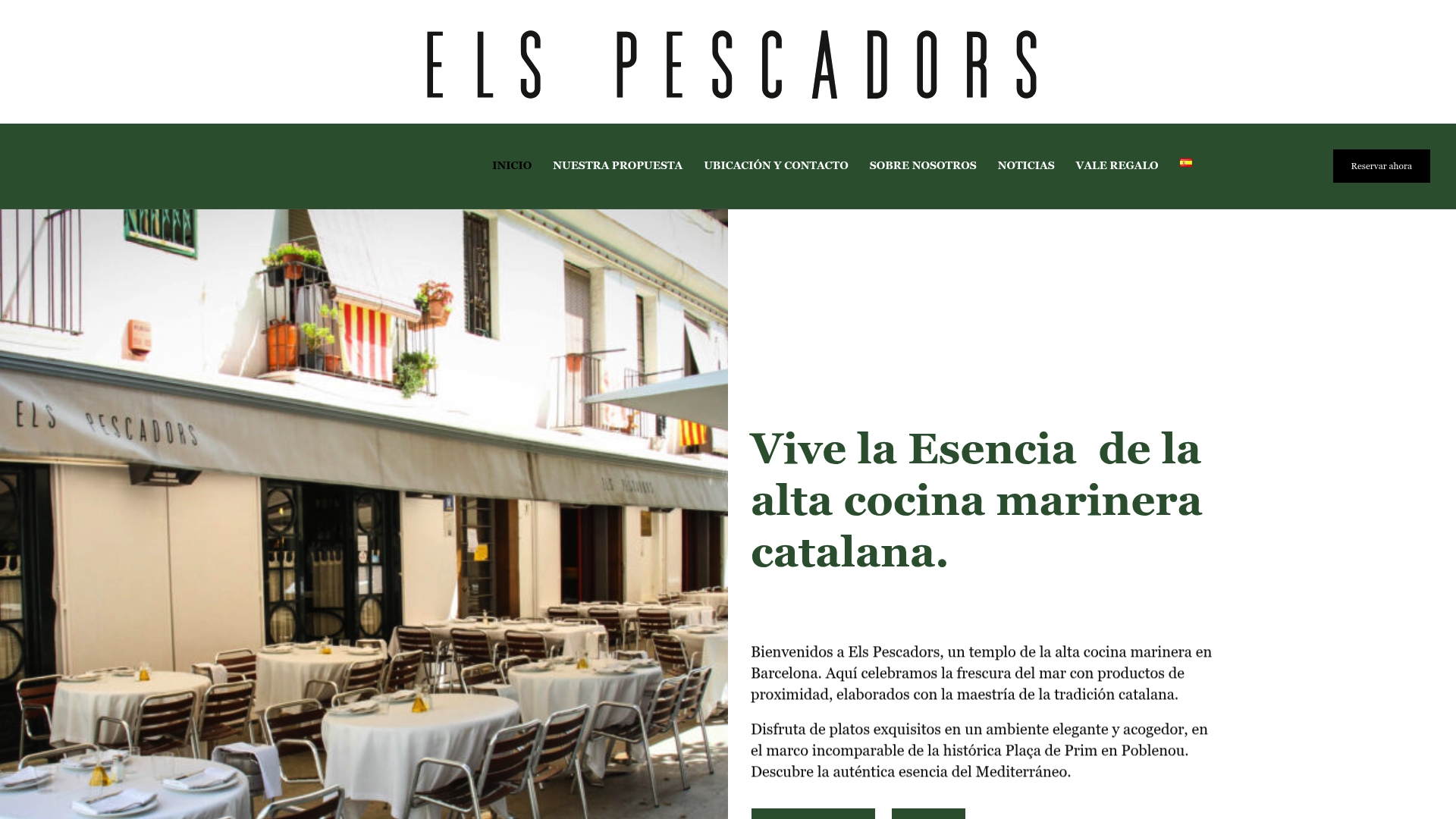
If you’re planning a celebration, a work event, or just a night where you’d rather taste the technique than practice it yourself, the group menu at Els Pescadors runs on the same seasonal logic covered here, just executed by a kitchen that’s been doing it for years in Poblenou. Larger parties can also look at our proposal for tailored group and event dining. Reserve a table and taste what a fully seasonal menu looks like when someone else is doing the shopping.
Sources
- Why is it important to consume seasonal food? – AZTI
- Agriculture
- Consenso sobre la dieta mediterránea: más allá de los nutrientes – SEA / SEMI
- Soy de temporada
FAQ
What Are the Typical Dishes of Mediterranean Cuisine?
Classic dishes include grilled or roasted seasonal fish, rice dishes like paella, legume stews, and vegetable preparations built around olive oil, garlic, and herbs. What changes is which vegetable or fish anchors the dish depending on the month.
What Are the Main Types of Mediterranean Cuisine?
Mediterranean cuisine spans several regional traditions, including Catalan, Provençal, Italian, Greek, and North African styles, all sharing olive oil, legumes, and fresh produce as a base while varying in spice and technique.
What Does a Typical Mediterranean Diet Menu Look Like?
A typical menu centers on vegetables and legumes as a base, fish or seafood several times a week, whole grains, and olive oil as the primary fat, with meals adjusted to whatever produce is in season.
Can You Give an Example of a Traditional Mediterranean Dish?
Seafood rice cooked with a tomato and garlic sofrito, using whatever fresh catch is available that day, is a strong example of how the cuisine adapts a traditional format to seasonal ingredients. Some restaurants build signature versions of this dish around the daily market catch.