A Catalan arroz marinero is a seafood rice built on fumet, an onion and tomato sofrito, and enough enjundia to taste the sea in every bite. You’ll recognize the real thing by three signs: a stock so concentrated it coats the spoon, seafood that reads as freshly caught rather than frozen filler, and a kitchen that resists drowning the dish in lemon or heavy herbs. Barcelona has plenty of places chasing this standard. Els Pescadors, in Poblenou, is one of them.
TL;DR:
- Most authentic Catalan arroz marinero is made with a concentrated fumet simmered from fresh small rockfish for at least 30 minutes, ensuring rich flavor.
- The sofrito should be cooked slowly with onion and tomato to build sweetness without relying on heavy herbs or lemon.
- A caldoso version stays brothy and soupy, while the seco style uses less liquid, resulting in a drier, more evenly cooked grain.
- Menus that frequently change seafood options to match seasonal catch indicate a kitchen cooking around the market rather than a fixed recipe.
- When ordering, ask if the fumet is made in-house daily and whether the seafood is fresh and seasonal for an authentic experience.
Table of Contents
- Where Catalan Arroces Marineros Come From
- The Building Blocks: Fumet, Sofrito, Rice, and Catch
- Rossejat, Caldoso, and the Other Marinero Names You’ll See
- How to Judge Authenticity When You’re Ordering in Barcelona
- How to Make a Solid Arroz Marinero at Home
- Why This Tradition Still Matters to Us
- Taste It Yourself at Els Pescadors
- Sources
- FAQ
Where Catalan Arroces Marineros Come From
Catalan seafood rice grew out of cocina de a bordo, the onboard cooking fishermen did between hauls, using whatever the nets brought up and whatever stayed edible after hours at sea. That practical, waste-nothing instinct still shapes how the dish gets made along the Catalan coast, from the Empordà to the Ebro delta, regions with centuries of documented rice cultivation behind them.
The technique diverges from other Spanish rice traditions in a few specific ways:
- Catalan sofrito leans on onion cooked low and slow alongside tomato, building sweetness before anything else happens in the pan, a contrast to some Valencian preparations that favor a leaner, more tomato-forward base.
- Many Catalan kitchens finish the rice in the oven rather than chasing a hard sear on the pan bottom.
- That oven finish produces a drier, more evenly cooked grain, but it trades away some of the crackling socarrat crust Valencian paella is known for.
None of this is a lesser version of paella. It’s a different set of priorities: depth of broth and richness of flavor over crust and char.
The Building Blocks: Fumet, Sofrito, Rice, and Catch
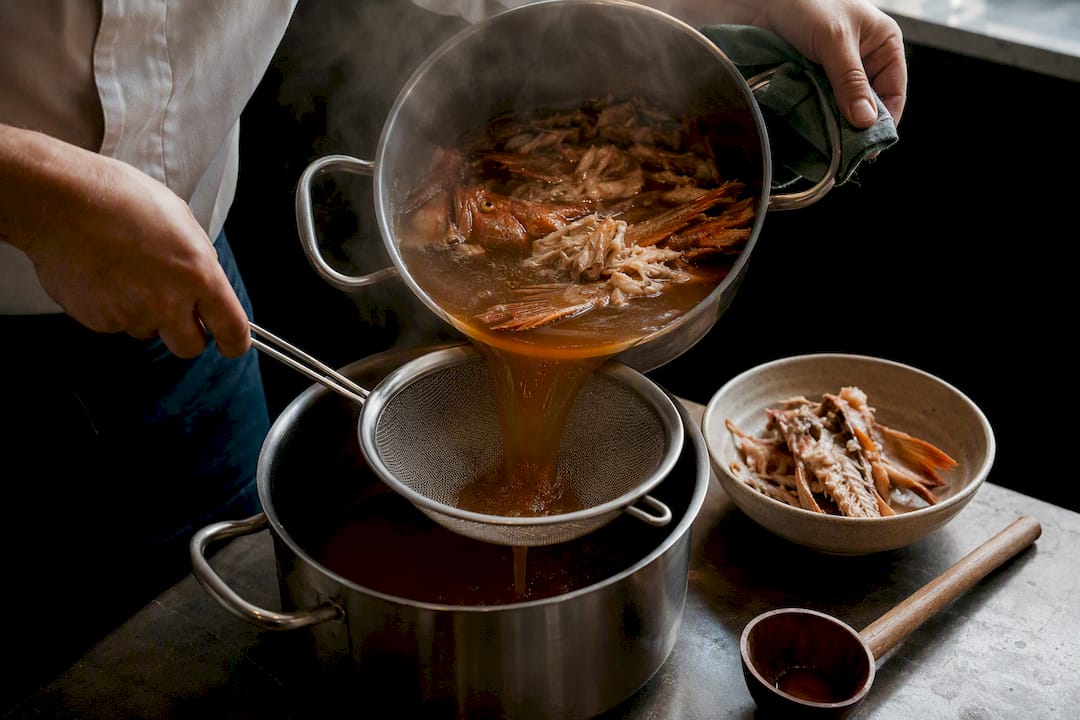
Everything starts with the fumet. Kitchens that take this seriously use morralla, the mix of small rockfish that would otherwise go unsold, breaking down the bones and simmering the stock long enough to pull out real substance. Professional accounts describe simmer times of 30 to 45 minutes minimum to get a fumet with body, not just fish-flavored water.
The sofrito comes next, and here’s where a lot of home versions fall short: some kitchens confit the onion overnight or hold a slow-cooked batch on standby, which builds sweetness and thickness without needing extra acid to compensate. It’s a quiet marker of a kitchen that cares about the details.
A few other essentials worth knowing before you order or cook:
- Bomba or another short round rice is the standard choice, since it absorbs stock without blowing out its structure.
- A caldoso version stays brothy and soupy; a seco version cooks the liquid down until the grains stand nearly dry.
- A picada, usually almonds, garlic, and parsley ground together, gets stirred in near the end to thicken and round out the broth.
- Shellfish and firm fish go in seasonally rather than on a fixed rotation, following whatever the day’s catch actually looks like.
Pro Tip: If a restaurant’s menu changes its seafood rice offerings week to week rather than running the same fixed dish year round, that’s usually a sign the kitchen is cooking around the market, not around a printed menu.
Rossejat, Caldoso, and the Other Marinero Names You’ll See
Menus in Barcelona use specific terms for specific techniques, and knowing them changes what you order.
- Rossejat. The rice (or sometimes fideos) gets toasted in oil before any liquid touches it, giving the grain a nutty, almost roasted backbone. This is a documented coastal fisherman’s technique that shows up frequently along the Catalan shoreline.
- Caldoso. A loose, soupy rice meant to be eaten with a spoon, not a fork. If a menu calls something caldoso and it arrives dry, that’s a red flag.
- Arròs sec. The oven-finished, dry-grain style discussed above, favoring even cooking over a crisped bottom layer.
- Suquet and cim i tomba. Not rice dishes themselves, but close cousins in the same marinero family: fish and potato stews built on the same principles of local catch, minimal intervention, and seasonal timing. Coastal reporting on Costa Brava cooking treats cim i tomba as essential context for understanding the wider marinero tradition.
Knowing these four terms alone will get you further on a Barcelona menu than most tourist guides bother to explain.
How to Judge Authenticity When You’re Ordering in Barcelona
The clearest tell is on the plate, but a few questions before the food arrives narrow things down fast. Ask whether the fumet is made in house daily, whether the rice dish changes with the season, and whether the seafood came from that morning’s catch rather than a freezer delivery.
Barcelona’s produce markets set the baseline for what “fresh” should mean here. La Boqueria and the city’s neighborhood fish stalls supply much of the seafood that ends up in these dishes, and a restaurant sourcing from that same ecosystem tends to show it in the final bowl. Food writers covering fisherman’s-quarter cooking in Barceloneta point to the same idea: good marinero cooking avoids masking the fish rather than covering it up with acid or heavy spice.
At Els Pescadors, that sourcing habit plays out through seasonal fishing practices that shape which rice dishes appear on a given week’s seasonal menu. A few practical notes for diners:
- Seafood rice dishes are usually built for two or more to share, so order accordingly.
- A dry white or a light cava pairs cleanly with most caldoso and seco styles without fighting the fumet.
- Reserve ahead, especially on weekends, since rice dishes with proper fumet take real time and kitchens often cap how many they can turn out per service.
How to Make a Solid Arroz Marinero at Home
You won’t match a restaurant’s overnight-confited onion or a stock simmered from ten kilos of morralla, but you can get remarkably close with attention to a few ratios and a clear sequence.
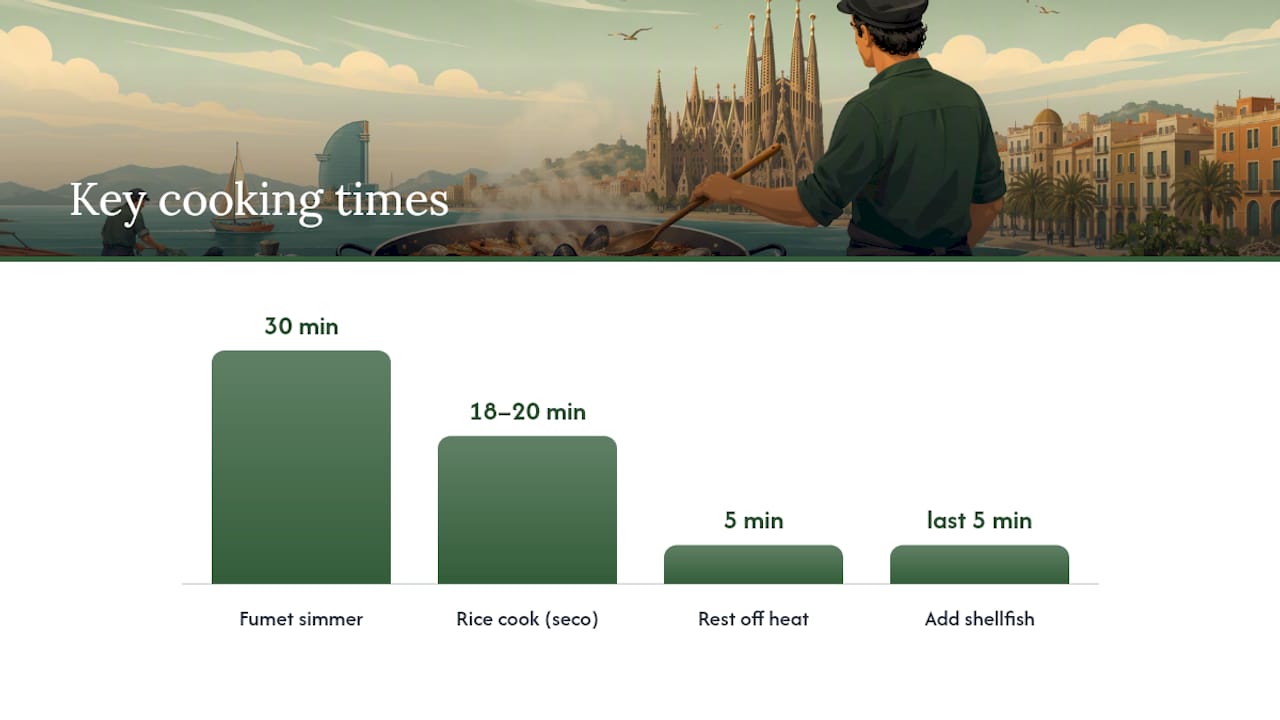
- Build the fumet first. Simmer rockfish bones and heads, or a mixed seafood stock base, for at least 30 minutes. Skip this step or rush it and nothing downstream will fix the flavor.
- Cook the sofrito low and slow. Onion first, cooked until it turns sweet and jammy, then tomato added and reduced until it loses its raw edge.
- Sauté the seafood briefly, then set aside anything delicate like shrimp or mussels to add back near the end so it doesn’t overcook.
- Add the rice and stock together. For a seco style, use roughly 3 parts hot fumet to 1 part rice. For a caldoso, push closer to 4 or 5 parts liquid to keep it soupy.
- Cook without stirring, about 18 to 20 minutes for a seco style, checking grain texture in the last few minutes. A caldoso finishes slightly faster since the goal isn’t full liquid absorption.
- Rest for 5 minutes off the heat before serving, or finish briefly in a hot oven if you want the drier, Catalan-style texture.
Pro Tip: Add shellfish like mussels and clams in the last five minutes of cooking, not at the start. Overcooked shellfish turns rubbery fast, and it’s the single most common mistake home cooks make with this dish.
The most common failure points: a weak, watered-down stock; over-acidifying with lemon to compensate for that weak stock; and cooking shrimp or fish alongside the rice for its full cooking time instead of adding it back late.
Why This Tradition Still Matters to Us
There’s something honest about a dish built from what fishermen couldn’t sell. That’s the spirit behind cocina de a bordo, and it’s the spirit we try to keep alive at Els Pescadors: cook what the season and the market give you, don’t hide it under too much sauce, and let the stock do the talking. Balancing that tradition with a more refined dining room isn’t always simple, but it starts with the same instinct every fisherman’s kitchen had: respect the catch. If you’re in Barcelona, we’d rather you taste this than just read about it.
— YellowRock
Taste It Yourself at Els Pescadors
If everything above has you craving a fumet-driven rice rather than another tourist-trap paella, Els Pescadors gives you the seasonal version done the way Catalan kitchens have done it for generations, in a historic Poblenou setting rather than a beachfront tourist strip. The Menú de Temporada is available at a price listed on the restaurant’s website and regularly features rice preparations built around seasonal catch.
If you’d rather explore the full range, check La Carta for current offerings or the Carta del Día for what’s fresh today. Groups planning ahead should look at the Menú para Grupos and request rice dishes in advance, since a proper fumet needs lead time a kitchen can’t always improvise on the spot. Curious diners wanting a longer, guided experience can also ask about the Menú Degustación. Reserve your table and taste what a real Catalan arroz marinero is supposed to be.
Sources
This guide draws on regional reporting on Catalan versus Valencian rice traditions, professional technique notes from Hello Chefs, the Barcelona markets guide, and El País coverage of maritime rice quality. For more on Els Pescadors’ approach, see our page on Mediterranean rice dishes in Barcelona.
- En qué se diferencian los arroces de Valencia, Murcia y Cataluña: una geografía de las paellas levantinas
- Claves para elaborar un buen arroz marinero | Hello Chefs
- Los secretos de una buena paella — Barcelona markets guide
FAQ
What Makes Arroces Marineros Different from Paella Valenciana?
Paella Valenciana relies on a lighter sofrito and often chases a crisp socarrat crust, while Catalan arroces marineros build depth through a concentrated fumet and an onion-heavy sofrito, often finished in the oven for a drier grain instead.
Should I Expect Socarrat in a Catalan Seafood Rice?
Not necessarily. Many Catalan kitchens favor oven-finishing over a hard pan sear, which produces evenly cooked, dry grains rather than the caramelized bottom crust associated with Valencian paella.
What Rice Works Best for Arroces Marineros?
Bomba or another short round variety is standard, since it holds its shape while absorbing the concentrated fumet without turning to mush.
Is There a Best Season to Try Arroces Marineros in Barcelona?
Seafood rice tastes best when the seafood itself is in season, so a restaurant that changes its rice dishes with the catch, like the rotating options on the Menú de Temporada at Els Pescadors, is a stronger bet than one running a fixed menu year round.
How Can I Tell If a Restaurant’s Fumet Is Made In-House?
Ask directly, and watch for a rice dish that changes weekly rather than staying identical every day. A kitchen making its own stock from morralla usually lets its rice menu follow the market instead of a printed template.