A sustainability label tells you that a fishery or farm was assessed against an environmental standard by an independent body. It does not tell you everything about the plate in front of you. The blue MSC label covers wild-caught seafood, the ASC label covers farmed seafood, and neither replaces the basic facts a restaurant in Spain must give you: species, origin, production method and fishing gear. This guide shows how to read the labels, what they leave out, and what to ask when a dish has no label at all.
TL;DR
- The blue MSC label marks wild-caught seafood from fisheries independently assessed against MSC’s environmental requirements. The ASC label is its counterpart for farmed fish.
- Labels cover the environment of the fishery or farm. They do not certify social or economic conditions, and a certification is not a complete traceability system.
- In Spain, the species name, scientific name, catch or farming area, production method and gear category are required information, whether or not a label exists.
- With no label, ask three things: which species, where it was caught or farmed, and how it was produced.
- A label is a good starting point. A restaurant that can answer your questions in detail is often the stronger signal.
Table of Contents
- The labels you are most likely to meet
- What a label does not tell you
- What Spanish rules already tell you, label or not
- How to check a claim in five steps
- What to ask when the fish has no label
- Reading restaurant claims with a clear head
- Our perspective
- Taste the season at Els Pescadors
- FAQ
- Sources
The labels you are most likely to meet
In a Spanish supermarket, fish counter or restaurant menu, a handful of marks come up again and again. They are not interchangeable, and they do not all measure the same thing.
| Label or standard | What it covers | What it is based on |
|---|---|---|
| Blue MSC label | Wild-caught seafood | Fishing practices independently assessed as meeting MSC requirements for environmental sustainability |
| ASC label | Farmed seafood (aquaculture) | Practices involved in responsible fish farming |
| Friend of the Sea, GlobalG.A.P., ISO 14001, ISO 22000 | Mostly aquaculture and management systems | Certifications and standards that Spain’s aquaculture observatory lists as relevant for the sector |
The first two rows come from the Marine Stewardship Council’s own explanation of how the blue label compares with ASC: the MSC considers the environmental sustainability of wild-capture fisheries, while the ASC considers aquaculture. The third row reflects a Spanish aquaculture observatory report that lists ISO 14001, ISO 22000, GlobalG.A.P. and Friend of the Sea among the certifications, standards and marks of interest to Spanish aquaculture. Some of those are management or food safety standards rather than consumer-facing sustainability seals, which is one reason the landscape feels confusing.
If you want a closer comparison of the two best-known marks, we explain them side by side in MSC vs ASC: what the blue and green seafood labels mean.
What the blue MSC label says
The MSC states that its blue label signifies wild-caught seafood from fishing practices independently assessed as meeting its requirements for environmental sustainability. In practice the assessment looks at the health of the fish stock, the impact of fishing on the wider marine environment, and how well the fishery is managed. That is a meaningful set of questions, and it is why the blue label is a sensible shortcut when you have nothing else to go on.
What the ASC label says
Farmed fish raise different questions: feed, water quality, escapes, disease, the surrounding habitat. The ASC addresses those, which is why a wild-capture label would be the wrong tool for a farmed sea bream or turbot. When you see a mark on a farmed product, check that it is the one designed for aquaculture rather than assuming any green or blue fish logo means the same thing.
What a label does not tell you
This is where most guides stop too early. A label is a statement about a defined scope, and the scope has edges.
It does not cover everything people mean by “sustainable”. The MSC says plainly that its label does not certify social or economic conditions, nor the packaging or carbon footprint of the final product. You can read that in the MSC’s own description of what the label means. If you care about working conditions or food miles, the label alone will not answer that.
Chain of custody is not the same as full traceability. Companies that process, package or sell seafood with the blue label must hold MSC Chain of Custody certification. That is a real control on the supply chain. Yet a 2026 report from a seafood transparency coalition cautions that chain of custody standards should not be equated with comprehensive traceability systems, and that private certification, while beneficial, does not eliminate risks such as forced labor or illegal, unreported and unregulated fishing.
Too many labels can confuse. The European Commission has noted that for eco-labels to be credible they need robust certification processes, and that a proliferation of labels can lead to consumer confusion.
Certification costs money. FAO material on certification in developing countries reports that MSC full assessment and certification can cost anywhere from USD 10,000 to 500,000 depending on the fishery. For that reason, a small boat fishing responsibly may not carry a label, and the absence of a label does not by itself mean the fish is a poor choice. It means you need another way to find out.
The same logic applies well beyond seafood. Any industry that talks about sustainability has to separate a claim from the evidence behind it, as this piece on what counts as sustainable in another product category shows. A mark is a prompt to ask questions, and it is a poor place to stop asking them.

What Spanish rules already tell you, label or not
Voluntary sustainability labels sit on top of a layer of mandatory information. For fishery and aquaculture products offered to the final consumer in Spain, Spain’s Ministry of Agriculture, Fisheries and Food outlines under EU Regulation 1379/2013 that the information must include the commercial and scientific name of the species, whether it was caught or farmed, the catch or farming area, the category of fishing gear, whether it was previously defrosted, and the minimum durability date.
That list is more useful than it looks. Take a hake fillet. The commercial name tells you what you are buying. The scientific name removes ambiguity, because the same common name can cover several species. The catch area tells you whether it came from the Mediterranean or the Atlantic. The gear category tells you whether it was line-caught, trawled or netted. None of that is a sustainability verdict, but it is exactly the raw material you need to form one.
Traceability rules have also tightened. The Ministry explains that traceability must be ensured from capture or harvest through every stage until retail sale, identifying both immediate suppliers and buyers. From 10 January 2026, each relevant lot must carry a unique lot identification number. For non-imported products, wild fish must also include the unique tide identification number(s), and farmed fish must include the producer or production unit’s name and registration number. Controls are coordinated nationally, and the autonomous communities organize and carry out the checks in their own territories.
For a diner, this means the information exists somewhere in the chain. A good restaurant can pass the useful parts of it on to you. If you want to see how the 2026 changes affect what reaches Barcelona’s tables, we cover it in how 2026 rules change what’s on the market.
How to check a claim in five steps
- Find the label, then check its type. A blue MSC mark points to wild capture. A farmed product should carry an aquaculture standard. A mismatch is a reason to ask.
- Read the mandatory details. Species, scientific name, area, method and gear should all be available on a label or menu note, or from staff.
- Look at the area and the gear. The same species can come from very different fisheries. Area and gear tell you which one you are eating.
- Ask about the supply chain. Who lands the fish, and who delivers it to the kitchen? A restaurant that knows its suppliers by name can usually answer quickly. We write about this in how local suppliers shape seafood restaurants in Barcelona.
- Cross-check with a seafood guide. Once you have species, origin and method, you can look up the rating in a reputable consumer guide.
Non-governmental organizations make a related point: real sustainability, they argue, needs both adherence to international codes of conduct and an independently audited, traceable chain of custody linking the final product to its source. A label can be one part of that picture. The audit trail is the other part.
What to ask when the fish has no label
Most fresh fish at a good restaurant arrives with no logo. That is normal, and it is no reason for suspicion. The Marine Conservation Society advises that when no label is present, you should ask for the specific species, where it was caught or farmed, and how it was produced. With those three answers you can check the fish against a seafood guide yourself.
Here is how that sounds at the table:
- “Which species is the fish of the day, and what is its Catalan or Spanish name?”
- “Was it caught or farmed, and in which area?”
- “Was it line-caught or taken with nets or trawls?”
- “Was it frozen at any point?”
- “Is this species in season now?”
Season matters more than many diners expect. A species in season is generally being landed in quantity from nearby waters, which tends to mean fresher fish and shorter journeys. Our guide to seasonal fish menus in Barcelona goes deeper on this.
If Catalan fish names on a menu are part of the difficulty, two of our guides help: 8 Catalan seafood names and how each is cooked, and Spanish restaurant menu words for travelers, which also covers allergens.
Reading restaurant claims with a clear head
When a menu uses words like “sustainable”, “responsible” or “eco”, treat them as an invitation to ask. The wording is rarely regulated the way species and origin information is. A shopper-focused industry piece published in September 2026 puts the mood simply: buyers want proof rather than promises. A restaurant that welcomes your questions is giving you that proof.
Three signals are worth more than a logo on a menu:
- Specificity. “Hake from the Mediterranean, line-caught” says more than “fresh local fish”.
- Consistency. The answer is the same whether you ask the host, the server or the chef.
- Seasonality. The offering changes with the catch rather than staying fixed all year.
We look at the dining side of this in Pescado sostenible: impacto real en tu experiencia gastronómica and in the key advantages of sustainable seafood restaurants in Barcelona. The people at the other end of the supply chain matter as well, which is why we wrote about supporting local fishermen in Barcelona.
Our perspective
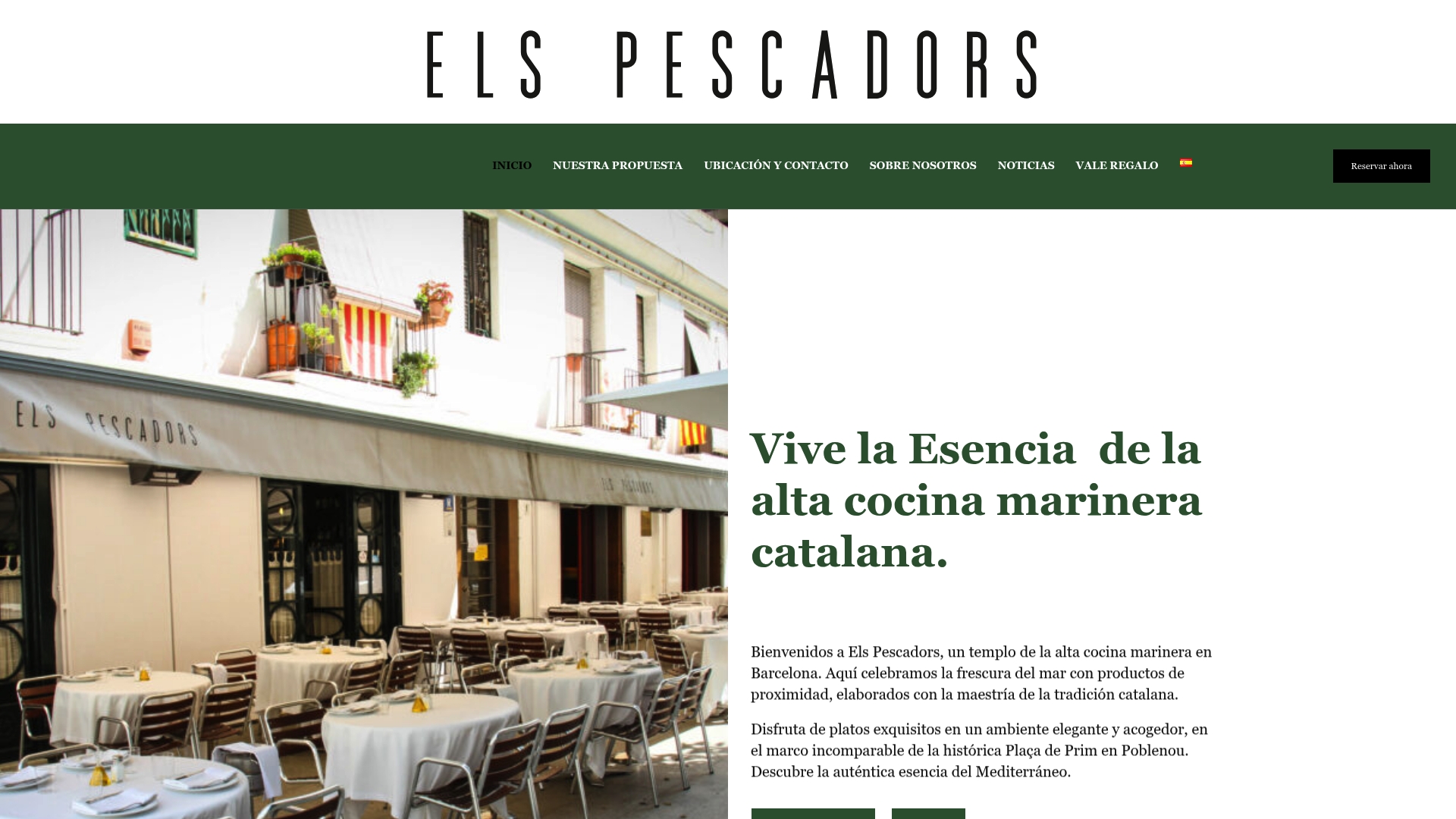
We cook Catalan maritime cuisine in Plaça de Prim, in Poblenou, and our menu is built around the daily fresh catch and seasonal, locally sourced ingredients. Quality, sustainability and culinary tradition are the three things we try to put on every plate.
From that kitchen, here is what we think about labels. They are useful, and we would never tell a guest to ignore them. But a logo is a summary, and a summary is only as good as the conversation behind it. What we want our guests to be able to do is ask us what the fish is, where it comes from and how it was brought in, and get a straight answer.
That is also why we prefer a menu that follows the sea over one that follows a fixed list. When the catch changes, the dishes change. Seasonal cooking is the most practical form of sustainability we know: you use what the sea offers now, you waste less, and you respect the rhythm of the species.
So our advice is simple. Use labels as a first filter, use Spain’s mandatory species and origin information as a second, and use your questions as the third. Choose a restaurant where all three line up.
YellowRock
Taste the season at Els Pescadors
If you would rather taste the idea than read about it, our Menú de Temporada is published at €39 per person and follows what the season brings. Our a la carte menu and daily proposal are on the main page, and the Menú Degustación is the way to explore the kitchen at length. Planning a celebration or a corporate lunch? See our group menus.
Bring your questions about the fish with you. We are happy to answer them.
FAQ
Is seafood with the blue MSC label really sustainable?
The MSC says the blue label signifies wild-caught seafood from fishing practices independently assessed against its environmental sustainability requirements. That covers the environment of the fishery. It does not cover social or economic conditions, or the packaging and carbon footprint of the final product, so it is best read as a strong environmental signal rather than a complete guarantee.
What is the difference between MSC and ASC?
MSC deals with wild-capture fisheries, and ASC deals with farmed seafood. They assess different production systems, so each one suits a different kind of product. A farmed fish carrying a wild-capture mark, or the reverse, deserves a question.
What information must a Spanish restaurant or shop give me about fish?
Under EU Regulation 1379/2013, as outlined by Spain’s Ministry of Agriculture, Fisheries and Food, consumer information includes the commercial and scientific name, whether the product was caught or farmed, the catch or farming area, the gear category, whether it was defrosted, and the minimum durability date. A restaurant can usually tell you the main points on request.
What should I ask if the fish has no label?
Ask which species it is, where it was caught or farmed, and how it was produced. With those three answers you can check the fish against a reputable seafood guide. Many responsible small-scale fisheries have no certification, so the lack of a logo alone proves nothing.
Do sustainability labels guarantee ethical labor conditions?
No. The MSC label does not certify social conditions, and transparency advocates warn that private certification does not eliminate risks such as forced labor or illegal fishing. Strong traceability and a supplier who can name where the fish came from are the better checks.
Sources
- What the blue MSC label means for you, Marine Stewardship Council
- How does the blue MSC label compare, Marine Stewardship Council
- Certificaciones, estándares y marcas de interés para el sector acuícola, OESA
- Trazabilidad de los productos de la pesca y la acuicultura, Ministerio de Agricultura, Pesca y Alimentación
- Programa nacional de control de la trazabilidad, February 2026, MAPA
- Report from the Commission on common marketing standards, 2023, European Commission
- Beyond Certification, Make Stewardship Count, April 2026
- Responsible sourcing recommendations for the Spanish seafood supply chain, Oceana, 2019
- Sustainable seafood FAQs, Marine Conservation Society
- Seafood certification and developing countries, FAO, 2018
- What counts as sustainable, Winston Quinn Gin