In most Islamic traditions, fish is halal. In a restaurant, the question that matters is less the animal than what happens to it in the kitchen: the wine in the sauce, the shared fryer, the pork fat in the rice. Shellfish is where the schools of Islamic law genuinely disagree. This guide explains both, then gives you the exact questions to ask when you eat seafood in Barcelona.
TL;DR
- Fish with scales is accepted across the main schools of law. Shellfish such as prawns, mussels and oysters is where the schools differ, so follow the school or scholar you personally follow.
- In a restaurant, a halal fish can become a problem through alcohol (white wine, beer batter), pork products (lard, gelatin, chorizo) or contact with non-halal food.
- “Muslim-friendly” is not the same as “halal-certified”. Ask how the dish is made and decide according to your own standard.
- In Spain, ask directly: “¿Podría decirme si este plato lleva…?” Simple grilled or steamed fish is usually the easiest dish to check.
Table of Contents
- The short answer: yes for fish, it depends for the rest
- What the four Sunni schools say about seafood
- What can make a restaurant fish dish a problem
- Muslim-friendly versus halal-certified
- How to order fish safely in Barcelona
- Rice, tasting menus and groups
- Freshness and sourcing matter too
- Our perspective
- Book a table and tell us what you need
- FAQ
- Sources
The short answer: yes for fish, it depends for the rest
The most widely cited rule is simple. Fish is permitted. Where Muslims disagree is about other sea creatures, and about how strictly to define “fish”.
One well-known example is the position published on the official website of Ayatollah Sistani, which says a fish eaten in a restaurant must have scales and be known to have been caught alive in the water or to have died in the fishing net. That is a Ja’fari (Shia) ruling, and it shows that the conditions can go beyond “it swims”. Sunni schools set their own conditions, covered below.
The Codex Alimentarius guidelines on the term halal, the international food standard, also note that interpretation can differ among Islamic schools. They also exclude poisonous or dangerous aquatic animals. So there is no single answer that fits every Muslim diner, and an honest guide should say so.
What the four Sunni schools say about seafood
The UK-based Islamic Foundation for Theology and Research summarizes the main positions in its seafood fiqh overview:
| School | Fish | Shellfish and other sea animals |
|---|---|---|
| Hanafi | Permitted | Crab, mussel, oyster, lobster, crawfish and prawn are not permitted |
| Shafi’i | Permitted | Sea animals permitted, with few exceptions |
| Hanbali | Permitted | Sea animals permitted, with few exceptions |
| Maliki | Permitted | All permitted except eel |
A 2025 overview from a halal certification body describes the Hanafi view as the most restrictive. It generally limits halal seafood to fish, but it also notes that some contemporary Hanafi scholars permit shrimp. A comparative academic study concludes that scaly fish and shrimp are accepted without controversy, while jurists disagree about other seafood, and even scholars within one school can differ on particular species.
What this means at the table
If you follow the Hanafi school, a grilled sea bream or hake is straightforward, while a seafood paella with mussels or prawns is not. If you follow the Shafi’i, Maliki or Hanbali schools, most seafood on a Mediterranean menu is acceptable in principle. Species that people often ask about, such as swordfish or sea urchin, are decisions for your own scholar. We would rather point you to that than guess on your behalf.

Barcelona’s city council makes a related point in its explanation of Islamic food rules. Halal is described as a broad concept in which individual intent (niyya) plays a significant role, and the law provides a framework while the final choice rests with the person.
What can make a restaurant fish dish a problem
Even when the fish itself is fine, the dish may not be. The same Barcelona council page lists what Islamic law excludes: pork, meat not ritually bled, animal blood and intoxicating substances. Applied to a seafood kitchen, that translates into a short checklist.
Alcohol in the cooking
Pork products such as gelatin and lard, and alcohol used as a cooking ingredient, are both considered haram in Muslim dietary guidance. Seafood kitchens use wine in many places:
- white wine in a sauce for clams, mussels or hake
- beer in a batter for fried fish
- sherry or brandy in a stock, a bisque or a rice base
- a splash of wine to deglaze a pan
IslamOnline’s guidance on seafood suggests asking a non-Muslim restaurant whether a dish is cooked with alcohol such as white-wine sauce, and notes that simple steaming or boiling is a lower-risk method.
Pork where you do not expect it
Spanish cooking uses cured pork as a flavoring in dishes that look meat-free. A travel guide for Muslim visitors warns that apparently meat-free dishes may contain pork fat or chorizo seasoning. In a seafood context, the places to check are rice bases, fish stocks, beans or chickpeas served with seafood, and any “surf and turf” combination.
Shared oil and shared surfaces
The Codex guidelines define halal food as food with no prohibited substance, prepared, processed, transported and stored without direct contact with non-halal food. In practice, that raises the question of a shared fryer or a shared grill. IslamOnline also recommends asking whether seafood is fried in oil shared with pork or non-halal meat. How strict you are about cross-contact is, again, a matter of your own standard and your scholar’s guidance.
Muslim-friendly versus halal-certified
These two phrases are often mixed up.
- Halal-certified means an external body has audited the kitchen and its suppliers against a standard. It is a formal label.
- Muslim-friendly is a looser, informal idea: a restaurant that serves food a Muslim diner can eat with confidence once the details are checked, and whose staff can answer questions about ingredients.
A seafood restaurant can be very easy for Muslim guests without carrying a certificate, because so much of its menu is naturally fish, vegetables and olive oil. But the certificate and the conversation are different things. If your standard requires certification, ask for it. If your standard is “no pork, no alcohol, no contact”, then the conversation is what counts, and a good restaurant welcomes it.
How to order fish safely in Barcelona
These steps work in almost any restaurant in Spain, ours included.
- Choose the simplest preparation. Grilled (a la plancha), baked or steamed fish with olive oil and lemon leaves the fewest places for a hidden ingredient.
- Ask about the sauce and the base. Ask whether wine, beer, brandy or sherry is used, and whether the stock or rice contains pork, ham or chorizo.
- Ask about the fryer and the grill. Find out whether fish is cooked in oil or on a surface shared with pork.
- Say what you do not eat, in one clear sentence. Staff in a busy dining room respond to specific requests far better than to a general worry.
- Mention it when you book. A note on the reservation gives the kitchen time to prepare rather than improvise.
The Codex guidance boils the questions down to two: does the dish contain anything prohibited, and was it prepared, processed or stored with equipment free of prohibited substances?
Useful Spanish phrases
A Spanish-restaurant language guide recommends asking directly whether a dish contains a named ingredient, with the phrase “¿Podría decirme si este plato lleva…?”. The same guide points out that “sin marisco” is more precise than “sin pescado” when shellfish is the concern.
Combine these for halal-minded requests:
- “¿Lleva vino o alcohol?” (Does it contain wine or alcohol?)
- “¿Lleva cerdo, jamón, panceta o chorizo?” (Does it contain pork, ham, bacon or chorizo?)
- “¿Se fríe en aceite compartido?” (Is it fried in shared oil?)
- “¿Puede ser a la plancha, sin salsa de vino?” (Can it be grilled, without a wine sauce?)
We also keep a short list of five questions to ask before ordering seafood, which pairs well with the ones above. Many of the same checks apply to allergies, and a guide to the 14 EU allergens to check shows how much a menu description can leave out about ingredients and preparation.
Rice, tasting menus and groups
Rice dishes are the most common trap on a Catalan seafood menu, because the flavor often comes from the base: a sofrito, a stock, sometimes a splash of wine or a piece of cured pork. Ask about the base rather than the seafood on top.
Tasting menus add a different challenge: many small courses, each with its own sauce. The best approach is to tell the restaurant ahead of time and ask for a version adjusted to your needs. Our own guide to how a Catalan tasting menu works explains the pacing, and our piece on how long a tasting menu lasts tells you what to say when you book.
Groups are easier to plan than they look. If some guests avoid shellfish and others avoid alcohol, a set menu agreed in advance avoids awkward ordering at the table. See our notes on group dining menus for upscale Barcelona events.
If some of your party want no fish at all, there is also a guide to ordering vegetarian at Spanish seafood restaurants without hidden fish stock.
For general advice on reading a fish menu anywhere on the Mediterranean, this piece on ordering fish on the coast covers what to look for when choosing a dish.

Freshness and sourcing matter too
For a fish to be permissible in the strict sense used by some rulings, how it died matters. A restaurant buying whole fish from daily catches can usually tell you what the species is and where it came from, which makes your questions easier to answer. That is one reason we care about fish freshness and sustainable sourcing in the first place. A kitchen that knows its fish is a kitchen that can answer you.
Our perspective
We cook Catalan maritime cuisine in Plaça de Prim, in Poblenou, and a large share of our guests ask us some version of this question. We think the right response is a straight conversation, not a reassuring slogan.
Our menus are built around fresh fish, seafood and rice dishes made with seasonal ingredients. Because the cooking is centered on the product, a fish can often be served simply, and that makes it easier for you to see what is on your plate. When a guest tells us what they avoid, we would much rather talk through the dish with them than have them guess.
We do not think a diner should have to choose between a restaurant they enjoy and a standard they keep. Halal certification is a separate matter from what we describe here. If your requirements are strict, ask us how a specific dish is prepared, and decide for yourself with that information.
YellowRock
Book a table and tell us what you need
If you are planning dinner in Barcelona, the simplest way to eat well is to tell us your requirements when you reserve. Our Menú de Temporada is published at €39 per person, and our Carta del Día shows the daily catch. For a longer evening, look at the Menú Degustación, or at the Menú para Grupos if you are booking for several people.
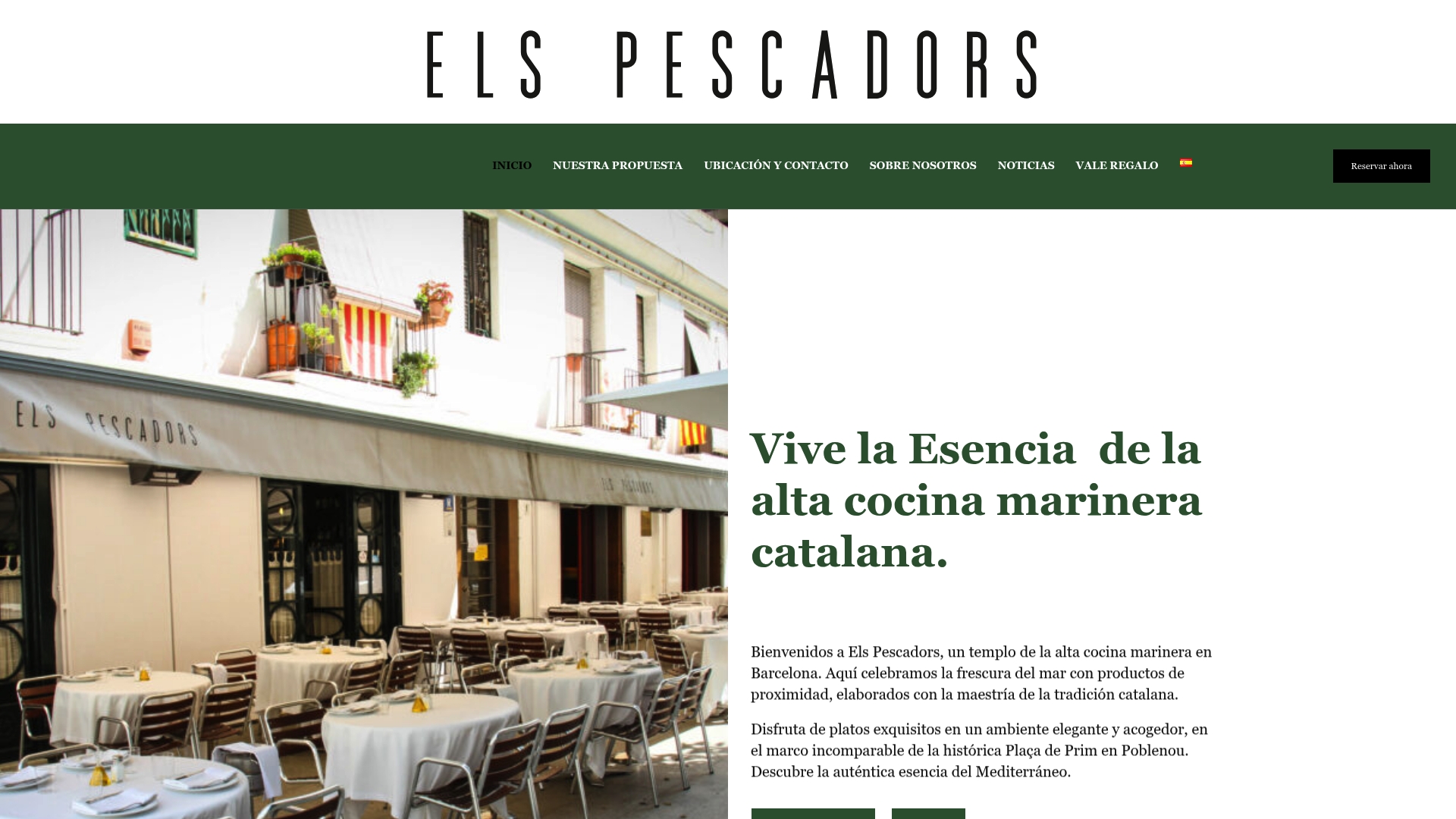
You can see everything on our main site and write your dietary notes into the reservation. If you have not booked a seafood dinner before, our step-by-step reservation guide walks through it.
FAQ
Is all fish halal?
Most scholars accept fish, but the details vary by school. Some rulings, such as Ayatollah Sistani’s, require scales and that the fish was caught alive or died in the net. Ask your own scholar about unusual species.
Is shellfish halal?
It depends on the school. Hanafi scholars generally do not permit prawns, mussels, oysters, lobster or crab, while Shafi’i and Hanbali scholars permit sea animals with few exceptions and Maliki scholars permit all except eel, according to the Islamic Foundation for Theology and Research.
Can I eat fish at a restaurant that also serves pork and alcohol?
Many Muslims do, provided the dish contains nothing prohibited and avoids contact with non-halal food, which is the test in the Codex guidelines. Some people hold a stricter standard, so decide according to your own.
What should I ask a Barcelona restaurant about a fish dish?
Ask whether it contains wine, beer or other alcohol, whether the sauce, stock or rice has pork, and whether the fish is fried or grilled on shared surfaces. Asking “¿Podría decirme si este plato lleva…?” is polite and clear.
Does “Muslim-friendly” mean halal-certified?
No. Muslim-friendly describes a restaurant that can answer your questions and adapt a dish, while certification is a formal audit. Barcelona’s city council stresses that intent and personal choice have a significant place in how halal is practiced.
Sources
- Fish – Question & Answer, official website of Ayatollah Sistani
- Seafood – Fiqh, Islamic Foundation for Theology and Research
- Halal Sea food as per Five Major Islamic Jurisprudences
- Halal Seafood, ISA Halal
- Muslim Dietary Restrictions, Yale Chaplain’s Office
- Crab: The Jurisprudence of Seafood, IslamOnline
- Food in Islam, Barcelona Religious Affairs Office
- La alimentación en el islam, Oficina de Asuntos Religiosos de Barcelona
- Halal Holidays in Spain
- How to politely request dietary restrictions in Spanish restaurants
- 14 EU allergens to check on takeout
- Seafood on the Tuscan coast