
A Michelin Star and the Bib Gourmand are different recognitions from the same guide: stars reward the pinnacle of cooking, while the Bib Gourmand highlights excellent value. Neither outranks the other because they measure different things. Both rely on the same inspector standards, so a Bib Gourmand listing is never a lesser version of a starred restaurant, just a different kind of reward.
TL;DR:
- A Bib Gourmand recognizes restaurants that deliver high-quality, satisfying food at a significantly lower price than starred venues, with specific thresholds that vary by city and year.
- Both awards are based on the same five criteria—ingredient quality, mastery, personality, value, and consistency—applied through anonymous, repeated inspections.
- Stars focus solely on cooking excellence on a scale of one to three, while Bib Gourmand is a binary recognition emphasizing value for money without a set scale.
- Starred restaurants are often more formal with longer booking lead times, whereas Bib Gourmand venues typically offer more relaxed meals for regular, budget-conscious visits.
- Both awards are prestigious and serve different purposes, with star ratings signaling culinary ambition and Bib Gourmand highlighting reliable, affordable quality.
Table of Contents
- 1. What a Michelin star actually means
- 2. What the Bib Gourmand recognizes and why it exists
- 3. Comparing stars and the Bib Gourmand side by side
- 4. How Michelin inspectors decide who gets which award
- 5. What each award means for booking, price, and expectations
- 6. How these standards show up in a working seafood kitchen
- 7. Both awards earn their place on the table
- 8. Dining at Els Pescadors: seasonal seafood done with the same care
- FAQ
- Sources
1. What a Michelin star actually means
A Michelin Star is a judgment on the cooking itself, nothing else. According to the Michelin Guide, stars are awarded for the quality of what lands on the plate, and that quality can show up in a modest noodle shop as easily as a grand dining room. Decor, service, and price tag get noted elsewhere in the Guide through separate symbols, but they never determine whether a kitchen earns a star.
The scale runs from one to three, and each level signals something different to a diner:
- One star: a restaurant worth a stop, where the cooking stands out for its quality and the chef’s technique is evident on the plate.
- Two stars: excellent cooking worth a detour, with a clear sense of a chef’s personal style coming through across the menu.
- Three stars: exceptional cuisine worth a special journey, the kind of meal that leaves a lasting impression rather than just a satisfying one.
That jump from “worth a stop” to “worth a special journey” is not a matter of fancier plating. One commentary on the top tier notes that a third star depends on the cooking creating something closer to an emotional, memorable experience rather than just technical polish, a distinction explored in a traveler’s guide to culinary experiences.
Every star, at every level, gets measured against the same five criteria inspectors apply across the entire Guide, as outlined in the Guide’s inspection process:
- The quality of the ingredients themselves.
- Mastery of flavor and cooking technique.
- The personality the chef brings to the cuisine.
- Value for money.
- Consistency, both across the menu and over repeat visits.
One of the Guide’s clearest signals is this: stars are awarded for cooking quality alone, which is why a simple regional restaurant can hold the same number of stars as an opulent one. That single standard is also why a star, once awarded, tends to be a reliable predictor of what a return visit will deliver. Inspectors revisit starred restaurants repeatedly, and a kitchen that slips on consistency risks losing what it earned.
2. What the Bib Gourmand recognizes and why it exists
The Bib Gourmand is Michelin’s answer to a simple problem: not every exceptional meal costs a fortune. Introduced in 1997, the award exists to flag restaurants serving genuinely good food at a price most diners can absorb without planning a special occasion around it, a point the Guide makes directly in its inspection process overview.
Unlike stars, the Bib Gourmand is not scaled. A restaurant either earns the distinction or it does not, and the deciding factor is whether the kitchen delivers skillful, satisfying cooking that punches above its price point. The same five criteria that apply to starred restaurants apply here too, with value for money carrying particular weight.
Price matters to this award in a very concrete way. Michelin historically leaned on a three-course, fixed-price benchmark, often cited as a benchmark price in many European cities as a working reference point for Bib Gourmand eligibility according to one analysis of the Bib Gourmand’s history. That figure is not a fixed rule stamped across every market: Michelin recalibrates the threshold locally each year to reflect the cost of living in each destination, as commentary on the award’s purpose explains, so the exact ceiling in Tokyo or Hong Kong looks nothing like the one applied in a mid-sized European city.
Three things worth remembering about the Bib Gourmand:
- It is a standalone mark of quality, not a lesser cousin of a star.
- The price ceiling shifts by city and year, so the number is a guide rather than a hard rule.
- It tends to flag the kind of restaurant you can return to often, not just visit once.
3. Comparing stars and the Bib Gourmand side by side
The clearest way to separate these two awards is by purpose. A star answers the question “how good is the cooking, full stop?” The Bib Gourmand answers a different question: “how good is the cooking relative to what it costs?” Both questions matter, but they point diners toward very different evenings out.
Format is the other obvious split. Stars run on a one-to-three scale that lets the Guide express degrees of excellence, while the Bib Gourmand is binary: a restaurant has it or it does not. That structural difference shapes what each award tells you before you even walk in. A star count gives you a sense of how far the cooking has been pushed. A Bib Gourmand tells you the meal will overdeliver for the price, whatever that price happens to be locally.
Price and venue type typically follow from there. Starred restaurants, especially at two and three stars, tend toward tasting menus, formal service, and prices that reflect the labor and ingredients behind an elaborate meal. Bib Gourmand restaurants lean toward three-course formats, relaxed service, and a bill that will not require a second thought.
None of this makes the Bib Gourmand a consolation prize. The Guide’s own framing of its symbols makes clear that a Bib Gourmand is a separate, prestigious recognition built around value, not a star that got downgraded. A restaurant can fail to earn a star and still be a poor match for Bib Gourmand status, or vice versa. Both are earned on their own terms.
A few practical pointers for deciding which to chase:
- Choose a starred restaurant for a celebration, an anniversary, or a meal you want to remember for years.
- Choose a Bib Gourmand restaurant for a regular night out where you want to eat well without overspending.
- Treat star count as a signal of ambition and scale, not a simple hierarchy of quality.
4. How Michelin inspectors decide who gets which award
Every Michelin distinction rests on the same foundation: trained inspectors eating anonymously, paying their own way, and returning often enough to be confident in what they are rating. According to the Guide’s own account of how its inspectors work, inspectors conduct many anonymous meals each year and lean on a collegial process when deciding which restaurants deserve recognition.
The process breaks down into a few consistent steps:
- An inspector visits a restaurant without identifying themselves and pays for the meal like any other guest.
- The same five criteria get applied: ingredient quality, mastery of flavor and technique, the chef’s personality on the plate, value for money, and consistency.
- Inspectors return multiple times over months or years to confirm the experience holds up, not just on a good night.
- For star consideration, findings go to a session where inspectors discuss the restaurant together, and a star typically requires something close to unanimous agreement.
- Bib Gourmand decisions follow a similarly collegial discussion, but the bar being measured is value rather than peak culinary achievement.
That unanimity requirement is part of why a star carries weight: it is not one person’s opinion but the product of repeated, independent visits converging on the same conclusion. The Guide also uses other symbols, forks and spoons among them, to flag comfort and service levels separately from the cooking itself, which is why a restaurant can be modest in setting and still carry a top culinary rating, as the Guide notes in its piece on what its symbols mean.
Pro Tip: When reading a Michelin entry, check the symbols for comfort and service separately from the star or Bib rating. They tell you what kind of room you’re walking into, not how good the food will be.
5. What each award means for booking, price, and expectations
Knowing the difference between a star and a Bib Gourmand only helps if it changes how you plan the evening. The two awards point toward different booking strategies, different budgets, and different kinds of meals.
Starred restaurants, particularly at two and three stars, often require reservations weeks or months ahead, especially for weekend evenings. Expect a tasting menu format with multiple courses, a longer time commitment at the table, and pricing that reflects the ambition of the kitchen. Bib Gourmand restaurants tend to be easier to book, sometimes even on short notice, and the typical format is a straightforward three-course meal rather than an extended tasting progression.
A few things to check before you book:
- Read the short Guide summary for the restaurant, which usually signals formality level and typical price range.
- Confirm whether the menu is fixed tasting courses or an a la carte format, since that changes both cost and time commitment.
- Match the occasion to the award: a quiet weeknight dinner suits a Bib Gourmand pace better than a six-course tasting menu.
Pro Tip: If you’re traveling and want to sample a region’s Michelin scene without committing a whole evening or a large budget, start with a Bib Gourmand listing before working up to a starred meal.
6. How these standards show up in a working seafood kitchen
The five criteria inspectors apply, ingredient quality, technique, personality, value, and consistency, are not abstract ideas reserved for Michelin sessions. They describe what any serious kitchen is trying to get right every service. At Els Pescadors, a seafood restaurant with a stated focus on daily fresh catch and seasonal, locally sourced ingredients lines up directly with the ingredient-quality standard that sits at the center of Michelin’s own framework.

Consistency matters just as much. A kitchen built around seasonal tasting menus, like this approach to seasonal tasting menus, has to deliver the same level of care whether a dish features fish or fresh langoustine depending on what the market brought in that morning. That is the same discipline inspectors look for when they return to a restaurant multiple times before reaching a verdict, and the same logic explored in a broader look at how Michelin-style criteria apply to Barcelona dining.
Catalan cooking’s emphasis on letting good ingredients speak for themselves, rather than burying them in technique for its own sake, also echoes the “chef’s personality” criterion, a theme covered in more detail in a piece on why Catalan cooking values simplicity. None of this amounts to a claim of Michelin recognition. It is simply a useful lens: the same questions that shape inspector visits are worth asking of any restaurant you are deciding whether to book.
7. Both awards earn their place on the table
Treating a Bib Gourmand as a backup plan for restaurants that couldn’t earn a star misses the point entirely. A star answers how far a kitchen has pushed its craft. A Bib Gourmand answers whether a meal delivers more than its price suggests it should. Both questions are worth asking, and the right answer depends entirely on the night you’re planning. Save the starred meal for the evening you want to remember. Save the Bib Gourmand pick for the dinner you want to repeat. Either way, check the current Guide entry before you book, since both lists get revisited every year.
— YellowRock
8. Dining at Els Pescadors: seasonal seafood done with the same care
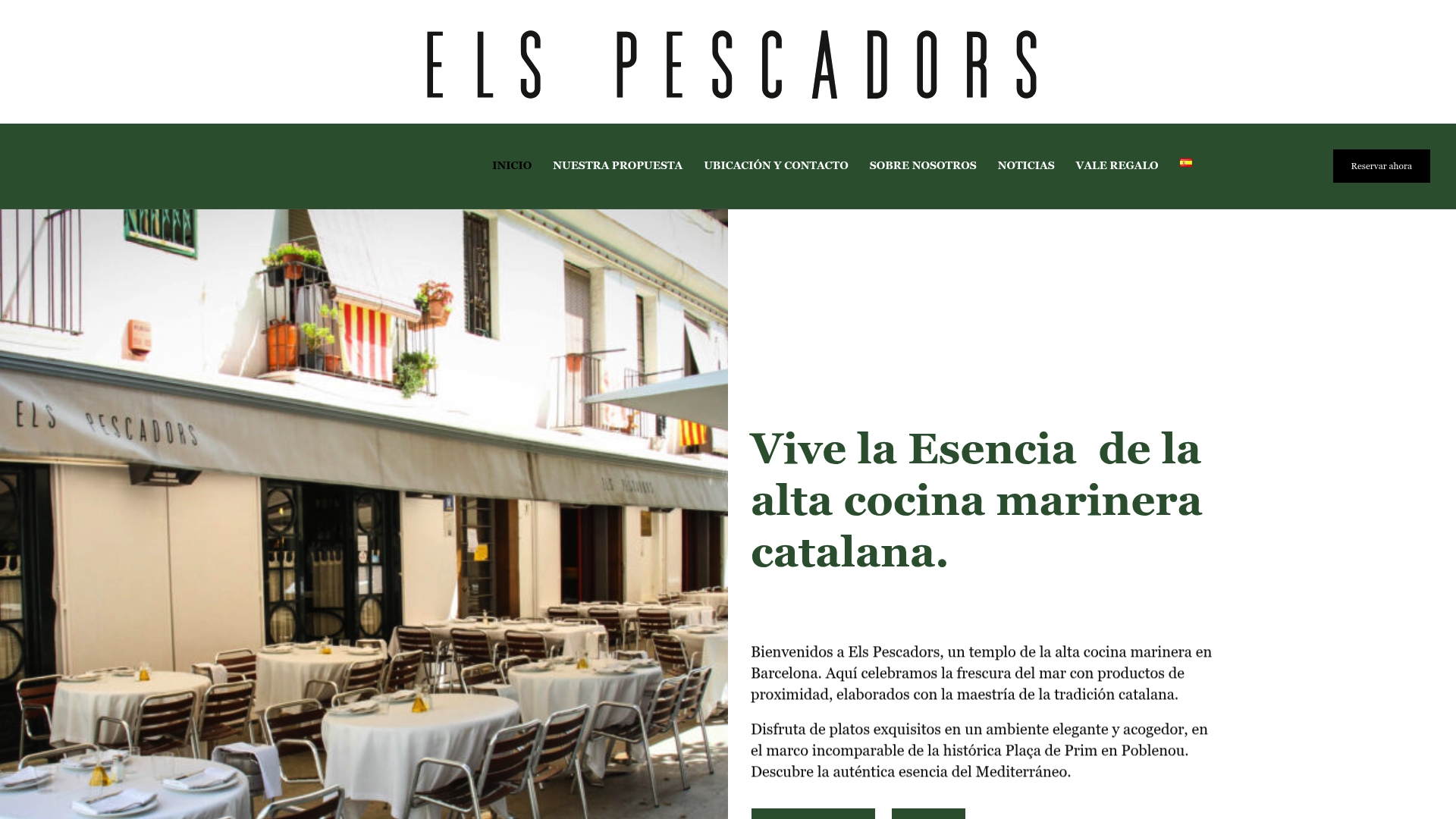
The standards behind Michelin’s recognitions, fresh ingredients, consistency, a clear point of view on the plate, are the same standards worth looking for in any restaurant you choose, including ours. The menu is built around daily fresh catch and seasonal, locally sourced seafood, served in a historic setting.
For diners who want to see that approach in action, two options stand out:
- The Menú Degustación offers a multi-course tasting progression built around what the sea brought in that week.
- The Menú de Temporada runs at €39 per person and shifts with the season rather than staying fixed year-round.
Both menus reflect the same commitment to authentic Catalan maritime cooking and sustainable sourcing that defines the restaurant’s approach, whether you’re booking a quiet dinner for two or a larger gathering. Check availability and reserve a table through the restaurant’s booking page to plan your visit.
FAQ
Is a Michelin Bib the same as a Michelin star?
No, they are separate recognitions. A Michelin star rewards the pinnacle of cooking on a one-to-three scale, while the Bib Gourmand flags excellent food at a moderate price and is awarded on a binary basis rather than a scale.
Is Bib Gourmand better than Michelin selected?
They serve different purposes rather than ranking against each other. A Bib Gourmand restaurant is recognized specifically for value for money, while a Michelin-starred restaurant is recognized purely for the excellence of its cooking, regardless of price.
Is there something higher than a Michelin star?
Three stars is the top tier of the standard Michelin star scale, reserved for cooking the Guide considers worth a special journey. The Guide also awards separate symbols, including the green star for sustainability, but these sit alongside stars rather than above them on the same scale, as outlined in the Michelin Guide’s history.
Is Bib Gourmand a big deal?
Yes, within its own category. It signals that inspectors found cooking that clearly overdelivers for its price, using the same rigorous five-criteria standard applied to starred restaurants, just with value weighted differently.