Choose plated service when you want a formal, tightly timed meal where every guest gets the same composed dish. Choose family style when you want a warm, talkative table where platters are passed and shared. Neither is better in the abstract. The right one depends on your guest list, your table, your schedule and the mood you want in the room. This guide walks through each point so you can decide before you book.
TL;DR
- Plated: each guest receives an individual dish at the table, with controlled portions, a clear timeline and a formal feel.
- Family style: platters arrive at the center of the table and guests pass and serve themselves, which feels relaxed and communal.
- Practical limits: plated needs a final headcount and a meal choice per guest. Family style needs table space and a seating plan that works for sharing.
- Cost: the price depends less on the label than on the menu, staffing, equipment and service hours, so ask for an itemized quote for both.
- Seafood and rice: shared platters suit seafood and rice dishes particularly well, and a plated course can still open or close the meal.
Table of Contents
- What each service style actually means
- How the guest experience differs
- Side-by-side comparison
- Table size, layout and the space problem
- Dietary needs and allergies
- What drives the price
- How to choose: five questions
- Choosing in Barcelona: why shared food comes naturally
- A simple decision guide
- Our perspective
- Plan your group meal with us
- FAQ
- Sources
What each service style actually means
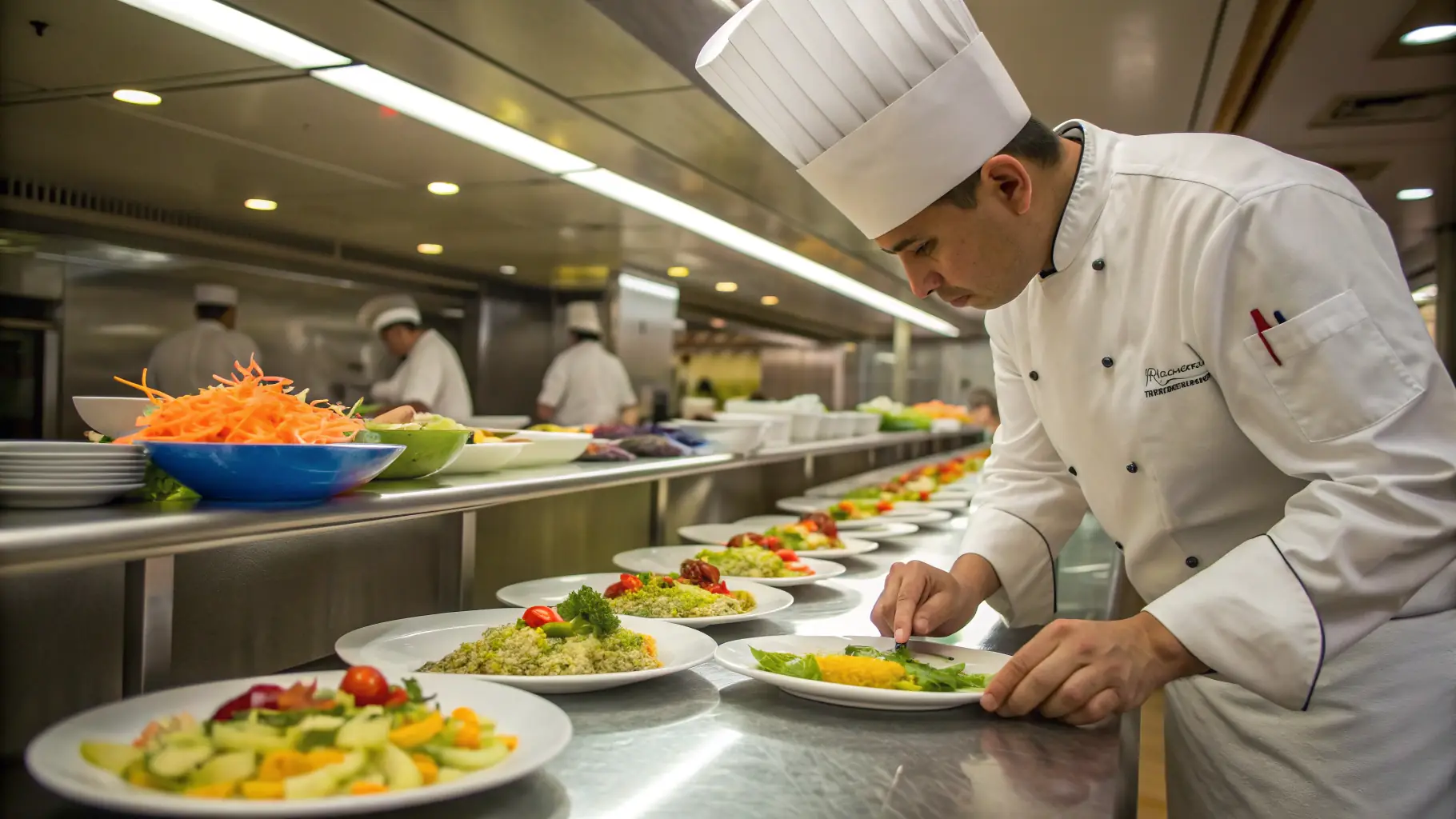
In plated service, the kitchen finishes every plate and servers bring it to the seated guest. Guests normally choose from a short list of main courses in advance, and each course arrives at roughly the same moment for the whole table. You get consistency: the same portion, the same temperature, the same presentation for everyone.
In family-style service, servers bring large plates or platters to the table and guests help themselves. Restaurantware describes family-style dining as a hybrid between table service and buffet service: the staff still serve the table, but the serving of individual portions is left to the guests. Dishes can be refilled when they run low.
There is a subtle point that event planners in Spain draw out. Xepep, a Spanish hospitality source, separates plating from table service: plating (emplatar) is putting the food on each diner’s plate, while table service describes how that plate reaches the diner. So the question “family style or plated?” is really two decisions: how the food is portioned, and how it travels to the table. Most hosts only need to settle the first one, but it helps to know the vocabulary when you talk to a restaurant.
How the guest experience differs
Plated: structure and ceremony
Plated meals feel orderly. Courses arrive together, guests stay seated, and the host can plan the toasts and speeches around the pace of service. That predictability is what makes plated the traditional choice for formal dinners, company galas and milestone celebrations. The food looks the way the chef intended, and each guest has a private moment with their plate.
The flip side is that guests are tied to the planned pace. If a speech runs long, the kitchen and the dining room need to adjust. A capable service team makes this invisible; a thin one makes it obvious.
Family style: conversation and choice
Shared platters give guests something to do together. Passing a dish, asking what is in it, and handing over the last piece to a neighbor all break the ice. Libbey Foodservice notes that shared-plate dining lets guests sample more dishes and control their own portion sizes while creating a communal atmosphere. That is a real advantage for mixed groups, where one person wants more fish and another wants just a taste.
The experience works best when the guests already know each other or are happy to get to know each other. A table of strangers who barely speak may find the passing awkward at first, though a good dish in the middle usually fixes that within minutes.
Side-by-side comparison
| Criterion | Plated | Family style |
|---|---|---|
| Atmosphere | Formal, structured | Relaxed, communal |
| Portion control | Exact, one portion per guest | Guests decide, with more food on the table |
| Presentation | Composed by the kitchen for each guest | Generous platters, shared presentation |
| Timing | Predictable, course by course | Flexible, guests set the pace within each course |
| Table space | Modest | Needs room for platters plus glasses and centerpieces |
| Staffing | More hands in the dining room for plating and delivery | Fewer plates carried, but more refilling and clearing |
| Advance information | Headcount and a meal choice per guest | Headcount and dietary needs |
| Best for | Galas, formal celebrations, tight schedules | Team dinners, family reunions, long lunches |
Table size, layout and the space problem
Family style is the format most often spoiled by the table, not the food. Big platters compete with glasses, bread baskets, candles and flowers. If you are planning a shared meal, think about these practical points:
- Table shape. Round tables of about eight to ten guests work well because everyone can reach the center and see each other. Very long, narrow tables make passing slow and leave the far ends out of the conversation.
- Centerpieces. Keep them low or leave them out. A platter of seafood is the centerpiece.
- Tableware. Guests need enough plates for tasting several dishes, plus serving spoons and tongs for every platter. Ask whether the restaurant changes plates between courses.
- Seating plan. Mixing people who know each other with those who do not keeps the sharing natural.
If you want a layout built for exactly this, our round table planner for groups explains how to book and arrange one. For a plated dinner, the table plan matters less for sharing and more for sightlines to the speaker and ease of service between chairs.
On board a boat the same logic applies in miniature: limited surface, many dishes, a crew that has to keep things moving. A look at family-style meal planning at sea shows how space and service trade-offs shape the way shared meals are organized, and the same thinking carries over to a restaurant table.
Dietary needs and allergies
Plated service has a natural advantage here. Because each dish is prepared individually, a vegetarian, gluten-free or allergy-conscious plate can be made and delivered discreetly, without the guest having to explain themselves to the table.
Family style can handle dietary needs well too, but it takes planning. Shared platters mean shared serving utensils, so cross-contact is a concern for guests with severe allergies. Two ways to manage it: ask the restaurant to prepare a separate small platter or individual plate for anyone with an allergy, and tell the team about every restriction when you book, not on the day. If a guest has a medical allergy such as shellfish or gluten intolerance, confirm the arrangements directly with the restaurant’s kitchen before the event. Seafood menus in particular should be discussed course by course, since shellfish, fish and sauces can all contain allergens.
What drives the price
Hosts often assume that one style is cheaper than the other. In practice, the label tells you little. What changes the bill is:
- The menu itself. A shared platter of premium shellfish costs more than a plated chicken course, and the reverse can be true elsewhere.
- Quantity of food. Family style usually puts more food on the table so that platters never look empty. Plated gives exact portions and tends to produce less leftover.
- Staffing. Plated needs enough servers to deliver and clear every plate at the same time. Family style needs fewer plate-carriers but still needs people to refill and clear.
- Service hours and equipment. The longer the meal and the more tableware needed, the higher the cost.
- Drinks and taxes. Always ask whether quotes include them.
The practical advice is to ask for both options priced on the same menu with the same wine pairing, so that the only variable is the service style. That comparison tells you more than any average figure from a wedding blog, because it is your menu, your headcount and your venue.
For reference, our own Menú de Temporada is published at €39 per person, a useful anchor when you are weighing a seasonal set menu against a larger celebration. For groups, prices depend on the menu you build, so we quote them with you directly.
How to choose: five questions
1. How formal is the occasion? A board dinner, an anniversary or a client entertainment evening leans plated. A team celebration, a family lunch or a farewell leans family style.

2. How tight is your schedule? If you have a flight, a keynote or a fixed end time, plated gives the host more control over the timeline. If the meal is the event, family style lets it breathe.
3. Who is at the table? Groups that know each other thrive on sharing. Mixed groups of clients and colleagues often prefer the neutrality of an individual plate, at least for the main course.
4. What are you serving? Some food is made to be shared: rice dishes, whole fish, seafood platters, croquettes. Other dishes depend on precise plating: a delicate tartare, a dessert with several components. Let the menu guide the format.
5. How certain is your headcount? Plated service needs a final number and a choice per guest. If you cannot get either, family style is more forgiving because the kitchen cooks to a number rather than to individual selections.
There is also a middle path: many restaurants, including in Barcelona, will plate a starter, bring mains to the center of the table and finish with individual desserts. Hybrid menus often feel the most natural, because they match each course to the way people actually like to eat it.
Choosing in Barcelona: why shared food comes naturally
Barcelona dining already leans communal. Tapas, shared starters and a rice dish in the middle of the table are everyday habits, not special-occasion gestures. Catalan maritime cuisine is particularly suited to this: fish, shellfish and rice are generous, aromatic and meant to be served at the table and enjoyed over time.
That does not make plated the wrong choice here. A seated, plated dinner remains the standard for formal celebrations and business occasions in Spain, and a clean plating of a single fish course can be the highlight of an evening. If you want inspiration on how presentation lifts a plate, these vibrant food presentation ideas show how color and arrangement change how a dish lands, which is exactly what plated service is built to deliver.
For Barcelona organizers, the useful questions to ask any restaurant are about logistics rather than labels:
- How many guests can sit comfortably at one table in the shared format?
- Can the kitchen finish rice dishes in time for the whole group to eat them hot?
- Are staff assigned per table, and who handles refills?
- What is the policy for last-minute changes to the headcount or choices?
If you are organizing a company event, our planner’s checklist for corporate dining and the step-by-step guide to booking group meals cover the questions in order. For menu ideas, look at our group seafood dining ideas and the group dining menu examples for upscale Barcelona events.
A simple decision guide
| If your event is… | Lean toward |
|---|---|
| A formal dinner with speeches and a fixed schedule | Plated |
| A team lunch where conversation is the goal | Family style |
| A mixed group of clients and colleagues | Plated mains, shared starters |
| A celebration with a rice or seafood centerpiece | Family style, with plated dessert |
| A group with several severe allergies | Plated, or shared with separate allergy plates |
| An uncertain final headcount | Family style |
Our perspective
We cook Catalan maritime cuisine, and that shapes how we think about this question. Fish, shellfish and rice are generous foods. They carry aromas, they change as they cool, and they invite people to talk about what is on the table. For many groups, a shared dish is the moment the meal comes alive.
But we also know that a well-composed plate is a form of respect for the guest. When a kitchen controls the balance, temperature and timing of a dish, every person at the table gets the version the chef intended. That is why we do not treat the two styles as rivals. We treat them as tools.
What we encourage hosts to do is start from the product and the people, not from the label. Tell us how many guests you expect, how well they know each other and what the evening is for. We will propose a menu and a service rhythm that fits, whether that is a seasonal menu, a tasting menu or a group menu built around the daily catch.
Our seasonal, locally sourced approach means the best format often depends on what arrives from the sea that week. A conversation before the event beats any rule of thumb.
YellowRock
Plan your group meal with us
If you are comparing formats for a group in Barcelona, we can help you shape the menu and the service around your guests. Our Menú para Grupos is built for celebrations and company dinners at our restaurant in Plaça de Prim, in the Poblenou district. Tell us your numbers, your timing and the atmosphere you want, and we will suggest what suits.
For a smaller table or a couple’s evening, the Menú Degustación or the Menú de Temporada gives you a paced, plated-style experience built around the season’s catch. You can also read about the benefits of Catalan group dining before you decide.
FAQ
Is family style more casual than plated?
Usually, yes. Shared platters and self-service create a relaxed, conversational mood, while plated service feels more ceremonial. That said, family style can still be elegant when the food, tableware and service are of high quality. Formality comes from the whole experience, not only the serving method.
Which is better for a large group?
It depends on the room and the schedule. Plated service is a strong choice for large groups with a tight timeline because every guest is served in a controlled sequence. Family style works well in groups seated at round tables of eight to ten, where each table can share its own platters.
Can I mix family style and plated in one meal?
Yes, and many hosts do. A common pattern is shared starters at the table, an individually plated main course and a plated or shared dessert. Mixing lets you use each style where it works best and keeps the meal varied.
How do I handle allergies with shared platters?
Tell the restaurant about every allergy and intolerance when you book, and ask for individual plates or separate platters for the affected guests. Shared serving utensils can transfer ingredients between dishes, so for severe allergies confirm the kitchen’s process directly before the event.
What should I ask the restaurant before choosing?
Ask about the maximum guests per table, how many servers are assigned, how rice and fish dishes are timed so they arrive hot, and what the deadline is for the final headcount and any menu choices. Ask for an itemized price for each format on the same menu.
Sources
- What Is Family Style Dining, Restaurantware
- Benefits & Best Dinnerware for Family-Style Dining, Libbey Foodservice
- Plating and table service at events, Xepep