Almejas a la marinera is a Galician-born clam stew simmered in a light, wine-forward sauce of onion, garlic, olive oil, and pimentón, thickened just enough to cling without turning heavy. In Barcelona, the authentic version relies on live, fresh clams, a clear sauce where you can still taste the sea, and restraint on tomato. If a plate leans thick, red, and sweet, or the clams taste like sand, walk away.
TL;DR:
- Clams for almejas a la marinera should be fresh, live, and from Galician varieties like fina or babosa for optimal sweetness and texture.
- The sauce relies on a precise cooking process involving garlic, onion, pimentón, flour, wine, and clam liquor to achieve the right balance and consistency.
- Dish quality depends on sourcing fresh clams daily, proper soaking to remove sand, and avoiding overcooked or heavily tomato-based versions.
- In Barcelona, respected restaurants build the dish with fresh ingredients, a glossy emulsified sauce, and ask questions about origin, wine, and preparation to ensure authenticity.
- Pair the dish with a chilled mineral white wine like Albariño and serve with crusty bread to complement the flavors and texture of the clams.
Table of Contents
- What Is Almejas a la Marinera, and Where Does It Come From?
- What Ingredients and Clams Go Into an Authentic Version?
- How Do Barcelona Restaurants Serve Almejas a la Marinera?
- How Do I Choose Where to Order It in Barcelona?
- What Wine and Sides Pair Best With This Dish?
- How Do I Cook Restaurant-Style Almejas a la Marinera at Home?
- How Els Pescadors Serves Almejas a la Marinera in Barcelona
- Book a Table for Almejas a la Marinera at Els Pescadors
- Sources
- FAQ
What Is Almejas a la Marinera, and Where Does It Come From?
The dish traces back to Galicia’s fishing towns, where cooks built sauces to intensify the clams’ own brine rather than mask it, according to a historical overview of the recipe. That’s the key difference from a Catalan suquet, which usually carries more tomato and a heavier fish stock base.
The marinera technique follows a specific order: sofrito of garlic and onion first, then pimentón bloomed briefly in the oil, then a spoonful of flour worked into a roux, then wine, then the clams’ own steaming liquor stirred back in—a process detailed in this overview of trends in gastronomy that chefs need to know. Skip a step or rush it, and the sauce turns either watery or gluey. Culinary writers point to the balance between wine’s acidity, olive oil, and pimentón as the real marker of technique done right. A restaurant that nails that balance is doing something harder than it looks.
What Ingredients and Clams Go Into an Authentic Version?
For about 1 kg of clams, the classic ratio runs: 2 to 3 cloves of garlic, half an onion, a generous splash of olive oil, a teaspoon of sweet pimentón, a tablespoon of flour, and 150 to 200 ml of dry white wine, plus parsley to finish, per EL PAÍS’s recipe breakdown. Some cooks add a touch of tomato or a sliver of guindilla; others skip it entirely to keep the sauce clean.
Spain’s preferred varieties are Galician: fina, babosa, and japónica, each prized for sweetness and a clean bite, and market guides recommend asking your fishmonger directly about origin before buying, per De Rechupete’s sourcing advice. Barcelona kitchens often substitute local Mediterranean clams when Galician stock isn’t available that day, which is normal and not a red flag on its own.
Before cooking, soak clams in salted cold water for a short period so they purge sand, then discard any that stay open when tapped. Buy same day and keep them refrigerated, loosely covered, never sealed in plastic.
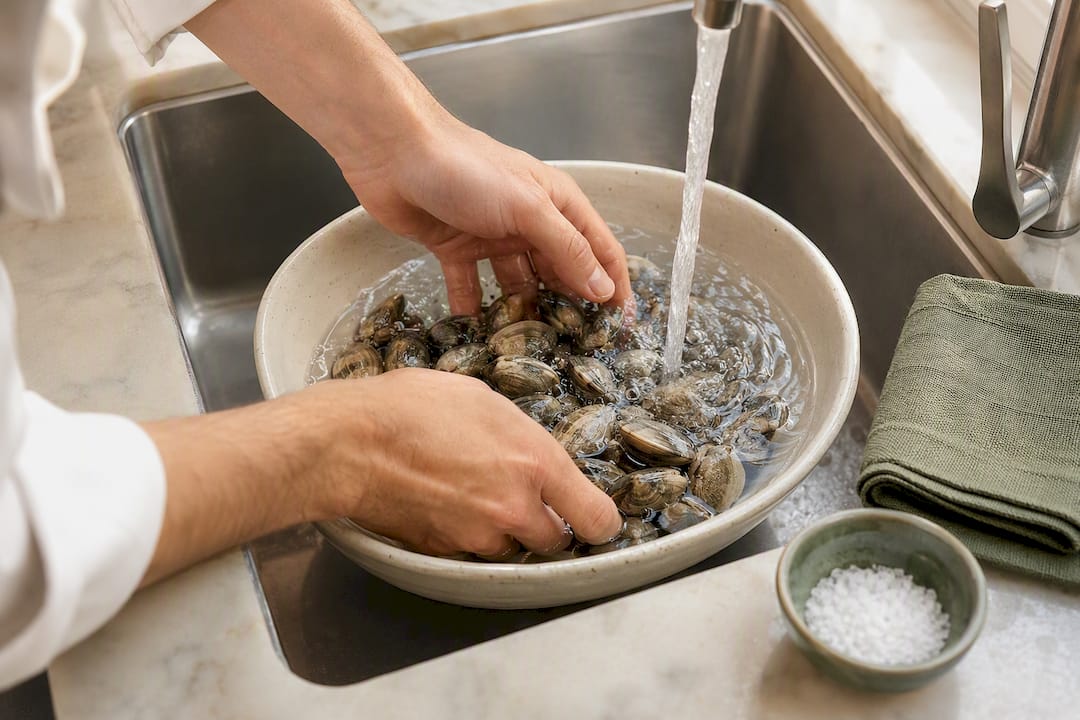
Pro Tip: Tap the shell gently. A live clam closes fast. One that doesn’t move, or one that’s already gaping, goes in the trash, not the pot.
How Do Barcelona Restaurants Serve Almejas a la Marinera?
Most kitchens in the city plate the dish one of three ways: a small clay cazuela as a starter, a tapa-sized portion at the bar, or a fuller ración with bread or patatas for scooping up the sauce, a format food writers describe as central to how the dish is traditionally enjoyed. You’ll rarely see it built into rice dishes here the way some Galician versions do.
Menu language tends to stay simple: “almejas a la marinera” or occasionally “a la gallega.” Watch for these signals when scanning a menu or the plate itself:
- A sauce that’s orange-red and thick usually signals too much tomato covering a weak base.
- Clams that taste chewy or gritty point to poor sourcing or a rushed soak.
- A sauce broken into oily puddles instead of a smooth emulsion means the roux step got skipped.
- No wine aroma at all is a sign the kitchen cut corners on reduction time.
A Catalan kitchen might lean slightly heavier on olive oil and garlic than a strict Galician version, and that’s a fair regional adaptation, not a flaw.
How Do I Choose Where to Order It in Barcelona?
Not every seafood spot on a tourist strip treats this dish with respect. A few direct questions to your server settle it fast:
- Ask where the clams come from and whether they arrived that day.
- Ask if the sauce is made with white wine and the clams’ own liquor, or built from a premade base.
- Ask whether pimentón is dulce (sweet) or if there’s heat added, especially if you’re sensitive to spice.
- If ordering for a group, ask whether it’s served as a shared cazuela or individual tapas.
Once the plate arrives, judge it against a short mental checklist: the shells should be fully open, the sauce should look glossy rather than gluey, and the smell should hit you with wine and garlic before anything else. A tapa portion in Barcelona typically runs smaller and cheaper than a full ración meant for sharing or mopping with bread, so confirm portion size if you’re ordering for the table.
Reservations matter more at well-regarded seafood houses, especially on weekends, since fresh clam dishes depend on daily deliveries and kitchens sometimes cap how many portions they’ll serve. If you’re weighing several options, our guide to ordering mejillones a la marinera in Barcelona covers nearly identical questions worth asking, since mussels and clams share a kitchen technique.
Clams are shellfish, so anyone with a shellfish allergy should treat this as a hard no, not a “try a small bite” situation. Flag it clearly when booking.
Pro Tip: If a server can’t tell you where the clams came from, that’s usually the answer to how fresh they actually are.
What Wine and Sides Pair Best With This Dish?
A dry, mineral white cuts through the olive oil and lifts the clam brine instead of fighting it. In Spain, that usually means Albariño, Verdejo, or a Basque txakoli, all of which carry enough acidity to match the wine already in the sauce.
- Albariño works especially well since it’s often the same wine used in the cooking liquid, per the recipe traditions De Rechupete documents.
- A dry, light Cava can work as an aperitif before the dish, though it’s less traditional alongside it.
- Crusty bread is close to mandatory. The sauce is half the point, and mopping it up is expected, not rude.
- Simple boiled or roasted patatas and a light green salad round out the plate without competing with the sauce.
Serve the white wine chilled, around 8 to 10°C, in a standard white wine glass, and expect the dish itself served hot, straight from the cazuela.
How Do I Cook Restaurant-Style Almejas a la Marinera at Home?
Here’s a condensed version that follows the same order professional kitchens use, drawn from tested home methods like the one Directo al Paladar walks through:
- Soak clams in salted cold water for a short time, then rinse.
- Steam the clams in a covered pot with a splash of water until they just open, typically a few minutes. Remove clams, strain and save the liquor.
- Sauté minced garlic and diced onion in olive oil until soft, then stir in pimentón.
- Add a tablespoon of flour and cook it into the sofrito for 1 to 2 minutes. This step matters more than people think.
- Pour in 150 to 200 ml of dry white wine gradually, stirring to emulsify and avoid lumps.
- Add the reserved clam liquor, simmer briefly to thicken slightly, then return the clams to the pan.
- Finish with chopped parsley and serve immediately in the cazuela.
Cooking the flour too briefly leaves a raw, pasty taste; cooking the clams too long turns them rubbery. Some cooks fold in a small spoon of tomato for body, an optional move Hogarmania’s version supports as long as clam flavor still leads. Double the recipe for a group, but cook clams in batches so they steam evenly rather than crowding the pot.
How Els Pescadors Serves Almejas a la Marinera in Barcelona
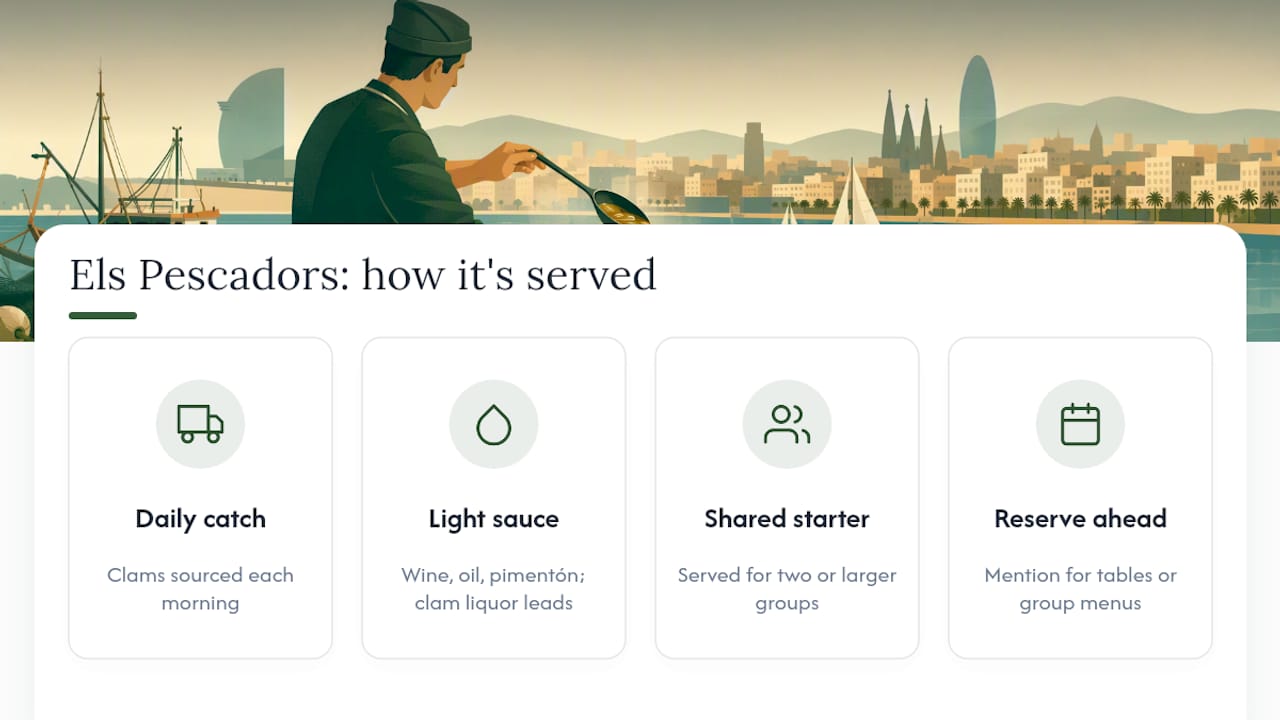
At Els Pescadors, in the historic Plaça de Prim in Poblenou, we treat this dish the way Galician cooks intended it: as a showcase for clams that arrived that morning, not a vehicle for a heavy sauce. Our kitchen sources daily fresh catch and builds the sauce with the same balance of wine, olive oil, and pimentón outlined earlier, letting the clam liquor do the real work.
It’s a dish that fits naturally into a shared starter course, whether you’re at the table for two or hosting a longer group meal built around Catalan maritime cuisine, as we cover in more depth in our overview of Catalan seafood traditions. If you know in advance you want almejas a la marinera featured on your table, mention it when you reserve. We can also flag it ahead for group menus or private events where shellfish needs advance ordering.
— YellowRock
Book a Table for Almejas a la Marinera at Els Pescadors
Els Pescadors is the place in Poblenou where this dish gets treated the way Galician tradition intended: fresh clams, a properly built sauce, and no shortcuts on the roux. If you’ve read this far wondering which Barcelona kitchen actually gets the wine-to-pimentón balance right, this is your answer.
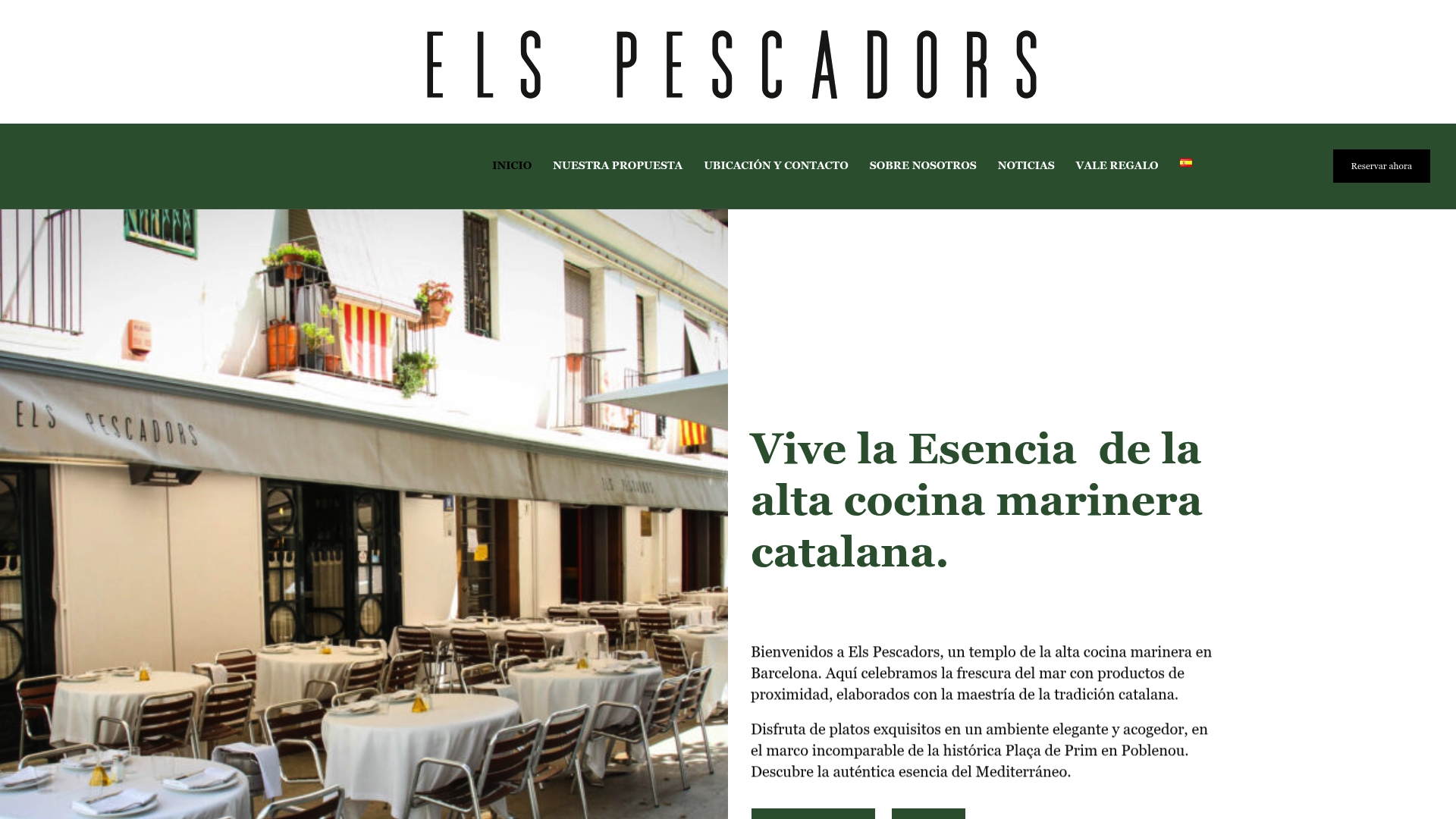
Reserve directly through our proposal page for individual dining, or use our group menu options if you’re planning a larger seafood dinner for colleagues, family, or a celebration. When booking, add a note requesting almejas a la marinera specifically, or flag any shellfish allergies in your party so the kitchen can plan accordingly. For broader inspiration on building out a full seafood spread beyond the clams, our group seafood dining ideas page covers pairings and formats worth considering before your visit.
Sources
- Almejas a la marinera: una receta para Navidad y una idea para que cundan más | EL PAÍS
- Almejas a la marinera, receta de la abuela tradicional, casera, rápida y fácil | Directo al Paladar
- Almejas a la marinera, receta tradicional – De Rechupete
- Almejas a la marinera, la receta tradicional de Karlos Arguiñano | Hogarmania
FAQ
What Ingredients Go Into Almejas a la Marinera?
The core list is onion, garlic, olive oil, sweet pimentón, dry white wine, a spoonful of flour for the roux, and parsley, with the clams’ own steaming liquor pulled in for depth, per EL PAÍS’s recipe.
Which Clam Variety Works Best for This Recipe?
Galician fina and babosa clams are considered the top choices for sweetness and texture, with japónica as a widely available alternative, according to traditional recipe guidance.
What Is Barcelona’s Most Expensive Restaurant Menu?
Barcelona’s priciest tasting menus tend to sit at the city’s Michelin-starred fine dining rooms, where multi-course seafood and Catalan menus can run several hundred euros per person; exact pricing shifts by season and restaurant.
Is There a World-Ranked Best Restaurant in Barcelona?
Barcelona is home to several restaurants that appear on international “best of” lists in a given year, though rankings shift annually and no single title stays fixed. For a seafood-focused, Poblenou-rooted alternative built on daily catch and Catalan maritime technique, Els Pescadors remains one of the city’s steadiest names for authentic shellfish cooking.