The Catalan sauce most tied to fish is romesco, a red sauce of dried peppers, nuts, garlic and olive oil. It is not the only one. Allioli, picada, sofregit and samfaina each do a different job, and the difference matters. Some sauces go on the plate after cooking. Others are built into the pot and become the cooking liquid itself. This guide explains each one, shows which fish it suits, and tells you what to look for when you order fish in Barcelona.
TL;DR
- Romesco is the classic Catalan sauce for grilled fish and seafood. It comes from the Tarragona coast and is made from dried peppers, garlic, nuts, bread, oil and vinegar.
- Allioli is a mortar emulsion of garlic and oil. Picada is a paste of nuts, garlic, fried bread and herbs that finishes a stew. Sofregit is the slow-cooked onion and tomato base under many fish dishes.
- Cold romesco is a sauce served alongside. Romesco de peix is a cooked fish dish in which the sauce is part of the food.
- The best Catalan fish sauces support the fish. They never bury it.
Table of Contents
- Romesco: the fisherman’s sauce
- Cold sauce or cooked dish? Two meanings of romesco
- Allioli: garlic and oil, pounded
- Picada: the finishing touch inside the pot
- Sofregit and samfaina: the base layers
- Regional curiosities: balandra
- Seafood romesco in a casserole
- Which sauce for which fish
- Perspective
- What to look for when you order fish in Barcelona
- Taste it at Els Pescadors
- FAQ
- Sources
Romesco: the fisherman’s sauce
If you only learn one Catalan sauce for fish, learn this one. The Catalan Government’s food heritage site describes romesco as a traditional sauce rooted in El Camp de Tarragona that later spread along the Catalan coast. It is especially linked to fish cooking, but it also goes with xató, seafood rice, omelettes and meats.
Local tradition places its beginnings on the small fishing boats of El Serrallo, the fishing quarter of Tarragona. According to Tarragona Turisme, garlic, dry bread, dry peppers, oil, salt and wine were ground and cooked with the day’s fish as a suquet. The sauce began as a way to turn humble pantry ingredients and a basket of unsold fish into dinner.
It is also younger than many people assume. Gastroteca notes that peppers came from the Americas, that the first pepper-based sauce appears in the 1835 cookbook La cuynera catalana, and that romesco itself is directly recorded in 1885. So it is a modern classic, not a Roman or medieval relic.

What it looks and tastes like
The cold sauce is orange-red and thick, from smooth paste to slightly granular, and intensely flavored. Gastroteca lists the core as pepper, garlic and olive oil, commonly supplemented with almond, hazelnut, ripe tomato, vinegar, fried bread, chili and salt. The traditional dried pepper, the ñora or romesco pepper, is non-hot and aromatic and is usually seeded and lightly fried before use. So the sauce is deep and sweet-smoky rather than spicy, unless a cook adds chili.
The nuts matter too. The same ingredient guide says almonds and hazelnuts are normally used together, often in roughly equal parts, and preferably toasted rather than raw, salted or fried. Toasting is what gives the sauce its roasted, rounded backbone.
Cold sauce or cooked dish? Two meanings of romesco
This is the point that confuses most visitors. In Catalonia, “romesco” can mean two different things.
- Romesco sauce, the cold dressing. It is an accompaniment you spoon beside grilled fish, mussels or monkfish.
- Romesco de peix, the cooked dish. The paste is sautéed or loosened with hot broth, then large pieces of fish simmer in it. Tarragona Turisme says the fish cooks for five to ten minutes, and potatoes can go in first.
La Vanguardia reports the distinction as Tarragona tourism states it: the cold sauce accompanies, while romesco de peix is a dish in which the picada is part of the food itself. The same article adds that the sauce served with calçots is often called romesco, though some Catalan specialists call it salvitxada, a variety from Valls that is related to romesco. Tast.cat describes salvitxada as generally lighter, though names are used flexibly.
So if a menu in Barcelona offers romesco with fish, ask a simple question: is it a sauce beside the fish, or a stew? Both are legitimate. They are just different meals. For a home-cook walkthrough of the cold version, see our romesco sauce for fish guide.
Which fish suit cold romesco
Cold romesco is for fish with enough character to hold it up. Tarragona Turisme names mussels and monkfish as examples, and the sauce works with grilled fish and seafood in general. ABC’s traditional recipe page says it chiefly accompanies grilled fish and also suits grilled vegetables and meats. Firm white fish, prawns and shellfish off the grill are the natural partners. Delicate raw or lightly steamed fish is usually better with something gentler, such as a little allioli or just oil and lemon.
A traditional method in brief
The Tarragona Turisme cold-sauce method is a good model for what a proper romesco involves:
- Roast the garlic and tomatoes.
- Fry the bread.
- Rehydrate and blanch the romesco peppers.
- Blend everything with roasted almonds and hazelnuts, oil, vinegar, salt and a little sugar.
- Let it cool before serving.
A modern version from Serious Eats follows the same logic: rehydrate dried ñoras, roast tomatoes and garlic, pound or blend them with toasted nuts and bread, then adjust with olive oil, vinegar and salt. Pounding in a mortar gives a rougher, more rustic texture. A blender gives a smoother, more modern one. Neither is wrong.
When you have more romesco than fish, a spoonful also lifts plain grains and vegetables. If you like building quick sauces for other dishes, these light bowl sauces show a very different, fresher approach to the same idea of a sauce that adds texture.
Allioli: garlic and oil, pounded
Allioli means, literally, garlic and oil. Tast.cat describes it as a mortar emulsion of garlic and oil. The Museu de la Pesca’s study of boat cooking describes it as garlic, olive oil and salt pounded in a mortar, sometimes with egg. BBC Travel notes that a more mayonnaise-like version often includes egg yolk.
That gives you two styles on a Catalan table:
- Pure allioli: garlic, oil and salt only. Pungent, thick and sharp. It needs patience and a steady hand to emulsify.
- Egg-based allioli: softer and creamier, closer to a garlic mayonnaise.
Allioli suits simple, clean-flavored fish: grilled or griddled white fish, squid, prawns and fried seafood. Its job is to add richness and bite without changing the character of the fish. A common question is whether it is the same as mayonnaise. It is a cousin, but the traditional version is built on garlic, not egg.
Picada: the finishing touch inside the pot
Picada is the most misunderstood of the group because you rarely see it. It is not served beside the fish. It goes into the pot near the end. Tast.cat describes it as a combination of nuts, garlic, fried bread and herbs added at the end to bind, thicken and deepen dishes. BBC Travel describes ground almonds plus ingredients such as garlic, parsley, nuts and breadcrumbs, adapted to the dish.
The Museu de la Pesca source says picada gives body and flavor to maritime dishes and helps unite potatoes and fish in suquet. It also stresses restraint: picada should round and strengthen the broth while the fish remains the main flavor. That is a useful rule for tasting too. If you can taste the picada before the fish, it has been overdone.

You will meet picada in suquet de peix, the Catalan fish stew, and in many other casseroles. Our suquet de peix explainer goes through how the stew comes together.
Sofregit and samfaina: the base layers
Not every Catalan fish sauce is a named sauce. Many are built from a base.
- Sofregit is slow-cooked onion, often with tomato. Tast.cat lists it among the foundations of Catalan cooking, and Bona Vida identifies marine sofregit alongside allioli and picada as fishermen’s foundational preparations.
- Samfaina is slow-cooked vegetables, served with fish, meat or eggs.
ABC’s 2026 recipe for suquet de peix shows the logic clearly. Onion, garlic, parsley and tomato are reduced as sofregit, potatoes absorb that base, fish stock is added, and fish and shellfish cook in the resulting broth before hot service. Here the sauce is the cooking medium. It never appears separately.
Tast.cat’s way of separating them is helpful: sofregit builds the base, picada binds and finishes a cooked preparation, and romesco more often arrives as a recognizable accompaniment.
Regional curiosities: balandra
Local sauces still turn up along the coast. Bona Vida describes balandra, from Montsià and Baix Ebre, as a fish sauce based on garlic, tomato, flour and fish broth, sometimes with bread and nuts. It is a reminder that Catalan sauce traditions vary by stretch of coast, and that the same family of ingredients (garlic, tomato, bread, nuts) gets rearranged in each place.
Seafood romesco in a casserole
The cooked version is worth seeing in full. Spain’s official tourism portal gives a seafood romesco recipe using hake, anglerfish, prawns, Norway lobsters, cuttlefish, squid, crabs and clams. A mortar paste of romesco pepper, almonds, garlic and bread is diluted with seafood stock and cooked hot in an earthenware dish. The paste seasons the whole cooking liquid instead of sitting on top of the fish, which is why the dish tastes so integrated.
Which sauce for which fish
| Sauce | What it is | Served | Best with |
|---|---|---|---|
| Cold romesco | Dried peppers, garlic, toasted nuts, bread, oil, vinegar | Beside the fish | Grilled fish, monkfish, mussels, prawns |
| Romesco de peix | The same paste, loosened with hot broth | Cooked with the fish | Hake, anglerfish, shellfish, with potatoes |
| Allioli | Garlic and oil (sometimes egg), emulsified in a mortar | Beside the fish | Grilled white fish, squid, fried seafood |
| Picada | Nuts, garlic, fried bread, herbs | Stirred in at the end | Suquet and other fish stews |
| Sofregit | Slow-cooked onion, often with tomato | Cooking base | Fish stews and rice dishes |
| Samfaina | Slow-cooked vegetables | Beside or under the fish | Roast or griddled fish |
A quick rule: the stronger the cooking method (grill, fire), the stronger the sauce can be. The more delicate the fish, the less sauce it needs.
Perspective
At Els Pescadors we think of sauce as a supporting voice. Our kitchen in Plaça de Prim, in Poblenou, works around authentic Catalan maritime cuisine, fresh fish, seafood and traditional rice dishes prepared with seasonal, locally sourced ingredients. When the fish is right, the sauce has one job: to make it taste more like itself.
That is why we find the Catalan approach so convincing. A sofregit builds depth in the pot. A picada rounds the broth at the end. A cold sauce like romesco or allioli gives contrast beside a grilled piece. None of them hides the catch of the day.
Our formula is designed around this idea: begin with seasonal fish, choose the cooking method that suits it, and add only the sauce that earns its place. If you want to understand Catalan cooking, eat the same fish two ways, once simply grilled and once in a cooked sauce, and notice how differently each sauce behaves.
YellowRock
What to look for when you order fish in Barcelona
A few practical habits help you read a menu and taste with understanding.
- Check the verb. Fish “a la brasa” or grilled usually pairs with a cold sauce on the side. A “suquet” or a dish “amb romesco” in a casserole tells you the sauce is cooked into the dish.
- Ask what is in season. Sauce choices follow the catch. Our piece on seasonal fishing in Catalan cuisine explains how the day’s market shapes what cooks reach for.
- Learn the fish names. Knowing a rap from a llobarro tells you how it will be cooked. Our guide to Catalan seafood names helps you decode the menu.
- Taste the fish first. A good Catalan sauce lifts the fish and leaves it as the main flavor.
For the wider context of how morning markets drive the menu, see Catalan maritime cuisine and the morning catch.
Taste it at Els Pescadors
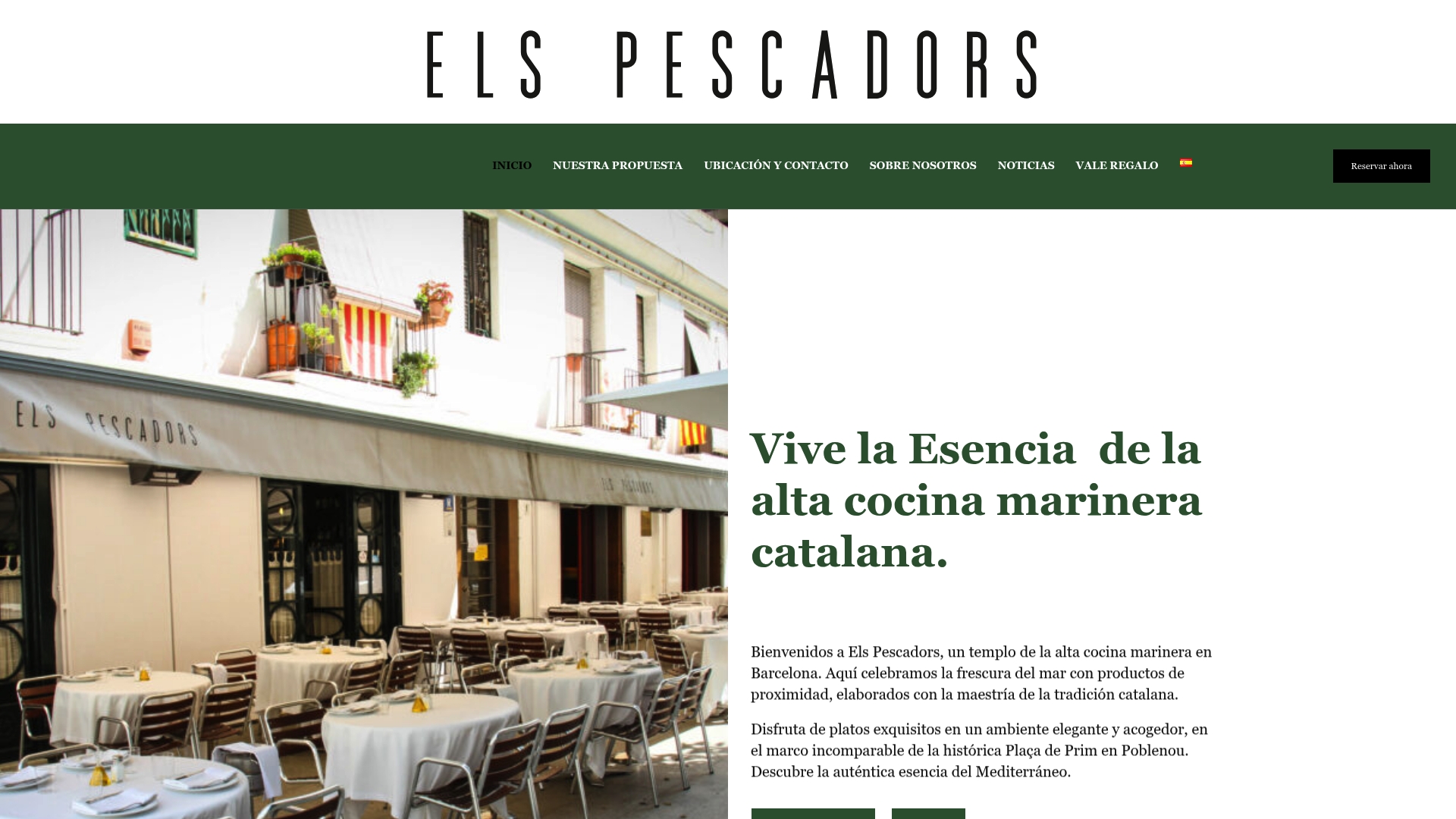
Reading about these sauces is useful, but they make the most sense at the table. Els Pescadors is a seafood restaurant on Plaça de Prim in Poblenou, built around Catalan maritime cooking: daily fresh catch, seafood and traditional rice dishes.
If you want a first look at how we cook with the season, our Menú de Temporada is published at €39 per person. For the full range of fish and rice dishes, browse La Carta, or take the longer route with the Menú Degustación. Planning for a group? See our group menus.
Book a table through our website and tell us what you want to try. We will gladly talk you through the day’s catch.
FAQ
What is the most famous Catalan sauce for fish?
Romesco is the best known. It comes from the Tarragona coast and is made from dried peppers, garlic, nuts, bread, oil and vinegar. It is especially associated with grilled fish and seafood, and in its cooked form fish simmers directly in it.
Is romesco sauce the same as the sauce served with calçots?
They are related but not identical. The calçot sauce is often called romesco in everyday speech, but some Catalan specialists call it salvitxada, a variety from Valls. It is generally lighter than romesco, although the names are used flexibly.
What is the difference between allioli and picada?
Allioli is a raw emulsion of garlic and olive oil, sometimes with egg, served beside food. Picada is a paste of nuts, garlic, fried bread and herbs that is stirred into a stew near the end to bind and deepen it. One is a condiment, the other is a cooking tool.
Which fish go best with romesco?
Grilled fish and seafood are the classic partners, with mussels and monkfish as common examples. In the cooked dish, hake, anglerfish, prawns, cuttlefish, squid and clams all work, usually with potatoes.
Sources
- Salsa romesco, Gastroteca (Catalan Government)
- Tarragona romesco, Tarragona Turisme
- Bases e ingredientes del Romesco
- Salsa Romesco, ABC Recetas de Rechupete
- Todo lo que la fiebre por los calçots oculta del romesco, La Vanguardia
- Salses catalanes: romesco, allioli, sofregit i picada, Tast.cat
- Romesco Sauce Recipe, Serious Eats
- La cuina de barca, Museu de la Pesca
- Catalan cuisine, BBC Travel
- Ranxos i xefles, Bona Vida
- Suquet de pescado y marisco, ABC Recetas de Rechupete
- Fish in tomato and garlic sauce, Spain.info