Eating out on the Mediterranean diet comes down to a few habits. Choose fish, vegetables and legumes cooked simply (grilled, baked, braised). Ask for olive oil rather than cream or butter. Share or pick one indulgence instead of banning them all. Barcelona is an easy city for this, because Catalan maritime cooking already works this way. Below you will find the principles, the menu choices, and how to apply them to seafood and rice dishes.
TL;DR
- Build the plate around vegetables, fish or legumes, and a modest portion of whole grains or rice, rather than a large starch or a large cut of meat.
- Pick grilled, baked, braised or steamed over fried, battered or creamy, and ask for olive oil and lemon on the side.
- Fish two to three times a week is the Catalan public-health target, so a seafood restaurant is a natural place to meet it.
- Choose one treat (bread, dessert or a glass of wine) and enjoy it, instead of trying to cut every one.
- Wine, if you drink it, is part of the traditional pattern only in moderation and with food.
Table of Contents
- What the Mediterranean diet actually asks of you at the table
- Weekly frequencies to keep in mind when you order
- Reading the menu before you sit down
- Cooking methods and sauces: what to look for
- Portions, bread and dessert
- Wine and other drinks
- Applying all this to Catalan seafood and rice
- When the menu does not seem to offer much
- Our perspective
- Where to eat this way at Els Pescadors
- FAQ
- Sources
What the Mediterranean diet actually asks of you at the table
Before you read a menu, it helps to know what you are aiming for. The Catalan public health portal Canal Salut describes the Mediterranean diet as built mostly on fresh, minimally processed plant foods: seasonal fruit and vegetables, legumes, nuts, whole grains and extra virgin olive oil. Fermented dairy and fish come in smaller quantity and frequency, followed by white and lean meats and eggs, with water as the main drink.
Spain’s food safety agency AESAN says the pattern, with fresh plant foods and fish, moderate meat and dairy, and olive oil as the main fat, is in line with its dietary recommendations.
Two points matter for restaurants in particular.
It is a whole pattern, not a single ingredient. The nonprofit Oldways stresses that when scientists study single foods from the diet, the greatest benefits are tied to overall adherence, not to one ingredient. One meal out does not make or break anything. What counts is the direction of your choices over weeks.
It is also a way of eating. The 2024 Catalan guide Petits canvis per menjar millor describes the diet as including eating in family or company, moderation in quantities, and the use of local and seasonal foods. A long shared lunch of several small dishes fits that description better than a rushed single large plate.
Weekly frequencies to keep in mind when you order
The same Catalan guide gives a frequency table that is useful as a mental checklist when you look at a menu:
| Food group | Catalan guide frequency |
|---|---|
| Vegetables | At least 2 times a day |
| Fresh fruit | At least 3 times a day |
| Whole grains | At every meal |
| Fish | 2 to 3 times a week |
| Legumes | 3 to 4 times a week |
| Eggs | 3 to 4 times a week |
| Meat | 3 to 4 times a week, at most 2 of them red meat |
| Nuts | 3 to 7 handfuls a week |
Source: Petits canvis per menjar millor, Catalan health authorities, 2024.
If you eat out once or twice a week, you do not need to hit every line at that meal. Ask instead what the rest of your week is missing. If you have had little fish lately, order fish. If your week has been heavy on meat, order a vegetable-led starter and a fish main.
AESAN also gives portion sizes for the daily basics. A vegetable portion is 150 to 200 g and a fruit portion 120 to 200 g, with a minimum of five portions of fruit and vegetables a day. A generous plate of grilled or sautéed vegetables on the side can cover a good part of one portion.
Reading the menu before you sit down
The easiest step happens before dinner. Look at the menu online, decide your main and one side, and you will not be choosing while hungry and distracted. Telehealth company Teladoc’s guide to the diet also recommends reviewing the menu in advance and eating normally during the day so you do not arrive overly hungry.
When you read, scan the verbs. Words like a la plancha, al horno, al vapor, estofado and a la brasa point to grilled, baked, steamed, stewed or flame-cooked food. Words like frito, rebozado, empanado, gratinado or anything with nata (cream) usually mean more frying or heavier sauces.
A simple order of decisions
- Pick the protein first. Fish or shellfish, or a legume-based dish, is the anchor.
- Pick the preparation. Grilled, baked, braised or steamed.
- Add vegetables. A starter salad, a vegetable side, or both.
- Choose the starch. Rice, whole-grain bread or potatoes, in a sensible amount.
- Decide on the one treat. Dessert, bread with the starters, or wine.
Cooking methods and sauces: what to look for
The advice from clinicians is consistent. The Cleveland Clinic suggests choosing red sauce, pesto, olive oil or wine-based preparations over creamy sauces and extra cheese, and notes that tomato-based sauces provide lycopene and are much lower in calories than cream sauces. It also points out that you can customize a dish, for example by asking for extra vegetables in the sauce.
In a Spanish or Catalan kitchen, this translates well:
- Sofrito-based dishes. Sofrito is tomato, garlic and onion or leek cooked slowly in olive oil. A Spanish public recipe book for the Mediterranean diet describes sofrito this way and counts dishes made with it, at least twice a week, as a marker of the pattern.
- Steaming and gentle cooking. AESAN advises steaming food to preserve its nutritional properties.
- Sauces on the side. If a dish arrives with a heavy sauce, ask for it separately. You decide how much goes on.
- Olive oil and lemon. For simply cooked fish, a drizzle of olive oil and a squeeze of lemon is often all it needs. The Mediterranean Plan, a meal-planning company, recommends asking for fish prepared simply with lemon and herbs and cooked in olive oil rather than butter.
One practical point: you are allowed to ask how something is cooked. A good kitchen expects the question.
Portions, bread and dessert
Quantity matters as much as the dish. Teladoc suggests balancing the plate with about half non-starchy vegetables, a quarter lean protein and a quarter carbohydrates, and choosing the treat you like best instead of trying to eliminate all of them.

The Quebec Diabetes Association’s restaurant guide, written by registered dietitians, adds several tips: restaurant portions are often oversized, so share a dish, ask for a half portion or take leftovers home. Eat slowly, drink water, and remember that an occasional restaurant meal is a question of frequency. The same guide notes that set menus can encourage you to eat beyond your appetite, and that ordering à la carte gives more control over what ends up on the table. It also warns that a fresh fruit platter can hold many servings of fruit, so sharing makes sense.
AESAN’s cereal guidance helps with bread and rice: a portion is 40 to 60 g of bread, or 60 to 80 g of dry pasta or rice, and it recommends 3 to 6 portions of cereals a day, preferably whole grain. A rice dish shared among two or three people, alongside vegetables and a fish starter, sits well within that.
How to keep dessert in the plan
In the traditional pattern, sweets are an occasional pleasure, and fresh fruit is the everyday finish. Order fruit if you want something light, or share one dessert across the table. Either way, you are following the pattern.
Wine and other drinks
Water is the main drink of the pattern, as Canal Salut notes. Wine appears in traditional descriptions, always moderate and with food. The Spanish recipe book cited above says moderate wine during meals is part of the diet, up to two glasses (150 ml each) a day for men and one for women, and says this point should be left out for non-drinkers, children, young people and pregnant or breastfeeding women.
A 2016 review of the “Mediterranean way of drinking” reaches a similar definition: regular, moderate consumption, mainly with food. If you do not drink alcohol, there is no reason to start. If you are pregnant, breastfeeding, taking medication or have a health condition, ask your doctor before including wine.
At the table, a practical routine is to start with water, order a glass rather than a bottle if you are one or two diners, and drink the wine with the food rather than before it.
Applying all this to Catalan seafood and rice
Catalan coastal cooking is a good fit, and there is research that backs it up. A 2023 peer-reviewed study built a Mediterranean-type eating plan from menus collected in restaurants and tapas bars in greater Barcelona. Its typical Catalan day included a goat cheese salad, codfish fritters, braised hake and fruit salad at lunch, and a Catalan salad, sautéed chicken breast and flan at dinner, with water and moderate wine. The authors controlled portion size to match different calorie levels. The lesson for diners is that ordinary Barcelona menus contain what you need, and the portion is the lever.
Here is how to translate that to the kinds of dishes you will find in a Barcelona seafood restaurant:
| If the menu offers | A Mediterranean-friendly way to order it |
|---|---|
| Fried seafood or battered starters | Share one portion among the table, or swap for steamed shellfish or a simple salad |
| Whole fish or fish fillets | Ask for grilled or baked, with olive oil and lemon, and a vegetable side |
| Rice dishes | Share a pot between two or more, and add a salad or vegetables to the table |
| Cream-based sauces | Ask for the sauce on the side or choose a tomato-based or olive-oil preparation |
| Dessert | Choose fresh fruit or share one dessert |
| Bread | Take it with the starters, or with the main, but not both |
If you want a deeper look at why fish deserves the center of the plate, our piece on seafood’s role in the Mediterranean diet walks through it. For ordering step by step in a Catalan restaurant, see ordering authentic Catalan dishes. If someone at your table does not eat fish, our guide to ordering vegetarian at a seafood restaurant will help.
When the menu does not seem to offer much
Some menus are not obviously Mediterranean. You can still make a good meal.
- Build from sides and starters. A salad, a vegetable dish and a grilled protein make a complete plate.
- Ask for a simple preparation. Fish or chicken grilled with olive oil and lemon on the side is a request most kitchens can meet.
- Remember the bigger picture. The Mediterranean Plan notes that one restaurant meal cooked in a different oil does not undo an otherwise consistent pattern. Choose what you can, enjoy the meal, and return to your usual habits the next day.
- Share. Several small dishes for the table give more variety and keep portions moderate.
Our perspective
At Els Pescadors, we cook authentic Catalan maritime cuisine in Plaça de Prim, in Poblenou: fresh fish, seafood and traditional rice dishes made with seasonal, locally sourced ingredients. For us, the Mediterranean diet is not a trend we follow. It is how this coast has always eaten.
That is why we believe a seafood restaurant is one of the easiest places to eat well. Our menu centers on the daily fresh catch, and our kitchen builds around what the season offers. Local and seasonal foods are, according to the Catalan health authorities, a core part of the Mediterranean pattern, and they are the starting point of how we cook.
Our advice to guests is simple. Come with an appetite for variety. Share rice dishes, start with something light, let the fish be the center of the table, and take your time. Tell your server what you prefer, and we will gladly guide you through the day’s catch.
YellowRock
Where to eat this way at Els Pescadors
If you would like to put these ideas into practice, our seasonal menu is a good place to begin: the Menú de Temporada is 39 € per person. Our Carta del Día shows the day’s proposals, and La Carta lets you choose dish by dish, which gives you the control over portions that dietitians recommend.
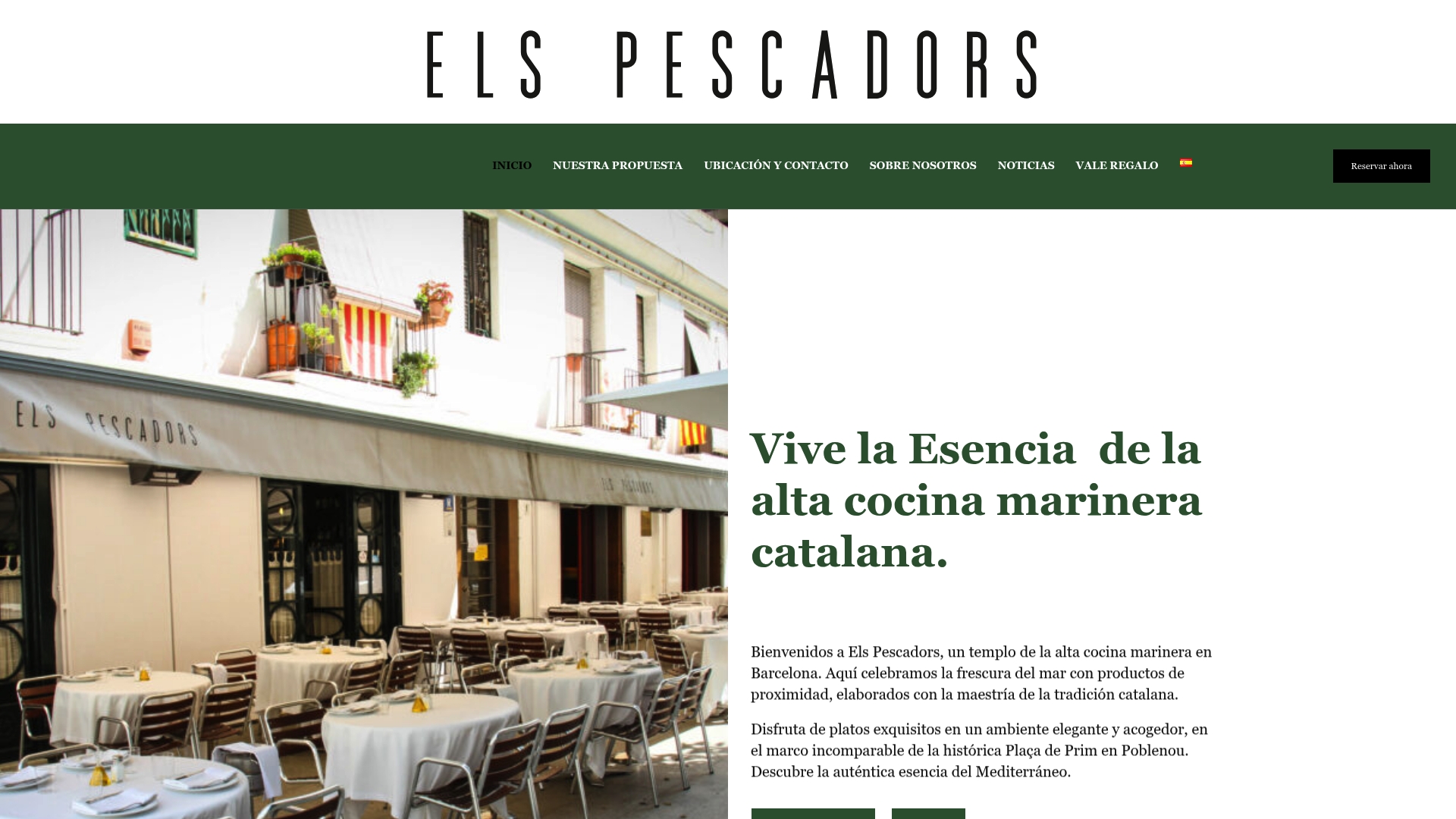
For a longer, slower meal, see our Menú Degustación, and if you are comparing formats, our guide to à la carte versus tasting menu can help you decide. Planning a celebration or business lunch? Our Menú para Grupos is made for shared tables. Reserve through our site and let us know any preferences when you book.
FAQ
How do I eat the Mediterranean diet at a restaurant?
Choose fish, legumes or vegetable-led dishes cooked by grilling, baking, braising or steaming. Ask for olive oil and lemon instead of cream or butter sauces, add a vegetable side, and keep bread, dessert or wine to one chosen treat. Sharing dishes helps keep portions moderate.
Is a seafood restaurant a good choice for the Mediterranean diet?
Yes. Catalan health guidance recommends fish two to three times a week, and seafood fits that target. Prefer grilled, baked or steamed preparations, and share rice dishes and fried items rather than ordering one each.
Can I drink wine with a Mediterranean-style meal?
The traditional pattern includes moderate wine with food: up to one glass a day for women and two for men in the sources we cite. Non-drinkers, children, young people and pregnant or breastfeeding women should leave it out, and anyone with a health condition or on medication should ask their doctor.
How can I keep portions under control when eating out?
Share a dish, ask for a half portion or take leftovers home, as dietitians recommend. Eat slowly, drink water, and order à la carte if set menus tempt you to eat past your appetite.
Sources
- Alimentació saludable, Canal Salut (Generalitat de Catalunya)
- Healthy and sustainable dietary recommendations, AESAN
- Recomendaciones dietéticas saludables, AESAN
- Petits canvis per menjar millor, 2024
- What is the Mediterranean Diet?, Oldways
- Your guide to the Mediterranean diet, Teladoc Health
- How to eat healthy at your favorite restaurants, Cleveland Clinic
- Recetas del Mediterráneo, recipe book
- Eating Out on the Mediterranean Diet, Mediterranean Plan
- Guide resto 2018, Diabète Québec
- Mediterranean Way of Drinking and Longevity, Europe PMC
- Macronutrient Adequacy of a Mediterranean-type Meal, PMC