
If you’re searching for club-pescadores.com.ar alternatives, the strongest options in Argentina are the Asociación Argentina de Pesca, Club de Pesca Olivos, APYCAC Córdoba, and Córdoba Trucha Club. Each one offers a genuine fishing community with private pier access, social facilities, and organized events that rival what Club de Pescadores provides on Buenos Aires’ Costanera Norte.
Here’s a quick look at the leading alternatives:
- Asociación Argentina de Pesca: One of the country’s most established national fishing bodies, with a long institutional tradition and connections to provincial federations.
- Club de Pesca Olivos: Located 15 km from Buenos Aires in Olivos, it features a 300-meter concrete pier, key access for members, and a full range of social amenities.
- APYCAC Córdoba: A regional association serving Córdoba province, focused on sport fishing competitions and community building for local anglers.
- Córdoba Trucha Club: A fly-fishing specialist club in Córdoba dedicated to catch-and-release, environmental conservation, and building camaraderie among its members.
- Federación Santafesina de Pesca Deportiva y Lanzamiento: Founded in 1967, it unifies Santa Fe fishing clubs under shared conservation guidelines and organizes provincial tournaments.
- Federación Chaqueña de Pesca Deportiva: The regional authority in Chaco province, best known for hosting the International Dorado Tournament at Isla del Cerrito.
What facilities and community benefits do Argentine fishing clubs offer?
The best fishing clubs in Argentina go well beyond a spot on the water. Membership typically includes access to a private pier with lighting, bait stations, and covered shelters, plus boat launching ramps and secure vessel storage. Club de Pesca Olivos, for example, offers boat storage and launching services alongside 11 covered grills, a pizza oven, a buffet, and delivery to the pier itself.
The social layer is what separates a club from a public fishing spot. Members share barbecue areas, green spaces, Wi-Fi zones, and family recreation areas. Many clubs also run pool tables, board games, and organized social nights.
- Private pier access with night lighting and bait stations
- Key entry system allowing unrestricted fishing access
- Boat launching ramps and covered vessel storage
- Restaurants, buffets, and muelle delivery services
- Barbecue areas, pizza ovens, and covered social halls
- Green spaces, pools, and family recreation zones
- Community events, fishing tournaments, and fly-casting clinics
Pro Tip: When comparing fishing membership options, visit the club on a weekday evening. That’s when you’ll see how the key-access system actually works and whether the pier lighting and social areas are genuinely maintained.
Experts who study fishing club culture point out that the multi-generational community aspect, where families return year after year, is what gives established clubs their staying power. A club with a strong social calendar tends to retain members far longer than one that offers fishing access alone.
How do fishing clubs approach environmental stewardship?
Conservation is no longer optional for serious fishing associations. The shift toward catch-and-release as a standard practice, known in Argentina as pesca con devolución, reflects a broader commitment to keeping fish populations healthy for future generations.
- Catch-and-release mandates: Clubs like Córdoba Trucha Club make catch-and-release a core membership value, not just a suggestion.
- Digital monitoring tools: The Federación Chaqueña uses ISLAPP, a digital registry app that tracks catches in real time during tournaments, promoting transparency and fish population data.
- Federation-level standards: The Federación Santafesina sets conservation guidelines across affiliated clubs, including rules on species protection and responsible fishing methods.
- Education programs: Fly-fishing clinics and youth outreach programs teach ethical angling from the ground up.
- Ecosystem monitoring: Clubs near sensitive river systems actively collaborate with provincial environmental agencies to track water quality and fish stock health.
The Federación Chaqueña’s International Dorado Tournament at Isla del Cerrito, held at the confluence of the Paraguay and Paraná rivers, runs entirely on catch-and-release rules. That’s a meaningful signal about where the sport is heading. Choosing a club affiliated with these federations means your membership fees support sustainable fishing practices that protect the rivers you fish.
How do fishing licenses and regulations work for club members in Argentina?
Club membership does not replace a provincial fishing license. Every angler in Argentina must hold a valid, state-issued fishing permit for the province where they fish, regardless of club affiliation.
- Provincial licenses are mandatory: Each province sets its own rules, seasons, and species restrictions. Regulations in Neuquén differ significantly from those in Santa Fe or Chaco.
- Club-facilitated licensing: Clubs registered with provincial federations can help members obtain permits and may offer discounts of up to 50% on annual licenses.
- Online permit processing: Most provinces now allow online license applications, though some, like Santa Fe, still require in-person processing at designated offices.
- Out-of-province validation: Permits obtained online for provinces like Neuquén must be stamped at a local fauna office before fishing outside your home province.
- Tournament permits: Clubs that organize competitions must register separately with provincial authorities to issue event-specific fishing permits.
The practical takeaway: join a club that is formally registered with its provincial federation. That registration is what unlocks the licensing benefits and keeps the club legally authorized to run tournaments.
How Elspescadors connects fishing culture to the table
The same values that define the best fishing communities, namely quality sourcing, respect for the sea, and a sense of tradition, are exactly what Elspescadors brings to the table in Barcelona’s Poblenou district. The restaurant sits in the historic Plaça de Prim and specializes in authentic Catalan maritime cuisine built around seasonal, locally sourced fish and seafood.
- Seasonal sourcing: The menu changes with the catch, reflecting the same respect for fish populations that catch-and-release clubs practice on the water.
- Local fishing community ties: Elspescadors works with local fishermen in Barcelona to source the daily catch, keeping the supply chain short and the fish genuinely fresh.
- Traditional recipes, refined approach: Classic Catalan rice dishes and seafood preparations are made with the same care that a fly-fishing club brings to its craft.
- Historic, community-centered setting: The Plaça de Prim location carries the same neighborhood identity that long-standing fishing clubs embody in their riverside communities.
- Sustainability as a guiding principle: From sourcing to preparation, Elspescadors’ dining experience reflects the same environmental ethic that the best Argentine fishing associations champion.
Which regions do alternative fishing clubs cover?
Geography shapes your real options. Buenos Aires province has the densest concentration of established clubs, with Club de Pesca Olivos serving the northern suburbs and the historic Club de Pescadores sitting on a large pier extending into the Río de la Plata. Córdoba province is home to both APYCAC and Córdoba Trucha Club, giving inland anglers access to river and reservoir fishing. Santa Fe is served by the Federación Santafesina, which coordinates clubs across the province’s extensive river system. Chaco province, through the Federación Chaqueña, offers access to the Paraná and Paraguay river corridors, prime territory for dorado fishing. For Patagonia, the Asociación de Guías de Pesca de la Patagonia, founded in 2000, covers the southern lake and river systems across Neuquén, Río Negro, and beyond.

What do membership fees typically look like at these clubs?
Fee structures vary widely and are not always published openly. Most established clubs charge an initiation fee plus monthly dues, with the monthly amount depending on the facilities offered and the club’s location. Clubs in greater Buenos Aires tend to carry higher fees than regional clubs in Córdoba or Chaco, reflecting real estate and infrastructure costs. The key-access system at clubs like Club de Pesca Olivos, which grants 24/7 entry to the pier and social areas, is typically included in the standard membership tier. Boat storage, known as guardería, is usually priced separately as a monthly add-on. Clubs registered with provincial federations may pass along license discounts of up to 50% on annual fishing permits, which partially offsets the membership cost for active anglers.
How do club tournaments and events compare?
Tournament culture varies sharply between clubs. The Federación Chaqueña’s International Dorado Tournament at Isla del Cerrito is one of the most prominent events in Argentine sport fishing, drawing competitors from across the region to a catch-and-release format on the Paraná. The Federación Santafesina organizes provincial casting and fishing competitions among its affiliated clubs, with formal rankings and championship titles dating back to 1965. Córdoba Trucha Club focuses on fly-fishing events that emphasize technique and conservation over catch volume. APYCAC Córdoba runs local competitions suited to the province’s river and reservoir conditions. Clubs in Buenos Aires province tend to organize more social fishing days alongside formal competitions, blending competitive and recreational formats.
What modern amenities and technology are fishing clubs adopting?
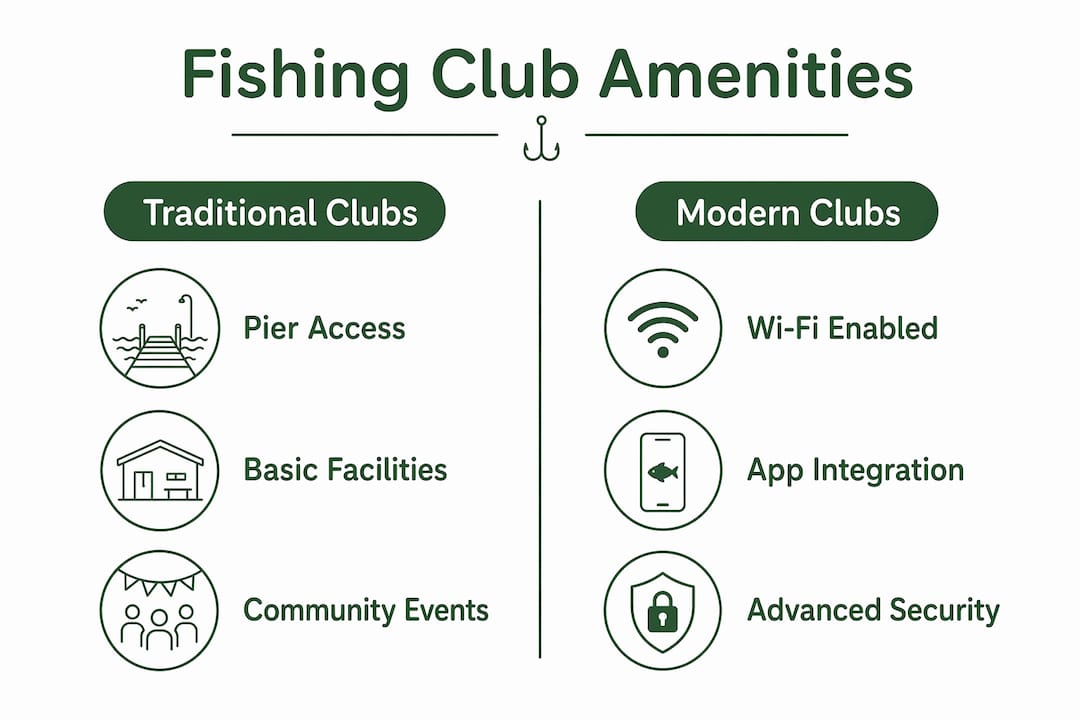
The gap between old-school fishing clubs and modern ones is widening fast. Wi-Fi on the pier, app-based catch registration, and digital membership management are becoming standard at forward-looking clubs. The Federación Chaqueña’s ISLAPP platform is the clearest example: it logs catches digitally during tournaments, provides real-time leaderboards, and feeds data into fish population monitoring. Club de Pesca Olivos offers Wi-Fi in outdoor areas and delivery service to the pier via a buffet system. Security cameras, electronic key-card access, and online reservation systems for social facilities are increasingly common at clubs that have invested in infrastructure upgrades.
What members say about these fishing communities
Member sentiment across Argentine fishing clubs consistently highlights two things: the quality of the social environment and the reliability of the facilities. At Club de Pesca Olivos, members frequently cite the family-oriented community as the primary reason they renew year after year, with the pier access system described as a genuine differentiator for early-morning and late-night fishing sessions. Córdoba Trucha Club members point to the conservation ethos as a source of pride, noting that the catch-and-release culture attracts anglers who take the sport seriously. Federation-affiliated clubs generally receive stronger reviews for tournament organization and regulatory compliance, since the federation structure provides oversight that standalone clubs often lack.
Key Takeaways
The strongest alternatives to club-pescadores.com.ar combine private pier access, a registered federation affiliation, and a clear conservation policy, making the membership package far more than just a fishing spot.
| Point | Details |
|---|---|
| Top alternatives | Club de Pesca Olivos, Córdoba Trucha Club, APYCAC, Federación Santafesina, and Federación Chaqueña each offer distinct regional strengths. |
| Licensing is separate | Provincial fishing licenses are mandatory regardless of club membership; registered clubs may offer up to 50% discounts on annual permits. |
| Conservation matters | Catch-and-release policies and tools like ISLAPP are now standard at leading clubs and federations. |
| Amenities beyond fishing | The best clubs include 24/7 key access, boat storage, social facilities, and Wi-Fi as part of the membership package. |
| Geography drives choice | Buenos Aires, Córdoba, Santa Fe, and Chaco each have distinct club networks; match your home province to the right federation. |
FAQ
What are the best alternatives to club-pescadores.com.ar in Argentina?
The strongest alternatives are Club de Pesca Olivos, Córdoba Trucha Club, APYCAC Córdoba, Federación Santafesina, and Federación Chaqueña, each offering private facilities, community events, and federation-backed regulatory support.
Do I still need a fishing license if I join a club?
Yes. A provincial fishing license is mandatory for all anglers in Argentina, regardless of club membership. Clubs registered with provincial federations can facilitate the license process and may offer discounts on annual licenses.
What is catch-and-release fishing, and do Argentine clubs practice it?
Catch-and-release, called pesca con devolución in Argentina, means returning fish to the water after catching them. Clubs like Córdoba Trucha Club and the Federación Chaqueña make it a core practice, and major tournaments like the International Dorado Tournament run exclusively on this format.
What does a typical fishing club membership include?
Most established clubs include pier access, social facilities such as barbecue areas and restaurants, and participation in club events. Clubs with a key-access system grant 24/7 entry to the pier and common areas; boat storage is usually available as a separate monthly service.
How does Elspescadors relate to fishing culture?
Elspescadors is a Catalan seafood restaurant in Barcelona that sources its daily catch from local fishermen, applying the same values of sustainability and tradition that define the best fishing communities. Its dining experience translates fishing culture directly into the plate.