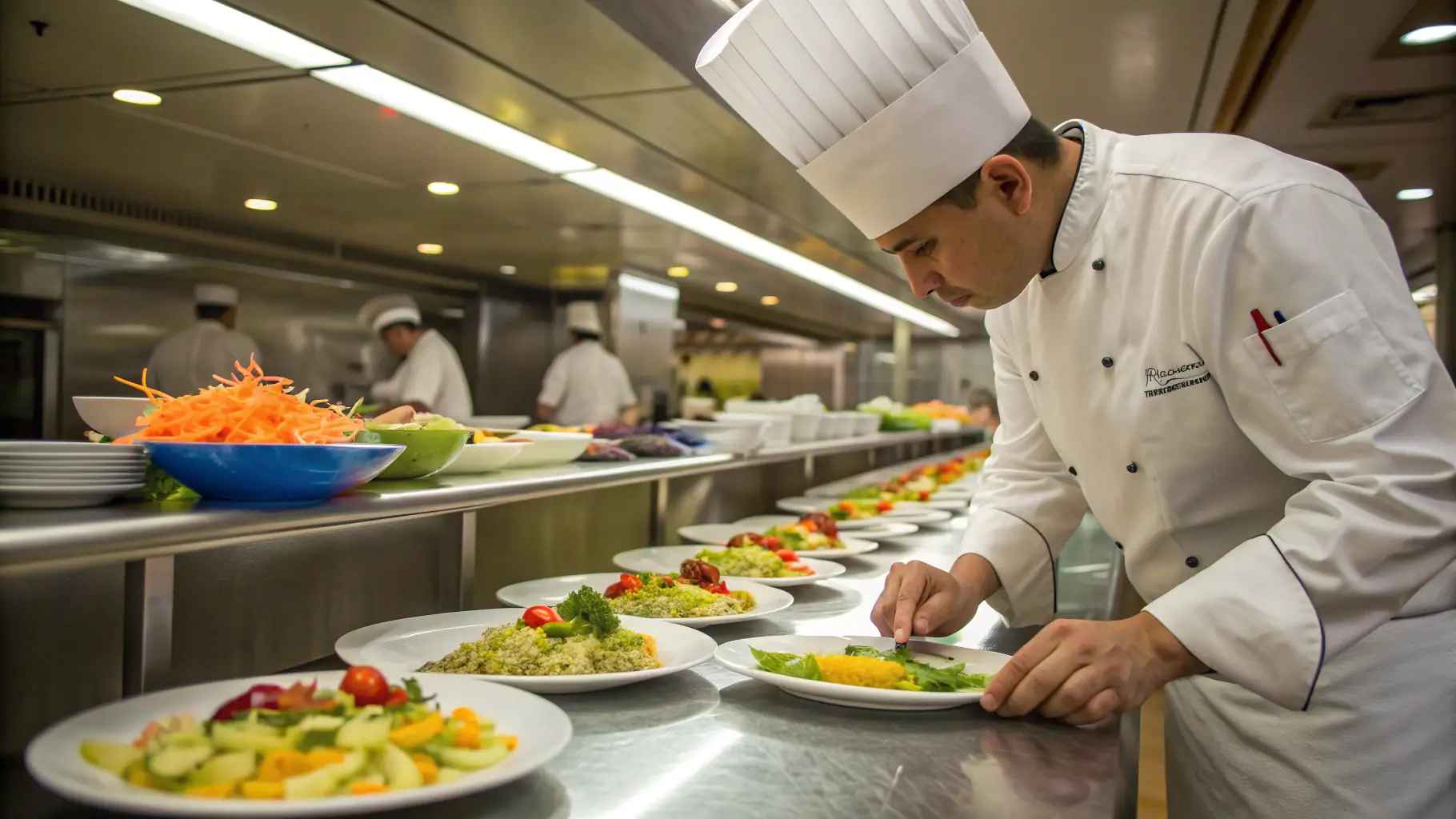
A tasting menu typically runs 15 to 20 minutes per course, which puts a short six or seven-course menu at 60 to 90 minutes, a standard 8 to 10-course menu at 90 to 150 minutes, and an exhibition-style menu of 15 or more courses well past two and a half hours. Wine pairings, elaborate plating, and multi-course finishing at the table push those numbers higher. A quick opening bite and tight kitchen sequencing can pull them lower.
TL;DR:
- The duration of a tasting menu depends largely on plating complexity, finishing techniques, and wine pairing, not just the number of courses.
- Kitchen staffing, staging, and guest behavior also significantly influence timing, with delays often caused by overambitious plating or simultaneous finishing steps.
- Communicating your preferred pace when booking, especially if you have a specific time constraint, helps the kitchen tailor the experience and avoid delays.
- Shorter, focused tasting menus with simple presentations generally last around 75 to 90 minutes, while longer, exhibition-style menus exceed three hours.
- Chefs are reducing menu length to meet guest demand for shorter dining experiences, making advertised durations more accurate and predictable.
Table of Contents
- Understanding Tasting Menu Duration by Format
- What Makes Two Similar Menus Take Different Amounts of Time?
- A Sample Timing Template for a 10-Course Menu
- How Kitchens Keep the Rhythm Without Falling Behind
- How Staff Read the Table and Adjust the Pace
- Where Tasting Menu Timing Goes Wrong
- Why Tasting Menus Are Getting Shorter
- Does Cuisine Type Change How Long a Tasting Menu Runs?
- How Private Events Change Tasting Menu Timing
- Publisher Perspective: How Els Pescadors Calibrates Timing
- Reserve a Tasting Menu Built Around Your Timeline
- Sources
- FAQ
Understanding Tasting Menu Duration by Format
The number of courses on a menu tells you less than you’d think. What matters is pacing, and that’s set by kitchen capacity and how much table-side work each course demands.
A tight six or seven course tasting menu with small, focused plates typically lands around 75 to 90 minutes, as explored in detail in Defining Culinary Experiences: a Traveler’s Guide, which helps travelers understand how tasting-menu duration affects their planning. That’s the format most restaurants offer for a weekday dinner or a pre-theater seating. A standard 8 to 10 course menu, the most common structure at mid-to-high-end restaurants, generally lasts about two to two and a half hours once you factor in wine service and conversation between courses. Exhibition-style menus, the 15 to 20 plate marathons associated with places like Eleven Madison Park or Sublimotion, can stretch past 3 or 4 hours in extreme cases.
A few planning notes worth keeping in mind:
- Menus advertised as “quick tasting” or “express” usually target the 60 to 90 minute window.
- Wine pairing adds roughly 20 to 30 minutes total across a standard menu, not per course.
- Build in 15 to 20 extra minutes for arrival, seating, and settling the check. That buffer rarely shows up in the advertised time.
Diner forums back this up anecdotally. Reported experiences range from 75 minutes to over 3 hours depending on menu length and restaurant style, which tells you the advertised course count is a starting point, not a promise.
What Makes Two Similar Menus Take Different Amounts of Time?
Course count is only half the story. Two ten-course menus can differ by 45 minutes or more depending on how each dish is finished and served.
Plating complexity is the biggest hidden variable. A dish assembled tableside, or finished with a sauce poured in front of the guest, adds two to five minutes that a plate arriving fully composed of the kitchen doesn’t need. Wine pairing compounds this. Decanting a structured red can take 10 to 15 minutes on its own, and a sommelier who wants to talk through each pour adds real time even when the wine itself needs no decanting.
Kitchen capacity matters just as much as anything happening in the dining room. A kitchen running multiple tasting menus at once has to stagger fire times, and if two tables hit the same course simultaneously, one of them waits. Guest behavior plays a role too: slow conversation, dietary substitutions requested mid-meal, and late arrivals all ripple through the rest of the seating.
- Table-side finishing or flambé work: add 2 to 5 minutes per affected course.
- Full wine pairing with sommelier narration: add 20 to 40 minutes total.
- Dietary substitutions requested after the meal starts: can delay that course and the one behind it.
- Multiple tables ordering the same tasting menu at once: increases kitchen bottleneck risk.
Pro Tip: If pace matters to you, tell the restaurant about dietary restrictions when you book, not when you sit down. A kitchen that knows in advance can build the substitution into its mise en place instead of improvising mid-service.
A Sample Timing Template for a 10-Course Menu
Restaurants that manage tempo well don’t wing it. They build a per-pass schedule before service starts, then adjust it in real time. Kavasoft’s operational framework breaks total duration into four components: time at the table, plate removal and reset, kitchen cook time, and a built-in buffer. That’s a more honest way to think about duration than just multiplying courses by minutes.
Typical timing for passes varies, with amuse-bouche around several minutes, cold courses slightly longer, and main protein courses taking the most time; exact minutes depend on kitchen and service style.
A worked example for a 10-course menu:
- One amuse-bouche (10 min) plus two cold courses (14 min each), totals 38 minutes.
- Four warm courses averaging 19 minutes each totals 76 minutes.
- Pre-dessert and dessert together add 26 minutes.
- Add sommelier pairing time (25 minutes) and a service buffer of roughly 10 to 15% of the running total.
That math lands the full experience at approximately 2 hours 45 minutes to 3 hours. This aligns with the 90 to 150 minute reference range that operational guides cite for shorter formats, scaled up for a longer, pairing-heavy menu.
How Kitchens Keep the Rhythm Without Falling Behind
Timing on paper only survives service if the kitchen has already done the work to protect it. Mise en place reduces in-service prep by getting components portioned and staged before the first guest sits down, which is why restaurants that manage tasting menus well treat prep as the real timing lever, not the plating itself.
Staggered starts matter too. Kitchens assign specific stations to specific courses and stagger fire times across tables so four plates don’t need to leave the pass at the same second. That single practice prevents the most common bottleneck in tasting menu service: everyone finishing at once.
- Portion proteins and sauces in advance so cook time per course stays predictable.
- Assign dedicated stations to complex courses to avoid one cook becoming a bottleneck.
- Run pilot services with staff or comped guests before a new menu goes live, to catch timing problems before paying customers do.
- Cap the number of tables running the same tasting menu simultaneously during peak service.
ComboHR’s guidance is direct on this point: a tasting menu only works if the interval between plates stays disciplined, because flavor sequencing depends on timing as much as on the dishes themselves.
How Staff Read the Table and Adjust the Pace
Good servers watch for signals most diners don’t realize they’re sending. A plate cleared in under ten minutes with a refilled glass usually means the table wants to keep moving. Long pauses between bites, deep conversation, or a slowly draining wine glass tell a different story, and an attentive server slows the next course accordingly.
Diners don’t have to rely on body language alone. A simple line at booking works well: “We have a flight to catch, please keep us to two hours” gives the kitchen a target to hit. Mid-meal, “we’re in no rush tonight” or “could we get the next course a bit sooner” both land fine with most staff.
- Watch for plate progress and empty glasses as cues to pick up the pace.
- State timing needs when booking, not after the first course arrives.
- Understand that a faster pace usually means less table-side narration and fewer pairing notes.
Where Tasting Menu Timing Goes Wrong
Most delays trace back to a handful of avoidable mistakes. Plating that’s too ambitious for the kitchen’s actual staffing is the most common one. So is scheduling too many finishing touches, garnishes, sauces, or flambé work, at the same stage of service, which creates a pileup right when multiple tables need the same station.
- Overambitious plating for the kitchen’s real capacity: simplify the dish or add staff before service, not during it.
- Too many simultaneous finishing steps: spread labor-intensive courses across different stages of the menu instead of clustering them.
- Undertrained stations covering unfamiliar dishes: run a pilot service before the menu goes live to catch this early.
- Diners arriving late or unprepared with dietary information: confirm restrictions at booking and arrive close to your reservation time.
Why Tasting Menus Are Getting Shorter
Chefs across Spain are actively trimming their tasting menus, and it’s not a marketing move. Recent coverage documents restaurants revisiting long-format menus because diners have grown tired of three-hour commitments, especially on weeknights or during business travel.
Chefs are listening to guests who want the narrative and craft of a tasting menu without surrendering an entire evening to it, which is reshaping menus toward fewer, more deliberate courses rather than an exhaustive procession.
The shift shows up in how menus are structured, not just how many courses they have. Some restaurants now offer a shorter core menu with optional add-on courses, letting diners choose their own commitment. Industry commentary frames this as chefs prioritizing impact per course over sheer volume.
For diners, this means the advertised duration on a menu today is more likely to be accurate than it was a few years ago. Restaurants offering flexible formats are also more willing to accommodate a guest’s stated time constraint, since the whole trend is built around respecting that constraint in the first place.
Does Cuisine Type Change How Long a Tasting Menu Runs?
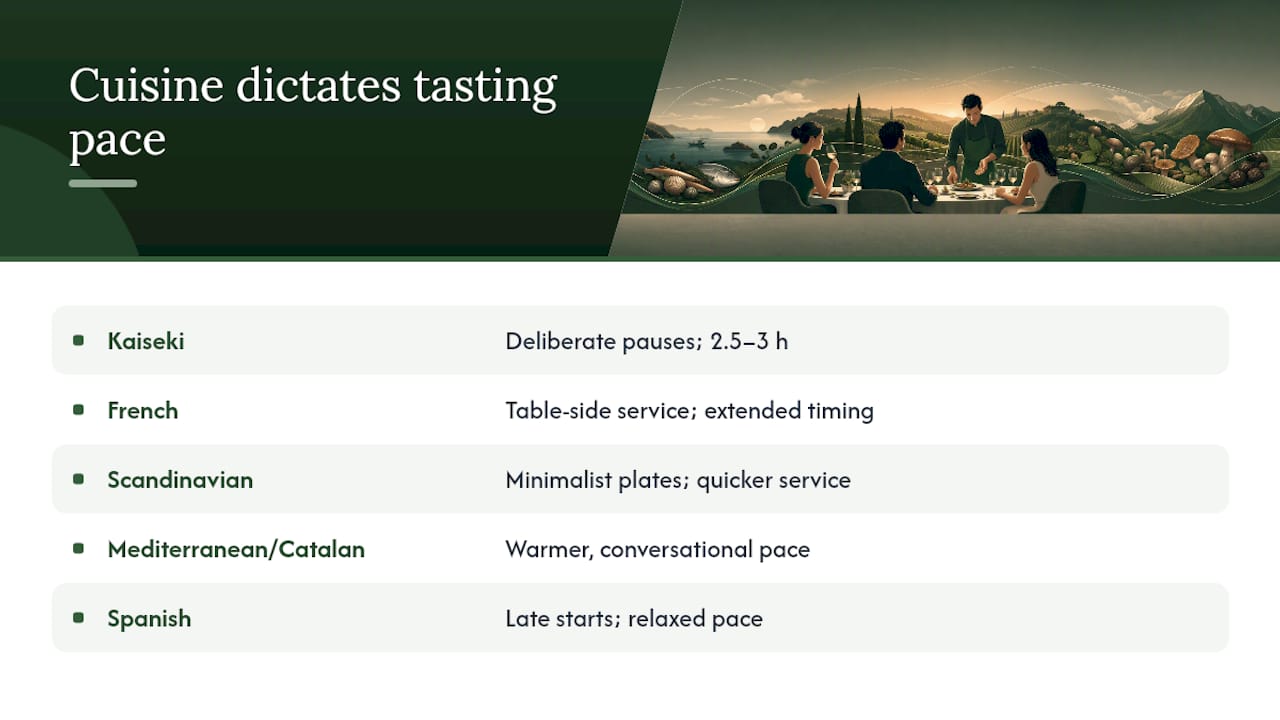
Cuisine and cultural dining norms shape pacing as much as course count does. Japanese kaiseki, for instance, is built around a deliberate, unhurried rhythm where pauses between courses are part of the experience, not a delay. A kaiseki dinner with 8 to 10 courses commonly runs 2.5 to 3 hours, longer than a Western tasting menu with a similar course count, because the format treats silence and presentation as essential rather than incidental.
French-influenced fine dining tends to build in more table-side service, sauce work, and formal wine presentation, which naturally extends timing compared to a Scandinavian-style tasting menu built around minimalist plates delivered in quick succession. Mediterranean and Catalan tasting menus, the format Els Pescadors works within, typically favor a warmer, more conversational pace than strict French service while still moving with intention between fish and rice courses, since shellfish and seafood preparations often need to be served immediately after cooking rather than held.
Cultural dining customs matter beyond the kitchen. In Spain, dinner reservations often start later in the evening and diners expect more relaxed conversation between courses than a lunch-hour business tasting menu would allow. A group of tourists unfamiliar with Spanish dining hours might find a 10 PM tasting menu reservation running past midnight, which is normal locally but worth planning around if you have an early flight.
None of this means one cuisine is objectively slower or faster. It means the same course count carries a different implicit time commitment depending on the culinary tradition, and asking about expected pace when booking a tasting menu in an unfamiliar cuisine avoids a scheduling surprise.
How Private Events Change Tasting Menu Timing
Group bookings and private events change the math in ways a standard reservation doesn’t. A private dining room serving 12 to 20 guests the same tasting menu simultaneously needs tighter kitchen sequencing than a handful of scattered tables ordering it throughout a normal service. That’s good for guests, since everyone at a private event tends to get their courses closer together, but it also means the kitchen needs more advance notice to stage that volume of simultaneous plating.
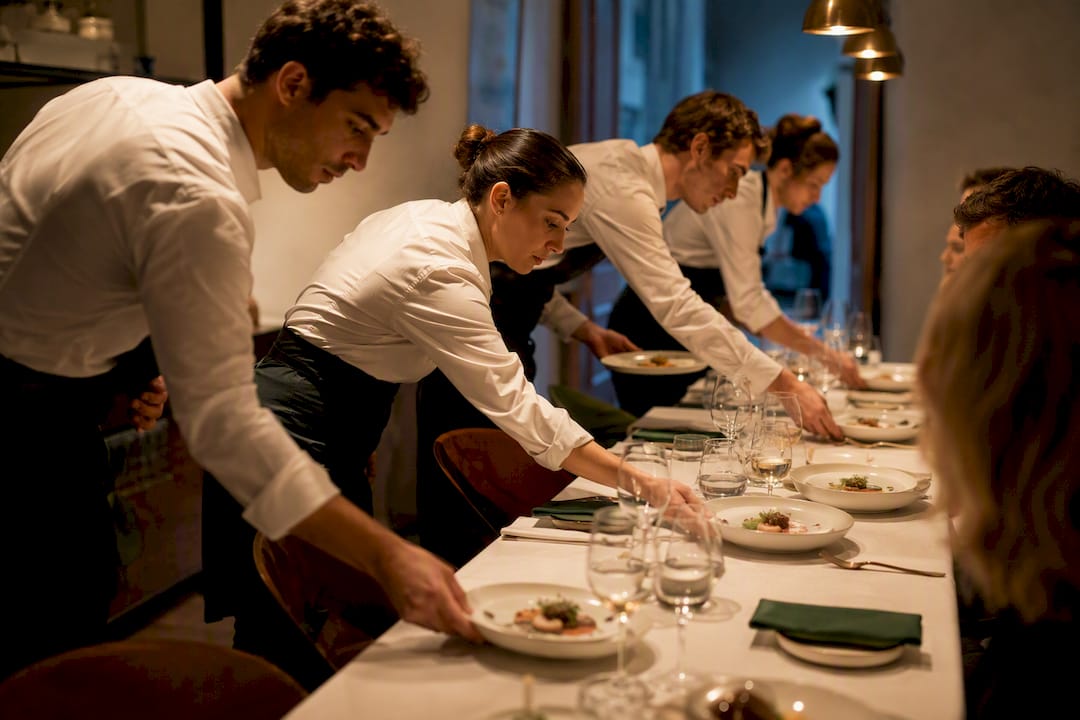
Special occasions add another layer. A celebratory dinner often includes speeches, toasts, or a cake course inserted mid-meal, and none of that is accounted for in a standard per-course timing template. Event organizers booking a tasting menu for a milestone celebration should build in an extra 20 to 30 minutes beyond the standard duration to cover those pauses, and communicate the occasion to the restaurant in advance so staff can plan the natural break points around it.
Corporate events tend to run the opposite direction: business diners often want a tighter, more predictable schedule so the meal doesn’t run long into an evening with other commitments. Telling a restaurant “this is a two-hour business dinner” versus “this is a birthday celebration with a toast around course six” leads to two very different service plans, even on the identical tasting menu.
Group size itself is a factor independent of the occasion. Larger private parties often benefit from a slightly simplified menu specifically to keep timing predictable across every seat at once, which is part of why group menu formats frequently differ from the standard individual tasting menu.
Publisher Perspective: How Els Pescadors Calibrates Timing
Some restaurants build their tasting menu around fresh daily catch, which means tempo has to bend around what the kitchen receives, not the other way around. Quality and sustainability come first; pacing is calibrated around that, not against it. Guests who want a specific tempo, faster, slower, or built around a wine pairing, should say so when reserving. That one detail shapes how the kitchen sequences the evening.
— YellowRock
Reserve a Tasting Menu Built Around Your Timeline
Most restaurants hand you a fixed menu and let you figure out the timing. Els Pescadors works the other way around: tell the kitchen your pace before you sit down, and the Menú Degustación gets built around it, whether that means a tighter two-hour seating before a show or a longer evening with full wine pairing through fresh Catalan seafood and rice courses.
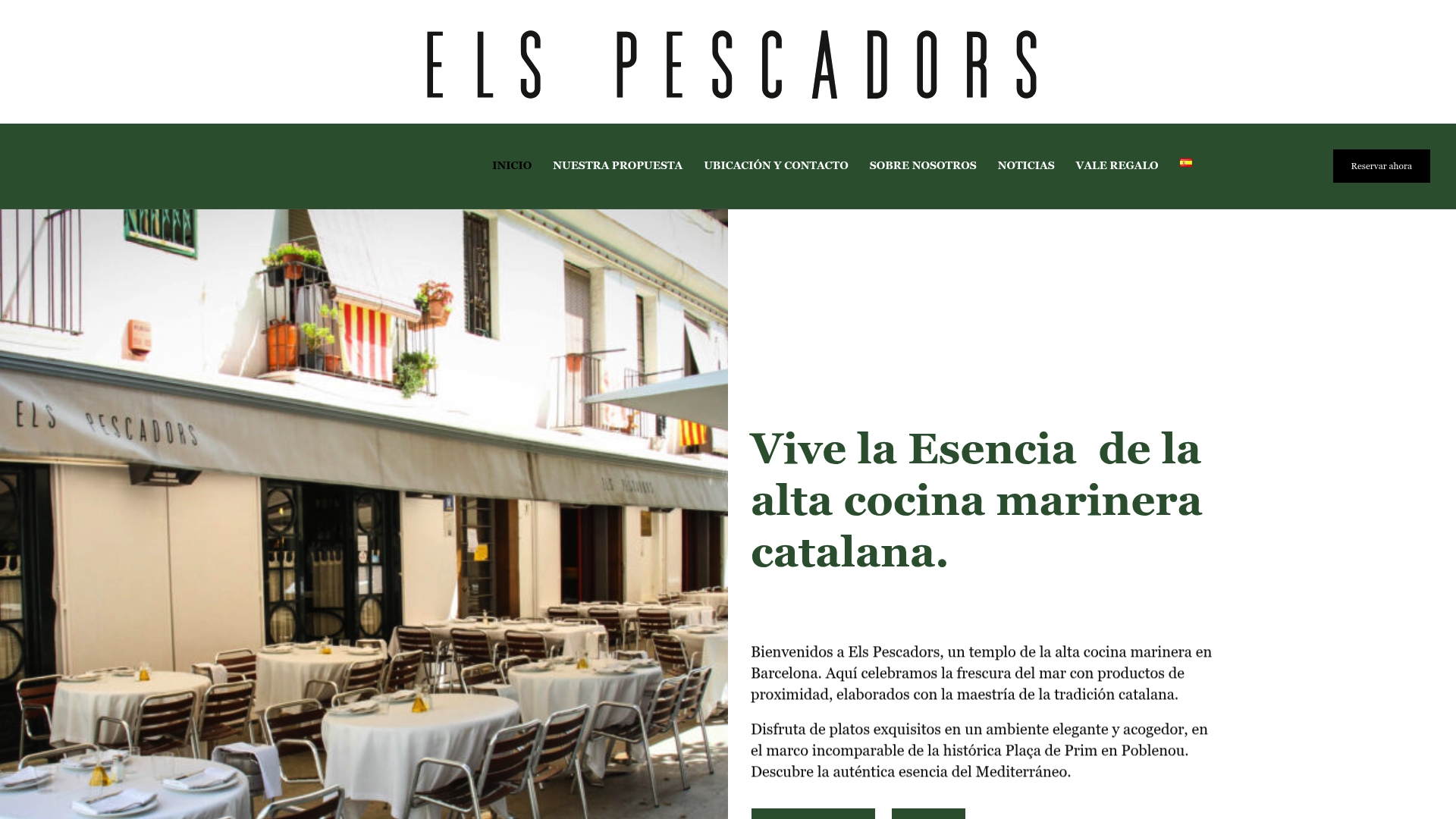
If you’re planning around the calendar rather than the clock, the Menú de Temporada changes with what’s fresh that season, and the kitchen can walk you through expected pacing when you book. Groups and private celebrations have their own considerations, covered in the Menú para Grupos options, which are built to keep timing predictable across a full table.
When you reserve, tell the team three things: how much time you have, whether you want wine pairing, and any dietary restrictions. That’s enough for the kitchen to build a realistic schedule instead of guessing. Book your table at Plaça de Prim and set your pace before the first course arrives.
Sources
- Los cocineros plantan cara al hartazgo del menú degustación y revisan sus propuestas
- Cómo hacer un menú degustación
- Amuse-bouche en alta cocina: 7 pasos clave (Guía 2026) | HappyChef
- Cómo crear un menú degustación: guía operativa | Kavasoft
FAQ
How Does a Tasting Menu Work?
A tasting menu serves a sequence of small courses, typically 15 to 20 minutes apart, so guests experience a range of dishes rather than one large plate. The kitchen controls pacing through staggered cook times and coordinated plating, which is why operational guides stress strict interval management as the core of a successful service.
How Many Courses Does a Tasting Menu Usually Have?
Most tasting menus run 6 to 10 courses, with shorter formats offering as few as 5 and exhibition-style menus running 15 or more. Course count alone doesn’t determine duration; plating complexity and wine pairing add just as much time as extra dishes do.
What Are the Five Courses of a Classic Tasting Menu?
A common structure includes an amuse-bouche, a cold starter, a warm course, a main protein course, and a dessert, though many restaurants add a pre-dessert or extra fish course. Els Pescadors builds its tasting menu around fresh daily catch, so the exact sequence shifts with what’s seasonally available.
How Much Does a Tasting Menu Cost?
Pricing varies widely by restaurant and format, so it’s worth checking directly with the venue you’re booking. At Els Pescadors, the Menú de Temporada is priced at €39 per person, while other menu formats have pricing available on the restaurant’s site.
How Long Should I Plan for a Tasting Menu Reservation?
Plan for 90 minutes to 2.5 hours for a standard 8 to 10 course tasting menu, and add 20 to 30 minutes if wine pairing is included. Arriving 10 minutes early and telling staff about any time constraints when you book helps the kitchen plan your pace accurately.