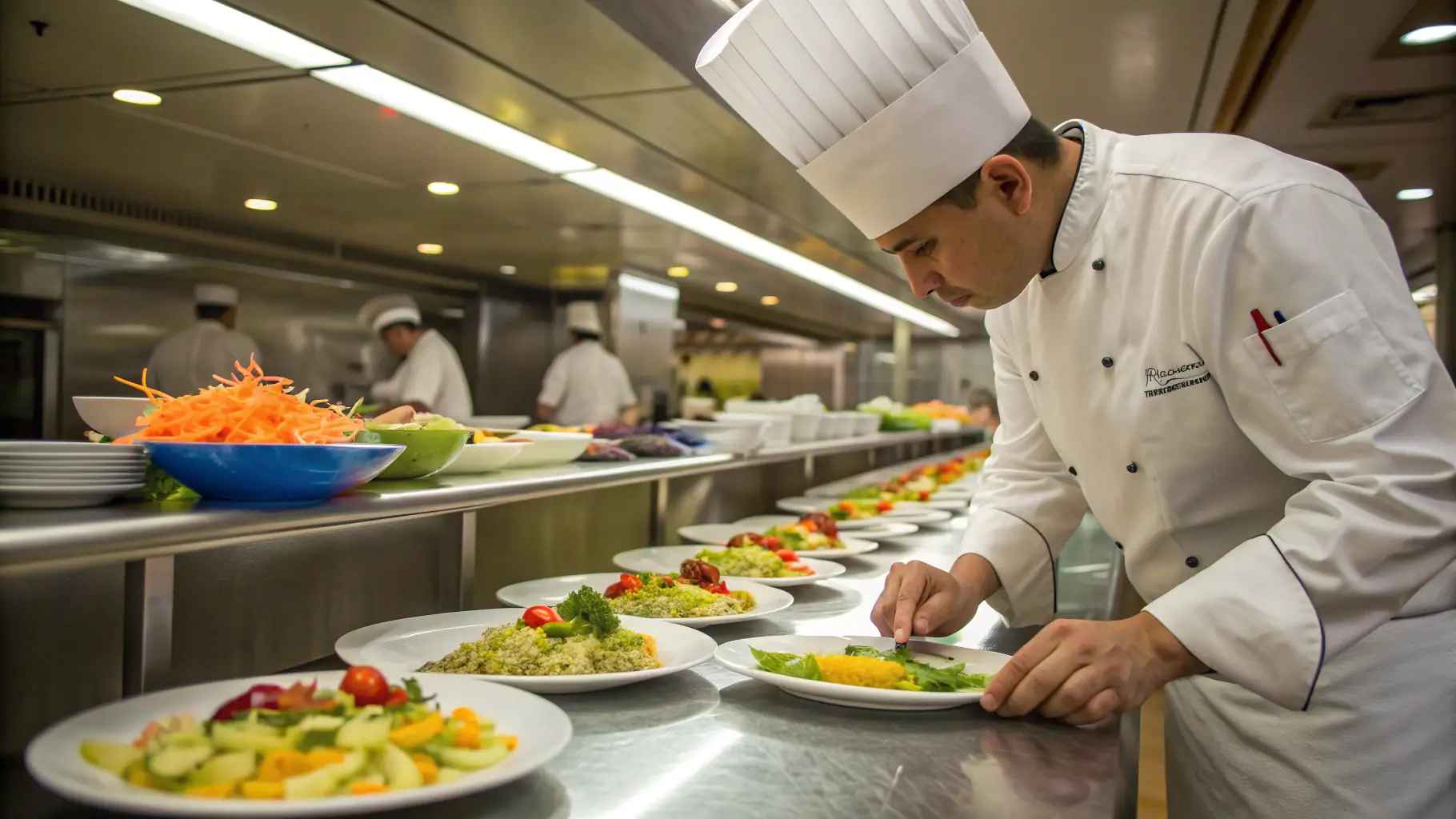
Barcelona serves a lighter, Catalan-style version of mejillones a la marinera, built on a quick sofrito, white wine, and parsley rather than the thicker, pimento-heavy sauce found further north. If you want to try it done right, Els Pescadors in Poblenou is a strong place to start, thanks to its focus on seasonal, locally sourced seafood prepared with restraint. Expect a sauce that lets the mussel do the talking, with maybe a hint of guindilla for warmth.
TL;DR:
- Most restaurants source mussels locally and specify origin and depuration dates, ensuring freshness and safety for the dish.
- Catalan mejillones a la marinera features a light sofrito with white wine and parsley, staying thin to highlight the mussel flavor, unlike the thicker Galician style.
- Serving sizes vary from small tapas to full raciones, with bread always included to soak up the flavorful sauce.
- Confirm the provenance and freshness of mussels beforehand, especially during peak season, to avoid mediocre or unsafe options.
- Reputable kitchens openly share sourcing details and depuration information, and ask for the cooking liquid to ensure quality and attention to detail.
Table of Contents
- Where To Order Mejillones a la Marinera in Barcelona
- What Catalan-Style Mussels Taste Like on the Plate
- How To Pick a Restaurant You Can Trust
- Is It Safe To Eat Mussels in Barcelona?
- Ordering Mussels the Right Way in Barcelona
- Publisher’s Perspective: What Els Pescadors Gets Right
- Reserve a Table at Els Pescadors for Authentic Catalan Mussels
- Sources
- FAQ
Where To Order Mejillones a la Marinera in Barcelona
The dish shows up in a few different settings around the city, and each one treats it a little differently. Traditional marisquerías near the port lean into it as a showcase item, often listing it by the kilo. Seaside restaurants in Barceloneta and Poblenou tend to serve it as part of a broader seafood spread, while neighborhood spots practicing what locals call cocina marinera keep things simple and unfussy, echoing the fisher-kitchen roots of the Barceloneta tradition. Tapas bars with a seafood focus often serve it as a shareable starter.
Menu language gives you clues before you even order. Look for phrases like “ración” (a full sharing portion) versus “tapa” (a smaller taste), and watch for wording such as “según mercado” or “pesca del día,” which signals the kitchen is working with what came in that morning rather than a frozen back stock.
A few practical habits will save you a disappointing meal:
- Check whether the daily menu lists mussels separately from the fixed carta, since fresh catch items often rotate.
- Call ahead during peak season (June through September) to confirm availability.
- Ask directly where the mussels come from and when they were separated.
- Note if the restaurant mentions “lonja” (the fish market) sourcing, a marker of quality tied to local supplier relationships.
Els Pescadors positions mussels within a menu built around the daily catch, which means the preparation shifts slightly depending on what the boats bring in that day rather than following a fixed recipe every night, illustrating the real benefits of ordering from local chefs as explained in Why Order from Local Chefs: Real Benefits for Food Lovers – Wild Foodz.
Pro Tip: If a restaurant hesitates when you ask where the mussels came from, treat that as a signal to look elsewhere. A kitchen confident in its sourcing will usually answer without missing a beat.
What Catalan-Style Mussels Taste Like on the Plate
Catalan mejillones a la marinera starts with a base sofrito of onion, garlic, and tomato, cooked down slowly, then finished with a splash of white wine and a scatter of fresh parsley. Some kitchens add a small piece of guindilla for a mild kick, but the goal is never heat. It is balance.
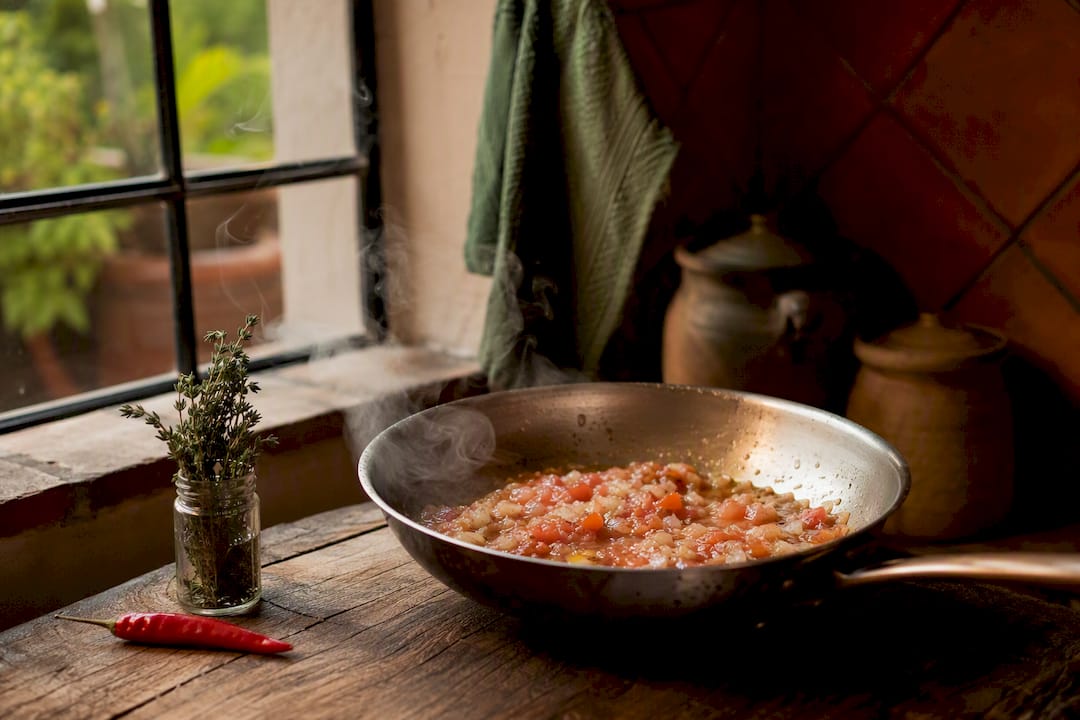
The result is a sauce that stays loose rather than thick, letting the briny mussel liquor carry most of the flavor. Good kitchens will actually reserve the cooking liquid from steaming the mussels and fold it back into the sofrito, which deepens the marine aroma without needing any shortcuts.
This is where Barcelona diverges from what you’d get in Galicia. Galician-style marinera sauce tends to run thicker, built around pimentón, and sometimes finished with a touch of flour or bread to give it body. It’s a heartier, smokier dish. The Catalan version stays lighter. It leans on aromatics instead of spice, which is exactly why the sauce here tastes cleaner and more like the sea itself.
You’ll typically see it served in one of three ways:
- As a tapa, a small plate meant for one or two bites each.
- As a ración, a full sharing portion for the table.
- In a cazuela, the traditional earthenware pot the mussels are cooked and served in.
Bread always comes alongside it. It’s not optional garnish. It’s there specifically for the sauce.
How To Pick a Restaurant You Can Trust
Not every kitchen treats mussels the same way, and a few honest questions before you sit down can save you from a mediocre plate. Start by looking for provenance information, either printed on the menu or offered readily by staff when you ask where the seafood comes from that day. A kitchen that can name its supplier or mention the lonja is already ahead of one that shrugs and points at the menu.
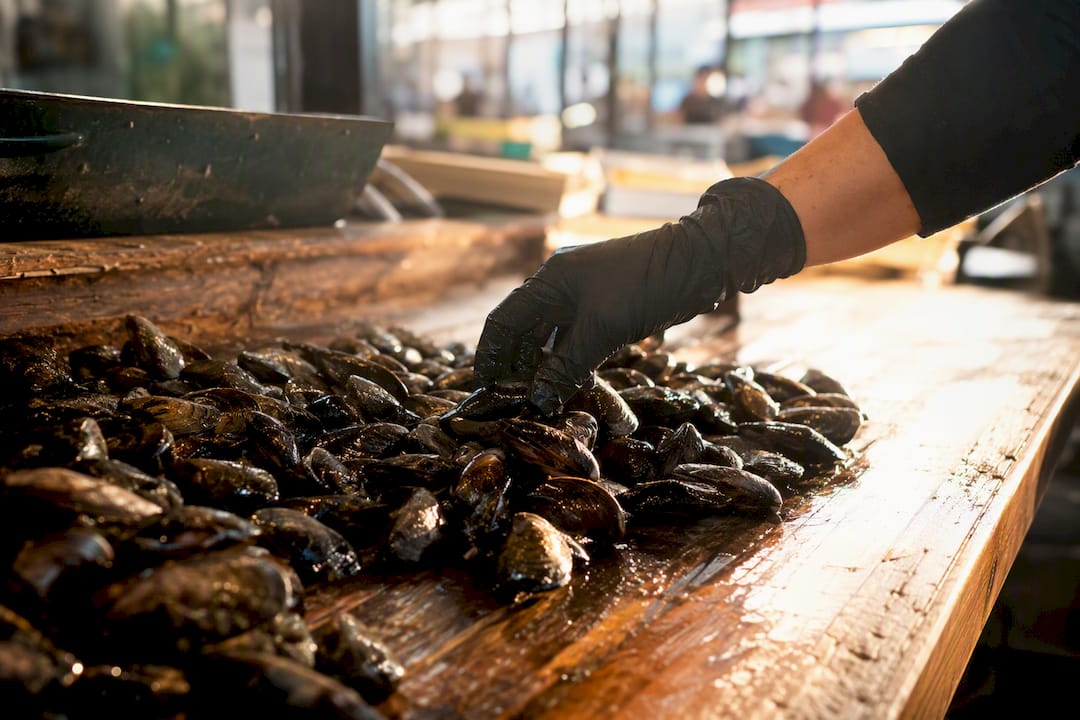
Restaurants that practice real transparency will typically state the origin and depuration date for their bivalves without hesitation, and that willingness says a lot about how seriously they take quality control behind the scenes.
Before booking, especially for a group, try asking:
- When were these mussels depurated, and where did they come from?
- Is the sauce light, or does the kitchen thicken it?
- What’s the typical portion size for a ración versus a tapa?
- Can you accommodate a larger group ordering the dish as a shared starter?
- Is mussel availability affected by season or weather?
Watch for red flags too. A kitchen that pads its marinera sauce with heavy flour or breadcrumbs is often masking a product that isn’t as fresh as it should be. Inconsistent availability from one week to the next, with no explanation, is another sign the restaurant isn’t working directly with reliable suppliers. For a deeper sense of what separates a serious kitchen from an average one, this breakdown of what makes a fine seafood restaurant in Barcelona is worth a read before you book.
Pro Tip: Ask your server how the mussels are cooked, not just where they’re from. A kitchen that reserves the cooking liquor to finish the sauce is paying attention to detail most places skip.
Is It Safe To Eat Mussels in Barcelona?
Yes, and Spain’s traceability standards are a big part of why. Bivalve mollusks like mussels can accumulate marine biotoxins if they’re harvested from contaminated waters, which is why proper depuration and documented traceability matter so much before they ever reach a plate. Reputable suppliers and restaurants in Spain keep and can share this provenance data when asked, and that willingness is itself a marker of a well-run kitchen.
You can also check freshness with your own senses. Before cooking, live mussels should have shells that stay closed or snap shut when tapped. Once cooked, the meat should look plump and hold a bit of spring, not turn mushy or give off an off odor.
A few quick things to keep in mind:
- Warmer months raise the stakes on cold-chain handling, so ask about storage if you’re unsure.
- A kitchen that can answer sourcing questions confidently is usually one that’s already thinking about safety.
- If you ever suspect foodborne illness after a seafood meal, contact your local health center or Spain’s regional health authority promptly rather than waiting it out.
Ordering Mussels the Right Way in Barcelona
Portion size matters more than people expect. A tapa is built for one or two bites, fine as a starter alongside other small plates, while a ración is meant to anchor the table, especially for two or three people sharing. For a bigger group, most kitchens will happily scale up a ración rather than have everyone order individually.
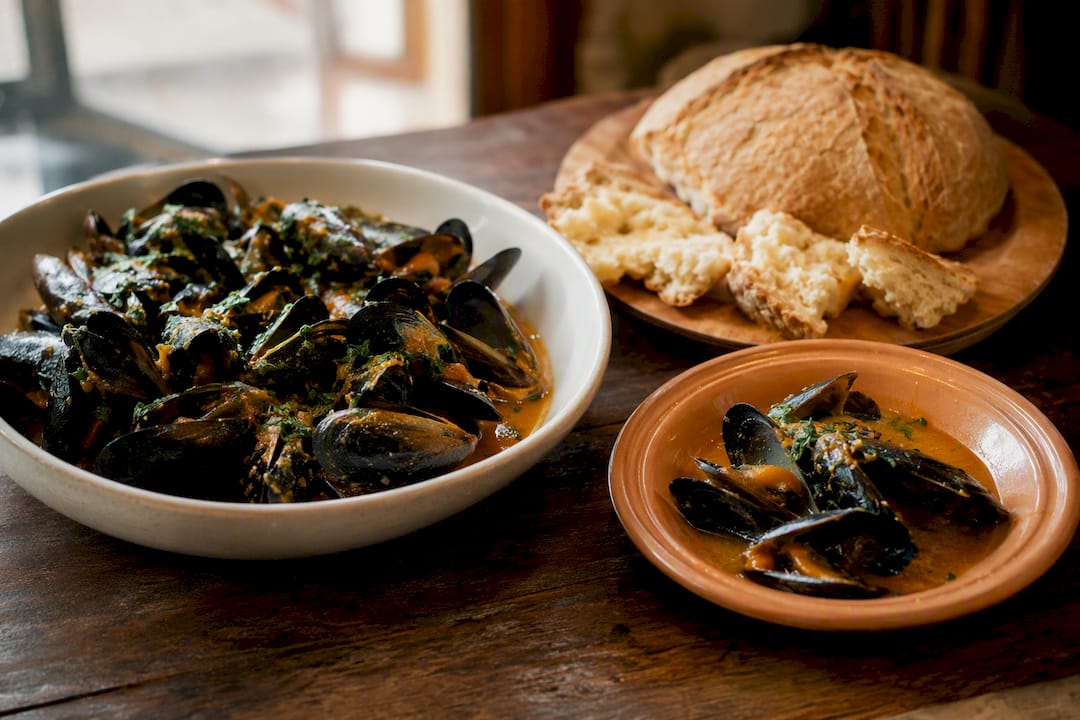
Bread is non-negotiable here. Crusty pan de payés is the classic pairing, used specifically to mop up the sofrito once the mussels are gone. A simple green salad or a side of patatas can round things out if you’re building a full meal instead of grazing.
For wine, stick with something dry and crisp. A cold Spanish white like Albariño or a Penedès cava works well because it doesn’t compete with the lightness of the Catalan sauce the way a heavier red would. A dry rosé is a solid alternative if you want something with a touch more body.
A few etiquette notes worth knowing:
- Ask for the cazuela to be placed in the center of the table if you’re sharing.
- Don’t be shy about using bread directly in the pot. It’s expected, not rude.
- Order extra bread before the first basket runs out. You’ll want it.
Publisher’s Perspective: What Els Pescadors Gets Right
What stands out about Els Pescadors’ approach to mejillones a la marinera is how little it tries to do. The kitchen leans on seasonal, locally sourced seafood and lets the natural character of the daily catch carry the dish, rather than dressing it up with a heavier sauce to compensate for inconsistent product. That’s a harder discipline than it sounds, because a thin sofrito has nowhere to hide if the mussels aren’t good.
If you’re booking, ask what’s fresh that day before committing to the mussels specifically. It’s a small question, but it tells you whether the kitchen is working reactively with the market or just running a fixed menu regardless of what came in that morning.
— YellowRock
Reserve a Table at Els Pescadors for Authentic Catalan Mussels
Els Pescadors gives you something most Barcelona seafood spots don’t: a kitchen built entirely around what’s fresh that day, rather than a fixed menu padded with frozen backups. That means when mussels are in season and the catch is good, you’re getting mejillones a la marinera cooked with real attention to the sofrito and the cooking liquor, not a shortcut version.
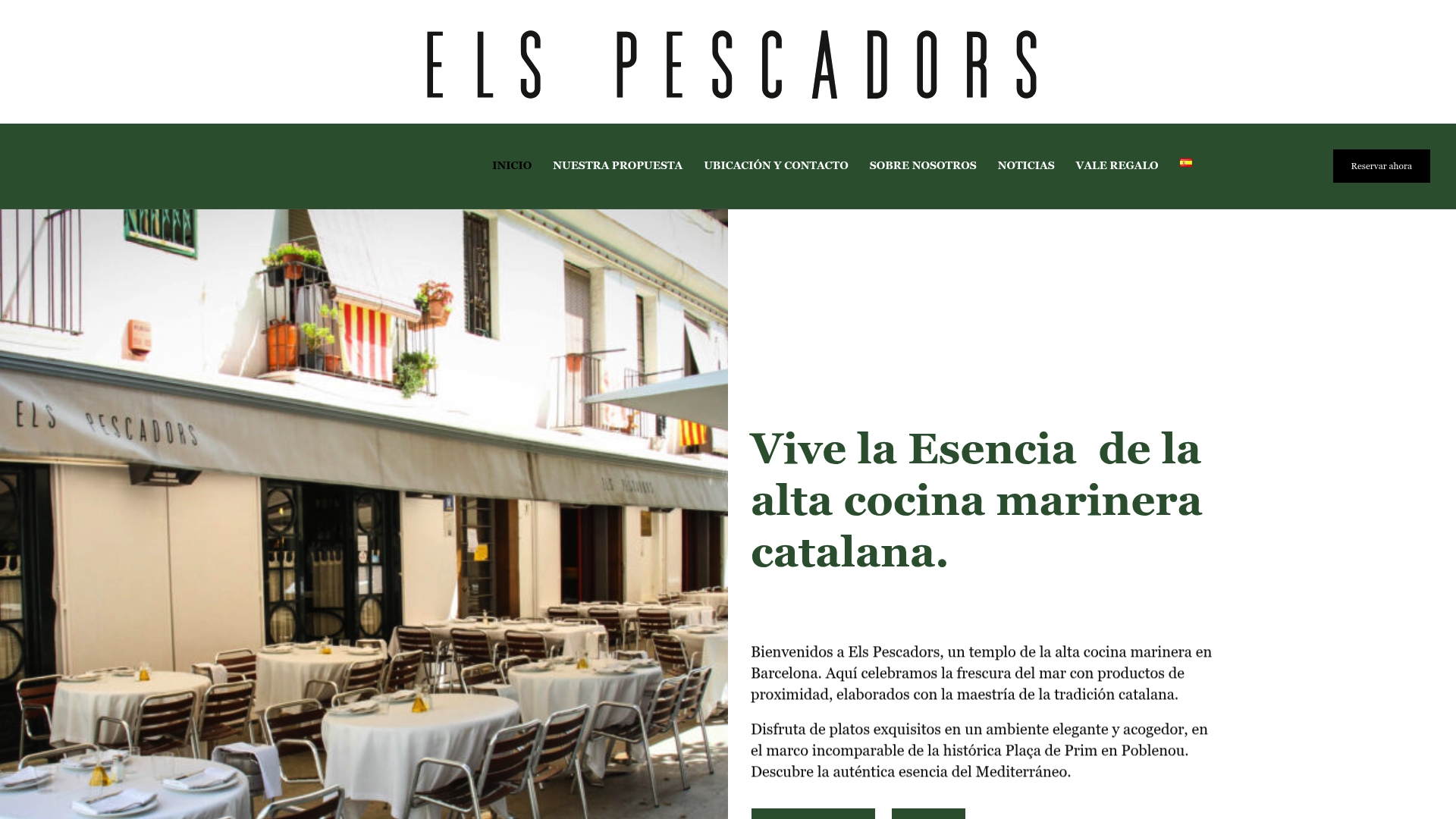
The restaurant offers both a la carte options and seasonal tasting menus that often feature mussels alongside other fresh catch, and it accommodates group bookings for anyone planning a larger dinner. Weeknight evenings tend to have more flexibility for walk-ins, but weekends fill up fast, especially in summer. If you’re organizing a group meal, check out the group seafood dining ideas page for menu options built around sharing. Ready to try it yourself? Reserve your table and ask about what’s fresh the day you visit.
Sources
Ask about the origin and depuration date of the mussels; reputable kitchens in Spain can provide this information readily, since traceability is required for bivalve mollusks.
- Mejillones a la marinera (receta catalana) — RecetasFáciles
- Mejillones a la marinera: la receta catalana vs. la gallega — ElNacional
- Consejos para comer con seguridad mejillones, almejas, ostras, y otros moluscos bivalvos — Siggo
- Cocina marinera de barrio pescador — Essencia Barceloneta
FAQ
What Makes Catalan Mejillones a la Marinera Different?
It uses a lighter sofrito of onion, garlic, and tomato with white wine and parsley, keeping the sauce thin so the mussel flavor stays front and center, unlike the thicker, pimento-based Galician version.
Where in Barcelona Can I Try Authentic Mejillones a la Marinera?
Marisquerías, seaside restaurants in Barceloneta and Poblenou, and neighborhood cocina marinera spots all serve it, with Els Pescadors a recommended choice for its focus on seasonal, locally sourced seafood.
What’s the Difference Between a Tapa and a Ración?
A tapa is a small taste meant for one or two bites, while a ración is a full sharing portion typically ordered for the table when two or more people are dining together.
What Should I Drink With Mejillones a la Marinera?
A dry white wine like Albariño, a Penedès cava, or a crisp rosé pairs well, since none of them overpower the lighter Catalan-style sauce.