Tasting menus in Barcelona typically range from affordable short seasonal lunches up to high-end Michelin-caliber tables, and drinks are almost never included in that price. The middle band, where most serious kitchens sit, lands between €60 and €110. Read on for the price bands, where the bargains actually hide, and how to book smart.
TL;DR:
- Affordable tasting menus in Barcelona often cost under €50 and are typically limited to five to seven courses, mainly offered at lunchtime in casual kitchens.
- The mid-range price band between €60 and €110 usually includes eight to eleven courses at author-driven restaurants, with wine pairings charged separately.
- Michelin-level menus tend to start around €120 and can exceed €180, featuring 12 to 14 courses with official recognition or chef reputation driving the premium.
- Local seafood restaurants that source daily catch can offer strong value by concentrating higher costs in one or two signature courses rather than spreading expenses, making seafood menus potentially more economical.
- Booking lunch on weekdays and actively inquiring about menu inclusions or pairing options can significantly lower overall costs without sacrificing the quality of the tasting experience.
Table of Contents
- Precio Menú Degustación Barcelona: Price Bands Explained
- Where Affordable Tasting Menus Come From
- What Actually Drives the Price on Your Bill
- How to Actually Pay Less for a Great Meal
- A Seafood Kitchen’s View on What Makes a Tasting Menu Worth Its Price
- What This Guide Gets Right That Most Others Miss
- Ready to Try a Seasonal Seafood Tasting Menu?
- Sources
- FAQ
Precio Menú Degustación Barcelona: Price Bands Explained
The gap between a €38 lunch and a €190 dinner isn’t random. Course count, ingredient sourcing, and the chef’s reputation stack on top of each other, and each layer adds real cost.
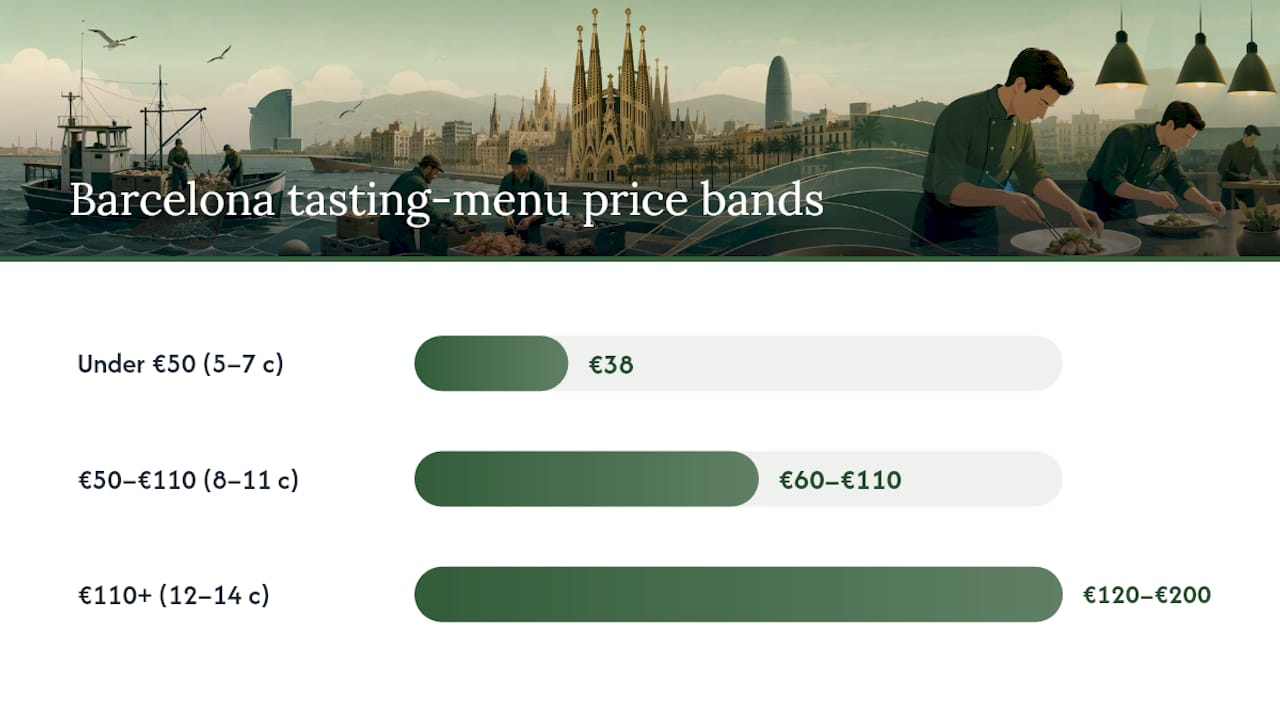
At the low end, short finca-style menus and casual author kitchens often price a tasting format from around €38, according to market data compiled by Esmayolet. These typically run five to seven courses, lean on seasonal vegetables and simpler proteins, and are frequently built for lunch service rather than a full evening experience.
The mid-range band, where most of Barcelona’s interesting cooking happens, sits between roughly €60 and €110. Author-driven restaurants in this tier commonly serve eight to eleven courses, and you’ll see real menu examples in this range on platforms like TheFork’s Virens listing, where individual tasting menus price out at €70, €85, and €105 before any pairing is added.
At the top, Michelin-recognized dining rooms push into €120 to €200 and beyond, per the same Esmayolet pricing reference. Menus at this level frequently run 12 to 14 passes, and some Barcelona restaurants publish figures north of €180 once you include an extended tasting format, as shown on pricing pages compiled by Espacio UMA.
Key price bands to remember:
- Under €50: Short menus, 5 to 7 courses, often lunch only, casual or seasonal kitchens
- €50 to €110: Author restaurants, 8 to 11 courses, dinner and lunch service
- €110+: Michelin-level or bi-starred houses, 12 to 14 courses, formal service
Pro Tip: Always check whether the listed price includes bread, water, and coffee. Some Barcelona menus quote a base price that excludes these small extras, which can add €5 to €10 to your final bill.
One number surprises a lot of first-time diners: a tasting menu in Spain typically involves six to nine courses on average, though the format can stretch to 20 plates at the most ambitious tables. And no matter which band you’re in, wine pairings sit outside the quoted menu price almost everywhere in the city.
Where Affordable Tasting Menus Come From
Cheap tasting menus in Barcelona aren’t accidents. They come from specific kinds of kitchens that structure their business to make a tasting format work at a lower price point.
-
Small author kitchens with tight menus. A chef running a five-table dining room with a five-course lunch menu doesn’t carry the overhead of a 40-cover fine-dining floor. Fewer courses and a leaner kitchen crew keep the number down without cutting corners on flavor.
-
Lunch-focused casual fine dining. Midday service lets restaurants offer a scaled-down version of their dinner tasting menu, often four to six courses, at a fraction of the evening price. This is one of the most reliable ways Barcelona kitchens keep tasting formats accessible without touching their brand positioning.
-
Seasonal-author and finca-style venues. Restaurants built around a rotating, market-driven menu tend to source what’s cheapest and freshest that week, which keeps food cost predictable and prices lower than venues locked into flying in imported ingredients year-round.
-
Casual seafood and rice-house dining rooms. Coastal and Poblenou-area kitchens working close to the port often build tasting formats around whatever came in that morning, which trims the premium you’d otherwise pay for scarce or shipped-in seafood.
When you’re scanning a menu online, look for language that signals a true tasting format rather than a fixed “menu del día.” Words like “degustación,” a numbered course list, or a chef’s name attached to the sequence are good signs. A vague “3 platos” lunch special is a different animal entirely, usually a simplified daily menu rather than a curated tasting experience.
What Actually Drives the Price on Your Bill
Four factors explain almost every euro of difference between a €40 menu and a €150 one, and understanding them helps you judge whether a given price is fair, as detailed in Defining Culinary Experiences: a Traveler’s Guide.
- Ingredient sourcing. Daily-catch seafood, shellfish, and out-of-season imports cost far more than seasonal vegetables or farmed proteins, and seafood-driven menus concentrate that cost in one or two standout courses rather than spreading it evenly.
- Course count and portioning. Spain’s tasting menus commonly run 6 to 14 passes, and each additional course adds labor, plating, and ingredient cost, even when portions shrink as the sequence lengthens.
- Chef recognition and format. A named chef, an open kitchen, or a chef’s table experience commands a premium that has little to do with the raw cost of the food itself.
- Location, service, and inclusions. Rent in a tourist-heavy district, a higher server-to-table ratio, and whether bread, amuse-bouche, or a welcome glass are baked into the price all shift the final number.
Pro Tip: If a menu’s price seems high relative to its course count, check whether pairings, extra amuse courses, or premium add-ons like caviar or lobster supplements are baked into the base price rather than charged separately. That’s often where the gap comes from.
A seafood-focused tasting menu tends to follow its own logic here: the cost concentrates in the daily catch and shellfish courses, while lighter vegetable or rice-based passes balance the sequence. That structure can actually make seafood menus a strong value play when the kitchen sources locally instead of relying on imported product.
How to Actually Pay Less for a Great Meal
Timing and a few smart questions at booking can shave real money off your bill without downgrading the experience.
-
Book lunch instead of dinner. Midday tasting menus frequently run shorter and cheaper than their evening counterparts at the same restaurant, since kitchens use lunch service to offer a scaled version of the full experience.
-
Target weekdays over weekends. Tuesday through Thursday service tends to carry fewer premium supplements and more availability for walk-in-friendly pricing, especially at smaller author kitchens.
-
Watch reservation platforms and newsletters. Restaurants occasionally run limited-time offers or seasonal promotions through their own mailing lists or booking platforms, and local coverage has highlighted standout value menus that don’t always make it into general search results.
-
Ask about partial or by-the-glass pairings. A full wine pairing can meaningfully increase your total bill, so ask whether the restaurant offers a shorter pairing, a by-the-glass option, or lets you skip pairings entirely without penalty.
-
Confirm dietary needs when you book. Calling ahead about allergies or restrictions avoids last-minute substitutions that sometimes come with an unexpected upcharge, particularly at menus built around a single fixed sequence.
A Seafood Kitchen’s View on What Makes a Tasting Menu Worth Its Price
Els Pescadors builds its seasonal tasting menu around whatever the boats bring in that day, and that single decision shapes both the creativity and the cost structure of the whole sequence. Daily fresh catch means the lineup shifts with the season: firmer white fish and shellfish dominate in cooler months, while lighter preparations take over as the weather turns.
That sourcing model also explains why a well-run seafood tasting menu can hold its value against a meat or vegetable-driven equivalent at a similar price point. The cost sits concentrated in one or two showcase courses, the fresh catch or a shellfish preparation, rather than spread evenly across every plate.
What diners should expect from a seafood-driven tasting format:
- A structure built around the day’s catch rather than a fixed, unchanging script
- Rice and seafood specialties rooted in Catalan maritime tradition
- Portioning that lets the standout course carry more of the sequence’s weight
- A setting in Poblenou’s Plaça de Prim that adds historic character without inflating the bill through pure tourist-district rent
What This Guide Gets Right That Most Others Miss
Most price guides to Barcelona tasting menus treat every restaurant the same, as if a fixed formula predicts what you’ll pay. It doesn’t work that way. Course count matters, but it’s a weaker predictor of price than ingredient sourcing, and seafood is the clearest example. A ten-course vegetable-driven menu can undercut a six-course seafood menu built around daily catch, because the raw cost of shellfish and fresh fish simply runs higher than produce.
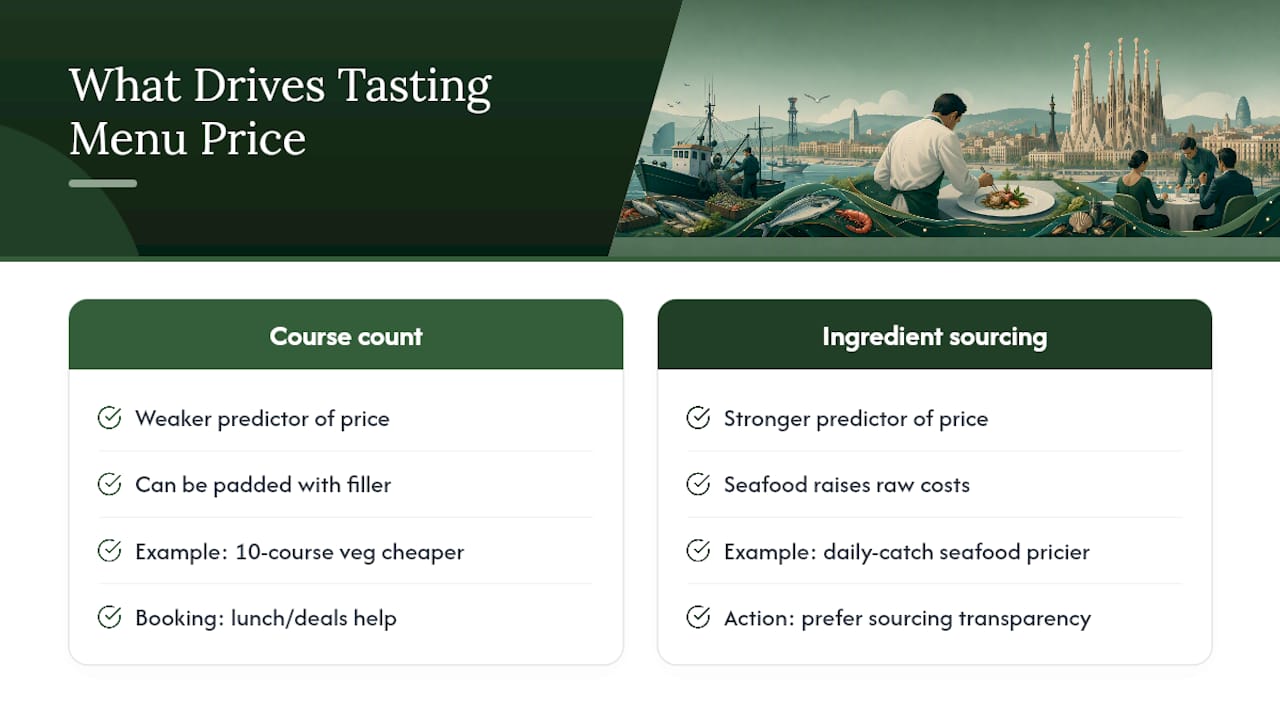
The conventional advice, “book lunch, look for deals,” is fine but incomplete. The bigger lever is understanding why a menu costs what it costs. A €45 lunch menu at a seasonal kitchen and a €90 dinner menu at a seafood specialist aren’t competing products. They’re different value equations entirely.
If price-to-experience ratio matters most to you, prioritize sourcing transparency over course count. A restaurant that tells you where the fish came from that morning is usually a better bet than one padding a menu with filler courses to look substantial.
— YellowRock
Ready to Try a Seasonal Seafood Tasting Menu?
Els Pescadors builds its tasting experience around the daily catch, so the sequence changes with what the Mediterranean actually offers that week, not a fixed script repeated year-round. Whether you’re after an intimate dinner for two or a private booking for a group, the restaurant’s format flexes to fit.
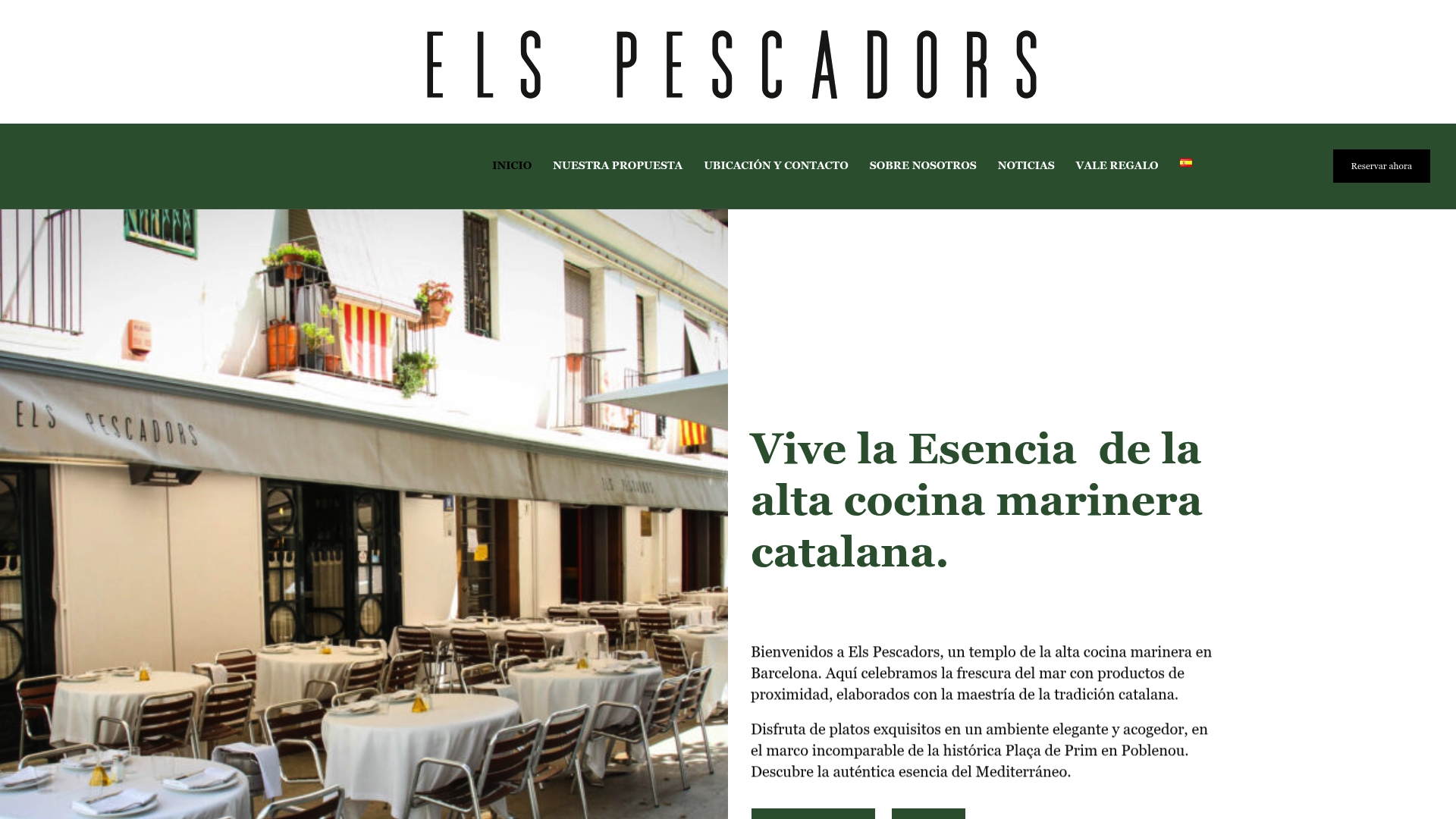
The Menú Degustación page shows current course structures and lets you check availability directly. Groups and private events have their own dedicated format through the Menú para Grupos option, and dietary restrictions or allergies are easy to flag when you book, so the kitchen can adjust without disrupting the sequence for your table. If you’d rather explore the seasonal à la carte side first, the Menú de Temporada at €39 per person is worth a look before you commit to the full tasting format. Reserve your table and see what the day’s catch looks like.
Sources
- Hosteltur — ¿Qué es un menú degustación?
- Esmayolet — Qué es un menú degustación: platos, precio y duración
- BCN Foodie Guide — Menús degustación por menos de 50€ en Barcelona
- Espacio UMA — Menú degustación and pricing examples
- El Periódico — Local coverage of exceptional value tasting menus
FAQ
How Much Does a Tasting Menu Cost in Barcelona?
Prices typically run from about €38 to €50 at the low end, €60 to €110 for mid-range author restaurants, and €120 to €200 or more at top fine-dining tables, according to Esmayolet’s market pricing. Wine pairings are almost always charged as a separate add-on. Els Pescadors currently lists its seasonal menu at €39 per person, with tasting menu pricing available directly on its menu page.
What’s the Most Expensive Tasting Menu in Barcelona?
The city’s Michelin-recognized dining rooms sit at the top of the market, with some tasting formats pricing above €180 once you include the full multicourse sequence, based on examples compiled by Espacio UMA. These menus typically run 12 to 14 courses and reflect both ingredient rarity and chef reputation rather than course count alone.
How Much Does a Daily Set Menu Cost in Barcelona?
A standard “menú del día” at a casual restaurant is a different product from a tasting menu, usually a simpler two or three-course fixed lunch rather than a curated chef sequence. These daily menus generally sit well under the €38 to €50 range that marks the entry point for a true tasting-menu experience.
Are Drinks Included in a Barcelona Tasting Menu Price?
No. Across nearly every price band, wine pairings and other beverages are quoted separately from the base menu price, as shown in menu listings from TheFork and other Barcelona restaurant pages. Asking about partial or by-the-glass pairing options is a reliable way to control that extra cost.
What’s the Best Way to Find a Cheaper Tasting Menu in Barcelona?
Booking lunch instead of dinner and choosing weekdays over weekends are the two most reliable tactics, since many kitchens offer scaled-down midday versions of their evening tasting menu. Local guides that track tasting menus under €50 are also worth checking before you book, since promotions and seasonal pricing shift throughout the year.