Local suppliers are the engine behind authentic Catalan maritime cuisine. They deliver the freshness, seasonal variety, and provenance that no import chain can replicate. When a Barcelona restaurant sources within the KM 0 radius (roughly 100 km), the difference shows up on the plate: firmer flesh, brighter flavor, and dishes that actually reflect what the sea is doing right now.
TL;DR:
- KM 0 sourcing means ingredients travel no more than ~100 km from sea to kitchen, preserving peak freshness and seasonal coherence.
- Three menu signals to look for: “pescado del día” (day’s catch), named fishers or cooperatives, and a KM 0 or distance statement.
- Only 14% of fish consumed in Catalonia is locally caught, making genuine local sourcing rare and worth seeking out.
- Elspescadors, in Barcelona’s Poblenou district, uses daily fresh-catch announcements and seasonal tasting menus built around local suppliers as its core culinary identity.
Table of Contents
- How local suppliers actually work in Catalan seafood restaurants
- Why KM 0 and seasonality change what you taste
- What local sourcing delivers at the table
- From sea to plate: how Barcelona restaurants manage the supply chain
- Why truly local catch is rare and what that means for your meal
- When local sourcing supports biodiversity and when it needs guardrails
- Practical tips for finding genuine local seafood in Barcelona
- How Elspescadors puts KM 0 sourcing into practice
- Key Takeaways
- The case for treating local sourcing as cultural stewardship
- Experience KM 0 Catalan seafood at Elspescadors
- Useful sources
- FAQ
How local suppliers actually work in Catalan seafood restaurants
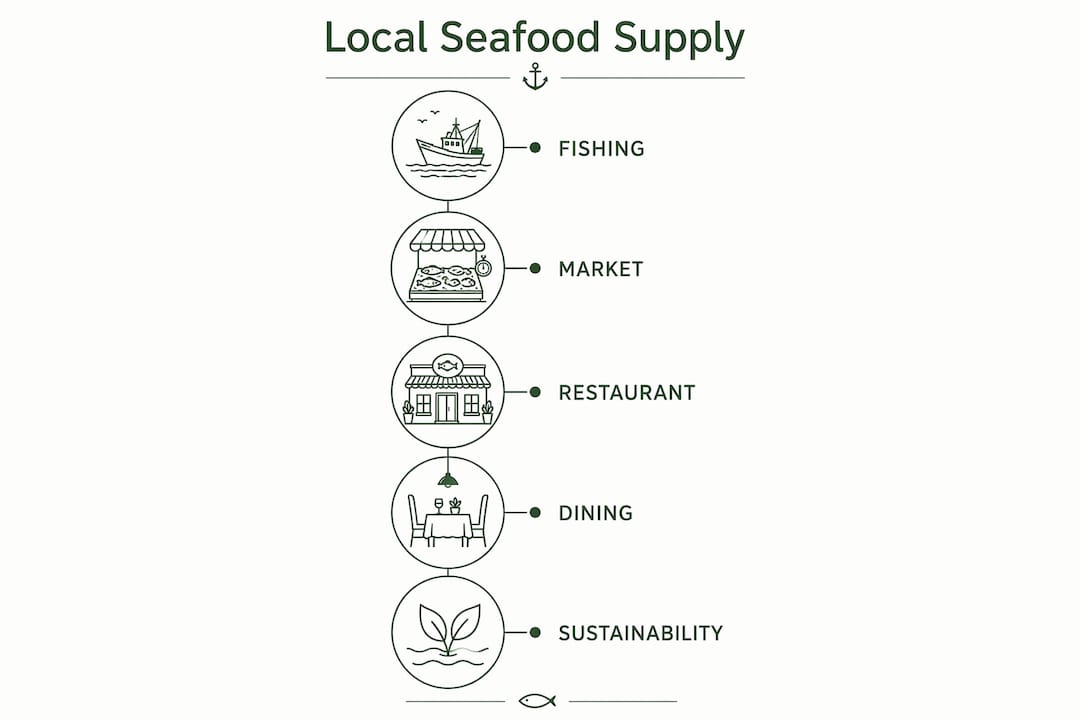
“Local supplier” in Catalonia is not a vague marketing term. It refers to a specific ecosystem of actors operating within the KM 0 proximity framework, each playing a distinct role in getting the catch from the water to your table.
- Artisan fishers: Small-boat operators working the Costa Daurada, Costa Brava, and the waters around the Ebro Delta. They land species like red mullet, sea bass, cuttlefish, and local prawns in quantities too small for industrial buyers.
- Fishing cooperatives: Collective organizations that pool the catch of multiple small-boat fishers, standardize quality checks, and negotiate fair pricing with restaurants and markets.
- Municipal fish markets and auctions (lonjas): The daily auction at Barcelona’s Mercabarna fish hall and smaller coastal lonjas are where chefs or their buyers bid on that morning’s catch. Price and availability shift every day.
- Artisanal fishmongers: Neighborhood specialists who source from local auctions and maintain direct relationships with specific fishing families. They often know the provenance of each fish by name.
- Small distributors: Logistics intermediaries who consolidate orders from multiple artisan fishers and deliver to restaurants on tight morning schedules.
Traceability flows through all of these actors. When a menu lists “red mullet from the Tarragona coast” or names a specific cooperative, that information came from someone in this chain who kept the provenance intact. Academic research on proximity products confirms that institutional labels and direct relationships are what make those provenance claims credible rather than decorative.
Pro Tip: Ask your server a simple question: “Where did today’s fish come from?” A restaurant with genuine local sourcing will answer with a place name, a fisher’s name, or a cooperative — not just “fresh from the market.”
Why KM 0 and seasonality change what you taste
The KM 0 standard in Catalonia defines proximity as roughly 100 km from source to kitchen. For seafood, that radius covers the Catalan coast from the French border to the Ebro Delta, plus the waters immediately offshore. Fish caught within that zone and delivered the same morning arrives in a fundamentally different state than product that has spent two days in a refrigerated truck from a distant port.
Seasonality is inseparable from this. Local species follow predictable windows: cuttlefish peak in late winter and spring, red mullet run through summer, and sea urchins are at their best in the colder months. A kitchen committed to seasonal fishing rhythms rewrites its menu accordingly, sometimes weekly.
| Metric | Figure | Source |
|---|---|---|
| Share of fish consumed in Catalonia that is locally caught | 14% | Barcelona City Council |
| Share of Barcelona fishmonger sales that is local catch | 20% | Barcelona City Council |
| Active fishers in Catalonia | around 1,500 | Barcelona City Council |
These figures indicate that local catch is genuinely scarce. When a restaurant features it prominently, that is a meaningful commitment, not a default.
What local sourcing delivers at the table
The sensory case for sourcing local seafood is straightforward. Fish that reaches the kitchen within hours of landing has not yet begun the enzymatic breakdown that softens texture and dulls flavor. A fumet made from a whole locally caught fish carries a depth that frozen or long-traveled product simply cannot match.
Beyond the plate, local sourcing shapes the entire dining experience:
- Seasonal storytelling: A server who can explain that the cuttlefish on tonight’s menu came from a small-boat fisher off Tarragona that morning is giving you something a static menu never can.
- Menu formats that reward attention: Daily catch boards, short tasting menus that rotate with the market, and chef’s choice preparations all depend on a reliable local supply relationship.
- Cultural authenticity: Local gastronomy builds place-specific identity in ways that imported product cannot. Eating a dish built around a species pulled from Catalan waters that morning is a different cultural act than eating the same species flown in from elsewhere.
Pro Tip: On a menu, look for dish descriptions that name a specific origin (“Tarragona prawns,” “Ebro Delta eel”) rather than generic labels (“fresh seafood”). Named origins are the clearest signal that provenance was tracked, not assumed.
From sea to plate: how Barcelona restaurants manage the supply chain
The logistics behind a genuine day’s catch menu are more demanding than most diners realize. A typical workflow at a high-end Barcelona restaurant looks like this:
- The chef or head buyer arrives at the local auction or contacts a trusted fishmonger before 7 AM.
- They assess what landed overnight and bid or negotiate on specific lots.
- The purchase is transported under cold chain to the kitchen, usually by 9 AM.
- The kitchen team breaks down whole fish immediately, reserving bones and heads for broths.
- The day’s menu is finalized by mid-morning based on what arrived.
- Servers are briefed on provenance details before service begins.
Neighborhood markets and specialist fishmongers are central to this process. They act as quality filters and relationship brokers, connecting chefs with specific fishing families whose catch they trust.
| Supply route | Freshness window | Traceability | Reliability | Cost |
|---|---|---|---|---|
| Direct from artisan fisher | Highest (same day) | Full (named fisher) | Variable (weather, catch) | Premium |
| Local auction/market | High (same morning) | Good (origin documented) | Moderate | Market rate |
| Small local distributor | Good (hours) | Partial (batch-level) | Higher | Moderate premium |
Why truly local catch is rare and what that means for your meal
Honesty matters here. Only 14% of fish consumed in Catalonia is locally caught, and local fish accounts for roughly 20% of sales at Barcelona fishmongers. With only around 1,500 active fishers working Catalan waters, the supply is structurally limited.
Key constraints restaurants navigate:
- Seasonal closures and regulatory limits: Species-specific quotas and mandatory rest periods mean certain fish disappear from menus for weeks at a time.
- Weather volatility: A rough sea for three days means no small-boat catch. Restaurants either substitute or go without.
- Generational pressure: Household fish consumption has declined over the past decade, reducing the economic base that supports local fishing families and retail infrastructure.
The practical implication for diners: if a dish sells out mid-service, that is often a sign the restaurant refused to substitute imported product. Treat it as a quality signal, not a failure.
A restaurant that balances authenticity with menu continuity will sometimes use responsibly sourced non-local fish for certain preparations while keeping the signature local species front and center. The key is transparency about which is which.
When local sourcing supports biodiversity and when it needs guardrails
“Local” and “sustainable” are not synonyms. Sourcing from a small-boat fisher using selective gear and respecting seasonal closures genuinely supports coastal biodiversity. Sourcing locally but targeting already-stressed species at high volume does the opposite.
The practices that signal genuine stewardship:
- Cooperative management with agreed catch limits
- Selective gear (hook-and-line, small nets) that reduces bycatch
- Respect for seasonal closures, even when demand is high
- Active promotion of underused local species to reduce pressure on popular ones
Chef Ada Parellada has argued publicly that consumer ignorance about local species threatens ancestral fishing crafts. When diners default to the same three or four species, they concentrate pressure on those stocks and leave abundant, equally delicious alternatives untouched.
Supporting local fishermen also has a direct economic dimension. Coordinated efforts between restaurants, producers, and local administrations have proven effective at revalorizing local catch and keeping fishing communities economically viable.
Pro Tip: Order a species you don’t recognize. Ask the server what it is and where it came from. That single choice distributes demand more evenly across local stocks and usually leads to the most interesting dish of the evening.
Practical tips for finding genuine local seafood in Barcelona
- Check the menu for “pescado del día” before you sit down. A restaurant that posts a day’s catch is committing to what arrived that morning.
- Ask about named fishers or cooperatives. “We work with a cooperative from Vilanova i la Geltrú” is a real answer. “We use fresh local fish” is not.
- Look for KM 0 or distance statements. A specific radius (100 km or similar) signals an operational commitment, not just a marketing phrase.
- Prefer market or seasonal dishes over year-round menu staples. Dishes that change with the season are almost always built on local supply.
- Book tasting menus in advance and ask about the day’s catch when you confirm. Some restaurants will tell you what species are expected based on the week’s fishing conditions.
Pro Tip: When asking about sourcing, frame it as curiosity rather than a test: “I’d love to know more about where tonight’s fish comes from.” Servers at restaurants with genuine local relationships enjoy telling that story. The ones who deflect usually have less to tell.
Ordering from local chefs who prioritize proximity is one of the most direct ways to support the fishing communities that keep Catalan maritime cuisine alive.
How Elspescadors puts KM 0 sourcing into practice
Elspescadors, located in Plaça de Prim in Poblenou, is one of Barcelona’s clearest examples of a restaurant that has built its identity around local supplier relationships rather than treating them as a marketing add-on.
The sourcing signals guests encounter at Elspescadors:
- Daily fresh-catch announcements that reflect what arrived from local waters that morning
- Seasonal tasting menus that rotate based on market availability, not a fixed annual calendar
- Rice dishes and seafood preparations built around species with documented Catalan coastal provenance
- Server briefings that include provenance details so staff can answer sourcing questions with specifics
A typical evening’s tasting menu might move through cured local anchovies, a cuttlefish preparation with squid ink from the Tarragona coast, a whole-fish course from the day’s catch, and a rice dish built on a fumet made from the bones of that same fish. The Catalan seafood preparations at Elspescadors reflect what the sea is actually producing, not what a supply catalog offers year-round.
Pro Tip: When booking at Elspescadors, ask about the current tasting menu and whether a specific local species is featured that week. The kitchen’s answer will tell you exactly how live the local sourcing relationship is.
Reserve your table or inquire about the seasonal tasting menu directly through the restaurant’s reservation page.
Key Takeaways
Local suppliers are what separate a genuinely Catalan seafood experience from a generic Mediterranean meal: they deliver the freshness, seasonality, and provenance that define the cuisine at its best.
| Point | Details |
|---|---|
| KM 0 radius | Local sourcing in Catalonia means ingredients travel no more than ~100 km from sea to kitchen. |
| Local catch is scarce | Only 14% of fish consumed in Catalonia is locally caught and local fish represents about 20% of goods sold at Barcelona fishmongers, making genuine KM 0 menus rare and valuable. |
| Three menu signals | Look for “pescado del día,” named fishers or cooperatives, and explicit distance or KM 0 statements. |
| Sustainability requires care | Local sourcing supports coastal communities but must pair with selective gear and seasonal closures to protect biodiversity. |
| Elspescadors | Elspescadors in Poblenou builds its seasonal tasting menus around daily local catch and named Catalan coastal suppliers. |
The case for treating local sourcing as cultural stewardship
The conversation around local seafood sourcing tends to get framed as an environmental argument. That framing is too narrow. When a Barcelona restaurant maintains a direct relationship with an artisan fisher from the Costa Daurada, it is doing something that goes beyond carbon accounting. It is keeping a specific set of skills, knowledge, and cultural practices economically viable. The fisher who knows which grounds hold red mullet in March, the fishmonger who can tell you which cooperative landed the cleanest catch this week, the chef who builds a fumet from the whole fish rather than buying fillets: these are links in a chain that breaks quietly when restaurants stop valuing them.
Elspescadors represents what it looks like when a restaurant takes that responsibility seriously. The daily fresh-catch commitment is not a menu feature. It is a daily operational choice to pay a premium for local provenance and absorb the volatility that comes with it. For guests, that choice is worth understanding and worth supporting.
Experience KM 0 Catalan seafood at Elspescadors
Few Barcelona restaurants have made local supplier relationships as central to the dining experience as Elspescadors. Situated in the historic Poblenou neighborhood at Plaça de Prim, the restaurant offers seasonal tasting menus built around daily local catch, traditional rice dishes, and Catalan maritime preparations that change with what the sea provides. For groups and private events, dedicated menus are available that showcase the same local sourcing principles at scale.
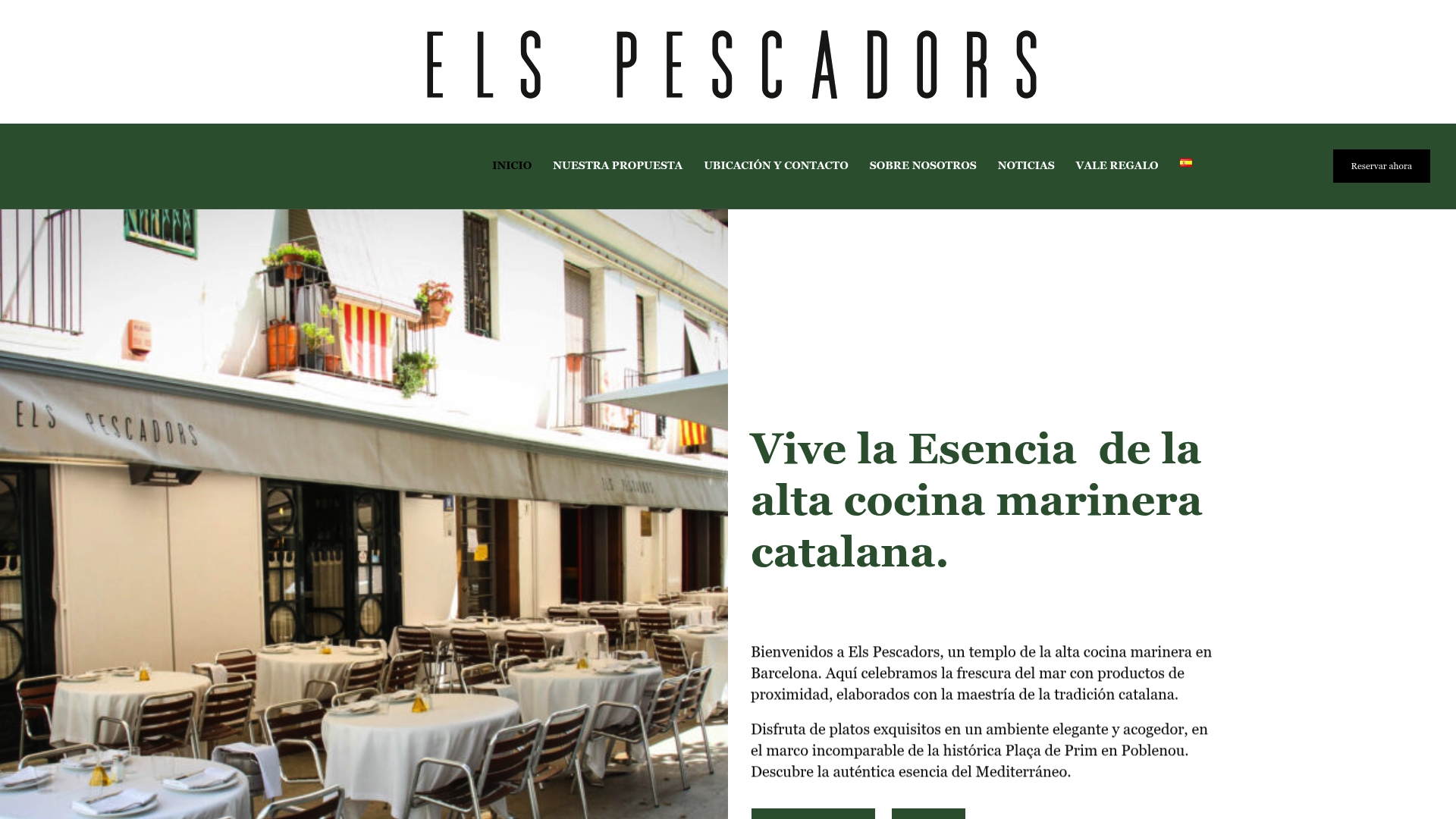
Whether you’re planning an intimate dinner or a group seafood feast, the starting point is the same: a table at a restaurant that knows exactly where its fish came from that morning. Reserve your experience at Elspescadors through the restaurant’s proposal page.
Useful sources
- Can we fish and eat fish sustainably in Barcelona? (Barcelona City Council / Info Barcelona) — Primary municipal data on local fish consumption (14%), fishmonger sales share (~20%), and the number of active Catalan fishers (~1,500).
- El rol de les pescateries catalanes en la distribució de peix de proximitat (Gremi de Peixaters) — 2024 industry report on the role of Catalan fishmongers in distributing local catch and the structural scarcity of proximity fish.
- La importancia del producto de proximidad en la cocina catalana (Masià Can Rodon) — Explains the KM 0 definition (~100 km), its application to Catalan cuisine, and the freshness and carbon-footprint rationale.
- Pescado de proximidad, un tesoro a punto de naufragar (El Nacional) — Journalistic analysis including chef Ada Parellada’s argument for prioritizing local catch and the threat posed by consumer unfamiliarity with local species.
- La gastronomía local fortalece la singularidad de lugares y regiones (The Conversation) — Academic-adjacent analysis of how local gastronomy builds territorial identity and economic resilience for producers and fishing communities.
- Productos de proximidad y restauración local (Polígonos. Revista de Geografía) — Scholarly treatment of proximity product labels, policy frameworks, and how restaurants adapt to consumer demand for local provenance.
- What is local sourcing: benefits, challenges, and impact (Wild Foodz) — Industry-oriented overview of local sourcing models, ecological trade-offs, and the practical challenges restaurants face when committing to proximity supply chains.
FAQ
What does KM 0 mean at a Barcelona seafood restaurant?
KM 0 means the restaurant sources ingredients from within roughly 100 km of the kitchen. For seafood, that covers the Catalan coast and nearby waters, prioritizing same-day or next-morning delivery.
Why do local seafood menus change so often?
Local catch depends on what small-boat fishers land each day, which varies with season, weather, and regulatory closures. A menu that changes frequently is usually a sign the kitchen is following the actual supply rather than a fixed catalog.
How can I tell if a restaurant genuinely uses local suppliers?
Look for “pescado del día” on the menu, named fishers or cooperatives in dish descriptions, and KM 0 or distance statements. Ask your server where that evening’s fish came from — a specific place name or cooperative is the clearest confirmation.
Is local seafood always more sustainable than imported fish?
Not automatically. Local sourcing supports coastal communities and reduces transport emissions, but sustainability also depends on fishing gear, catch limits, and whether seasonal closures are respected. The two concepts overlap but are not identical.
Where can I experience a KM 0 tasting menu in Barcelona?
Elspescadors in Poblenou builds its seasonal tasting menus around daily local catch and named Catalan coastal suppliers, making it one of the most direct ways to experience KM 0 sourcing at a fine-dining level in Barcelona.