Yes. Barcelona is one of the most reliable cities in Spain for celiac diners who want seafood, provided you stick to two rules: choose a dedicated 100% gluten-free kitchen or an ACC/FACE-accredited restaurant, and confirm it before you sit down. The city hosts over 112 certified establishments through local celiac associations, and seafood-focused venues like Els Pescadors already field questions about adapting dishes for gluten-free guests.
TL;DR:
- Choosing a restaurant with a verified 100% gluten-free kitchen provides the safest option for seafood diners in Barcelona, as contamination risks are minimized.
- Accreditation programs like FACE and ACC ensure staff are trained and protocols are in place, making certified establishments more reliable than those just labeling dishes as gluten-free.
- Always confirm if the used stock, sauces, or frying methods are prepared separately and without gluten-containing ingredients before ordering seafood dishes.
- The EU legal limit for gluten in “gluten-free” labeled products is 20 parts per million, and accreditation ensures restaurants adhere to this safety standard.
- Booking in advance and clearly communicating dietary needs significantly reduce cross-contamination risks and allow kitchens to prepare safe, gluten-free seafood options.
Table of Contents
- Where to Find Safe Gluten-Free Seafood in Barcelona
- How FACE, ACC Accreditation, and EU Law Protect You
- What to Ask Before You Order Seafood
- Best Neighborhoods for Gluten-Free Seafood in Barcelona
- Catalan Seafood Dishes That Are Usually Gluten-Free
- Dining Safely in Barcelona: An Honest Take
- Book a Gluten-Free-Friendly Seafood Meal at Els Pescadors
- Sources
- FAQ
Where to Find Safe Gluten-Free Seafood in Barcelona
Not all “gluten-free friendly” restaurants carry the same risk level, and the distinction matters more than most guides admit. A 100% dedicated gluten-free kitchen has no wheat, barley, or rye anywhere on the premises, which means no shared fryers, no flour dust in the air, and no risk of a rushed line cook grabbing the wrong scoop. An accredited restaurant, by contrast, serves both regular and gluten-free dishes, but has passed an external audit, trained its staff, and follows written protocols to keep the two separate.

Barcelona has both, and both work. The dedicated kitchens are the safer bet by default because there’s simply nothing on site to contaminate the food. Several dedicated gluten-free kitchens anchor the city’s gluten-free scene, offering a variety of cuisines and bakery options.
For traditional Catalan seafood restaurants that aren’t 100% dedicated, accreditation is the signal to look for. It doesn’t mean the kitchen is gluten-free from wall to wall. It means the restaurant has agreed to audits, trained its staff on cross-contamination protocols, and can usually explain exactly how a dish is prepared without staring at you blankly. That distinction between “we don’t use much flour” and “we’re accredited” is the entire ballgame when you’re ordering shellfish or a rice dish that might have touched a floured surface an hour earlier.
How FACE, ACC Accreditation, and EU Law Protect You
The legal backbone here is simpler than most diners realize. Regulation (EU) No 828/2014 sets the threshold for a product labeled “sin gluten” at 20 milligrams per kilogram, commonly written as 20 ppm. That’s not a marketing number. It’s the maximum trace amount the EU considers safe for someone with celiac disease, and any restaurant or product claiming to be gluten-free in Spain is legally bound to that ceiling.
Labeling law alone doesn’t police a restaurant kitchen in real time, though, which is where two accreditation programs matter more than the sticker on the window suggests:
- FACE (Federación de Asociaciones de Celíacos de España) runs a program called Restauración Sin Gluten, which trains staff, audits kitchen protocols, and issues a recognizable sticker to restaurants that pass. Their Restauración Sin Gluten initiative also includes FACEMOVIL, an app that maps every accredited venue by city.
- Associació de Celíacs de Catalunya (ACC), the regional counterpart, accredits over 112 establishments across the region using its own on-site checks and, in some cases, analytical sampling of finished dishes.
The Crossed Grain Symbol, a stylized wheat stalk with a line through it, is the internationally recognized mark tied to licensed gluten-free certification. If you see it alongside a FACE or ACC sticker, the restaurant has been through more than a self-declared menu edit. Studies on mixed kitchens back up why this process matters: research into high-risk establishments found that strict separation protocols, separate storage, dedicated prep zones, exclusive utensils, can consistently produce finished dishes under 20 ppm even without a fully dedicated kitchen. Accreditation is the proof that a restaurant actually follows that discipline instead of just claiming to.
What to Ask Before You Order Seafood
Walking into a Barcelona seafood restaurant without a plan is how cross-contamination happens, not because staff are careless, but because nobody asked the right question at the right moment. A short script solves most of this.
- State your condition clearly on arrival: “Soy celiaco/a” (I’m celiac) carries more weight with kitchen staff than “sin gluten, por favor” alone, since it signals medical necessity rather than preference.
- Ask directly: “¿Está certificado por FACE o ACC?” If the answer is a confident yes, you’re in good hands. If it’s a shrug, treat that as information.
- For any seafood dish involving a sauce or stock, ask: “¿Se prepara en cocina aparte?” (Is this prepared in a separate kitchen area?)
- Confirm fryer status before ordering anything fried: shared fryers used for battered or breaded items are one of the most common contamination sources in Spanish seafood restaurants.
- Ask how the fumet (fish stock) is thickened. Many Catalan sauces use a roux, and some kitchens add soy sauce or Worcestershire sauce to seafood preparations without mentioning it unless you ask directly.
Watch for red flags that mean it’s time to reconsider: vague or contradictory answers about ingredients, a fryer visibly shared between calamari and breaded chicken, or plates made from biodegradable cereal fiber, which can carry trace gluten despite looking harmless.
Pro Tip: Always ask specifically about the fumet or base stock in paella and marinera-style dishes. It’s the single most common place gluten hides in an otherwise safe-looking seafood order, since kitchens often use the same roux base across multiple dishes.
Best Neighborhoods for Gluten-Free Seafood in Barcelona
Some neighborhoods make this easier than others, and knowing the map before you book saves a lot of second-guessing at the table.
- Raval and Eixample hold the highest concentration of dedicated gluten-free kitchens and bakeries in the city, including several from the list above. If you want maximum certainty with minimum vetting, start here.
- El Born and the Gothic Quarter work well for tapas-style seafood crawls, with gluten-free bakeries scattered nearby for dessert. Verify each tapas stop individually since shared kitchens are common in this district.
- Barceloneta is the historic seafood neighborhood, and the tradition runs deep, but tourist-facing beach restaurants here carry higher risk. High turnover and simplified menus for tourists sometimes mean less staff training on allergen protocols. Ask about accreditation before you sit down, not after the bread basket arrives.
- Gràcia and Sarrià-Sant Gervasi have fewer venues overall but include specialty bakeries worth planning around. Booking ahead and calling to confirm gluten-free protocols works better here than walking in.
Catalan Seafood Dishes That Are Usually Gluten-Free
Catalan cuisine gives celiac diners more built-in safety than most regional cuisines, mostly because its best dishes rely on rice, fish, and shellfish rather than wheat-based binders. That’s a real advantage if you know which dishes to trust and which questions to ask anyway.
Arroz marinero and paella start from a naturally gluten-free base of rice, but the stock is where things go sideways. Some kitchens thicken fumet with flour or add gluten-containing flavor enhancers, so confirming the stock recipe still matters even when the dish looks safe on paper.
Grilled fresh fish is close to a guaranteed safe order in most Catalan kitchens, since it typically involves nothing beyond olive oil, salt, and citrus. Mejillones a la marinera (mussels in a tomato and wine sauce) is another strong bet, though it’s worth confirming the sauce isn’t thickened with a roux. Steamed shellfish, served simply, carries minimal risk for the same reason grilled fish does: less preparation means fewer places for gluten to hide.
The hidden risks cluster in a predictable place: sauces built on roux, soy sauce or Worcestershire sauce added to seafood marinades, breadcrumb toppings on baked fish, and shared fryers used for calamari alongside breaded meats. Restaurants that work with seasonal seafood and build Mediterranean rice dishes from scratch tend to have more flexibility here, since a kitchen that already tracks ingredient sourcing closely can usually walk you through a stock recipe without hesitation. Els Pescadors, for example, works with daily fresh catch and has fielded gluten-free requests before, including documented instances of adapting seafood preparations for celiac guests.
Pro Tip: If a menu lists a dish as “a la marinera” or “en salsa,” always ask what thickens the sauce. Rice-based or reduction-based sauces are usually safe; flour-based roux is the exception to watch for.

Dining Safely in Barcelona: An Honest Take
Barcelona earns its reputation as a celiac-friendly city, but not because every restaurant automatically gets it right. It earns that reputation because the infrastructure, EU labeling law, FACE and ACC accreditation, and a genuinely large cluster of dedicated kitchens, gives you the tools to verify safety instead of hoping for it. That’s a meaningfully different situation than cities where “gluten-free” is a menu label with no audit behind it.
The single habit that matters most is the one people skip when they’re hungry and the table just opened up: ask about accreditation before you order, not after. Every recommendation in this guide collapses into that one move.
— YellowRock
Book a Gluten-Free-Friendly Seafood Meal at Els Pescadors
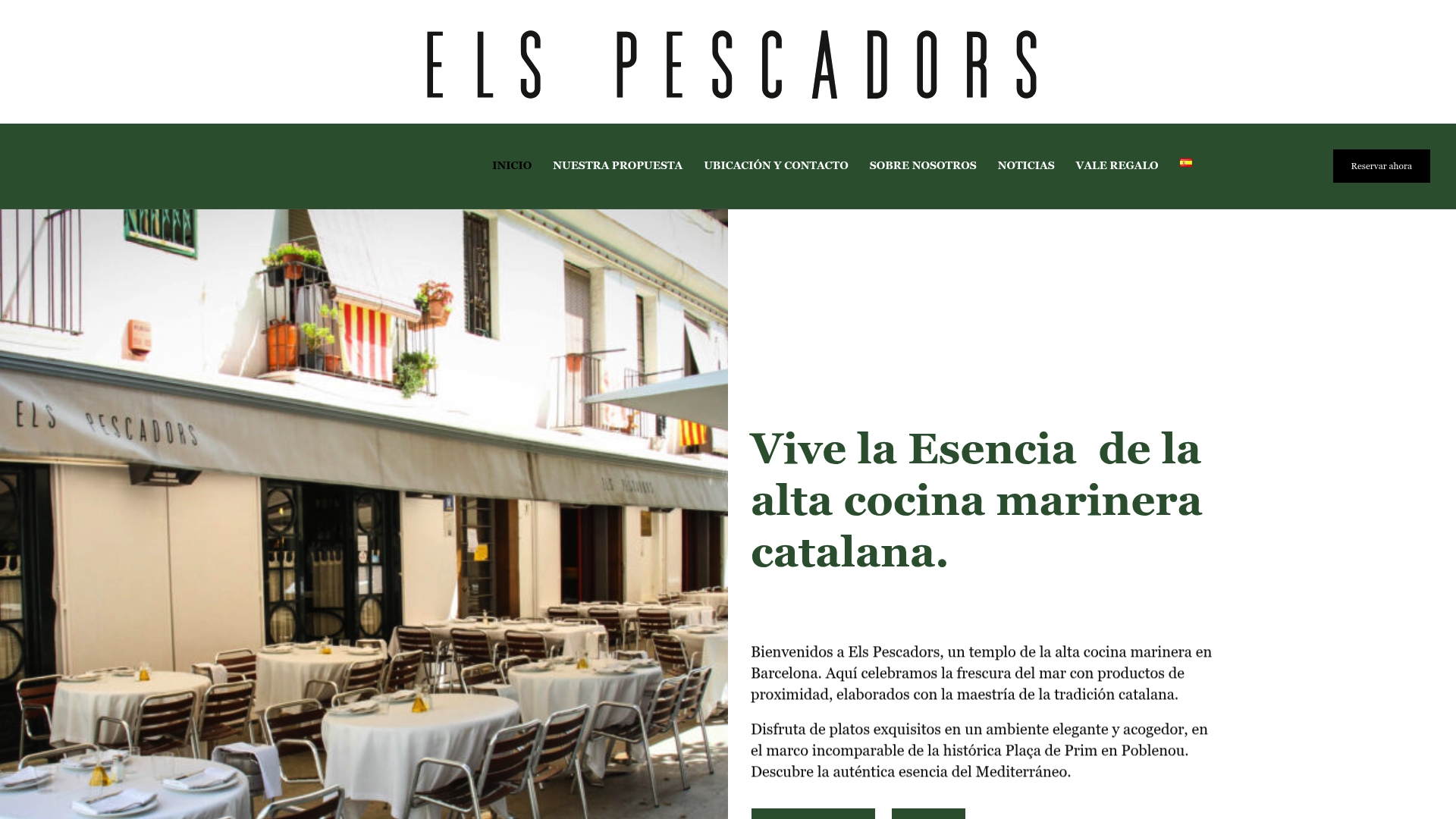
Els Pescadors works with daily fresh catch and seasonal ingredients, which gives the kitchen more room to adapt a dish than a restaurant running a fixed, pre-portioned menu. The restaurant has already fielded gluten-free requests from celiac diners, and staff can walk you through how a specific fish, shellfish, or rice dish is prepared when you ask.
The most useful thing you can do is tell the restaurant about your dietary needs when you book, not when you arrive. That gives the kitchen time to plan the dish rather than improvise around it. The Menú de Temporada, priced at €39 per person, built around seasonal catch, and the Menú Degustación both work well for guests who flag dietary requirements in advance, since both menus already lean on grilled fish, rice, and shellfish preparations rather than breaded or sauce-heavy plates. If you’re planning a larger celebration, the Menú para Grupos option lets you coordinate dietary needs for an entire table at once. Reserve directly through Elspescadors and mention your requirements in the booking notes so the kitchen can plan around them from the start.
Sources
A few official resources let you double-check anything a restaurant tells you, rather than taking a claim at face value.
- Associació de Celíacs de Catalunya — accredita tu establecimiento
- Regulation (EU) No 828/2014 — transmission of information to consumers about absence or reduced presence of gluten
- FACE — FACE Restauración Sin Gluten
- Celiacos
FAQ
Is Barcelona Good for Gluten-Free Dining?
Yes, Barcelona is considered one of Spain’s most celiac-friendly cities, largely thanks to a dense network of accredited restaurants and dedicated gluten-free kitchens. The Associació de Celíacs de Catalunya alone certifies over 112 establishments in the region, and EU labeling law backs every “sin gluten” claim with a legal standard.
What Does “Sin Gluten” Mean in Spain?
“Sin gluten” is a legally regulated label meaning the product or dish contains no more than 20 mg/kg (20 ppm) of gluten, the threshold set by EU Regulation 828/2014. It’s not a marketing phrase in Spain; restaurants and packaged goods claiming it are bound to that limit.
What Is Barcelona’s Most Famous Dish?
Paella and other Catalan rice dishes rank among the city’s most recognized specialties, alongside pa amb tomàquet and fresh grilled seafood. Many of these are naturally gluten-free at the base, though it’s worth confirming how the stock or sauce was prepared before ordering.
What Is Dua Lipa’s Favorite Restaurant in Barcelona?
This detail isn’t publicly documented in any verifiable source, so no restaurant can be reliably named. Celebrity dining preferences in Barcelona change frequently and are rarely confirmed directly by the individuals involved.
Does Els Pescadors Offer Gluten-Free Seafood Options?
Els Pescadors works with seasonal fresh catch and has adapted seafood dishes for celiac guests before, based on restaurant listings for celiac-friendly dining. Notifying the restaurant of dietary needs when booking gives the kitchen time to plan the safest preparation for your table.