Why sea urchins hold a central place in Catalan gastronomy
Sea urchins are not a curiosity on the Catalan coast. They are a seasonal obsession, a cultural marker, and one of the most intensely flavored things you can eat in the Mediterranean. The species at the center of it all is Paracentrotus lividus, a palm-sized, purple-spined echinoderm that clings to rocky shorelines along the Costa Brava and reaches peak edibility during the cold, calm months of winter.
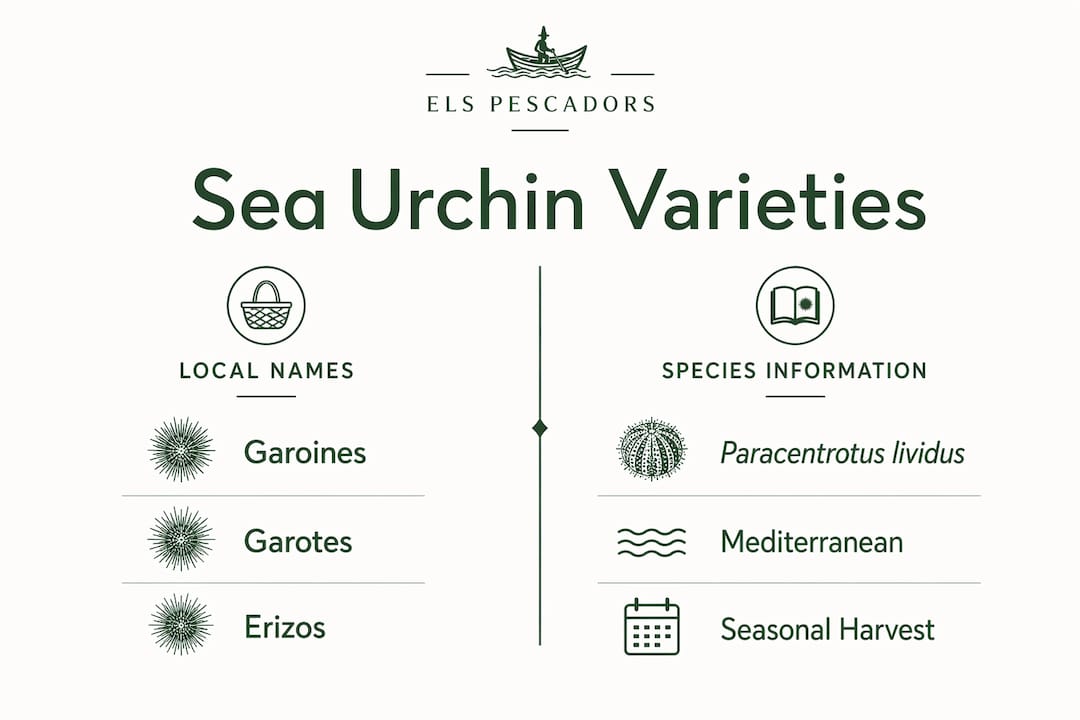
Locally, the creature goes by two names depending on where you are: garoines in the southern Empordà dialects and garotes further north. Both refer to the same animal, and both carry the same cultural weight. Here is what defines their role in Catalan cuisine:
- Species: Paracentrotus lividus, the dominant edible sea urchin of the western Mediterranean
- Local names: Garoines (Baix Empordà), garotes (northern Costa Brava), and occasionally eriçó de mar (“hedgehog of the sea”)
- Season: mid-January through late March, when the gonads are full and the sea is calm enough for safe harvesting
- Culinary status: a luxurious winter delicacy, eaten raw, prized for its briny and mineral flavor
- Traditional pairings: rustic bread, botifarra negra (blood sausage), tender green garlic, and chilled white wine from the Empordà or cava
- Cultural role: a symbol of maritime heritage, once fishermen’s sustenance, now a celebrated gastronomic event
The culinary use of sea urchin in Catalonia sits at the intersection of ecology, tradition, and flavor philosophy. Nothing about it is accidental.
Traditional names, species, and how sea urchins fit Catalan seafood culture
Paracentrotus lividus is the only species Catalans have traditionally harvested for the table. It grows on submerged rocks and the seabed along the stretch of coast between Tamariu and Calella de Palafrugell, a geography that has shaped the entire gastronomic identity of the Baix Empordà region.
“Sea urchins, these animals into a ball, black with red point, bristling with spikes, arrapados to rocks… What they have inside is quite significant, especially for people who like things that they like the sea.” — Josep Pla, Catalan writer and son of Palafrugell, from Les hores
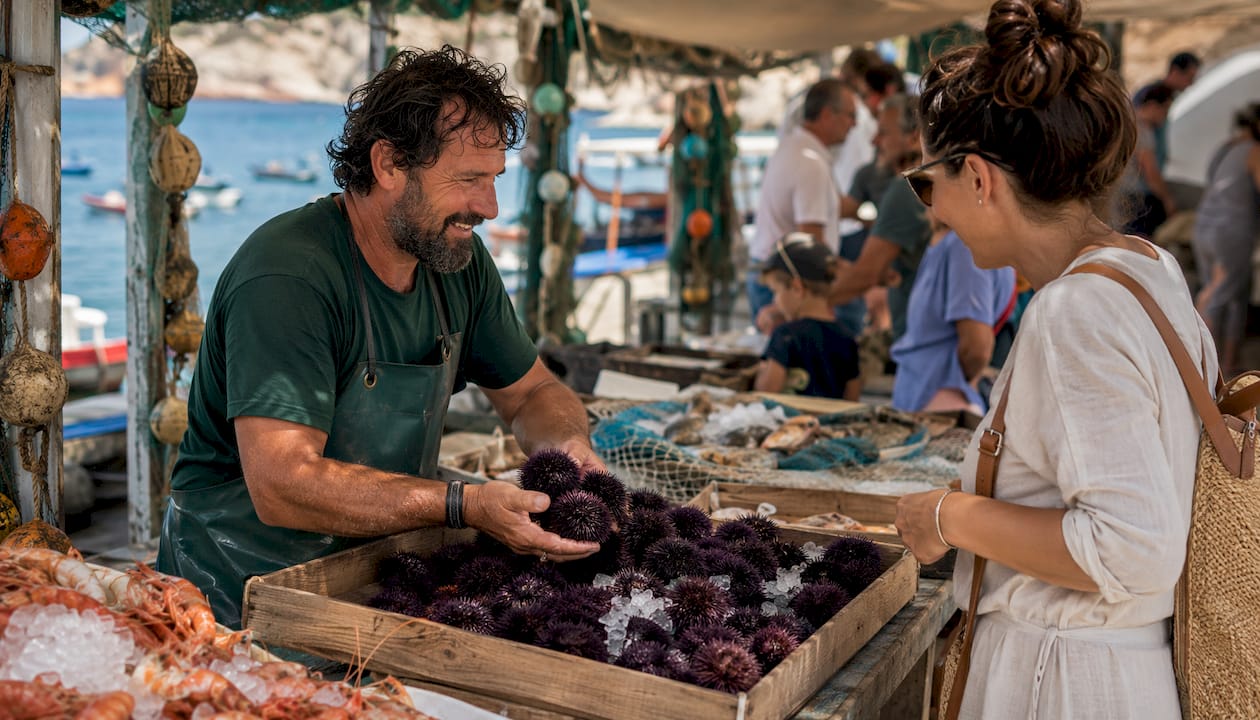
Pla’s description captures what generations of coastal families already knew: the exterior is forbidding, the interior is extraordinary. Fishermen ate garoines straight off the rocks, scooping the orange gonads onto bread as a snack between hauls. That working-class origin is part of why the flavor carries such cultural resonance today. The Catalan seafood tradition treats sea urchins not as an exotic import but as something that belongs here, pulled from the same waters that define the region’s identity.
The naming variation between garoines and garotes is not just dialect trivia. It reflects the tight geographic specificity of Catalan food culture, where a village ten kilometers up the coast might use a different word, a different preparation, and a different wine pairing for the same ingredient.
How sea urchins are prepared and served in Catalonia
The Catalan approach to sea urchins is built on restraint. You open them, you eat them. Anything more is considered interference.
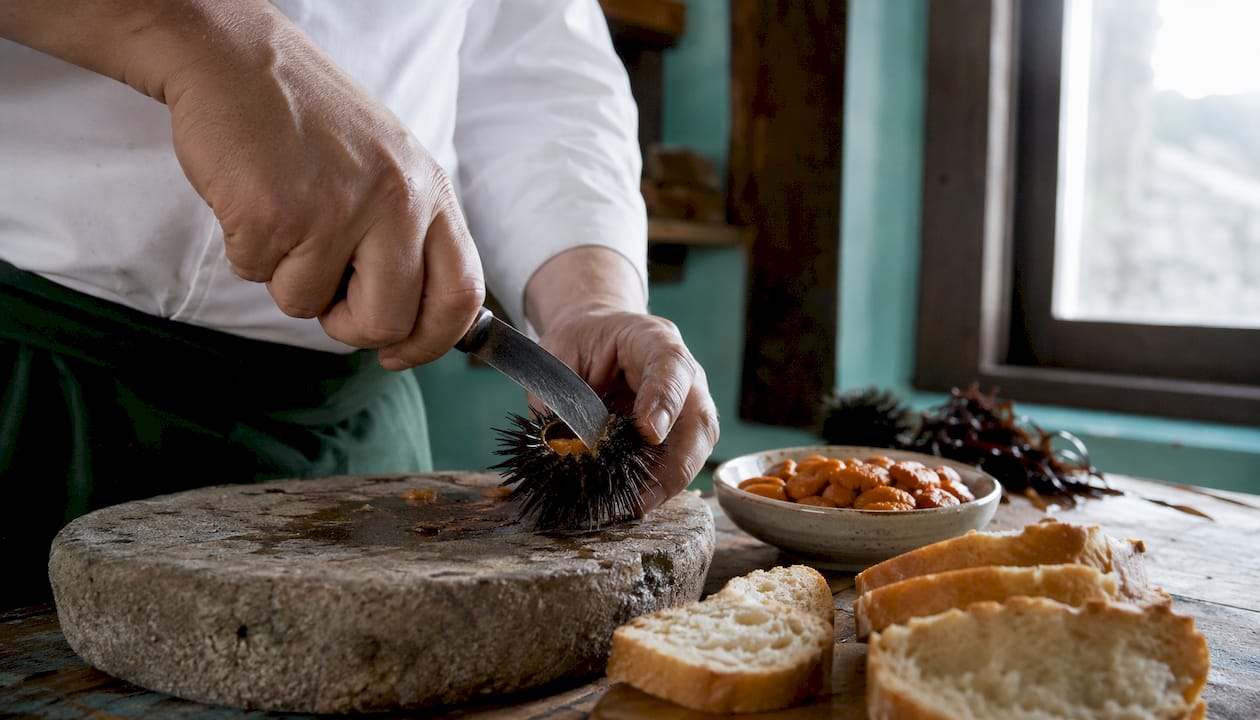
Traditional preparation involves cutting the top of the shell with a large curved knife, rotating the urchin against the blade rather than forcing it. Once open, the orange gonads sit in a small pool of seawater inside the shell. You scoop them out with a piece of bread, not a spoon, and certainly not a metal utensil.
- Open with a curved blade, rotating the urchin in the palm of your hand
- Scoop the roe with rustic bread, never metal cutlery
- Serve immediately, at ambient temperature, with no dressing
- Pair with botifarra negra and tender green garlic to balance the sea’s intensity with earthy, pungent notes
- Drink chilled Empordà white wine or cava alongside
Pro Tip: *Avoid metal spoons entirely when handling sea urchin roe. Metal contact
and introduces a harsh metallic aftertaste that overwhelms the natural brine. Bread is the correct tool, and it doubles as a vehicle for the flavor.*
The flavor itself is unlike anything else on the Catalan table. Saveur describes it as “briny, minerally, metallic, clean” and compares a spoonful to an underwater white truffle. That analogy holds: the intensity is concentrated, the finish lingers, and the experience rewards attention. Pere Vehi, owner of Bar Boia in Cadaqués, put the philosophy plainly: “Never oil, never lemon. Do you put lemon on caviar?”
What is the Garoinada, and why does it matter beyond the food?
The Garoinada is an annual gastronomic festival centered on garoines, running from mid-January through late March in Palafrugell and the surrounding villages of Calella de Palafrugell, Llafranc, and Tamariu. The 2026 edition runs from January 16 through March 29. The festival was founded in 1992 and has grown into one of the most recognized winter food events on the Costa Brava.
| Feature | Details |
|---|---|
| Festival dates | Mid-january to late march (2026: January 16 – March 29) |
| Location | Palafrugell, Calella de Palafrugell, Llafranc, Tamariu |
| Participating venues | Over 10 restaurants and hotels in the Palafrugell area |
| Standard menu price | — |
| Premium packages | €60–€120 per person, including accommodation and cultural activities |
| Cultural add-ons | Pottery workshops, traditional boat trips with garoines tasting |
| Typical menu structure | Garoines starter, Empordà main dish (fish stew, brothy rice, or noodle casserole), dessert of xuixo from Girona |
The Garoinada’s cultural significance goes beyond a food festival. It converted a fishing community’s survival habit into a formal celebration of intangible heritage, drawing visitors during the winter off-season when coastal tourism would otherwise stall. The timing is not arbitrary: January and February are when Paracentrotus lividus gonads are fullest, the sea is calm enough for safe harvesting, and the population is not yet in its reproductive phase. Eating them in summer would be both ecologically damaging and gastronomically pointless.
Understanding local gastronomy’s role in tourism helps explain why the Garoinada has lasted over three decades. It gives visitors a reason to come to the Costa Brava in winter, and it gives locals a reason to take pride in something their grandparents ate off the rocks.
How Elspescadors approaches Catalan maritime cuisine and sea urchins
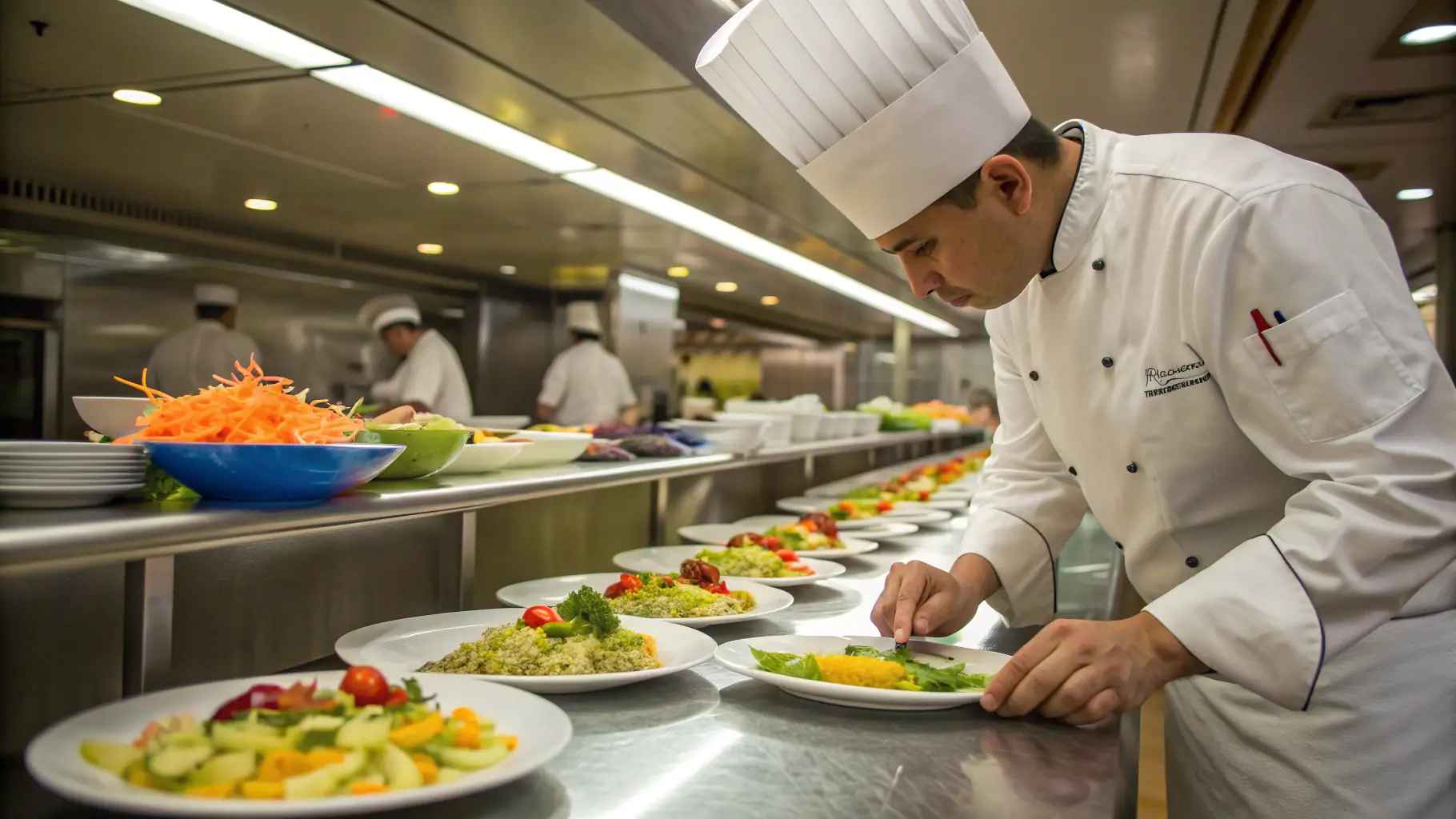
Elspescadors, located in Barcelona’s Poblenou district at Plaça de Prim, operates from the same culinary philosophy that drives the Garoinada: seasonal seafood, local sourcing, and respect for the ingredient’s natural character. The restaurant’s menus change with the fishing calendar, and sea urchins appear when the season and quality justify it.
At Elspescadors, the sea urchin is treated the way it deserves: as a product that needs almost nothing from the kitchen. The cook’s job is to source it right and get out of the way. That discipline is what separates authentic Catalan maritime cuisine from imitation.
That philosophy connects directly to the broader Catalan tradition. The best Catalan seafood dishes succeed not because of technique but because of timing and sourcing. A garoina eaten in february, opened correctly, scooped onto good bread, and paired with a cold glass of Empordà white wine is already complete. Adding anything risks subtracting from it.
What makes sea urchin roe worth eating nutritionally?
Sea urchin roe is dense with nutrients relative to its serving size. The gonads are high in protein and contain omega-3 fatty acids, iodine, zinc, and vitamins A and E. The iodine content is particularly notable, reflecting the animal’s marine diet and its role in filtering seawater. Traditional Catalan consumption, where garoines are eaten raw and unprocessed, preserves these nutrients entirely since no heat is applied.
The roe also contains compounds associated with antioxidant activity, which aligns with the broader health profile of Mediterranean coastal diets. Eaten in the quantities typical of a Garoinada meal, a dozen garoines represent a concentrated but modest serving, rich in flavor and micronutrients without being calorically heavy.
Why the harvest window is so narrow, and what that means for sustainability
Paracentrotus lividus takes approximately four years to reach maturity, which is why overharvesting nearly depleted Costa Brava populations before regulations were introduced. Catalan fishery authorities now enforce closed seasons and minimum size requirements. Harvesting outside the january-to-march window is prohibited, protecting the species during its spring and summer reproductive cycle.
The seasonal fishing calendar in Catalonia treats this restriction not as a burden but as a feature. Scarcity creates value. The fact that you can only eat garoines for roughly ten weeks a year is precisely what makes the Garoinada feel like an event worth traveling for. Sustainability and gastronomy, in this case, reinforce each other rather than conflict.
Key Takeaways
Sea urchins in Catalan gastronomy are a seasonal, culturally embedded delicacy whose value depends entirely on timing, restraint, and respect for the ingredient.
| Point | Details |
|---|---|
| Species and local names | Paracentrotus lividus is called garoines or garotes depending on the Costa Brava village |
| Flavor profile | Briny, mineral, and clean; best eaten raw with bread and no added seasoning |
| Preparation rule | Use a curved blade and bread to scoop roe; metal utensils damage flavor |
| Garoinada festival | Runs mid-january through late march in Palafrugell; menus range from €60 for basic offerings, rising to €120 for premium packages with accommodation and cultural activities |
| Sustainability | A four-year growth cycle requires strict closed seasons; the harvest window protects both ecology and gastronomic quality |
FAQ
What is the role of sea urchins in Catalan cuisine?
Sea urchins, specifically Paracentrotus lividus, serve as a prized winter delicacy in Catalan cuisine, eaten raw with bread and paired with local wine. They also anchor the annual Garoinada festival on the Costa Brava, making them a symbol of maritime heritage as much as a food.
Why is sea urchin considered a delicacy?
The roe’s flavor is intensely briny, mineral, and clean, concentrated in a way that rewards attention and resists imitation. Its short harvest window of roughly ten weeks per year, combined with a four-year growth cycle, makes it genuinely scarce and seasonally irreplaceable.
How are sea urchins traditionally served in Catalonia?
Catalans open them with a curved knife, scoop the orange gonads onto rustic bread, and eat them raw with no oil or lemon. Traditional accompaniments include botifarra negra and tender green garlic, paired with chilled Empordà white wine or cava.
Which cultures eat sea urchins?
Sea urchins are eaten across Japan (as uni), in Sicily (tossed with spaghetti), and throughout the Mediterranean. In Catalonia, the tradition is distinctly local: raw, unadorned, and tied to a specific coastal geography and winter season that no other culture replicates in quite the same way.