A good table request note is short, specific and written before you arrive. Give the date, time, party size and a phone number, then add one line per real need: an allergy, a seat preference, an occasion or a time limit. In Barcelona, where tables for dinner fill up and kitchens plan around the day’s catch, a clear note is what lets the team prepare for you instead of improvising at the door.
This guide shows what belongs in the notes box, what belongs in a phone call, and gives you wording to copy for a seafood restaurant booking.
TL;DR
- Put the essentials first: date, time, exact number of diners, booking name and a reachable phone number.
- Write each request as one clear line. Name the specific ingredient for an allergy, not just “allergies”.
- Mention seating, occasion and time limits when you book, not when you sit down.
- For large groups, set menus or serious allergies, add a call or a direct message to the form note.
- Keep the tone polite and brief: a greeting, the request, the details, a thank you.
Table of Contents
- What the notes field is for
- The details every booking needs
- Requests worth writing down, with wording you can copy
- Food allergies and dietary needs: be specific
- Seating requests: ask for the experience, not a table number
- Occasion notes: tell the team why you are coming
- Timing: arrival, pace and how long you want to stay
- Group size and group requests
- How to write the note: short, polite, in order
- When to call instead of writing
- Our view on table notes
- Book your table at Els Pescadors
- FAQ
- Sources
What the notes field is for
Most online reservation forms have a free-text box labeled notes, comments or special requests. It is not a place to repeat the date and time. The form already captured those. Use it for the things a form cannot ask about: how your party eats, where you would like to sit, why you are coming and how long you plan to stay.
The box is also small and easy to overlook. A restaurant team reading dozens of bookings for one service scans for the line that changes what they have to do. If your note is a paragraph of life story, the allergy in the fourth sentence is the one that gets missed. One request per line, most important first.
The details every booking needs
Before any special request, make sure the basics are complete. Spain-focused guidance lists the ordinary details exchanged when reserving: the date, time, number of people, name and a contact phone number, repeated back to check they were recorded correctly. Another Spain dining guide gives the same core list for phone calls: date, time, party size and the name for the booking.
Two habits make these basics work:
- Use the exact number of diners. “Around six” is not a count. If the number may change, say so and give the latest date you can confirm it.
- Give a phone number that works in Spain. If you are a visitor with a foreign SIM, add the country code. A restaurant that needs to confirm a detail about your allergy or arrival time will try the number you wrote.
If you book by phone, read the details back. If you book by form, check the confirmation message and reply to correct anything wrong.
Requests worth writing down, with wording you can copy
The table below covers the requests that most often change how a table is prepared. Adapt the wording and keep the line short.
| Request | Why say it in advance | Example line |
|---|---|---|
| Allergy or intolerance | The kitchen needs time to plan and check ingredients | “One guest has a shellfish allergy. Please advise on the menu before we arrive.” |
| Dietary choice | Helps the team adapt dishes or suggest alternatives | “Two guests are vegetarian and one does not eat pork.” |
| Seating | Tables differ in noise, light and privacy | “A quiet table, away from the door if possible.” |
| Occasion | Lets the team time the evening | “It is our anniversary; we would like an unhurried dinner.” |
| Mobility or access | Layout and route to the table matter | “One guest uses a wheelchair and needs step-free access.” |
| Time limit | Prevents a rushed finish | “We have a show at 10:30 p.m. and need to leave by 9:45.” |
| Children | Seating and pacing | “We are bringing one child; a high chair would help.” |
| Menu choice | Sets expectations for a tasting or set menu | “We would like the tasting menu for everyone at the table.” |
A restaurant may not be able to grant every request, and a note is a request rather than a guarantee. The point is that the team knows what you hope for early enough to answer.
Food allergies and dietary needs: be specific
This is the one part of the note that should never be vague. The American Academy of Allergy, Asthma & Immunology advises considering advance notice of an allergy and asking staff about ingredients and preparation. The same page points out that seafood restaurants may store or prepare fish and shellfish together, which creates a risk of cross-contact. If you are dining at a seafood restaurant with an allergy to fish, shellfish, mollusks or anything else, that is a reason to write the note and then to confirm it again when you arrive.

A Spain-based dining guide gives the same practical rule: be specific about the ingredient in a serious allergy and confirm the information with staff on arrival. It also advises sharing dietary needs at booking instead of waiting until you are seated.
How to word an allergy note
Compare these two lines:
- Weak: “Some allergies in the group.”
- Strong: “One guest has an allergy to shellfish (crustaceans). Please tell us which dishes are safe and how they are prepared.”
The strong version names the ingredient, says who is affected and asks a question the team can answer. For a severe reaction, do not rely on a notes box alone. Phone the restaurant, speak to someone, and repeat the allergy to your server at the table. If you carry prescribed emergency medication, keep it with you. Your own doctor or allergist is the right person to tell you what is safe for you to eat.
If shellfish allergy is your concern, our guide with exact restaurant scripts and kitchen checks for shellfish allergy gives you the questions to ask. Guests avoiding gluten can read about gluten-free seafood in Barcelona. If the Spanish menu words are new to you, our list of Spanish restaurant menu words for travelers covers seafood terms and allergens.
Vegetarian and other dietary requests
In a Catalan seafood restaurant, a vegetarian or pescatarian request is easy to misread. “No meat” may or may not include fish, broth or the stock under a rice dish. Say exactly what you mean: “vegetarian, no fish, no shellfish, no fish stock.” For ideas on how to phrase meal requests in advance, see this piece on vegetarian meal planning on a charter, where the same principle applies: state the rule, and ask what can be done.
Seating requests: ask for the experience, not a table number
You rarely know a restaurant’s floor plan, so describe what you want rather than a specific table. Useful phrases:
- “A quiet corner for a conversation.”
- “A table where we can talk easily, not near the bar.”
- “A table with some privacy; this is a proposal dinner.”
- “Terrace, if there is space and the weather is good.” Mention a backup: “Inside is fine if not.”
Give a reason when you can. “We would like a quiet table because one guest is hard of hearing” is easier to act on than “quiet table.” And always add flexibility. A request with a fallback (“or any table that works”) is more likely to be met than a rigid one.
Our practical guide to reserving a fine dining table and the step-by-step seafood restaurant reservation guide go deeper on choosing the day and time.
Occasion notes: tell the team why you are coming
A birthday, an anniversary, a proposal, a business closing dinner, a first visit to Barcelona: each changes how a good evening feels. You do not have to ask for anything. A simple line such as “We are celebrating a 10th wedding anniversary” lets the team decide whether it matters.
Two cautions keep it smooth:
- Surprises need coordination. If you are planning a surprise for another guest, say who is arranging it and who should not be told. Do not assume a note will be read by the person who greets you.
- Be clear about extras. If you are bringing a cake or flowers, say so in advance and ask what is possible. Do not assume.
For couples, an occasion note plus a quiet-table request is usually enough. Keep it to two lines.
Timing: arrival, pace and how long you want to stay
Timing notes matter more than most diners expect. Tell the restaurant:
- If you will be late. Say “we may arrive 15 minutes after our time” in the booking note, then call if it becomes more.
- If you have a hard stop. A show, a train or a babysitter changes the pace. State the time you must leave.
- If you want a long meal. Tasting menus take time, and a note that you are not in a hurry lets the team plan the pacing. Our guide on what to tell the restaurant to secure a 2 to 3 hour tasting menu reservation lists the three things to mention.
If you cannot decide between a tasting menu and ordering freely, carta versus tasting menu explains the difference. If you want the whole table on the same menu, put that in the note, since tasting menus are often served to everyone at the table at once.
Group size and group requests
Party size changes everything. A table of two can be seated in many ways. A table of ten needs a layout, a menu plan and often a deposit or a pre-order. For parties above a handful of guests, a note in a form is a starting point, not the full booking.
For groups, include:
- The final headcount and the latest date it could change.
- The occasion and whether it is private or corporate.
- A budget per person, if you have one.
- Dietary needs, listed per person or per count: “3 vegetarian, 1 shellfish allergy.”
- The preferred seating arrangement, such as one long table or a round table.
- A single contact person for the restaurant to speak to.
To see how it works step by step, read how to book group meals and the one page planner for a round table for groups. If you are choosing a menu, group dining menu examples for upscale Barcelona events shows what a group menu can look like. For team events, why seafood restaurants suit team dinners explains the reasoning.
How to write the note: short, polite, in order

A written request does not need to be formal. Spanish-language reservation guidance recommends a greeting, a direct request, the date, time and party size, contact information and a courteous closing. That structure works in English too, and it fits in any notes box.
Here is a template:
Hello, we would like a table for 4 on [date] at [time], under the name [surname]. One guest has a shellfish allergy (crustaceans), and we would like a quiet table for an anniversary dinner. Our phone number is [number with country code]. Thank you very much.
And a version for a business dinner:
Good afternoon, I am booking for 8 people on [date] at [time] for a team dinner, under [company or surname]. We would like one table, a tasting menu for everyone and an end time of about 11 p.m. Two guests are vegetarian (no fish). You can reach me at [number]. Many thanks.
Writing in English is usually fine in a tourist-heavy city such as Barcelona. If you want to add a Spanish line, keep it simple: “Alergia al marisco” (shellfish allergy) or “mesa tranquila” (quiet table).
Common mistakes
- Writing a long story and hiding the key request in the middle.
- Saying “allergies” without naming the ingredient.
- Adding a request only in the notes of a third-party booking site and never confirming it with the restaurant.
- Changing the headcount on the day without telling the restaurant.
- Treating a note as a guarantee. Reply to the confirmation and, if a point is critical, call.
When to call instead of writing
A note is the right tool for ordinary preferences. Pick up the phone when:
- A guest has a serious food allergy.
- Your group is large or your plan is complicated.
- You are booking within hours of the meal.
- You have not had a reply to a note about something important.
When you call, give the date, time, party size and name, then the special request, then repeat the details. If you want an overview of what the process looks like from beginning to end, the reservation guide is a good place to start.
Our view on table notes
At Els Pescadors we cook around the daily fresh catch and the season, with a menu built on Catalan maritime cuisine: fish, seafood and rice dishes. That is why we think a table note is worth the thirty seconds it takes.
A seafood table is not like a generic table. Guests choose between the carta, the daily proposal, the seasonal menu and the tasting menu, and groups have their own menu. When you tell us what you are coming for, whether it is a quiet couple’s dinner in the historic setting of Plaça de Prim, a long tasting menu or a team celebration, you help us shape the evening to fit it.
Our advice is simple: write the basics, write one line per request, name the ingredient if there is an allergy, and say when you need to leave. Everything else is a pleasure to discuss.
YellowRock
Book your table at Els Pescadors
If you are deciding what to order before you write your note, our Menú de Temporada is available at 39 € per person, and you can see it on the seasonal menu page. Prefer to choose freely? Look at the carta, the daily proposal or the tasting menu. For parties, see the group menu.
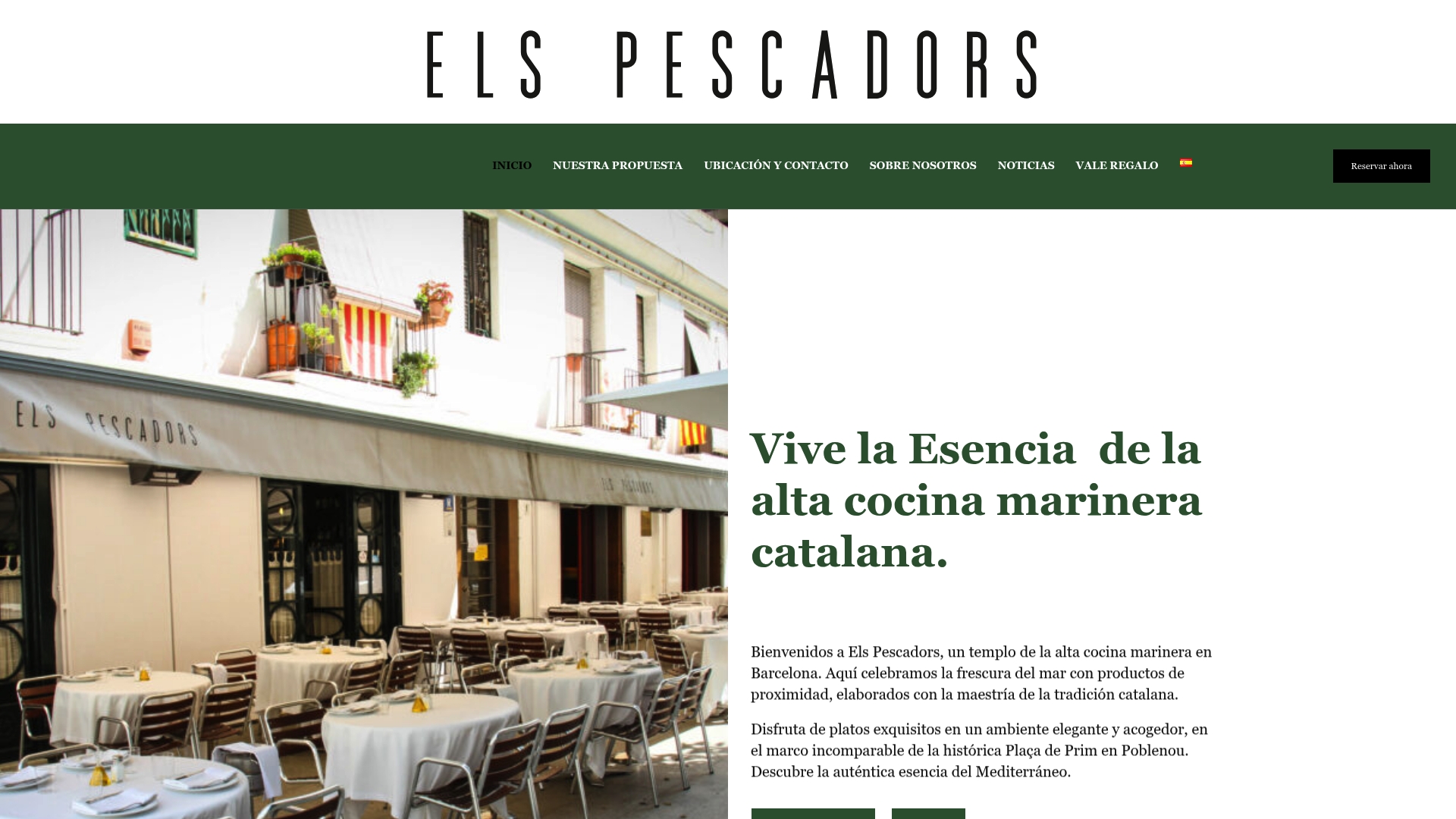
When you are ready, reserve through our website and add your notes with the date, party size and any requests. Els Pescadors is in Plaça de Prim, in the Poblenou district of Barcelona.
FAQ
What should I put in the notes when booking a restaurant table?
First make sure the date, time, number of diners, name and phone number are right. Then add one line for each real need: an allergy with the specific ingredient, a seating preference, an occasion or a time limit. Keep it short so the key request is not missed.
Should I mention an allergy in the booking note or by phone?
Do both when the allergy is serious. Write the specific ingredient in the note so the kitchen can plan, call to speak to a person, and repeat the allergy to your server when you arrive. Allergy specialists advise giving advance notice and asking about preparation.
Can I request a specific table?
You can ask, but describe the kind of table instead of a number: quiet, private, by a window, easy to reach. Add a fallback such as “any quiet table is fine”. A request is not a guarantee, and the confirmation reply tells you what the restaurant can do.
How far ahead should I tell the restaurant about a group or a special occasion?
As early as you can, and at the latest when you make the booking. Groups need the final headcount, dietary needs and a menu choice, so a form note should be followed by a call or message. Our group booking guide lists the steps.
Do I need to write the note in Spanish?
No. English is generally fine in Barcelona’s restaurants. A short, polite note with the key details is more useful than a perfect translation, and a Spanish word for the allergen can help.
Sources
- Comer en un Restaurante en España – Guía Práctica en Español
- How to Reserve Spanish Restaurants with Ease
- Dining Out with Food Allergies, American Academy of Allergy, Asthma & Immunology
- Spanish Writing Structure for Restaurant Reservations