Panellets are small, marzipan-based sweets eaten in Catalonia every year around November 1 for the Castanyada, the local celebration of All Saints’ Day. They are one of the most culturally loaded foods in the Catalan calendar, tied to memory, seasonal ritual, and centuries of tradition. The European Union recognizes them as an Especialidad Tradicional Garantizada (E.T.G.), a protected traditional specialty that sets strict rules on ingredients and production. At Elspescadors, Barcelona’s fine seafood restaurant in Poblenou, panellets represent exactly the kind of seasonal, place-rooted food that defines authentic Catalan culinary identity.
Quick facts:
- Core ingredients: dried peeled almonds, sugar, and egg whites
- Hallmark toppings: pine nuts (piñones), almond slivers, shredded coconut
- Season: late October through November 1 (Castanyada / All Saints)
- Authenticity flag: the E.T.G. label on packaging or a bakery’s posted certification
- Forbidden under E.T.G.: potato, sweet potato, apple, preservatives, artificial colorings
Table of Contents
- What is the history behind panellets in Catalan food culture?
- What do authentic panellets actually contain?
- Traditional varieties versus modern takes: where does authenticity end?
- How are panellets made?
- When and how do Catalans eat panellets?
- Where can you find authentic panellets in Barcelona?
- Elspescadors’ perspective on panellets and Catalan tradition
- Key Takeaways
- Useful sources
- FAQ
What is the history behind panellets in Catalan food culture?
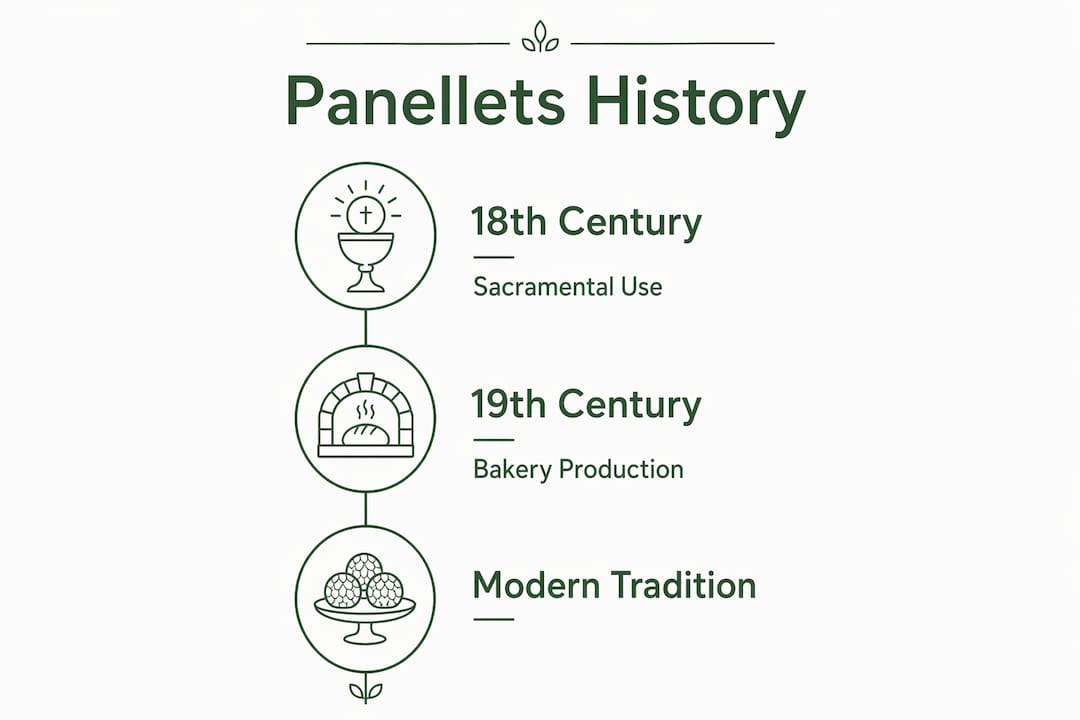
Panellets go back at least to the 18th century. Written sources in Catalan document a chestnut and panellets fair in what is now the Ciutat Vella neighborhood of Barcelona, where vendors sold the sweets alongside chestnuts and sweet wine every All Saints’ season. By 1796, that fair counted more than 200 stalls, and bakers were raffling panellets among the crowds.
The original function was sacramental. Families brought panellets to church in baskets, had them blessed by a priest, and shared them inside the temple as a collective ritual. The connection to funeral vigils was practical as well as symbolic: panellets are calorie-dense, easy to transport, and keep well, which made them ideal food for long overnight vigils on the eve of All Saints’ Day and the Day of the Dead.
By the 19th century, production had shifted from home kitchens into pastelerías, and pine nuts were added as a topping during that period. Today, bakeries dominate seasonal sales. The tradition has spread beyond Catalonia to Valencia, Aragon, and the Balearic Islands, each with local variations.
| Period | Development |
|---|---|
| 18th century | Documented fairs in Barcelona; blessed offerings at All Saints vigils |
| 1796 | More than 200 stalls at the Barcelona fair; bakers raffle panellets |
| 19th century | Production moves into pastelerías; pine-nut variety emerges |
| — | Retail staple; regional spread to Valencia, Aragon, Balearic Islands |
| Present | E.T.G. certification protects the traditional recipe; modern variants proliferate |
Gastronomy experts describe panellets as a bridge between ancestral funeral rites and contemporary festive food culture. For visitors, that history has a practical implication: you will only find them in bakeries and markets for a narrow window each autumn. Outside of October and early November, they simply are not made.
What do authentic panellets actually contain?
The E.T.G. designation is the clearest line between a genuine panellet and an almond-based sweet that borrows the name. Under the E.T.G. rules, the marzipan base must be made exclusively from dried peeled almonds, sugar, and egg whites. The specification recognizes three marzipan types: mazapán base, mazapán basto, and mazapán fino, each with different almond-to-sugar ratios that affect texture and richness.
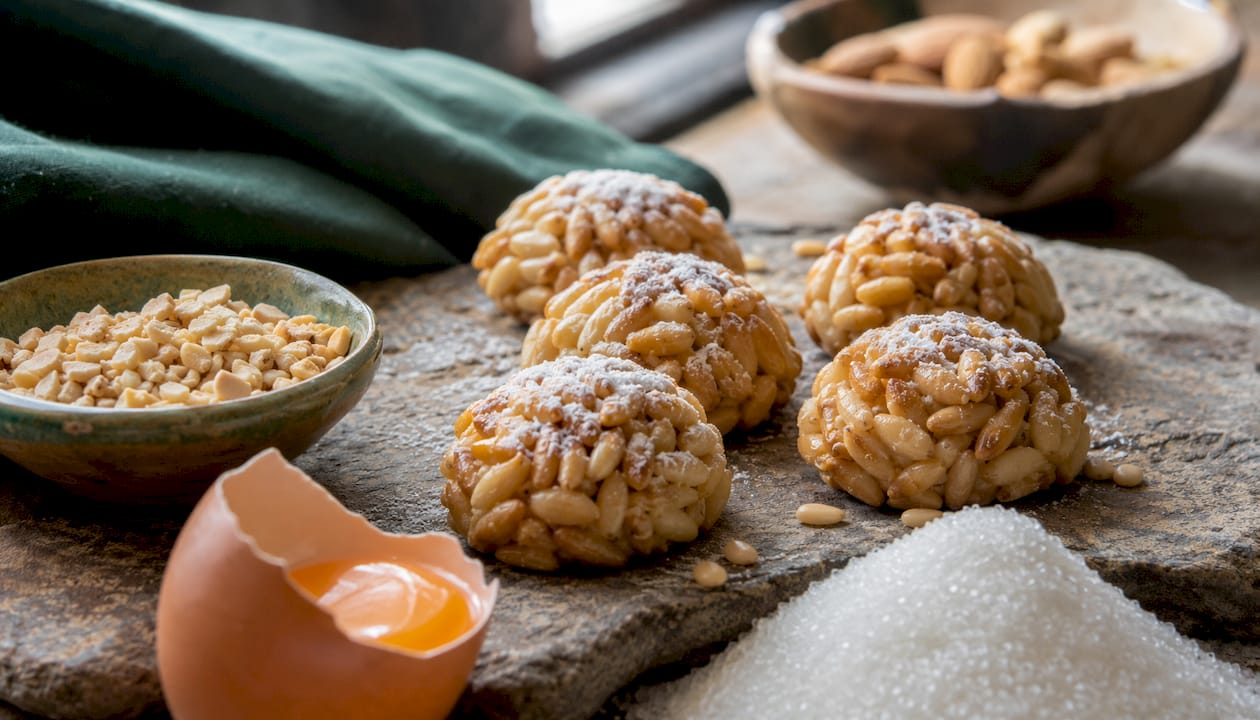
What the rules explicitly prohibit is just as telling: potato, sweet potato, apple, preservatives, and artificial colorings are all forbidden. That list is not arbitrary. Each of those ingredients has been used at some point to bulk out or cheapen the product, and the E.T.G. draws a hard line against all of them.
| Ingredient | E.T.G. status |
|---|---|
| Dried peeled almonds | Required |
| Sugar | Required |
| Egg whites | Required |
| Pine nuts, coconut, almond slivers (toppings) | Permitted |
| Potato or sweet potato | Prohibited |
| Apple | Prohibited |
| Preservatives | Prohibited |
| Artificial colorings | Prohibited |
Sensorially, the rules matter. A pure marzipan base produces a firm, slightly chewy interior with a clean almond flavor. Add potato or sweet potato and the texture softens considerably, the almond flavor dilutes, and the sweetness shifts. Both products exist; only one carries the E.T.G.
Pro Tip: When buying at a bakery, look for the E.T.G. logo on the display case or packaging. If it is not posted, ask directly whether the recipe uses any filler. An artisan baker will answer without hesitation.
Traditional varieties versus modern takes: where does authenticity end?
Pine-nut panellets are the classic, and by a wide margin. According to the E.T.G. reference data, pine-nut panellets accounted for roughly 50% of consumption in Barcelona and its province in autumn 1999, with almond panellets second at around 15%. Coconut, hazelnut, lemon, coffee, and orange varieties are all considered traditional extensions of the marzipan base.
The controversy centers on potato and sweet potato. Historically, adding boiled potato or sweet potato to the marzipan reduced cost and produced a softer, moister texture. Many families made panellets this way for generations, and some home bakers still do. The debate is as much about social history as taste: filler-based panellets were a working-class adaptation, not a corruption, and they have their own legitimate place in the tradition.
- Classic varieties: pine nut, almond, coconut, hazelnut, lemon, orange, coffee
- Modern additions: chocolate, pistachio, strawberry, marron glacé, chestnut-chocolate
- Filler-based (non-E.T.G.): potato or sweet potato marzipan base, softer texture, lower cost
- High-end context: E.T.G.-certified, pure almond base, premium pine nuts or toppings
For a discerning diner, the distinction is straightforward. A restaurant or bakery presenting panellets as a premium seasonal product should be working from a pure almond base. The filler version is a household tradition worth understanding, but it is not what you want on a tasting menu.
Pro Tip: Ask specifically for “panellets de piñones con base de almendra pura.” That phrase signals you know what you are looking for, and any serious baker will appreciate it.
How are panellets made?
The process is short but unforgiving of shortcuts. Here is the traditional method:
- Blanch and peel the almonds. Raw almonds go into boiling water briefly, then the skins slip off. The almonds are dried completely before grinding.
- Grind to a fine meal. The almonds are ground until they reach a slightly oily, fine-meal consistency. Coarser grinding produces a grainier final texture.
- Combine with sugar and egg whites. The three E.T.G. base ingredients are mixed until a smooth, cohesive dough forms. Lemon zest is traditional at this stage.
- Rest the dough. The marzipan needs refrigeration time, typically several hours, to hydrate fully and let the flavors integrate. Skipping this step produces a dough that cracks when shaped and a finished panellet with a drier, less cohesive crumb.
- Shape and top. Small balls or ovals are formed by hand, then rolled in pine nuts, almond slivers, or coconut, depending on the variety.
- Egg wash and bake. A light egg-yolk wash goes on before a short, hot bake. The goal is a golden exterior and a just-set interior, not a fully dried-out cookie.
Almond quality and the almond-to-sugar ratio are the two variables that separate a memorable panellet from a forgettable one. Fresh almonds with good fat content produce a richer, more aromatic marzipan. The role of fresh ingredients in Catalan cooking applies here exactly as it does to a fish dish: the raw material is the recipe.
Pro Tip: Home bakers often skip the resting step to save time. The result is workable but noticeably inferior. If you make them at home, refrigerate the dough overnight.
When and how do Catalans eat panellets?
The season is tight: late October through November 1. The social setting is family-centered, usually an evening gathering on the eve of All Saints’ Day or the day itself. Markets and bakery windows fill up in the final week of October, and demand often outpaces supply for the best artisanal batches.
- Classic pairing: roasted chestnuts (castanyes), baked sweet potatoes (boniatos), and sweet wine or moscatel. The Mercats de Barcelona present this trio as the emblematic autumn combination.
- Wine pairing: a chilled moscatel or a light, sweet Penedès wine cuts through the richness of the almond base without overwhelming it.
- Seafood menu context: panellets work well as a dessert course after a maritime meal. Their sweetness is restrained enough not to clash with the lingering salinity of a seafood-forward menu.
- Serving temperature: room temperature, never refrigerator-cold. Cold marzipan loses its aromatic quality.
- Portion guidance: two or three panellets per person is the traditional serving at a family gathering; on a tasting menu, one or two varieties work as a petit-four finish.
Where can you find authentic panellets in Barcelona?
The best panellets in Barcelona come from neighborhood pastelerías with a long seasonal track record. Municipal markets, particularly the Mercat de Santa Caterina and the Mercat de l’Abaceria, carry artisanal batches from local bakers during the last two weeks of October. Demand is high and supply is genuinely limited for the best producers, so visiting early in the final week of October gives you the widest selection.
- Check for the E.T.G. label on the display case or ask the baker directly. Certified producers are required to label accordingly.
- Ask about almond origin. Marcona almonds from Spain are the traditional choice; a baker who knows their product will tell you immediately.
- Ask whether pine nuts are fresh or pre-toasted. Fresh pine nuts have a sweeter, creamier flavor; pre-toasted ones are drier and more bitter.
- Price is a signal. Artisanal panellets, especially pine-nut varieties, carry a premium price that reflects the cost of quality pine nuts and hand labor. Unusually cheap panellets almost always involve filler or lower-grade ingredients.
- For visitors from Central Europe: panellets do not travel well beyond a few days, so plan to taste them in Barcelona rather than bringing them home. A late-October visit timed around a seafood-focused dining itinerary is the most natural way to experience them in context.
Elspescadors, located in Plaça de Prim in Poblenou, sits within easy reach of several neighborhood pastelerías that produce excellent seasonal batches. Pairing a panellet tasting with a Catalan maritime dining experience gives you the full seasonal picture: fresh catch from the Mediterranean, followed by the almond sweetness that has closed the Castanyada meal for three centuries.
For groups planning a late-autumn visit, Elspescadors offers group seafood dining experiences that can be timed to coincide with the Castanyada season, making it straightforward to build a complete Catalan culinary itinerary around both the savory and sweet traditions of the region.
Elspescadors’ perspective on panellets and Catalan tradition
Panellets are not a side note to Catalan food culture. They are a seasonal anchor, the kind of food that tells you exactly where you are and what time of year it is. At Elspescadors, the commitment to authentic Catalan maritime cuisine is grounded in the same logic that makes panellets worth understanding: ingredients matter, season matters, and the story behind a dish is part of what you taste.
A fine seafood restaurant that ignores the sweet traditions of its own region is telling only half the story. The Castanyada is the moment when the Mediterranean autumn turns inward, when the fishing season’s energy gives way to something quieter and more reflective. Panellets belong to that moment. Serving them, or pointing guests toward where to find them, is part of what it means to offer a genuinely complete Catalan dining experience.
The broader context of Catalan cuisine makes this clearer: Catalan food has always been seasonal and place-specific. Panellets are not a novelty or a tourist attraction. They are what people here actually eat in late October, and have eaten for centuries. Understanding them makes every other part of the culinary tradition more legible. For visitors who want to experience Catalonia’s food culture at its most authentic, the panellet is as good a starting point as any dish on a restaurant menu. You can explore more of what makes this region’s culinary experiences distinctive before you arrive.
Key Takeaways
Panellets are the defining sweet of the Catalan Castanyada, protected by E.T.G. certification that requires a pure almond-sugar-egg marzipan base and prohibits potato, sweet potato, apple, preservatives, and artificial colorings.
| Point | Details |
|---|---|
| Definition and season | Small marzipan sweets eaten at Castanyada (All Saints, November 1) in Catalonia. |
| E.T.G. authenticity | The EU E.T.G. label guarantees a pure almond base; potato and sweet potato fillers are prohibited. |
| Classic varieties | Pine-nut panellets are the most consumed; almond, coconut, and hazelnut are also traditional. |
| How to buy well | Ask about almond origin and pine-nut freshness; the E.T.G. label is the clearest quality signal. |
| Visitor timing | Visit Barcelona in late October for the widest artisanal selection before November 1 demand peaks. |
Useful sources
The following authoritative sources support the claims in this article:
- E.T.G. Panellets — Ministerio de Agricultura, Pesca y Alimentación: The primary legal reference for E.T.G. ingredient rules, marzipan classifications, and prohibited additives.
- Panellets — Cultura Popular, Ajuntament de Barcelona: Municipal cultural authority on the history, sacramental origins, and Castanyada context of panellets.
- El panellet: el dulce imprescindible de la Castanyada — Mercats de Barcelona: Local market guide covering seasonal availability, the autumn trio (panellets, chestnuts, sweet potatoes), and pairing traditions.
- Els orígens dels panellets — Diari Més: Historical account of the shift from domestic production to pastelerías in the 19th century.
- Panellets, dulces de Todos los Santos — Carta España: Contemporary coverage of seasonal demand, premium pricing, and broad social consumption.
- Elspescadors — Our Proposal: For visitors ready to plan a Catalan dining experience in Barcelona that honors seasonal food traditions.
FAQ
What are panellets made of?
Panellets are made from a marzipan base of dried peeled almonds, sugar, and egg whites, then shaped and topped with pine nuts, almond slivers, or coconut before a brief bake.
When are panellets eaten in Catalonia?
Panellets are eaten during the Castanyada, the Catalan celebration of All Saints’ Day on November 1, traditionally alongside roasted chestnuts and sweet wine.
What does the E.T.G. label mean on panellets?
The E.T.G. (Especialidad Tradicional Garantizada) is an EU certification confirming the panellets were made with a pure almond-sugar-egg base, with no potato, sweet potato, apple, preservatives, or artificial colorings.
Why do some panellets contain potato or sweet potato?
Adding potato or sweet potato was historically an economic adaptation that reduced cost and softened the texture. These versions are not E.T.G.-certified and are considered non-traditional by purists, though some families still make them.
Where can you buy authentic panellets in Barcelona?
The best places are neighborhood pastelerías and municipal market stalls during the last two weeks of October. Look for the E.T.G. label and ask about almond origin and pine-nut freshness to distinguish artisanal from mass-produced batches.