Fish freshness is the single clearest signal of a restaurant’s seafood quality. It determines taste, texture, safety, and whether the kitchen’s sourcing claims hold up under scrutiny. A plate of sea bass can be technically flawless in execution and still disappoint if the fish arrived three days past its peak. That gap between promise and plate is where restaurants either earn trust or lose it.
Before the deeper science: here is what to check the moment you sit down.
- Smell: A fresh fish dish should smell like the sea, clean and faintly briny. Ammonia, sourness, or anything that reads as “fishy” in the unpleasant sense signals breakdown.
- Texture: Flesh should hold together with a slight resistance. Mushy or falling-apart pieces before the fork even presses indicate age.
- Eyes (whole fish on display): Clear, slightly convex, and bright. Sunken, cloudy eyes mean days have passed.
- Menu design: Short, rotating menus with daily catch listed by species and origin suggest supply-driven choices, not a static freezer rotation.
- Staff knowledge: Anyone working the floor at a serious seafood restaurant can tell you when the fish arrived and where it came from.
- Safety red flag: Refuse any fish with a strong ammonia odor. That smell means bacterial breakdown is advanced, and no amount of cooking fully reverses it.
The sections below explain the science behind each of these signals, the supply chain that determines whether fish arrives in peak condition, and the practical questions worth asking before you order.
Table of Contents
- Why does freshness define the quality of a fish restaurant?
- What does “fresh” actually mean for fish?
- How does freshness change the taste and texture of fish?
- What are the food safety risks when fish isn’t fresh?
- How does the cold chain determine freshness before the kitchen?
- When can frozen fish equal or beat “fresh from the market”?
- How do top restaurants signal their commitment to freshness?
- A practical checklist for spotting fresh fish at the table
- How Elspescadors demonstrates freshness in practice
- Key Takeaways
- Why chefs treat freshness as their guiding principle
- Fresh fish, served daily: what Elspescadors offers
- Sources and further reading
- FAQ
Why does freshness define the quality of a fish restaurant?
The answer is biochemical before it is culinary. From the moment a fish dies, enzymes in its own muscle tissue begin breaking down proteins and fats. That process is not inherently bad — controlled enzymatic activity is what gives aged fish its depth. But uncontrolled, it produces off-odors, soft texture, and eventually the compounds that make spoiled seafood dangerous. A restaurant that handles this window well serves something genuinely different from one that does not.
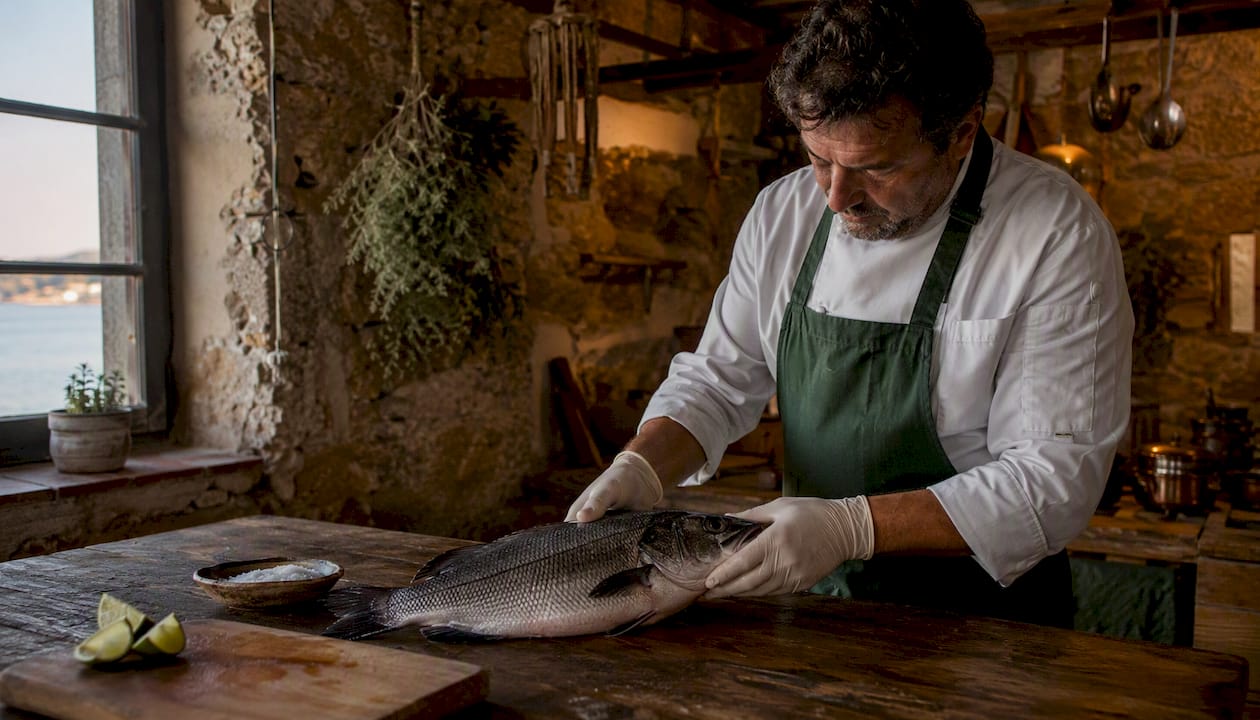
Fresh fish quality comes down to three sensory markers the FDA identifies: firm flesh that springs back when pressed, a mild oceanic scent, and clear bright eyes on whole fish. Spoiled fish shows the opposite: soft or mushy flesh, sour or ammonia-like odors, and sunken cloudy eyes. These are not aesthetic preferences. They reflect measurable changes in bacterial load and protein integrity.
The importance of fresh fish goes beyond taste. It is the restaurant’s sourcing credibility made edible. A kitchen that receives peak-condition fish and handles it correctly does not need to mask anything with heavy sauces or aggressive seasoning. The fish speaks for itself.
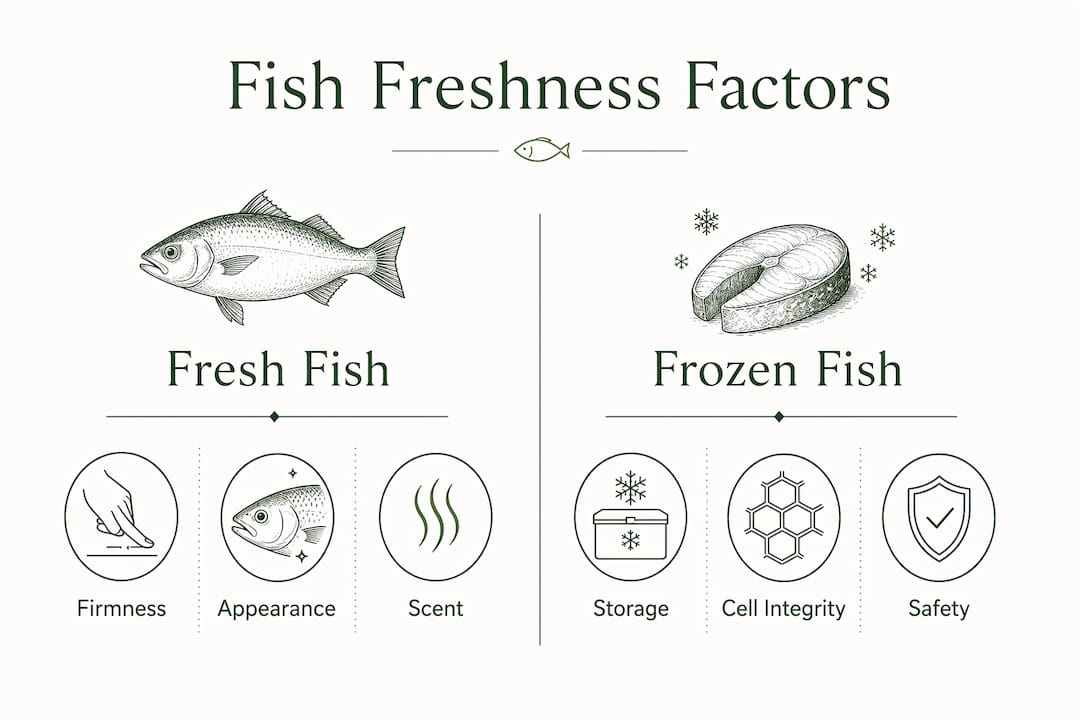
What does “fresh” actually mean for fish?
The word “fresh” on a menu is not a regulated term. It can mean caught yesterday or caught last week and kept cold. Understanding what it actually means operationally protects you as a diner.
A working definition: Fresh fish is fish that has been handled correctly from the moment of catch — bled promptly, chilled to near 0°C, and delivered to the kitchen within a timeframe that preserves peak sensory quality. Time matters, but handling matters more. A fish caught two days ago and bled immediately, kept on ice at 0°C, can outperform a fish caught this morning and left in a warm hold.
Sensory indicators worth knowing
- Smell: Fresh fish smells clean, faintly saline, like a cold ocean breeze. Any sourness, rancidity, or ammonia note means protein breakdown is underway.
- Texture/firmness: Flesh should be firm and spring back under light pressure. Softness or mushiness indicates enzymatic proteolysis has progressed.
- Color/translucency: Fresh fillets are translucent or have a bright, natural color specific to the species. Dullness or yellowing at the edges signals oxidation.
- Eyes and gills (whole fish): Eyes should be clear, full, and slightly convex. Gills should be bright red or pink, not brown or gray. These are the most reliable freshness indicators for whole fish at a fish counter or display.
A short glossary
Days post-catch: The number of days since the fish was landed. Most chilled fish is considered prime within a few days; quality declines progressively after that, though species and handling vary.
Flash-freezing / IQF (Individually Quick Frozen): Freezing fish rapidly at ultra-low temperatures (often -35°C or below) immediately after catch. This locks in cellular structure and peak flavor in a way slow freezing cannot.
Rigor mortis: The temporary stiffening of muscle tissue after death, caused by ATP depletion. Fish in rigor can be too firm for certain preparations; chefs time dishes around this window.
Sashimi-grade: Not a legal or regulatory classification. It is a trade term indicating the supplier and chef consider the fish suitable for raw consumption — based on handling, species, and parasite risk management. It carries no official certification.
One more distinction worth making: “fresh” at a retail counter and “fresh” in a restaurant kitchen are not the same thing. A restaurant receiving daily deliveries from a port-side supplier operates in a different freshness tier than a supermarket fish counter restocked twice a week.
How does freshness change the taste and texture of fish?
The flavor of a perfectly fresh fish is not simply “better” in a vague sense. Specific biochemical changes at each stage of post-mortem aging produce measurable sensory outcomes, and skilled chefs manage those stages deliberately.
Immediately after death, ATP (adenosine triphosphate) in the muscle breaks down through a cascade that eventually produces inosine monophosphate (IMP), a compound that contributes savory, umami-adjacent flavor. This is why fish caught and served within hours can taste clean but slightly flat — the IMP peak has not yet arrived. Chefs working with dry-aging techniques in fine dining exploit this window deliberately, allowing controlled enzymatic activity to increase glutamate and concentrate fat, producing depth without spoilage.
The key stages and their sensory effects:
- Immediate post-mortem (0–6 hours): Rigor mortis sets in. Flesh is very firm, sometimes too firm for raw preparations. IMP begins accumulating.
- Enzymatic aging (1–3 days, species-dependent): Proteolytic enzymes soften connective tissue and develop umami. This is the sweet spot for most preparations.
- Lipid oxidation: Fattier species like mackerel, sardines, and tuna oxidize faster than lean white fish. Oxidized fat produces rancid, metallic off-notes. This is why fatty fish has a shorter peak window and why seasonal seafood menus rotate around fat cycles.
- Bacterial proteolysis: When temperature control fails, bacteria accelerate protein breakdown, producing trimethylamine (the classic “fishy” smell) and eventually histamine in susceptible species.
Fat content is the variable most diners overlook. A lean fish like sole or turbot ages gracefully over several days under proper refrigeration. A fatty fish like mackerel or bonito can turn from sublime to unpleasant within 24 hours if not handled precisely. Chefs who understand this choose preparations accordingly — a mackerel served raw demands same-day delivery; the same fish cured or grilled has a slightly wider window.
Pro Tip: If a restaurant offers crudo or sashimi-style preparations, that is a strong signal of confidence in their cold chain. Those dishes have nowhere to hide. A kitchen that puts raw fish on the menu is betting its reputation on the freshness of its supply.
What are the food safety risks when fish isn’t fresh?
Fresh raw material plus an unbroken cold chain is not just a quality preference. It is the foundation of safe seafood service. The FAO’s cold-chain guidance is explicit: bacterial spoilage and food safety failures in seafood trace directly to lapses in temperature control from harvest to plate.
Primary risks:
- Bacterial spoilage: Pathogens like Listeria monocytogenes, Vibrio, and Salmonella multiply rapidly above 4°C. Ready-to-eat seafood held at improper temperatures can reach dangerous bacterial loads without obvious visible signs.
- Histamine/scombroid poisoning: This is the risk most diners do not know about. Certain species — tuna, mackerel, bonito, mahi-mahi — contain high levels of the amino acid histidine. When these fish are held at warm temperatures, bacteria convert histidine to histamine. Cooking does not destroy histamine. Symptoms (flushing, headache, rapid heartbeat, nausea) appear within minutes to hours of eating. The only prevention is keeping these species cold from catch to plate.
- Parasites: Several fish species carry parasites that are killed by thorough cooking or by certified freezing protocols. Sashimi-grade handling requires either confirmed parasite-free sourcing or freezing at -20°C for 7 days (or -35°C for 15 hours) per FDA guidance.
- Cross-contamination: Raw fish handled on the same surfaces as ready-to-eat items, or stored above other foods in a refrigerator, creates secondary risk regardless of the fish’s initial freshness.
The safe handling guidance from FoodSafety.gov reinforces the sensory checks: smell, texture, and gill/eye condition for whole fish are the consumer’s first line of defense. A strong ammonia odor is a hard stop — that fish should not be on a plate.
Species at higher scombroid risk: tuna, mackerel, bonito, mahi-mahi, and bluefish. If you experience flushing, tingling, or rapid heartbeat after eating any of these, seek medical attention promptly. The reaction is histamine-driven and responds to antihistamines.
How does the cold chain determine freshness before the kitchen?
A restaurant’s sourcing rhythm and cold-chain controls are the biggest determinants of fish quality after the catch itself. The kitchen can do very little to recover fish that arrived in poor condition.
The path from water to plate runs roughly like this: catch → bleed and gut (ideally within minutes) → on-board chilling or flash-freeze → transport to distributor → restaurant receiving and cold storage → prep and service. Each handoff is a potential failure point.
Critical control points:
- Bleeding and ikejime: Immediate bleeding after catch removes blood that accelerates spoilage. Ikejime (a Japanese technique involving precise brain and spinal cord destruction) reduces stress hormones and preserves ATP, enabling longer controlled aging and cleaner flavor. Chefs and high-end sushi operations cite ikejime as a material improvement in shelf life and eating quality.
- On-board temperature: Fish should reach 0°C within two hours of catch. Every degree above that accelerates bacterial growth exponentially.
- Flash-freeze timing: When freezing is the chosen method, it should happen at -35°C or below within hours of catch to preserve cellular structure.
- Transport temperature: Chilled fish in transit should stay at 0–2°C. Breaks in this range, even brief ones, compound over the journey.
- Delivery frequency: Daily or near-daily deliveries from a local supplier are the clearest operational signal of a restaurant’s freshness commitment. Weekly boxes from a distant distributor, regardless of how they are marketed, cannot match that cadence.
| Control Point | Target Temperature | Typical Window |
|---|---|---|
| On-board chilling | 0°C | Within 2 hours of catch |
| Flash-freezing | -35°C or below | Within hours of catch |
| Transport (chilled) | 0–2°C | Duration of transit |
| Restaurant cold storage | 0–2°C | Until service |
| Ready-to-eat sashimi | Below 4°C | Strict; no exceptions |
Understanding local sourcing benefits makes the delivery frequency point concrete: a restaurant sourcing from a port 50 kilometers away can receive fish landed that morning. One sourcing from a national distributor 500 kilometers away cannot, regardless of how the menu describes it.
Pro Tip: Ask your server: “When did this fish arrive?” A confident, specific answer (“this morning from the market”) is a good sign. Vagueness or deflection is not.
When can frozen fish equal or beat “fresh from the market”?
High-quality flash-frozen fish can equal or exceed the eating quality of poorly handled chilled fish. That sentence still surprises many diners, but the science is clear.
Sensory testing research from Queensland DPI found that controlled studies often cannot distinguish properly handled frozen fish from chilled-fresh fish for many species. The key variables are freezing rate, storage stability, and thawing technique — not the fact of freezing itself. Lean species held at consistent low temperatures showed comparable quality up to three months; premium-frozen samples were frequently indistinguishable from fresh.
Flash-freezing vs. chilled handling: a direct comparison
| Criterion | Flash-frozen (-35°C) | Chilled (0–2°C, multi-day) |
|---|---|---|
| Cell integrity | Preserved (rapid ice crystal formation) | Degrades progressively |
| Texture | Matches fresh when thawed correctly | Depends on handling chain |
| Parasite control | Effective at certified temps/durations | Requires separate treatment |
| Consistency for service | High (batch quality locked in) | Variable by delivery |
| Peak-season capture | Yes (frozen at optimal fat/flavor) | Limited to delivery window |
The case for frozen is strongest when the alternative is a multi-day chilled chain with uncertain handling. A tuna caught off the Canary Islands, flash-frozen on the boat at -40°C, and thawed correctly in a Barcelona kitchen can arrive in better condition than the same species chilled and trucked for four days.
What to look for on a menu:
- Honest provenance notes (“previously frozen” disclosures, or “flash-frozen at sea”)
- Species that travel well frozen: tuna, swordfish, shrimp, scallops
- Chefs who explain their freezing choices when asked — that transparency is itself a quality signal
The chef perspective on frozen seafood is increasingly pragmatic: consistency, parasite control, and the ability to capture peak-season quality are the primary reasons professional kitchens accept premium frozen. The stigma is a consumer perception problem, not a culinary one.
How do top restaurants signal their commitment to freshness?
Look for supply-driven menu choices and staff who can describe sourcing and timing without hesitation. Those two things together are more reliable than any marketing claim.
Observable signals:
- Daily catch listed by species and origin on a chalkboard or insert — not just “catch of the day” with no further detail
- Short menus that rotate with the season and the market, rather than 40-item laminated cards that never change
- Seasonal rotation tied to species lifecycles, not just calendar aesthetics. A kitchen that pulls mackerel off the menu when it spawns and brings it back when fat content peaks is making culinary decisions, not marketing ones. Seasonal fish tasting menus built around these cycles reflect genuine sourcing discipline.
- Whole fish on display at the counter or in an open kitchen — a visible commitment to quality that is hard to fake
- Simple preparations (grilled, steamed, crudo, a la plancha) that let the fish carry the dish. Heavy sauces and elaborate garnishes can mask age; simplicity cannot.
- Staff language: Phrases like “we received this from the Barceloneta market this morning” or “this species is only on the menu for the next few weeks” indicate genuine supply awareness, not scripted marketing.
Pro Tip: Ask: “What’s the freshest thing on the menu today?” A good server at a serious seafood restaurant will answer without pausing. They will name a species, tell you where it came from, and probably suggest a preparation. That answer tells you more about the kitchen than any review.
A practical checklist for spotting fresh fish at the table
You do not need to be a chef to evaluate what arrives on your plate. These checks take seconds and require no special knowledge.
- Smell the dish before you eat. Fresh fish smells clean and oceanic. Any ammonia, sourness, or strong “fishy” odor is a sign of breakdown. Send it back.
- Press the flesh lightly with your fork. It should offer slight resistance and hold together. Flesh that falls apart at the lightest touch, or feels mushy, has been aging too long.
- Check the color. Fresh fish is bright and species-appropriate. Yellowing at the edges of a fillet, or a dull, grayish cast, indicates oxidation.
- Ask when it arrived. “When did this fish come in?” is a completely normal question at any serious seafood restaurant. A specific answer is reassuring; vagueness is not.
- Order a simple preparation if you are unsure. Grilled, steamed, or a la plancha with minimal sauce gives you the clearest read on the fish’s actual quality. A dish buried in cream or heavy spice makes evaluation harder.
- Request provenance on raw dishes. For crudo, ceviche, or sashimi-style plates, ask where the fish came from and whether it was flash-frozen. A kitchen confident in its supply will answer directly.
Dos and don’ts:
- Do ask about delivery days and sourcing. It is a compliment to a kitchen that takes it seriously.
- Do order the daily special over a permanent menu item — it is usually what arrived that morning.
- Don’t ignore an off smell to avoid seeming difficult. Your instinct is correct.
- Don’t assume “fresh” on a menu means anything specific. Ask what it means operationally.
How Elspescadors demonstrates freshness in practice
Elspescadors, located in the Plaça de Prim in Barcelona’s Poblenou district, applies the sourcing and service principles described throughout this guide in a way that is visible from the moment you look at the menu.
The restaurant’s daily fresh catch listing changes according to what the market offers, not according to what a static menu requires. Preparations lean toward simplicity: grilled fish, rice dishes built around the day’s catch, and seasonal tasting menus that rotate with species availability and fat cycles. That menu design is not an aesthetic choice. It is a direct expression of local fish sourcing discipline — a kitchen that sources daily cannot afford to lock itself into fixed preparations.
What this looks like operationally:
- Daily catch listed by species, reflecting what arrived that morning from local suppliers
- Seasonal tasting menus that shift with the Mediterranean’s fishing calendar, not a marketing schedule
- Simple preparations (grilled, a la plancha, traditional rice) that put the fish’s quality on full display
- Staff trained to describe sourcing and delivery timing when guests ask
When you visit, look for the daily catch section first. The recommended approach for first-time diners is to order whatever arrived that morning in the simplest preparation available. That dish will tell you everything about what the kitchen values.
Key Takeaways
Fish freshness is the primary determinant of taste, texture, and safety in a seafood restaurant, and every sourcing, menu, and service decision either supports or undermines it.
| Point | Details |
|---|---|
| Freshness drives taste and texture | Enzymatic and bacterial changes after catch directly determine flavor depth, firmness, and off-odor development. |
| Cold chain is non-negotiable | FAO guidance confirms that unbroken temperature control from catch to plate is the foundation of both quality and safety. |
| Flash-frozen can match fresh | Queensland DPI sensory testing found frozen fish indistinguishable from chilled-fresh for many species when frozen at -35°C and stored correctly. |
| Ask the right questions | “When did this arrive?” and “Where is it from?” are the two most useful questions a diner can ask at any seafood restaurant. |
| Elspescadors as a reference point | Elspescadors uses daily catch listings, seasonal menus, and simple preparations to make freshness visible and verifiable at the table. |
Why chefs treat freshness as their guiding principle
Every kitchen decision flows from the quality of the raw material. A chef working with fish that arrived this morning in peak condition can do less and achieve more — a clean grill, a squeeze of lemon, a good olive oil. That simplicity is not laziness. It is confidence in the supply chain.
The harder discipline is what happens when the fish does not meet standard. A serious kitchen throws it out. That decision costs money every time it happens, and it happens more often than diners realize. The restaurants that do it consistently are the ones worth returning to.
The freshness principle also shapes how menus are written. A kitchen that sources daily cannot promise the same dish every night. That constraint is a feature, not a limitation. It means the menu reflects what is actually available at peak condition, not what was ordered in bulk three days ago.
Fresh fish, served daily: what Elspescadors offers
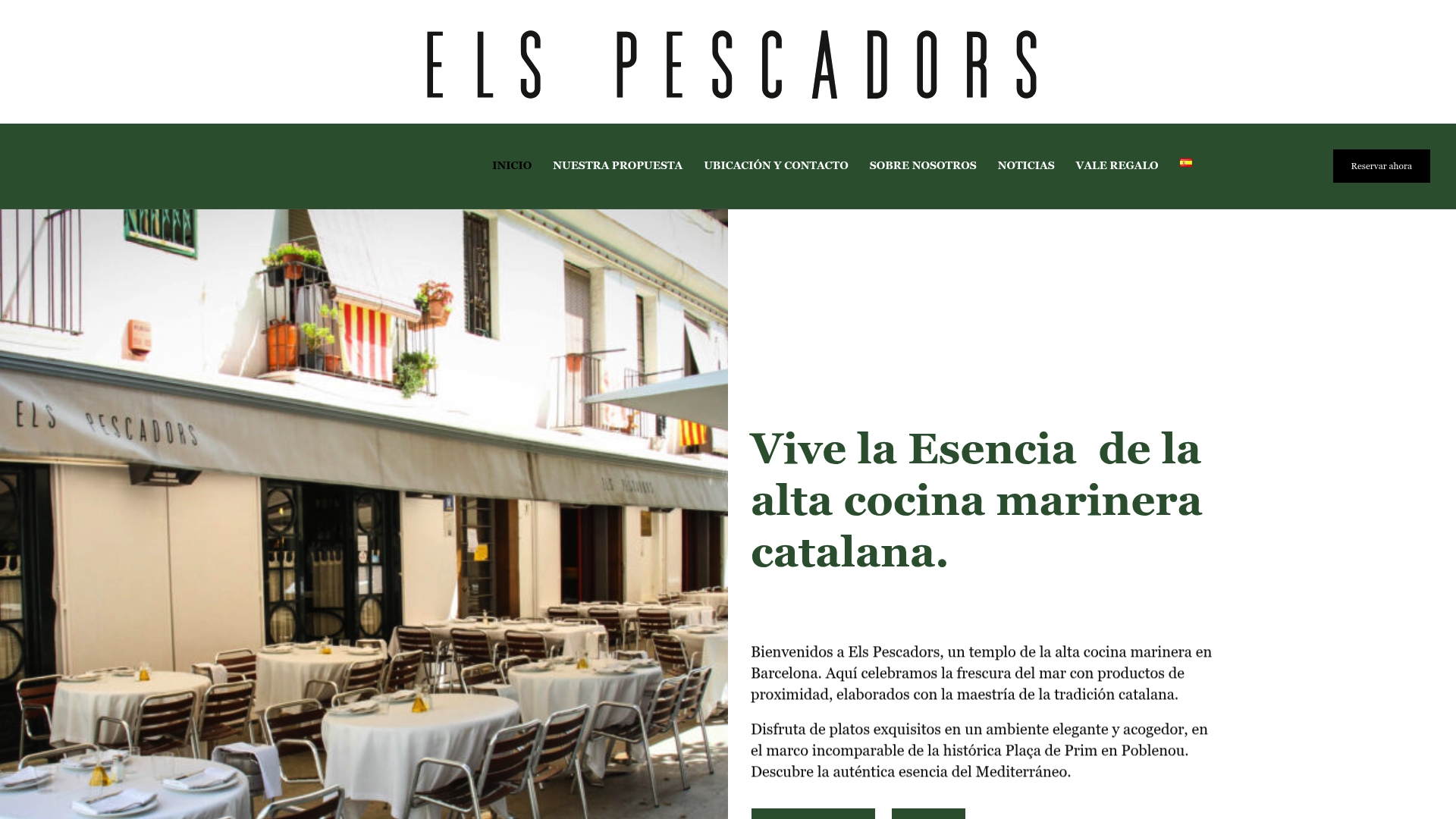
Elspescadors is one of Barcelona’s clearest examples of a restaurant where freshness is built into the operating model, not added as a marketing layer. The daily catch changes with what the Mediterranean and local suppliers offer that morning. The menu stays short and seasonal by design. Preparations are simple enough to make the fish’s quality the point of the dish.
If you are planning a visit, the restaurant’s full proposal covers the current tasting menus, daily catch options, and seasonal offerings. For groups or private events, the group menu is built around the same sourcing principles — fresh, seasonal, and Catalan in character. Reserve your table and ask the team what arrived that morning. Their answer will tell you exactly what kind of kitchen you are walking into.
Sources and further reading
The claims in this article draw on the following primary and peer-reviewed sources. Each covers a distinct aspect of fish freshness science, safety, or culinary practice.
- U.S. Food and Drug Administration (FDA) — Sensory indicators of fresh and spoiled fish; guidance on parasite control through freezing protocols.
- FoodSafety.gov — Safe selection and handling of fish and shellfish — Consumer-facing selection and handling guidance; smell, texture, and eye/gill checks.
- FAO — Food and Agriculture Organization — Cold-chain management from harvest to plate; foundational food safety and quality guidance for seafood supply chains.
- Queensland DPI — Sensory testing of seafood (2017) — Controlled sensory panel research comparing flash-frozen and chilled-fresh fish across species and storage windows.
- PMC — Assessment and Prediction of Fish Freshness — Peer-reviewed overview of biochemical freshness indicators and measurement methods.
- Robb Report — Dry-aging fish in fine dining — Chef interviews and trade reporting on controlled enzymatic aging as a culinary technique.
When you visit a seafood restaurant, ask about the daily catch and where it came from. A kitchen that sources well will welcome the question.
FAQ
Why does fish taste better at a good restaurant?
Restaurants with strong sourcing relationships receive fish closer to its peak condition, and skilled chefs time preparations around the fish’s enzymatic aging window to maximize flavor and texture.
What counts as fresh fish in a restaurant?
Fresh fish is fish that has been bled, chilled to near 0°C promptly after catch, and delivered within a timeframe that preserves peak sensory quality — firm flesh, clean oceanic scent, and bright color, as the FDA’s sensory guidance describes.
Why is checking fish freshness important before eating?
Spoiled fish carries bacterial loads and, in species like tuna and mackerel, histamine levels that cooking cannot eliminate. The FoodSafety.gov handling guide recommends smell, texture, and eye checks as the first line of consumer defense.
Is fresh seafood always better than frozen?
Not automatically. Queensland DPI sensory research found that flash-frozen fish stored at consistent low temperatures is often indistinguishable from chilled-fresh fish. The quality of handling matters more than whether the fish was frozen.
How does Elspescadors show its commitment to freshness?
Elspescadors lists its daily catch by species, rotates its menu seasonally, and uses simple preparations that put the fish’s quality on display rather than masking it — the clearest operational signals that freshness drives every kitchen decision.