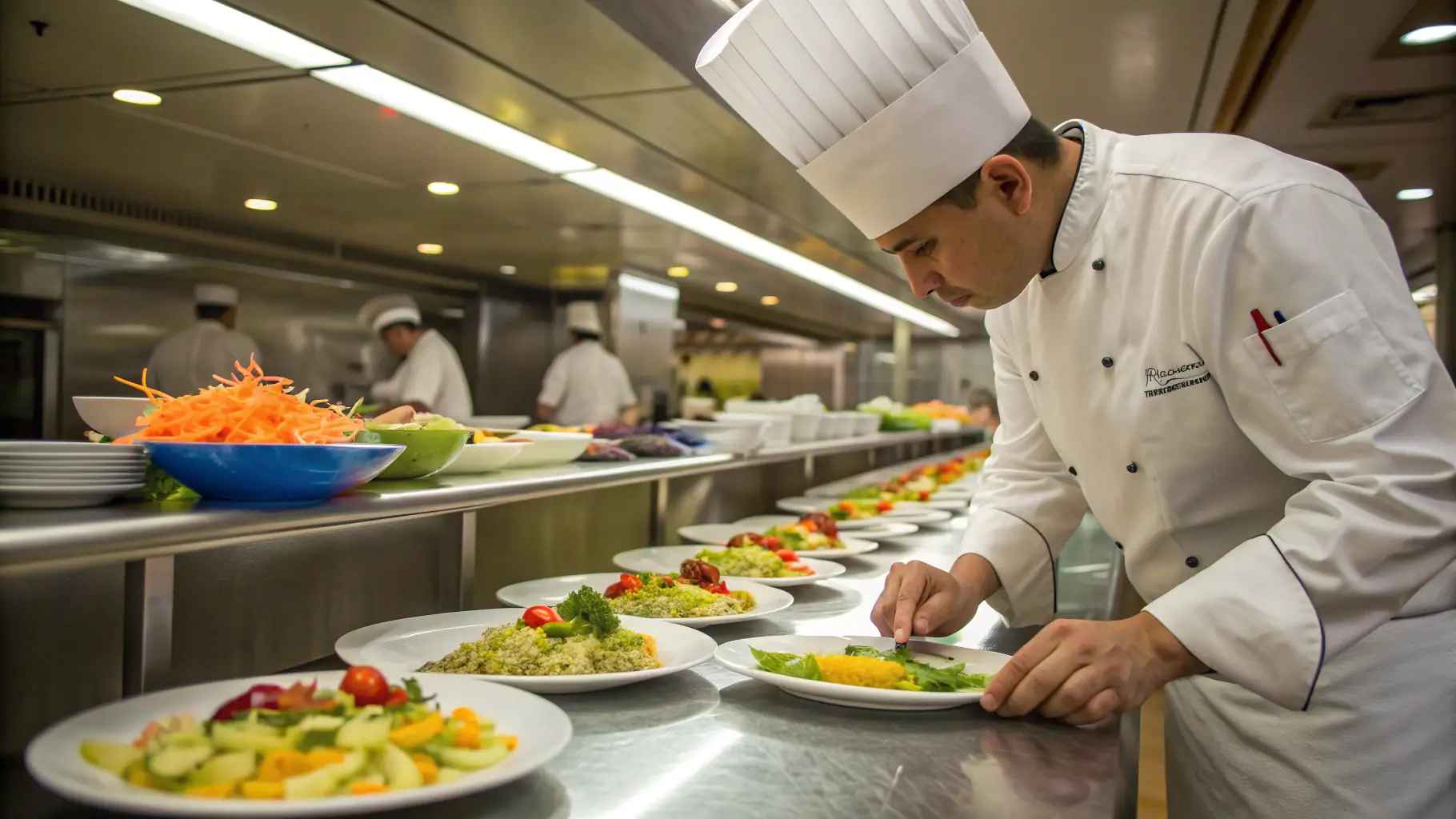
When companies plan team gatherings and client dinners, venue choice does more than set the backdrop. It determines whether attendees connect or stay guarded, whether logistics go smoothly or spiral into chaos. The question of why host corporate events at restaurants goes well beyond food. Restaurants offer a purpose-built social environment, integrated services, and a psychological warmth that conference rooms simply cannot replicate. This guide breaks down the strategic, relational, and financial advantages that make restaurant venues one of the smartest choices for planners who want their events to actually work.
Table of Contents
- Key Takeaways
- Why host corporate events at restaurants: the logistical case
- How restaurant spaces change the way people interact
- Privacy and customizability for corporate groups
- Financial sense: why restaurants win on budget clarity
- Ambiance, executive comfort, and client relations
- My honest take on restaurant events after years of planning
- Host your next corporate event at Els Pescadors
- FAQ
Key Takeaways
| Point | Details |
|---|---|
| Logistics are built in | Restaurants provide amenities, staffing, and catering under one roof, cutting vendor complexity. |
| Shared meals build connection | Participatory dining formats reduce professional distance and encourage genuine conversation. |
| Privacy is customizable | Private rooms, semi-private sections, and full buyouts let planners match space to group size and confidentiality needs. |
| Pricing is predictable | Bundled menus and beverage packages give planners clear cost control from the start. |
| Atmosphere shapes outcomes | Restaurant ambiance influences how clients perceive your brand and how guests experience the event. |
Why host corporate events at restaurants: the logistical case
The term “restaurant event space benefits” is commonly used by planners, but the industry concept behind it is called integrated venue services. This means a single location handles venue, catering, staffing, setup, and breakdown. That single-vendor model removes the coordination overhead that exhausts planners at multi-vendor events.
Integrated amenities like restrooms, parking, climate control, and Wi-Fi come standard at established restaurants. You do not need to rent a generator, hire a separate cleaning crew, or arrange mobile restroom trailers. These details, trivial in isolation, compound into hours of planning time and thousands of dollars when sourced separately.
| Feature | Restaurant venue | Traditional/blank venue |
|---|---|---|
| Catering management | In-house, coordinated | External caterer required |
| Staffing (servers, bartenders) | Included | Hired separately |
| Climate control | Standard | Often rented |
| AV/Wi-Fi infrastructure | Typically included | Varies, often additional cost |
| Cleanup and breakdown | Staff handles it | Separate vendor or planner |
| Single point of contact | Yes | Rarely |
Dedicated event coordinators manage logistics, freeing you to focus on guests instead of troubleshooting setup. This distinction matters enormously when you are hosting a client dinner or a leadership offsite. Your attention should be on the people in the room.
Pro Tip: When evaluating a restaurant for a corporate event, ask specifically whether a dedicated coordinator is assigned from booking to breakdown. A general manager handling six things at once is not the same thing.
Predictable pricing packages also reduce financial surprises. Prix-fixe menus and bundled beverage options mean you know your per-head cost before the event. Compare that to blank-venue models where each vendor invoices separately and you rarely reconcile total spend until a week after the event.
How restaurant spaces change the way people interact
Most corporate event planning advice focuses on logistics. Far fewer planners think about what the industry calls “participation architecture.” This refers to how a space’s physical design and dining format influence whether people actually talk to each other.
Open floor designs and shareable food encourage roaming conversations and organic networking in a way that rows of chairs facing a podium never will. When guests can move, graze, and choose who they stand next to, conversations become voluntary rather than obligatory. That shift is significant for team-building.
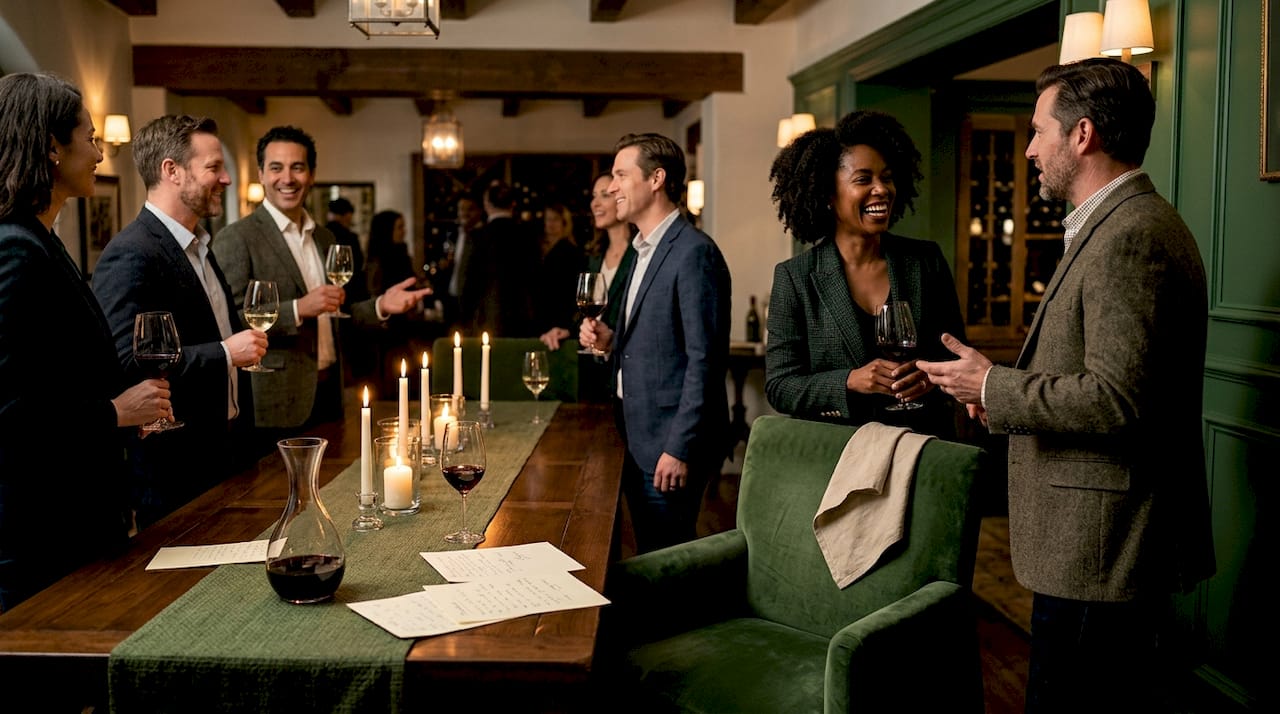
Shared tasting menus take this further. Corporate groups using shared participatory menus report noticeably more engagement than those seated at individual plated dinners. Passing dishes creates what you might call conversation cues. Someone has to say “try this” or “should we order more?” Those micro-interactions break down professional distance faster than any icebreaker activity.
The science backs this up. A 2026 Scientific Reports study found that meal sharing correlates with wellbeing, reporting lower stress and higher happiness on days when people dine together rather than alone. For corporate events designed to strengthen team dynamics, this is not a soft benefit. It is a measurable one.
Key interaction advantages of restaurant settings include:
- Movement encouraged. Open floor plans and bar areas let guests self-select conversation partners.
- Shared plates break silence. Passing food gives quieter attendees a natural reason to speak.
- Ambient noise works for you. Restaurant sound levels discourage awkward silence without making conversation hard.
- Relaxed posture. Comfortable seating and dining tables naturally reduce the formality that stifles candid discussion.
Pro Tip: For team-building events, request a shared menu format rather than individual place settings. Group dining formats for interaction consistently outperform plated service when your goal is conversation, not ceremony.
Privacy and customizability for corporate groups
Not every business event has the same needs. A confidential strategy session requires something fundamentally different from a celebratory team dinner. Restaurants accommodate this range through three primary formats: private dining rooms, semi-private sections, and full restaurant buyouts.
Private dining rooms typically accommodate 14 to 125 guests, with tailored menus, dedicated service staff, and event coordinators assigned to your group. Semi-private sections work well for mid-size gatherings where complete separation is not necessary but ambient separation from other diners is appreciated. Full buyouts give large groups total ownership of the venue experience, including control over music, décor, and guest flow.
| Format | Typical capacity | Key benefits |
|---|---|---|
| Private dining room | 14 to 60 guests | Full privacy, dedicated staff, custom menu |
| Semi-private section | 20 to 80 guests | Managed separation, flexible setup |
| Full restaurant buyout | 50 to 125+ guests | Total control, exclusive atmosphere |
When evaluating options, treat private event capabilities as measurable characteristics. Confirm room dimensions, acoustic privacy, and whether the coordinator assigned to your event handles only your group or also manages the main dining floor. Those details separate a genuine private event from a slightly sectioned-off corner.
Pro Tip: Ask the venue for a floor plan and a sample run-of-show from a past corporate event. Any restaurant with real private event experience will have both ready without hesitation. If they do not, keep looking.
Curated menu options matter here too. A group celebrating a product launch wants different food and beverage options than a team conducting a half-day strategy session. Look for venues that allow menu customization, not just a choice between two prix-fixe tiers. The private events in Barcelona category shows what genuinely tailored corporate dining looks like when a venue has built its offering around business clients.
Financial sense: why restaurants win on budget clarity
Budget management is where the advantages of restaurant venues often go unnoticed by planners who focus only on headline per-head cost.
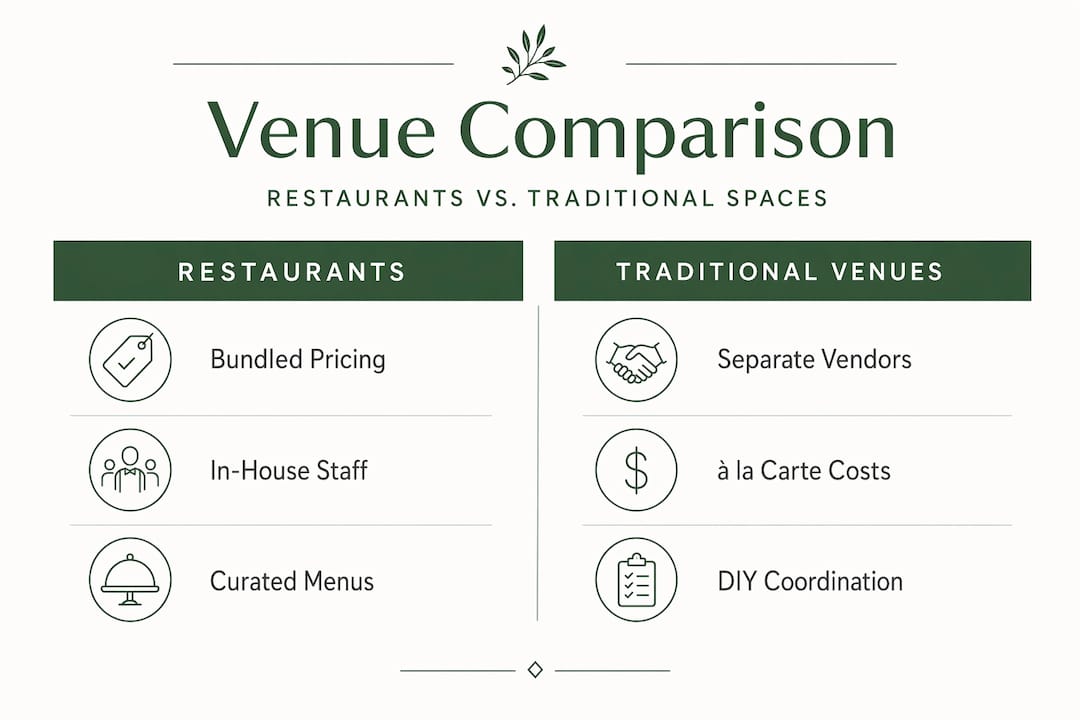
Bundled pricing, including food, beverages, service, and space, delivers something multi-vendor approaches rarely can: a single, predictable invoice. Packaged pricing stabilizes kitchen workload and lets staff plan capacity accurately, which directly translates into better service quality on the day of your event.
Financial benefits worth noting:
- Capped open bars. Agree on a per-person beverage cap in advance and avoid surprise overage charges.
- Group discounts. Many restaurants offer negotiated rates for repeat corporate clients or bookings above a minimum headcount.
- No vendor overlap fees. Using an external caterer at a raw venue often triggers facility usage fees you never anticipated.
- Transparent minimums. Food and beverage minimums replace vague venue hire fees, and you spend the minimum on something your guests actually consume.
Restaurants that host corporate clients regularly also develop loyalty structures and promotional arrangements for repeat business. A company that books three client dinners per year at the same venue often finds pricing more favorable by the second booking. That relationship has real financial value over time.
Pro Tip: When negotiating a group package, ask about early booking discounts and off-peak scheduling. A Tuesday evening often commands meaningfully better terms than a Friday, with no difference to the guest experience.
Ambiance, executive comfort, and client relations
The environment you choose for a client dinner sends a message before a word is spoken. Restaurants offer a controlled, polished setting that communicates care and investment in the relationship. That impression is harder to manufacture in a hotel ballroom or a rented boardroom.
Hotel restaurants and fine dining venues are gaining preference among executives for client meetings precisely because they provide reliable service and a calm environment without requiring guests to travel far or stay late. The structure of a restaurant event reduces cognitive load for attendees. The food arrives, the drinks are handled, the timing is managed. Guests can focus entirely on conversation.
For client-facing events specifically, atmosphere shapes brand perception in ways that are easy to underestimate. A restaurant with a strong identity and genuine culinary character tells your clients something about your standards. It signals that you chose quality deliberately rather than booking the default hotel conference package.
Strategies for aligning venue ambiance with your corporate culture:
Consider whether the event calls for casual connection or formal presentation. A seafood restaurant with a terrace suggests openness and conversation. A dark-paneled private room suggests gravity and discretion. Neither is wrong. Choosing thoughtfully shows clients and colleagues that you considered their experience.
Attendee retention also matters. Events that feel like a genuine dinner rather than a networking obligation leave guests satisfied and more likely to engage again. That outcome compounds over time for planners building long-term client relationships.
Pro Tip: Match restaurant character to the tone of the relationship you want to build. For corporate dining in Barcelona, a venue with authentic local identity adds cultural richness that a generic event space cannot replicate.
My honest take on restaurant events after years of planning
I have watched planners spend months perfecting slide decks for offsite events held in rooms that looked like airport lounges. No one remembers the slides. Everyone remembers whether they had a good time, whether the food was memorable, and whether they actually talked to someone new.
What I have learned is that the venue is not neutral. It actively shapes behavior. Restaurants are designed to make people comfortable, communicative, and open in a way that business-purposed spaces are not. That design does real work for you when your goal is relationship-building.
The mistake I see most often is planners selecting a restaurant based purely on capacity and budget, then discovering too late that the dining format undercuts the event goal. A plated dinner in a beautiful room still produces a table of twelve people staring at their own plates. Shared menus, thoughtful seating, and a venue with actual hospitality expertise change that outcome entirely.
The restaurants that deliver consistently for corporate clients have built specific capabilities around business events. They have coordinators, flexible menus, and an understanding of what a planner actually needs. Finding one that genuinely specializes in corporate groups is worth more than finding the trendiest spot in the city.
— YellowRock
Host your next corporate event at Els Pescadors
Els Pescadors brings together everything planners need in a single Barcelona address. Located in the historic Poblenou district, the restaurant offers private event spaces designed specifically for corporate gatherings, from intimate client dinners to full group buyouts with tailored Catalan seafood menus.
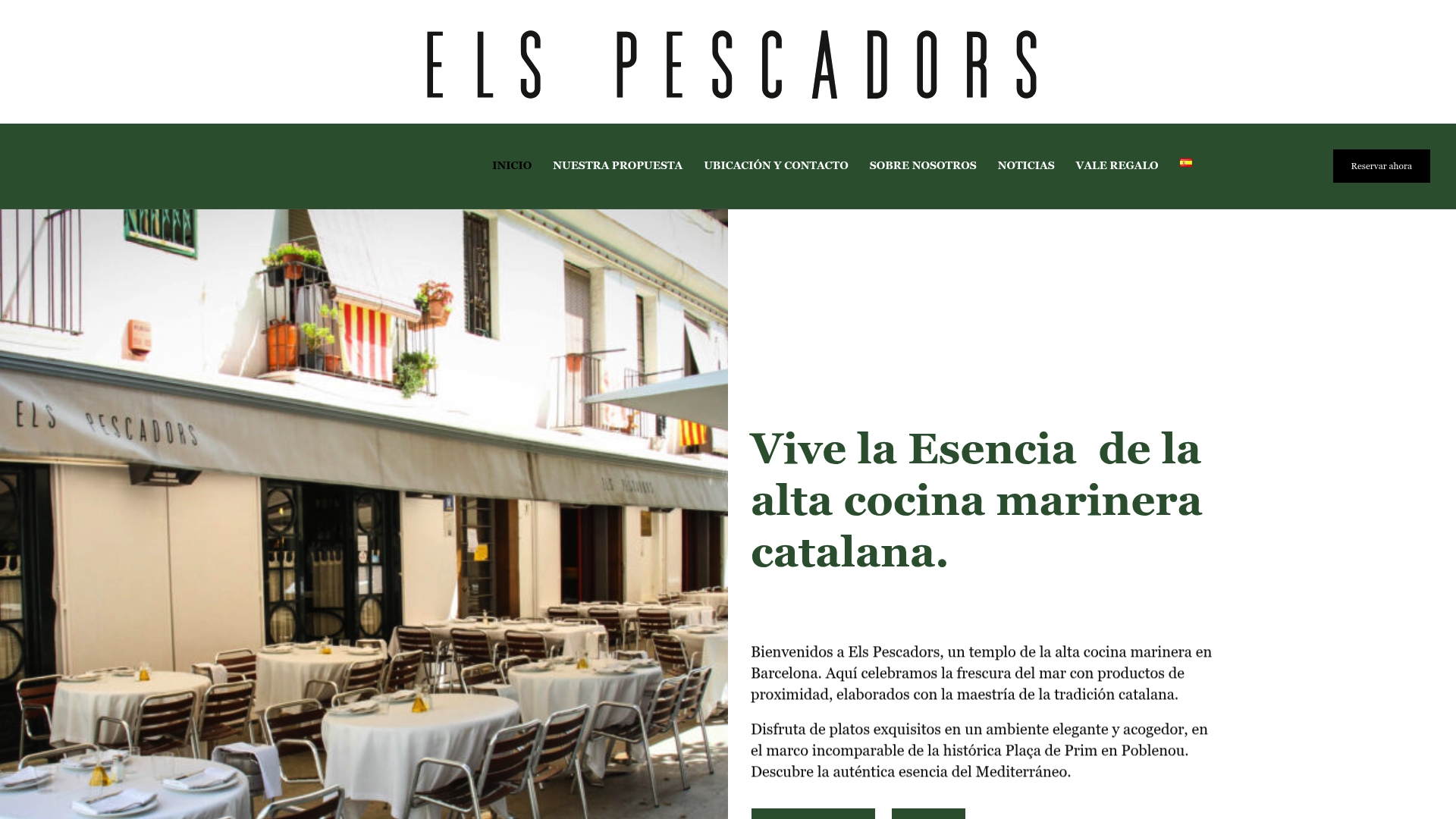
The team at Els Pescadors handles coordination, menu customization, and service from first inquiry to final course. Seasonal ingredients, locally sourced seafood, and a setting that reflects genuine Mediterranean character give your corporate event a quality that generic venues cannot match. Explore the group dining menu options and contact the team to discuss what your event requires.
FAQ
Why are restaurants better than hotels for corporate events?
Restaurants offer a more personalized environment, dedicated service staff, and a defined culinary identity that hotel ballrooms typically lack. For client dinners and smaller executive gatherings, the controlled atmosphere and focused hospitality make a measurable difference in guest satisfaction.
What size groups work best for restaurant corporate events?
Most restaurant private event formats comfortably serve groups from 14 to 125 guests, depending on room configuration and whether you book a partial or full venue buyout. Matching group size precisely to available space is one of the most important steps in corporate event planning.
How do shared dining formats improve team-building?
Shared plates and participatory tasting menus create natural conversation triggers that plated dinners do not. Research shows that meal sharing boosts wellbeing, and corporate groups report stronger engagement when food is passed and shared rather than individually served.
How do restaurant venues help with budget management?
Bundled pricing that covers food, beverages, and service in a single package removes the invoice fragmentation common with multi-vendor events. Capped beverage arrangements and negotiated group rates give planners clear cost visibility before the event rather than after.
What should planners verify before booking a restaurant for a corporate event?
Confirm private room dimensions, acoustic separation from the main dining floor, coordinator availability exclusively for your event, and whether the menu can be customized beyond standard tiers. Any restaurant experienced with corporate events will have clear answers to all four questions.