Most travelers arrive in Barcelona expecting good food and end up eating overpriced pasta on Las Ramblas. The reasons why eat local in Barcelona matter go far beyond avoiding bad meals. Eating where locals actually eat saves you money, connects you to a living culinary tradition that dates back centuries, and puts your spending into the hands of farmers and fishermen who actually care about what ends up on your plate. This guide covers every angle, from practical cost savings to environmental impact, with specific tips for finding the real thing.
Table of Contents
- Key Takeaways
- Why eat local in Barcelona: the real case for it
- Economic benefits of dining local in Barcelona
- Catalan food culture and the social side of eating local
- Health and environmental benefits of supporting local food
- How to find authentic local dishes in Barcelona
- My honest take on eating local in Barcelona
- Experience authentic local seafood at Els Pescadors
- FAQ
Key Takeaways
| Point | Details |
|---|---|
| Skip the tourist corridors | Dining away from Las Ramblas cuts costs significantly and delivers far better food quality. |
| Use the menú del día | Weekday set menus offer a three-course local meal with wine for a fraction of tourist-restaurant prices. |
| Ask locals, not apps | The best neighborhood spots rarely appear in Google results and rely entirely on word-of-mouth. |
| Local food supports farmers | Buying from local producers keeps money in the community and preserves traditional Catalan crops. |
| Eating local is healthier | Traditional Catalan diets use fermentation and seasonal pairing that improve nutrient absorption compared to processed alternatives. |
Why eat local in Barcelona: the real case for it
The most common mistake visitors make is treating Barcelona as an interchangeable European city where any restaurant near a landmark will do. It won’t. Tourism-driven overcrowding inflates prices and strips food of its authenticity in the city’s most-visited zones. A few hundred meters away, in neighborhoods like Gràcia, Poblenou, or Sant Pere, the same city exists at a completely different price point and quality level.
Barcelona’s food culture is not a performance for visitors. It’s a daily practice. The menú del día, vermouth at noon, shared plates at a corner bar. These are real habits, not curated experiences. When you step into them, you’re not consuming a product. You’re participating in something genuine.
The economic case is straightforward. Neighborhood bars, markets, and tapas streets keep daily food costs reasonable without sacrificing quality. A three-course weekday lunch with wine at a local restaurant runs between 10 and 15 euros. The same number of courses at a tourist-facing spot near the Gothic Quarter can easily hit 40 euros, with worse ingredients and no soul.
Economic benefits of dining local in Barcelona
The menú del día is one of the most underused tools available to anyone eating in Barcelona. Available Monday through Friday at lunch, it typically includes a first course, second course, dessert, bread, and a drink. For 12 to 14 euros at a genuine local spot, it represents extraordinary value. Many of these menus rotate daily based on what’s fresh and seasonal, which means the quality is consistently higher than fixed tourist menus.
Here’s where the savings compound:
- Standing bars cost less. Most neighborhood bars charge less when you eat at the counter than at a table, sometimes by 20 to 30 percent.
- Markets beat supermarkets for quality and price. Mercat de Sant Antoni, for example, offers great value for fresh produce and prepared foods that rival any restaurant.
- Sharing tapas keeps spending flexible. You order what you want, when you want it, and the social format naturally prevents overspending.
- Timing matters more than you think. Eating lunch between 1:30 and 3:30 pm and dinner after 9 pm puts you in sync with local rhythm, where set menus and daily specials are at their best.
Pro Tip: Avoid restaurants that have menus translated into five languages posted outside the door with laminated photos of the dishes. That’s a reliable signal you’re about to overpay for food designed for people who won’t come back.
The neighborhoods that consistently deliver the best value are Poblenou, El Born, Gràcia, Sants, and Sant Pere. These areas have working locals who eat out regularly, which means restaurant owners are competing on quality and price, not foot traffic.
Catalan food culture and the social side of eating local
Food in Barcelona is inseparable from social life. Sitting down for a meal isn’t something you rush through. The pace is deliberate. Conversations stretch past the last bite. Eating small plates, drinking vermouth, and socializing are not optional extras. They are the meal.
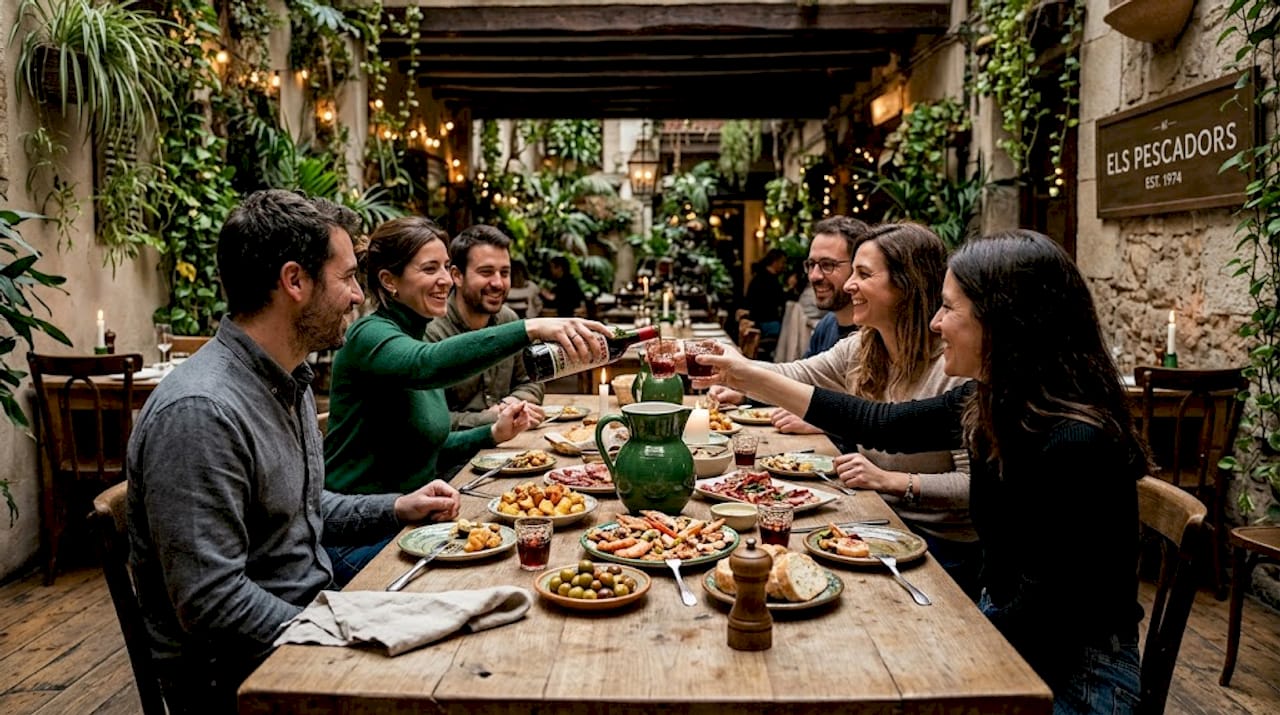
The vermouth hour, known locally as la hora del vermut, happens around noon on weekends. Neighborhood bodegas fill up with people sharing olives, anchovies, and patatas bravas while drinking chilled vermouth or a cold beer. This is not a tourist ritual. It’s a deeply ingrained social habit, and joining it costs almost nothing while offering an unscripted window into how people actually live here.
The late-night dinner culture carries the same weight. Restaurants in local neighborhoods start filling up around 9:30 pm. Sitting down at 7:30 pm because that’s when you’re hungry marks you as a visitor and often means you’ll be eating in a half-empty room with a menu designed for early arrivals. Adjusting your schedule by two hours changes everything.
“Eating with consciousness strengthens local economies and preserves biodiversity by supporting traditional producers.” Carlo Petrini, founder of the Slow Food movement, put it plainly: authentic food culture survives when people choose to participate in it rather than consume a version of it.
Local eateries like neighborhood bodegas and family-run tapas bars are cultural anchors. They’ve often been operating for decades under the same family, serving the same dishes, and maintaining the same relationships with local suppliers. Eating there is the difference between experiencing authentic Catalan flavors and watching them from behind glass.
Health and environmental benefits of supporting local food
The case for eating locally goes well beyond personal taste. It carries measurable consequences for health, the environment, and the long-term resilience of the food system.
-
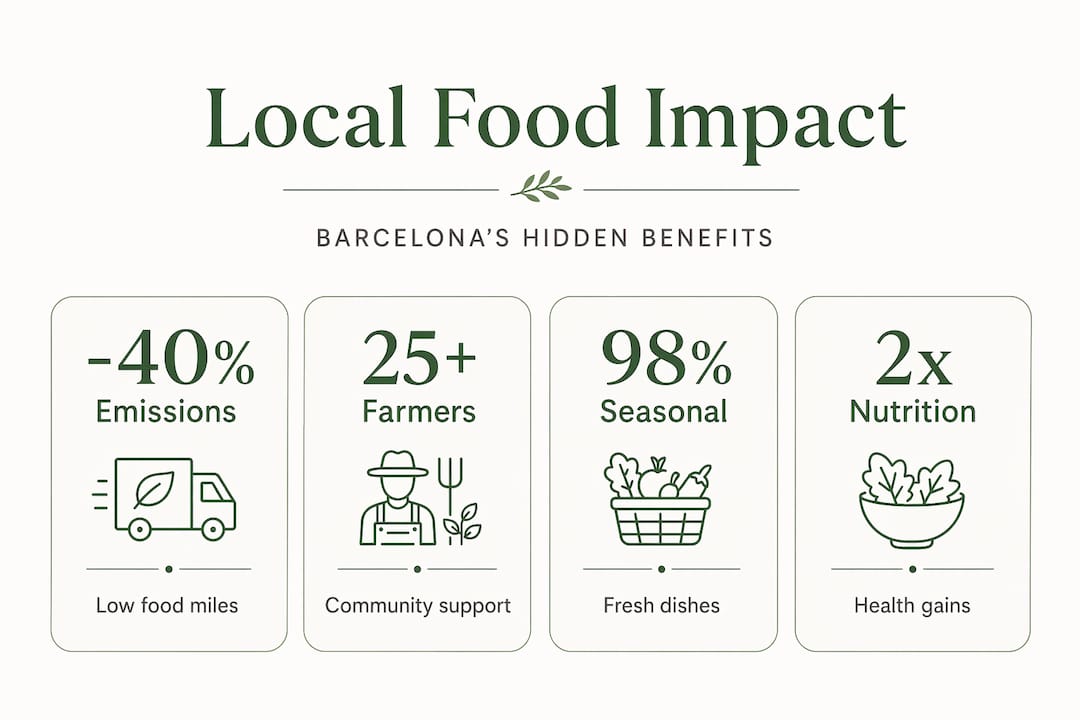
Reduced carbon footprint. Local farmers spend earnings locally and reduce carbon footprints by eliminating the transport chains that industrial food systems depend on. A tomato grown 30 kilometers outside Barcelona has a fundamentally different environmental impact than one shipped from a greenhouse in northern Europe.
-
Biodiversity preservation. Supporting local producers means supporting traditional crop varieties that don’t survive in industrial agriculture. Catalan farmers cultivate specific strains of beans, peppers, and grains that would disappear without local demand.
-
Better nutrition from traditional preparation. Traditional diets act as nutrient optimization architectures, with fermentation and specific food pairings that increase the bioavailability of key nutrients. A bowl of escudella or a plate of fresh sardines with pa amb tomàquet isn’t just culturally correct. It’s physiologically superior to processed alternatives.
-
Greater food safety and transparency. When you buy from a market vendor who sources from named farms, you know where your food comes from. Industrial supply chains make traceability nearly impossible.
-
Support for a functioning local economy. Every euro spent at a local restaurant or market stall circulates back into the city’s neighborhoods rather than disappearing into a corporate supply chain.
The benefits of eating seasonal food compound these effects. Seasonal produce requires fewer chemical inputs, travels shorter distances, and delivers better flavor. Barcelona’s climate makes year-round access to high-quality seasonal produce realistic in a way that isn’t possible in most European cities.
How to find authentic local dishes in Barcelona
The honest answer is that the best spots don’t show up on Google. Top local venues rely purely on word-of-mouth rather than digital presence. The most useful thing you can do is ask the person at your hotel reception, your Airbnb host, or the person sitting next to you at a bar where they actually eat.
That said, a few tools and strategies make the search easier.
The EsmorzApp is a specialized tool that helps discover authentic Catalan breakfasts, specifically the esmorzar de forquilla, a substantial mid-morning meal featuring cured meats, tortilla, and local bread with tomato. This is a completely different meal culture from the continental breakfast most visitors default to, and it’s genuinely cheaper and more satisfying.
Here’s a practical comparison of where to eat versus where to avoid:
| Setting | What you get | Typical cost |
|---|---|---|
| Local neighborhood bar (standing) | Fresh tapas, daily specials, local wine | 8 to 15 euros per person |
| Market stall (Mercat de Sant Antoni) | Seasonal produce, prepared foods, freshly made dishes | 5 to 12 euros per person |
| Tourist-facing restaurant (Las Ramblas area) | Generic Mediterranean food, inflated prices | 30 to 60 euros per person |
| Fine local seafood restaurant (Poblenou) | Fresh daily catch, traditional rice, Catalan specialties | 40 to 70 euros per person for a full experience |
Recognizing an authentic menu is simpler than it sounds. Look for handwritten daily specials, a menu that changes regularly, staff who don’t automatically speak English, and a room full of people who live nearby. If the restaurant has a printed menu that hasn’t changed in years, it’s optimized for tourists who won’t return.
Pro Tip: When ordering at a local bar, watch what the regulars are eating before you look at the menu. The dish everyone at the counter has in front of them is almost always the best thing available that day.
For seafood specifically, understanding what makes a local fish spot genuine comes down to whether the catch changes daily and whether the kitchen talks about where the fish came from. Static seafood menus are a warning sign.
My honest take on eating local in Barcelona
I’ve spent enough time at both ends of the Barcelona dining spectrum to say this plainly: the tourist version of this city’s food is a pale imitation of the real thing, and the gap between them is larger than in almost any other major European city.
What surprises most people when they start eating locally isn’t the food itself. It’s the pace. Sitting at a corner bar at 2 pm on a Tuesday, watching the neighborhood unfold around a shared plate of cured meats and a glass of house wine, teaches you something about Barcelona that no landmark can. The city’s character lives in those unhurried hours.
The economic argument for eating local is real, but it’s secondary to the cultural one. I’ve had transcendent meals in Poblenou for 14 euros and forgettable ones near the Gothic Quarter for 50 euros. The price gap is consistent. So is the quality gap. Every time I’ve followed a local recommendation over an online review, the meal has been better.
My advice is simple. Spend your first lunch at a neighborhood menú del día spot, order whatever the daily specials are, and let the pace of the meal set your expectations for the rest of the trip. You’ll spend less and remember more.
— Elspescadors
Experience authentic local seafood at Els Pescadors
If you want to put everything in this guide into practice at a level where local sourcing, seasonal ingredients, and Catalan maritime tradition converge, Els Pescadors in Poblenou is the place to do it.
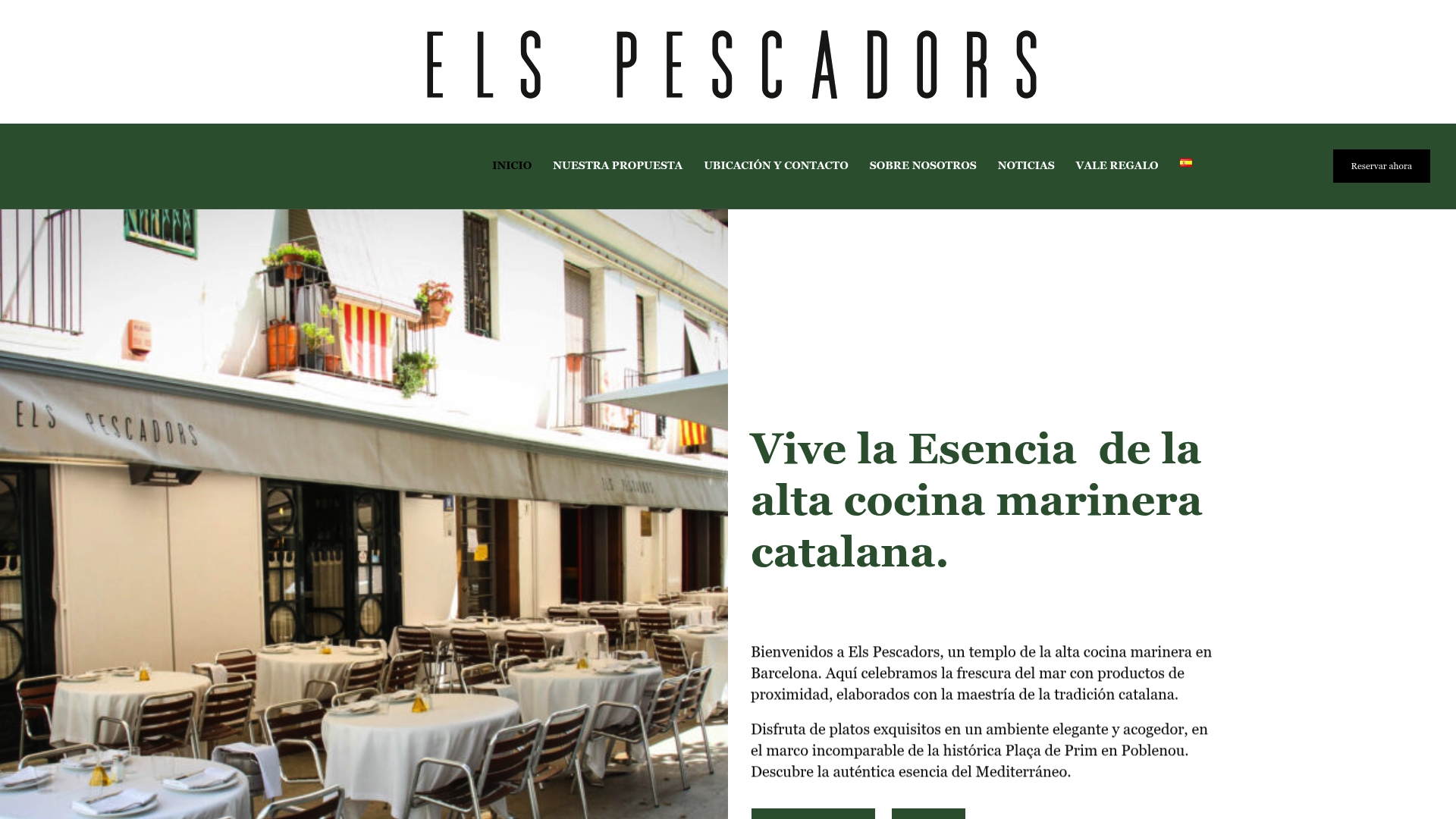
Located in Plaça de Prim in the historic Poblenou district, Els Pescadors has built its reputation on exactly the values discussed above. Fresh daily catch, traditional Catalan seafood dishes prepared with seasonal ingredients, and a menu that reflects what the sea and land are actually offering at any given time. Check our full proposal to see current menus, tasting options, and how to book. This is what choosing local in Barcelona looks like at its most refined.
FAQ
Why is eating local cheaper in Barcelona?
Local restaurants and neighborhood bars in Barcelona compete on quality and repeat customers rather than tourist foot traffic. The weekday menú del día, typically 10 to 15 euros for three courses, offers far better value than tourist-facing restaurants where similar meals cost two to four times more.
What is the best local food to eat in Barcelona?
Traditional Catalan staples like pa amb tomàquet, fideuà, escudella, and fresh seafood rice dishes represent the best of local cuisine. Seasonal availability drives quality, so ordering whatever the kitchen features that day almost always delivers the strongest result.
How do you find authentic restaurants in Barcelona?
Ask locals rather than relying on Google, since the best neighborhood spots rarely maintain a digital presence. Look for handwritten menus that change daily, rooms filled with residents rather than visitors, and staff who talk about where their ingredients come from.
Why should I support local farmers in Barcelona?
Supporting local producers keeps money circulating in the local economy, reduces the carbon footprint of your meals, and helps preserve traditional Catalan crop varieties that industrial agriculture cannot sustain.
What neighborhoods have the best local food in Barcelona?
Poblenou, Gràcia, El Born, Sants, and Sant Pere consistently offer the strongest combination of authentic local restaurants, neighborhood markets, and traditional bars where residents actually eat every day.